Plato; Pangle, Thomas L,Biblio.com
7 552 résultats
réf. 644384-nnew. unknown
1988réf. Q-0226671100University of Chicago Press 1988-03-15. Paperback. New. New. In shrink wrap. Looks like an interesting title! University of Chicago Press paperback
1988réf. 55496Univ of Chicago Pr. New. Paperback. FREE UPGRADE to Courier/Priority Shipping Upon Request – – IN STOCK AND IMMEDIATELY AVAILABLE FOR SHIPMENT - Flawless copy brand new pristine never opened -- with a bonus offer-- . 1988. 0226671100 . Univ of Chicago Pr paperback
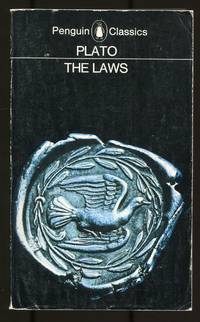
1978réf. RO60006169Penguin Books. 1978. In-12. Broché. Bon état, Couv. légèrement passée, Dos satisfaisant, Papier jauni. 552 pages.. . . . Classification Dewey : 420-Langue anglaise. Anglo-saxon
1970réf. 533710Middlesex England: Penguin 1970. Softcover. Very Good. Reprint. Translated with an introduction by Trevor J. Saunders. 550pp. Mass market paperback. Inked initials on rear interior panel wrappers moderately rubbed and edgeworn very good. Penguin unknown books
réf. 45097526-nnew. unknown
réf. 45097526like new. unknown
réf. 50565052-nnew. unknown
réf. 50667793-nnew. unknown
réf. 50667793like new. unknown
réf. 50199867like new. unknown
réf. 46079244like new. unknown
réf. 7780214-nnew. unknown
réf. 48194793like new. unknown
réf. 7780214like new. unknown
réf. 46998553-nnew. unknown
réf. 46998553like new. unknown
réf. 44261573like new. unknown
réf. 44261573-nnew. unknown
2003réf. 2350065New York: Penguin Books 2003. Trade Paperback. Fine. 7x5x0. Brand new from publisher. An exceptional copy. 2003 Trade Paperback. xliv 256 pp. Translated by Hugh Tredennick and Harold Tarrant with introduction and notes by Harold Tarrant. "The trial and condemnation of Socrates 469-399 B.C. on charges of heresy and corrupting the minds of the young forms one of the most tragic episodes in the history of Athens in decline. Plato chose to set the four works of this volume despite their different subjects in the context of the events leading up to Socrates' execution. Euthyphro and Crito are typical Socratic dialogues showing the pungency of his mind in addressing the question of man's relationship with the gods and with society. The Apology is Plato's version of Socrates' speeches at his trial -- a brilliant and humorous manifesto for a life guided by self-responsibility though deliberately doomed to failure as a legal defence. In Phaedo Plato develops his own philosophy out of Socrates' calm confidence in the face of death." Includes: Chronology; Preface; General Introduction; Further Reading; A Note on the Texts; Euthyphro - Holiness: Socrates in Confrontation; Apology - Justice and Duty i: Socrates Speaks at His Trial; Crito - Justice and Duty ii: Socrates in Prison; Phaedo - Wisdom and the Soul: Socrates about to Die; Postscript: The Theory of Ideas in the Phaedo; Notes; Index. Penguin Books paperback books
1969réf. RO20268273PENGUIN CLASSICS. 1969. In-12. Broché. Etat d'usage, Couv. convenable, Dos plié, Quelques rousseurs. 199 PAGES. . . . Classification Dewey : 420-Langue anglaise. Anglo-saxon
1992réf. 63786London: Guild Publishing. Very Good with no dust jacket. 1st Guild Edition. Original quarter leather. Light tanning to text block. Light soiling to top edge.; With placeholder ribbon.; 21.6 x 14.2 x 2.5 cms; Plato’s The Last Days of Socrates—a grouping of the dialogues Euthyphro Apology Crito and Phaedo—offers a powerful and enduring portrait of Socrates’ final days capturing his trial imprisonment and death. Often published together including in The Guild Books edition these texts explore central philosophical themes such as justice piety duty and the immortality of the soul. Euthyphro takes place shortly before Socrates' trial. He meets Euthyphro a man prosecuting his own father for impiety and together they debate the nature of piety. Socrates challenges Euthyphro’s definitions asking whether the gods love the pious because it is pious or whether it is pious because the gods love it. The dialogue ends unresolved as Socrates finds Euthyphro’s arguments lacking in clarity and consistency. In the Apology Socrates stands before the Athenian court defending himself against accusations of corrupting the youth and impiety. He speaks plainly and with conviction asserting that he is guided by a divine mission to encourage critical thought and virtue. Socrates refuses to pander to the jury ultimately accepting the guilty verdict and the death sentence rather than compromise his principles. Crito is set in Socrates’ prison cell where his friend Crito urges him to escape. Socrates calmly refuses arguing that to break the laws of Athens would be unjust even if the laws themselves have condemned him unfairly. He explains that he has benefited from and agreed to live under these laws and to flee would be to undermine the moral and legal foundation of the city. Phaedo recounts Socrates’ final conversation before his death. In the company of his friends and disciples he offers a series of arguments for the immortality of the soul including the theory of opposites the doctrine of recollection and the soul’s affinity with the divine and unchanging. The dialogue ends with Socrates taking the poison hemlock and dying peacefully confident that the soul lives on after death. Together these four dialogues trace a coherent philosophical journey—from ethical questioning to legal reasoning civic responsibility and metaphysical reflection. They not only memorialise Socrates’ death but also exemplify the principles by which he lived. The Guild Books edition presents these works in an accessible and enduring format allowing readers to engage with one of the foundational figures of Western thought. . 1992. Guild Publishing hardcover
2003réf. SKU0642015Penguin Classics 2003-04-29. paperback. New. 7x5x0. New Textbook Ships with Tracking Penguin Classics paperback
réf. Q-0140440372Penguin USA Mm. paperback. New. New. In shrink wrap. Looks like an interesting title! Penguin USA (Mm) paperback
1993réf. 73126AB1993. London Penguin Books 1993. 13 cm x 20 cm. 237 Pages. Original Softcover. Very good condition with only very minor signs of external wear. Slight tear on the front cover. Annotations throughout the book. A small ink stain on few pages. From the library of philosopher Graham Parkes. Includes for example the following essays: HOLINESS - Socrates in Confrontation: Euthyphro / JUSTICE AND DUTY I - Socrates Speaks at His Trial: the Apology / JUSTICE AND DUTY 2 - Socrates in Prison: Crito / WISDOM AND THE SOUL - Socrates about to Die: Phaedo / etc. paperback