PLATOBiblio.com
7 588 résultats
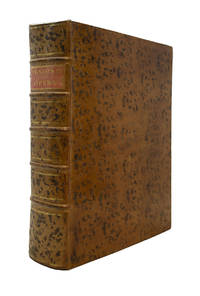
1491réf. 68663Venice: Vernardinus de Choris de Cremona and Simon de Luere for Andreas Torresanus 1491. Venice: Bernardinus de Choris and Simon de Luere for Andreas Torresanus August 13 1491. And: FICINO Marsilio. Platonica theologia de immortalitate animorum. Venice: 13 August 1491. Second edition of the works of Plato. Folio 11 7/8 x 8 inches; 301 x 206 mm. 4 444 leaves. Printed in Gothic type in double columns. With beautifully illuminated initials and border to the first text leaf. Numerous illuminated 7 8 9 and 10-line initials heightened in gilt with blue red and green backgrounds. The initial letter will extend beyond the letter with illumination 5-7 lines both up and down. Additional 3 4 5 and 7-line initials in red blue or gold. The first leaf of text a1 with two large illuminated initials and a full illuminated border with red green blue and gilt scrolls floral motifs and a shield surrounded by a wreath. This is the first edition to include Ficino's great work Platonica Theologia which was not included in the 1484 edition as Ficino first published his work in 1482. Marsilio Ficino's Latin translation. Second editions of Ficino's translation of Plato's work first published 1484 as well as his chief philosophical work the Platonica theologia in which he attempts to illustrate the harmony between Platonism and Christian theology first published 1482 and this edition is the first to collect both works together in one. With only one complete copy of the 1484 first edition at auction since the the copy that came up in the 1940s. This copy sold in 2021 for $1026000. This present edition is realistically the first obtainable edition of Plato's works. 18th-century acid treated calf. Spine with orange morocco spine label lettered in gilt. All edges dyed yellow and speckled red. Newer endpapers. A small amount of old ink neat marginalia. A small repaired hole to the title-page not affecting text just the top edge of some illumination on verso. A very clean and beautiful copy with lovely illumination. Overall a very good copy of the second edition and first obtainable edition of Plato's Opera. Plato was the first of the ancient philosophers to appear in print and for nearly thirty years Ficino's translation was the only published version available until the appearance of the Greek 'editio princeps' in 1513. Ficino's translation took twenty years to complete and during this time he was assisted by members of the Platonic Academy founded by his patron Cosimo de Medici whose ambition was to revive the study of Platonic philosophy. "Amidst a great diversity both of subject and treatment the dialogues are pervaded by two dominant impulses: a love of truth and a passion for human improvement. While nowhere is a definite system laid down it has been truly said that the germs of all ideas can be found in Plato." "Printing and the Mind of Man" # 27 for 1484 edition. BMC V 465 IB. 23432; IGI 7861; PolainB 3190; Goff P-772; PMM 27. HBS 68663. $75000. Vernardinus de Choris, de Cremona, and Simon de Luere, for Andreas Torresanus unknown
1491réf. 68663Venice: Vernardinus de Choris de Cremona and Simon de Luere for Andreas Torresanus 1491. Venice: Bernardinus de Choris and Simon de Luere for Andreas Torresanus August 13 1491. And: FICINO Marsilio. Platonica theologia de immortalitate animorum. Venice: 13 August 1491. Second edition of the works of Plato. Folio 11 7/8 x 8 inches; 301 x 206 mm. 4 444 leaves. Printed in Gothic type in double columns. With beautifully illuminated initials and border to the first text leaf. Numerous illuminated 7 8 9 and 10-line initials heightened in gilt with blue red and green backgrounds. The initial letter will extend beyond the letter with illumination 5-7 lines both up and down. Additional 3 4 5 and 7-line initials in red blue or gold. The first leaf of text a1 with two large illuminated initials and a full illuminated border with red green blue and gilt scrolls floral motifs and a shield surrounded by a wreath. This is the first edition to include Ficino's great work Platonica Theologia which was not included in the 1484 edition as Ficino first published his work in 1482. Marsilio Ficino's Latin translation. Second editions of Ficino's translation of Plato's work first published 1484 as well as his chief philosophical work the Platonica theologia in which he attempts to illustrate the harmony between Platonism and Christian theology first published 1482 and this edition is the first to collect both works together in one. With only one complete copy of the 1484 first edition at auction since the the copy that came up in the 1940s. This copy sold in 2021 for $1026000. This present edition is realistically the first obtainable edition of Plato's works. 18th-century acid treated calf. Spine with orange morocco spine label lettered in gilt. All edges dyed yellow and speckled red. Newer endpapers. A small amount of old ink neat marginalia. A small repaired hole to the title-page not affecting text just the top edge of some illumination on verso. A very clean and beautiful copy with lovely illumination. Overall a very good copy of the second edition and first obtainable edition of Plato's Opera. Plato was the first of the ancient philosophers to appear in print and for nearly thirty years Ficino's translation was the only published version available until the appearance of the Greek 'editio princeps' in 1513. Ficino's translation took twenty years to complete and during this time he was assisted by members of the Platonic Academy founded by his patron Cosimo de Medici whose ambition was to revive the study of Platonic philosophy. "Amidst a great diversity both of subject and treatment the dialogues are pervaded by two dominant impulses: a love of truth and a passion for human improvement. While nowhere is a definite system laid down it has been truly said that the germs of all ideas can be found in Plato." "Printing and the Mind of Man" # 27 for 1484 edition. BMC V 465 IB. 23432; IGI 7861; PolainB 3190; Goff P-772; PMM 27. HBS 68663. $75000. Vernardinus de Choris, de Cremona, and Simon de Luere, for Andreas Torresanus unknown books
réf. 78082-nnew. unknown
réf. 78082like new. unknown
1985réf. F75005Warszawa, Akademia Teologii Katolickiej 1985 218pp., 24cm., softcover, stamp, good condition, [contains 2 parts: Czesc pierwsza: "Jedno i istnienie wedlug Platona" & Czesc druga: "Jednosc i intelekt wedlug Sw. Tomasza"], [contributions in Polish], F75005
1850réf. R260166933SUMTIBUS ET TYPIS CAROLI TAUCHNITII. 1850. In-18. Broché. Etat d'usage, Couv. défraîchie, Dos fané, Mouillures. 319 pages. Texte en grec. Premier plat détaché. Manque le second plat. Léger manque au dos auréolé.. . . . Classification Dewey : 880-Littératures helléniques. Littérature grecque
réf. 506476Gothae et Erfordiaie, sumptimus Guil. Hennings, 1833-1836. In-12, reliure de l'époque, dos refait en demi-toile bordeaux, LIII-169 pp., 262 pp.-[1]f, 289 pp.-[2]ff. Index (Bibliotheca graeca virorum doctorum opera recognita et commentariis instructa).
2024réf. ABD-9789388454155Ishika Publishing House 2024. New. Ishika Publishing House unknown
2024réf. ABD-9789388454155Ishika Publishing House 2024. New. Ishika Publishing House unknown
198569pp. + frontispiece, 24cm., softcover, some stains at bottom of last pages, text in good condition, F76967
réf. feb77440Used. For more details please contact me unknown
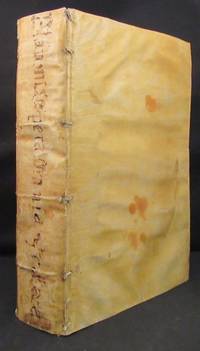
1513réf. 32134Venice: Aldus Manutius and Andreas Torresanus September 1513. The Editio Princeps the First Edition of the Works of Plato in Greek. Folio 312 x 194mm beautifully bound in its contemporary limp vellum binding with hand calligraphy to the spine panel yapp edges. 15 unnumbered leaves without leaf 16 blank; 502 pages without the final blank; 439 pages. Aldine anchor device Fletcher f4 to title-page and verso of the last leaf. A superb copy in excellent condition. Very rare thus in its original binding some leaves with very sophisticated very sympathetic expert re-margining at the bottom outside corners where loss occurred at some time. The restoration has been brilliantly accomplished and is nearly imperceptible. VERY RARE AND IMPORTANT. THE FIRST ALDINE EDITION OF PLATO. THE EDITIO PRINCEPS AND A UNIQUE AND IMPORTANT COPY. As Marsilio Ficino dedicated his Latin translation of Plato to Lorenzo de’ Medici so Manutius dedicates his Greek edition to the son of Lorenzo Giovanni who became Pope Leone X in march. Aldus places his hopes for the foundation of his Academy in the new pope as he says in the dedicatory epistle of his edition of Greek Orators published in the same year: “may you watch over us and take care of our mission which deserves the help and favours of the highest statesmen indeed may you Supreme Pontiff found this Academy as perpetual good for mankind in the city of Rome.” The Platonic Dialogues are preceded by the “Life” of Plato by Diogenes Laertius and followed by a Greek hymn by Marco Musuro publisher of the edition together with Manutius. In 1513 Manutius printed the Editio Princeps of Plato which he dedicated to Pope Leo X in a preface eloquently and earnestly comparing the miseries of warfare and the woes of Italy with the sublime and tranquil objects of the student's life.The printings of Plato done through the years 1484-1485 were issued in parts and the printing of 1491 was printed in book form please see mention in next paragraph. These editions were published and printed in the Latin language rather than in the Greek see the next paragraph for information on the printing and translation of Plato out of the original Greek manuscripts. In 1462 by order and gift of Cosimo de Medici and with support of the Academy the manuscript translations of Plato's philosophical writings.his Dialogues.were begun. They were concluded under the beneficence of Lorenzo the Magnificent. The translation which was completed in the 1470's contributed in great measure to the rediscovery of critical thinking and of the disciplines of Greek scholarship. Marcello Ficino had begun his translation under the patronage of Cosimo de Medici in 1463. The work was completed five years later and circulated in manuscript for several years before finally being printed in parts beginning in 1484. It wasn't until 1491 that an edition brought together for the first time the fundamental text of Plato with Ficino's PLATONICA THEOLOGIA the most important Renaissance interpretation of the great philosopher. In this groundbreaking work Ficino sets out to prove that a harmony can be found between Christian theology and Platonism. The conversion of these two modes of thought the classic and the medieval was instrumental in the formation of the modern European identity. The importance Ficino placed on this work even extended to the printing and he was not pleased with the first edition which contained 7 pages of corrigenda. In contrast Ficino was very pleased with the typographical correctness of the later 1491 edition and this printing in large measure comes with the most important of the textual corrections and emendations and changes. So it was not until 1513 when Aldus undertook the project that the "Works"or "Opera" of Plato the Omnia Platonis Opera was published in the original Greek language of its author. This printing by Aldus was the true first printing of the original writings of Plato in their original tongue. The printing of the Editio Princeps was one of the most important projects ever undertaken by Aldus and represents along with his printing of Aristotle's works the consummate offering of the greatest philosophers of all time. The importance of Aldo's success in bringing the original language of Plato to the reader is one of the most significant accomplishments of the Aldine Press. The leading publisher and printer of the Venetian High Renaissance Aldus set up a definite scheme of book design produced the first italic type introduced small and handy pocket editions of the classics and applied several innovations in binding technique and design for use on a broad scheme. The use of the Greek fonts used in the printing of the text by Aldus is appreciated as one of the singular greatest accomplishments in all of printing history. It was Manutius' ambition to secure the literature of Greece from further loss by committing its chief masterpieces to type. The preface to his editions were written in Greek. Greeks from Crete collated manuscripts read proofs and gave models of calligraphy for casts of Greek type. Not counting the craftsmen employed in purely manual labour Manutius entertained as many as thirty of these Greek assistants in his family. "The entire western philosophical tradition has been described as a footnote to Plato but his importance was particularly felt in the Renaissance where his newly-rediscovered ideas percolated across intellectual communities and laid the groundwork for both the empiricism of the Enlightenment as well as a robust esoteric tradition. Only the Phaedo Meno and a paraphrase of the Timaeus were available to the Latin West for much of the Middle Ages until the groundbreaking Latin translation of the complete works by Marsilio Ficino. For this first Greek edition the great Cretan scholar Marcus Musurus edited the text working from high quality manuscripts belonging to Cardinal Bessarion. In the dedication Aldus sets out a vision for classical studies and the foundation of a Greek academy on Plato’s model; his letter is “one of the most comprehensive statements of the humanist position to be found outside Erasmus” Lowry. This edition also includes the Hellenistic paraphrase of the Timaeus and Diogenes Laertius’s life of Plato. Ahmanson-Murphy 114; Clemons and Fletcher 17; Renouard Alde 62:4; see Lowry The World of Aldus Manutius p.205; Wilson From Byzantium to Italy pp.151-2." Christies 12/2018 Firmin-Didot p. 342; Doniscotti-Orlandi n LXXVIII Laurenziana n 116; Marciana n 130; Legrand I 39; Adams P 1436; UCLA 97 - 1 97-2 Aldus Manutius and Andreas Torresanus hardcover
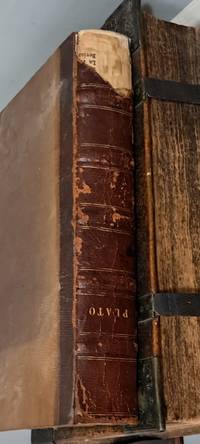
1634réf. 32Walderus' printing was the second edtion of the complete Plato in Greek. Printed in Basil 1534 it followed by two decades the Venice edition prinfed by Aldus in 1513. In those decades the Humanists Gyrnaeus and Oporinus had been at work on that text and comparing it with the oldest manuscripts. The Plato 690 pgs was part of job that also included a Commentary by Proclus 445pgs in addition to an index and supplementary materials. Plato and Proclus recieve seperate pagination but additionally and index and supplementary material amounting to about 36 pgs was printed as well. Printed on the stock of this particular copy and calculating the bulk resulting in a one volume quarto volume it seems a bit heavy and necessarily heavily lined Additionally Plato and Proclus are seperately paginated and the Supplementary unpaginated. The first printing of the complete run was bound in in three volumes. As the decades and the centuries passed Plato was often found bound seperately. This is the at least the second binding of that original printing and was done under the care of Residence Jesusits in Galway in the late 1800s judging from materials used.This binding contains no visible trace of any earlier bindings. At this time the text was attached to three stout cords and apparently also trimmed and edge sprinkle at that binding in the late 1800s.These cords are attched to a half goat or hide binding broken at the last panel and starting at corners but strong. It contains the complete 1534 Walderus Plato and the required 36 leaves unpaginated supplementary material and index. Bookworm damage! This damage occurs throughout the book little loss of text generally very light but a concentration in several square inch areas at some leaf edges. The good news is that the volume as it exists is stable and readable. The bad news is that although the pgs 98-118 are remarkably stable now only experienced people should handle this book: the wosrt locations are where damage in the outer margin results in lacy paper see image #7.Imo the lacing on those outer leaves can be stabilized in situ without much bulk with ultra light tissue- I was a restorer- but that is a task for a conservator or skilled binder Walderus hardcover
réf. 104307Lugduni apud Antonium Vincentium 1548. Folio. 20 leaves. 646 pages. 1 blank leaf. Half calf ornamented flat spine ancient binding rebacked. Nice Lyon imprint of this authoritative Latin translation of the complete works of Plato by Italian poet and philosopher Marsilio Ficino 1433-1499. Edited by German Protestant and humanist theologian Simon Grynaeus 1494-1541 this highly esteemed version see Brunet was first published in Basel in 1532. Completed some twenty years before the publication of the original Greek text of Plato it remained the reference text for the study of the work of the Athenian philosopher for a long time. Some handwritings on the title page. General browning of paper a few stains. Good copy. Graesse vol.5 320. unknown
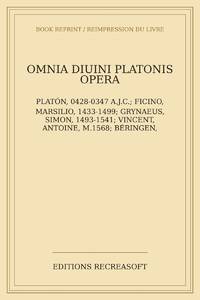
2026réf. LRB19001213Paris: Editions Recreasoft 2026 Langue : Latin. Environ 646 pages. Français : Réimpression à la demande. Édition originale : 1548. Recueil humaniste des oeuvres de Platon établi dans la tradition éditoriale de la Renaissance et accompagné des apports de Marsile Ficin et de Simon Grynaeus. Cette édition latine imprimée à Lyon témoigne de la réception de Platon au XVIe siècle et de l'importance des grands centres typographiques dans la diffusion des textes philosophiques antiques. Ouvrage d'intérêt pour l'histoire de la philosophie de l'édition savante et du platonisme renaissant. Images du livre non contractuelles English : Print-on-demand reprint. Original edition : 1548. Humanist collection of the works of Plato issued within the Renaissance editorial tradition and associated with the contributions of Marsilio Ficino and Simon Grynaeus. This Latin edition printed in Lyon reflects the reception of Plato in the sixteenth century and the role of major typographic centers in the circulation of ancient philosophical texts. An important work for the history of philosophy scholarly printing and Renaissance Platonism. Book images are non-contractual. Editions Recreasoft. Softcover. New. Editions Recreasoft paperback
réf. 26961Bâle, Johann Froben et Hieronymus Episcopius, 1551. 1 vol. in-folio, peau de truie estampée à froid sur ais de bois biseautés, dos à nerfs soulignés de filets à froid, titre écrit à la plume en tête, triple encadrement de roulettes à froid sur les plats, la première à décor de rinceaux et fleurettes, la seconde à décor continu de palmettes, la troisième comportant des représentations allégoriques des sept vertus cardinales, plaque estampée à froid au centre du plat sup. avec une représentation allégorique de la Trinité accompagnée d'un verset de l'évangile de saint Jean ("sic Deus dilexit mundum ut Filium suum unigenitum daret") et d'une plaque centrale à froid au plat inférieur représentant une crucifixion, tranches rouges, fermoir en bronze ciselé. Reliure de l'époque, manque un fermoir, usures aux coins et à la coiffe sup., tache d'humidité en tête du plat sup. et quelques rayures. Cachet humide violet de la bibliothèque du lycée de Stralsund (Allemagne). (6) ff., 952 pp., (24)ff. d'index. Signatures : alpha6 [a-z]6 [A-Z]6 [Aa-Zz]6 [AA-II]6 HH8 [LL-OO]6. Un trou de ver traverse le volume.
réf. 120504aafLugduni (Lyon). Apud Antonium Vincentium M. D. XLVIII., 1548, in-8°, 18 ff. (a6-c6) + 646 p. + 1 f. blanche, Premières feuilles avec pertes dans les marges extérieures due a l’eau et d’nsectes (peu de texte affecté), reliure en plein veau, medaillon centrale sur les deux plats, dos à 6 nerfs avec auteur et monogramme ‘S/fermé PP entrelassé’.
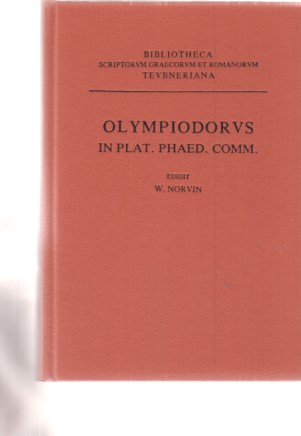
1966xii + 272pp. + 1 folding plate, in the series "Bibliotheca Scriptorum Graecorum et Romanorum Teubneriana", 20cm., publisher's hardcover in orange cloth, text and interior are clean and bright, very good condition, [Introduction in Latin, Text edition in Greek], F105671
1987réf. 1197991Georg Olms Verlag (in Lizenz), 1987. XI; 272 S.; Illustr. auf Tafelseiten.
1966250pp., in the series "Bibliotheca Scriptorum Graecorum et Romanorum Teubneriana", 20cm., publisher's hardcover in orange cloth, text and interior are clean and bright, very good condition, [Introduction in Latin, Text edition in Greek], F105672
1966réf. F105671Hildesheim, Georg Olms 1966 xii + 272pp. + 1 folding plate, in the series "Bibliotheca Scriptorum Graecorum et Romanorum Teubneriana", 20cm., publisher's hardcover in orange cloth, text and interior are clean and bright, very good condition, [Introduction in Latin, Text edition in Greek], F105671
1966réf. F105672Hildesheim, Georg Olms 1966 250pp., in the series "Bibliotheca Scriptorum Graecorum et Romanorum Teubneriana", 20cm., publisher's hardcover in orange cloth, text and interior are clean and bright, very good condition, [Introduction in Latin, Text edition in Greek], F105672
2025réf. 1-1041183712Taylor & Francis Ltd 2025. Paperback. New. 506 pages. 11.25x8.50x11.22 inches. Taylor & Francis Ltd paperback
réf. 1041183712.Gpaperback. Good. Access codes and supplements are not guaranteed with used items. May be an ex-library book. paperback
réf. GOR006435193Paperback. Very Good. paperback