SOULIE DE MORANT (George)Livre Rare Book

788 resultados
ref. 4152Paris, Henri Piazza, 1929. 1 volume in-8, broché, 213-(7) pp., couvertures souples imprimées défraîchies, illustré d'un portrait de Confucius, gravé sur bois par A. Ouvré, assez bon état.
ref. 13790Paris, Henri Piazza, 1929. 1 volume in-8, reliure indochinoise pleine peau couverture imprimée conservée, 213-(7) pp., illustré d'un portrait de Confucius, gravé sur bois par A. Ouvré, très bon état.
1994In-16 (cm. 16.90), 3 volumi, brossura illustrata, con alette, cofanetto, pp. 95, (1); 95, (1); 91, (3), con illustrazioni in bianco e nero nel testo. Minime tracce d’uso ai tagli, scritta a penna ed etichetta che riguardano esclusivamente il cofanetto; i volumi sono in ottimo stato di conservazione. In generale, in buono stato (good copy).
1997thomas cleary La saggezza di Confucio. , Mondadori 1997, piatti e dorso lievemente segnati dal tempo. tagli bruniti. interno ingiallito, in buono stato. Buono (Good) . 186 8804433795
1995ref. R240032610FRANCE LOISIRS / J-P MIGNE. 1995. In-8. Relié. Bon état, Couv. convenable, Dos satisfaisant, Intérieur frais. 455 pages.. Avec Jaquette. . . Classification Dewey : 840-Littératures des langues romanes. Littérature française
in-16, 351 pages, broché. Très bel exemplaire. [PM-LP4]
1963Payot 1963, In-8 relié pleine toile verte. 214 pages. Cachet de bibliothéque. Bon état.
1963ref. 99936409Payot Payot 1963, In-8 relié pleine toile verte. 214 pages. Cachet de bibliothéque. Bon état.
1953ref. 3311953 Presses Universitaires de France, Paris, 1953. Un volume in-8 broché, couverture verte, 230 pages. Bon état, exemplaire non coupé.
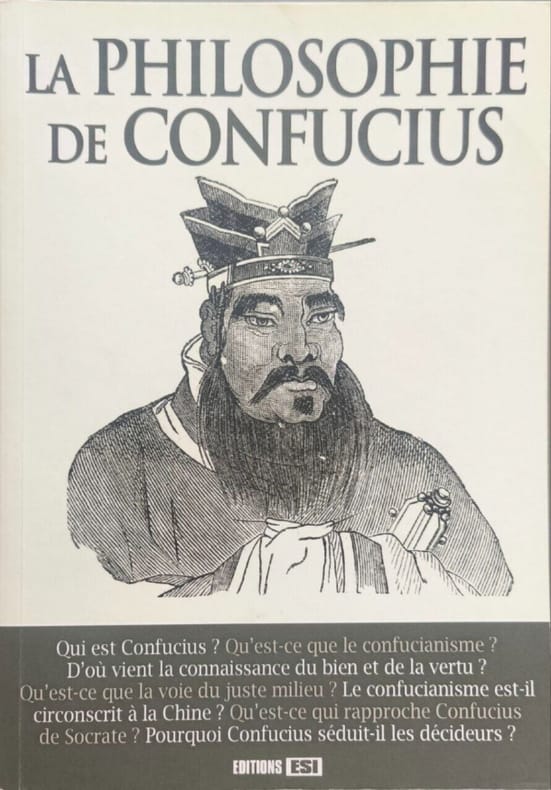
2013ref. 12585ESI 2013 157 pages 14 8x1 6x20 8cm. 2013. Broché. 157 pages. Cet ouvrage de Nicolas Treiber explore la philosophie de Confucius en répondant à des questions fondamentales sur l'identité de Confucius la nature du confucianisme et l'origine de la connaissance du bien et de la vertu
1963ref. 75361963 broché (paperback) in-octavo, dos blanc (white spine), couverture illustrée (cover illustrated), sans illustration (no illustration), 214 pages, 1963 à Paris Payot,
1934ref. 30813Paris La Renaissance Du Livre 1934 Fort In Petit In-8 Collection l'évolution de l'humanité.614 pp.
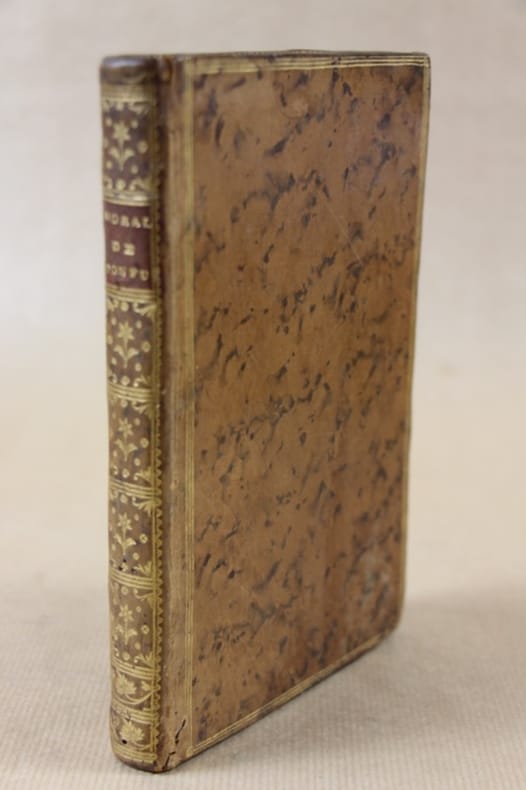
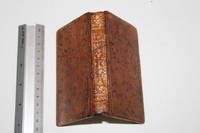
1783ref. 135173Paris, Imprimerie de Valade ; et Reims, Cazin 1783 In-8 187 × 112 mm, plein veau blond, dos lisse orné, triple filet sur les plats, filet en coupes, dentelles en contreplats, tranches dorées, 1 portrait gravé en frontispice, [4]-236 pp. Grand de marges. Petite attaque de vers aux mors en pied. Une mouillure claire angulaire sinon très bon exemplaire frais.
1783ref. 66603Londres but Paris: publisher not identified 1783. Small 12mo pp. 4 197 1; portrait frontispiece signed "D'Eleane"; contemporary marbled paper wrappers on wastepaper blank paper label on spine; wrappers rubbed and faded textblock untrimmed; worn but sound. At foot of frontispiece: "Edition de Cazin." The first edition of this translation was published in 1688 and has some uncertain attribution though James St. Andre in Translating China as Cross-Identity Performace cites the combined efforts of Jean de Labrune Louis Cousin and Pierre Savouret. Includes: "Lettre sur la morale de Confucius" signed and dated: S. F. i.e. Simon Foucher Paris 1688. All the morals of Confucius in abbreviated form. From the advertisement on p. 1: The volume "is quite small if we look at the number of pages that make it up; but it is undoubtedly very large if we consider the importance of the things contained there. We can say that the morality of this philosopher is infinitely sublime but at the same time it is simple sensitive and drawn from the purest sources of natural reason. Certainly never has reason deprived of the light of divine revelation appeared so developed nor with so much force. As there is no duty which Confucius does not speak of there is none which he disregards. He pushes his morality well but he does not push it further than necessary his judgment always letting him know how far he must go and where he must stop." Brunet II 222. [publisher not identified] unknown books
ref. 1391079817.Ghardcover. Good. Access codes and supplements are not guaranteed with used items. May be an ex-library book. hardcover
ref. 1391024834.Gpaperback. Good. Access codes and supplements are not guaranteed with used items. May be an ex-library book. paperback
ref. 47077316like new. unknown
ref. 1023985527.Ghardcover. Good. Access codes and supplements are not guaranteed with used items. May be an ex-library book. hardcover
1783ref. 013634Paris - Reims: De l'imprimerie de Valade - chez Cazin 1783 Book. Good. Hardcover. A Paris: De l'imprimerie de Valade. Et a Reims chez Cazin. xii 197 1 pages frontispiece. At the foot of the frontispiece it states - edition de Cazin. Pencil underlining mainly confined to pages 9-16 and 134-145. Some of the pages lightly browned. Ink ownership inscriptions to the second front free end paper. In old full leather binding but the front joint is split and the leather rather worn. In French throughout reprints a translation originally published in 1688. De l'imprimerie de Valade - chez Cazin hardcover
1783ref. 66603Londres but Paris: publisher not identified 1783. Small 12mo pp. 4 197 1; portrait frontispiece signed "D'Eleane"; contemporary marbled paper wrappers on wastepaper blank paper label on spine; wrappers rubbed and faded textblock untrimmed; worn but sound. At foot of frontispiece: "Edition de Cazin." The first edition of this translation was published in 1688 and has some uncertain attribution though James St. Andre in Translating China as Cross-Identity Performace cites the combined efforts of Jean de Labrune Louis Cousin and Pierre Savouret. Includes: "Lettre sur la morale de Confucius" signed and dated: S. F. i.e. Simon Foucher Paris 1688. All the morals of Confucius in abbreviated form. From the advertisement on p. 1: The volume "is quite small if we look at the number of pages that make it up; but it is undoubtedly very large if we consider the importance of the things contained there. We can say that the morality of this philosopher is infinitely sublime but at the same time it is simple sensitive and drawn from the purest sources of natural reason. Certainly never has reason deprived of the light of divine revelation appeared so developed nor with so much force. As there is no duty which Confucius does not speak of there is none which he disregards. He pushes his morality well but he does not push it further than necessary his judgment always letting him know how far he must go and where he must stop." Brunet II 222. [publisher not identified] unknown
ref. 0274407930.Gpaperback. Good. Access codes and supplements are not guaranteed with used items. May be an ex-library book. paperback
ref. 2385081067.Gpaperback. Good. Access codes and supplements are not guaranteed with used items. May be an ex-library book. paperback
ref. 2012156142.Gpaperback. Good. Access codes and supplements are not guaranteed with used items. May be an ex-library book. paperback
ref. 2019158116.Gpaperback. Good. Access codes and supplements are not guaranteed with used items. May be an ex-library book. paperback
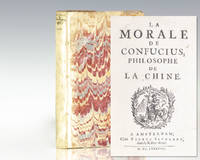
1688ref. 135381Amsterdam: Pierre Savouret 1688. Rare first edition of The Morals of Confucius preceding the English translation regarded as the first work which introduced readers to Confucianism. Small octavo bound in half vellum over marbled boards. In near fine condition. An exceptional example scarce and desirable with only three examples appearing at auction in the last 90 years. "Basically a translation of Le Morale de Confucius philosophe de la Chine" Savouret 1688 The Morals of Confucius was "translated and abridged from the Latin translation of Prospero Intorcetta Philippe Couplet and others or from an intervening French translation attributed to Louis Cousin or Jean de La Brune" ESTC T140229. Chinese philosopher Confucius’s principles had a commonality with earlier Chinese tradition with an emphasis on personal and governmental morality ancestral veneration respect for one’s elders and strong family loyalty. His teachings left a legacy of disciples and gained widespread prominence under the Han and Tang Dynasties became the official imperial philosophy of China after his death in 479 B.C.E. and remained the dominant philosophy in China until the early 20th century. Likely compiled and composed by his disciples after Confucius's death the Analects or Maxims grew to be one of the central texts of Confucianism by the end of the Han Dynasty. Pierre Savouret hardcover