ROBIDA, ABiblio.com
205 résultats
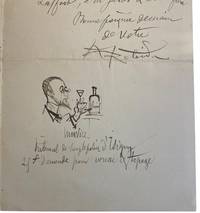
1890réf. 5291Grandcamp: S.P. C1890. First Edition / Orignal letter written and signed by Albert Robida. Dated the third of August and from Grandcamp. the letter is to a single sheet of writing paper folded and written to three of the sides. It includes an attractive small vignette of him raising a glass to toast to his friend the letters recipient. The text reads: "Grandcamp August 3. My dear friend. You are a thousand times too kind – what a supply! 10 bottles of Maruani wine 6 elixirs 2 crates of tea and 4 of paste – enough to brighten up the rainy days warm us up on cold days and cheer us up on cold days. A sad end to the season probably for the Normandy coast with the Asian visitor arriving in Le Havre. It's a good thing you left Villers which must be depopulating like Trouville with this threatening neighbour so close by. We must be noticing it everywhere for the last two weeks it's been cleaner the Municipality is cleaning! I wonder if we'll be lucky enough to finish our season without any trouble. - With the prospect of finding the Seine nymphs in their broth of microbes in Argenteuil. My friend Montetand went to Saint-Malo for a small plot of land bought at the tip of Varenne that's where there's a deal on superb land on the Rance near Dinard a large park divided into lots - too far unfortunately! I wish you a good season in Valesaire in the Mediterranean Barbizon. Give my respects to these ladies and my best wishes to Dr. Laffat Mr. Jaros and your brother. Good handshake of your A. Robida". Below the vignette is the text "My vice. Isigny Police Court: 25 francs fine for drunkenness and disorderly conduct." A lovely piece from Robida. The letter is clean and tidy with just a little creasing both from the original fold and from it being folded again. 17.5cm x 22.5cm. The Asian visitor is almost certainly a reference to the Fifth Cholera pandemic which was rife in France between 1881 and 1896. . Première édition / Lettre originale écrite et signée par Albert Robida. Datée du 3 août et provenant de Grandcamp. La lettre est sur une seule feuille de papier à lettres pliée et écrite sur trois des côtés. Elle comporte une jolie petite vignette qui le représente levant son verre pour porter un toast à son ami le destinataire de la lettre. Le texte se lit comme suit : "Grandcamp 3 août Mon cher ami. Tu es mille fois trop gentil - quel cadeau ! 10 bouteilles de vin de Maruani 6 élixirs 2 caisses de thé et 4 de pâte de quoi égayer les jours de pluie nous réchauffer les jours de froid nous remonter le moral les jours de froid. Triste fin de saison sans doute pour la côte normande avec l'arrivée au Havre du visiteur asiatique. Heureusement que vous avez laissé Villers qui doit se dépeupler comme Trouville avec ce voisin menaçant tout près. On doit le remarquer partout depuis deux semaines c'est plus propre la municipalité nettoie ! Je me demande si nous aurons la chance de finir notre saison sans encombre. - Avec la perspective de retrouver les nymphes de la Seine dans leur bouillon de microbes à Argenteuil. Mon ami Montetand est allé à Saint-Malo pour un petit terrain acheté à la pointe de la Varenne c'est là qu'il y a une affaire pour un superbe terrain sur la Rance près de Dinard un grand parc divisé en lots - trop loin malheureusement ! Je vous souhaite une bonne saison à Valesaire dans le Barbizon méditerranéen. Présentez mes respects à ces dames et mes meilleurs vœux au Dr Laffat à M. Jaros et à votre frère. Bonne poignée de main de votre A. Robida". Sous la vignette figure le texte "Mon vice. Tribunal de police d'Isigny : 25 francs d'amende pour ivresse et trouble de l'ordre public". Une belle pièce de Robida. La lettre est propre et bien rangée avec juste un peu de plis provenant à la fois de la pliure originale et d'une nouvelle pliure. 175 cm x 225 cm. Le visiteur asiatique est presque certainement une référence à la cinquième pandémie de choléra qui a sévi en France entre 1881 et 1896. S.P. unknown
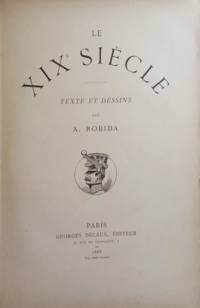
réf. 2401SB012Texte et dessins par A. Robida. Georges Decaux Éditeur. Paris. 1888. De 30x21 cm. Com vi iii 404 iii págs. Encadernação do editor inteira de tela com desenhos e gravações a ouro nas pastas e lombada. Cortes das folhas dourados. Profusamente ilustrado em face da folha de rosto com uma bela gravura protegida por folha de papel vegetal no texto com vinhetas a preto e branco desenhadas pelo autor e em extratexto com gravuras e desenhos alguns a cores sobre folhas de papel mais encorpado. Exemplar com danos na lombada encontrando-se a pasta anterior descolada do miolo. O autor dá uma imagem do século XIX em França com recurso a narração das biografias e das memórias de várias personagens típicas que representam o século XIX recorrendo à sátira e caricatura. Albert Robida Compiègne 1848 Neuilly-Sur-Seine 1926 foi um ilustrador gravador litógrafo caricaturista e romancista francês. Ilustrou guias turísticos obras de história popular e clássicos da literatura. Durante a década de 1880 escreveu uma aclamada trilogia de romances futuristas Le Vingtième Siècle 1883; La Guerre au vingtième siècle 1887; Le Vingtième siècle: La vie électrique 1890 que suscitam parecenças com Júlio Verne e onde propõe invenções integradas na vida quotidiana e imagina os desenvolvimentos sociais que delas decorrem muitas vezes com precisão: promoção social das mulheres turismo de massas poluição etc. A sua obra La Guerre au vingtième siècle descreve a guerra moderna com mísseis robotizados e gás venenoso. O seu Téléphonoscope era um ecrã plano de televisão que transmitia as últimas notícias 24 horas por dia as últimas peças de teatro cursos e teleconferências. Também se destacou pela edição em conjunto com Georges Decaux da revista La Caricature durante 12 anos. M-4-B-45 hardcover
1883réf. 21555Paris: Georges Decaux 1883. Georges Decaux unknown
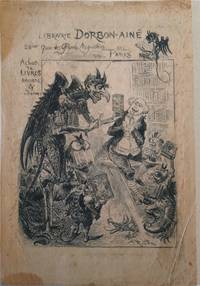
1910réf. 145284librairie Dorbon-ainé 1910. Loose leaf. Vieux papier en français. - Une feuille 13 x19 cm. Gravure sur fort papier japon. Papier un peu bruni une tache en marge inférieure. ref. 145284 librairie Dorbon-ainé unknown
réf. B172807-1Paris E. Baudelot n.d. 8 parts each with 1 original lithograph with remarques 6 on Normandy vellum 2 on heavy board and a folded leaf with 4-pp. text. Contents loose as issued. Folio. Publishers original colored wrappers. New fitted cloth clamshell case. Contents as follows: 1: Reims. 2: Louvain. 3: Senlis. 4: Malines. 5: Arras. 6: Termonde. 7: Soissons. 8: Ypres. Paris (E. Baudelot), n.d. hardcover
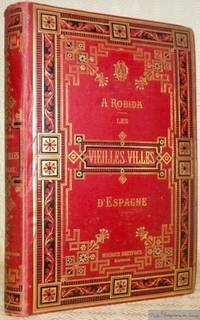
1880réf. 66488Paris : Maurice Dreyfous éditeur 1880. ROBIDA A.Les vieilles villes d’Espagne. Notes et souvenirs. Ouvrage illustré de 125 dessins à la plume par A. Robida reproduits en fac-simile. Paris Maurice Dreyfous éditeur 1880 260x180mm 324 pages reliure cartonnage orné de l’éditeur Rousseurs marginales. Plat supérieur et dos richement illustrés d’ornementations à froid et dorées. Tranches dorées. Bel exemplaire. Belle reliure. No hidden customs fees for orders shipped to the U.S.A with a value of up to 800 USD PDDP shipping we pay the VAT in advance Maurice Dreyfous, éditeur unknown
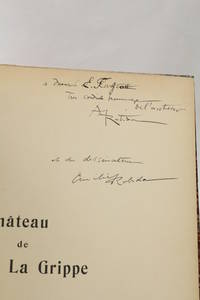
1904réf. 67797Paris: Librairie Henri Floury 1904. Fine. Librairie Henri Floury Paris 1904 25 x 32.50 cm relié First edition of the text of Albert Robida illustrated by his daughter Emilie one of 275 numbered copies on vellum only large paper after 25 on Imperial paper of Japan. Signed autographs of Albert and Emilie Robida to E. Fargeau. Albert Robida repeated the name of the addressee a certain L. Eopold Carteret. Librairie Henri Floury hardcover
réf. 252370Paris: Librairie Illustree. hardcover. near fine. Hundreds of illustrations. 336pp. small thick folio red cloth black leather spine label. Paris: La Librairie Illustree n.d. A near fine copy. Librairie Illustree unknown
réf. 252371Paris: Librairie Illustree. hardcover. near fine. Hundreds of illustrations. 332pp. small thick folio red cloth black leather spine label. Paris: La Librairie Illustree n.d. A near fine copy. Librairie Illustree unknown
réf. 252369Paris: Librairie Illustree. hardcover. near fine. Hundreds of black & white illustrations. 331pp. small folioi red cloth black leather spine label. Paris: La Librairie Illustree n.d. A near fine copy. Librairie Illustree unknown
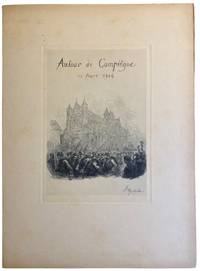
1914réf. RobidaXX1914. Print. New. Albert Robida. Etching by Albert Robida on Paper. SIGNED NUMBERED PRINT. Size: 6" x 9" 160mm x 240mm. This is a beautiful etching signed and numbered by the artist #59/120 and signed lower left. The image depicts the 254th Territorial Regiment marching through Compeigne in August 1914. Signed by the artist Albert Robida 1848 - 1926. unknown
1909réf. 54918Paris: Boivin & Cie 1909. Fine. Boivin & Cie Paris 1909 30 x 37 cm reliure de l'éditeur First edition and first issue of the full-page color illustrations by Albert Robida. Publisher's full grey percaline binding smooth spine front cover illustrated with a polychrome composition by Albert Robida blue-grey paper endpapers and pastedowns all edges gilt. Headcaps lightly rubbed as often handsome copy. Boivin & Cie unknown
1908réf. 67791Paris: Librairie Dorbon Aîné 1908. Fine. Librairie Dorbon Aîné Paris s. d. 1908 17.50 x 27.50 cm en feuillets sous chemise First edition printed in 126 copies ours one of 100 on Holland Van Gelder paper illustrated with 155 original compositions including 25 plates. Our copy is complete with its original etching its Japan paper suite of the 25 plates the original cover as well as the etching with remarque. Our copy is presented in its publisher's decorated chemise in full grey cloth. Ties missing. Librairie Dorbon Aîné hardcover
1870réf. 37149Paris: Aux bureaux de l'Eclipse et de la Lanterne de Boquillon et Aux bureaux du Journal amusant 1870. Fine. Aux bureaux de l'Eclipse et de la Lanterne de Boquillon et Aux bureaux du Journal amusant Paris s. d. Circa 1870 21.50 x 31 cm relié First edition. Contemporary half blonde sheep binding smooth rubbed spine decorated with triple gilt fillets joints cracked on one side at head and foot. Some tears and foxing. 54 discontinuous numbers for Monde comique lacking nos. 95 to 98 101 102 to 113 117 119 to 152 154 to 156 158 to 166 168 to 172 174 175 177 to 182 184 187 to 195 197 to 202 205 206 208 212 214 216 224 to 229 231 240 248 251 to 254 256 to 269 and 272 to 275 and 41 discontinuous numbers for Petit journal pour rire nos. 116 to 176 178 to 233 236 to 265 267 270 to 283 285 to 321 322 to 364 366 to 372 375 379 384 388 to 395 397 to 402 404 405 407 409 411 417 420 to 425 427 430 to 432 434 436 437 and 439 lacking. Each number consists of eight pages and features a front page heightened in colors by Robida for Monde comique and by Grévin in Petit journal pour rire. Artistic contributions by Lefman principally for Monde comique and by Bertall Daumier and Gillot among others for Petit journal pour rire. Alongside Journal amusant appeared from 1856 to 1904 Le Petit journal pour rire a ""popular"" version of smaller format and eight pages also less expensive most of whose illustrations were reprinted from Journal amusant. Its first editor-in-chief was Nadar. It had as director Eugène Philipon then Th. le Cerf. Starting from number 9 the front cover presented an original composition which was colored starting from number 50. From 1859 to 1889 Grévin was its author then starting in 1889 B. Gautier took over. Le Petit Journal pour rire also suffered interruptions during the 1870 war and the Commune. Amusing gathering of these two competing periodicals. Aux bureaux de l'Eclipse et de la Lanterne de Boquillon et Aux bureaux du Journal amusant unknown
réf. 16-4066Paris: Charles Meunier 1914. Large 4to. 36 x 29 cm. Original cloth and paper chemise with rubbing on the spine and cover. One of 40 numbered copies of the large paper edition. In-4 en feuilles chemise à rabats de l'éditeur. Conte imagé gravé et enluminé par Albert Robida orné de 14 eaux-fortes dont un frontispice en couleurs une vignette de titre 12 illustrations in-texte et 8 encadrements répétés. Rare tirage à part de 40 exemplaires réimposés grand in-4 celui-ci le n°38 un des 24 exemplaires sur Hollande teinté contenant une suite sur chine de toutes les gravures sauf le frontispice. Carteret Illustrés IV p. 52. Expertise by Librairie Giraud-Badin Paris. Paris: Charles Meunier, 1914. hardcover
1888réf. 13374Paris: Decaux 1888. In-4 p. mm. 295 x 200 mz. pelle coeva con angoli dorso a cordoni con decoraz. e titolo oro taglio superiore dorato conservata la bella brossura originale a colori pp. 4III4044 molto ben illustrato dalle pregevoli composizioni di Robida: sono 317 nel testo e 48 tavole fuori testo di cui numerose a colori. "Prima edizione". Cfr. Brun1074 - CarteretIV343: "Edition recherchée" - BenezitIX15: "Albert Robida 1848-1926 dessinateur de talent était aussi un érudit". Esemplare ben conservato. Decaux, unknown
1915réf. 5304France: S.P. 1915. First edition. Hardback slipcase with engraved plates. Limited edition of only 125 this is copy #113. Each plate is signed the titles are hand written in pencil by Robida at the foot of the card: "Les Evacués italiens" "Départ des territoriaux" "Le dernier jour du Pont de Compiègne" "les Fugitifs" "Le Prisonnier" "Convoi belge échappé de Namur" "Le Premier Taube!" The cream slipcase has a pasted on title sheet with a view of soldier on a quayside looking at a destroyed bridge. A little darkening and marking to the boards and the spine of the folder is quite damaged. This has been reinforced from the inside with archival tape. Original closure ties are present. Inside the work is in a stiff card folder slightly darkened with a title showing soldiers marching past a cathedral. This is signed by Robida in pencil. The first gather is the text sheets 4 pages three of which are printed with the image from the front board replicated. This is darkened to the edges but clean. The seven plates are in lovely condition each with a tissue guard. A scarce piece of world war one illustration. Compiègne in the Oise department was Robida's home town. He could not have known when he created this work that Compiègne would play a deeply symbolic and strategic role as the site of the armistice that ended the conflict. The famous signing of the armistice was in the Forest of Compiègne. The town was close to the Western Front and saw many troop movements and bombardments. Albert Robida 1848–1926 was a French illustrator caricaturist lithographer and novelist celebrated both as an artist and as a visionary social commentator of the Belle Époque period. In 1880 Robida co-founded and edited La Caricature. Première édition. Boîtier cartonné avec des planches gravées. Édition limitée à 125 exemplaires seulement il s'agit de l'exemplaire n° 113. Chaque planche est signée les titres sont écrits à la main au crayon par Robida au pied de la carte : "Les Evacués italiens" "Départ des territoriaux" "Le dernier jour du Pont de Compiègne" "les Fugitifs" "Le Prisonnier" "Convoi belge échappé de Namur" "Le Premier Taube !". L'étui crème comporte un feuillet de titre collé avec une vue d'un soldat sur un quai regardant un pont détruit. Les planches sont légèrement assombries et marquées et le dos de la pochette est assez endommagé. Il a été renforcé à l'intérieur avec du ruban adhésif d'archivage. Les attaches d'origine sont présentes. À l'intérieur l'œuvre se trouve dans une chemise en carton rigide légèrement assombrie avec un titre montrant des soldats défilant devant une cathédrale. Elle est signée au crayon par Robida. Le premier rassemblement est constitué des feuilles de texte 4 pages dont trois sont imprimées avec l'image de la première planche reproduite. Les bords sont assombris mais l'ouvrage est propre. Les sept planches sont en très bon état chacune d'entre elles étant accompagnée d'un papier de garde. Une pièce rare d'illustration de la première guerre mondiale. Compiègne dans l'Oise était la ville natale de Robida. Il ne pouvait pas savoir lorsqu'il créa cette œuvre que Compiègne jouerait un rôle profondément symbolique et stratégique en tant que lieu de l'armistice qui mit fin au conflit. La célèbre signature de l'armistice a eu lieu dans la forêt de Compiègne. La ville était proche du front occidental et a été le théâtre de nombreux mouvements de troupes et de bombardements. Albert Robida 1848-1926 est un illustrateur caricaturiste lithographe et romancier français célèbre à la fois comme artiste et comme commentateur social visionnaire de la Belle Époque. En 1880 Robida a cofondé et publié La Caricature. S.P. hardcover
1895réf. 002280Paris: Libraire Illustree 1895. First . Hardcover. Very Good/No Jacket. Folio. A.Robida. 8 412 with 25 plates eau-forte couleur 8. lithographie with tissue guards and c. 248 illustrations in-text. Original illustrated paper covers front back and spine mounted on sheets at the back. Full vellum gilt titles to spine and dentelles teg marbled eps. A little spotting of prelims and fore edge spine bleached boards dust stained bookplates of Edward Penton and Charles M. Hutt on fpd. Folio Libraire Illustree hardcover
1909réf. 6544Paris: Ancienne Librairie Furne/Boivin & Cie Editeurs 1909. First Edition Thus. Hardcover. Near Fine. No DJ as Issued. First Edition Thus. Hardcover. Part of the series "Collection d'Albums Historiques". Text in French. 38 full page plates including double page. A very handsome copy. Light shelf/edge wear touch of gilt toning at spine else tight bright and unmarred. Teal cloth boards gilt and black ink lettering gilt and full color pictorial elements blue paper endpages chromolitho textblock on tabs aeg. Small fo. 80pp. Illus. color plates. Index of Plates. Ancienne Librairie Furne/Boivin & Cie, Editeurs hardcover
1904réf. 67831Paris: Henry Floury 1904. Fine. Henry Floury Paris 1904 25 x 32.50 cm broché First edition one of 25 numbered copies on Japan paper deluxe copy and first printing of Albert Robida's illustrations. Fine copy. Work illustrated with large compositions forming frames around each page by Albert Robida. Henry Floury unknown
1895réf. 67796Paris: Librairie illustrée 1895. Fine. Librairie illustrée Paris 1895 24 x 32.50 cm relié First edition one of 50 numbered copies on Japan paper deluxe copy and first printing of Albert Robida's illustrations. Contemporary binding in red half cloth with corners smooth spine decorated with a central gilt fleuron double gilt fillet and gilt date at foot long black morocco title label illustrated pink covers preserved binding signed Carayon. A very fine copy. Librairie illustrée hardcover
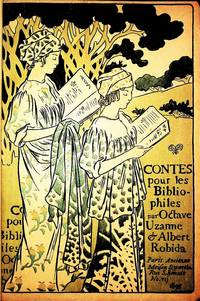
1895réf. 1298Paris: Ancienne Maison Quantin Librairies-Imprimeries Reunis 1895. First printing. LIMITED FRENCH EDITION SUMPTUOUS COLLECTION OF STORIES ILLUSTRATED WITH ORIGINAL ETCHINGS LITHOGRAPHS AND PHOTOGRAVURES INCLUDES "THE END OF BOOKS"--PREDICTING TODAY'S eBOOKS AND AUDIOBOOKS. 12 inches tall hardcover 3/4 green pebbled leather binding gilt rules marbled paper covered boards decorative gilt title to spine marbled endpapers 2x2.5 inch photographic bookplate to front free endpaper "Ex. Lib. E. C. 1895" original art deco color lithographed paper covers by Auriol bound in title page with hand colored vignette by Robida and facing limitation notice volume 467 of 1000 printed on Japanese vellum iv 230 pp colophon printed on presses of the former Quantin Paris November 27 1894. 17 plates comprising 2 original etchings by Robida and 15 photogravures or lithographs including 4 handcolored 170 figures in text. Wear to cover edges and corners binding tight light browning to pages text and plates unmarked bright and clean with tissue guards intact. Very good in custom archival mylar cover. CONTENTS: Un Almanach des Muses de 1789; L'Heritage Sigismond; Le Bibliothecaire van der Boecken de Rotterdam; Un Roman de chevalerie franco-japonais; Les Romantiques inconnus; Le Carnet de notes de Napoleon 1er; La Fin des Livres; Poudriere et bibliotheque; L'Enfer du chevalier de Kerhany; Les Estrennes du poete Scarron; Histoires de Momies recits authentiques. OCTAVE UZANNE 181-1931 was a 19th-century French bibliophile writer publisher and journalist. He founded the Société des Bibliophiles Contemporaines of which he was president. In the early 1890s Uzanne was considered to be ". the best authority that book lovers know on subjects specially interesting to book lovers". In contrast to most bibliophiles of his time Uzanne was chiefly interested in the creation of new luxurious bibliophile works collaborating closely with printers binders typographers and artists especially the Symbolists and early Art Nouveau artists. Among them were such painters as James McNeill Whistler Adolphe Lalauze and Jules Barbey d'Aurevilly. Uzanne's bibliophile activity in the early 1880s coincided with the gradual abandonment of manual methods of printing illustrations kin favour of photomechanized methods. As a journalist sometimes employing the pseudonym "la Cagoule" Uzanne wrote for L'Écho de Paris Le Gaulois and other newspapers. In addition for other French and foreign magazines like The Studio Magazine of Art and Scribner's Magazine for which he wrote in 1894 an article "The End of Books" which he thought would come because of the rise of phonography where he predicted the rise of radio and television. The original illustrated La fin des Livres is included in Contes des Bibliophiles offered here. Uzanne was fascinated by modern technology and the possibilities it offered for the reproduction and dissemination of words sounds and images which was evidenced not only in that article or in his groundbreaking work in book publishing but also in an article he wrote in 1893 for the French newspaper Le Figaro about a visit he made to US President Grover Cleveland and the inventor Thomas Edison during the EXPO Chicago 1893 where he witnessed the Kinetograph shortly before it went public. Contes Pour les Bibliophiles offered here was translated into English as Tales for bibliophiles Chicago The Caxton Club 1929. ALBERT ROBIDA 1848-1926 was a French illustrator etcher lithographer caricaturist and novelist. He edited and published La Caricature magazine for 12 years. Through the 1880s he wrote an acclaimed trilogy of futuristic novels. These works drew comparison with Jules Verne. Unlike Verne he proposed inventions integrated into everyday life not creations of mad scientists and he imagined the social developments that arose from them often with accuracy: social advancement of women mass tourism pollution etc. His La Guerre au vingtième siècle describes modern warfare with robotic missiles and poison gas. His Téléphonoscope was a flat screen television display that delivered the latest news 24-hours a day the latest plays courses and teleconferences. GEORGE AURIOL 1863-1938 was a French poet songwriter graphic designer type designer and Art Nouveau artist. He worked in many media and created illustrations for the covers of magazines books and sheet music. Ancienne Maison Quantin, Librairies-Imprimeries Reunis hardcover
1910réf. 66916Paris: Angelo Mariani 1910. Fine. Angelo Mariani Paris 1910 23.50 x 33.50 cm relié Edition decorated with original color illustrations and borders including 10 full-page by Albert Robida and printed in 100 numbered copies on handmade vellum ours one of 50 nominative copies that of Charles Meunier. Bradel binding in full paper smooth spine red morocco title label handmade paper endpapers and pastedowns original wrappers preserved binding signed P. Goy & C. Vilaine. Rare and handsome copy. Angelo Mariani hardcover
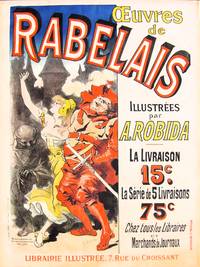
1885réf. Affiche Cheret Robida RabSuperb advertising "indoor poster" lithographed in colors for bookstores. It announces the publication of the Rabelais' Works with illustrations by Albert Robida at La Librairie Illustrée in 1885-1886. The two volumes will have 49 full page illustrations and numerous in-text drawings in the first printing. Here we recognize the lively and colorful style of Robida associated with the know-how of the printer Chéret both major artists of Art Nouveau and Paris " fin de siècle ". 2 Traces of former central folds bottom and edges slightly yellowed otherwise this poster with very bright colors and contrasting composition is in very good condition. Imprimerie Chaix (succursale Chéret)
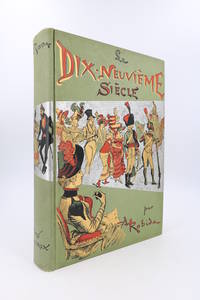
1888réf. 91170Paris: Georges Decaux 1888. Fine. Georges Decaux Paris 1888 21 x 31 cm Reliure de l'éditeur First edition illustrated with in-text and full-page black-and-white and colour drawings by Albert Robida. Publishers original illustrated cloth binding in full green percaline signed Engel smooth spine featuring a large polychrome illustration heightened with gold and palladium by Souze extending across the spine and boards; the original front cover in colour preserved; all edges gilt. ""Ceci qui va suivre sous un titre ambitieux pris simplement comme une étiquette en chiffres n'est bien entendu pas une histoire ni un tableau ni un résumé c'est une série d'esquisses de croquis à la plume et à la mine de plomb de portraits familiers de notre Siècle à différentes époques de sa vie tourmentée. . ce Siècle s'il nous a fait connaître des jours noirs a eu de bons moments et des rayons de gai soleil. Ce livre est une revue à grandes lignes des périodes sombres ou joyeuses de la pièce à grand spectacle qui s'est jouée sous nos yeux des évènements importants et des menus faits des hommes et des choses des types naissant prospérant et disparaissant des modes et des caractères un voyage en somme ou plutôt une croisière de cent années sur le fleuve éternel de la vie."" préfaceSome light foxing to the endpapers otherwise a very fine copy. Copies in the publishers original illustrated bindings are scarce and sought after. Georges Decaux hardcover