Anonymous [H]Biblio.com

268.959 resultados
ref. 005171Cloth. Very Good. Imaginative whimsical verse and illustrations of an upper crust rabbit Pollux and his frivolous cares and activities. N.d. early 20th century and World War One era. Oblong 4to 24.5 by 30 cm. 21 pp. and leaves of original pen and ink and watercolored drawings. Each page has a mounted illustration with inked verse next to it poking fun at Pollux's dress his vanity his helplessness his manners etc. Other characters include Jenkins card players a pining woman all of whom are rabbits. While we do not know the identity of the cartoonist the level of work is plausibly professional with details rendered meticulously. The various verses and illustrations are somewhat loosely linked -- there isn't so much a continuous narrative as much as an overarching archness. The artist and versifier is shooting arrows at the idle nobility. Also included are 10 additional cartoons on separate sheets only one of which involves Pollux and only two with colored watercolors. These additional cartoons including the one with Pollux relate to the First World War. From these and the album proper we can infer that the artist was of a more left leaning sensibility. unknown
ref. 005171Cloth. Very Good. Imaginative whimsical verse and illustrations of an upper crust rabbit Pollux and his frivolous cares and activities. N.d. early 20th century and World War One era. Oblong 4to 24.5 by 30 cm. 21 pp. and leaves of original pen and ink and watercolored drawings. Each page has a mounted illustration with inked verse next to it poking fun at Pollux's dress his vanity his helplessness his manners etc. Other characters include Jenkins card players a pining woman all of whom are rabbits. While we do not know the identity of the cartoonist the level of work is plausibly professional with details rendered meticulously. The various verses and illustrations are somewhat loosely linked -- there isn't so much a continuous narrative as much as an overarching archness. The artist and versifier is shooting arrows at the idle nobility. Also included are 10 additional cartoons on separate sheets only one of which involves Pollux and only two with colored watercolors. These additional cartoons including the one with Pollux relate to the First World War. From these and the album proper we can infer that the artist was of a more left leaning sensibility. unknown books
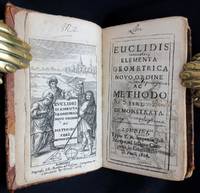
1666ref. 12956London: Typis T.R. impensis Joh. Martyn. Good with no dust jacket. 1666. First Edition Thus. Leather. viii 136 pp. 12 folding plates. A-F12. A small 12mo measuring 3" x 5" entirely in old calf with new-ish spine. Frontis plate showing 3 ancient scholars along with a modern fellow demonstrating geometrical shapes. This is an odd and scarce little first edition a new method of demonstrating Euclid's elements with an anonymous editor some have identified as Nicolaus Mercator. OCLC 1050145768 identifies Mercator as the editor ESTC R23875 does not. Mercator the German mathematician c1620-1687 did indeed write an extensive introduction to publisher John Martyn's 1678 second edition of this work. According to Malet it is "a simplified reorganized presentation of most of his results the reorganization also involves the axioms and common notions mostly aimed at practically teaching how to solve problems." It covers Books 1-6 and 11-12. A pre-publication 1665 review of the book said "In this compendious and pretty Edition the Anonymous Author pretends to have rendred these Elements more expeditious; by bringing all together into one place what belongs to one and the same subject." English mathematician John Collins wrote ".I met with a Cambridge Scholar who suggested that the small anonymous Jesuit's Euclid printed by Mr. Martyn was now in good request among tutors and their scholars there that they wanted the like for arithmetic and algebra." Beeley BJHS 2019. We haven't been able to determine exactly why this work was known as the "Jesuit's Euclid" except that the Jesuits who taught Euclidean geometry as standard part of the curriculum may have appreciated this condensed no-nonsense version and adopted it for their classrooms. While it may have been popular in the mid-1600s it is now quite scarce with no copies currently for sale and no auction records for this first edition only 3 for the 1678 second edition and those over 50 years ago. ESTC records only 25 copies of the first edition in libraries 14 in the UK and 11 in the US. Condition is good. Original leather boards have some age but are clean and intact new spine done a while ago. Original endpapers appear to have been laid down older cloth strengthening at the gutters. The frontis has a small ink splotch on it's back the title has a ghost impression of the frontis along with at least 2 owner inscriptions one indicating that the book was in the possession of a Benedictin order at some point. The bottom of B12 has a short lack. The folding tables at the rear are out of order and table 1 is labeled table 2 but there are 12 different tables. #10 is separating at the fold. Some small normal toning throughout and signs of use but an intact copy in nice condition of this quite scarce little work. ; Engravings; 12mo 7" - 7½" tall; 136 pages . Typis T.R. impensis Joh. Martyn hardcover
1790ref. 4138London: Published by Robert Sayer 1790. Hand-coloured mezzotint. State vi/viii. A remarkable portrait of Lord Grosvenor's Pangloss by the master equine painter George Stubbs. George Stubbs is considered to be one of the greatest English painters. His ingenious animal and sporting pictures remain unrivalled in their passionate depiction of emotion and their commitment to naturalistic observation. Stubbs was briefly apprenticed to the painter Hamlet Winstanley a relationship that quickly ended leaving the young artist to his own education. In contrast to contemporary academic theory Stubbs attached great importance to the belief that art should imitate nature not the work of other artists. He spent years carefully studying human and equine anatomy so that he could truthfully represent natural form and movement. A result of this study was his famous Anatomy of the Horse which details with beautiful engraving the various elements of a horse's anatomy from skeletal form to muscular definition. By the 1760's Stubbs had developed a considerable reputation as a sporting artist and had attracted a number of distinguished patrons. Continuing in search of innovation Stubbs began experimenting with a myriad of different mediums becoming accomplished in both enamels and printmaking. Through arduous application he became a talented mezzotint engraver and worked with ease in both soft ground and etching techniques. Stubbs' masterful paintings inspired some of the greatest engravers of the day to reproduce his work for publication including his own son George Townly Stubbs who reproduced with faithful accuracy the sublime emotion inherent in his father's exquisite works. Stubbs was elected Director of the Society of Artists and a Royal Academician and today his prized paintings are housed in some of the finest museums in the world. Stubbs was often commissioned to paint accurate portraits of specific racehorses for proud aristocratic patrons who wished to highlight their horses' racing success. This practice is expertly exemplified with this magnificent print of Pangloss Lord Grosvenor's beloved horse. Pangloss was foaled in 1755 and named after a character in Voltaire's Candide; little is known about Lord Grosvenor's horse apart from the fact that his racing career was ended by a broken leg. This print was the second of a series of engraved horse portraits begun by the publisher Ryland in 1771 and extended by Robert Sayer in 1777. Although the inscription on the print establishes Stubbs as the painter the painting has not been identified making this print extremely intriguing since it is the only record of Stubbs' lost work. Lennox-Boyd George Stubbs 20 vi/viii; Gilbey Life of George Stubbs no.39; Siltzer The Story of British Sporting Prints p.270. Published by Robert Sayer unknown
1790ref. 4138London: Published by Robert Sayer 1790. Hand-coloured mezzotint. State vi/viii. A remarkable portrait of Lord Grosvenor's Pangloss by the master equine painter George Stubbs. George Stubbs is considered to be one of the greatest English painters. His ingenious animal and sporting pictures remain unrivalled in their passionate depiction of emotion and their commitment to naturalistic observation. Stubbs was briefly apprenticed to the painter Hamlet Winstanley a relationship that quickly ended leaving the young artist to his own education. In contrast to contemporary academic theory Stubbs attached great importance to the belief that art should imitate nature not the work of other artists. He spent years carefully studying human and equine anatomy so that he could truthfully represent natural form and movement. A result of this study was his famous Anatomy of the Horse which details with beautiful engraving the various elements of a horse's anatomy from skeletal form to muscular definition. By the 1760's Stubbs had developed a considerable reputation as a sporting artist and had attracted a number of distinguished patrons. Continuing in search of innovation Stubbs began experimenting with a myriad of different mediums becoming accomplished in both enamels and printmaking. Through arduous application he became a talented mezzotint engraver and worked with ease in both soft ground and etching techniques. Stubbs' masterful paintings inspired some of the greatest engravers of the day to reproduce his work for publication including his own son George Townly Stubbs who reproduced with faithful accuracy the sublime emotion inherent in his father's exquisite works. Stubbs was elected Director of the Society of Artists and a Royal Academician and today his prized paintings are housed in some of the finest museums in the world. Stubbs was often commissioned to paint accurate portraits of specific racehorses for proud aristocratic patrons who wished to highlight their horses' racing success. This practice is expertly exemplified with this magnificent print of Pangloss Lord Grosvenor's beloved horse. Pangloss was foaled in 1755 and named after a character in Voltaire's Candide; little is known about Lord Grosvenor's horse apart from the fact that his racing career was ended by a broken leg. This print was the second of a series of engraved horse portraits begun by the publisher Ryland in 1771 and extended by Robert Sayer in 1777. Although the inscription on the print establishes Stubbs as the painter the painting has not been identified making this print extremely intriguing since it is the only record of Stubbs' lost work. Lennox-Boyd George Stubbs 20 vi/viii; Gilbey Life of George Stubbs no.39; Siltzer The Story of British Sporting Prints p.270. Published by Robert Sayer unknown books
1752ref. 571785 vol. in-4 reliure de l'époque plein veau blond, dos à 5 nerfs dorés orné, triple file doré d'encadrement en plats, double filet doré en coupes, chasses ornées, toutes tranches dorées, Chez Desaint & Saillant, [ Chez Duchesne ; Chez N. M. Tilliard ], Paris, 1752-1762, I : Chez Desaint & Saillant, 1752 : 4 ff., XXI-348 pp. et 1 f. n. ch. avec frontispice et 107 planches hors texte ; II : Chez Duchesne, 1756 : 1 f., VIII-429 pp. et 2 ff. n. ch avec frontispice et 128 planches (planches 58 bis et ter) ; III : Chez Desaint & Saillant, 1759 : XXXVI pp. (y compris le frontispice), 448 pp. avec frontispice et 121 planches hors texte ; IV : Chez N. M. Tilliard : 1761 : XX pp. (y compris le frontispice), 418 pp. et 1 f. n. ch. avec frontispice et 125 planches hors texte ; V : Chez N. M. Tilliard, 1762 : XXVI pp. (y compris le frontispice), 1 f. n. ch., 348 pp. avec frontispice et 120 planches hors texte
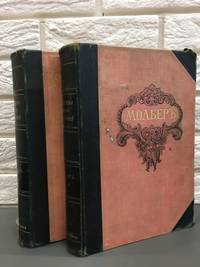
1912ref. KNY100311141912. Hardcover. no. 1912. leather binding. Language: Russian. Condition: not graded please see the photos. The photos show the actual copy offered. Ships from Ukraine by Nova Post as a tracked international parcel including customs clearance. Where applicable VAT or sales tax is calculated and collected by Biblio at checkout EU orders up to EUR 150 UK Canada Australia New Zealand many US states; for EU orders over EUR 150 import VAT and a carrier fee may be charged on delivery. Antiquarian book 1912. Export from Ukraine requires a cultural-goods export certificate; we obtain it before shipping so delivery takes several weeks. Please ask before ordering if you need a firm delivery date. Covered by the BIBLIO 30-day return guarantee. If the book does not match the description or is damaged in transit please contact us right after receipt. hardcover
ref. KNY100977922008. no. 2008. 1220 pp. Language: Ukrainian. Condition: not graded please see the photos. Print run: 300 copies. The photos show the actual copy offered. Set of 300 volumes shipping weight about 210 kg; shipping is included in the price no extra postage will be requested. Ships from Ukraine by Nova Post as a tracked international parcel; estimated delivery 12-28 business days including customs clearance. Where applicable VAT or sales tax is calculated and collected by Biblio at checkout EU orders up to EUR 150 UK Canada Australia New Zealand many US states; for EU orders over EUR 150 import VAT and a carrier fee may be charged on delivery. Covered by the BIBLIO 30-day return guarantee. If the book does not match the description or is damaged in transit please contact us right after receipt. unknown
1984ref. mon0000550474Victoria Park Publications 1984-01-01. Paperback. Acceptable. in x in x in. Ex-library book usual marking. Clean copy in good condition. Some marking due to age on pages but overall book remains in good condition considering age. Victoria Park Publications paperback
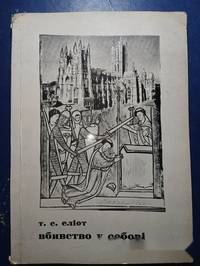
1963ref. KNY10103204Munich 1963. Softcover. Fair. no. Munich 1963. Softcover paperback. Language: Russian. Condition: fair. Defects: signs of age spots tears repairs with tape/glue. Black-and-white illustrations. The photos show the actual copy offered. Set of 300 volumes shipping weight about 210 kg; shipping is included in the price no extra postage will be requested. Ships from Ukraine by Nova Post as a tracked international parcel; estimated delivery 12-28 business days including customs clearance. Where applicable VAT or sales tax is calculated and collected by Biblio at checkout EU orders up to EUR 150 UK Canada Australia New Zealand many US states; for EU orders over EUR 150 import VAT and a carrier fee may be charged on delivery. Covered by the BIBLIO 30-day return guarantee. If the book does not match the description or is damaged in transit please contact us right after receipt. paperback
ref. KNY10031047no. Language: Russian. Condition: not graded please see the photos. The photos show the actual copy offered. Ships from Ukraine by Nova Post as a tracked international parcel; estimated delivery 12-28 business days including customs clearance. Where applicable VAT or sales tax is calculated and collected by Biblio at checkout EU orders up to EUR 150 UK Canada Australia New Zealand many US states; for EU orders over EUR 150 import VAT and a carrier fee may be charged on delivery. Covered by the BIBLIO 30-day return guarantee. If the book does not match the description or is damaged in transit please contact us right after receipt. unknown
1900ref. 000467Publisher: Società Sicula Tramvia-Omnibus Palermo 1900. Printer: Litografia Wild & C. Milano. Technique: Lithography. Size: 100 × 70 cm. Ref.: beniculturali 0500656978 Condition: An original poster in good condition. The printed sheet is untrimmed both the registration marks and the margins of the lithography stone are preserved. There is one small tear near the lower right corner approx. 3cm on the margin outside of the main poster area. This has been stabilised with light acid free archival tape on the reverse side. Additionally one fold each at upper left and lower left. However the design area is complete without paper loss and the colours are still deep and vibrant. Not mounted. Notes: The poster was printed in 1900 for the opening of the railway connection between Palermo and the popular excursion destination Monreale at the foot of Monte Caputo. It is a wonderful representative of the collaged tourism poster of the Belle Époque in which the tourist and picturesque attractions of a destination were arranged in small medallions around a central pictorial element. Società Sicula Tramvia-Omnibus
ref. 009450[Anonyme], L'Anneau lumineux ou les Mystères de l'Orient, contenant les Aventures de Frédérick de Dorna traduit de l'allemand par un M.-. d'Hérédon. Paris, Barba, 1811. [2]-frontispice-[2]-201-[2]p. Edition originale et unique, rare. Caillet (n°308) en dit : « Ouvrage singulier et rare, dont l'action se passe en 1268, et qui reconstitue le tableau des Initiations Maçonniques du XVIIIe siècle. Frédérick de DORNA, dernier fidèle de Conrad V mis à mort par l'inflexible Charles d'Anjou, rencontre dans sa suite un vieillard qui appartenait à une association secrète. Celui-ci après avoir éprouvé le cour droit du jeune homme, soulève à ses yeux un pan du voile qui recouvre les grands Mystères Maçonniques. Enflammé par cette révélation, Frédérick parcourt toutes les épreuves terribles alors en usage et renouvelées des Initiations Antiques. En même temps se déroule tout le programme Politique des Loges, dont la Révolution de 1789 a été un des résultats, en attendant les autres. ». L'ouvrage est suivi d'un second ouvrage : Madame de Blesensky, Ladislas ou suite des mémoires de la famille du comte de Revel (Paris, Schoell, 1811. In-12, 225p). Edition originale. Cartonnage bradel d'époque, pièce de titre maroquin. Petits défauts, ouvrage en partie mouillé. Etiquette bibliothèque de Cangé n°1410 (Château de Cangé à Saint-Avertin, Indre-et-Loire). Ouvrage TRES RARE.
ref. 39245S. l. [avril], 1788. In-8 (175 x 110 mm), cartonnage à la Bradel moderne, dos lisse, pièce de titre de maroquin lavallière, (2), 73, (1) pages, frontispice gravé.
1859ref. 7219Lima: Felipe Bailly 1859. First Edition Primera edición. Lima Felipe Bailly 1859. En folio. 6 volúmenes. -I: xxx-379 pp. 2 h. -II: 428 pp. -III: 591 pp. -IV: 540 pp. -V: 593 18 1 pp. -VI: 394 pp. 12 láminas a toda página en tinta sepia y un gran mapa plegado. Encuadernación original del editor estampada en oro en los planos. Primera edición de esta obra bien documentada y de aprecio. Ejemplar muy limpio las portadas con sello recortado sin afectar al texto por lo demás perfecto. Felipe Bailly unknown
ref. R300001285CHEZ L'AUTEUR. NON DATE. In-8. En feuillets. Bon état, Couv. convenable, Dos satisfaisant, Intérieur frais. 74 aquarelles d'algues avec nom manuscrit.. . . . Classification Dewey : 580-Botanique
1862ref. 90174Military orphan press | Calcutta 1862 | 12.5 x 19.6 cm | Broché
1867ref. 90175Tho. S. Smith | Calcutta 1867 | 11.2 x 18.7 cm | Broché
1806ref. 89651Pietro Meucci | Livourne 1806 | 14.5 x 20.5 cm | Relié
1857ref. 89167Typographie de Arbieu | Poissy 1857 | 13 x 21.6 cm | Relié
1793ref. 92404Pierre-Antoine FAVET | Marseille s. d. [1793] | 21 x 27.3 cm | Une feuille
1858ref. 85472Chez P. Martinon | A Paris 1858 | 15.50 x 24.20 cm | relié
1737ref. 693661 vol. petit in-4 reliure pleine veau marbré brun, dos muet à 4 nerfs richement orné : 1 : Mémoire instructif adressé par la Bourgeoisie de Genève au Très-Illustre et Très-Excellent Seigneur Monsieur le Comte de Lautrec, Lieutenant Général du Roi en la Province de Guienne, Maréchal de ses Camps & Armées, Inspecteur Général de son Infanterie, & Plenipotentiaire à Genève de la part de Sa Majesté Très-Chrestienne. Aux très-honorez, très-nobles et prudens Seigneurs de la Ville de Zurich, Jean Hoffmaistre, bourgmaistre, et Jean-Gaspard Escher, Stathalter ; et aux très-honorez, très-nobles et prudens Seigneurs de la Ville de Berne, Isaac Steiguer, ancien Advoïer, et Louis De Wattenville, ancien Banderet, et Haut Commandant du Païs de Vaud, s.n., s.d. [ circa 1737 ], 144 pp. et 1 f. n. ch. (errata) [ Suivi de : ] 2 : Représentation des Citoyens et Bourgeois : Additions aux dites Représentations et le Tombeau de l'Edit de l'an 1570, s.d. [ circa 1734 ], 1 f., 26 pp. [ Suivi de : ] 3 : Additions aux Représentations des Citoyens & Bourgeois de Genève, en datte du 4me Mars 1734, s.d. [ circa 1734 ], 14 pp. [ Suivi de : ] 4 : Tombeau de l'Edit de l'An 1570, s.d., 18 pp. [ Suivi de : ] 5 : Mémoire Justificatif pour Michel Léger Pasteur de l'Eglise de Genève [Avec ] : Verbal et information ballivale de Lausanne, Contenant les Déclarations de Gamaliel Gaudard, & de Monsieur le Lieutenant de Montet dit Taverney de la Paroisse de Corsier, Au Sujet d'une Déclaration que ledit Gaudard a faite à Genève le 6me Décembre 1734 [Avec : ] Second Verbal, s.d. [circa 1736 ], 65 pp. [ Suivi de : ] 6 : Déclaration de Gamaliel Gaudar, s.d. [circa 1735 ], 33 pp.
1855ref. 634723 vol. in-32 reliure postérieure plein chagrin maroquiné sous étui commun bordé, dos à 5 nerfs, tête dorée, couvertures et dos conservés, Sauvat, Bordeaux, 1855, 64 ; 74 ; 68 pp.
1799ref. 666711 vol. in-8 br., 64 ff. avec 5 petits feuillets manuscrits volants joints [ Rappel du Titre : ] Manuscrit anonyme : Recueil de traduction, d’épigrammes, de poèmes et de texte divers [ Contient notamment : ] Fragment traduit du 1er chant du Poëme des Jardins du père Rapin ; Imitation de la XV Elégie d'Ovide, lib. 1 ; Traduction d'un fragment d'Arminius oula Germanie libérée, poëme héroïque, allemand, du baron de Schonaich ; Pot-Pourri pour la fête de M. Bxxx (Emmanuel) chanté par M. Le Bxxx, acteur de l'Opéra, habillé en Pélerin ; Contes : La Récréation de l'Hermite - La Nouvelle Agnès - Le Chaste abbé - Jupiter et Antiope - La Gasconade - La Réponse normande ; «Couplets chantés le 30 Brumaire an 8, dans un repas auquel assistait le Ministre des Finances, Gaudin» ; «Vers accompagnant une Corbeille de fleurs et de fruits, présentée à l’épouse du Gal Dessoles (née Dampierre) par Mme M***, nouvellement mariée» ; "Couplets adressés à Mme Bxxx, pour sa fête Ste Catherine, le 3 frimaire an XIII" ; "Couplets chantés à M.Mxxxau, par Mme sa fille, pour le jour de la St Jean, sa fête, en lui faisant présent d'une tabatière, dont le couvercle représente une Pensée, tissue avec des cheveux" ; "Couplet adresse à Mme Txxx par M. MxxxX son père, en lui faisant présent d'une écuelle d'argent dont le couvercle étoit surmonté de deux colombes, qui tenoient le couple dans leur bec" ; "Couplets chantés par le Comte de Txxx, alors détenu au Chatelet, en dînant chez le concierge, ou se trouvaient réunies Mlle Chardon et autres jeunes demoiselles, très aimables" ; "Couplets chantés au citoyen Martel, officier de marine, pour le jour de St Jean, sa fête" ; "Couplets adressés au citoyen Albert, mécanicien, pour le jour de St Augustin, sa fête" ; etc...