STENDHALBiblio.com
4.852 Ergebnisse
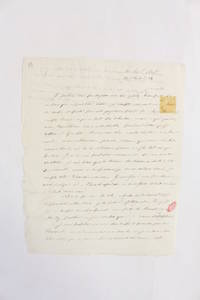
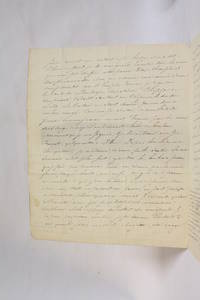
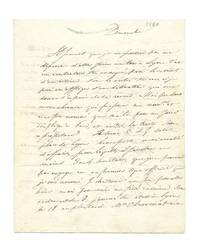
1810Best.-Nr. Stendhal3STENDHAL Henri Beyle dit 1783-1842 Autograph letter to his sister Pauline Périer-Lagrange N.p " Sunday " 13rd May 1810 3 p. 1/4 in-4° Autograph address on fourth page Missing wax seal without affecting the words small tears on folds Stendhal despairs of know Victorine Mounier escaping him and consoles himself in the arms of another woman " Il paraît que je ne pourrai pas me dispenser d'aller faire un tour à Lyon. C'est un contre-temps très marqué pour les intérêts d'ambition. Pour les autres tu sens si je puis m'affliger d'une destination qui me donne l'espoir de te revoir. Mais pendant mon absence qui pressera ma nomination et une fois nommé qui sera là pour me faire employer à Paris et éviter la triste sous-préfecture Je serai Commissaire des Guerres de la place de Lyon beau poste mais accablé d'affaires pour lesquelles il faudra au moins trois ou quatre secrétaires que je ne pourrai pas engager car au premier signe officiel que je suis nommé je déserterai non pas pour aller boire mais pour me faire examiner. Mon ordre est du 8 j'aurais dû être à Lyon le 18 au plus tard. M. Charmat mon ordonnateur sera en colère d'avoir été chargé tout ce temps de l'ennuyeuse besogne de sous-ordre. Ce cruel-là me refusera la permission d'aller passer vingt-quatre heures à Grenoble. Voilà le plan du drame que je vais exécuter cet été. Je n'ai pas le temps de te parler de ta simple et charmante lettre. Tu ne m'annonces que de mauvaises nouvelles et cependant en lisant ta lettre j'étais beaucoup plus occupé de la finesse et de la simplicité charmante que j'y trouvais que du plat renard qui vient m'enlever ce qu'il n'appréciera pas et ce que j'aimais mieux que lui allusion au mariage de Victorine Mounier. J'ai pris sans qu'il y parût des renseignements sur l'homme. C'est l'égoïste le plus sec et le cœur le plus étroit que nous connaissions me dit-on de toutes parts. Comment ton amie à qui je fais la justice de ne pas la croire aveuglée par l'amour ne voit-elle pas ce qui frappe tout le monde Connais-tu quelqu'un à Lyon Envoie-moi une lettre de recommandation poste restante. J'y serai d'un beau sombre. Mes journées sont remplies ici par une femme dont je ne suis pas amoureux mais à laquelle je pense sans cesse. Depuis que je vois le départ sous mes pas je ne puis plus lire tant je pense à elle. Je crois qu'il ne faut qu'un peu d'absence à tout cela pour me remplir de la mélancolie la plus ridicule. Ce qui me le fait craindre c'est que je ne l'ai pas. Je te conterai tout ça et tu te moqueras de moi ferme. Je me conduis comme un respectable membre de Lycée. Il me semble que je partirai d'ici à huit jours par conséquent le commencement de juin me verra aux rives du Rhône en grossissant le cours de mes larmes amères. Ne dis pas mon voyage à Grenoble même à nos parents. Il y a encore quelque possibilité de l'éviter. " The feelings expressed here for Victorine Mounier 1783-1822 are not recent. He met her in 1806 in Grenoble when his friend Édouard Mounier introduced him to his sister. Knowing her little he imagines a thousand qualities and dreams of marriage. However she remains a "disembodied" love. He wrote first to his brother hoping that he would have his sister read the letters and then to Victorine herself without receiving a reply. Stendhal learned with spite of Victorine's marriage in 1811. The year 1810 marked for Stendhal the beginning of his social ascent. Having been ordered to go to Lyon on May 11 1810 but which he finally decided to ignore he continued to frequent theaters read walk and write. Appointed auditor to the Council of State on 1 August he became inspector of furniture and buildings of the Crown in the autumn. Stendhal then frequented powerful characters and lived in the intimacy of Count Daru's family. He bought himself a fashionable convertible stamps with his initials rents an apartment more in line with his new status. His social situation put an end to his financial worries and made him hope for the barony mentioned at the beginning of the second letter but left him dissatisfied. In need of love he says: "This happiness of dress and money is not enough for me I must love and be loved". Favorite sister of Henri Beyle Pauline 1786-1857 had married in 1808 François-Daniel Périer-Lagrange and lived then at the castle of Thuellin near Brangues where will take place the news item at the origin of the novel Le Rouge et le noir. Widowed at the age of 31 Pauline must have been embarrassed because her husband had mismanaged his property. She escaped with the help of her brother who regularly paid her an annuity and bequeathed her modest possessions upon her death. Bibliography: Lettres à Pauline éd. L. Royer La Connaissance 1921 p. 79-80 Correspondance générale éd. V. Del Litto Honoré Champion t. II n°566 Provenance: Dr Jean Marchand's collection
Best.-Nr. LCS-196Exemplaire à toutes marges de « L’Abbesse de Castro », avec de nombreux témoins, conservé dans sa demi-reliure de l’époque. Paris, Dumont, éditeur, 1839.In-8 de (2) ff. pour le faux titre et le titre, 329 pp. Petite déchirure habilement restaurée dans la marge blanche de la p. 153 sans atteinte au texte, petit manque de papier dans la marge blanche de la p. 163. Demi-basane rouge, dos lisse orné de filets dorés, pièce de titre en maroquin vert, non rogné. Petit manque à la pièce de titre. Cachet d’appartenance sur le titre. Reliure de l’époque. 219 x 135 mm.
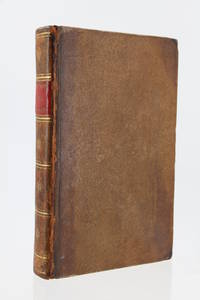
1814Best.-Nr. 78167Paris: De l'Imprimerie de P. Didot l'aîné 1814. Fine. De l'Imprimerie de P. Didot l'aîné Paris 1814 12.50 x 20.50 cm relié De l'Imprimerie de P. Didot l'Aîné Paris 1814 125 x 205 cm bound in calf First edition of Stendhal's very first book published under the pseudonym of Louis-Alexandre-César Bombet. Contemporary binding in half brown calf spine decorated with gilt fillets and tooling as well as a red morocco title piece. Very rare according to Clouzot De l'Imprimerie de P. Didot l'aîné unknown
Best.-Nr. LCS-A81Magnifique exemplaire cité par Carteret. Paris, Dumont, 1839. In-8 de (2) ff. pour le faux titre et le titre, 335 pp. mal chiffrées 329. Demi-veau blond, dos lisse orné de fleurons dorés et filets dorés et à froid, pièces de titres vertes, tranches marbrées. Reliure de l’époque. 204 x 127 mm.
Best.-Nr. LCS-18382Exemplaire conservé dans sa pleine reliure de l’époque signée de Doll, condition des plus rares. Paris, Delaunay et Pelicier, 1817. In-8 de 366 pp., (1) f. d’errata. Plein veau havane, filet noir encadrant les plats, dos lisse avec pièce de titre de maroquin olive, tranches marbrées, charnières légèrement frottées. Reliure de l’époque signée de Doll. 201 x 126 mm.
Best.-Nr. 40037Paris, Mongie, 1822 & Bohaire, 1833. 2 volumes in-12, III-232; 330p. Reliures à coins demi-maroquin rouge à longs grains, dos lisses ornés de filets dorés, titre dorés, têtes dorées, gardes marbrées, couvertures conservées.
1890Best.-Nr. AMO-4499Paris, Publié pour les Sociétaires de l'Académie des Beaux Livres (Bibliophiles contemporains), 1890 (achevé d'imprimer le 20 décembre 1890). 1 volume grand in-8 (26 x 18 cm), 170-(2) pages. Toutes les pages sont décorées d'encadrements en camaïeu par Eugène Courboin, eaux-fortes dans le texte gravées par Manesse d'après les dessins d'Eugène Courboin. Reliure de l'époque plein maroquin violine, dos à deux nerfs, plats décorés d'une guirlande de fleurs oranges et feuillage de houx, décor mosaïqué au centre du premier plat avec rehauts de motifs au fer à dorer avec la devise dorée AMOR A -MORT (avec serpents argentés, anges souffleurs de trompettes, le tout surmonté par une tête de mort en majesté cernée de rayons d'or), avec feuillages. Dos mosaïqué de fleurs de lis avec titre doré au centre. Encadrement intérieur mosaïqué de fleurettes rouges et feuillage doré, doublures et gardes de tabis gris, filet doré sur les coupes, tranches dorées. Etui bordé. Reliure signée CH. MEUNIER 97 (Charles Meunier, 1897). Exemplaire parfaitement conservé. Quelques décharges en regard des gravures.
Best.-Nr. LCS-A75Bel exemplaire conservé dans ses reliures de l’époque en demi-chagrin. Paris, Ambroise Dupont, 1839. 2 tomes en 2 volumes in-8 de: I/ (2) ff. pour le faux titre et le titre, 402 pp.; II/ (2) ff. pour le faux titre et le titre, 445 pp. Complet ainsi. Quelques exemplaires possèdent hors pagination 1 feuillet de catalogue relié à la suite du texte. L’exemplaire du baron Rothschild, décrit et collationné par Picot, ne possède pas ce feuillet publicitaire facultatif. Quelques rousseurs et traces de mouillures. Reliés en demi-chagrin bordeaux de l’époque, dos à nerfs ornés de caissons à froid, de filets et de fleurons dorés, tranches mouchetées. Reliure de l’époque. 202 x 128 mm.
Best.-Nr. 3911lpoque o se situe cette lettre, le jeune Beyle, engag dans larme sous les ordres de son cousin Pierre Daru, voyage en Allemagne, dans le sillage de Napolon 1er, qui il voue une profonde admiration. La route de Berlin Hanovre passait par Stendal . Onze ans plus tard le nom lui reviendra en mmoire pour inventer son masque de prdilection. En juillet 1807, Beyle tait alors confirm dans ses fonctions, et titularis.Sitt qu dix-sept ans Stendhal et quitt Grenoble et son pre ha, il dcouvrit toute la force de laffection qui le liait sa sSur Pauline (lane de ses deux sSurs, ne en 1786 ; il dtestait sa seconde sSur Znade, la prfre du pre). Henri fait de Pauline sa confidente et commence entretenir avec elle une troite correspondance, qui constitue un vritable trsor pistolaire : ...Tu mcris donc enfin, je te trouve charmante, prends encore patience jusqu ce que jaille Grenoble, je te promets de te tirer dennui. Jure-moi de prendre patience encore quelque tems... Stendhal poursuit sur son itinraire : ...Je suis arriv de Halberstadt 1h du matin, et je repars demain 6. Me Alexandrine [lpouse de Pierre Daru] qui est Berlin est passe par ici, elle ma montr beaucoup damiti. Jarrivais dHanovre jolie ville, charmant voyage je te rendrai compte de tout a, je ne veux aujourdhuy que te donner signe de vie...V. [Victorine Mounier] a beaucoup plus dexprience que toi, fais toi assez son amie pour lui parler cSur ouvert sur tes projets [En 1802 Beyle stait pris Paris dune vive passion pour Victorine Mounier. La jeune femme, tant revenue Grenoble pour se marier, Stendhal pria sa sSur de se rapprocher delle afin de le renseigner sur celle-ci]...Puis il charge Pauline de plusieurs commissions : la premire : ...Prie mon papa de mexpdier Courrier par Courrier lextrait de Baptme qui prouve que je suis n le 22 Janvier 1782, remarque lanne, le ministre le demande pour lexpdition de mon Brevet 1782 et non 1783..., la seconde : ...Prie mon grand papa dcrire Mr D. [Daru] le plus courtement possible. Me Alex. Berlin et me voulant du bien, fera bien russir la lettre. Prie-le de ne pas parler de Me Al. autrement on verrait quil crit parce que je len prie. Chose quil faut surtout viter.... Il ajoute affectueux : ...Je taime toujours plus. Adieu ma chre amie, cris-moi, les lettres que tu veux bruler sont toujours les meilleures. Jtais sur le point de te croire, amoureuse et moubliant, cris souvent... Sa troisime requte concerne lenvoi ...dune bonne empreinte du cachet de mon pre...Il ajoute un P.S. : ...Mille et mille choses notre bonne tante...
1805Best.-Nr. 669741805. Fine. 10 Floréal 13 30 avril 1805 18.50 x 23.10 cm une feuille Stendhal's autograph letter addressed to his sister Pauline. 28 lines written with a fine writing in black ink. First name ""Pauline"" from the hand of the sender at the bottom of the letter. Inventory number ""36"" in ink from another hand. Two small traces of stamp and stamp a small tear restored in the bottom margin of the page. A few tiny folds inherent in the enveloping of the letter. Rare and beautiful letter of Stendhal addressed to his sister Pauline in which all the sensitivity of the young man and his love for the dramatic art shows more than twenty years before his big romantic successes. This letter comes from the correspondence between Henri Bayle here twenty-two years with his sister Pauline three years younger. This true epistolary liaison which quickly took the form of a ""diary"" - Pauline's answers were rare - is an essential milestone in the constitution of the intellectual journey of the future Stendhal. Our letter of a great lyricism testifies to the strength of the bond uniting the young writer and his sister: ""Let's shake each other my good friend. We will never find anyone who loves Pauline as Henry nor will Henry ever find a more beautiful soul than Pauline. ""The use of the third person and a lover vocabulary erects the young woman to the rank of alter ego a sister-soul and even perfect mistress. The young Henri is then precisely under the yoke of a devouring passion for the actress Melanie Guilbert whom he met during his declamation classes at Dugazon: "" I'm going to be bored perhaps by my dark sadness. I know very well that the seriousness of ardent passions is not pleasant. "" Contrasting with this passionate relationship Pauline symbolizes reason and balance a figure that Henri like a pygmalion can fashion at leisure. In good tutor he advises: ""Learn by heart roles. About declamation I will teach you a thousand things. I'm bringing you a Gil Blas and a Tracy. ""We understand here worship Stendhal devoted to the theater from his earliest years both as a player as a playwright the fund of its archives to the Grenoble Library contains nearly 700 sheets of blanks:"" I am in despair at not being able to wear you Beanies. But wait maybe someday will come . as Ulino says. ""This passion for theater Henry intends to pass it to his sister:"" We will work like hell during the time that I stay in Grenoble. ""In total opposite view with the education of women in his time he put a point of honor that Pauline is an educated person; In several letters moreover we find injunctions from the brother ordering his sister to give up needlework in favor of the reading he recommends. Truly obsessed with theater and convinced that he will become an author of successful comedies he works tirelessly: ""I am told a room where I will not be free and where I can not just declaim. Try to disturb this arrangement. ""Years before writing great novels that make her famous Stendhal already understands that loneliness is for him a source of creation and says:"" A lonely is jealous of his freedom. It is his greatest good as that of all men. "" unknown
1889Best.-Nr. 71152Librairie moderne Maison Quantin | Paris 1889 | 13 x 19 cm | relié
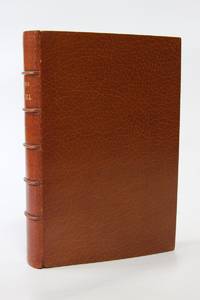
1889Best.-Nr. 71152Paris: Librairie moderneMaison Quantin 1889. Fine. Librairie moderne Maison Quantin Paris 1889 13 x 19 cm relié First edition one of 12 numbered copies on Hollande the only deluxe issue. Complete with the folding map at the end. Full fawn morocco binding five raised band spine date at foot comb-marbled paper pastedowns framed with a rich gilt roll comb-marbled endpapers gilt fillet to headcap gilt fillet to leading edges gilt roll to headcaps original wrappers and spine preserved all gilt deckled edges housed in a fawn morocco-edged slipcase. Binding signed by Semet & Plumelle. Provenance: From the libraries of Dr André Chauveau Lucius Wilmerding and RBL with their bookplates affixed. A splendid deluxe copy of exceptional rarity. Librairie moderneMaison Quantin unknown
Best.-Nr. LCS-18612Exemplaire dans une condition exceptionnelle, en pleine reliure à la cathédrale. Elle est sortie de l’atelier d’Edme Vivet, relieur et papetier parisien. Paris, Delaunay, 1826. 2 volumes in-8 de I/ (2) ff., 304 pp. ; II/ (2) ff., 348 pp. Veau havane, bordure formée de deux filets noirs et d'une roulette palmée à froid, grande plaque à la cathédrale frappée à froid, dos ornés avec nerfs soulignés d'une roulette dorée, caissons décorés d'une palette à froid, pièces de titre et de tomaison vertes, roulette intérieure à froid, tranches dorées. Reliure à la cathédrale de l’époque signée Ed. Vivet, praticien né à Dresde, actif à Paris entre 1820 et 1850. 200 x 119 mm.
1808Best.-Nr. 689671808. Fine. 26 mars 1808 20 x 24.80 cm Une feuille Long autograph letter by Stendhal addressed to his sister Pauline written in fine handwriting with black ink. Address of Stendhal's father where his sister resides in Grenoble with the stamp ""n°51 Grande Armée."" Red wax seal bearing Stendhal's coat of arms. Several original folds inherent to postal delivery. A paper loss due to the unsealing of the letter has been skillfully restored. Published in his Correspondance ed. Henri Martineau Paris Le Divan 1933 vol. 3 no. 262 A pp. 26-29. A very beautiful letter filled with romantic passion blending childhood nostalgia with sentimental tales and foreshadowing The Red and the Black. This letter is part of the correspondence between twenty-five years old Henri Beyle and his sister Pauline three years his junior. This epistolary relationship which quickly took the form of a ""journal"" as Pauline's responses were rare. It is deemed a crucial milestone in the intellectual development of the future Stendhal: ""Here are my dreams my dear friend; I am almost ashamed of them; but after all you are the only person in the world to whom I dare confess them."" In this letter which attests to the strong bond between brother and sister Stendhal then in Germany expresses his deep nostalgia: ""I revisited in my memory all the time we spent together: how I did not love you in our childhood; how I once hit you at Claix in the kitchen. I hid in the little book cabinet; my father came back a moment later furious and said to me: 'Wicked child! I would eat you!' Then all the woes inflicted upon us by poor Aunt Séraphie; our walks along those paths surrounded by stagnant water towards Saint-Joseph."" These regrets about the past are accompanied by a typically Stendhalian melancholy: ""Alas! That delightful happiness I once imagined I glimpsed it once at Frascati and a few other times in Milan. Since then it has not returned; I marvel at my inability to feel it. The mere memory of it is more powerful than all the present joys I can procure."" This evocation of the Italy he longs for is intertwined with memories of the women he loved: ""I told you that while in Frascati at a charming fireworks display at the moment of the explosion Adèle leaned on my shoulder for an instant; I cannot express how happy I was. For two years whenever I was overwhelmed with sorrow this image gave me courage and made me forget all my troubles. I had long forgotten it; I tried to recall it today. Against my will I see Adèle as she is; but as I am now there is no longer the slightest joy in this memory."" This lengthy account of Adèle Rebuffet his cousin with whom he had a profound romantic relationship before forming a closer bond with her mother reflects Stendhal's sentimentality. He also mentions another of his great passions Angelina Pietragrua the ideal Italian woman and embodiment of his Milanese memories: ""Madame Pietragrua is different: her memory is linked to that of the Italian language; whenever something pleases me in a role for a woman in a work I involuntarily put it into her mouth."" This ""role for a woman"" that Stendhal refers to echoes the central theme of this letter the work Il Matrimonio segreto by composer Cimarosa: ""Do you sometimes play the Matrimonio Its the passage Cara sposa at the beginning between Carolina and Paolino. . But play the Matrimonio for my sake especially Signor deh permettette and the finale Io rival de mia sorella."" This opera by Cimarosa remained a constant throughout the writer's life and work. In his Memoirs of an Egotist 1832 he explains: ""In Milan in 1820 I wanted to have this written on my tomb . I wanted a marble tablet in the shape of a playing card: ""Errico Beyle - Milanese - Visse scrisse amò - Quest'anima adorava Cimarosa Mozart e Shakspeare - Morì di anni. il . 18."" ""Henri Beyle - Milanese - He lived wrote loved - This soul adored Cimarosa Mozart and Shakespeare - He unknown
1839Best.-Nr. 89931Ambroise Dupont | Paris 1839 | 13 x 21.7 cm | 2 volumes reliés sous étui
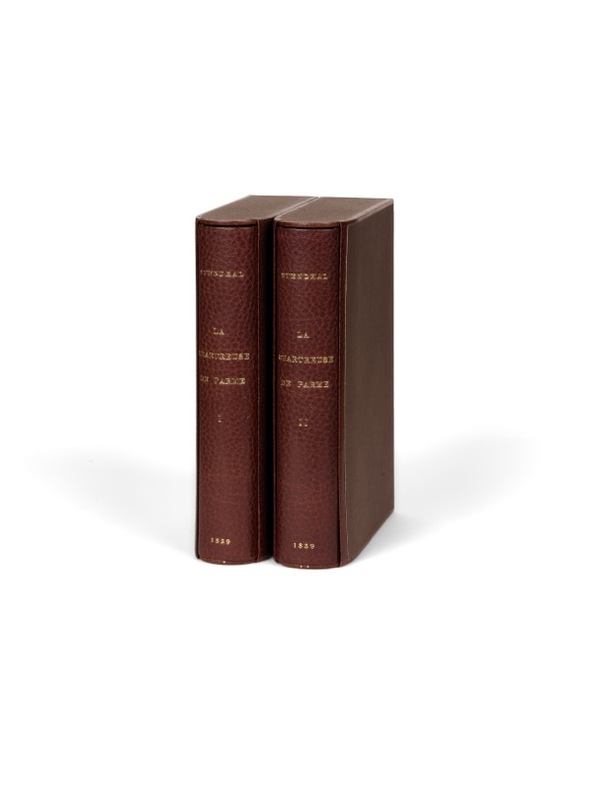
1839Best.-Nr. 89931Paris: Ambroise Dupont 1839. Fine. Ambroise Dupont Paris 1839 13 x 21.7 cm 2 volumes reliés sous étui First edition printed on thick wove paper. Bound in contemporary half brown shagreen smooth spines decorated with black typographic motifs marbled paper boards hand-marbled endpapers and pastedowns modern slipcase edged in brown morocco with matching marbled paper sides and olive-green felt lining. Some occasional foxing the note ""Henri Beyle"" in black ink at the upper corner of the title page of the first volume without the final catalogue leaf at the end of the second volume small corner restorations to four leaves of the first volume. ""Very rare and extremely sought after. Usually quite simply bound at the time. Often foxed"" Clouzot. ""This work is of great rarity in fine condition"" Carteret. A handsome and very rare copy large-margined and attractively bound at the time of this masterpiece by Stendhalrarer still than Le Rouge et le Noir. Ambroise Dupont hardcover
1831Best.-Nr. 87102A. Levavasseur | Paris 1831 | 13.10 x 20.80 cm | 2 volumes reliés
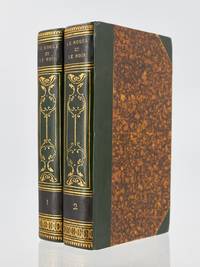
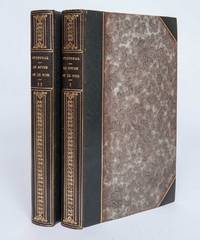
1831Best.-Nr. 87102Paris: A. Levavasseur 1831. Fine. A rare copy with no foxing A. Levavasseur Paris 1831 13.10 x 20.80 cm 2 volumes reliés First edition ""very rare and extremely sought-after"" Clouzot one of 750 copies on laid paper with title vignettes engraved by Henri Porret after Henry Monnier. Skilful restoration of a tear at the foot of a page with slight damage to a letter. A rare copy with no foxing. Green half calf binding smooth spines with arabesques stamped in gilt black title labels and volume labels; marbled paper boards spine boards and endpapers speckled edges later bindings in the Romantic style. Stendhal began writing 'Le Rouge et le Noir' under the Restoration and completed it just four months after the July Revolution of 1830. The seminal novel was published in the last weeks of 1830. All critics immediately praised the novel's exceptional qualities although even its most enthusiastic supporters were shocked by the hero's harsh judgment of society and Jacobinism. A handsome first-edition copy of this great classic of French literature. A. Levavasseur hardcover
Best.-Nr. LCS-18177Le dernier exemplaire d’Armance, « broché, mouillé, piqué, taché et sali » (ainsi décrit) fut vendu 73 000 € par Christie’s Paris le 25 juin 2009. Paris, Urbain Canel, 1827. 3 volumes in-8 de : I/ (1) faux-titre, (1) titre, viii pp., 177 pp. ; II/ (1) faux-titre, (1) titre, 191 pp. ; III/ (1) faux-titre, (1) titre, 243 pp. Demi-veau bleu glacé, dos lisses ornés de filets dorés, tranches jaspées. Elégantes reliures de l’époque. 170 x 100 mm.
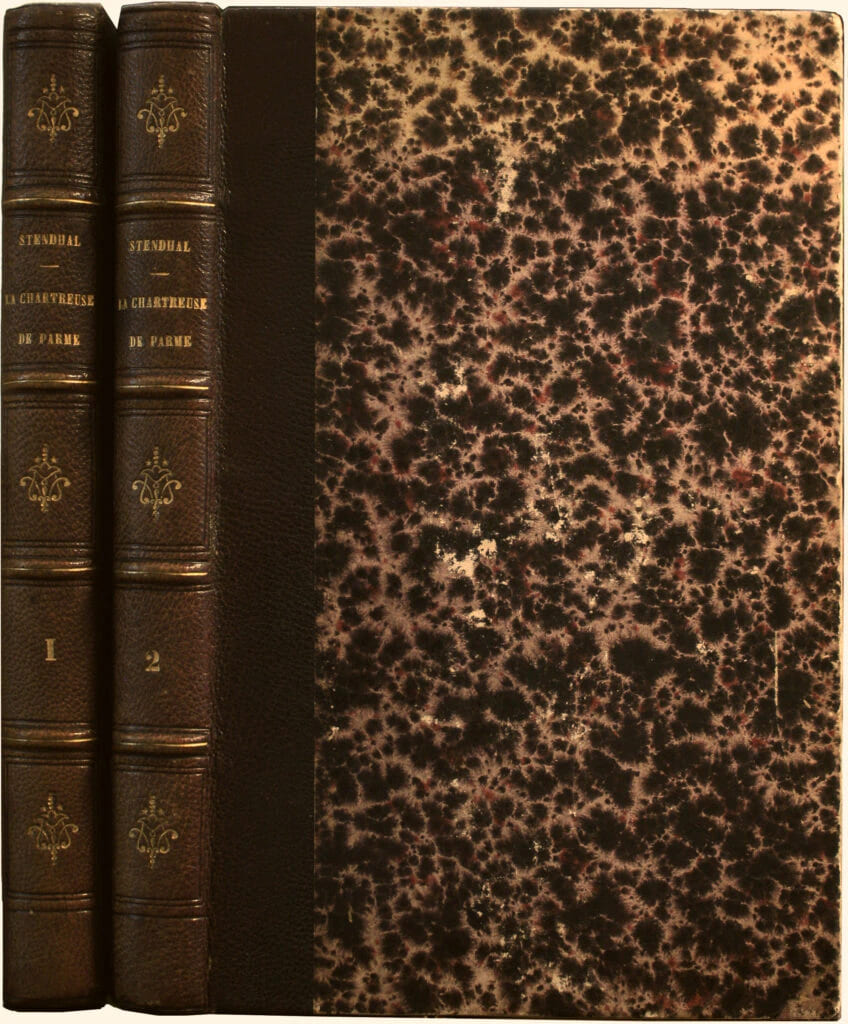
Best.-Nr. LCS-18512Exemplaire imprimée sur vélin et conservé dans une superbe reliure de Chambolle-Duru. Paris, Dupont, 1839. 2 tomes en 2 volumes in-8 de: I/ (2) ff. pour le faux titre et le titre, 402 pp. ; II/ (2) ff. pour le faux-titre et le titre, 445 pp. Plein maroquin rouge, large encadrement de six filets dorés autour des plats, dos à nerfs ornés de même, double filet or sur les coupes, encadrement intérieur de cinq filets dorés, tranches dorées. Élégante reliure signée de Chambolle-Duru. 213 x 126 mm.
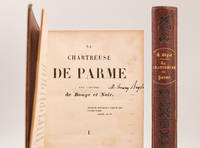
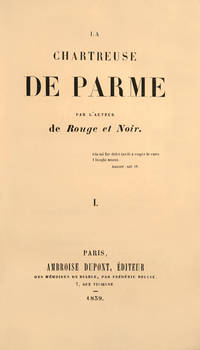
Best.-Nr. ABAA25-44Paris Dupont 1839. 2 parts in 2 volumes 8vo of : I/ 2 ll. for the half-title and the title 402 pp. ; II/ 2 ll. for the half-title and the title 445 pp. Full red morocco six gilt fillets around the covers ribbed spines decorated the same way inner border of five gilt fillets gilt edges. Elegant binding by Chambolle-Duru. 213 x 126 mm. First edition printed on vellum of one of the most coveted novels of the 19th century. Carteret Le Trésor du bibliophile romantique 358; Vicaire Manuel de l'amateur de livres du XIXe siècle 458; Picot Catalogue du baron Rothschild 1584. "Very rare and extremely sought after". M. Clouzot 257. "Balzac published a glowing article about Stendhal and his book in the Revue parisienne of 25 September 1840: 'M. Beyle has written a book in which the sublime bursts forth from chapter to chapter. He has produced at an age when men rarely find grandiose subjects and after having written some twenty extremely spiritual volumes a work that can only be appreciated by truly superior souls and people. Finally he wrote the modern Prince the novel that Machiavelli would write if he lived banished from Italy in the nineteenth century". Stendhal dreamed of writing a novel about the life of Alexander Farnese 1468-1549; he was also working on a story about the Battle of Waterloo. His work took shape on 3 September 1838 when he decided to bring the events revealed to him by the Italian chronicle into the 19th century so that his hero would be at Waterloo and Stendhal could indulge in a satire of absolutism by depicting a small Italian court around 1820. "In this 'Chartreuse de Parme' Stendhal excels in translating all his ideals of art and life the now distant mirage of glory and the Napoleonic epic the passion for adventure the deep love for contemporary Italy and for the much admired Italy of the Renaissance but above all the love of love. The refined psychological analyses the obstinate and precise rigour of the style the philosophical and moral considerations everything is transfigured in the rare joy of a lyrical vision which in the best pages reaches the rhythmic purity of a song". It has now taken its place in French literature as one of the landmark books of 19th century literature and the culmination of the refined psychology of the 18th century. Bibliographers are unanimous in emphasizing the rarity of this first edition. Stendhal wrote La Chartreuse de Parme between 4 November and 26 December 1838 after having written L'Abbesse de Castro. La Chartreuse de Parme written in a state of grace lasting fifty-two days has since become the perfect image of the "joy of writing". His novel grew out of his plans for a Napoleonic narrative centered on the Battle of Waterloo and his interest in the history of Alexander Farnese the future Pope Paul III whose life overlapped with many of the events in Fabrice del Dongo's life. Stendhal's contemporaries gave the novel an enthusiastic reception as evidenced by Balzac's famous letter to Stendhal: "La Chartreuse is a great and beautiful book I tell you without flattery without envy because I would be incapable of doing it". A very fine copy of this great classic of French literature preserved in a superb binding by Chambolle-Duru. FR Paris Dupont 1839. 2 tomes en 2 volumes in-8 de : I/ 2 ff. pour le faux titre et le titre 402 pp. ; II/ 2 ff. pour le faux-titre et le titre 445 pp. Plein maroquin rouge large encadrement de six filets dorés autour des plats dos à nerfs ornés de même double filet or sur les coupes encadrement intérieur de cinq filets dorés tranches dorées. Élégante reliure signée de Chambolle-Duru. 213 x 126 mm. Edition originale imprimée sur vélin de l'un des romans les plus convoités du XIXe siècle. Carteret Le Trésor du bibliophile romantique 358 ; Vicaire Manuel de l'amateur de livres du XIXe siècle 458 ; Picot Catalogue du baron Rothschild 1584. " Très rare et extrêmement recherché ". M. Clouzot 257. Balzac publia dans la Revue parisienne du 25 septembre 1840 un article élogieux sur Stendhal et son livre : 'M. Beyle a fait un livre où le sublime éclate de chapitre en chapitre. Il a produit à l'âge où les hommes trouvent rarement des sujets grandioses et après avoir écrit une vingtaine de volumes extrêmement spirituels une œuvre qui ne peut être appréciée que par les âmes et par les gens vraiment supérieurs. Enfin il a écrit le Prince moderne le roman que Machiavel écrirait s'il vivait banni de l'Italie au dix-neuvième siècle'. Stendhal rêvait de tirer un roman de la vie d'Alexandre Farnèse 1468-1549 ; il travaillait aussi à un récit de la bataille de Waterloo. Son œuvre prend forme le 3 septembre 1838 quand il décide de transporter au XIXè siècle les événements que lui a révélés la chronique italienne ainsi son héros sera à Waterloo et Stendhal pourra se livrer à une satire de l'absolutisme en peignant une petite cour italienne vers 1820. " Dans cette " Chartreuse de Parme " Stendhal excelle à traduire tout son idéal d'art et de vie le mirage désormais lointain de la gloire et de l'épopée napoléonienne la passion de l'aventure l'amour très profond pour l'Italie contemporaine et pour l'Italie si admirée de la Renaissance mais surtout l'amour de l'amour. Les analyses psychologiques raffinées la rigueur obstinée et précise du style les considérations philosophico-morales tout est transfiguré dans le rare bonheur d'une vision lyrique qui atteint dans les meilleures pages à la pureté rythmique d'un chant. " Elle prend place à présent dans la littérature française comme un des livres phares de la littérature du XIXe siècle et l'extrême aboutissement de la psychologie si raffinée du XVIIIe siècle. Les bibliographes sont unanimes à souligner la rareté de cette édition originale. Stendhal écrivit La Chartreuse de Parme entre le 4 novembre et le 26 décembre 1838 après avoir composé L'Abbesse de Castro. La Chartreuse de Parme rédigée dans un état de grâce de cinquante-deux jours est devenue depuis l'image parfaite du " bonheur d'écrire ". Son roman naquit de son projet de récit napoléonien centré sur la bataille de Waterloo et de son intérêt pour l'histoire d'Alexandre Farnèse futur pape Paul III dont la vie recoupe bien des événements de la vie de Fabrice del Dongo. Les contemporains de Stendhal firent un accueil enthousiaste au roman comme en témoigne la célèbre lettre de Balzac à Stendhal : " La Chartreuse est un grand et beau livre je vous le dis sans flatterie sans envie car je serai incapable de le faire ". Très bel exemplaire de ce grand classique de la littérature française conservé dans une superbe reliure de Chambolle-Duru. hardcover
1831Best.-Nr. 88395A. Levavasseur | Paris 1831 | 14 x 22 cm | 2 volumes reliés
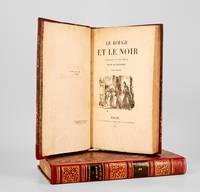
1831Best.-Nr. 1979Paris: A. Levavasseur 1831. First edition. Fine. A Fine copy of Stendhal's masterpiece and one of the major literary works of 19th century France. A lovely copy entirely untrimmed pages 181 x 140 mm with the original wrappers bound in to each volume including the spine panels. Elegantly bound by Edouard Pagnant of Paris 1852-1916 in green half-morocco over marbled boards spine with gilt titles and decorated columns marbled end papers. Internal contents clean and fresh quite rare and desirable with the original printed wrappers. Upper wrapper and titles with vignettes of Henry Monnier engraved by Porret. Volume one vignette shows Julien Sorel appearing to Madame de Renal near a confessional; volume two shows Mathilde de La Mole holding the head of Julien Sorel. Stendhal's surprisingly modern bildungsroman about the rise and fall of the romantic Julian Sorel who attempts to climb the rungs of French society and surpass the expectations of his modest rural upbringing. The novel is not only an exploration of Julian's own psychological and spiritual struggles but also a satire of the clergy and French society in general. "The Red and The Black like much of Stendhal's work was not appreciated in his own day. It was only after Stendhal's death that critics began to realize what a revolutionary stylist he was. He's currently credited as one of the fathers of psychological realism due to the space he devotes to his characters' inner lives. "Stendhal's mind was of the first order. he wrote his two novels which so few people have read in a spirit of fearless liberty" Joseph Conrad. Fine. A. Levavasseur unknown books
1831Best.-Nr. 88395Paris Paris: A. Levavasseur 1831. Fine. First edition in contemporary binding of one of the rarest and most sought-after Romantic novels A. Levavasseur Paris Paris 1831 14 x 22 cm 2 volumes reliés First edition untrimmed with wide margins very rare and highly sought-after see Clouzot. Some occasional foxing. Illustrated on the title pages of both volumes with two engraved vignettes by Porrêt. This copy contains the publishers notice leaf in the first volume and the authors note leaf in the second volume. Contemporary red half calf over marbled boards calf corners spines ruled in gilt with double gilt panels decorated with typographic gilt tooling black calf title and volume labels some minor rubbing to joints marbled endpapers and pastedowns lower corners a bit worn bookplate pasted on the front pastedown of volume one contemporary bindings. A very rare and desirable copy entirely untrimmed and preserved in a handsome contemporary binding an even rarer feature. As noted by Clouzot: Contemporary bindings are most often rather plain; one should not be overly particular regarding their quality. A. Levavasseur hardcover
1839Best.-Nr. 27512Édition originale, premier tirage.L'un des huit exemplaires connus avec envoi autographe, le seul à une femme. Paris, Ambroise Dupont, 1839. 2 vol. (125 x 200 mm) de [2] f., 402 p. et 1 f. ; [2] f. et 445 p. Maroquin havane, contreplats et gardes de chèvre velours sable, titres dorés sur les pats, tranches dorées sur témoins, chemises avec titre et tomaison, étui bordé (reliure signée de Renaud Vernier - Claude Ribal, 2025). Édition originale. Exemplaire de première émission, sur papier vélin. Envoi autographe signé : « À Madame d'André, hommage respectueux de l'auteur ».