Fodors TravelABAA
Fodor's Travel New York City
réf. WELLER9781101879948New. New book. unknown books

Weller Book Works ABAA/ILAB · États-Unis19,99 $US≈ 17,82 €
37 887 résultats
réf. WELLER9781640970205New. New book. unknown books
réf. WELLER9781101879948New. New book. unknown books
2013réf. UFODFOD00CCWFodor's 2013. Fine. Fodor's Travel Publications Inc. COR. Fodor's New York City 2013. New York: Fodor's 2013. 541pp. Indexed. Illustrated. 8vo. Paperback. Book condition: Near fine. Fodor's paperback books
2004réf. 252558Stanhope: Memoir Club 2004. Hard Cover. Very Good binding/Very Good dust jacket. 464pp. Slight bumping to edges of dust jacket but dust jacket protected in a mylar cover; no markings of any kind. Very Good binding / Very Good dust jacket. Memoir Club unknown books
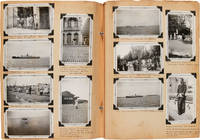
réf. 4689MASSACHUSETTS JOURNEY DIARY AND PHOTOGRAPHY ALBUM. Book. 115pg. 1891. Massachusetts. A travel journal and photography album entitled “Coaching Trip June 5th to 20th 1891”. There are typewritten notes about a trip from Malden Massachusetts west to the Berkshires and across the Hudson River to West Point and then back to Boston. There are almost a hundred accompanying photographs of the people scenery and activities. The journal concerns the travels of “Mr. and Mrs. H.E. Sawyer Miss Converse Miss Estabrook Captain H.E. Harry Elisha Converse and Messrs G.S. Stockwell J.E. Cochrane and P.W. Sprague” page 91. The scrapbook begins with “Coaching Trip June 5th to 20th 1891. M.B.S. M.C.P. and the scribe meet at the B. & M. Boston and Maine Railroad Station in Malden waiting to be joined by F.E.C. and E.A.E. for the 4:10 train to Boston. We wish we had a photograph of the baggage for we are sure it would be interesting as a souvenir. Bags boxes shawl straps kodaks banjo umbrellas etc. are transported across Boston to the B. & A. Station while the ladies start for Young’s Hotel stopping by the way to purchase finery for Dennis and James. F.E.C. orders dinner and as time is limited thoughtfully orders Broiled Chicken…Dinner is served in Private Parlors – It consists of Milk and crackers. This being insufficient for the insatiable J.E.C. and F.E. another dinner is ordered for them but the report comes back that fire has gone out…”. The ride continues west seemingly along the path of the modern State Route 2 aka the Mohawk Trail: “…notwithstanding the length of the afternoon drive time passes so pleasantly in talking reading singing etc. that we arrive in Northampton long before any of the party wish to leave the drag. The odometer shows that we traveled 17 miles after dinner…Short walks in some cases after dinner and then we gather on the upper veranda for an hours sing…Bloody Brook House is reached at 12.45 where we dine after which the young ladies devote themselves to letter writing…The gentlemen attend a prize fight in the rear of the house in which one party ‘Jim Carrigan’ a notorious local tough is badly cut up and a visiting tough is completely knocked out or rather kicked out…”. The party continues through Shelburne Falls Charlemonte up and down the Hoosac Mountain North Adams and into Williamstown. In Williamstown one person makes a long distance telephone call to his father and they attend a baseball game. On June 12th they turn south to Lenox and Great Barrington. On June 15th the narrator mentions that “The young ladies are demoralized this morning because they cannot get alcohol; I never saw girls so dependent upon strong drink early in the morning; this calls to mind the fact that this was to be a dry trip…the heat and dust are almost unbearable…”. They traveled to Fishkill and then take a boat to West Point where they see cadets and hear a concert. The journal concludes with a listing of the songs they heard on their travels. There are 92 photographs of various sizes. The book was apparently was specially made for the occasion since there is a logo atop every page mentioning “June 5th – 20th 1891”. The red cloth covers are disbound and the spine is missing; the front cover is gilt stamped with the date of the trip. A fine late Nineteenth Century travel memento. hardcover books
réf. 202355Privately Printed. Hard Cover. Very Good binding/no dust jacket. Previous owner's bookplate attached to front paste-down endpaper. No pencil or ink markings in text. Boards very lightly soiled. Small bump at top of spine at front board. Cloth and paper-covered boards. Very Good binding / no dust jacket. Privately Printed unknown books
1931réf. LLV2250London:: Macmillan & Co. 1931-32. 1931. 3 issues. Small 4to. pp. 1053-88; 181-216; 413-448. Original self-wraps. Very good. Macmillan & Co.), 1931-32. paperback books
1877réf. 21389Nrw York: D. Appleton and Company 1877. First American Edition. Hardcover. Very good. 8vo pp. xxiv 399 6 ads with chromolithograph frontispiece many illustrations in the text double-page Map of the Kaiser Franz Josef Land surveyed by Payer. Original red cloth with decoration in gilt and black. Spine lightly sunned. Blind stamp and "withdrawn" ink stamp of the California Academy of Sciences Library on title page but no other markings. Sound and clean. Arctic Bibliography 13202: "Narrative of the voyage from Norway to the waters northwest of Novaya Zemlya the drift in the ice Aug. 1872-Mar. 1874 the discovery and exploration by sledge of Franz Joseph Land including chapters on auroras the technique of sledge travel and the effect of cold on the men. D. Appleton and Company hardcover books
réf. 21423Boston and New York: Houghton Mifflin. Hardcover. Very good. Early reprint title page undated copyright page states "Published February 1913." 338 pp indexed and illustrated including double-page map in original blue cloth binding. No dust jacket. Light shelfwear to boards; binding sound text clean with the exception of some foxing to the first few leaves. Previous owner's raised stamp on front free endpaper. As described in contemporary review in the Missionary Herald "the earlier part of Miss Kendall's journey brings out vividly the life of such unfamiliar regions as French Tonking and the provinces of Yunnan and Szechuan in West China and includes such unusual experiences as a peek into Lolo Land a stop at Tachieniu--gateway to Tibet--and a remarkable sojourn at the monastery of Omei Shan that ancient and mysterious mountain shrine of Buddhist China. The middle part of the journey follows the more usual highways down the Yangtze and north to the Wall but the route becomes adventurous again as it crosses the Gobi Desert and pushes northward through Mongolia to Siberia. Houghton Mifflin hardcover books
réf. 1793New York: Thomas Nelson & Sons. Hardcover. Very Good/Very Good. Undated; owner's signature dated 1959 on front endpaper. 264 pp illustrations with map index. Light wear to edges top corners and spine lightly bumped; else clean and sound. Dust jacket shows light shelf wear. The "living world of Athos" described by "an honored guest" who "knew it as few laymen do" dust jacket having lived there for thirty years. Typed letter regarding the condition of the Serbian monestary on Mt. Athos and its collection of Byzantine art laid in. Thomas Nelson & Sons hardcover books
1981réf. 329Lima Peru: Instituto Andino de Estudios en Poblacion y Desarrollo 1981. Softcover. Very Good. 55 pp with two foldout diagrams bibliography. Short 1/2 inch tears at head and foot of spine; light handling wear; contents clean and sound. Text in Spanish. A study of migration patterns within the nation of Peru. Instituto Andino de Estudios en Poblacion y Desarrollo unknown books
1784réf. 29268London: G. Nicol & T. Cadell 1784. Etched and engraved by C. Grignion after a drawing by Webber. Image size: 10 1/4 x 7 inches. Sheet size: 22 x 15 1/2 inches. In this attractive portrait a young muscular man dances what was then a sacred dance called Hula. In his right hand he holds a feather covered gourd. Virtually nude he wears only a bark cloth "malo" or loin cloth a coral necklace and dogtooth leggings. His body is tattooed in rhythmic patterns that flow down his arms and legs. "Cook's third voyage was organized to seek the Northwest Passage and to return the islander Omai to Tahiti. Officers of the crew included William Bligh James Burney James Colnett and George Vancouver. John Webber was appointed artist to the expedition. After calling at Kerguelen Island Tasmania New Zealand and the Cook Tonga and Society Islands the expedition sailed north and discovered Christmas Island and the Hawaiian Islands which Cook named the Sandwich Islands. Cook charted the American west coast from Northern California through the Bering Strait as far north as latitude 70 degrees 44 minutes before he was stopped by pack ice. He returned to Hawaii for the winter and was killed in an unhappy skirmish with the natives. Charles Clarke took command and after he died six months later the ships returned to England under John Gore. Despite hostilities with the United States and France the scientific nature of this expedition caused the various governments to exempt these vessels from capture. The voyage resulted in what Cook judged his most valuable discovery - the Hawaiian Islands" Hill. John Webber R.A. born in London of Swiss parents was the official artist on Cook's historic and final Pacific voyage. The drawings were the source for the engravings that illustrated Cook's "A Voyage to the Pacific" which was published in 1784. G. Nicol & T. Cadell unknown books
1919réf. 228863New York; Chicago; London; Edinburgh: Fleming H. Revell Co 1919. Hard Cover. near Very Good binding. Illustrated; No pencil or ink markings in text but rubbing to front pastedown where paper has been removed. Front hinge a little weak but holding well. Brown cloth binding. Closed tear at top of front board at spine. Moderate edgewear to boards; Not Ex-Library. near Very Good binding. Fleming H. Revell Co unknown books
1946réf. 778London: John Murray 1946. Hardcover. Very Good/Very Good. Reprint. 282 pp with photographic frontispiece map appendix bibliography. Bookplate on front pastedown light wear to edges; else clean and sound. Dust jacket shows moderate shelf wear and has several tape reinforcements. Stark lived and travelled with the Hadhramaut people producing a unique and pioneering account of South Arabia modern-day Yemen. John Murray hardcover books
1903réf. 162Boston MA: Houghton Mifflin Company 1903. First Edition. Hardcover. Very Good. 397 pp illustrations with frontispiece. This story follows journey of young Harry from Seattle to the arctic. Accompanied by illustrations from photographs from the arctic. Light wear to edges; contents clean and sound. No dust jacket. Houghton Mifflin Company hardcover books
réf. 59771Two un-edited first drafts of Claire's memories of his first meetings with Larry McMurtry and James Dickey. Written at Yaddo in the mid 1970's. unknown books
1938réf. WRCAM55556Various locations in Latin America 1938. 100pp. containing 230 photographs as well as postcards maps dozens of menus greeting cards and other travel ephemera. Thick folio. Contemporary brown paper-covered cloth string-tied. Boards lightly scuffed and worn. Some leaves loose moderate edge wear and chipping. Photographs clean and nice annotations highly legible. Good plus. An illuminating and entertaining illustrated scrapbook documenting the travels of six friends on a trip to Mexico Panama and various points in South America including Colombia Peru Chile Argentina and Brazil in 1938. One of the opening leaves has four photographs of the travellers comprised of two elderly couples and two single women captioned "Rogues to the Pampas!" Throughout the album there are numerous photographs both vernacular and professional a great many capturing locals in native dress as well as images of scenery and the city streets. The photographs are accompanied by colorful descriptive annotations. The voyage began January 20 1938 aboard the Japanese NYK Liner S.S. Bokuyo Maru. There are numerous menus and other ephemera from the ship as well as a photograph of the Japanese crew signed by the ship's officers. The first photographs depict Manzanillo Mexico a week later with captions such as "Worst city we ever saw says the man from Capetown South Africa who has been around the world" and "Sid Thompson says 'I bet if these Mexicans had a good hot bath they'd find a suit of underwear they didn't know they had!" They picture a "peddler of hats and drink" and a "man carrying load on his head" in the streets of Manzanillo. They then take a train to Colima Mexico on which a passenger is noted to say "Jesus Christ you'd think they never saw an American before" and where they eat papaya for the first time. In Panama on February 3 they see "a native with an iguana in each hand - we also saw our first sloth and a land crab" and they witnessed "a negro funeral." On February 5 the travellers stop at Buenaventura Colombia where they experienced an earthquake and their first sight of the Andes along with a "strong acrid wet odor that pervades atmosphere everywhere." There are several photographs of the city and the locals including one of "natives" fishing accompanied by significant commentary on the locals: "The natives have plenty of fish which they catch in nets thrown by hand - plenty of bananas and fruits and cocoanuts and will not work enough to buy anything but a little clothing rice and coffee. There are no public schools in Colombia - a few religious schools inland. All education for boys and girls of better class is in U.S. or Europe. U.S. buys 85% of Colombia's coffee. Population 80% negroes on coast. Government is unstable foreign capital will not make very much of an investment here but Standard Oil Co. has a $52000000 pipeline in Colombia. Malaria is the greatest plague here though typhoid is also guarded against in fruits and vegetables. Buenaventura is wholly tropical." The group then proceeds to Lime Peru where they arrive "in a dense fog - worst in 10 years." They take numerous snapshots of various cultural sights around the city images of "guano birds" along the shoreline and a "Typical Peruvian Indian of the High Andean Plateaus." They stayed three nights at the Hotel Bolivar before proceeding to Cuzco Tacua and Mollendo which they describe as "a dirty town." Still they took several photographs here including "Descendants of the Incas at Cuzco" an "Indian woman riding Burro - typical scene" in Tacua and other street scenes. Chile was next for the group. They were in Santiago by February 23 and shot several images at a street market such as a soap dealer the flower market a corn stand and other scenes. Shortly thereafter they traveled to Valparaiso Puerto Varas Puerto Montt and other Chilean locations. They captured the port of Valparaiso the Three Brothers at Chilean Lakes scenes in the Chilean mountains Lake Llanquihue and include in the album a professional real photo postcard captioned "Typical Araucanian Indian Hut" among other images. The travellers then moved on to Argentina. They describe Buenos Aires as "the most beautiful city in South America so far as the city itself is concerned." Their time in the city is illustrated exclusively with postcards but they include a plethora of descriptive text for numerous monuments landmarks harbor scenes gardens and other sites. During their time in Brazil the travellers document coffee production cattle and other agricultural settings as well as cities and architectural features. These include numerous images of Rio de Janeiro which "no picture however beautiful can portray with any accuracy the beauty of Rio." On March 30 the group heads "from Buenos Aires down the muddy Rio de la Plata" towards the Amazon River. Here they include real photo postcards of "Typical Indians of the Amazon" an "Amazon Indian Hut" and "More Indians - These are some of the most primitive people living." Among the images taken on the streets of Brazil is one showing a black woman walking with a bundle on her head which is captioned "N asterisks ours mammy in pink dress and head load - and was she furious when I took her picture! If looks could kill I'd be buried in Brazil." The group rejoined their cruise in Brazil boarding the Rio de Janeiro Maru and finished their journey at the end of April. A detailed revealing and lengthy travel account extensively illustrated and annotated by a group of judgmental American tourists. hardcover books
1859réf. WRCAM54728N.p. likely Hartford 1859. Broadside sight size 13 3/4 x 11 inches. Woodcut vignette. Minor toning and foxing two small pencil notations. Very good. Matted and framed. A wonderfully evocative and patriotic illustrated broadside advertising a steamer trip down the Connecticut River from Hartford to Lyme then on to Greenport or Sag Harbor by connection to another steamer or on to New London by car and eventually back to Hartford on Independence Day in 1859. The woodcut illustration shows the steamship L. BOARDMAN in action with smoke flying from the stacks and the American flag flying proudly off the stern. A rare historical advertising piece with only one copy recorded in OCLC at the Connecticut Historical Society Library. OCLC 20878562. unknown books
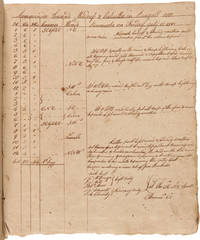
1796réf. WRCAM54712Mostly at sea from New York with stops in Calcutta Saint Helena Ascension Island and Cornwall England 1796. 246pp. Square folio. Original crude burlap covers stab-sewn with thick string. A bit toned and foxed occasional ink or tobacco burns. Very good. A remarkable artifact of early American naval commerce containing the sailing directions and shipboard activities of the "Ship Washington of Philadelphia" which sailed from New York to Calcutta rounding the southern tip of Africa and visiting Saint Helena and Ascension Island before crashing on the rocks at Cornwall England on the way to Hamburg Germany. The log contains a navigational ledger with locations headings wind and weather remarks along with occasional sick lists names of men "unfit for duty" those put on light duty temperatures and other information. The remarks are quite detailed and specific regarding shipboard work and activity. The captain of this final voyage of the ship WASHINGTON was Samuel Hubbart but the identity of the sailor who kept this log is unknown. The ship departed New York on July 4 1795 and reached Calcutta on August 31. Without the need for recording navigational data while in port the log's author switches from the ledger-style format and writes longer more-detailed daily entries describing the crew's activities. The crewmen mentioned include pilots boatswains carpenters coopers caulkers sailmakers and others. Most of the entries pertain to the maintenance of the ship while anchored in the bay. Numerous mentions are made of crew on board fixing various equipment including types and amounts of supplies. A few entries note the employment of Indian "Cooleys" on board the ship making various repairs. An interesting incident of September 17 bears relating: "Hearing a noise upon the main Deck Mr. Naylor went to see what was the matter - upon engaging found Abraham Moor had struck Thomas Williams the Cook as Moor said for wanting to trouble a girl which Moor had on board - Mr. Naylor told him he should not ill use that man for he had every reason to believe it to be false what he alledged against the Cook. Moor said he did not come here to be jawd by a black Man.S." After swearing he would "never go home" on the WASHINGTON Moor literally jumped ship just after this confrontation and hid on another ship before being found and brought back to the WASHINGTON "in irons." In early November a few entries mention the ship receiving a supply of sugar taking on "Three Burr Load of Sugar" on November 7 and two more "Burr Load" two days later. Subsequent entries detail the loading of several "Burr Load of Bales" and "one hundred bags of ginger." Over the course of the ship's time at Calcutta the author mentions encounters with at least four other American ships: the GANGES the HAMILTON the MAJOR PINKNEY of Charleston and the "American Ship Camilla of New York arriv'd here from London." By early February the WASHINGTON left Calcutta for the voyage to Hamburg spelled variously here as "Hamborough" and "Hamburgh" though the ship would never make it to Germany. On March 15 and again on April 6 the recordist notes an inventory of the ship's water supply. By March 23 the ship reaches a point "prependicular on Cape Lagulas Bank" the southernmost point of Africa. About a week later the punishment of a drunken sailor is reported: "Joseph Gonrabbysp who has for some time past been addicted to Drunkeness and no person on board having given him any liquor he was discovered this morning to have taken from the Ships stores about half a Gallon of rum and from his being frequently very drunk there is no doubt of his having been Guilty of the same offence before for which Capt. Hubbart is necessitated to order his Boatswain to flog him. Accordingly mustered all hands aft and give him one and a half dozen lashes." On April 16 the WASHINGTON arrived at the remote island of Saint Helena in the South Atlantic Ocean sending "the Boat on shore with an Officer to the Governor for permission to Anchor." Here the WASHINGTON restocked supplies including water potatoes & other vegetables rice and bread before embarking for Ascension Island which they reached on April 25. The author remarks on the "number of remarkable rocks like pyramids" and "a low point of black Rocks with a fine white sandy beach back of it" witnessed at Ascension Island. The WASHINGTON spent one night at Ascension where a group of men went ashore in order to "spend the Night in Catching Turtle in the different Bays." The crewmen caught twelve turtles and brought them aboard ship before continuing their journey. While heading north to Europe the WASHINGTON was boarded on May 17 by the "Quebec British Frigate Cap J Cook in Company with the Carnatic 74 Rear Admr Powel with a convoy of 21 sail of Transports & Gun boats with 10000 Troops on board bound for Martinico Martinique." On June 7 they again encounter another ship "a Spaniard from some port in South America bound for Cadiz out 3 months & 10 days - we cannot understand rightly what port she was from." Then on June 18 disaster struck the WASHINGTON as it ran aground at the Lizard Rocks off Cornwall England. The log book records the ship's demise: "The weather still very thick and hazy. At 9PM hearing the Surf break on shore took in all the studding sails Braced the Yards sharp and hauled to the Southward finding ourselves in amongst the Rocks off the Lizard have all aback and endeavored to get her out from among them but the Flood tide making very strong drove the Ship so hard upon the Rocks that with every endeavour we found it impracticable to get her off she having settled on them & the strength of the tide Thumping her very hard upon the Rocks sounded the Pump and found she made water very fast. Fired several Guns as a signal of Distress which brought several boats off from the Shore to our assistance." For the next couple of weeks the crew of the WASHINGTON participated in "discharging the cargo" from the ship so that it is not "plundered by the natives" sending everything to Falmouth "where the Goods are deposited under the protection of a Custom house Yaught." The log book mentions one crewman of the WASHINGTON "threatening revenge on Captain Hubbart." Another crewman is put "under a Guard of Soldiers" after selling off some of the muslin stored in the bales rescued from the wreck. Here the ship's log ends along with the career of the Ship WASHINGTON. A unique record of the last voyage of an early American trading vessel with insight into late 18th-century navigational methods and the commercial interests of Federal-era America. unknown books
1784réf. WRCAM50195London 1784. Engraving. Folio. Matted suitable for framing with the mat cut to near the plate mark. Very good. An individual plate from the atlas to Cook's THIRD VOYAGE. - ALASKA AND THE PACIFIC NORTHWEST. unknown books
1784réf. WRCAM10711London 1784. Engraving. Folio. Matted suitable for framing with the mat cut to near the plate mark. Very good. An individual plate from the Atlas to Cook's THIRD VOYAGE - KAMCHATKA. unknown books
1884réf. WRCAM5413Salem 1884. 4pp. Quarto. Folded slight chipping at edge a few spots else very good. Contains a letter describing a railroad trip from Omaha to Kansas City and on to St. Louis with observations along the way. Apparently part of a series by the same author describing an extensive western trip signed "Peabody." unknown books
1784réf. WRCAM50198London 1784. Engraving. Folio. Matted suitable for framing with the mat cut to near the plate mark. Very good. An individual plate from the tlas to Cook's THIRD VOYAGE. unknown books
1784réf. WRCAM50204London 1784. Engraving. Folio. Matted suitable for framing with the mat cut to near the plate mark. Very good. An individual plate from the atlas to Cook's THIRD VOYAGE. unknown books
1784réf. WRCAM50194London 1784. Engraving. Folio. Matted suitable for framing with the mat cut to near the plate mark. Very good. An individual plate from the atlas to Cook's THIRD VOYAGE. - ALASKA AND THE PACIFIC NORTHWEST. unknown books