1916réf. JOYCEJAM000887B.W. Huebsch New York. 1916. First edition. Octavo. pp iv 299.Spine slightly dull and a bit rubbed at the ends. Corners also slightly rubbed. Very good. No dustwrapper. B.W. Huebsch, New York. unknown
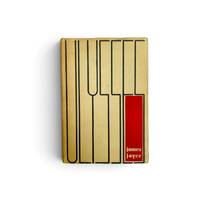
1934réf. 24133USA: Random House 1934. First authorised American edition first printing with "First American Edition" stated on the copyright page and no indication of a subsequent printing. Thick octavo measuring approximately 21 × 14 cm. xvii 2 5768 pp. Publisher's original beige cloth lettered in black and red with dark-brown top edge in the original typographical dust wrapper designed by Ernst Reichl. This copy retains the particularly desirable Reichl-signed variant of the dust wrapper with the designer's surname printed vertically at the lower-right corner of the front panel. Two variants of the wrapper are known one bearing Reichl's name and the other without it. Although no conclusive bibliographical priority has been established the signed variant is generally preferred by collectors and commands a premium. The first authorised edition of Joyce's modernist masterpiece to be published in the United States appearing twelve years after the Shakespeare and Company first edition of 1922. The novel had long been prohibited from importation into America on grounds of obscenity. Random House deliberately arranged for a copy to be seized by US Customs in order to test the ban in court culminating in Judge John M. Woolsey's landmark 1933 ruling that Ulysses was not obscene and could legally be admitted and published in the United States. This edition includes a foreword by Morris L. Ernst concerning the historic judgment together with Joyce's letter to Random House publisher Bennett Cerf expressing his desire for an authorised American edition. Ernst Reichl's striking typographical treatment of the binding wrapper and text has subsequently become recognised as a landmark of twentieth-century American book design. The price-clipped dust wrapper is slightly toned to the spine with a little chipping and areas of wear to the extremities. Some spotting to the cloth boards and minor toning internally. A very good copy in the very good original dust wrapper. Random House hardcover
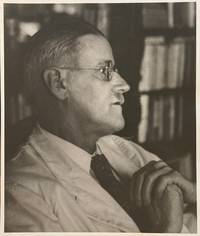
1937réf. 2884Paris: np 1937. Very Good. POWERFUL IMAGE OF JAMES JOYCE BY SURREALISTIC PHOTOGRAPHER JOSEF BREITENBACH. A remarkable set of circumstances had to come together to this photograph of James Joyce by German born photographer Josef Breitenbach to first exist and then to survive. Throughout the summer of 1937 as he experienced increasingly painful flashes in his right eye Joyce pored over early proofs of Finnegan's Wake then known only as "Work in Progress". Perhaps he was preoccupied with correcting the inevitable and myriad errors in his pun-flecked stream of consciousness prose or perhaps he was overcome with pain but we know from Breitenbach's pocket diary that Joyce canceled four times before the two exiled artists finally met. James Joyce's relationship with Ireland was famously complex and included self imposed exile. He and Nora Barnacle his future wife left Dublin in 1904 for mainland Europe never returning to his homeland after 1912. On the other hand photographer Josef Breitenbach was a Jewish German refugee who fled the rising Nazi's. Both his Jewish background and prior involvement with the short-lived revolution of 1918 made him an early target of the Brownshirts who knocked on his Munich studio door one day in 1932. Thinking on his feet Breitenbach was able to use his portrait of then Vice-Chancellor Papen whom he had photographed the year before together with a letter of thanks from Papen for his work in order to claim that he was under Papen's protection. Seizing the brief vacuum created by his subterfuge Breitenbach immediately packed his bags and within days departed for Paris. Once in Paris Breitenbach mingled with the Surrealists showing in gallery exhibitions alongside Man Ray Henri Cartier-Bresson and Brassai. Over time he developed a reputation for landscapes nudes and photo-journalism. By the time Breitenbach photographed James Joyce in July 1937 he had built a portfolio of portraits of artists such as Max Ernst Emile Bernard and Bertold Brecht. Studio portraits like this print of Joyce were often bathed in a soft seductive glow both flattering and intriguing. Here Joyce sits in profile with clasped hands behind him are blurred rows upon rows of bookshelves. The message is clear: despite failing vision Joyce remained a bright and vibrant writer. Meanwhile history marched on. Two years later in September 1939 Breitenbach was placed with other German and Jewish exiles in a French internment camp. His survival skills still intact he volunteered for a rural labor force that saved him from deportation to a concentration camp. With the help of friends in England and the United States Breitenbach once again fled the Nazi's arriving in New York in June 1941. To his enormous relief his entire oeuvre of photographic prints and negatives including the Joyce pictures had been smuggled out of Paris by another friend and sent to the States by way of Havana. As Breitenbach once again built a life for himself in a new country he turned to his pre-war work. Among the first negatives he developed were those of Joyce - an homage to the writer who had died months before at age 59 in Zurich. Silver gelatin photograph. Taken in 1937; printed later. With "Estate of Josef Breitenbach" stamp on verso. Very faint corner crease only noticeable on verso. Image approx 9x7 1/2 in / 23 x 19.2 cm; with margins 9 3/8 x 7 7/8 in / 23.8 x 19.9 cm. A beautiful evocative image. Rare. References: Michael Shnayerson Josef Breitenbach: James Joyce 9 Portraits. Dublin The Towers 2004. np unknown books
1937réf. 2884Paris: np 1937. Very Good. POWERFUL IMAGE OF JAMES JOYCE BY SURREALISTIC PHOTOGRAPHER JOSEF BREITENBACH. A remarkable set of circumstances had to come together to this photograph of James Joyce by German born photographer Josef Breitenbach to first exist and then to survive. Throughout the summer of 1937 as he experienced increasingly painful flashes in his right eye Joyce pored over early proofs of Finnegan's Wake then known only as "Work in Progress". Perhaps he was preoccupied with correcting the inevitable and myriad errors in his pun-flecked stream of consciousness prose or perhaps he was overcome with pain but we know from Breitenbach's pocket diary that Joyce canceled four times before the two exiled artists finally met. James Joyce's relationship with Ireland was famously complex and included self imposed exile. He and Nora Barnacle his future wife left Dublin in 1904 for mainland Europe never returning to his homeland after 1912. On the other hand photographer Josef Breitenbach was a Jewish German refugee who fled the rising Nazi's. Both his Jewish background and prior involvement with the short-lived revolution of 1918 made him an early target of the Brownshirts who knocked on his Munich studio door one day in 1932. Thinking on his feet Breitenbach was able to use his portrait of then Vice-Chancellor Papen whom he had photographed the year before together with a letter of thanks from Papen for his work in order to claim that he was under Papen's protection. Seizing the brief vacuum created by his subterfuge Breitenbach immediately packed his bags and within days departed for Paris. Once in Paris Breitenbach mingled with the Surrealists showing in gallery exhibitions alongside Man Ray Henri Cartier-Bresson and Brassai. Over time he developed a reputation for landscapes nudes and photo-journalism. By the time Breitenbach photographed James Joyce in July 1937 he had built a portfolio of portraits of artists such as Max Ernst Emile Bernard and Bertold Brecht. Studio portraits like this print of Joyce were often bathed in a soft seductive glow both flattering and intriguing. Here Joyce sits in profile with clasped hands behind him are blurred rows upon rows of bookshelves. The message is clear: despite failing vision Joyce remained a bright and vibrant writer. Meanwhile history marched on. Two years later in September 1939 Breitenbach was placed with other German and Jewish exiles in a French internment camp. His survival skills still intact he volunteered for a rural labor force that saved him from deportation to a concentration camp. With the help of friends in England and the United States Breitenbach once again fled the Nazi's arriving in New York in June 1941. To his enormous relief his entire oeuvre of photographic prints and negatives including the Joyce pictures had been smuggled out of Paris by another friend and sent to the States by way of Havana. As Breitenbach once again built a life for himself in a new country he turned to his pre-war work. Among the first negatives he developed were those of Joyce - an homage to the writer who had died months before at age 59 in Zurich. Silver gelatin photograph. Taken in 1937; printed later. With "Estate of Josef Breitenbach" stamp on verso. Very faint corner crease only noticeable on verso. Image approx 9x7 1/2 in / 23 x 19.2 cm; with margins 9 3/8 x 7 7/8 in / 23.8 x 19.9 cm. A beautiful evocative image. Rare. References: Michael Shnayerson Josef Breitenbach: James Joyce 9 Portraits. Dublin The Towers 2004. np unknown
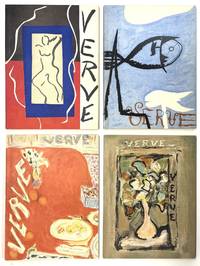
1937réf. 510540Verve 1937. First Edition. Paperback. FINE. Complete run of the first four issues of Teriade's legendary art magazine. Beginning with a stunning cover produced by Matisse for the first issue Verve would incorporate fresh artwork into its cover designed newly commissioned by artists such as Miro Picasso Chagall and other leading lights of the French art world. Each issue offered spectacular color lithographs printed by the Paris lithographers Mourlot. Early issues came in litho-printed card wrappers in boxes later volumes would be in paper-over board with litho covers. This choce allowed Teriade to feature the fresh lithographic artwork in the cover design but left the books themselves extremely fragile and succeptible to wear. Additionally the full-page lithographs have been continuous targets for art dealers looking to excise the plates. So condition seen here is quite rare with each volume preserved COMPLETE FINE with no signs of the wear and toning so commonly seen. 'The cover of Verve No. 1 is by Henri Matisse; it consists of three unmodulated colors--red blue and black--that the master cut directly from printers' ink specimen books. . Mattisse's cover for the first issue lithographed by Fernand Mourlot printers was an original work of art created expressly for the magazine--as would be practically all of the Verve's covers. . The painter took great pains to make sure that the cover would turn out exactly as he wished. . THe care Matisse lavished on what others might consider a minor undertaking was one of the hallmarks of Teriade's publications. How did he induce the greatest artists of this century to give the very best of themelves . Matisse and Teriade shared a common ideal. For both of them painting was life itself.' Michel Antonioz VERVE: The Ultimate Review of Art and Literature 35-36. Verve paperback
1916réf. 345922New York: B.W. Huebsch 1916. First edition. iv 299 1 pp. 1 vols. 8vo. Publisher's blue cloth stamped in gilt on spine and in blind on front cover. Some rubbing spine ends and slightly on corners one scratch to front cover near spine not affecting blind stamp; very clean internally. First edition. iv 299 1 pp. 1 vols. 8vo. First edition of Joyce's autobiographical novel recounting the schooldays and emerging artistic consciousness of his alter-ego Stephen Dedalus. The novel was refused by Grant Richards publisher of Dubliners Secker and Edward Garnett for Duckworth. Finally B.W. Huebsch agreed to take on the book if Harriet Weaver who had serialized the novel in The Egoist in 1914 would arrange for 750 copies to be published in London. It was published first in New York by Huebsch on 29 December 1916 and then in London on 22 January with the American sheets and a cancel Egoist title-page. Slocum & Cahoon A11 B.W. Huebsch unknown books
1916réf. 345922New York: B.W. Huebsch 1916. First edition. iv 299 1 pp. 1 vols. 8vo. Publisher's blue cloth stamped in gilt on spine and in blind on front cover. Some rubbing spine ends and slightly on corners one scratch to front cover near spine not affecting blind stamp; very clean internally. First edition. iv 299 1 pp. 1 vols. 8vo. First edition of Joyce's autobiographical novel recounting the schooldays and emerging artistic consciousness of his alter-ego Stephen Dedalus. The novel was refused by Grant Richards publisher of Dubliners Secker and Edward Garnett for Duckworth. Finally B.W. Huebsch agreed to take on the book if Harriet Weaver who had serialized the novel in The Egoist in 1914 would arrange for 750 copies to be published in London. It was published first in New York by Huebsch on 29 December 1916 and then in London on 22 January with the American sheets and a cancel Egoist title-page. Slocum & Cahoon A11 B.W. Huebsch unknown
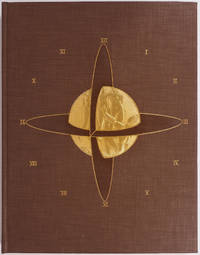
1935réf. 8741Number 58 of 1500 copies signed in pencil by Henri Matisse a further 250 copies of the edition were additionally signed by Joyce. This is the first illustrated edition of Ulysses though Matisse chose to supply illustrations of the Calypso episodes of Homer's Odyssey corresponding to the six episodes of the novel as his artist's response to Joyce's text which it is often said he never finished reading. He thus confounded both the publisher George Macy and most of the public on its first publication. The Limited Edition Club edition owes its existence to the lifting of the American ban on the novel in December 1933. Large 4to 295 × 225 mm pp. 363 1 6 soft ground etchings on thick paper with a total of 20 reproductions of Matisse's preliminary drawings on yellow and blue paper of different sizes 26 illustrations in all. Original brown buckram gilt with gold orb design to the upper cover original slipcase. The slipcase slightly chipped towards the head. A fine copy with the cloth binding exceptionally sharp and free of rubbing. Limited Editions Club.
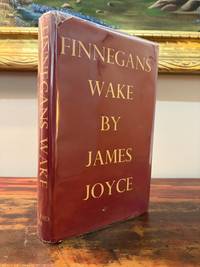
1939réf. 6185London: Faber and Faber Limited 1939. First Edition. Very Good/Very Good. First trade edition. In original unclipped jacket in a protective sheet. The jacket has some edge wear chipping and light toning to the spine. Bound in red cloth over boards with gilded lettering and lines on the spine. Square corners no lean slight push at the head of the spine. Long and lower edges roughly trimmed. Many pages uncut though also loose from being handled. Some toning to edges. Toning to pastedowns a few preliminary pages and final page of text; infrequent elsewhere. Joyce's follow-up to his Ulysses Finnegans Wake was written between 1922 and 1939. It was initially published in installments and its title was only revealed with the final publication. Its use of language lack of normal structure and use of characters baffled and baffle many readers though some consensus has formed around themes etc. Preceded by a 425-print run of signed limited editions. Pages: 8 628 Dimensions: 913/16 x 69/16 x 19/16. Faber and Faber Limited unknown
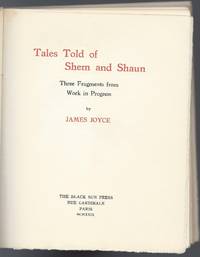
1929réf. 1882Paris: The Black Sun Press 1929. First edition. Limited one of 500 numbered copies printed in red and black on Holland Van Gelder Zonen 650 copies altogether. Provenance: the author’s grandson’s Stephen James Joyce’s bookplate. Illustrated with the famous abstract portrait by Constantin Brâncuși. In publisher’s wrappers. In the original gilt leafed cardboard slipcase. Slipcase slightly worn. Spine somewhat worn and stained. Otherwise in fine condition. First edition. Limited one of 500 numbered copies printed in red and black on Holland Van Gelder Zonen 650 copies altogether. Provenance: the author’s grandson’s Stephen James Joyce’s bookplate. Illustrated with the famous abstract portrait by Constantin Brâncuși. In publisher’s wrappers. In the original gilt leafed cardboard slipcase. 10 XV 1 55 7 p. and one loose plate protected with tracing paper. Limited first edition of Joyce’s Tales Told of Shem and Shaun the author’s grandson’s copy. This book includes three fragments from Work in Progress later published as Finnegans Wake. Stephen James Joyce 1932-2020 was the grandson of James Joyce and the executor of Joyce's literary estate. . The Black Sun Press unknown
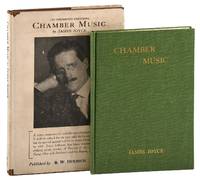
1918réf. 8532Boston and New York: The Cornhill Company / B.W. Huebsch 1918. First Unauthorized and Authorized American Editions. 1. Chamber Music. Boston: The Cornhill Company 1918. First Unauthorized American Edition First Printing one of ca.1000 copies. 12mo. 15.75cm; sage green cloth with titles stamped in gilt on upper front cover; wove endpapers also issued with laid endpapers with no priority established; glassine dustjacket; 40pp. A fresh Fine copy in a Near Fine copy of the publisher's glassine overlay showing some trivial wear a tiny tear at crown with a few tiny nicks. 2. Chamber Music. New York: B.W. Huebsch 1918. First Authorized American Edition First Printing. Octavo 18.25cm; dark brown laid paper-covered boards with titles stamped in blind on spine and in gilt on front cover; top edge gilt; dustjacket; 48pp. Some offsetting and two small faint splash marks to lower endpapers gentle sunning to spine with mild crease to heel; Near Fine. In the original pictorial dustjacket priced $1.00 at base of spine; edgeworn gently spine-sunned and lightly dust-soiled with shallow losses and a few tiny tears to spine ends and extremities none affecting lettering and corresponding faint splash marks to lower flap edges; an unrestored Very Good example. Both volumes housed together in a custom crushed morocco and marbled paper clamshell case. Joyce's first collection of poems originally issued by Elkin Mathews in 1907. The Cornhill edition published June 1918 precedes the authorized American edition published by B.W. Huebsch September 30 1918 by three months. Slocum & Cahoon A5 & A6. 8532. The Cornhill Company / B.W. Huebsch unknown
1907réf. 140946996London: Elkin Mathews 1907. First Edition. Near Fine. First edition of James Joyce's first trade book and one of 509 copies originally printed. Second issue with thick wove endsheets. Bound in publisher's green cloth stamped in gilt. Near Fine with slight fading to spine cloth foxing to endsheets and preliminary matter contents tanned. A beautiful copy of this collection of poems with the title being derived from the sound of urine hitting a chamber pot. Slocum & Cahoon 3. Elkin Mathews unknown books
1907réf. 140946996London: Elkin Mathews 1907. First Edition. Near Fine. First edition of James Joyce's first trade book and one of 509 copies originally printed. Second issue with thick wove endsheets. Bound in publisher's green cloth stamped in gilt. Near Fine with slight fading to spine cloth foxing to endsheets and preliminary matter contents tanned. A beautiful copy of this collection of poems with the title being derived from the sound of urine hitting a chamber pot. Slocum & Cahoon 3. Elkin Mathews unknown
1920réf. 021432Paris 24 November 1920. Letter. Close to Fine. Small 4-1/2" x 6-1/2" AUTOGRAPH LETTER SIGNED "James Joyce" to Madame Yasushi Tanaka Louise Gebhard Cann on blue paper integral with envelope which is addressed in Joyce's hand and postmarked on the verso. In full: "Dear Madam In reply to your letter I shall call on you on Sunday afternoon next as it seems to be the most convenient time for you. Sincerely yours James Joyce." Louise Gebhard Cann was a prominent writer and art critic in early 20th century France. At Ezra Pounds suggestion Cann wrote to Joyce requesting an interview with him for an article on writers in France set to appear in an upcoming issue of THE PACIFIC REVIEW. Following publication of the "Nausicaa" episode of ULYSSES in THE LITTLE REVIEW the previous year Joyces writing was deemed obscene. This particular issue of THE LITTLE REVIEW was effectively banned in the United States and it is believed that because of the controversy the editors then decided to omit any mention of Joyce from the finished article published in the March 1921 issue of THE PACIFIC REVIEW. Ellman JAMES JOYCE LETTERS III: 32. unknown books
1932réf. 69434New York: Berenice Abbott 1932. JOYCE James; ABBOTT Berenice. ABBOTT Berenice. Photographic Portrait of James Joyce by Berenice Abbott. New York: Bernice Abbott 1932. Full Description: JOYCE James. ABBOTT Berenice. Photographic Portrait of James Joyce by Berenice Abbott. New York: Berenice Abbott n.d. taken 1928. Original gelatin silver print portrait of Joyce taken by Abbott. Signed by the photographer in pencil in the lower right hand corner of the photograph. Mounted on stiff board. Abbott's stamp with her "50 Commerce Street NY" address on the verso of the mount. Image size: 13 x 10 1/8 inches; 330 x 260 mm. Some minor sunning around the perimeter of the photo. A tiny bit of scuffing to top and bottom edges. Otherwise about fine. This is the largest photo we can find of Joyce for the Commerce St. address. Swann Galleries who has had this photo before states "Circa 1932." This is a lovely and well-know portrait of author James Joyce. He is seated in Abbott's studio with a cane wearing a hat and his signature round-framed glasses. "Abbott photographed Joyce on two occasions the first in 1926 at his home in Paris and the second two years later in her studio. At the time of the sitting Joyce was struggling with teeth and eye problems and was struggling through completion of one of his best-known works Finnegan's Wake." "Berenice Alice Abbott July 17 1898 - December 9 1991 was an American photographer best known for her portraits of cultural figures of the interwar period New York City photographs of architecture and urban design of the 1930s and science interpretation of the 1940s to the 1960s." Wikipedia Abbott lived at 50 Commerce St. in NYC with her partner the influential art critic Elizabeth McCausland from 1935 to 1965. HBS 69434. $6000. Berenice Abbott unknown books
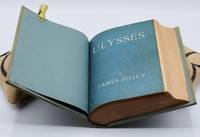
1922réf. 72310London: Egoist Press 1922. First UK edition. Printed in France from the plates of the original Shakespeare and Company edition just nine months after the first. Number 1299 of 2000 numbered copies. Finely re-bound in large 8vo gilt-stamped full blue leather with edges slightly trimmed by approximately 5 mm and the original paper covers bound in. The separately published 7-page errata that would have originally been laid in is not present here but facsimile copy is provided. Very good to near fine with original paper covers showing small amount of edge wear minor damp staining to bottom tips of several leaves and covers toned to light brown on spine and along edges. Slocum & Cahoon A18 Egoist Press unknown books
1928réf. 835131928. JOYCE James. Anna Livia Plurabelle. Orig. cloth t.e.g. New York: Crosby Gaige 1928. Slocum and Cahoon A32. First edition first issue. One of 800 signed copies this being no. 515. An early published chapter from Joyce's "work in progress" that would eventually become Finnegans Wake. A fine copy. unknown
1918réf. 82207New York:: B. W. Huebsch 1918. First American edition. publisher's cloth-backed blind-embossed boards in dust jacket. Preserved in a custom cloth slipcase. Some slight foxing to the endsheets and half-title page; in an unworn binding. the dust-soiled dust jacket has a few minor chips and tiny tears. . 12mo. B. W. Huebsch, hardcover
1932réf. 69434New York: Berenice Abbott 1932. JOYCE James; ABBOTT Berenice. ABBOTT Berenice. Photographic Portrait of James Joyce by Berenice Abbott. New York: Bernice Abbott 1932. Full Description: JOYCE James. ABBOTT Berenice. Photographic Portrait of James Joyce by Berenice Abbott. New York: Berenice Abbott n.d. taken 1928. Original gelatin silver print portrait of Joyce taken by Abbott. Signed by the photographer in pencil in the lower right hand corner of the photograph. Mounted on stiff board. Abbott's stamp with her "50 Commerce Street NY" address on the verso of the mount. Image size: 13 x 10 1/8 inches; 330 x 260 mm. Some minor sunning around the perimeter of the photo. A tiny bit of scuffing to top and bottom edges. Otherwise about fine. This is the largest photo we can find of Joyce for the Commerce St. address. Swann Galleries who has had this photo before states "Circa 1932." This is a lovely and well-know portrait of author James Joyce. He is seated in Abbott's studio with a cane wearing a hat and his signature round-framed glasses. "Abbott photographed Joyce on two occasions the first in 1926 at his home in Paris and the second two years later in her studio. At the time of the sitting Joyce was struggling with teeth and eye problems and was struggling through completion of one of his best-known works Finnegan's Wake." "Berenice Alice Abbott July 17 1898 - December 9 1991 was an American photographer best known for her portraits of cultural figures of the interwar period New York City photographs of architecture and urban design of the 1930s and science interpretation of the 1940s to the 1960s." Wikipedia Abbott lived at 50 Commerce St. in NYC with her partner the influential art critic Elizabeth McCausland from 1935 to 1965. HBS 69434. $6000. Berenice Abbott unknown
1931réf. 50369New York:: Sylvia Beach 1931. First authorized American edition. original gray-blue wrappers stamped in black. Very slight crease to front wrapper; else a fine copy. 12mo. Slocum and Cahoon A25. Sylvia Beach, unknown
1935réf. 51936New York: Limited Editions Club 1935. Hardcover. very good . Henri Matisse. 363p quarto. A very good copy in a worn publisher's slipcase. Inner hinges cracked but holding. Limited to 1500 copies this copy is number 1137. Signed by Henri Matisse. Matisse's illustrations for this work were the source of much outrage for Joyce as it came to be discovered that Matisse never read the book. Limited Editions Club hardcover
1922réf. 72310London: Egoist Press 1922. First UK edition. Printed in France from the plates of the original Shakespeare and Company edition just nine months after the first. Number 1299 of 2000 numbered copies. Finely re-bound in large 8vo gilt-stamped full blue leather with edges slightly trimmed by approximately 5 mm and the original paper covers bound in. The separately published 7-page errata that would have originally been laid in is not present here but facsimile copy is provided. Very good to near fine with original paper covers showing small amount of edge wear minor damp staining to bottom tips of several leaves and covers toned to light brown on spine and along edges. Slocum & Cahoon A18 Egoist Press unknown
1939réf. 87094London: Faber & Faber 1939. First trade edition. Hardcover. 1939 First trade edition first impression. Royal 8vo. Original red cloth ruled and lettered in silver to spine. Dust-jacket priced 25s. A very good first edition of Joyce's key work of literary modernism a hallucinatory dream-like narrative centred on the Earwicker family that weaves myth history and language into a cyclical structure. Very minor rubbing to jacket extremities but overall a very good example. Very Good Faber & Faber hardcover
1929réf. 181353Paris: Shakespeare and Company 1929. Who is Sylvia What is she that all our scribes commend her First edition first issue a press copy inscribed by Beach on the title page "the publisher Sylvia Beach" and with "press copy" ink-stamped on the initial blank. The first article "Dante. Bruno. Vico. Joyce" is Samuel Beckett's first appearance in print while the wider collection is among the earliest critiques of Finnegans Wake published ten years before the novel. The French writer Andre Chamson wrote "Sylvia carried pollen like a bee. She cross-fertilized these writers She did more to link England the United States Ireland and France than four great ambassadors combined. It was not merely for the pleasure of friendship that Joyce Hemingway Bryher and so many others often took the path to Shakespeare and Company in the heart of Paris." This early critique of Joyce's final work was partially intended to raise funds for the perennially impecunious writer. Other contributors include Marcel Brion Frank Budgen Stuart Gilbert Eugene Jolas Victor Llona Robert McAlmon Thomas McGreevy Elliot Paul John Rodker Robert Sage and William Carlos Williams. The publishers later sold sheets of this edition to Faber & Faber in London and New Directions in New York who reissued them with inserted title pages but this copy is from the original Paris issue. Octavo. Original white wrappers printed in black. Housed in custom orange cloth slipcase and chemise. Nicking and a couple of spots of faint toning to extremities short closed tears to spine ends chipping and toning to otherwise clean contents many leaves unopened: a very good copy. Slocum & Cahoon B10. hardcover
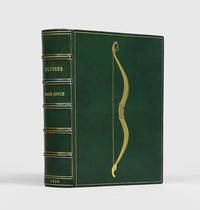
1936réf. 183370London: John Lane The Bodley Head 1936. Handsomely bound copy First UK edition. From a total printing of 1000 numbered copies this is one of 844 on japon vellum unsigned of which this is number 844. The Bodley Head Ulysses established the text for the succeeding 25 years and printed as appendices the International Letter of Protest against Samuel Roth's piracy and the famous legal judgement by John M. Woolsey lifting the ban in America on the publishing of the book. Crown octavo 250 x 190 mm. Finely bound by the Chelsea Bindery in green morocco spine lettered and decorated gilt raised bands block design of the bow first designed by Eric Gill gilt to front board twin rule to turn ins burgundy endpapers top edge gilt others untrimmed. The ocasional minor blemish an excellent copy finely bound. Slocum and Cahoon A23. hardcover