44 résultats
1978réf. 223151978. Sci-FiAfrican AmericanLiterature Butler Octavia E. Mind of My Mind. New York: Avon 1978. First Avon Mass market paperback edition with striking psychedelic-style cover art depicting a green-skinned woman with glowing eyes and intersecting telepathic beams of light underscoring the novel's speculative and psychic themes. The second book in Butler's groundbreaking Patternist series Mind of My Mind centers on Mary a powerful telepath whose emergence signals a new evolutionary leap for humanity. Mary's narrative is deeply intertwined with African diasporic identity and the complexities of inherited power. As Mary asserts her own psychic authority she challenges patriarchal and racial legacies embedded in her father's centuries-long domination. The novel's intersection of speculative fiction and Black feminist thought marks Butler as one of the genre's most visionary figures. With its themes of collective consciousness reproductive agency and telepathic connection the book anticipates later scholarship on Afrofuturism and queer futurity. As literary scholar Sandra Govan noted Butler's Patternist series "presents a vision of a black future that transcends traditional genre boundaries" Govan 1986. Spine creased moderate edgewear and rubbing to wrappers some toning and corner creasing to rear. Text block uniformly toned but internally clean and unmarked. Overall very good condition. Mind of My Mind remains a pivotal work in Black speculative fiction exploring psychic liberation and the creation of a matriarchal future. unknown books
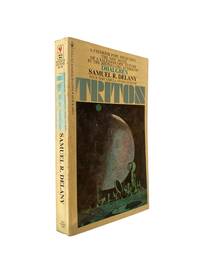
1976réf. 223921976. African AmericanLGBTQSci-Fi Literature Delany Samuel R. Triton. New York: Bantam Books 1976. First edition. Signed by the author on dedication page "Samuel R. Delany Amherst '91". A work of queer science fiction by one of the most significant African American science fiction writers of the 20th century. Triton is an essential exploration of gender variance social structure and identity. Published in the wake of Ursula K. Le Guin's The Left Hand of Darkness 1969 Delany's novel offers a pointed subversive response deepening the exploration of gender nonconformity by imagining a society where gender and sexual identities are not only fluid but technologically alterable. Set on the anarchic post-capitalist moon colony of Triton the novel follows Bron Helstrom a misfit and self-styled dissident whose inability to conform becomes a lens through which Delany critiques heteronormative power structures. As Bron undergoes elective gender reassignment surgery the novel dismantles essentialist notions of gender and challenges the fantasy of liberation without introspection. Unlike Le Guin's speculative treatment of androgyny through a unified race Delany himself a gay Black writer and theorist constructs a fractal intersectional society where race sexuality gender and desire constantly shift. Triton does not offer utopia but instead asks: who is truly capable of freedom and at what personal cost The book stands at the intersection of New Wave science fiction and early queer theory anticipating themes that would later define trans and nonbinary narratives in speculative literature. Toning and spotting to inner wrappers and end pages. Overall very good condition. A signed first edition of Delany's politically radical philosophically rich and narratively transgressive vision of queerness and selfhood. unknown books
1965réf. 191371965. Burgess Anthony. A Clockwork Orange 1965 first mass-market paperback edition brought Burgess's dystopian novel of juvenile violence state punishment behavioral conditioning and individual choice to an American paperback readership six years before Stanley Kubrick's 1971 film adaptation. Burgess constructs the novel around Alex and his teenage gang whose violence leads to Alex's imprisonment and compulsory submission to the Ludovico Technique a state conditioning program intended to make violent behavior physically intolerable to him. The conflict between Alex's brutality and the government's attempt to eliminate his capacity to choose gives the novel its central question: whether enforced good behavior can constitute moral goodness when the individual no longer possesses the freedom to act otherwise. Burgess Anthony. A Clockwork Orange. New York: Ballantine Books 1965. First mass-market paperback edition. 191 pages. Illustrated wrappers with cover art by Mozelle Thompson. The front shows a young man in sunglasses and black leather riding a motorcycle with two additional leather-clad men and a blonde woman grouped behind him. Ballantine explicitly marketed the novel through contemporary anxiety about juvenile delinquency placing above the title the line "Terrifying Shocker of a World Dominated by Teen-age Gangs." Thompson's imagery and the publisher's tagline differ markedly from the visual vocabulary subsequently associated with Kubrick's film preserving an American commercial interpretation of Burgess's novel before Alex and his droogs became inseparable in popular culture from the film's costumes and imagery. Published in paperback during a decade of sustained public debate over juvenile delinquency crime punishment and behavioral control this Ballantine edition shows how Burgess's novel was initially presented to American mass-market readers: not principally through the later film's imagery but as a sensational narrative of teenage gang violence. Minor scuffing and creasing to wrappers with an orange line beneath "Orange" in the title discoloration to rear wrapper and bumping at foot of spine. A few pencil notes occur throughout the text. Cover colors remain bright and crisp. Overall very good condition. First mass-market paperback edition with Mozelle Thompson's pre-Kubrick artwork and Ballantine's original emphasis on the novel's teenage gang culture. unknown books
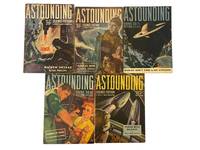
1939réf. 223811939. Campbell John W. ed. Astounding Science-Fiction archive 1939 documents a central moment in American science fiction publishing when pulp magazines helped consolidate the genre's Golden Age through technologically oriented storytelling serialized fiction scientific essays and editorial emphasis on rational problem solving. Campbell became editor of Astounding Science-Fiction in late 1937 and remained associated with the magazine through its later identity as Analog making these 1939 issues part of the editorial period most closely linked to the rise of hard science fiction and the professionalization of modern speculative fiction. The archive supports research into pulp publishing prewar technological imagination serialized genre fiction and the early publication context for writers including Clifford D. Simak L. Sprague de Camp Manly Wade Wellman and Theodore Sturgeon. Astounding Science-Fiction. Vols. XXII-XXIV. New York: Street & Smith Publications 1939. Five issues. Archive of five pulp magazine issues from January March April June and September 1939 with pictorial wrappers serialized novels novelettes short fiction scientific articles cover art and reader-oriented genre material. The issues appear during the magazine's Campbell editorship and show the cultural sphere of late-1930s science fiction through adventure plots scientific speculation alien contact technological conflict planetary engineering future war anxieties humor and experiments in scale that linked pulp entertainment to scientific literacy. 1 Campbell John W. ed. Astounding Science-Fiction. Vol. XXII No. 5. New York: Street & Smith Publications 1939. The January issue includes "The Blue-Men of Yrano" by Warner Van Lorne "Maiden Voyage" by Vic Phillips short fiction by L. Sprague de Camp Malcolm Jameson Arthur J. Burks and Norman L. Knight and a science article comparing photographic and telescopic observation. With cover art by John Frew the issue shows Astounding's mix of adventure fiction technical explanation humor and speculative treatment of contact and invention. 2 Campbell John W. ed. Astounding Science-Fiction. Vol. XXIII No. 1. New York: Street & Smith Publications 1939. The March issue includes "Cloak of Aesir" by Don A. Stuart Campbell's pseudonym alongside "Children of the 'Betsy B'" by Malcolm Jameson work by H. L. Gold and Part 2 of Clifford D. Simak's "Cosmic Engineers." The issue is useful for tracing Campbell's dual role as editor and writer and for documenting how Astounding combined alien-human tension technologically mediated emotion youth-centered rebellion and large-scale cosmic engineering within a single issue. 3 Campbell John W. ed. Astounding Science-Fiction. Vol. XXIII No. 2. New York: Street & Smith Publications 1939. The April issue features "Worlds Don't Care" by Nat Schachner "Revolt" by A. M. Phillips fiction by Eando Binder and Harry Walton and the concluding installment of Simak's "Cosmic Engineers." The issue's plague exile revolt and working-life motifs place scientific speculation in relation to social strain showing how late-1930s pulp science fiction used adventure forms to process crisis labor and planetary risk. 4 Campbell John W. ed. Astounding Science-Fiction. Vol. XXIII No. 4. New York: Street & Smith Publications 1939. The June issue includes Clifford D. Simak's "Hermit of Mars" Harl Vincent's "The Morons" Nat Schachner's "When the Future Dies" and L. Sprague de Camp's science feature "Design for Life" with cover art by Graves Gladney. Its contents bring together Martian conflict dehumanization future collapse and speculative biology illustrating how Astounding paired fiction with scientific commentary in the same editorial environment. 5 Campbell John W. ed. Astounding Science-Fiction. Vol. XXIV No. 1. New York: Street & Smith Publications 1939. The September issue includes "Forces Must Balance" by Manly Wade Wellman "Masson's Secret" by Raymond Z. Gallun "Atmospherics" by Victor Valding and Theodore Sturgeon's "Ether Breather" with cover art by Hubert Rogers. "Ether Breather" is identified by bibliographic sources as Sturgeon's first published science fiction story giving this issue particular importance within the archive as evidence of a major writer's entrance into the field through Campbell's Astounding. Typical pulp toning modest edge wear and some spine wear with interiors complete; good to very good overall. Substantive five-issue 1939 run of Astounding Science-Fiction showing Campbell-era editorial direction prewar hard science fiction serialized genre experimentation and an early appearance by Theodore Sturgeon within one of the defining American science fiction magazines of the twentieth century. unknown books
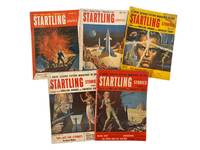
1954réf. 223831954. Magazines and PeriodicalsLiteratureSci-fi Five-issue pulp magazine archive of Startling Stories published by Better Publications and Standard Magazines 1954-55. The run includes work by notable authors such as Margaret St. Clair Judith Merril Richard Matheson Bryce Walton and Philip K. Dick. This period of Startling reflects pulp science fiction's evolving engagement with gender Cold War anxiety and postwar domesticity. Stories by women such as Margaret St. Clair Judith Merril and Miriam Allen deFord present unusual agency and narrative complexity for female characters within the male-dominated SF field of the era. 1 Startling Stories Vol. 32 No. 1 Summer 1954. Features "The Spiral of the Ages" by Fletcher Pratt a time-travel romance structured around male agency. Noteworthy contributions include "Finders Keepers" by Margaret St. Clair and "Stormy Weather" by Judith Merril-both rare instances of women-authored SF in a mainstream pulp. Merril's protagonist must telepathically track her missing son a complex female-centered narrative. St. Clair's story like much of her work blends domesticity with technological tension. 2 Startling Stories Vol. 32 No. 2 Fall 1954. Includes the full-length novel "Spacemen Lost" by George O. Smith and "Simple Psiman" by F.L. Wallace. Margaret St. Clair's "The Marriage Manual" returns with a satirical inversion of gendered advice culture: "If you can't beat the opposition join them." A rare example of feminist satire in a 1950s SF pulp. 3 Startling Stories Vol. 33 No. 1 Spring 1955. Includes Bryce Walton's "Too Late for Eternity" an aging-themed space opera with paternalist overtones and a novelet by William Morrison. Notable for short fiction by Philip K. Dick "Nanny" and Richard Matheson "Miss Stardust" the latter offering a proto-feminist beauty allegory. The issue's range also includes stories by Arthur Porges Roger Dee and Winston Marks. 4 Startling Stories Vol. 33 No. 2 Summer 1955. Contains three novelettes: "An Apple for the Teacher" by Robert F. Young "White Spot" by Murray Leinster and "Awakening" by Bryce Walton. "An Apple for the Teacher" is of particular note for its female educator protagonist whose students transcend earthly expectations. Also includes "Time Out for Redheads" by Miriam Allen deFord a prolific feminist and mystery writer whose tale involves female agency in matters of love and identity. Other contributors include Leslie Waltham and Gordon R. Dickson. 5 Startling Stories Vol. 33 No. 3 Fall 1955. Features "The Naked Sky" by James E. Gunn and "Jungle Doctor" by Robert F. Young. Margaret St. Clair contributes "Lazarus" a short about bodily resurrection and consent characteristic of her nuanced feminist themes. Leslie Waltham's "I Like a Happy Ending" offers psychological depth rarely given to women characters in pulp fiction. Includes seven short stories showcasing an unusual number of female-centered narratives. All issues exhibit moderate pulp toning and light edgewear with intact bindings and no major losses. Overall good condition. A compelling five-issue sequence within 1950s science fiction pulp culture including significant contributions by women writers. unknown books
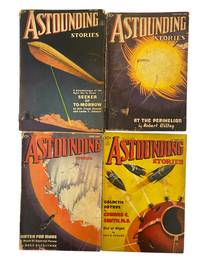
1937réf. 223771937. LiteratureSci-fi Four-issue archive of Astounding Stories published by Street & Smith during a pivotal year in American science fiction. These 1937 issues each contain original content and are distinguished by visually arresting pulp cover art and contributions from some of the genre's early luminaries. Together they offer insight into science fiction's evolution prior to its "Golden Age" highlighting key works by underrecognized women writers and reflecting contemporary concerns about gender race and modernity. 1 Astounding Stories Volume XVIII Number 6. February 1937. Includes "At the Perihelion" by Robert Willey "The Saga of Pelican West" by Eric Frank Russell and short fiction by Stanton A. Coblentz and Jack Williamson. Features a science article by John W. Campbell Jr. titled "Other Eyes Watching." Issue contains early science journalism exploring the structure of the solar system. 2 Astounding Stories Volume XIX Number 2. April 1937. Lead novel is "Water for Mars" by Ross Rocklynne with additional fiction by P. Schuyler Miller and A. Macfadyen Jr. Stories include "The Endless Chain" "The Eye of Madness" and "Winter on the Planet." Notable for thematic emphasis on protoplasmic disintegration and sentient planetary life mirroring fears of biological destabilization during the interwar years. 3 Astounding Stories Volume XIX Number 5. July 1937. Features "Seeker of To-Morrow" by Eric Frank Russell and Leslie T. Johnson as well as "The Great Ones" by Leslie F. Stone one of the few known women writing speculative fiction in this era. Stone's story engages with themes of biological balance and evolutionary survival subtly confronting male-dominated narratives of scientific supremacy. Her inclusion in this issue marks a rare acknowledgment of female speculative authorship in 1930s pulp culture. Very scarce. 4 Astounding Stories Volume XX Number 2. October 1937. Contains Part II of "Galactic Patrol" by E.E. Smith and "Out of Night" by Don A. Stuart John W. Campbell plus "Stardust Gods" by Dow Elstar and Robert S. McCready. While dominated by space opera tropes the issue reflects growing interest in interplanetary mythology and militarized masculinity. An early archive of Astounding Stories in the pre-Campbell editorship period showcasing early contributions to the sci-fi genre and a significant seldom-seen appearance by a pioneering woman author. Light chipping paper brittleness and spine wear present across issues with many exhibiting partial separation of front wrapper. Interiors complete bindings fragile. Overall condition ranges from fair to good. A scarce early pulp magazine archive highlighting the early emergence of a notable female writer within the male-dominated pulp science fiction field of the 1930s. unknown books
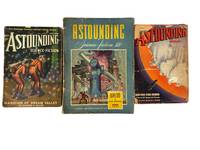
1937réf. 218581937. Magazines and PeriodicalsLiteratureSci-fi Astounding Science Fiction archive of three issues. New York: Street & Smith Publications 1937-1942. Three issues with color-illustrated wrappers. A significant three-issue archive from the formative years of Astounding Science Fiction the flagship pulp magazine that defined mid-20th-century science fiction under editor John W. Campbell Jr. These issues-dating from 1937 1938 and 1942-capture the emergence of hard science fiction and its consolidation as a genre grounded in technological rigor speculative futurism and serialized world-building. Notable for early appearances by many of the key architects of the Golden Age these issues exemplify Astounding's unique editorial voice and influence as well as its role in shaping American popular conceptions of science progress and modernity. Archive includes: 1 Astounding Science Fiction Volume XIX No. 2 April 1937. Published under the earlier "Astounding Stories" banner this issue features Ross Rocklynne's novella Water for Mars described as "a great novel of supernal forces" alongside stories by P. Schuyler Miller Nelson S. Bond and Ray Cummings. Additional science features include John W. Campbell Jr.'s Beyond the Life Line and Battell Loomis's A Talking Hill a speculative exploration of the Great Pyramid. 2 Astounding Science Fiction Volume XXII No. 2 October 1938. Marking the magazine's transitional moment as Astounding Science-Fiction this issue includes L. Ron Hubbard's serialized novel The Tramp part two alongside early work by Clifford D. Simak "Hunger Death" Raymond Z. Gallun "Magician of Dream Valley" and Eando Binder "Orestes Revolts". With Peter van Dresser's article "Why Rockets Don't Fly" the issue demonstrates Campbell's programmatic blending of scientific speculation and narrative fiction. 3 Astounding Science Fiction Volume XXIX No. 6 August 1942. A landmark issue containing the first appearance of Waldo by Anson MacDonald a pseudonym for Robert A. Heinlein. The novella introduced the concept of remote manipulator arms-"Waldoes"-which would enter the scientific and technical lexicon. Additional contributions include Hal Clement's Impediment Cleve Cartmill's The Link and Lewis Padgett's Deadlock. The article "Bombing is a Fine Art" by Willy Ley presents a technical perspective on aerial warfare at the height of World War II. This trio highlights the early pulp-to-prestige transition ushered in by Astounding Science Fiction cementing its role in launching the careers of Heinlein Hubbard Clement Simak and others. All issues with significant creasing and chipping. April 1937 issue with loss to top left corner of front wrapper front wrapper separated. In overall fair condition. A fascinating primary source for scholars of speculative fiction Cold War futurism and American literary science fiction's institutional evolution. Scarce in any condition. unknown books
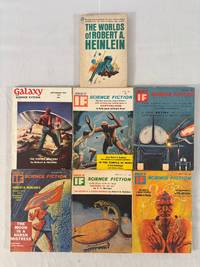
1951réf. 219121951. Mid-century pulp science fiction archive centering on Robert A. Heinlein's serialized first printing of "The Moon Is a Harsh Mistress" and Cold War-era narratives of space-age paranoia postwar individualism and futuristic political allegory. This archive offers a vivid look into the speculative anxieties and technological optimism of the 1950s and 1960s as imagined by some of the most influential voices in American science fiction. Robert A. Heinlein's serialized novel The Moon Is a Harsh Mistress a seminal libertarian narrative is represented here across multiple consecutive issues of Worlds of If magazine providing a nearly complete run of its first appearance in print. These pulps highlight the role of genre fiction in constructing narratives of rebellion authoritarianism and the limits of state control-core themes in American Cold War identity. Other major writers represented including John Brunner and Poul Anderson contributed to the racial geopolitical and gendered contours of American futurism during a moment of global unrest and rapidly advancing technology. Archive includes: 1Heinlein Robert A. "The Puppet Masters." Galaxy Science Fiction Vol. 2 No. 1. New York: Galaxy Publishing September 1951. A Cold War allegory of alien infiltration "The Puppet Masters" visualizes paranoia through body-snatching extraterrestrials-an early and potent example of anti-Communist subtext in sci-fi. Very good condition with bright cover. 2 Heinlein Robert A. "The Moon Is a Harsh Mistress." Worlds of If Vol. 15 No. 6. New York: Galaxy Publishing December 1965. The first installment of Heinlein's most overtly political novel introducing themes of AI consciousness penal colonies and libertarian revolt. Cover depicts Luna's underground world. Minor edge wear very good. This came out a year before the first edition first printing of June 1966. 3 Heinlein Robert A. The Worlds of Robert A. Heinlein. New York: Ace Books 1966. A reprint collection of Heinlein's short fiction exploring personal agency space colonization and post-nuclear dystopia. The collection includes stories first published in the 1940s and 1950s reflecting both Heinlein's evolving libertarian politics and the genre's response to atomic-age anxieties. Very good condition. 4 Heinlein Robert A. "The Moon Is a Harsh Mistress." Worlds of If Vol. 16 No. 3. New York: Galaxy Publishing January 1966 published out of order. This issue includes the third segment of the novel emphasizing lunar independence and collective identity. Also features "The Moonrakers" by Poul Anderson. Mild spine wear very good overall. 5 Heinlein Robert A. "The Moon Is a Harsh Mistress." Worlds of If Vol. 16 No. 1. New York: Galaxy Publishing February 1966. Second installment of the serialized novel featuring Heinlein's growing critique of Earth-centric authoritarianism. Minor toning very good. 6 Brunner John. "The Long Way to Earth." Worlds of If Vol. 16 No. 2. New York: Galaxy Publishing March 1966. Brunner's serialized novel is paired with shorter works from Keith Laumer and Heinlein. His tale reflects on alienation exile and homecoming mirroring 1960s countercultural themes. Minor creasing very good condition. 7 Laumer Keith and Brown Rosel G. Earthblood. Worlds of If Vol. 16 No. 4. New York: Galaxy Publishing April 1966. A collaboration between two of science fiction's most action-driven writers Earthblood explores interstellar race relations and power struggles in a crumbling empire. This issue also includes stories by Heinlein and Fred Saberhagen. Light wear to spine overall very good. All volumes retain their original illustrated covers with visual themes emphasizing atomic power space technology and human-alien hybridity. The archive's convergence around Heinlein's serialized lunar epic makes it a rare and cohesive grouping ideal for scholars of American libertarianism in popular fiction Cold War sci-fi allegory and serialized storytelling in pulp periodicals. Light general wear across volumes including minor edge rubbing and spine creasing. No missing pages or internal markings. Overall very good condition across the archive. unknown books
1990réf. 2221738Bantam edition. 6 3/4" x 4". Original stiff color pictorial wrappers. Very good. 342 pages. Signed and inscribed by Bradbury on title page with large drawing of a monster: "Gerry! From Ray Bradbury 2/8/92." Bantam Books paperback books
réf. 31115NY1962: Doubleday First edition first prnt. Inscribed by Bradbury on the front free endpage. "Nan! Jessie! Merry Christmas! 1962! and Love! from Ray Bradbury." The inscriptee's small Hollywood address label has been affixed on an angle on the page and partially covers the date. Touch of shelfwear mostly at the spine ends lower board corners lightly bumped beginning toning on the endpages; dustjacket with wear at the corners and spine ends tiny chips and wrinkling on the topedge. A bright and tight copy in Very Good condition in a Very Good dustjacket with an archival cover. Bradbury;s eighth story collection. Contains two previously uncollected storeies. Inscribed & Dated by Author. First Edition. Hardcovers. Very Good/Very Good. 8vo - over 7¾" - 9¾" tall. Doubleday hardcover books
réf. 000703Alfred Knopf 1972 Book. As New. Hardcover. F. Cloth. As New/As New. First Edition. 8vo - over 7¾" - 9¾" tall. ISBN:0-394-82472-5. Mint copy erasure of ownership on front paste down. Alfred Knopf, 1972 Hardcover books
réf. 001091Crowell 1986 Book. As New. Hardcover. Signed by Authors. F. Cloth. As New. First Edition. 4to - over 9¾" - 12" tall. ISBN:0-690-04545-X. Presentation by illustrator original art a Monster by Brown. Crowell, 1986 Hardcover books
1971réf. A35139New York: Dodd Mead & Company. Near Fine in Near Fine dust jacket. 1971. 1st American Edition; 1st Printing. Hardcover. 039606325X . SIGNED EDITION. First American Trade Edition following a mimeographed stapled limited edition. This book is in Near Fine condition and has a Near Fine dust jacket. The book and its contents are in clean bright condition. The text pages are clean and bright. The dust jacket is crisp and clean with the exception of light sunning to the spine and spine joints. This copy has been signed by the author on the title page. "Blish spent 19421944 as a medical technician in the United States Army. After the war he became the science editor for the Pfizer pharmaceutical company. His writing career progressed until eventually he gave up his job to become a full-time writer. He is credited with coining the term gas giant in the story "Solar Plexus" as it appeared in the anthology Beyond Human Ken edited by Judith Merril. The story was originally published in 1941 but that version did not contain the term; Blish is thought to have added it in a rewrite done for the anthology which was first published in 1952. From 1962 to 1968 Blish worked for the Tobacco Institute. Then in 1968 Blish left his native United States and moved to Henley-on-Thames England. From 1967 to 1977 Blish worked on a series of books for the Star Trek franchise. He died before the series was completed and the final volume Star Trek 12 was co-credited to his wife." ; Signed by Author . Dodd, Mead & Company hardcover books
1992réf. 33759Bedford: Applewood Books. Near Fine in Near Fine dust jacket. 1992. Hardcover. 1557091773 . Third printing of this facsimile edition. About fine in like dust jacket. . Applewood Books hardcover books
1997réf. 11122NY: Farrar Straus Giroux 1997. First edition first prnt. Faint soiling on the topedge; unread copy in Near Fine condition in a Fine dustjacket with an archival cover. Bakis's first novel. Winner of the Bram Stoker Award. First Edition. Hardcovers. 8vo - over 7¾" - 9¾" tall. The images are of the book described and not stock photos. Farrar Straus Giroux hardcover books
2004réf. 6166NY: Ballantine Books 2004. First US edition first prnt. Signed by Mieville on the title page. Unread copy in Fine condition in a Fine dustjacket with an archival cover. Mieville's fourth novel and the third of his Bas-Lag novels. Hardcovers. Fine/Fine. 8vo - over 7¾" - 9¾" tall. Ballantine Books hardcover books
2000réf. 010348New York: Knopf 2000. First American edition of book 3 of the "His Dark Materials" trilogy; A most acceptable copy; 518pp. First U.S. Edition. Hard Cover. VG/VG. Knopf Hardcover books
2001réf. 33000NY: Hyperion Volo. Fine. 2001. Hardcover. 0786807067 . First printing. Fine in pictorial boards. No dust jacket as issued. . Hyperion (Volo) hardcover books
2006réf. 40135NY:: Harpercollins. Near Fine in Near Fine dust jacket. 2006. Hardcover. 0060577347 . Book club edition. Very near fine in like dust jacket. . Harpercollins, hardcover books
2005réf. 34737NY: Delacorte Press. Fine in Fine dust jacket. 2005. Hardcover. 0385730438 . Illustrated by the author. First printing. Fine in a fine dust jacket. . Delacorte Press hardcover books
2005réf. 32715Orlando: Harcourt. Fine. 2005. Hardcover. 015205457X . Illustrated by Scott M. Fischer. First printing. Review copy with slip laid in. Fine in glossy illustrated boards. No dust jacket as issued. . Harcourt hardcover books
2001réf. 33001NY: Hyperion Volo. Fine. 2001. Hardcover. 0786807091 . First printing. Fine in pictorial boards. No dust jacket as issued. . Hyperion (Volo) hardcover books
2002réf. 32998NY: Hyperion Volo. Near Fine. 2002. Hardcover. 0786808497 . First printing. About fine in pictorial boards. No dust jacket as issued. . Hyperion (Volo) hardcover books
2001réf. 32999NY: Hyperion Volo. Fine. 2001. Hardcover. 0786807075 . First printing. Fine in pictorial boards. No dust jacket as issued. . Hyperion (Volo) hardcover books
2001réf. 35004NY: Scholastic Blue Sky Press. Fine in Fine dust jacket. 2001. Hardcover. 0590316818 . Illustrated by Mark Teague. Eighth printing. Fine in a fine dust jacket. . Scholastic (Blue Sky Press) hardcover books