6.419 Ergebnisse
1989Best.-Nr. BN147972Verlag für Amerikanistik D. Kuegler 1989. 1989. Hardcover. Calumet. Der heilige Rauch. Pfeifen und Pfeifenkulte bei den nordamerikanischen Indianern. Calumet. Der heilige Rauch. Pfeifen und Pfeifenkulte bei den nordamerikanischen Indianern. Willy Schroeter Verlag für Amerikanistik D. Kuegler hardcover
Best.-Nr. 106662Zürich ABC 1979. 4° 159 S. 108 meist farb. Abb. OLwd. Min. gebrauchspurig sonst tadell. - Camille Graeser 1892-1980 wuchs in Stuttgart auf. Er absolvierte eine Schreinerlehre und studierte an der dortigen Königlichen Kunstgewerbeschule Möbelbau und Innenarchitektur bei Bernhard Pankok. 1915 arbeitete er als Möbelzeichner in Berlin und begegnete dort Herwarth Walden von der Galerie Der Sturm. 1917 eröffnete er in Stuttgart ein eigenes Atelier für Innenarchitektur und Werbegrafik und nahm Malunterricht bei Adolf Hölzel.In Stuttgart war Graeser vor allem als Innenarchitekt und Designer von Gebrauchsgegenständen tätig. 1918 konnte er seine Werke im Kunsthaus Schaller in Stuttgart erstmals in einer Einzelausstellung präsentieren. Er wurde 1918 zudem in den Deutschen Werkbund aufgenommen und beteiligte sich an dessen Ausstellungen. So steuerte er zum Beispiel Exponate zu der wegweisenden Ausstellung Die Form ohne Ornament 1924 bei. 1927 richtete Graeser eine Musterwohnung in einem von Mies van der Rohe entworfenen Wohnblock in der Weißenhofsiedlung in Stuttgart im Rahmen der Ausstellung Die Wohnung ein.1933 flüchtete Graeser nach Zürich. In der Schweiz fiel es ihm zunächst schwer beruflich wieder Fuß zu fassen. Er heiratete Emmy Rauch die den Arbeitslosen finanziell unterstützte. In der Schweiz konzentrierte sich Graeser auf die Malerei. Seine künstlerische Tätigkeit begann 1937 mit dem Beitritt zur Künstlergruppe allianz. Ab dem Folgejahr beteiligte er sich an fast allen Ausstellungen der allianz ab 1947 auch im Ausland.Die Staatliche Akademie der Bildenden Künste Stuttgart ernannte Camille Graeser am 8. Februar 1977 aus Anlass seines 85. Geburtstags zum Ehrenmitglied wodurch „nicht nur die engen Beziehungen des Malers und Graphikers zum Stuttgarter Kunstleben sondern auch sein herausragender Beitrag zur konkreten Kunst gewürdigt werden“ sollten.5Er fand seine letzte Ruhestätte auf dem Zürcher Friedhof Nordheim. Seine Grabstätte wurde aufgehoben.Zur Verwaltung seines Nachlasses rief seine Witwe die Camille-Graeser-Stiftung ins Leben die sich bis heute seinem künstlerischen Wirken widmet. 010 Zürich, ABC, 1979 unknown
Best.-Nr. 41309Zürich ABC 1979. 4° 159 S. 108 meist farb. Abb. OLwd. m. OU. in Schuber Schuber min. gebräunt sonst tadell. - Camille Graeser 1892-1980 wuchs in Stuttgart auf. Er absolvierte eine Schreinerlehre und studierte an der dortigen Königlichen Kunstgewerbeschule Möbelbau und Innenarchitektur bei Bernhard Pankok. 1915 arbeitete er als Möbelzeichner in Berlin und begegnete dort Herwarth Walden von der Galerie Der Sturm. 1917 eröffnete er in Stuttgart ein eigenes Atelier für Innenarchitektur und Werbegrafik und nahm Malunterricht bei Adolf Hölzel.In Stuttgart war Graeser vor allem als Innenarchitekt und Designer von Gebrauchsgegenständen tätig. 1918 konnte er seine Werke im Kunsthaus Schaller in Stuttgart erstmals in einer Einzelausstellung präsentieren. Er wurde 1918 zudem in den Deutschen Werkbund aufgenommen und beteiligte sich an dessen Ausstellungen. So steuerte er zum Beispiel Exponate zu der wegweisenden Ausstellung Die Form ohne Ornament 1924 bei. 1927 richtete Graeser eine Musterwohnung in einem von Mies van der Rohe entworfenen Wohnblock in der Weißenhofsiedlung in Stuttgart im Rahmen der Ausstellung Die Wohnung ein.1933 flüchtete Graeser nach Zürich. In der Schweiz fiel es ihm zunächst schwer beruflich wieder Fuß zu fassen. Er heiratete Emmy Rauch die den Arbeitslosen finanziell unterstützte. In der Schweiz konzentrierte sich Graeser auf die Malerei. Seine künstlerische Tätigkeit begann 1937 mit dem Beitritt zur Künstlergruppe allianz. Ab dem Folgejahr beteiligte er sich an fast allen Ausstellungen der allianz ab 1947 auch im Ausland.Die Staatliche Akademie der Bildenden Künste Stuttgart ernannte Camille Graeser am 8. Februar 1977 aus Anlass seines 85. Geburtstags zum Ehrenmitglied wodurch „nicht nur die engen Beziehungen des Malers und Graphikers zum Stuttgarter Kunstleben sondern auch sein herausragender Beitrag zur konkreten Kunst gewürdigt werden“ sollten.5Er fand seine letzte Ruhestätte auf dem Zürcher Friedhof Nordheim. Seine Grabstätte wurde aufgehoben.Zur Verwaltung seines Nachlasses rief seine Witwe die Camille-Graeser-Stiftung ins Leben die sich bis heute seinem künstlerischen Wirken widmet. 010 Zürich, ABC, 1979 unknown
1979Best.-Nr. BN252151Zürich : ABC-Verlag 1979. 1979. Camille Graeser : Lebensweg u. Lebenswerk eines konstruktiven Malers. Willy Rotzler Camille Graeser : Lebensweg u. Lebenswerk eines konstruktiven Malers. Willy Rotzler Rotzler Willy und Camille Graeser Zürich : ABC-Verlag unknown
Best.-Nr. 12560Chez Higgins (Témoignages), s.d. In-8, 15 photographies (tampon sec de l'éditeur) sous serpentes et (4) pp. de texte, sous portefeuille illustré d'une photo contrecollée, et étui.
1931Best.-Nr. 1415717New York: Paul B. Hoeber Inc 1931. First Edition. Hardcover. Octavo xxxiii 2 427 pages plus eleven plates including frontispiece. In Very Good minus condition. Bound in full red cloth with gilt titling to front board and spine and blind-tooled emblem to rear board. In clear plastic cover. Spine has heavy rubbing throughout with fading to gilding and cloth completely rubbed through in a few spots. Boards have bumping to fore corners rubbing and scuffing throughout and slightly loose joints; front board has heavier rubbing near spine. Text block has age-toning and scuffing to edges with dust soiling to top edge; gift inscription dated April 1931 to front free endpaper and age-toning and light scuffing throughout. Shelved in Room A octavo overflow. 1415717. Special Collections - Upstairs. Paul B. Hoeber, Inc hardcover
1931Best.-Nr. 1415717New York: Paul B. Hoeber Inc 1931. First Edition. Hardcover. Octavo xxxiii 2 427 pages plus eleven plates including frontispiece. In Very Good minus condition. Bound in full red cloth with gilt titling to front board and spine and blind-tooled emblem to rear board. In clear plastic cover. Spine has heavy rubbing throughout with fading to gilding and cloth completely rubbed through in a few spots. Boards have bumping to fore corners rubbing and scuffing throughout and slightly loose joints; front board has heavier rubbing near spine. Text block has age-toning and scuffing to edges with dust soiling to top edge; gift inscription dated April 1931 to front free endpaper and age-toning and light scuffing throughout. Shelved in Room A octavo overflow. 1415717. Special Collections - Upstairs. Paul B. Hoeber, Inc hardcover books
1931Best.-Nr. 305440New York: Hoeber 1931. hardcover. very good. Frontispiece portrait. 427pp. thick tall 8vo maroon cloth spine dulled. New York: Paul Hoeber 1931. First Edition. Very good. "An excellent monograph of concer" Leonardo written because of the surgeon's great interest in the surgical attack on it. Hoeber unknown
Best.-Nr. A9781258399511Paperback / softback. New. paperback
1931Best.-Nr. 305440New York: Hoeber 1931. hardcover. very good. Frontispiece portrait. 427pp. thick tall 8vo maroon cloth spine dulled. New York: Paul Hoeber 1931. First Edition. Very good. "An excellent monograph of concer" Leonardo written because of the surgeon's great interest in the surgical attack on it. Hoeber unknown books
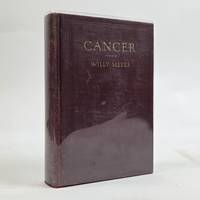
1931Best.-Nr. 81837New York New York: Paul B. Hoeber Inc 1931. Presumed First Edition First printing. Hardcover. Good. xxxiii 3 427 1 pages. Footnotes Some cover wear. Includes Preface Introduction List of Illustrations and List of Portraits. Part 1 covers the Origin the Development and the Self-Perpetuation of Cancer; Part 2 covers The Therapy of Cancer including the treatment of Operable and Inoperable Cancer in the Light of a Systemic Conception of Malignancy. The book also contains a Summary a Retrospect and an Outlook an Index of Personal Names and an Index of Subjects as well as 5 black and white illustrations of Lymph nodes and 12 black and white portraits of deceased scientists renowned in cancer research. Inscribed by the author on the fep: Inscription reads: To Dr. H. Beaman Douglass with kind regards Willy Meyer Palm Beach February 1931. Thoracic surgery in America owes a great deal to Meyer's pioneer work. In his clear vision of the importance of this specialty he founded in I919 the New York Society for Thoracic Surgery and the American Association for Thoracic Surgery. Dr. Meyer's interest in cancer and his extensive study of the literature on cancer are best evidenced in his last publication a book entitled "Cancer" in which he comes to the conclusion that cancer is a systemic disease. Among his publications those on thoracic surgery are probably the most numerous. He was a Fellow of the American College of Surgeons a member of the American Medical Association American Surgical Association American Thoracic Gastro-Enterological and Urological Associations American Association for Cancer Research New York Academy of Medicine Pathological Society. Dr. Beaman Douglass was an eye ear nose and throat specialist. He invented the Douglass tonsillotome among other instruments. He was a former consulting surgeon at the New York Post-Graduate Hospital. This book deals with the tumor cancer as an ordinary lawful reaction of the tissue to certain systemic and local morbid conditions of the human organism. The book denies the autonomy of cancer. Halsted and Meyer were the first to achieve successful results with the radical mastectomy thus ushering in the modern era of surgical treatment for breast cancer. In 1894 William Halsted published his work with radical mastectomy from the 50 cases operated at Johns Hopkins between 1889 and 1894. Willy Meyer also published research on radical mastectomy from his interactions with New York patients in December 1894. The en bloc removal of the breast tissue became known as the Halsted mastectomy before adopting the title "the complete operation" and eventually "the radical mastectomy" as it is known today. Radical mastectomy was based on the medical belief at the time that breast cancer spread locally at first invading nearby tissue and then spreading to surrounding lymph ducts where the cells were "trapped". It was thought that hematic spread of tumor cells occurred at a much later stage. Halsted himself believed that cancer spread in a "centrifugal spiral" solidifying this opinion in the medical community at the time. Paul B. Hoeber, Inc hardcover
1966Best.-Nr. SKU1029164Pergamon 1966. unknown_binding. Very Good. 0x0x0. 1966 Pergamon Press. Stated First Edition. From U.S. Army Library. Pages all clean tight and bright. Black cloth hardcover is clean and strong with light rub at corners and spine ends. Pergamon unknown
Best.-Nr. 200813073Verviers, Marabout junior, 1961 ; in-12, 155 pp., broché, couverture illustr(. N° 207 - la mission dramatique de l'équipage du fameux B.29 qui convoya, vers le Japon, la bombe atomique tristement célèbre.
2013Best.-Nr. BN490933Kehl am Rhein. SADIFA MEDIA Verlags GmbH 2013. 2013. Carl Benz - Ein Leben für das Automobil Carl Benz - Ein Leben für das Automobil Williamson Willy Harold und Martin Grünewald Kehl am Rhein. SADIFA MEDIA Verlags GmbH unknown
Best.-Nr. 38211Neuchâtel, Paul Attinger, 1926. In-8°, 235p. Broché.
1926Best.-Nr. AUB-2567Neuchâtel, Paul Attinger 1926. Bon exemplaire broché, couverture ornée d'éd., in-8, 235 pages + annexe.
Best.-Nr. 8416aafNeuchâtel, Paul Attinger, 1926, in-8°, Frontispice portrait + 2 35 p., Une histoire de l'industrie du chocolat en Suisse vu au travers de Suchard. brochure originale.
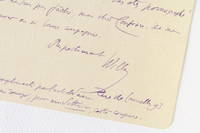
1900Best.-Nr. 644351900. Fine. s. d. 11.50 x 8 cm une carte Autograph letter signed by Henry Gauthier-Villars known as Willy 6 lines in purple ink sender's address at foot: ""Rue de Courcelles 93"". Amusing letter from Willy central personality of Parisian social life at the turn of the 19th century where all his taste for humor and provocation shows through: ""Ah! Ah! You too are a pornographer! I am not displeased my dear colleague to find myself in such good company"". unknown
Best.-Nr. 007996Henry Gauthier-Villars dit Willy (1859-1931), écrivain. C.A.S., sd, 5 lignes. Amusant courrier : « Seigneur, vous l'avez faite [illisible] Faites le admettre. Et que votre Nom soit béni ! Willy. Elle s'appelle Marcelle Rossat ». [181b]
Best.-Nr. 18016Carte postale Disc AZ noir & blanc de Line et Willy au format 9 x 13,8 cm. Au verso liste des enregistrements. Carte dédicacée par les artistes.
1903Best.-Nr. 80483A. Gerschel | Paris 17 novembre 1903 | 9 x 14 cm | une carte postale photographique
2019Best.-Nr. 2-8416436614Dolmen Ediciones 2019. Paperback. New. 56 pages. Spanish language. 11.34x8.66x0.79 inches. Dolmen Ediciones paperback
2015Best.-Nr. 2-8416436088Tebeos Dolmen Editorial S.L. 2015. Hardcover. New. 56 pages. Spanish language. 9.13x6.57x1.11 inches. Tebeos Dolmen Editorial, S.L. hardcover
2019Best.-Nr. 2-8416961700Dolmen Publicaciones 2019. Hardcover. New. 56 pages. Spanish language. 11.10x8.50x0.79 inches. Dolmen Publicaciones hardcover
2019Best.-Nr. 2-8416961131Dolmen Editorial 2019. Paperback. New. 56 pages. Spanish language. 11.42x8.66x0.79 inches. Dolmen Editorial paperback