VoltaireBiblio.com

10 419 résultats
réf. 1023985624.Ghardcover. Good. Access codes and supplements are not guaranteed with used items. May be an ex-library book. hardcover
1921réf. AQ33882Paris: Éditions Jules Tallandier 1921. 4 xvi 2 174pp 4. Title in red and black. With 10 plates and numerous illustrations in the text by Adrein Moreau. Bound in later purple half-morocco marbled paper boards lettered in gilt to spine stamp-signed with gilt omega symbol and dated in blind 1969 to rear turn-in. Original publisher's printed wrappers bound in. Spine sunned. Together with: LAFAYETTE Madame de. La princesse de clèves. Paris. A. Ferroud 1925. Limited edition of 1225 copies of which this is number 353. 4 220pp 2. With numerous coloured illustrations in the text seven full-page. Bound in later dark-green half-morocco marbled paper boards lettered in gilt to spine T.E.G. stamp-signed with gilt omega symbol and dated in blind 1969 to rear turn-in. Original publisher's printed wrappers bound in. Inked inscription of Rosemary Gaisford to front blank fly-leaf. A trifle rubbed. And: LOTI Pierre. Pêcheur d'Islande. Paris. Librairie Hachette 1928. 271pp 3. Bound in later dark-green half-morocco marbled paper boards lettered in gilt and blind to spine T.E.G. stamp-signed in blind with omega symbol and dated in blind '70' to rear turn-in. Original publisher's printed wrappers bound in. Inked inscription of Rosemary Walker to front blank fly-leaf. And: MAUPASSANT Guy de. Contes choisis. Stockholm. Jan Förlag 1946. 364pp. Bound in later burgundy half-morocco decorated paper boards T.E.G. stamp-signed in blind with omega symbol and dated in blind '70' to rear turn-in. A collection of four choice copies of French classics handsomely bound by an anonymous artisan mysteriously identified only by the Greek character omega. . 8vo. Éditions Jules Tallandier hardcover
réf. ria9783387034097_inpHardcover. New. New Book; Fast Shipping from UK; Not signed; Not First Edition; Reproduction de l'original. La maison d'édition Megali se spécialise dans la reproduction d'uvres historiques en gros caractères afin de faciliter la lecture aux personnes dont la vue est réduite. hardcover
réf. ria9783368334093_inpHardcover. New. New Book; Fast Shipping from UK; Not signed; Not First Edition; Reproduction de l'original. hardcover
1933réf. 956F9Paris: Gibert Jeune Librairie D'Amateurs 1933 . Paperback. Good. 11" by 8.5". Umberto Brunelleschi. A beautifully illustrated Limited Edition of Voltaire's 'Candide' illustrated with vibrant colour plates from Umberto Brunelleschi. In the original French.The second edition to feature the illustrations of Italian artist Umberto Brunelleschi.Number 22 of 2500 copies produced printed on vellum.Illustrated with sixteen colour plates. Collated complete.First published in 1759 Enlightenment philosopher Voltaire's novella enjoyed both success and scandal upon publication widely banned from public consumption due to religious blasphemy. As philosophers of Voltaire's day contended with the problem of evil so does Candide in this theological work albeit more directly and humorously. Voltaire ridicules religion theologians governments armies philosophies and philosophers. In the publisher's original paper wraps retaining the original glassine. Wraps exceptionally bright with chipping to back strip head and tail and light vertical folds to back strip. Glassine age toned with losses to back strip head and tail small holes to folds over joints and closed tears to perimeters. Internally the binding is tender with the gatherings of the first half of the work working loose. Pages clean and bright. Good Gibert Jeune, Librairie D'Amateurs paperback
réf. feb69466Used. For more details please contact me unknown
réf. feb45025Used. For more details please contact me unknown
1940réf. 85419A Paris: Ed. du Charme 1940. Cm. 205 pp. 193 3. Con molte illustrazioni a colori nel testo di Jylbert. Bross. orig. con velina protettiva. Ben conservato. Ex libris. Edizione a tiratura limitata e numerata. Ed. du Charme unknown
1959réf. 80862Alpignano: Tallone 1959. Cm. 265 pp. xxiii 1 190 8. Brossura editoriale protetta da velina entro camicia e custodia. Perfetta conservazione. Pregevole edizione stampata in 650 esemplari numerati ns. n. 436 su carta distinta: "papier vélin ivoire". Tallone unknown
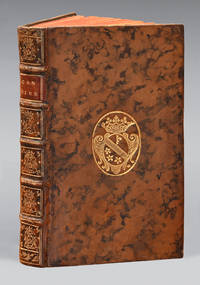
réf. ABAA-75TH-VBF-27N.p. Genève Cramer 1759. 12mo of 299 pages. Signatures A-N4. Full marbled calf coat of arms gilt-stamped in the center of the covers spine decorated with crowned coat of arms repeated five times red edges. Contemporary armorial calf binding. 159 x 93 mm. "Very rare and much sought after"original edition. "There are eight different editions of Candide published in 1759 without the name of the city or the printer all printed in the same format and all having an identical title. Of these eight editions this is the first." Bengesco B.n.F. En Français dans le texte. "Raised in a baron's castle a certain young man named Candide leads the most pleasant life in the company of his tutor Dr. Pangloss. And for good reason: he takes from the latter that the world is absolutely good since any cause brings the best end in an inescapable way until the day when the squire disturbs this quietude: having surprised the dear Candide on the breast of his daughter Cunégonde he sends him on the hour to all the devils of a great kick in the butt. Reduced to rolling his hump the young man travels to various countries that will show him that this world does not respond very well to the wonderful teaching of the good man Pangloss. Whether he finds himself in England France or Italy he is forced to note that evil prevails over good in the most savage way." "It is certain that Voltaire is the master of ironic pessimism. Eugène Marsan observes in this respect: "Of all his veins it is this one that has suffered the least from time. What he had of caduc in his poetry of dry in his history of short in his philosophy ended up repulsing instead of the pessimism of Candide seducing more and more ". This original edition of Candide is rare and very rare in fine condition. A copy of mediocre quality in rubbed calf was sold for 100 000 € 90 000 $ at the time by American booksellers exhibiting at the Salon de la Mutualité in May 2001 22 years ago. A copy in simple roan with arms was sold for 150 000 € in 2009 14 years ago. A precious and beautiful copy - the only one to appear on the market in contemporary marbled calf with arms for half a century - bound with the arms and pieces of arms of the marquis de Caraman 1731-1806. Marie-Jean-Louis de Riquet known as the marquis de Caraman fourth son of Victor-Pierre-François comte de Caraman and Louise-Madeleine-Antoinette Portail born on November 26 1731 became a knight of the order of Saint-Louis in 1760 and a brigadier of the king's armies on April 20 1768; he died in 1806; he had married on August 21 1763 Marie-Charlotte-Eugénie de Bernard de Montessus de Rully. Voltaire and the marquis de Caraman were frequenting each other at the court of Stanislas. In 1738 the treaty of Vienna put an end to the war of Polish Succession. The king Stanislas Leszczynski was exiled. As Louis XV's father-in-law he was given Lorraine and Barrois which were then erected as kingdoms. He was fond of Lunéville where the court led by a "puppet sovereign" attracted brilliant minds with its great freedom. The whole of intellectual Europe met there in particular Voltaire and Madame Du Châtelet. Stanislas took a liking for this couple that he received with all the honors. Voltaire appreciated the relaxed and tolerant atmosphere of Lunéville where he found refuge when he published disturbing works. The two men continued to correspond and remained linked until Stanislas' accidental death in 1766. Among the main guests who came successively to charm and entertain the court of Lunéville we must mention the Prince of Conti the Crown Prince of Hesse-Darmstadt Miss Charolais; the Bishop of Toul Mgr Drouas de Boussey; the count and the marquis de caraman the count of Stainville the marshal of Bercheny an old friend of Stanislas who lives near Châlons; Mgr de Choiseul-Beaupré the marshal of Maillebois and his son etc. etc. His tolerance was the same for all; he welcomed as liberally the philosophers who fled the Bastille as the Jesuits who fled the wrath of the Parliament. At his court everyone had complete freedom of conscience: his first doctors and his treasurer were Protestants. For Stanislaus the greatest pleasure of all was to talk with people whose minds were as lively and cultured as his own; he didn't care about their opinions he loved to discuss. The men of letters as well as the philosophers were not without appreciating the rare honor which their royal fellow-member made to them so good so familiar so accessible; they pleased themselves infinitely in this peaceful court where they were admired as they deserved to be and where they enjoyed in peace the fruit of their work far from the envy and the cabals. Voltaire did not live happier years than those he spent in Lunéville. FR S.l. Genève Cramer 1759. In-12 de 299 pages. Signatures A-N4. Plein veau marbré armoiries frappées or au centre des plats dos à nerfs orné de pièces d'armoiries couronnées répétées cinq fois filet or sur les coupes tranches rouges. Reliure en veau armorié de l'époque. 159 x 93 mm. Edition originale " très rare et très recherchée ". " Il existe de Candide huit éditions différentes publiées en 1759 sans nom de ville ni d'imprimeur toutes tirées dans le même format et ayant toutes un titre identique. De ces huit éditions celle-ci est la première. " Bengesco B.n.F. En Français dans le texte. " Élevé dans le château d'un baron certain jeune homme appelé Candide mène la vie la plus agréable en compagnie de son précepteur le Dr Pangloss. Et pour cause : il tient de ce dernier que le monde est absolument bon vu que toute cause amène la meilleure fin d'une manière inéluctable jusqu'au jour où le châtelain trouble cette quiétude : ayant surpris le cher Candide sur le sein de sa fille Cunégonde il l'envoie sur l'heure à tous les diables d'un grand coup de pied au derrière. Réduit à rouler sa bosse le jeune homme parcourt divers pays qui se chargeront de lui montrer que ce monde répond fort peu au mirifique enseignement du bonhomme Pangloss. Qu'il se trouve en Angleterre en France ou en Italie force lui est de constater que le mal prévaut sur le bien de la manière la plus sauvage. " " Il est certain que voltaire est le maître du pessimisme ironique. Eugène Marsan observe à cet égard : " De toutes ses veines c'est celle-là qui a le moins souffert du temps. Ce qu'il avait de caduc dans sa poésie de sec dans son histoire de court dans sa philosophie a fini par rebuter au lieu que le pessimisme du Candide a de plus en plus séduit ". Cette édition originale de Candide est rare et rarissime en bel état. Un exemplaire de qualité médiocre en veau frotté fut vendu 100 000 € 90 000 $ de l'époque par des libraires américains exposant au Salon de la Mutualité en mai 2001 il y a 22 ans. Un exemplaire en simple basane armoriée fut vendu 150 000 € en 2009 il y a 14 ans. Précieux et bel exemplaire - le seul apparu sur le marché en veau marbré armorié de l'époque depuis un demi-siècle - relié aux armes et pièces d'armes du Marquis de Caraman 1731-1806. Marie-Jean-Louis de Riquet dit le marquis de Caraman quatrième fils de Victor-Pierre-François comte de Caraman et de Louise-Madeleine-Antoinette Portail né le 26 novembre 1731 devint chevalier de l'ordre de Saint-Louis en 1760 et brigadier des armées du Roi le 20 avril 1768 ; il mourut en 1806 ; il avait épousé le 21 août 1763 Marie-Charlotte-Eugénie de Bernard de Montessus de Rully. Voltaire et le marquis de Caraman se fréquentaient à la cour de Stanislas. En 1738 le traité de Vienne met fin à la guerre de Succession de Pologne. Le roi Stanislas Leszczynski est exilé. En tant que beau-père de Louis XV il se voit attribuer la Lorraine et le Barrois alors érigés en royaumes. Il affectionne Lunéville dont la cour animée par un " souverain fantoche " séduit de brillants esprits par sa grande liberté. Toute l'Europe intellectuelle s'y retrouve en particulier Voltaire et Mme Du Châtelet. Stanislas se prend d'amitié pour ce couple qu'il reçoit avec tous les honneurs. Voltaire apprécie l'atmosphère détendue et tolérante de Lunéville où il trouve refuge quand il publie des ouvrages qui dérangent. Les deux hommes continueront à correspondre et resteront liés jusqu'à la mort accidentelle de Stanislas en 1766. Parmi les principaux hôtes qui viennent successivement charmer et distraire la cour de Lunéville il faut citer le prince de Conti le prince héritier de Hesse-Darmstadt Mlle de Charolais; l'évêque de Toul Mgr Drouas de Boussey; le comte et le marquis de Caraman le comte de Stainville le maréchal de Bercheny un vieil ami de Stanislas qui demeure près de Châlons; Mgr de Choiseul-Beaupré le maréchal de Maillebois et son fils etc. etc. Sa tolérance était la même pour tous; il accueillait aussi libéralement les philosophes qui fuyaient la Bastille que les jésuites qui fuyaient les foudres du Parlement. A sa cour chacun avait toute liberté de conscience: ses premiers médecins son trésorier étaient protestants. Pour Stanislas le plus grand de tous les plaisirs était de causer avec des personnes dont l'esprit était 168 comme le sien vif et cultivé; peu lui importait leurs opinions il adorait discuter. Les hommes de lettres aussi bien que les philosophes n'étaient pas sans apprécier l'honneur rare que leur faisait leur royal confrère si bon si familier si accessible; ils se plaisaient infiniment dans cette cour paisible où ils étaient admirés comme ils méritaient de l'être et où ils jouissaient en paix du fruit de leurs travaux loin de l'envie et des cabales. Voltaire n'a pas vécu d'années plus heureuses que celles qu'il a passées à Lunéville. Voltaire est déjà passé par la Lorraine lorsqu'il arrive à Lunéville en février 1748 accompagné d'Emilie du Châtelet sa douce amie depuis quelques années. Stanislas l'accueille avec grand plaisir et lui fait les honneurs de sa cour. Très vite se nouent de bonnes relations entre les deux hommes. Même si Voltaire n'est pas toujours en accord avec les ouvrages que publie Stanislas il apprécie l'atmosphère détendue et tolérante de Lunéville. Il y trouve ce qui lui est le plus cher : " les fêtes et la liberté " comme il en témoigne lui-même dans sa correspondance. La cour lorraine offre à Voltaire un refuge où il peut fuir Paris cette capitale française où il est souvent en délicatesse avec la censure et le pouvoir royal. L'émulation artistique et intellectuelle qui règne à Lunéville fait se succéder jeux concerts et représentations théâtrales au cours desquelles les œuvres du " roi Voltaire " sont applaudies. D'autres auteurs importants sont passés par Lunéville comme le fameux Montesquieu le mathématicien Maupertuis ou le président Hénault dramaturge et historien. En 1749 Voltaire et Emilie du Châtelet sont de retour en Lorraine pour une halte estivale au château de Commercy avant de retrouver Lunéville. C'est là que meurt la " divine Emilie " le 10 septembre 1749. Cette disparition brutale affecte tellement Voltaire qu'il doit abandonner la Lorraine après avoir fait ses adieux à Stanislas qui le quitte en pleurant. hardcover
réf. A9781165358090New. unknown
réf. 0266209289.Ghardcover. Good. Access codes and supplements are not guaranteed with used items. May be an ex-library book. hardcover
réf. 3387034091.Ghardcover. Good. Access codes and supplements are not guaranteed with used items. May be an ex-library book. hardcover
réf. 2865030911.Gpaperback. Good. Access codes and supplements are not guaranteed with used items. May be an ex-library book. paperback
réf. B9781165358090New. unknown
1921réf. 19417CB1921. Paris Jules Tallandier. 1921 xvi21744 pages 10 plates. Contemporary half leather binding. Very good. hardcover
réf. 149819351X.Gpaperback. Good. Access codes and supplements are not guaranteed with used items. May be an ex-library book. paperback
réf. 1498140548.Ghardcover. Good. Access codes and supplements are not guaranteed with used items. May be an ex-library book. hardcover
réf. 0274418959.Ghardcover. Good. Access codes and supplements are not guaranteed with used items. May be an ex-library book. hardcover
réf. 0274412977.Ghardcover. Good. Access codes and supplements are not guaranteed with used items. May be an ex-library book. hardcover
réf. 101541706X.Ghardcover. Good. Access codes and supplements are not guaranteed with used items. May be an ex-library book. hardcover
réf. 1104068362.Ghardcover. Good. Access codes and supplements are not guaranteed with used items. May be an ex-library book. hardcover
réf. 1104045176.Gpaperback. Good. Access codes and supplements are not guaranteed with used items. May be an ex-library book. paperback
réf. 3368334093.Ghardcover. Good. Access codes and supplements are not guaranteed with used items. May be an ex-library book. hardcover
réf. 3368334085.Gpaperback. Good. Access codes and supplements are not guaranteed with used items. May be an ex-library book. paperback