Stefflre, Volney,Biblio.com

800 resultados
ref. 833905-nnew. unknown
ref. 6385955like new. unknown
ref. 6385955-nnew. unknown
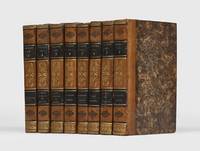
1821ref. 160633Paris: Bossange Frères 1821. With autograph material by the author First complete collected works. Bound into this set are five letters by Volney including one dated only a week before his death addressed to his friend Colonel Pierre Jacotin the head geographer responsible for all mapping operations during Bonaparte's Egyptian campaign. The letters underscore Volney's keen engagement with the contemporary discourse surrounding the geography of the Arabian Peninsula Egypt and the Levant. Jacotin met Volney in Corsica in the 1790s while working as a cadastral mapper. His conversations with Volney - who had travelled extensively to Egypt and Syria - eventually inspired him to pursue a career in Egypt where he was later assigned as military cartographer to the Napoleonic expedition. Jacotin's account of the cartographic survey work conducted in the area later formed the basis of the monumental Description de l'Égypte. Bound in at the beginning of the first volume are three letters sent by Volney to Jacotin from Paris respectively dated 20 March 11 April and 17 April 1820 Volney died on 25 April. A fourth letter at the end of vol. IV is dated 24 October. In the first letter Volney apologises for not having been able to receive Jacotin who had come to visit him the day before due to a bad fever. In the others Volney asks Jacotin for help and advice with preparing the plates specifically the maps for an English edition of his Ruines which "a bookseller" had asked him permission to publish; he also points out misspellings appearing in earlier states of the plates for example correcting toponyms in the Arabian Peninsula. No details are given concerning the edition in question. The first translation of the Ruins appeared in 1792 and was followed by numerous others. Further manuscript pages in Volney's hand are tipped into the first volume with a note gifting them to Jacotin. These contain an extract from an anonymous article published on 1 July 1819 in The Monthly Magazine London with the title "Account of Newly-Discovered Antiquities in Arabia Petraea Derived from the Personal Inspection of a Recent British Traveler". The traveller was William John Bankes 1786-1855 and the article is concerned with the projected publication of his voyage. Bankes travelled from Jerusalem to Wadi Musa passing through Kerak Castle Mount Hor and Petra; he describes the ancient Roman ruins that he saw during the trip and recounts sojourning with the Bedouin transcribing a Bedouin love song. Volney translates part of the article into French and adds his own comments and questions. A philosopher and orientalist Volney 1757-1820 wrote extensively on history religion politics and linguistics. His major works include Voyage en Syrie et en Egypte published in 1787 which had a profound impact on the Western view of the region and inspired Napoleon to undertake his invasion of Egypt in 1798 and Les Ruines 1791 a philosophical treatise on the history of social political and religious institutions and the rise and fall of empires. According to the distinguished American historian Ussama Makdisi holder of the Arab-American Educational Foundation Chair of Arab Studies at Rice University Volney's Voyage en Égypte et en Syrie "was simply the first of the great works of modern travel writing and description. Volney was a man of the Enlightenment. His work was suffused with its vocabulary and his humanism motivated him to travel to Asia to better understand the nature of 'despotism' under which his native France laboured" Makdisi p. 17. 8 vols octavo 204 x 123 mm. With 40 engraved plates many folding including portrait of author tables and maps. Contemporary quarter calf smooth spines divided by gilt fillets gilt and black ornaments in compartments black calf labels marbled boards endpapers and sides black silk bookmarkers. Embossed library stamp lettered "Ct Perret Havre" on front free endpaper of vol. I perhaps Auguste Perret 1874-1954 French architect active in Le Havre. Extremities rubbed couple of small chips short superficial splits at foot of front joints of vols. V and VIII remaining firm patches of stripping to leather of vols II and III occasional light foxing to contents faint damp stain to lower margin of final leaves and folding plates of first 5 vols otherwise generally bright and clean. A very good set. Ussama Makdisi The Culture of Sectarianism: Community History and Violence in Nineteenth-Century Ottoman Lebanon 2000. hardcover
2024ref. SKU0604400Cambridge University Press 2024-02-15. paperback. Good. 5x0x8. Textbook May Have Highlights Notes and/or Underlining BOOK ONLY-NO ACCESS CODE NO CD Ships with Tracking Cambridge University Press paperback
2024ref. SKU0651907Cambridge University Press 2024-02-15. paperback. New. 5x0x8. New Textbook Ships with Tracking Cambridge University Press paperback
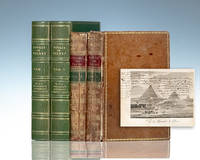
ref. M7236Complete set of 2 volumes. Chez Volland & Desenne Paris 1787. Second edition revised and corrected. In-8 Vol. I: xvi & 383 pages. Vol. II: viii & 458 pages. With 2 geographical maps and two engraved plates depicting the ruins of the Sun Temple at Balbek and those of the town of Palmyra in the Syrian desert. Full calf with 5 raised bands with leather labels a fine set. From the library of Egyptologist Andrew H. Gordon. Language: French/Français. This set ships from the USA shipping costs will be updated accordingly TXR. Relevant subjects: Egypt: Travelers & Egyptologists. unknown
ref. M7371Firmin Didot Frères Fils et Cie Paris 1860. First edition. In-4 frontispiece 778 pages. Contempoary half-leather some worm holes along the spine and on inner hinges text itself in fine condition. A good copy. Language: French/Français. This book ships from Europe shipping costs will be updated accordingly BPF. Relevant subjects: Egypt: Travelers & Egyptologists. unknown
2013ref. x-080715010XLouisiana State Univ Pr 2013. Paperback. New. 1st edition. 336 pages. 5.25x7.75x1.00 inches. Louisiana State Univ Pr paperback
1799ref. 146536A Paris: Chez Dugour et Durand Libraires Rue et Hotel Serpente 1799. Volney's important work on Egypt and Syria from the library in exile of Napoleon Bonaparte with his annotations and corrections throughout several made as he was dictating details from the Egyptian Campaign for his own Memoirs. This copy may also have accompanied him during his Egyptian Campaigns; it is known that Napoleon brought along a copy of Volney's book to Egypt and it served as the standard reference source for the members of the campaign. Octavo two volumes bound in full contemporary French sprinkled calf with gilt tooling to the spine morocco spine labels lettered in gilt gilt scrolling to the front and rear panels with 3 engraved folding maps and 5 folding plates. First published in 1787 this important travel account by the renowned French historian orientalist philosopher and politician Constantin Francois de Chasseboeuf comte de Volney 1757-1820 is considered the best exposition of Egypt from Ottoman Syria in the late eighteenth century. It served as a basis for later Egyptian expeditions and many scientists as well as Bonaparte himself took this work with them on their expeditions. His candid descriptions did not romanticize Egypt's history or its contemporary social and political conditions but discussed the ills that plagued the country and explored the military weakness of the Ottoman Empire. Based on his observations Volney discouraged a conquest of Egypt and while he supported his friend Bonaparte politically he declined the invitation to accompany Napoleon's expedition in person. It is known that Napoleon brought along a copy of Volney's book to Egypt and it served as the standard reference source for the members of the campaign. The French campaign in Egypt and Syria 1798--1801 was a Napoleonic campaign in the Ottoman territories of Egypt and Syria executed by Bonaparte. Napoleon proclaimed to "defend French trade interests" and to establish "scientific enterprise" in the region. Despite early victories and an initially successful expedition into Syria Napoleon and his Armee d'Orient were eventually defeated and forced to withdraw especially after suffering the defeat of the supporting French fleet by the British Royal Navy at the Battle of the Nile. However on a scientific front the expedition was a success that led to the discovery of the Rosetta Stone creating the field of Egyptology. This important copy contains numerous annotations in ink and pencil in Bonaparte's hand mostly concerning measurements and other calculations including a heavily annotated folding plate of the pyramids "Vue de Pyramides de Djize" in Vol. I. The first volume contains ink annotations on pages 188 232 272 273 277-79 281 plate at page 229 cited above and map "Carte de la Syrie" at p. 288 outlines drawn in red pencil. The second volume contains mostly pencil annotations on pages 223 225 227 229 272 ink and pencil and 333. These corrections were made by Napoleon as he was dictating details from the Egyptian Campaign for his own Memoirs see provenance below. After Napoleon's death on St. Helena a large portion of his last library was divided by the executors among heirs and friends. The remainder was removed from St. Helena by order of the British Government and sold to the important French bookseller in London Martin Bossange. The lots that failed to sell almost half were quickly consigned by Bossange to Sotheby's and sold on 23 July 1823. The lengthy catalogue entry for the present lot in the Sotheby's catalogue reads: "This Work is one of the most interesting books that has occurred for sale for many years. Most persons are aware that Napoleon wrote very little but dictated to his favorite Generals Bertrand Montholon and Count Las Casas. The Egyptian Campaign which forms a part of two volumes just published of his Memoirs have been dictated from these volumes: he has taken notice of the most trifling error in the book; hence the many CORRECTIONS BY HIM. The Plate at page 229 vol. i is entirely covered with his hand writing. This unique Book forms an historical document which will be looked at with a mixture of pleasure and pain by the admirers of so great a man." Provenance: Napoleon I each title-page with circular hand-stamp in brown ink from Napoleon's library at Longwood House on St. Helena; and with his numerous ink annotations to plates and text in both volumes; Sir James Lewis Knight-Bruce bookplates; and with a note from his grandson regarding this copy: "These two volumes of 'Volnay's Voyages' which belonged to Napoleon the first were understood to have accompanied him during his Egyptian Campaigns and contain many notes in his the Emperor's handwriting. My grandfather the late Lord Justice Sir James Lewis Knight-Bruce of Roehampton Priory purchased these books presumably about 1821-2 when they were sent to England from St. Helena for sale. They being in Napoleon's possession there until his death in 1821." In very good condition with splitting to the spine and joints small section of leather torn from the upper cover of Vol. II; some wear to extremities. Occasional pale spotting internally final blank leaves 30/8 of both volumes removed presumably at the time of binding. First map in Vol. I with small marginal tear repaired near gutter margin second and third maps each with 2-inch tear repaired at gutter a few other plates with small marginal tears or reinforcements. Housed in a custom full crushed levant morocco clamshell box by Riviere & Son. Third edition revised and corrected. An exceptional piece of history with fascinating provenance. Chez Dugour et Durand, Libraires, Rue et Hotel Serpente hardcover
1852ref. 604181852. Notiz. Geb. Nat. Heilk. 4 441445. - Anatomie und Physiologie 1.Bd. No. 4546. - Frorieps Tagsberichte. - Weimar Januar 1852 8° pp.321-336 2 Rückenbroschuren. Erstdruck! "1852 zeigen der deutsche Physiologe Julius Ludwig Budge 1811-1888 und der englische Neurophysiologe Augustus Volney Waller 1816-1870 dass die für die Pupille bestimmten Fasern des Sympathikus ihren Ursprung im Rückenmark haben. Wenn man die vorderen Wurzeln der Nervenpaare durchschneidet die aus dem Centrum ciliospinale hervortreten - also aus der Wurzel der zwei oder drei ersten dorsalen Spinalnervenpaare - so sieht man an der Pupille sogleich die für die durchtrennung des Halssympathikusstrangs charakteristische Verengung." Albert Mudry : Johann Friedrich Horner 1831-1886 und das okulopupilläre Syndrom. Schweiz Med Forum 2014;1434: pp.605-607 "In 1851 Waller abandoned his practice to devote himself entirely to research and moved to Bonn Germany. During his 5 years in Bonn Waller turned to his second major focus in neurophysiology the autonomic nervous system. In collaboration with Julius Ludwig Budge Waller studied the pupillary action and nerve supply to the iris. Their important observations were reported in 1851 and 1852 in the Comptes Rendus published by the French Academy of Sciences. With carefully executed experiments Budge and Waller showed the influence of the cervical portion of the sympathetic nerve in dilatation of the pupil. Using the Wallerian method to trace the dilator fibers they followed the fibers in the sectioned sympathetic trunk to the first and second thoracic segments of the cord. If this region was stimulated in an intact animal there was pupillary dilatation; if the cervical sympathetic nerve was sectioned pupillary dilatation was abolished. Budge and Waller named the area controlling the dilatation of the pupils the ''ciliospinal center.'' Their work on the ciliospinal center won Budge and Waller the 1852 Monthyon Prize awarded by the French Academy of Sciences. They went on to demonstrate the action of the cervical sympathetic nerves on vasoconstriction." Venita Jay: Augustus Volney Waller. Arch Pathol Lab Med 126/9 2002: pp: 1018-1019. unknown
1850ref. 604211850. Notiz. Geb. Nat. Heilk. 4 199. - Anatomie und Physiologie 1.Bd. No. 14. - Frorieps Tagsberichte. - Weimar October 1850 8° pp.97-104 Rückenbroschur. Erstdruck! Mittgetheilt der RoyalmSociety durch Prof. Owen. Ferner findet sich in diesem Heft von Mayer & Budge "Über die abhänigkeit der hinteren Lympherzen des Frosches und des Rückenmarke pp.97-99 und von Mayer Über den Einfluß der Centraltheile des nervensystems auf as Caudalherz des Als p.99. unknown
1851ref. 604221851. Notiz. Geb. Nat. Heilk. 4 413415. - Anatomie und Physiologie 1.Bd. No. 4344. - Frorieps Tagsberichte. - Weimar November 1851 8° pp.321-336 2 Rückenbroschuren. First Edition of the comprehensive report partly published before! Ludwig Julius Budge 1811-1888 is known for his anatomical and physiological investigations of the autonomic nervous system discovering that sympathetic nerve stimulation brings about pupillary dilatation and that oculomotor nerve stimulus produces constriction. With neurophysiologist Augustus Volney Waller he was awarded the Prix Montyon by the French Académie des Sciences for research in identifying the segments of spinal cord that control operation of the ciliary muscles. unknown
1852ref. 401691852. Arch. Anat. Phys. 1852. - Berlin Verlag von Veit et Comp. 1852 8° pp.391-418 Broschur. Important neurological treatise by the founder Augustus Volney Waller 1816-1870 of the "law of nerve degeneration" -cf. Garrison p.524 unknown
ref. 120374Paris Bossange Frères Libraires 1822. XXV1 blank3831 blank p. engraved portrait engraved frontispiece 1 engraved plate and 2 folding tables showing a map of Europe Africa & Asia and a celestial map with the signs of the zodiac. Half calf 13.5 cm Condition: Boards and corners somewhat scuffed. Some slight foxing Note: The French historian philosopher and orientalist Constantin François de Chassebuf de Volney 1757-1820 is one of the founding fathers of the Black Athena theory. After a trip to the Middle East in 1782 he suggested that the ancient Egyptians were originally black Africans and that the Egyptians of his time were mulats with mixed blood. 'Les anciens Égyptiens étaient de vrais Nègres de l'espèce de tous les naturels d'Afrique; et dès-lors on explique comment leur sang allié depuis plusieurs siècles à celui des Romains et des Grecs a dû perdre l'intensité de sa première couleur en conservant cependant l'empreinte de son moule originel .; de penser que cette race d'hommes noirs aujourd'hui notre esclave et l'objet de nos mépris est celle-là même à qui nous devons nos arts nos sciences et jusqu'à l'usage de la parole'. Voyage en Syrie et en Égypte pendant les années 1783 1784 & 1785 Paris 1785 p. 75/6 § In 1791 Volney published his 'Les Ruines ou méditations sur les révolutions des empires' an essay on the philosophy of history. 'L'auteur se met en scène sur les ruines de Palmyre; et là il se livre à de profondes méditations sur la destruction de tant d'empires à qui leur puissance colossale semblait promettre une éternelle durée et qui n'en ont pas moins obéi à cette loi de la nature qui veut que tout périsse. Dans ce même ouvrage Volney établit la nécessité de la tolérance religieuse reconnue aujourd'hui par tous les esprits éclairés. . Les Ruines n'en passent pas moins pour une des productions les plus remarquables de la littérature de la fin du XVIIIe siècle'. Wikipédia s.v. Volney Some of the central ideas in Les Ruines stirred the imagination of its readers. It predicted the final union of all religions by the recognition of the common truth underlying them all and stated that empires rise if government allows enlightened self-interest to flourish Photographs on request hardcover
1851ref. 49884Paris Bachelier 1851. 4to. No wrappers. In: "Comptes Rendus Hebdomadaires des Séances de L'Academie des Sciences" Tome 33 No 14. Pp. 361- 392 entire issue offered. The paper: pp. 370-374. First printing of a pioneer research in the physiology of the nerves. The authors describes here for the first time the cilio-spinal centre controlling the dilatation of the pupil.Garrison & Morton No 1267. unknown
1804ref. 40723Weimar Landes=Industrie=Comptoirs 1804. Unbound but stitched. VIII283 pp. and one folded engraved map "Charte vonn Nord-America zur Erläuterung des Systems der Winde und Strömungen. Weimar 1804" Bibliothek der neuesten und wichtigsten Reisebeschreibungen.hrsg. von M.C. Sprengel 8. Bd.: 2. Theil. Having the general titlepage this with a stamp.- Sabin: 100690. unknown
ref. 6131464517Read Books UK . Papeback. New. pp. 272 Read Books (UK) unknown
1792ref. 18551à Paris: Chez DesenneVollandPlassans 1792. Fine. Chez Desenne Volland Plassans à Paris 1792 12.50 x 20 cm relié First French edition. The original edition appeared in Geneva in 1791. Illustrated with 3 plates a frontispiece and two folding: a hemispheric map and an astrological one. Contemporary full marbled sheep binding. Smooth spine decorated. Red morocco title label. Upper headcap worn. Rubbing to joints and edges. Famous work by the philosopher Volney in which personal memories philosophy and reflections alternate. While the general subject is a questioning of the disappearance and ruin of empires Volney begins his book with a meditation on the collapse of Palmyra the work addresses multiple related themes: origins of religious cults symbolism worship of stars. The book excels through its lyrical style and allegories. Volney remembering Herodotus trusts as a historian only in facts and he interrogates the ruins so that they might reveal to him the ruin of an empire and a city. Chez DesenneVollandPlassans unknown
1880ref. 995H35London: Farrah c1880. Cloth. Very Good Indeed. 7" by 4". None Stated. A later English edition of Volney"s landmark meditation on the rise and fall of civilisations including The Law of Nature illustrated with two fold-out plates and a frontispiece. In the publisher"s original green cloth.Illustrated with two fold-out plates and a frontispiece. Collated complete. This edition includes The Law of Nature Volney"s exposition of secular ethics and political philosophy a text that proved especially influential among radical and freethinking audiences in Britain and America.A later English edition of Volney"s celebrated philosophical and historical meditation on the rise and fall of civilisations first published in France in 1791 and shaped by the intellectual and political aftermath of the French Revolution.Constantin François de Volney 1757-1820 was a French philosopher historian and committed Enlightenment rationalist closely associated with the ideals and reformist spirit of the French Revolution. In the publisher's original cloth binding. Externally very smart. Slight rubbing and bumping to extremities. Very minor blistering to boards. Internally firmly bound. Pages bright and clean if characteristically age toned with one or two light spots. Slight cockling to pages. Very Good Indeed Farrah hardcover
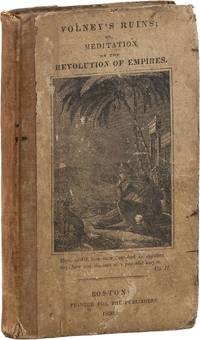
1835ref. 88767Boston: Charles Gaylord 1835. Early US Edition. Twelvemo. 17cm. Publisher's original linen spine lacking paper title label over decorated publisher's paper covered boards. 216pp. Strong and solid scuffed to the corners with the paper worn allowing the board to show through rubbed and a little battered in places with some light cosmetic fraying to the spine ends and a general unform wear that is oddly not unappealinig; internally foxed in a pale similarly uniform fashion with some truly eccentric oak gall ink inscriptions to the preliminary blanks stating that the book was part of the library of the Transylvania Whig Society of Kentucky and presented by a visiting Englishman the inscriptions seem to serve as a kind of lending record denoting that the book was especially approved of by Kathleen O'Pinkerly who seems to have borrowed it twice; the page block is worn and a little stained but solid and eminently handleable and the rear flyleaf blank is covered with small neat pencil annotations with a corner of the blank torn away. Cosmetically unappealing perhaps but aesthetically rather charming and undeniably a survivor. A very good copy by dint of completeness eccentricity and stubbornness. An early US reprint the US first was issued in New York in 1828 by Dixon and Sickles and it is likely there is a Gaylord edition from 1833 with all US imprints being pretty thin on the ground especially with illustrated publisher's boards. This is in addition an uncredited Jefferson-Barlow translation translated with the approval and co-operation of the author by none other than Thomas Jefferson who managed the first 20 chapters or so before distracting himself with political fripperies whereupon it was subsequently completed by Joel Barlow. Of the various translations the Jefferson-Barlow is considered superior by dint of Volney's close relationship with Jefferson their common views and sympathies and frankly the fact that it renders the whole piece rather more poetically than might be found elsewhere. Controversial and madly popular it's far more a work of radical philosophy than anything else; like Jefferson Volney was a committed Deist and a firm believer in the separation of church and state for reasons clearly expressed by him through Jefferson in this work. Even more radically for the time he was a propogator of the "Christ Myth" which suggested that there was little or no evidence for the actual existence of Christ as a historical personage and that He was far more likely to be an inspiring assemblage. As might be expected such views were polarizing engendering either inspired revolutionary support or cries of heresy and treason depending upon the reader. The upshot of this and a number of other controversies was that Volney in common with the Founding Fathers not being a man known for keeping his mouth shut was ejected from the United States on more or less invented charges of espionage and his philosophical musings on the ashes of Empires and the sad destiny of mankind somewhat discredited. This had little effect upon the historical importance of Volney's "Ruins" however and it was for example widely embraced by the Romantics and their followers with Shelley having a virtual addiction to its evocative embracing of decay and his wife Mary for reasons of her own making it the text from which Frankentein's monster learned what he could about the nature of mankind and developed a rather stereotypically male interest in the Roman Empire. An unusual edition of an influential and incendiary work. Charles Gaylord unknown
1805ref. 965F7London: G. Robinson; T. Davison 1805 . Leather. Very Good. 9" by 6". Not Stated. The third English language translation of comte de Volney's detailed and charmingly illustrated account of his late eighteenth century travels in Syria and Egypt. The third edition in the English language of this work complete in two volumes.Volney a French philosopher and historian travelled extensively through the Levant documenting his observations on the geography climate agriculture society and political conditions of the regions he visited.Volney combines empirical observation with critical analysis of Islamic societies and ancient ruins studying the decline of the once-prosperous civilisation.Illustrated with a folding frontispiece two folding maps to volume I and with two folding plates to volume II.Collated complete.With the bookplate of G. A. F. H. Bridgeman to front pastedowns and Weston Library bookplates to rear pastedowns. Rebacked in calf retaining original calf boards. Endpapers renewed. Significant rubbing to board perimeters otherwise externally excellent. Armorial bookplates to front pastedowns library bookplates to rear pastedowns. Internally firmly bound. Pages bright and generally clean with only the odd spot. Significant spotting to plates. Very Good G. Robinson; T. Davison hardcover
2007ref. Alibris.0032615Costa Mesa California: Cycle News. 2007. Trade paperback. Very good. 241 p. Includes illustrations. Cycle News paperback
ref. 654540678Cambridge University Press CUP . Papeback. New. pp. 412 2 Maps Cambridge University Press CUP unknown