189 risultati
1929rif. 1826BOOKSELLER JOURNAL Newsboy & Newsgirl. A Monthly Paper for all the Boys & Girls of W H Smith & Son. London 1929-1955. Uncommon publication created for the children and teenagers employed by the UK news vendors W H Smith best known for their chain of railway station airport port hospital and motorway service station shops selling books stationery magazines newspapers entertainment products and confectionery. Articles include internal news of the company features by various staff and extracts from similar news agencies issued in the USA Australia and Europe also Boys Scout news with special coverage of the blitz during World War II comprising: Volumes 3 issues 1 - 36 January 1928 thru December 1930; afterwards renamed JUNIOR STAFF JOURNAL Volumes 5 issues 1 - 36 January 1934 thru December 1936; volume 6 issues 1 - 12 January - December 1937; volume 7 8 each 12 issues January 1938 thru December 1939 volume 9 ten issues January thru October 1940; volume 10 two issues November December 1940; Volumes 11 thru 13 each twelve issues January 1941 thru December 1943; volumes 14 thru 16 each twelve issues January 1944 thru December 1946. Also Including TALKING SHOP A Business Magazine for the Staff of W H Smith & Sons Ltd January 1948 thru December 1955. Altogether 288 issues bound into eleven cloth bindings not matching. W H Smith & Son, hardcover books
rif. 6252EDWARD ALLEN GOODWIN unknown-1862. Goodwin was the Sergeant in Company K of the 23rd Regular Massachusetts Volunteers. This is the diary of Edward A. Goodwin Co. K 23rd Regt. M. of. M. This diary is THE AMERICAN UNION DIARY FOR 1862 an annual published diary accessible and likely provided to Union soldiers during the Civil War. After a few pages that include a calendar and interest tables the diary provides space for each day of the year 1862. Goodwin wrote entries every day from January 1st to April 7th and none thereafter. At the time Goodwin was serving in the 23rd Massachusetts Infantry Regiment which was a part of the Coast Division under General Ambrose Burnside. Entries are handwritten in either pencil or black ink. Notable entries include: aFriday 7: Naval engagementplace lasting from noon till sunset. Troops were landedin the afternoon and evening. Bivouacked on Roanoke Island in the rain. b Saturday 8: Captured a rebel battery in a swamp. Took 3000 rebel provisions and the whole island wasSergt. Howard hurt his foot. W.S. Clark missing. Both entries describe the Battle of Roanoke Island fought February 7th and 8th 1862. Part of General Ambrose Burnsides expedition to capture key ports in the Outer Banks the battle first saw Union gunboats first firing on Confederate forts under the command of Henry Wise until Burnsides soldiers could land ashore unopposed. and the forts on shore engaged in a gun battle with occasional contributions from the Mosquito Fleet. The next day the Union soldiers successfully flanked the Confederate artillery and infantry defenders on both sides forcing a retreat into the Confederate forts. The forts were then individually taken with the Union suffering only 264 casualties and capturing 2500 Confederate defenders. c Friday 14: Fought the battle of New Bern. Took over 100 pieces of artillery ammunitioncamp equipment &c. I arrived at night in the tents of the enemy. This entry describes the Battle of New Bern fought on March 14th 1862. After first advancing up the Trent River General Burnside had his soldiers exploit the weakened center of the line of the defending Confederates under Lawrence O'B. Branch. This allowed the Union Navy to shell Fort Thompson forcing its abandonment and shortly thereafter the city of New Bern too. 90 Union soldiers were killed and 64 Confederates were killed and 413 were captured. d Monday 31: Sick all day. Took horses.e Monday 7: Saw Amoat the hospital. DeceasedRain in the afternoon. These two entries foreshadow Goodwins ultimate fate including his last entry on April 7th 1862. Goodwin would pass away in New Bern on April 16th. Having survived two major battles unscathed at least according to his diary Goodwin most likely succumbed to disease. It is estimated that 2/3 of Civil War soldiers who died during the war died of disease not in battle. His body was ultimately returned to Massachusetts and is buried in Mansfield. The pages of the journal are in good condition but the exterior of black leather is frayed and partially torn. It should be handled very delicately but its value as a lens into the mindset of a Civil War soldier is immense. hardcover books
rif. 836472025. Journal of Comparative Law. JCL Studies in Comparative Law Second Series. 10 titles in 11 books. Complete set of all titles published to date. $1495. - Butler W.E.; Kresin O.V. Editors. Discovering the Unexpected: Comparative Legal Studies in Eastern and Central Europe. 2021. - Butler W.E.; Kresin O.V. Editors. The World Picture of Comparative Law. 2024. - Dippel Horst. Modern Constitutionalism: Origin and Manifestations. 2 vols. 2022. - Hammond A.F.; Adegbite F.R.; Mensa-Bonsu Y.A.; Batariwah P. Family Law in Africa: Perspectives on Selected Systems of Marriage. 2023. - Kresin O.V.; Butler W.E. Comparative Law in Warsaw 1800-1835. 2021. - Leibniz G.W.; De Iuliis C. Model of Certainty Or Demonstrations in Law Expounded in the Doctrine. 2025. - Meder S.; Beck V. Translator. Legal Machines Of Subsumption Automata Artificial Intelligence And Search for the "Correct" Judgment. 2023. - Palmer S.; Xiaobo Z. Editors. Bentham Around the World. 2021. - Rebet L.; ButlerW.E Editor and translator. The Comparative Method in the Science of Law. 2022. - Palmer Michael; Ling Zhou; Yang Lin Editors. Administrative Justice in China: Institutional Conflicts and Governance Transformation. 2026. Together 10 titles in 11 books. unknown books
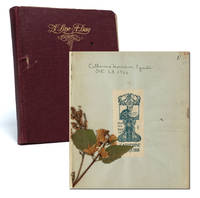
1911rif. 6011US Germany 1911. Red cloth over card with gilt to front board. All edges stained read. Measuring 200 x 170mm and containing 186 handwritten pages across five years. Dried flowers and theatre program loosely inserted at front. Ownership signature and bookplate of Catherine Harrison Squibb to front pastedown and endpaper with signature of the same to rear endpaper. A research rich and densely written diary the present would be useful in fields including but not limited to intergenerational wealth and its relationship to emotional abuse women's education and educational travel early 20th century reading habits modern friendship courtship and romance and women's increased mobility and travel. The second daughter of Charles Fellow Squibb himself the second son of pharmaceutical boss Dr. E. R. Squibb Catherine Harrison Squibb was raised in economic privilege. Her earliest years were spent in the Brooklyn townhouse built for her parents by her grandfather while her teen years were split between her father's historic estate of Welwood and her boarding school in Dresden. At Welwood Charles always considered as "the lesser son" according to his E.R.'s journals followed in his father's controlling footsteps by "purchasing polo ponies setting about learning to jump" and "insisting his children do the same.to maintain the lifestyle of the landed gentry" Belcher. This is confirmed in the opening entry of the diary October 25 1906 near Catherine's 16th birthday where she reports "I rode side-saddle with Rosalie in the morning.rode again in the afternoon ist richerverlobt! er est 62 --- alt!!" The numerous rides do not seem to entirely please Catherine as she hides her frustration in the German parenthetical roughly "he is engaged to be a judge! he is 62 years old!!". Three days later on her birthday she spends her time significantly differently clowning with her brother and aunt and "playing tennis in the afternoon." This becomes something of a tradition as her birthday entries report several times "played tennis all afternoon" She also notes her time in French and German lessons -- with German becoming more frequent during and after her time at school in Dresden especially when she wants to obfuscate her thoughts from unwanted readers. If this diary is any indication music and reading travel and school became refuges for Catherine. And she claimed as much time as she could to find independence and develop herself outside of Charles' strict rules. Her reading preferences reflect this desire to immerse herself in Jane Austen's world of social visits and balls where family conflict is eventually smoothed by a woman's exit to a loving partner and home of her own. "Good day!" she writes on April 29 1908 "Stayed in bed all day. I finished Pride & Prejudice and began Emma." This is contrast against her reaction to Charlotte Bronte's work on May 1 of the same year: "Cold & windy. We came in on the 9.30. Aunts at Welwood.had music lesson.I began Jane Eyre. Dismal book!" Her tone and word choice reflect the most happiness in these circumstances whereas riding is reported like a duty -- she may report what time of day and what horse but no expressions of joy accompany them. While the diary concludes in 1911 when Catherine is 21 we know that she would return to Europe from 1917-1919 as a nurse in WWI watching her own country battle her beloved Germany. Within the time her father had sold his birthright in Squibb and with "his extravagant lifestyle eating through his money quickly.he was forced to sell Welwood.not long thereafter he went to France" and never returned to the US Belcher. In 1920 she would marry veteran and shoe manufacturing foreman Raymond Pratt moving with him to Pasadena California and becoming a civic leader. Much deeper work can be done on Catherine's lives and relationships especially considering the current cultural trends of novels films and series depicting both the glamour and the emotional squalor of the 1%. unknown books
1822rif. 68178Washington 1822. Single sheet 56 x 40 cm. 2 pp. printed in 5 columns. Some overall toning to text a few spots else very good. Printing a message from Pres. James Monroe transmitting "sundry papers relative to the Recognition of the Independence of the South American Colonies" and including messages from Secretary of State John Quincy Adams and the objections of Don Joaquin de Anduaga Minister from Spain. Also printed in this issue is a report on repairs to the Cumberland Road; several columns devoted to the printing of the American Colonization Society's Fifth Annual Report; an advertisement by Don Francisco Arango for the sale of his estates on the Island of Cuba; two notices for rewards offered for run away enslaved people; etc. unknown books
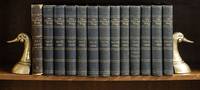
1889rif. 846751889. The Boston Book Company. Volume I-XIII 1889-1901. The Boston Book Company. Volume I-XIII 1889-1901. A Handsome Lavishly Illustrated Chronicle of American Law 1889-1901 Journal. Fuller Horace W. Editor Volumes I-XI. Baldwin Thomas. Tileston Editor Volume XIII. The Green Bag: A Useless but Entertaining Magazine for Lawyers. Boston: The Boston Book Company. Volume I-XIII 1889-1901. 13 volumes. Indexed Volume X has a cumulative index. Illustrated throughout with plates photographs and engravings. Quarto 10-1/2" x 8"; 26.7 x 20.3 cm. Volume I: Contemporary three-quarter calf over marbled boards raised bands and gilt title to spine. Others: contemporary three-quarter pebbled cloth over marbled boards gilt fillets and titles to spines. All volumes have similar appearance. Some rubbing with minor wear chip to head of Volume I minor scuff to spine of Volume X some hinges starting one cracked but secure internally clean. A handsome set. $1500. These are the first thirteen volumes of an important legal periodical that was published in 26 volumes from 1889 and 1914. As its subtitle suggests The Green Bag is full of colorful anecdotes humorous verse curious cases and other diversions. It is also a useful resource for the legal historian one that offers book notices and reviews biographies of contemporary legal figures based on first-hand accounts obituaries studies of current events professional notices profiles of law schools throughout the United States and other important source materials. F.W. Maitland Louis Brandeis and Theodore Dwight are among the many important jurists who contributed to this journal. Well designed and handsomely produced it is a pleasure to read and handle these volumes. Marke A Catalogue of the Law Collection at New York University 1953 1160. unknown books
1908rif. 785271908. Ten 10 linear feet shelf space. Ten 10 linear feet shelf space. Complete Run of a Notable Nineteenth-Century Journal with Several Articles of Enduring Value Journal. Thompson Isaac Brent Editor. Brown Irving Editor. The Albany Law Journal: A Weekly Record of the Law and the Lawyers. Albany: Weed Parsons & Co. January 1870-January 1909 Imprint date December 1908. 70 volumes each with index text printed in double columns. All issued. Octavo 11" x 7-1/2"; 27.9 x 19 cm. Later library buckram lettering pieces and black-stamped volume numbers dates and library name Rochester Appellate Division to spine endpapers renewed. Light shelfwear library markings to endleaves. Moderate toning some leaves have minor stains and marks to leaves some volumes have cracks to text blocks. $1500. As Surrency notes many articles in this journal "have an enduring quality which makes them enjoyable reading even today. Several historical articles are invaluable as a source of legal history of New York. Generally each issue began with a page or two of current topics reporting on amusing and human tragedies as revealed in the court room. It is only in the pages of such journals that bizarre behaviors are found. For example the defendant who invited the jury over for a meal after being acquitted in Des Moines Iowa would never be recorded in any other legal literature. Full texts of decisions as well as digest are printed from many of the state courts. The book review shows a perception of legal literature that subsequent reviewers have not shown. One can only admire the work of the editor who kept this publication going for those years. Certainly the two editors should receive greater recognition in legal literature for their contributions. Issac B. Thompson and Irving Browne were authors with literary flair rarely found in the legal profession. Their articles were vigorous graceful and often elegant." One of the most important periodical legal publications of the post-Civil War period the Albany Law Journal was an outspoken supporter of David Dudley Field's efforts at codification and law reform. Surrency A History of American Law Publishing 192-193. Catalogue of the Library of the Harvard Law School 1909 I:26. unknown books
rif. B302089-2New York The Institute for Architecture and Urban Studies/ Rizzoli 1973-1984. Nos. 1-26 all published. 4to. Wraps. New York (The Institute for Architecture and Urban Studies/ Rizzoli), 1973-1984. paperback books
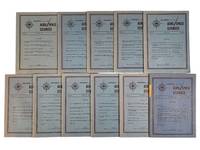
1959rif. 223131959. Journal of the Aerospace Sciences 1959 documents foundational research in American aerospace engineering during the early Cold War space race. Published the year after the establishment of NASA and amid intensified U.S. efforts to match Soviet rocket achievements following the 1957 launch of Sputnik these issues contain contemporary technical studies on hypersonic aerodynamics missile stability spacecraft propulsion and planetary trajectory design. Articles by scientists and engineers working at leading research institutions and government laboratories record the theoretical groundwork that would shape the next decade of American spaceflight including early analytical work on Mars trajectories reentry materials and competing propulsion systems for interplanetary travel. Journal of the Aerospace Sciences. Volume 26 numbers 1 2 4 5 6 7 8 9 10 11 and 12. New York: Institute of the Aeronautical Sciences 1959. Eleven issues from the journal's 1959 volume lacking only the March issue. The periodical served as the principal research forum of the Institute of the Aeronautical Sciences the professional organization that later became the American Institute of Aeronautics and Astronautics. Together these figures represent a cohort of scientists who would define American spaceflight theory and practice in the decade to come.Archive consists of 11 printed volumes in original wrappers approx. 50-80 pages per issue totaling over 800 pages. This archive includes: Volume 26 No. 1 January 1959: Features research on turbulent skin-friction drag at supersonic speeds jet nozzle structures nonlinear flutter problems and B-47 gust response. Includes Frank E. Goddard Jr. T.C. Adamson Jr. S.P. Shen. Vol. 26 No. 2 February 1959: Contains work on spiked bodies at hypersonic speeds reentry missile stability and panel flutter. Contributors include Seymour M. Bogdonoff E.V. Laitone and Frederick L. Ryder. Vol. 26 No. 4 April 1959: Publishes the Twenty-Second Wright Brothers Lecture by Maurice Roy of ONERA France. Other articles include thermal stresses hypersonic shock tunnels and boundary-layer transition. Vol. 26 No. 5 May 1959: Focuses on heat transfer at hypersonic speeds lift-drag ratios at supersonic speeds low-thrust spacecraft flight mechanics and chemically reacting boundary layers. Authors include A.J. Hanawalt Clinton E. Brown and Daniel E. Rosner. Vol. 26 No. 6 June 1959: Includes Hans Bethe's paper on the ablation of glassy materials structural matrix analysis and free-molecule flow dynamics. Vol. 26 No. 7 July 1959: Features M.A. Biot on thermomechanical reciprocity airplane turbulence responses and reentry motion. Also includes research on fatigue stress and laminar dissociated airflows. Vol. 26 No. 8 August 1959: Discusses transonic wing/body aerodynamics supersonic plate divergence mercury plasma tunnels and propellant burning models. Includes Hans U. Eckert. Vol. 26 No. 9 September 1959: Opens with Richard H. Battin's landmark article on planetary reconnaissance trajectories from MIT along with contributions on missile drag optimization rocket flight variational problems and real-gas flows. Vol. 26 No. 10 October 1959: Features George Paul Sutton's comprehensive comparison of interplanetary propulsion systems addressing ion rockets nuclear heating and solar sails. Also includes optimal aircraft climb paths and spherical cap snapping. Vol. 26 No. 11 November 1959: Includes studies on flutter energy equations jet-flap compressors porous-wall cooling and actuator disc dynamics in turbomachinery. Vol. 26 No. 12 December 1959: Closes the year with work on thermal buckling subsonic turbulence reattachment zoom climb optimization and hypersonic similitude. Contributors include Carl Gazley Jr. Wallace D. Hayes and George Gerard. In 1959 the Journal of the Aerospace Sciences served as the official scientific platform for cutting-edge American aerospace research marking the transition from aeronautical to astronautical engineering. That year saw sustained focus on hypersonics ballistic missile trajectories spacecraft propulsion and heat transfer under extreme atmospheric conditions as the U.S. sought to stabilize its strategic position after the 1957 Sputnik crisis and ahead of the 1960 Mercury program. Research in these volumes was underwritten by military contracts NASA collaboration established in 1958 and Cold War exigencies. Light foxing to several wrappers particularly July issue; some edge wear and surface abrasions. Two issues show sticker residue at spine or lower edge. Interiors uniformly clean bindings firm and covers largely bright and intact. Overall very good condition. The studies record the technical environment that produced early American satellite programs and later lunar navigation systems linking university laboratories defense contractors and federal research agencies. unknown books
rif. 144688hardcover. Began the 9th Day of April 1691; and Ended the 27th of September 1743. Vol. I. Published by Order of the General Assembly. title vignette. iv 840 2pp. folio contemporay calf; expertly rebacked in modern calf with leather labels; first few and last few leaves heavily foxed in margins; some light browning to text; binding moderately rubbed edges of corners worn small rubberstamp of a former owner on margin of t.p. N.Y.: Hugh Gaine 1764. "The largest issue of Gaine's press and the first piece of government printing he secured. The pp. 2 is `An Act of reversing the Attainder of Jacob Leisler and others' and is often lacking. The work was edited and the index made by Abraham Lott Junr." Ford The Journals of Hugh Gaine I p. 113 This work is complete in itself vol. II was published in 1766. Evans 9756. unknown books
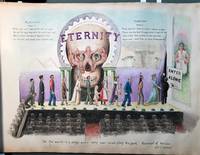
1928rif. 21163New York: Unique. 1928 - 1935. In an archival box. Good; clean throughout; front cover missing; first few leaves with chipped edges and a light small tide mark along the edges. Oblong folio that meas. appx. 11 x 16 inches; appx. 170 pages. Each page with an original watercolor or pen & ink sketch accompanied by mounted photographs and often by news articles with hand-written commentary. Gennert a German immigrant to the United States lived most of his life 1854 - 1935 in Brooklyn. He apparently spent time in Pennsylvania given the references in this diary. It is an unusual compilation of a self aware curious individual with political and artistic interests. He served as a drummer boy for the 96th New York Regiment during the Civil War a mounted photograph in uniform in the diary is self identified and had a career as an electrical inventor who held several patents assigned to the Manhattan Brass Company and E P Gleason Manufacturing Co. The diary however does not deal with his business accomplishments. It is focused on events places historical incidents architecture and people he knew. It is retrospective and apparently accomplished in the last decade of his life. Gennert lived through one of the most transformative periods in American history including WWI and then the stock market crash of 1929. The overall tone of the diary is patriotic and suffuses the entries throughout. Despite this he could also be quite acid in his observations on society or the actions of those around him or in political life. There are several illustrated scenes of what could only have been childhood reminiscences of Pennsylvania country life that are unlikely to be recorded elsewhere. A remarkable illustrated record of a life. Unique. unknown books
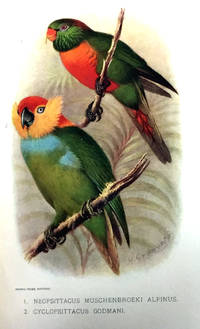
rif. 16386London: John van Voorst 1883-1886; Gurney and Jackson 1887-1903; R.H. Porter 1904-1913; British Ornithologists’ Union 1914-1932. FIRST EDITIONS. Hundreds of exquisite full-page lithographed plates many hand-colored after J.G. Keulemans J. Wolf J. Jennens H. Gronvold and others text illustrations distribution maps and tables. The first group of volumes also contain a list of members of the Union and the date of their election. The first six volumes bound in contemporary half-calf over marbled boards spine in compartments with the remaining volumes in library cloth and most have the original printed wrappers bound in where the journal was issued quarterly; interior excellent. Bookplate withdrawn of Trinity College Library on the paste-downs; a wonderful set. First printings of this famous journal of ornithology. Included are: Fifth series Volumes 1 1883 - 6 1888 Sixth series Volumes 1 1889 - 6 1894 Seventh series Volumes 1 1895 - 2 1896 Eighth series Volumes 2 1902 - 6 1906 Ninth series Volumes 1 1907 - 6 1912 Tenth series Volumes 1 1913 - 6 1918 Eleventh series Volumes 1 1919 - 6 1924 Twelfth series Volumes 1 1925 - 6 1930 Thirteenth series Volumes 1 1931 - 2 1932 Authors include G.E. Shelley Sclater John Henry Gurney Edward Hargitt William C. Tait Henry Seebohm Osbert Salvin O. Finsch W. L. Buller R. Bowdler Sharpe Scott B. Wilson; literally all of the great ornithologists throughout the publishing history of this journal. Sclater 1829-1913 a co-founder and editor of Ibis was a well-known and highly productive over 1400 publications ornithologist by trade. He is also remembered for his 1858 paper setting out the faunal regions classification of zoogeography later adopted by Alfred Russel Wallace. He was also secretary of the Zoological Society of London a member of more than forty professional societies at home and abroad and a council member of the Royal Society of London. Assisting him as co-editor of some of the issues was Howard Saunders or A.H. Evans until 1931 when C.B. Ticehurst took over as editor. Now subtitled the International Journal of Avian Science it is in its present form a peer-reviewed scientific journal which covers ecology conservation behavior palaeontology and taxonomy of birds. For it’s first nearly one hundred years however the journal focused on a more popularistic type of article often introducing species and images to the public for the first time. A group of friends mostly wealthy collectors of bird specimens founded the British Ornithologists' Union in 1858 with the primary intent of starting an ornithological journal. The first volume of the journal The Ibis appeared in 1859. Lists of species observed by traveling ornithologists and long catalogues of specimens obtained on expeditions filled the journal. “This random fact gathering on distribution persisted unchanged from 1859 to the 1940s.” In her article entitled “The Ibis: Transformations in a Twentieth Century British Natural History Journal” in Journal of the History of Biology October 2004 Volume 37 No. 3 pp. 515–555 Kristin Johnson points out in a much more complete and professional manner the difference between “popular” ornithology and “scientific” ornithology study of the living bird in its natural environment more on a biological aspect the transition of which occurred post-1940. Meanwhile the articles appearing in the Ibis were geared more toward the popularization of the science and the spread of knowledge of geographic distribution and the habits and patterns of the various bird species. John van Voorst (1883-1886); Gurney and Jackson (1887-1903); R.H. Porter (1904-1913); British Ornithologists’ Union (1914-1932 unknown books
1813rif. 19270Paris: L’Imprimerie de la Republique 1813. FIRST EDITIONS. Woodcut vignettes head- and tailpieces many with folding engraved plates. All volumes in original bindings uncut some unopened completely unsophisticated. Other than 2 volumes in the original calf-backed marbled boards all are bound in original plain or printed wrappers and preserved in half-calf slipcases with morocco spine labels. First editions of the Journal de l'Ecole Polytechnique one of the oldest scientific journals. It contains sections in mathematics physics chemistry geology astronomy and mechanics design and architecture. Here you find original contributions by the top French scientists of the time. A listing of each of the issues is set forth below with a sampling of the contributors. We offer Numbers 1-16 missing only Numbers 2 9 10. No. 1. viii 189 pp. Folding engraved plate. No binding.1 leaf of contemporary manuscript describing the plate laid in. Contributions from Monge Prony Barruel Hassenfratz Fourcroy Chaptal Berthollet Guyton etc. No. 3. iv xvi ii 209-444 pp. Original marbled wrappers. Contributions from Prony Guyton Berthollet Observations on the eudiometric properties of phosphorus. No. 4. ii xxviii 445-743 3 pp. including errata. With 9 folding engraved plates. Contemporary calf-backed marbled boards. Not in a folding case. Contributions from Fourcroy et Vauquelin Hassenfratz. Tom II No. 5. iv 208 iv pp. Original printed wrappers. Contributions from Fourcroy Lagrange Laplace Guyton Prony. Tom II No. 6. iv 209-456 pp. Original printed wrappers. Contributions from Fourcroy Lagrange Hassenfratz Laplace Monge. Tom III Nos. 7 and 8. iv vii I 477 2 pp. Original marbled paper-covered boards. Contribution from Prony Philosophical mechanics or reasoned analysis of the various parts of the science of balance and movement. Tome IV No. 11. ii 395 pp. With 9 folding engraved plates. Contemporary calf-backed marbled boards. Not in a folding case. Contributions from Monge Prony Hachette Poisson Biot Hassenfratz Buyton Berthollet Gauss a short report on his Disquisitiones arithmeticae Tom V No. 12. iv 324 pp. Original wrappers. Contribution from Lagrange Lecons sur le calcul des fonctions. Tom VI No. 13. ii 378 1 pp. Original wrappers. Contributions from Monge Poisson Ampere Biot Fourcroy et Thenard chemistry Hassenfratz chemistry. Tom VII No. 14. iv 400 4; ii 90 pp. Supplement. With 3 full-page engraved plates. Original wrappers. Contemporary signature on title. The Supplement is Lagrange Supplement aux lecons sur le calcul des fonctions. Also a contribution from Montgolfier On the possibility of substituting the hydraulic ram for the old Marly machine. Tom VIII No. 15. ii 358 pp. Original wrappers uncut and partially unopened. Contributions from Poisson Memoir on the secular inequalities of the means of movement of the planets Lagrange Clarification of a singular difficulty which is encountered in the calculation of the attraction of spheroids very little different from a sphere Monge Essay on the application of analysis to some questions of elementary geometry another from Monge Construction of the vibrating string equation a number of articles from Poisson Laplace Dissertation on various points of analysis. Tom IX No. 16. iv 354 2 pp. Original boards. Contributions from Cauchy Poisson. École Polytechnique was created in 1794 a politically and economically troubled time but also the culmination of the Enlightenment. The Journal commenced publication the following year and has since then maintained the highest reputation of published research. L’Imprimerie de la Republique unknown books
1861rif. 2786np: np 1861. First edition. Original leather covers. Good. A REMARKABLY EXTENSIVE ARCHIVE OF A UNION SOLIDER INCLUDING DIARIES FROM 1861-1865 SPANNING HIS ENTIRE CIVIL WAR CAREER. THE SOLDIER CHARLES E. SMITH PARTICIPATED IN SOME OF THE MOST CRITICAL CAMPAIGNS OF THE WAR INCLUDING THE SEIGE OF VICKSBURG THE FALL OF ATLANTA AND SHERMAN'S MARCH TO THE SEA. Background: Charles E. Smith 1836-1905 was born in Berlin Township Ohio. He worked as a farmer and country schoolteacher in Alum Creek Delaware County Ohio. He enlisted in the 32nd Ohio Volunteer Infantry at the age of 25 on September 3 1861 and mustered in September 7 1861. He was promoted to the rank of corporal in Company I of the regiment on January 30 1864. He was slightly wounded on July 29 1864 during the Atlanta Campaign. He mustered out of the service on July 20 1865 at Louisville Kentucky. The 32nd Ohio Infantry was organized at Mansfield Ohio on August 20-September 7 1861 and mustered in for three years' service under the command of Colonel Thomas H. Ford. The regiment was involved in several important engagements and operations during the Civil War including the Battle of Greenbrier River the Battle of McDowell the Battle of Harpers Ferry the Battle of Champion Hill the Siege of Vicksburg the Atlanta Campaign the Battle of Jonesborough Sherman's March to the Sea the Carolinas Campaign and the Battle of Bentonville. The 32nd Ohio Infantry mustered out of service at Louisville Kentucky on July 20 1865. The Collection: The collection consists of 26 dairies dating from 1859 to 1866. Except for four volumes covering a period from 1856 to April 1861 and one covering the period September 18 1865 to December 5 1866 the remaining dairies 21 volumes span his entire Civil War career in the 32nd Ohio Volunteer Infantry covering the period September 3 1861 the date of his enlistment to the date of his mustering out of the service on July 20 1865. The diaries of various sizes average approximately 100 pages with few blank pages. His daily entries in his Civil War diaries many of which are detailed consist of descriptions of the weather diet geographical locations his devotion to the Union camp activities military news and description of engagements. He also included several drawings in the diaries some in color. He described his day of enlistment of September 3: "Enlisted at Lewis Center between 8 and 9 oclock in Captain Dyre's company of 3 years volunteers. I bid good bye to all my folks and started having resolved to assist in sustaining the Government. But the feelings which came over me when I left home friends and all that seemed dear to me I cannot describe." The new enlistees moved to Camp Dennison and Smith records the daily activities in camp as his company prepared for their first movement. From Camp Dennison the 32nd Ohio was ordered to western Virginia present-day West Virginia to assist in driving Confederate forces out of the region. On October 3 1861 the 32nd Ohio participated in the inconclusive Battle of Greenbrier River. Smith records in his diary beginning on September 29 through October 3: "In the evening we received orders to march to make an attack on Greenbrier about 12 miles distant. Our company numbered 86 men. Our regiment probably numbered 900 men present and able to perform duty. The 32nd. Went in advance and cleared out the road and took one prisoner. Our regiment stopped at the cross roads within four miles of Greenbrier and stopped. We expected there that the battle commenced. but they Confederate troops did not come and we. crept into the thick laurel bushes to lay till morning. When I awoke it was daylight and other regiments were passing. The artillery was hurrying along as fast as possible each gun was drawn by six horses and about nine oclock the canons began to roar. It was kept up till two oclock on both sides when our communication failed and our men withdrew from the field without losing any guns. The canons roared very loud and the sound rolled over the Mountains and valleys and made everything ring once more. Our loss was including those that were killed on the field and those that died of wounds after the battle about 12 men. We took 13 prisoners." Smith describes an engagement with Confederate forces around Beverly Virginia on December 18 1861: "The rebels came out and met our forces and a bloody fight ensued. The 32nd fought bravely and drove the enemy back. The 25th were in the advance and were cut up dreadfully. They fell back and the 32nd stood their ground and fought them like tigers. Our men made two or three gallant charges and drove them out of their entrenchments and were forced out themselves. Our boys could not drive them out again and after a desperate and bloody struggle our troops retreated. having lost about one hundred men." After spending the winter in Beverly Virginia the 32nd Ohio participated in the Shenandoah Campaign of 1862 where they engaged Stonewall Jackson's Confederate force at the Battle of McDowell Virginia on May 8 and were defeated. On that day Smith recorded the following: "We formed into line and gave three cheers to the cavalry and were waiting to welcome the infantry when a dispatch came for us to report immediately at headquarters armed and equipped. We went forthwith and formed into line of battle on an open field. The rebels came down on the hills & tried to pick a spot to plant a gun and our boys threw shell amongst and drove them out. The rebels gathered on a mountain at the right of town about 4000 men. Our boys did not find out what they were at or where they were till late in the afternoon. Two regiments went up the mountain and the ball was opened. The battle lasted till after 8 oclock at night when our boys withdrew bringing the wounded and mostly all the dead from the field. The fight lasted about 4 hours." The 32nd Ohio retreated to Franklin Virginia where they joined General John C. Fremont's command. Fremont followed the Confederates into the valley and engaged a Confederate force at Cross Keys Virginia on June 8 1862 but Smith's company did not participate in the action. The 32nd Ohio move on to Winchester Virginia where they performed garrison duty for the remainder of the summer. In September 1862 the 32nd Ohio was dispatched to Harper's Ferry. The regiment again faced Stonewall Jackson participating in the Battle of Harper's Ferry September 12-15 1862. In this engagement Jackson captured the town and nearly twelve thousand Union soldiers including the 32nd Ohio subsequently paroling them after confiscating their supplies. In his entry for September 15 Smith describes the last day of the battle: "At sunrise the ball opened with a heavy cannonade from both sides. Our men were nearly out of ammunition for artillery and the enemy was mowing down our ranks. The shells and shot came down like hail all around and amongst us and many of our officers and soldiers were mortally wounded. Our artillerists run out of ammunition and there was no other way for us to do than surrender or be slaughtered on the field. At about 8 oclock the stripes and stars were hauled down and the white flag waved as a signal for surrender. The rebel cavalry and officers were soon riding through our camp. They hoisted the bars and stars where an hour before our glorious old star spangled banner floated proudly in the breeze. O how my heart beat and my bosom heaved to see that corrupt flag raised in defiance over us." The surrender of the 32nd Ohio resulted in a revolt in the ranks of the enlisted men against the regiment's officers which Smith later discusses in a January 15 1863 entry in his diary stating: "we were obliged to surrender 11500 men to the Rebels General A.P. Hill. It was the opinion of nearly all of our men that Colonel Miles of Baltimore betrayed us into the hands of the Rebels. It was said that he got 15 cents per head for us. Our Col Thomas H. Ford was examined by a committee and dismissed from the service for blame that was unjustly laid against him for the evacuation of the Maryland Heights. Since we were paroled a hard feeling was created between the officers of the regiment." Smith and his regiment eventually rejoined General Ulysses Grant's Army of the Tennessee in Memphis on January 25 1863. The regiment was involved in Grant's Siege of Vicksburg beginning in April 1863. A pivotal engagement in Grant's Vicksburg Campaign was the Battle of Champion Hill which occurred on May 16 resulting in a Union victory. Smith's entry for that day records the fighting: "A battle had begun on the left the firing seemed to be from large guns and the line seemed to be several miles long. We halted to await orders. Soon they came & we went forward & laid behind a ridge where we could see the fighting. The scene was grand but terrible. The heavy fighting was on the left & center at first. Our brigade charged on a rebel battery and took it & hauled it off. The 32nd did a noble part charging on the hills & ravines and out the battery driving the enemy before them killing a large number." The siege of Vicksburg ended on July 4 1863 when the Confederate forces surrendered and the Union troops under Grant including the 32nd Ohio entered the city. Smith recorded the events of July 3 and 4 in his diary. On July 3 he wrote: "This is the 46th day of the Siege. The rebels have sustained at this place and nobly and bravely have they defended it but General Grant has been too much for them." The next day's entry detailed the surrender. "At nine oclock it was announced that Vicksburg was surrendered. What a thrill of joy ran through every heart. The boys all seem lively and jubilant over the success which has crowned our arms. At half past ten oclock the rebels march out of their forts and rifle pits. and form in line outside their works and stuck arms." After Vicksburg the 32nd Ohio joined an expedition to Monroe Louisiana and then participated in General James McPherson's expedition to Brownsville Mississippi. In addition to his daily entries Smith also drew a number of pencil and ink sketches that reflected what he described in on a particular day such as sketching images that depicted the sleeping arrangements in the soldiers' tents maps of terrains and a two-page spread showing the capture of a Confederate battery in Mississippi. He also wrote down poems whether written by him or others. For example on January 31 1864 he added a six-stanza poem possibly written by him entitled "Evening Thoughts" to that day's entry. A partial transcription reads: "I'm weary and I'm lonely//As I'm sitting in my tent//And I'll take my leaden pencil//And give you my feelings sent// O would this war be over//And these bloody strivings cease//And our country now distracted//Return with lasting peace." In February 3 to March 6 1864 the 32nd Ohio was involved in General William T. Sherman's Meridian Expedition which resulted in the capture of Meridian Mississippi. On March 3 Smith recorded a diary entry that detailed the destruction rendered by the campaign: "I cannot fully give the amount of damage done to the Southern Confederacy while on this Expedition but the result foots up about as follows. About 200 miles of railroad running east & west was destroyed. About 60 miles of the Mobile and Ohio railroad was destroyed and about 40 miles of the Central Mississippi road destroyed. There were about 25 Locomotives and a considerable number of cars together with Confederate railroad houses machine shops and foundries manufacturing establishments of arms ammunition. A large amount of cotton was burned." On June 10 1864 the 32nd Ohio joined Sherman's Atlanta Campaign. In the campaign the 32nd fought in the Battles of Kennesaw Mountain Atlanta Ezra Church and Jonesborough. The campaign ended on September 2 1864 when Union forces occupied Atlanta. Smith's diary entry for June 27 mentions the engagement at Kennesaw Mountain: "We were aroused at early dawn. and then ordered to pile our knapsacks and be ready to move. A battery had been brought up and was shelling the Rebels lively for a while. Our division having formed a line of battle came to a right shoulder shift arms and then we advanced in line through the woods toward the enemy. The skirmishers engaged the enemy who replied by volleys of musketry which whizzed overhead and sounded hideous. The rebels brought several batteries down and opened upon us. Moved up a little higher and laid down again and the rebels opened with shot and shell which came whizzing overhead. Some of them sung like an old spinning wheel under the control of a northern farmer's wife. Our loss in this engagement was considerable. We fell back learning that the rebels were massing their force to right and formed a new line of battle in front of our new breastworks and behind the skirmishers. Skirmishing was kept up lively along the lines and many had hair breadth escapes. We made our demonstration to draw as much rebel force away from the right as possible." His diary entry for September 3 1864 reported the good news concerning the fall of Atlanta: "Atlanta was evacuated yesterday morning at daylight the rebels having blown up large magazines of ammunition destroyed government stores and eighty carloads of ammunition. The Twentieth Corps under General Slocum marched into and took possession of the city of Atlanta an eleven oclock. We have last caused the rebels to evacuate what they called the 'Gate City' or 'Key' to the southern Confederacy and that without a very general battle. The rebels have made many boasting speeches and declared that they would fight for Atlanta till the last man woman and child was sacrificed before they would give it up. Where is their vain boasting where are their prophesies" The capture of Atlanta had a major impact on the presidential election of 1864 and helped President Lincoln's chances for reelection enormously. On election day November 8 the 32nd Ohio voted in the field. Smith's diary entry for the day reads "This being election day the polls were opened and we voted for President. Abe Lincoln carried the day." In mid-November 1864 the 32nd Ohio participated in General Sherman's "March to the Sea." The command engaged in no noteworthy battles or skirmishes until reaching Savannah Georgia. On December 10 1864 the regiment was among the lead Northern units that drove the Confederate garrison into the confines of city. Upon the Union Army's capture of Savannah on December 21 1864 the 32nd entered and encamped in the city. Within a week of the fall of Richmond the capital city of the Confederacy the news of President Lincoln's assassination and death on April 15 spread slowly to the soldiers in the south including the 32nd Ohio. On Monday April 17 Smith recorded in his diary: "An order said to have come from Secretary Stanton to General Howard was announced to the soldiers. That President Lincoln Secretary Seward and son were assassinated and that the President was killed. Whether this be true or not it caused sadness in many hearts and was believed to be reliable." The next day's entry was in response to the confirmation that Lincoln was dead: "News of the death of our President Abraham Lincoln causes a gloom over our minds. We feel that in losing him we have lost one of the best men our nation ever produced. In losing him we lose a wise and intelligent statesman a great and good counsellor a lover of freedom and humanity and the deliverer of our nation from the curse of slavery." In addition to the dairies there are several documents and papers relating to Smith and his family including the following: 1 An autograph manuscript entitled "The Vicksburg Campaign from Millikens Bend Louisiana. From March to July 4th 1863" 81 pages one side only in a bound copy book cover missing 8.5" x 11.5" n.p.; n.d. 2 An autograph manuscript entitled "The Siege of Vicksburg Continued" 34 pages one side only in a bound copybook 6.75" x 8.25 n.p.; n.d. 3 Autograph manuscript signed entitled "Diary of Events Transpiring between the United States and Spain over Cuban affairs." 117 pages in bound copy book 5.75" x 9" n.p.; circa 1901. 4 Autograph manuscript signed entitled "Closing Scenes of the Rebellion. An Original Poem" Six pages one side only in bound copybook 8" x 10" n.p.; May 30 1895. Poem was recited on Decoration Day at Cheshire Ohio on May 30 1895. 5 An autograph manuscript entitled "The Great Three Days Battle of Gettysburg Fought July 1 2d & 3d 1863. The Greatest and Most Decisive Conflict of the Great Struggle for American Independence" 28 pages one side only in bound copy book missing front cover 8" x 10" n.p.' n.d. 6 Autograph manuscript part 2 of number 4 above 27 pages one side only in bound copy book 8" x 10" n.p.; n.d. 7 Autograph manuscript entitled "Original Poem Written for the 49th anniversary of the birth of Mrs. Louisa Rolson Smith" Five pages one side only 8" x 10" n.p.; June 22 1895. 8 Autograph manuscript signed entitled "Incidents in the war of the rebellion from 1861 to 1865. Poetical Effusions from the pen of Charles E. Smith late of Co. F. 32d Ohio veteran volunteer Infantry" 68 pages one side only in bound copybook missing front and back cover 8.5" x 11.75" n.p.; n.d. 9 Photograph of Charles E. Smith 3.5" x 4.75 oval albumin print mounted on board n.p; circa 1894. 10 CDV of George Smith brother of Charles E. Smith 2.5' x 4" T.Beach photographer Delaware Ohio; circa 1860s. 11 Medal with badge for 32nd National Encampment GAR Cincinnati 1898. 12 Photograph of residence of Charles E. Smith West Berlin Ohio an 9.25" x 7.5 albumen print on a 10.25" x 8.5" mount Acme View Company McAlisterville Pennsylvania; 1894. 13 A Confederate envelope "captured on the battle field of Raymond Miss. May 12 1863 by C. E. Smith. 14 Discharge of Charles E. Smith from the service one page 6" x 8.5" Columbus Ohio; July 28 1865. 15 Two pencil sketches by Smith of "A residence near camp of 20th Ohio sketched by C. E. Smith Dec 3d 1863" on front and "A scene in co. D. 20th O.V.I. Thursday evening Nov 26th 1863. A Thanksgiving oyster supper. Sketch by C. E. Smith Nov 27th 1863." 16 A pencil sketch of the "View of The Court House at Vicksburg. Drawn by C.E. Smith Nov 4th 1863." 17 Pencil sketch of the Rock House inside the Confederate fortifications at Vicksburg "Sketched by C.E. Smith Nov 2d 1863." On verso is sketch by Smith of the city vault in Vicksburg November 2 1863. 18 Photocopy of will of Charles E. Smith Two pages West Berlin Ohio; December 18 1901. Condition: The 26 diaries all have leather covers over boards which in most cases are worn but intact. The front cover of volume #9 has separated. Most have flaps. Overall the dairies are in good condition. The other items in the collection are overall good; numbers #1 and #7 manuscripts are brittle and fragile. Foxing and toning to letters along with creasing and light tearing at edges. Wear and staining to the exterior of diaries. Note: The text of the collection has been published as "A View From the Ranks: The Civil War Diaries of Corporal Charles Smith" in a very limited printing by the Delaware County Historical Society 1999. A copy of the book is included with the collection. A REMARKABLE UNBROKEN RUN OF DIARIES OFFERING A HIGHLY LITERATE FIRST-HAND ACCOUNT OF THE CIVIL WAR EXPERIENCE THROUGH THE EYES OF A UNION SOLDIER. np unknown books