4 985 résultats
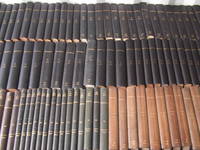
1813réf. 19270Paris: L’Imprimerie de la Republique 1813. FIRST EDITIONS. Woodcut vignettes head- and tailpieces many with folding engraved plates. All volumes in original bindings uncut some unopened completely unsophisticated. Other than 2 volumes in the original calf-backed marbled boards all are bound in original plain or printed wrappers and preserved in half-calf slipcases with morocco spine labels. First editions of the Journal de l'Ecole Polytechnique one of the oldest scientific journals. It contains sections in mathematics physics chemistry geology astronomy and mechanics design and architecture. Here you find original contributions by the top French scientists of the time. A listing of each of the issues is set forth below with a sampling of the contributors. We offer Numbers 1-16 missing only Numbers 2 9 10. No. 1. viii 189 pp. Folding engraved plate. No binding.1 leaf of contemporary manuscript describing the plate laid in. Contributions from Monge Prony Barruel Hassenfratz Fourcroy Chaptal Berthollet Guyton etc. No. 3. iv xvi ii 209-444 pp. Original marbled wrappers. Contributions from Prony Guyton Berthollet Observations on the eudiometric properties of phosphorus. No. 4. ii xxviii 445-743 3 pp. including errata. With 9 folding engraved plates. Contemporary calf-backed marbled boards. Not in a folding case. Contributions from Fourcroy et Vauquelin Hassenfratz. Tom II No. 5. iv 208 iv pp. Original printed wrappers. Contributions from Fourcroy Lagrange Laplace Guyton Prony. Tom II No. 6. iv 209-456 pp. Original printed wrappers. Contributions from Fourcroy Lagrange Hassenfratz Laplace Monge. Tom III Nos. 7 and 8. iv vii I 477 2 pp. Original marbled paper-covered boards. Contribution from Prony Philosophical mechanics or reasoned analysis of the various parts of the science of balance and movement. Tome IV No. 11. ii 395 pp. With 9 folding engraved plates. Contemporary calf-backed marbled boards. Not in a folding case. Contributions from Monge Prony Hachette Poisson Biot Hassenfratz Buyton Berthollet Gauss a short report on his Disquisitiones arithmeticae Tom V No. 12. iv 324 pp. Original wrappers. Contribution from Lagrange Lecons sur le calcul des fonctions. Tom VI No. 13. ii 378 1 pp. Original wrappers. Contributions from Monge Poisson Ampere Biot Fourcroy et Thenard chemistry Hassenfratz chemistry. Tom VII No. 14. iv 400 4; ii 90 pp. Supplement. With 3 full-page engraved plates. Original wrappers. Contemporary signature on title. The Supplement is Lagrange Supplement aux lecons sur le calcul des fonctions. Also a contribution from Montgolfier On the possibility of substituting the hydraulic ram for the old Marly machine. Tom VIII No. 15. ii 358 pp. Original wrappers uncut and partially unopened. Contributions from Poisson Memoir on the secular inequalities of the means of movement of the planets Lagrange Clarification of a singular difficulty which is encountered in the calculation of the attraction of spheroids very little different from a sphere Monge Essay on the application of analysis to some questions of elementary geometry another from Monge Construction of the vibrating string equation a number of articles from Poisson Laplace Dissertation on various points of analysis. Tom IX No. 16. iv 354 2 pp. Original boards. Contributions from Cauchy Poisson. École Polytechnique was created in 1794 a politically and economically troubled time but also the culmination of the Enlightenment. The Journal commenced publication the following year and has since then maintained the highest reputation of published research. L’Imprimerie de la Republique unknown
2020réf. 2081502111906754Hoo shubbansha 2020. Soft Cover. Fine. The book is in fine condition. Hoo shubbansha paperback
2019réf. 2081502111906862Hoo shubbansha 2019. Soft Cover. Fine. The book is in fine condition. Hoo shubbansha paperback
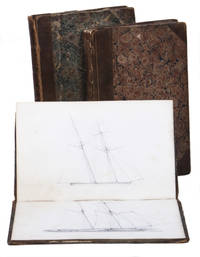
1822réf. ABC_49460Aboard the Winchelsea written and drawn at sea 1822. Contemporary half gold-tooled brown calf marbled paper sides each volume with a different marbled paper the journal volume with marbled endpapers. 8vo. The two sketchbooks contain a total of ca. 100 pages of sketches of ships done in pencil including 1 page containing signal flags in colour. 3 volumes. With: Two sketchbooks with pencil drawings of ships. A neatly-written and illustrated sea journal kept by James Dudman the second mate on board the East India Company's ship Winchelsea during a 1822-23 voyage to India. Launched in 1803 the Winchelsea was already a veteran East Indiaman this being her ninth voyage - she made a total of eleven voyages for the EIC before she was broken up in 1834. On the present voyage commanded by Captain William Adamson she carried 592 people including the 17th and 44th Regiments of Foot and detachments of the King's and EIC's soldiers and a number of women and children. The sea journal volume is accompanied by two additional volumes by Dudman containing pencil sketches of unidentified masted sailing vessels.The Winchelsea's journey from its departure at Blackwall Dock on April 24 1822 to its arrival in Bengal and eventual return to England via St. Helena and The Downs on May 24 1823 reflects the extensive maritime routes integral to British imperial dominance. The ship's role in transporting personnel and cargo exemplifies the strength of the EIC's logistical network sustaining Britain's colonial and economic interests in India. The journal with its careful record-keeping offers an intimate glimpse into the daily operations experiences and extraordinary events encountered by the second mate aboard an East Indiaman during Britain's height of imperial expansion.The journal written in Dudman's beautiful scribe-like handwriting opens with an entry dated 24 April 1822 at Blackwall Dock where the voyage started "bound for Bengal." The next few pages contain a detailed listing of the people on board beginning with the ship's company of 122 men with names followed by the troops on board: "List of a detachment of His Majesty's Troops belonging to the 44th Regt. of Foot on board the Honable. Company's Ship Wincelsea for Bengal" comprising name and rank of 367 men followed by the names of 42 women on board as well as the name and age of 57 children on board including 3 who died at sea plus 4 additional passengers.At Saugur meaning Sagar Island they took on board further passengers duly noted in an additional "List of H.M. 17th Regiment of Foot with the Women and Children accompanying them. Embarked on board the Honble. Company's ship Winchelsea at Saugur New Anchorage for England."Beyond the usual records of position winds weather and other ships Dudman includes interesting notes on unusual occurrences. Perhaps the most fascinating event was recorded on February 10 1823: a major earthquake off the coast of India experienced by the Winchelsea: "At 10 minutes past 1 PM every one on board was greatly alarmed at the singular feel of the ship which was in a violent trembling motion as if the ship was grazing over a rocky shoal and a loud rumbling noise similar to the roll.g! of a Bull quickly along the deck this very singular seuration lasted certainly not less than a minute those below ran on deck to enquire the cause and those below the poop below to ask the same question. I was in the round house at the time when it comen'd. The noise appeared to me as coming along the quarter deck and instantly over the poop the sea was smooth and the day clear. I looked out at the stern windows but saw no appearance of any shoal which I certainly would have done had such existed. The water being very clear and the ship not going more than 2 knots I cannot account for this very singular phenomenon in any other way than its being the shock of an Earthquake".The voyage journal of the Winchelsea during its 1822-23 journey to Bengal provides valuable insight into the maritime operations of the EIC its commercial and colonial reach and the strategic importance of British trade with India in the early 19th century. As a veteran East Indiaman the Winchelsea was part of the vast trading network that connected Britain with the Indian subcontinent transporting soldiers goods and passengers under the auspices of the EIC which functioned as both a commercial enterprise and a colonial governing force.The journal volume contains the typographic book plate of Mr. Jas. Dudman on the front pastedown and a manuscript inscription in ink on the first flyleaf by Lumsden Dudman who was married to Mary Anne Shirreff "Joseph H. Shirreff from L.S. Dudman Xmas 1892" one of the sketchbooks contains a manuscript inventory list in Greek of goods for sale on the first flyleaf and one of the sketchbooks with ownership signature "L: Dudman / Sept. 27 1836" likely Rev. Lumsden S. Dudman perhaps a brother of James Dudman. Some general wear to the leather spines and corners of the boards of the volumes occasionally foxed but overall internally clean. Overall in good condition. unknown
réf. 231217Wilson and Mackinnon Melbourne 1873 - 1884. The Australasian Sketcher from # 1 April - 1873 to # 186 Nov. 1884 contained in 5 uniform very good half-morocco volumes and two other cloth volume vol. 11. With wood-engraved illustrations throughout some folding or double-page wood-engraved or lithographed plates This set lacks many of the supplements as is often the case however a few are present. the final volume does have 8 of the coloured supplements and the earlier volumes have 2. Issues 168- 174 are duplicated./ All items in very good sound & clean condition. This gorgeous item is a virtual window into the rich and burgeoning times in Australia rolling on from the wealth of the goldfields. Bursting with 1000's of engravings many full page and double-page views the collection defines this maturing period of our history from every aspect imaginable - including the Kelly saga Sport Racing Cricket and Football the Exhibitions the City the Country Disasters Flood Fire & Shipwrecks Architecture Theatre Social & Community Events - even the Pacific and New Guinea - a window into the past not matched elsewhere in breadth depth or sheer visual impact. This gathering comprises the most important part of the Sketcher's run went to issue 252 Dec. 1889. In its later issues it turned to Victorian serial romance for much of its content and also many of these later issues were plagued with unsatisfactory acid paper. Wilson and Mackinnon, Melbourne, 1873 - 1884 hardcover
1866réf. 010620London: Office for Advertisments and Publications 1866. A near complete run from 1866 to 1994. 231 volumes. Lacking July-Decenber 1948 & January-June 1949. Books measure 36x26.5 last 31 volumes measure 30x21.5. Illustrated throughout. Most volume bound in modern black cloth with gilt lettering others bound in quarter calf. The calf volumes are faded on spines. Generally all bindings in very good clean firm condition. Internally very occasional library mark stamp. Pages and illustrations in very good clean condition. . Cloth. Very Good. Small Folio. Office for Advertisments and Publications Hardcover
2020réf. 2081502111906507Hoo shubbansha 2020. Soft Cover. Fine. The book is in fine condition. Hoo shubbansha paperback
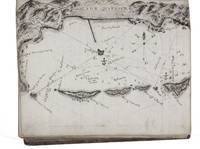
1831réf. F72I8N01U79OMostly on board the barque Sarah of London 1831. Contemporary sheepskin parchment sewn on 2 tapes. 4to 19.5 x 16.5 cm. The journal with an engraved view as frontispiece "Island of Saint Helena" engraved by Everingham in London 15 full-page 1 nearly full-page and 1 smaller manuscript maps and coastal profiles plus a small engraved view "Tomb of Napoleon" mounted on 1 page. The lecture notes with a matching pair of engravings of a scull one signed "A. East del" on and facing the title page and 27 pencil and/or ink anatomical drawings including 2 full-page some also with red. Most are drawn on the album leaves a few on separate slips mounted on the leaves. Both the lecture notes and the journal are written in brown ink with occasional additions in pencil. Including: MANUSCRIPT - ANATOMICAL. MORSE Edward George. Lecture Book notes on anatomical lectures by Joseph Constantine Carpue.London November-December 1828. A manuscript ship's journal kept by Edward George Morse Bromyard 1805-Deal post 1850 who no doubt served among other functions as the ship's surgeon. Morse made his earliest dated entries in April 1831 at the island Mauritius in the Indian Ocean and others at Madagascar and its surrounding islands from May to August 1831. Those around Madagascar indicate he was on the barque Manchester but from at least 11 December 1831 to his arrival back in England on 14 March 1833 he was on the barque Sarah a 600 ton ship sailing out of London. In it he spent a year in the Seychelles 11 December 1831-15 December 1832 including Make Island Bird Island Praslin Island and La Digue. The ship stopped at St Helena in February 1833 where Napoleon had died 12 years before. Morse provides extensive notes on the natural history topography and people of the Seychelles Madagascar and the neighbouring islands including observations of turtles and their night-time hatching and provides detailed maps of many of the islands and coastal areas along with a few coastal profiles. He also mentions the ship's Captain Stevens and chief officer Thompson and relates a tale of a lucky escape from a 10-gun pirate ship. He also includes background information about the history of the sites visited partly from published sources.The two manuscripts are written in a single album of laid paper watermarked: Britannia in a crowned double circle = "1824". Morse used it 1828 to take notes when he attended the London lectures on anatomy and blood circulation by the innovative surgeon Joseph Constantine Carpue London 1764-1846 who had pioneered facial reconstructive surgery by introducing ancient Indian techniques http://livesonline.rcseng.ac.uk/biogs/E000415b.htm. He was famous for illustrating his lectures with chalk drawings which no doubt served as the models for the anatomical illustrations in Morse's notes. Notes for four of the lectures explicitly state that they were given by Carpue they are dated November 1828 on the title-page though also in pencil 1827 two of the lectures are dated November and December and another Thursday 27 November 1828. Morse turned the album over to use it from the other end for his journal.The ship Sarah had recently returned from Hobart-Town in Tasmania where it departed for London on 11 February 1829. After it returned from its Seychelles voyage a notice in the London Gazette tells us it was to set out again for Hobart-Town on 16 October 1833 "expressly for the conveyance of Single Women of good health and character from 15 to 30 years of age No females will be admitted but those of good moral character and industrious habits." An experienced surgeon was to accompany the emigrants but the present journal provides no evidence that Morse took that job. He appears to have first settled in Chelmsford baptising a daughter there in 1836. His first wife apparently died and he married another Chelmsford woman in London in 1840. They settled in Deal near Chelmsford where they baptised children until 1850.The journal is not strictly chronological but covers the various regions and topics in different sections with titles. Morse does include a daily log of tabular data and remarks for the voyage home 10 April-14 March 1833. After his return he appears to have added some stories of the voyage from his own recollections and a few of other voyages from other sources including one on the murder of two crew members of a ship off the coast of Java in April 1835.The original blank album probably collated A-N16 = 208 leaves with N15 and 16 removed used by the binder and A1 and N13 pasted down. Fifteen further leaves were removed A15; B1 9 15; E2; G8.9; H1 H9 10; I7 12; K8; L67 but most were blank and none appears to cause any gap in the content of the manuscript. Most were probably used for other purposes most of the anatomical drawings mounted on the leaves of the lecture notes use a different paper stock but one appears to use a cut-out album leaf. The lecture notes occupy about 110 pp. and the journal about 170 pp. A few clippings and hand-written notes have been inserted.A few leaves show chips holes or tears some repaired at an early date and the ink on 3 pages has left watery shadows around the words bleeding through to the map on a fourth page but the texts and images remain clear. Otherwise in very good condition. The binding is dirty and abraded and the boards slightly warped but it remains structurally sound. A fascinating and unusual ship's journal with numerous maps kept in the unused leaves of the author's illustrated anatomical lecture notes from a few years earlier. unknown
1861réf. 2786np: np 1861. First edition. Original leather covers. Good. A REMARKABLY EXTENSIVE ARCHIVE OF A UNION SOLIDER INCLUDING DIARIES FROM 1861-1865 SPANNING HIS ENTIRE CIVIL WAR CAREER. THE SOLDIER CHARLES E. SMITH PARTICIPATED IN SOME OF THE MOST CRITICAL CAMPAIGNS OF THE WAR INCLUDING THE SEIGE OF VICKSBURG THE FALL OF ATLANTA AND SHERMAN'S MARCH TO THE SEA. Background: Charles E. Smith 1836-1905 was born in Berlin Township Ohio. He worked as a farmer and country schoolteacher in Alum Creek Delaware County Ohio. He enlisted in the 32nd Ohio Volunteer Infantry at the age of 25 on September 3 1861 and mustered in September 7 1861. He was promoted to the rank of corporal in Company I of the regiment on January 30 1864. He was slightly wounded on July 29 1864 during the Atlanta Campaign. He mustered out of the service on July 20 1865 at Louisville Kentucky. The 32nd Ohio Infantry was organized at Mansfield Ohio on August 20-September 7 1861 and mustered in for three years' service under the command of Colonel Thomas H. Ford. The regiment was involved in several important engagements and operations during the Civil War including the Battle of Greenbrier River the Battle of McDowell the Battle of Harpers Ferry the Battle of Champion Hill the Siege of Vicksburg the Atlanta Campaign the Battle of Jonesborough Sherman's March to the Sea the Carolinas Campaign and the Battle of Bentonville. The 32nd Ohio Infantry mustered out of service at Louisville Kentucky on July 20 1865. The Collection: The collection consists of 26 dairies dating from 1859 to 1866. Except for four volumes covering a period from 1856 to April 1861 and one covering the period September 18 1865 to December 5 1866 the remaining dairies 21 volumes span his entire Civil War career in the 32nd Ohio Volunteer Infantry covering the period September 3 1861 the date of his enlistment to the date of his mustering out of the service on July 20 1865. The diaries of various sizes average approximately 100 pages with few blank pages. His daily entries in his Civil War diaries many of which are detailed consist of descriptions of the weather diet geographical locations his devotion to the Union camp activities military news and description of engagements. He also included several drawings in the diaries some in color. He described his day of enlistment of September 3: "Enlisted at Lewis Center between 8 and 9 oclock in Captain Dyre's company of 3 years volunteers. I bid good bye to all my folks and started having resolved to assist in sustaining the Government. But the feelings which came over me when I left home friends and all that seemed dear to me I cannot describe." The new enlistees moved to Camp Dennison and Smith records the daily activities in camp as his company prepared for their first movement. From Camp Dennison the 32nd Ohio was ordered to western Virginia present-day West Virginia to assist in driving Confederate forces out of the region. On October 3 1861 the 32nd Ohio participated in the inconclusive Battle of Greenbrier River. Smith records in his diary beginning on September 29 through October 3: "In the evening we received orders to march to make an attack on Greenbrier about 12 miles distant. Our company numbered 86 men. Our regiment probably numbered 900 men present and able to perform duty. The 32nd. Went in advance and cleared out the road and took one prisoner. Our regiment stopped at the cross roads within four miles of Greenbrier and stopped. We expected there that the battle commenced. but they Confederate troops did not come and we. crept into the thick laurel bushes to lay till morning. When I awoke it was daylight and other regiments were passing. The artillery was hurrying along as fast as possible each gun was drawn by six horses and about nine oclock the canons began to roar. It was kept up till two oclock on both sides when our communication failed and our men withdrew from the field without losing any guns. The canons roared very loud and the sound rolled over the Mountains and valleys and made everything ring once more. Our loss was including those that were killed on the field and those that died of wounds after the battle about 12 men. We took 13 prisoners." Smith describes an engagement with Confederate forces around Beverly Virginia on December 18 1861: "The rebels came out and met our forces and a bloody fight ensued. The 32nd fought bravely and drove the enemy back. The 25th were in the advance and were cut up dreadfully. They fell back and the 32nd stood their ground and fought them like tigers. Our men made two or three gallant charges and drove them out of their entrenchments and were forced out themselves. Our boys could not drive them out again and after a desperate and bloody struggle our troops retreated. having lost about one hundred men." After spending the winter in Beverly Virginia the 32nd Ohio participated in the Shenandoah Campaign of 1862 where they engaged Stonewall Jackson's Confederate force at the Battle of McDowell Virginia on May 8 and were defeated. On that day Smith recorded the following: "We formed into line and gave three cheers to the cavalry and were waiting to welcome the infantry when a dispatch came for us to report immediately at headquarters armed and equipped. We went forthwith and formed into line of battle on an open field. The rebels came down on the hills & tried to pick a spot to plant a gun and our boys threw shell amongst and drove them out. The rebels gathered on a mountain at the right of town about 4000 men. Our boys did not find out what they were at or where they were till late in the afternoon. Two regiments went up the mountain and the ball was opened. The battle lasted till after 8 oclock at night when our boys withdrew bringing the wounded and mostly all the dead from the field. The fight lasted about 4 hours." The 32nd Ohio retreated to Franklin Virginia where they joined General John C. Fremont's command. Fremont followed the Confederates into the valley and engaged a Confederate force at Cross Keys Virginia on June 8 1862 but Smith's company did not participate in the action. The 32nd Ohio move on to Winchester Virginia where they performed garrison duty for the remainder of the summer. In September 1862 the 32nd Ohio was dispatched to Harper's Ferry. The regiment again faced Stonewall Jackson participating in the Battle of Harper's Ferry September 12-15 1862. In this engagement Jackson captured the town and nearly twelve thousand Union soldiers including the 32nd Ohio subsequently paroling them after confiscating their supplies. In his entry for September 15 Smith describes the last day of the battle: "At sunrise the ball opened with a heavy cannonade from both sides. Our men were nearly out of ammunition for artillery and the enemy was mowing down our ranks. The shells and shot came down like hail all around and amongst us and many of our officers and soldiers were mortally wounded. Our artillerists run out of ammunition and there was no other way for us to do than surrender or be slaughtered on the field. At about 8 oclock the stripes and stars were hauled down and the white flag waved as a signal for surrender. The rebel cavalry and officers were soon riding through our camp. They hoisted the bars and stars where an hour before our glorious old star spangled banner floated proudly in the breeze. O how my heart beat and my bosom heaved to see that corrupt flag raised in defiance over us." The surrender of the 32nd Ohio resulted in a revolt in the ranks of the enlisted men against the regiment's officers which Smith later discusses in a January 15 1863 entry in his diary stating: "we were obliged to surrender 11500 men to the Rebels General A.P. Hill. It was the opinion of nearly all of our men that Colonel Miles of Baltimore betrayed us into the hands of the Rebels. It was said that he got 15 cents per head for us. Our Col Thomas H. Ford was examined by a committee and dismissed from the service for blame that was unjustly laid against him for the evacuation of the Maryland Heights. Since we were paroled a hard feeling was created between the officers of the regiment." Smith and his regiment eventually rejoined General Ulysses Grant's Army of the Tennessee in Memphis on January 25 1863. The regiment was involved in Grant's Siege of Vicksburg beginning in April 1863. A pivotal engagement in Grant's Vicksburg Campaign was the Battle of Champion Hill which occurred on May 16 resulting in a Union victory. Smith's entry for that day records the fighting: "A battle had begun on the left the firing seemed to be from large guns and the line seemed to be several miles long. We halted to await orders. Soon they came & we went forward & laid behind a ridge where we could see the fighting. The scene was grand but terrible. The heavy fighting was on the left & center at first. Our brigade charged on a rebel battery and took it & hauled it off. The 32nd did a noble part charging on the hills & ravines and out the battery driving the enemy before them killing a large number." The siege of Vicksburg ended on July 4 1863 when the Confederate forces surrendered and the Union troops under Grant including the 32nd Ohio entered the city. Smith recorded the events of July 3 and 4 in his diary. On July 3 he wrote: "This is the 46th day of the Siege. The rebels have sustained at this place and nobly and bravely have they defended it but General Grant has been too much for them." The next day's entry detailed the surrender. "At nine oclock it was announced that Vicksburg was surrendered. What a thrill of joy ran through every heart. The boys all seem lively and jubilant over the success which has crowned our arms. At half past ten oclock the rebels march out of their forts and rifle pits. and form in line outside their works and stuck arms." After Vicksburg the 32nd Ohio joined an expedition to Monroe Louisiana and then participated in General James McPherson's expedition to Brownsville Mississippi. In addition to his daily entries Smith also drew a number of pencil and ink sketches that reflected what he described in on a particular day such as sketching images that depicted the sleeping arrangements in the soldiers' tents maps of terrains and a two-page spread showing the capture of a Confederate battery in Mississippi. He also wrote down poems whether written by him or others. For example on January 31 1864 he added a six-stanza poem possibly written by him entitled "Evening Thoughts" to that day's entry. A partial transcription reads: "I'm weary and I'm lonely//As I'm sitting in my tent//And I'll take my leaden pencil//And give you my feelings sent// O would this war be over//And these bloody strivings cease//And our country now distracted//Return with lasting peace." In February 3 to March 6 1864 the 32nd Ohio was involved in General William T. Sherman's Meridian Expedition which resulted in the capture of Meridian Mississippi. On March 3 Smith recorded a diary entry that detailed the destruction rendered by the campaign: "I cannot fully give the amount of damage done to the Southern Confederacy while on this Expedition but the result foots up about as follows. About 200 miles of railroad running east & west was destroyed. About 60 miles of the Mobile and Ohio railroad was destroyed and about 40 miles of the Central Mississippi road destroyed. There were about 25 Locomotives and a considerable number of cars together with Confederate railroad houses machine shops and foundries manufacturing establishments of arms ammunition. A large amount of cotton was burned." On June 10 1864 the 32nd Ohio joined Sherman's Atlanta Campaign. In the campaign the 32nd fought in the Battles of Kennesaw Mountain Atlanta Ezra Church and Jonesborough. The campaign ended on September 2 1864 when Union forces occupied Atlanta. Smith's diary entry for June 27 mentions the engagement at Kennesaw Mountain: "We were aroused at early dawn. and then ordered to pile our knapsacks and be ready to move. A battery had been brought up and was shelling the Rebels lively for a while. Our division having formed a line of battle came to a right shoulder shift arms and then we advanced in line through the woods toward the enemy. The skirmishers engaged the enemy who replied by volleys of musketry which whizzed overhead and sounded hideous. The rebels brought several batteries down and opened upon us. Moved up a little higher and laid down again and the rebels opened with shot and shell which came whizzing overhead. Some of them sung like an old spinning wheel under the control of a northern farmer's wife. Our loss in this engagement was considerable. We fell back learning that the rebels were massing their force to right and formed a new line of battle in front of our new breastworks and behind the skirmishers. Skirmishing was kept up lively along the lines and many had hair breadth escapes. We made our demonstration to draw as much rebel force away from the right as possible." His diary entry for September 3 1864 reported the good news concerning the fall of Atlanta: "Atlanta was evacuated yesterday morning at daylight the rebels having blown up large magazines of ammunition destroyed government stores and eighty carloads of ammunition. The Twentieth Corps under General Slocum marched into and took possession of the city of Atlanta an eleven oclock. We have last caused the rebels to evacuate what they called the 'Gate City' or 'Key' to the southern Confederacy and that without a very general battle. The rebels have made many boasting speeches and declared that they would fight for Atlanta till the last man woman and child was sacrificed before they would give it up. Where is their vain boasting where are their prophesies" The capture of Atlanta had a major impact on the presidential election of 1864 and helped President Lincoln's chances for reelection enormously. On election day November 8 the 32nd Ohio voted in the field. Smith's diary entry for the day reads "This being election day the polls were opened and we voted for President. Abe Lincoln carried the day." In mid-November 1864 the 32nd Ohio participated in General Sherman's "March to the Sea." The command engaged in no noteworthy battles or skirmishes until reaching Savannah Georgia. On December 10 1864 the regiment was among the lead Northern units that drove the Confederate garrison into the confines of city. Upon the Union Army's capture of Savannah on December 21 1864 the 32nd entered and encamped in the city. Within a week of the fall of Richmond the capital city of the Confederacy the news of President Lincoln's assassination and death on April 15 spread slowly to the soldiers in the south including the 32nd Ohio. On Monday April 17 Smith recorded in his diary: "An order said to have come from Secretary Stanton to General Howard was announced to the soldiers. That President Lincoln Secretary Seward and son were assassinated and that the President was killed. Whether this be true or not it caused sadness in many hearts and was believed to be reliable." The next day's entry was in response to the confirmation that Lincoln was dead: "News of the death of our President Abraham Lincoln causes a gloom over our minds. We feel that in losing him we have lost one of the best men our nation ever produced. In losing him we lose a wise and intelligent statesman a great and good counsellor a lover of freedom and humanity and the deliverer of our nation from the curse of slavery." In addition to the dairies there are several documents and papers relating to Smith and his family including the following: 1 An autograph manuscript entitled "The Vicksburg Campaign from Millikens Bend Louisiana. From March to July 4th 1863" 81 pages one side only in a bound copy book cover missing 8.5" x 11.5" n.p.; n.d. 2 An autograph manuscript entitled "The Siege of Vicksburg Continued" 34 pages one side only in a bound copybook 6.75" x 8.25 n.p.; n.d. 3 Autograph manuscript signed entitled "Diary of Events Transpiring between the United States and Spain over Cuban affairs." 117 pages in bound copy book 5.75" x 9" n.p.; circa 1901. 4 Autograph manuscript signed entitled "Closing Scenes of the Rebellion. An Original Poem" Six pages one side only in bound copybook 8" x 10" n.p.; May 30 1895. Poem was recited on Decoration Day at Cheshire Ohio on May 30 1895. 5 An autograph manuscript entitled "The Great Three Days Battle of Gettysburg Fought July 1 2d & 3d 1863. The Greatest and Most Decisive Conflict of the Great Struggle for American Independence" 28 pages one side only in bound copy book missing front cover 8" x 10" n.p.' n.d. 6 Autograph manuscript part 2 of number 4 above 27 pages one side only in bound copy book 8" x 10" n.p.; n.d. 7 Autograph manuscript entitled "Original Poem Written for the 49th anniversary of the birth of Mrs. Louisa Rolson Smith" Five pages one side only 8" x 10" n.p.; June 22 1895. 8 Autograph manuscript signed entitled "Incidents in the war of the rebellion from 1861 to 1865. Poetical Effusions from the pen of Charles E. Smith late of Co. F. 32d Ohio veteran volunteer Infantry" 68 pages one side only in bound copybook missing front and back cover 8.5" x 11.75" n.p.; n.d. 9 Photograph of Charles E. Smith 3.5" x 4.75 oval albumin print mounted on board n.p; circa 1894. 10 CDV of George Smith brother of Charles E. Smith 2.5' x 4" T.Beach photographer Delaware Ohio; circa 1860s. 11 Medal with badge for 32nd National Encampment GAR Cincinnati 1898. 12 Photograph of residence of Charles E. Smith West Berlin Ohio an 9.25" x 7.5 albumen print on a 10.25" x 8.5" mount Acme View Company McAlisterville Pennsylvania; 1894. 13 A Confederate envelope "captured on the battle field of Raymond Miss. May 12 1863 by C. E. Smith. 14 Discharge of Charles E. Smith from the service one page 6" x 8.5" Columbus Ohio; July 28 1865. 15 Two pencil sketches by Smith of "A residence near camp of 20th Ohio sketched by C. E. Smith Dec 3d 1863" on front and "A scene in co. D. 20th O.V.I. Thursday evening Nov 26th 1863. A Thanksgiving oyster supper. Sketch by C. E. Smith Nov 27th 1863." 16 A pencil sketch of the "View of The Court House at Vicksburg. Drawn by C.E. Smith Nov 4th 1863." 17 Pencil sketch of the Rock House inside the Confederate fortifications at Vicksburg "Sketched by C.E. Smith Nov 2d 1863." On verso is sketch by Smith of the city vault in Vicksburg November 2 1863. 18 Photocopy of will of Charles E. Smith Two pages West Berlin Ohio; December 18 1901. Condition: The 26 diaries all have leather covers over boards which in most cases are worn but intact. The front cover of volume #9 has separated. Most have flaps. Overall the dairies are in good condition. The other items in the collection are overall good; numbers #1 and #7 manuscripts are brittle and fragile. Foxing and toning to letters along with creasing and light tearing at edges. Wear and staining to the exterior of diaries. Note: The text of the collection has been published as "A View From the Ranks: The Civil War Diaries of Corporal Charles Smith" in a very limited printing by the Delaware County Historical Society 1999. A copy of the book is included with the collection. A REMARKABLE UNBROKEN RUN OF DIARIES OFFERING A HIGHLY LITERATE FIRST-HAND ACCOUNT OF THE CIVIL WAR EXPERIENCE THROUGH THE EYES OF A UNION SOLDIER. np unknown
réf. Garff, Jan edIn Pristine Condition. unknown