1.264 resultados
ref. elala2755Ghent: la Veuve Pierre De Goesin 1744. First Edition. Fête book celebrating the inauguration at Ghent on April 27 1744 of Maria Theresa as Countess of Flanders. The Archduchess of Austria and Queen of Hungary and Bohemia was presented on the occasion with a magnificent Ghent-made gown with a garniture of Flemish lace. She is shown wearing the gown in an oil painting by Martin Van Meytens which hangs in the city town hall. Cohen-De Ricci 868. Landwehr Splendid Ceremonies 209. Vinet 685. folio. pp. 43. title & head of dedication in red & black. woodcut arms on title. engraved frontis. portrait of Maria Theresa by Frans Pilsen after a painting by Philips Karel Marissal & large folding double-page engraved plate of the inauguration ceremony by Pilsen after David ‘t Kindt. contemporary calf imperial arms on upper cover arms of Flanders on lower cover covers with surface abrasions spine repaired at head & foot wormholes in outer margin – those in first few leaves neatly filled in the folding plate with half a dozen unobtrusive wormholes & some reinforcements of the folds but in very good condition nonetheless Ghent: la Veuve Pierre De Goesin, 1744 unknown
1769ref. 57355Wien: Johann Thomas Edlen von Trattnern 1769. First Edition. Folio pp. xvi 282 lvi Illustrated with 27 engravings in the text & 3 folding engraved plates included in the pagination. Some foxed and toned lacks the front flyleaf. Bound in very rubbed contemporary calf still a very good tight copy. Woodcut and typographic ornaments and initials. Text in German black letter with glosses in Latin. Bound in contemporary calf spine gilt little rubbed and recently rebacked red edges. Woodblock printed end papers. Some toning to the text The binding is a little rubbed but still a very good crisp and clean copy. Maria Theresa was the eldest daughter of emperor Charles I and of Elizabeth Christina of Brunswick. At the death of her father in 1740 she became the sole heiress of his dominions of the house of Austria. Upon her accesion to the throne the neighboring countries tried to capture parts of the empire which led to the Wars of Austrian Succession which finally concuded with the treaty of Aix-la-Chapelle in 1748. This is the famous criminal code of Maria Theresa which used torture as a means of "eliciting truth." Her insticts were absolutist and she would allow nothing that limited state power even as she reformed the education system and worked to better the lives of her citizens. And she did not forbid torture. Torture was only to be used only is capital and very serious criminal cases. Included in this volume are very graphic illustrattions of instruments of torture thumb-screws stocks racks burning candles leg vices winches the Viennese shoe! with detailed and precise instruction of their use. According to the Britannica this edition was suppressed by Prince Kaunitz chancellor of the state and an advisor to the Empress. Torture was formally abolished in the empire in 1776. Maria Theresa Walburga Amalia Christina was the only female ruler of the Habsburg dominions and the last of the House of Habsburg. Maria Theresa and her husband Francis I Holy Roman Emperor had sixteen children including Queen Marie Antoinette of France. Maria Theresa was the absolute sovereign . She promulgated financial and educational reforms promoted commerce and the development of agriculture and reorganised Austria's ramshackle military all of which strengthened Austria's international standing. Johann Thomas Edlen von Trattnern unknown
1769ref. 57355Wien: Johann Thomas Edlen von Trattnern 1769. First Edition. Folio pp. xvi 282 lvi Illustrated with 27 engravings in the text & 3 folding engraved plates included in the pagination. Some foxed and toned lacks the front flyleaf. Bound in very rubbed contemporary calf still a very good tight copy. Woodcut and typographic ornaments and initials. Text in German black letter with glosses in Latin. Bound in contemporary calf spine gilt little rubbed and recently rebacked red edges. Woodblock printed end papers. Some toning to the text The binding is a little rubbed but still a very good crisp and clean copy. Maria Theresa was the eldest daughter of emperor Charles I and of Elizabeth Christina of Brunswick. At the death of her father in 1740 she became the sole heiress of his dominions of the house of Austria. Upon her accesion to the throne the neighboring countries tried to capture parts of the empire which led to the Wars of Austrian Succession which finally concuded with the treaty of Aix-la-Chapelle in 1748. This is the famous criminal code of Maria Theresa which used torture as a means of "eliciting truth." Her insticts were absolutist and she would allow nothing that limited state power even as she reformed the education system and worked to better the lives of her citizens. And she did not forbid torture. Torture was only to be used only is capital and very serious criminal cases. Included in this volume are very graphic illustrattions of instruments of torture thumb-screws stocks racks burning candles leg vices winches the Viennese shoe! with detailed and precise instruction of their use. According to the Britannica this edition was suppressed by Prince Kaunitz chancellor of the state and an advisor to the Empress. Torture was formally abolished in the empire in 1776. Maria Theresa Walburga Amalia Christina was the only female ruler of the Habsburg dominions and the last of the House of Habsburg. Maria Theresa and her husband Francis I Holy Roman Emperor had sixteen children including Queen Marie Antoinette of France. Maria Theresa was the absolute sovereign . She promulgated financial and educational reforms promoted commerce and the development of agriculture and reorganised Austria's ramshackle military all of which strengthened Austria's international standing. Johann Thomas Edlen von Trattnern unknown books
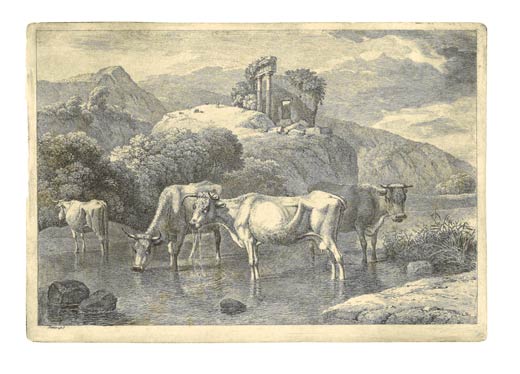
1928ref. STLE0108(Brünn) [ca. 1928]. 26 Orig.-Radierungen, Blattgröße 29 x 41 cm (Titelbl. 27 x 35), Plattengröße 9 x 12 cm bis 20 x 26 cm. Titelbl. stockfl., ansonsten fleckenfreie Abzüge. Dazu eine Porträtphotographie Rektorziks auf Karton montiert. In HLn.-Mappe m. mont. Orig.Radierung BLBL III,424; ÖBL IX,54; Thieme / B. 28,145. Franz Xaver Rektorzik (Brünn 1793-1851) war im Hauptberuf mährisch-schlesischer Gubernial-Expedits-Director in Brünn und betätigte sich aus Liebhaberei als Künstler. In seiner Kunst Autodidakt, fertigte er zahlreiche Radierungen im Geiste der Romantik, die u.a. in der Wiener Albertina und im Kupferstichkabinett in Dresden aufbewahrt werden. Gilt als einer der bedeutendsten Radierer Mährens. Seine hauptsächlichen Motive waren Landschaften und Tiere. Sein Werk umfaßt lediglich 83 Radierungen. Der Brünner Radierer August Potuczek (1882-1936) fertigte Abzüge von den Originalplatten an und gab diese in einer kalligraphisch beschrifteten Mappe in kleiner Auflage heraus. Beigegeben sind ein Zeitungsausschnitt "Franz Xaver Rektorzik. Anläßlich der Neuherausgabe seines Radierwerks durch Maler-Radierer August Potuczek" sowie 6 Postkarten mit Reproduktionen nach Radierungen aus dem Mappenwerk.Sohn e. Theatermalers, seit 1809 im Staatsdienst, 1832 Gubernial-Expeditionsdirektor. In seiner Kunst Autodidakt, fertigte er zahlreiche Radierungen im Geiste der Romantik, die u.a. in der Wiener Albertina und im Kupferstichkabinett in Dresden aufbewahrt werden. Gilt als einer der bedeutendsten Radierer Mährens. - DIESES OBJEKT UNTERLIEGT DER DIFFERENZBESTEUERUNG.
1667ref. 6759Paris, Charles Angot, 1667, 3 tomes in-4 veau brun dos-à-nerfs très décoré et doré titre doré roulette sur les coupes tranche rouge (reliure de l'époque) ; (24) pp. y compris le titre, 540 pp., 47 figures. Lettres de Mr Descartes, où sont expliquées plusieurs belles difficultez touchant ses autres ouvrages. Nouvelle édition reveue et corrigée. Tome second. Paris, Charles Angot, 1666 ; (16), 564, (4) pp. et près d'une centaine de figures ou croquis. Lettres de Mr Descartes. Où il répond à plusieurs difficultez que luy ont esté proposées sur la Dioptrique, la Géométrie, et sur plusieurs autres sujets. Tome Troisième et dernier. Paris, Charles Angot, 1667 ; (24), 646 pp. et près de 180 figures ou croquis.
1949AN EXCEPTIONAL COPY OF THIS IMPORTANT LIVRE D'ARTISTE, WITH PENCIL-SIGNED ETCHINGS BY MAURICE UTRILLO AND HIS WIFE, LUCIE VALORE, AND UNSIGNED ETCHINGS BY PICASSO AND BERNARD LAMOTTE. This book is a collection of poems about Montmartre by Vertex (there is even a poem dedicated to Utrillo and Valore!), illustrated with reproductions of drawings by many artists associated with Montmartre, including Marie Laurencin, Dunoyer de Segonzac, Dignimont, Laprade, Charles GuÈrin, Roger Wild. and Vertex himself. Also illustrated with FOUR LOOSE HORS-TEXTE ETCHINGS, one each by Utrillo, Valore, Picasso, and Bernard Lamotte.. All four etchings are signed in the plate. THIS IS AN OUTSTANDING ASSOCIATION COPY printed for Robert Conchon. On the verso of the title-page is a fine presentation inscription to Conchon underneath the reproduced drawing by Vertex, which he has colored by hand in this copy. Furthermore, THE ETCHINGS BY UTRILLO AND VALORE ARE SIGNED IN PENCIL BY THE ARTISTS. Maurice Utrillo (1883-1955), among the greatest of modern artists, married his fellow artist (and former patron) Lucie Valore (1878-1967) in 1935, after she had been widowed. Utrillo made very few original prints, and signed impressions are of the utmost rarity. From a total edition of 110 numbered copies, this is ONE OF ONLY 15 BEAUTIFULLY PRINTED ON FINE MARAIS WOVE PAPER. From the private collection of Sylvan Cole (1918-2005), the leading American print dealer. Large folio. Loose as issued in wraps. UNCUT AND UNOPENED. A few creases to extreme margin of half-title, else FINE AND BRIGHT. In the original (somewhat worn) board chemise and slipcase. Utrillo was surely Montmartre's most emblematic artist, and the signed etchings by him and his wife make this a truly wonderful book. Since these etchings are loose (as issued), they are ready for framing.
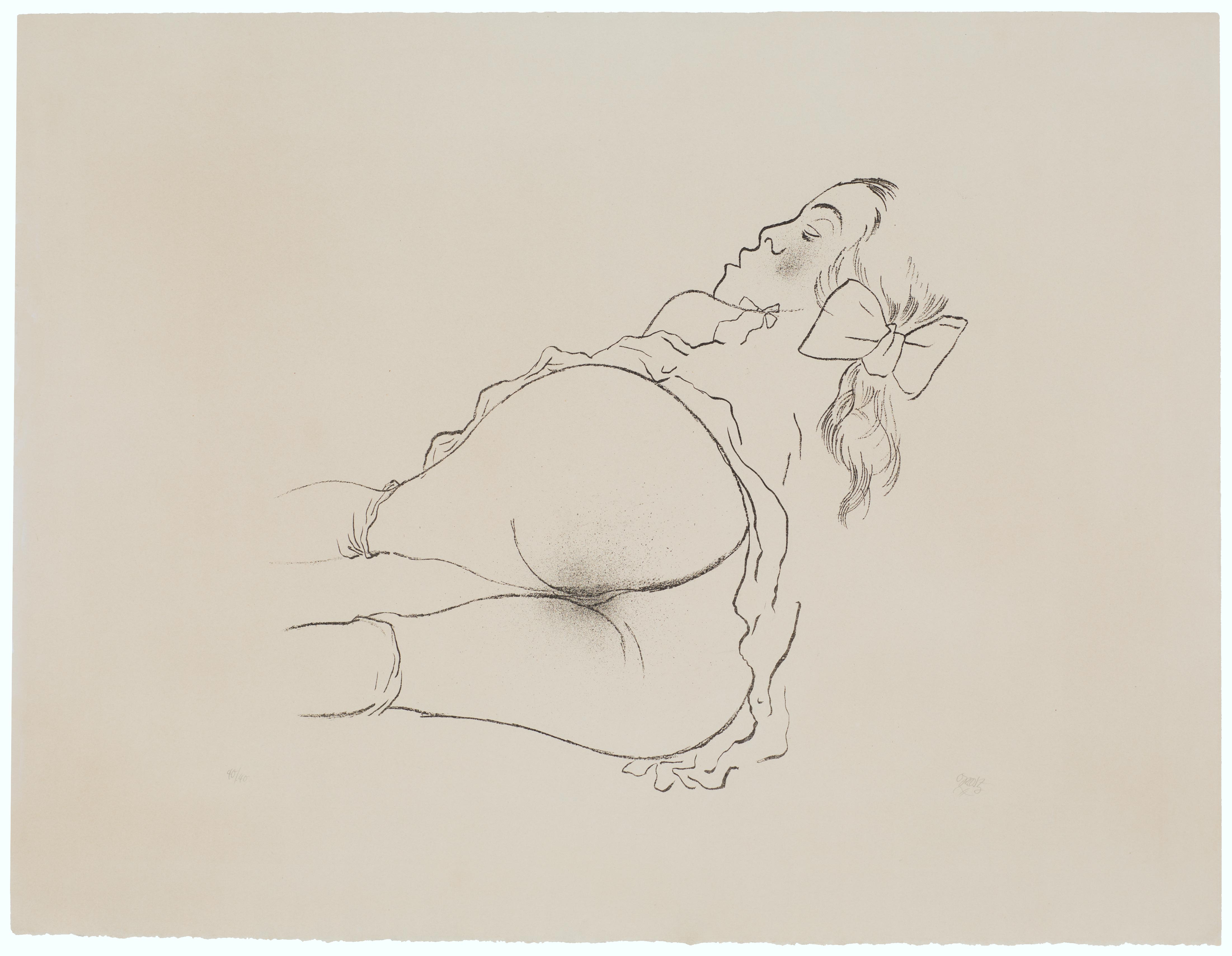
ref. EN-145o.J. Lithographie, 1922, auf chamoisfarbenem Bütten, mit Bleistift nummeriert ?40/40? und signiert ?Grosz?. Darstellungsgröße 33,3:37,5 cm, Blattgröße 50:65,5 cm. Kleiner hinterlegter Einriss im rechten Blattrand, ansonsten sehr schönes Exemplar. - Literatur: Dückers E 79. ? Nach Dückers vermutlich im Selbstverlag, in einer Gesamtauflage von mindestens 53 Exemplaren, erschienen. Die Darstellung ist unter dem genannten Titel abgebildet in ?Ecce Homo?, 1923, Taf. 67, und wird dort ebenfalls auf 1922 datiert. [2 Warenabbildungen]
1769ref. elala199Vienna: Johann Thomas Edlen von Trattnern 1769. 1769. folio. pp. 8 p.l. 282 lvi. 27 engravings in the text & 3 folding engraved plates incl. in pagination. woodcut ornaments & initials. full contemporary dark brown morocco lettered in gilt on upper cover: Constitutio Criminalis Theresiana Spectans Ad Antiquam Civitatem Voitsbergensem 1773 Antonius Josephus Schilcher P.T. Judex Civitatis Voitsberga bit rubbed some browning & foxing marginal dampstain to last section containing engravings folding plates dampstained & repaired -1 with some loss of text. Inscribed on front blank: "Mathias SchuemackerSuperioris Austriae Jo. J. Syndrins Voitsberga 1773". First Edition of the famous criminal code of Maria Theresa which redefined torture as "a subsidiary means of eliciting truth". Torture could be applied to obtain confessions only in cases where condemnation would have involved capital or severe corporal punishment. A remarkable publication including graphic illustrations of instruments and methods of torture thumb-screws stocks racks burning candles leg vices winches the Viennese shoe with detailed and precise instructions on their use. According to the Encyclopaedia Britannica 11th Edn. this illustrated edition was suppressed by Prince Kaunitz chancellor of state and advisor to the Empress a few days after its appearance. Torture was formally abolished in the empire in 1776. Signed by Authors. 1st Edition. Vienna: Johann Thomas Edlen von Trattnern, 1769. hardcover
1910ref. 86274Mailand [Poststempel], 29. X. 1910. Quer-kl.-8vo. 1 p. Postgelaufen.
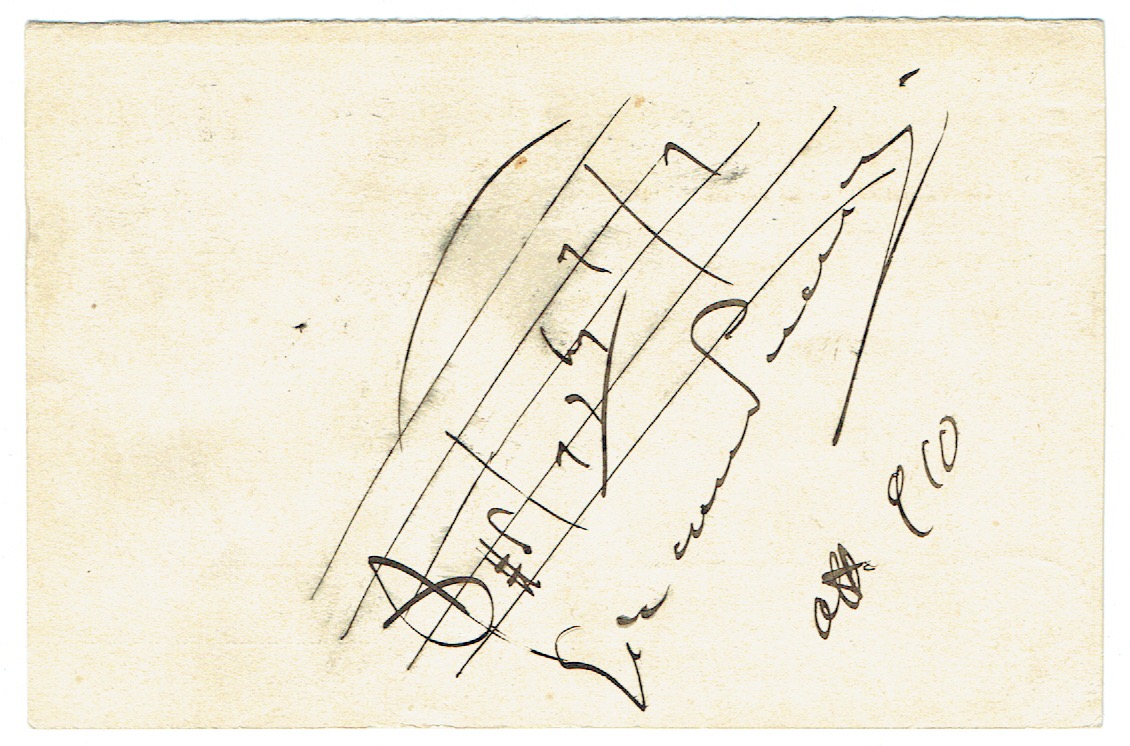
1769ref. 52694Wien: Johann Thomas Edlen von Trattnern 1769. First Edition. Folio pp. xvi 282 lvi Illustrated with 27 engravings in the text & 3 folding engraved plates included in the pagination. One of the plates was misfolded and is consequently slightly frayed at the lower edge with an old paper repair at the foredge not affecting the print area. Woodcut and typographic ornaments and initials. Text in German black letter with glosses in Latin. Bound in contemporary calf spine gilt little rubbed and recently rebacked red edges. Woodblock printed end papers. Some toning to the text The binding is a little rubbed but still a very good crisp and clean copy. Laid in: MARIA THERESA; EMPRESS. Autograph Note Signed "Maria Theresia" on black rimmed mouring paper to paymaster Mayer in German concerning her son's pension requesting 500 ducats or sovereigns and in a postscript written at lower edge and vertically at upper edge adding that the letters would follow in the evening. 1 page 12mo mourning stationery; some staining affecting signature but still legible folds. Vienna circa 1776. Maria Theresa was the eldest daughter of emperor Charles I and of Elizabeth Christina of Brunswick. At the death of her father in 1740 she became the sole heiress of his dominions of the house of Austria. Upon her accesion to the throne the neighboring countries tried to capture parts of the empire which led to the Wars of Austrian Succession which finally concuded with the treaty of Aix-la-Chapelle in 1748. This is the famous criminal code of Maria Theresa which used torture as a means of "eliciting truth." Her insticts were absolutist and she would allow nothing that limited state power even as she reformed the education system and worked to better the lives of her citizens. And she did not forbid torture. Torture was only to be used in capital and very serious criminal cases. Included in this volume are very graphic illustrattions of instruments of torture thumb-screws stocks racks burning candles leg vices winches the Viennese shoe! with detailed and precise instruction of their use. According to the Britannica this edition was suppressed by Prince Kaunitz chancellor of the state and an advisor to the Empress. Torture was formally abolished in the empire in 1776. Maria Theresa Walburga Amalia Christina was the only female ruler of the Habsburg dominions and the last of the House of Habsburg. Maria Theresa and her husband Francis I Holy Roman Emperor had sixteen children including Queen Marie Antoinette of France. Maria Theresa was the absolute sovereign . She promulgated financial and educational reforms promoted commerce and the development of agriculture and reorganised Austria's ramshackle military all of which strengthened Austria's international standing. Johann Thomas Edlen von Trattnern unknown
1769ref. 52694Wien: Johann Thomas Edlen von Trattnern 1769. First Edition. Folio pp. xvi 282 lvi Illustrated with 27 engravings in the text & 3 folding engraved plates included in the pagination. One of the plates was misfolded and is consequently slightly frayed at the lower edge with an old paper repair at the foredge not affecting the print area. Woodcut and typographic ornaments and initials. Text in German black letter with glosses in Latin. Bound in contemporary calf spine gilt little rubbed and recently rebacked red edges. Woodblock printed end papers. Some toning to the text The binding is a little rubbed but still a very good crisp and clean copy. Laid in: MARIA THERESA; EMPRESS. Autograph Note Signed "Maria Theresia" on black rimmed mouring paper to paymaster Mayer in German concerning her son's pension requesting 500 ducats or sovereigns and in a postscript written at lower edge and vertically at upper edge adding that the letters would follow in the evening. 1 page 12mo mourning stationery; some staining affecting signature but still legible folds. Vienna circa 1776. Maria Theresa was the eldest daughter of emperor Charles I and of Elizabeth Christina of Brunswick. At the death of her father in 1740 she became the sole heiress of his dominions of the house of Austria. Upon her accesion to the throne the neighboring countries tried to capture parts of the empire which led to the Wars of Austrian Succession which finally concuded with the treaty of Aix-la-Chapelle in 1748. This is the famous criminal code of Maria Theresa which used torture as a means of "eliciting truth." Her insticts were absolutist and she would allow nothing that limited state power even as she reformed the education system and worked to better the lives of her citizens. And she did not forbid torture. Torture was only to be used in capital and very serious criminal cases. Included in this volume are very graphic illustrattions of instruments of torture thumb-screws stocks racks burning candles leg vices winches the Viennese shoe! with detailed and precise instruction of their use. According to the Britannica this edition was suppressed by Prince Kaunitz chancellor of the state and an advisor to the Empress. Torture was formally abolished in the empire in 1776. Maria Theresa Walburga Amalia Christina was the only female ruler of the Habsburg dominions and the last of the House of Habsburg. Maria Theresa and her husband Francis I Holy Roman Emperor had sixteen children including Queen Marie Antoinette of France. Maria Theresa was the absolute sovereign . She promulgated financial and educational reforms promoted commerce and the development of agriculture and reorganised Austria's ramshackle military all of which strengthened Austria's international standing. Johann Thomas Edlen von Trattnern unknown books
ref. EN-141o.J. Feder in Schwarz und Aquarell in Rot, auf chamoisfarbenem Velin, monogrammiert, bezeichnet und datiert ?peag / Berlin (19)30?, auf Karton montiert, dort betitelt, bezeichnet und datiert ?Café Lunte? / Orig. Zchg. / Berlin 1930? sowie signiert ?Peter-Anton Gekle.? - Dargestellt ist der Blick in das legendäre Café Lunte, dem Treffpunkt der Berliner Bohème der 1920er bis 1930er Jahre in der Eislebener Straße 11, an der Wand der dadaistische Spruch ?Anti chianti Chianti-Christ!?. - Die Eislebener Straße in Charlottenburg wurde ab 1893 angelegt und nach der Stadt Eisleben benannt, dem Geburts- und Sterbeort Martin Luthers. Sie ist nur 270 Meter lang und stellt eine der Verbindungsstraßen zwischen der Rankestraße und der Nürnberger Straße dar. Schon Anfang des 20. Jahrhunderts war die ?Eislebener? eine gutbürgerliche Adresse. Wie viele andere der umliegenden Straßen war auch die Eislebener Straße in den 1920er und frühen 1930er Jahren geprägt von der künstlerischen Bohème. In einem ehemaligen Zigarrenladen in der Eislebener Straße 11 residierte das kleine Café ?Die Lunte?. Man nannte sie ?wohl die verruchteste, billigste der Künstlerkneipen?, der renommierte Fotograf Umbo (d.i. Otto Umbehr, 1902-1980) fotografierte hier.
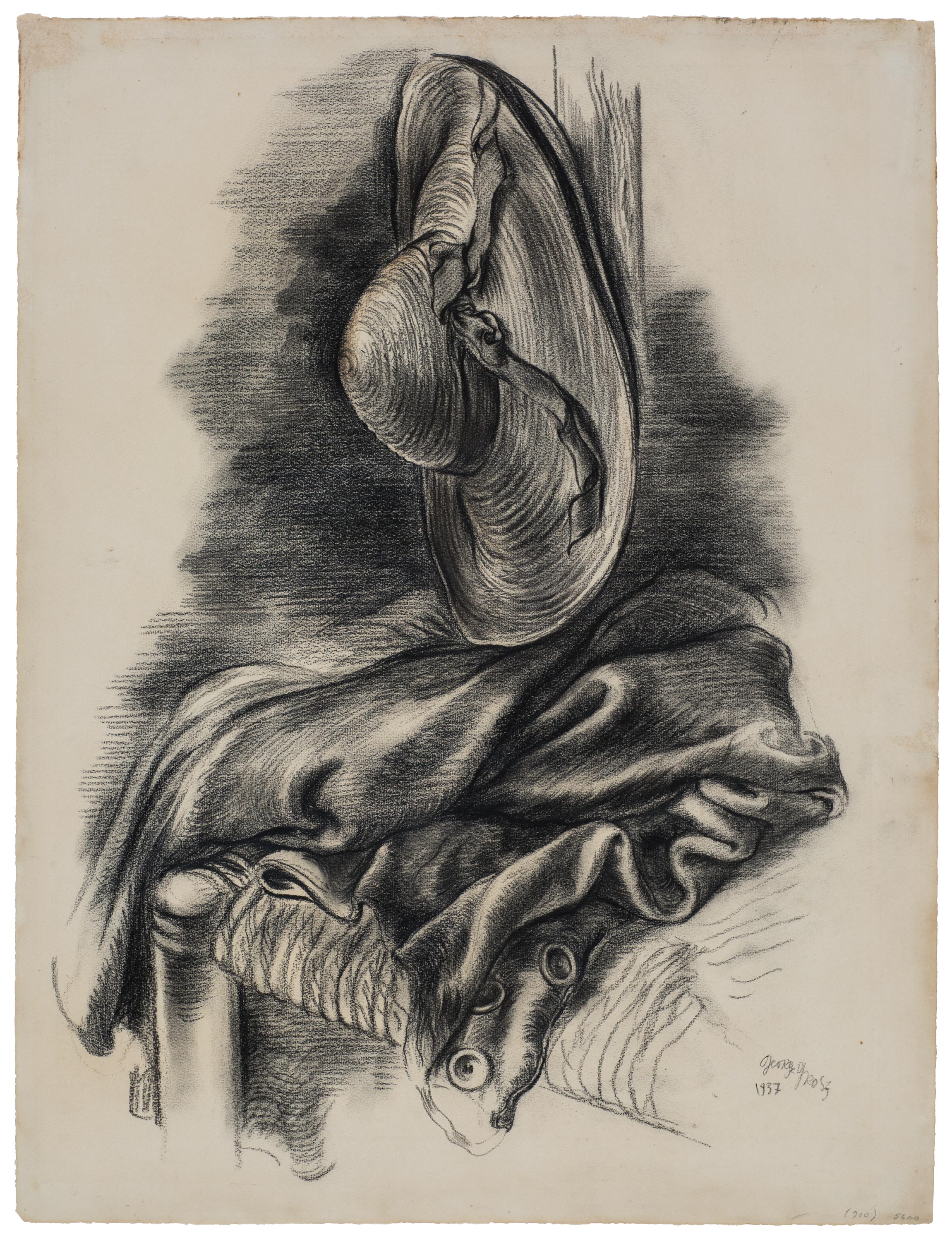
ref. EN-144o.J. Kohle, auf Bütten mit Wasserzeichen: MICHALLET FRANCE, mit Bleistift signiert und datiert ?George Grosz / 1937?. Blattgröße 63,2:48,1 cm. Zu den Rändern hin leicht fleckig. - Provenienz: Villa Grisebach, Berlin, A 254, Lot 1197, November 2015; Privatsammlung, Hessen.
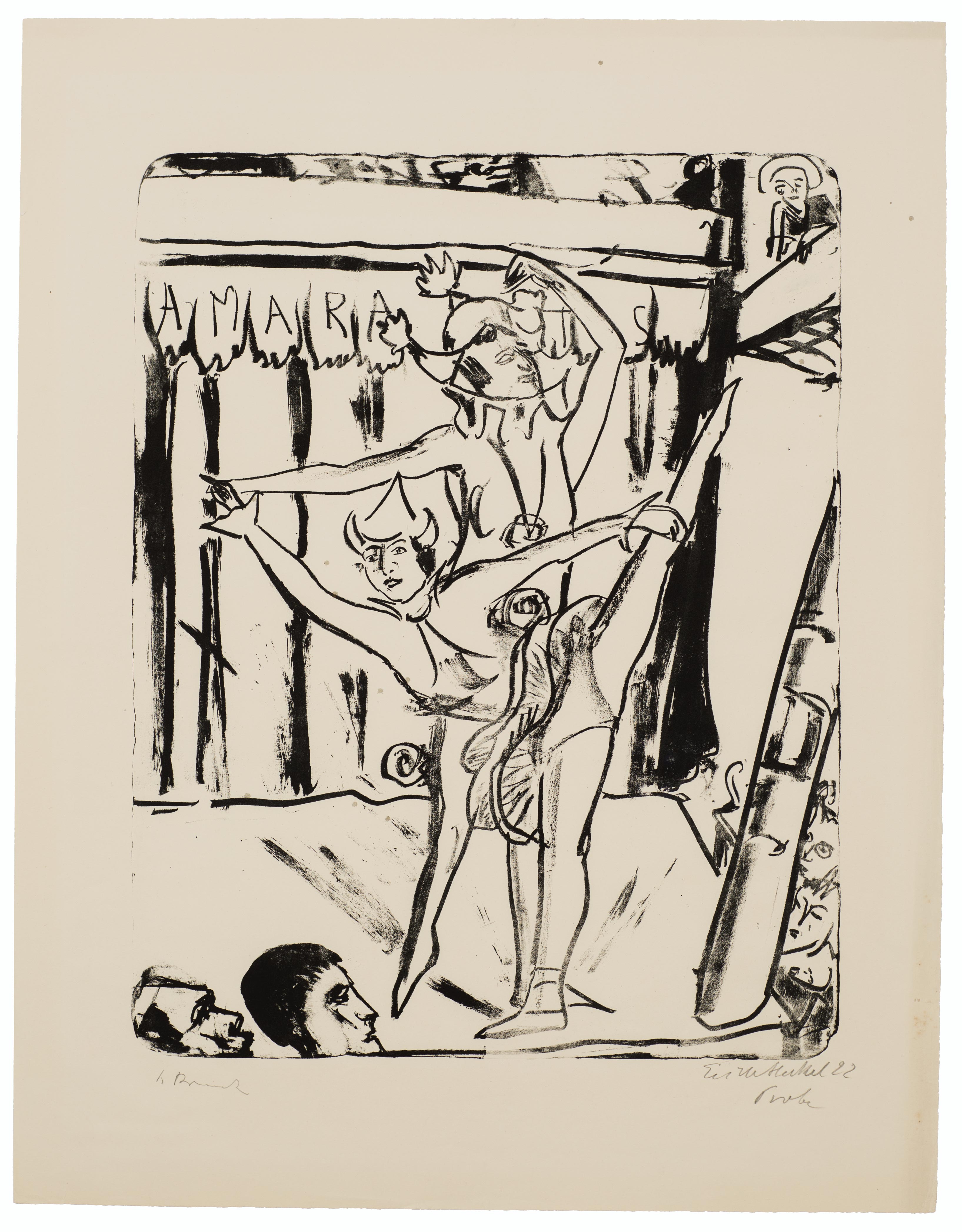
ref. EN-146o.J. Lithographie, 1922, auf chamoisfarbenem Velin mit Wasserzeichen: Johann Wilhelm, mit Bleistift bezeichnet ?1. Druck?, signiert, datiert und bezeichnet ?Erich Heckel 22 / Probe?. Darstellungsgröße 49:38,3 cm, Blattgröße 64,5:50,2 cm. - Von großer Seltenheit! Eines von drei bekannten Exemplaren des ersten Zustandes. - Provenienz: Sammlung Hermann Gerlinger, Würzburg, Lugt 6032. - Literatur: Annemarie und Wolf-Dieter Dube, Erich Heckel: Das graphische Werk, Bd. 2: Radierungen, Lithographien, New York 1965, WVZ-Nr. L 270 I a (von III b); Renate Ebner, Andreas Gabelmann, Erich Heckel. Werkverzeichnis der Druckgraphik, Bd. 2: 1914-1968, München 2021, WVZ-Nr. 784 L I a (von III b); Heinz Spielmann (Hrsg.), Die Maler der Brücke. Sammlung Hermann Gerlinger, Stuttgart 1995, S. 312, SHG-Nr. 480 (m. Abb.); Hermann Gerlinger, Katja Schneider (Hrsg.), Die Maler der Brücke. Bestandskatalog Sammlung Hermann Gerlinger, Halle/Saale 2005, S. 222, SHG-Nr. 502 (Abb. S. 223). - Austellungen: Schleswig-Holsteinisches Landesmuseum, Schloss Gottorf, Schleswig (Dauerleihgabe aus der Sammlung Hermann Gerlinger, 1995-2001); Kunstmuseum Moritzburg, Halle an der Saale (Dauerleihgabe aus der Sammlung Hermann Gerlinger, 2001-2017); Buchheim Museum, Bernried (Dauerleihgabe aus der Sammlung Hermann Gerlinger, 2017-2022); Erich Heckel, Einfühlung und Ausdruck, Buchheim Museum, Bernried, 2020/2021, (Abb. S. 292). [2 Warenabbildungen]