231 résultats
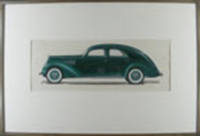
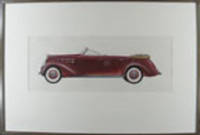
1937réf. 18773Utica 1937. Tempera on paper. Exquisite drawing of a quintessential 1930s roadster. The old established Willoughby firm coach body makers in Utica New York had a reputation for conservative quality coachwork in 1930 when Viennese born Otto Hoffmann was hired as draughtsman/designer. He quickly moved the company's design philosophy to the forefront of the streamline school translating traditional luxury car body types such as this touring car into the modern idiom. Willoughby designed bodies for many major luxury car manufacturers including Lincoln and Rolls Royce. Provenance: Acquired from Hoffmann's widow January 1985. unknown books
1937réf. 187971937. Mixed media on paper. Exquisite drawing of a 1930s concept car. The old established Willoughby firm of Utica New York had a reputation for conservative quality coachwork in 1930 when Viennese born Hoffmann was hired as draghtsman/designer. He quickly moved the company's design philosophy to the forefront of the streamline school translating traditional luxury car body types such as this touring car into the modern idiom. Willoughby designed bodies for all the major luxury car firms. We have attributed this drawing to Hoffman on the basis of a very similar drawing of the period that was acquired in 1985 from Hoffmann's widow clearly done by the same hand and exhibiting the same exquisite touch and sense of proportion. unknown books
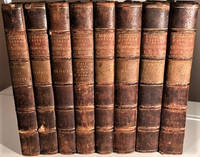
1811réf. 23068Freiberg: Craz und Gerlach 1811-1818. First Edition. Contemporary three-quarter leather. Very good; front joint of vol.1 & 4 part one and rear joint of the second section of vol. 1 & vol. 4 part two are beginning to split; small gouge to the backstrip of the seventh volume. 8vo. Volumes 2 3 and 4 were published in 2 parts each; volume 1 is here bound as two volumes this was a convenience introduced by the binder because of the length of the second section of text in the first volume. This is not designated on the title page of the first volume later volumes are clearly printed with a part number subordinate to the volume number. The binder in this instance inserted the fly-title before the text of the second section that constitutes this additional volume. The following Roman numerals designate the volume numbers in conformity with the printed title pages. I - xxiv 1 - 349 1 - blank 2 - fly-title 353 - 685 1 - errata 2 - adverts pp. folding table; II1 - 4 1 - 382 pp.; II2 - x 1 - 322 2 - adverts pp.; III1 - iv 1 - 339 1 - errata pp.; III2 - 2 3 - 311 1 - blank pp.; IV1 - 2. 3 - 288 pp.; IV2 - x 2 3 - 208 xiv 1 - 58 209 - 245 index 1 - errata pp. There are also two sheets of detailed contemporary notes that are bound in. One dealing with gold and another with a peculiar mineral formation found formed as a nodule accompanied by a hand drawn illustration in the Italian Alps. There is also a 13 line note on the verso of the front free endpaper of volume one that faces the title page and runs on to it below the imprint. The note discusses the "bequem" format of the 8 volume binding of the book; it is signed: E. v. Uechtritz. Inspector of precious stones Hoffmann studied at the Freiberg Bergakademie under A.G. Werner ". the great oracle of the sciences of the earth" Hoover catalog quoting Cuvier. "Very scarce" Schuh. This work is one of the greatest encyclopedias of Werner's mineral theories ever published. It was the only authorized publication of Werner's mineral system. It was begun by Hoffmann who died after the first two volumes were published and continued by August Breithaupt who completed the third and fourth volumes. In this monumental treatise the Wernerian doctrine of mineralogy is propounded in its most detailed presentation. The authors accept all of Werner's theories concerning mineral formation and classification and include numerous illustrative examples. The text is generous in its treatment of the subject sometimes devoting long detailed sections to minute points. Werner did not publish much on his theories but his students and followers insured that his ideas would reach a larger audience by their own works following his guidelines. The first volume provides a short history of mineralogy definitions descriptions of physical properties including color optics streak hardness specific weight transparency luster and crystal form chemical characteristics the use of the blow-pipe nomenclature and a synopsis of the classification system. Later volumes contain essentially a descriptive mineralogy; all that was known was included in the descriptions. See Schuh; Freilich sale catalog #251; see Dibner Heralds . #91 for Werner; see Hoover #878 for Werner; Ward & Carozzi #1094; see DSB II p. 440. Craz und Gerlach hardcover books
1910réf. 97511910. Letters. Collectible; Very Good. 1910 HANDWRITTEN LETTER FROM LEGENDARY AUSTRIAN ARCHITECT JOSEF HOFFMANN Vienna Secessionist and co-founder of the Wiener Werkstatte TO EDUARD JOSEF WIMMER-WISGRILL the first Artistic Director of the fashion department of the Wiener Werkstatte. Clean and bright and very well-preserved. Written on the stationary with lavish letterhead of The Hotel Hassler in Rome. In a strong clear hand in fountain pen and on a single sheet folded into quarters -- with very minor crease folds. A translation into English from the original German on another sheet of paper is includeds as well. 8" x 10 1/2". Also includes the original envelope handwritten by Josef Hoffmann. unknown books
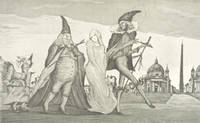
1920réf. 24429Leipzig: W. Drugulin 1920. Vorzugsausgabe. Limited numbered edition. Hardcover. vg. 1/120. Elephant folio. VIII 1032pp. & 13 unnumbered illustration pages. Gold-stamped full green calf with gold lettering on cover and spine in original dust wrapper and sturdy paper-covered green clamshell box. Gold-lined raised bands. All deckled edges. Inside of front and back board stamped with double gold borders. Binding designed by R. Hadl handcrafted by A. Köllner. Elaborate deluxe edition of Hoffmann's novel "Signor Formica". E. T. A. Hoffmann 1776-1822 was a German author composer draftsman caricaturist jurist and music critic. He was one of the major authors of the Romantic movement. Signor Formica was first published in 1820 and a year later was included in the forth volume of Hoffmann's work "Serapionsbrüder." His few literary works are stories in which supernatural and sinister characters appear in people's lives revealing grotesque and often tragic sides in human nature. This deluxe edition is illustrated with original artwork by the Hungarian sculptor and etcher Richard Hadl. The illustrations consist of one original signed full-page pencil drawing as well as 12 full-page- and 7 in-text drawings in aquatinta-manier. Additional signature of illustrator on limitation page. "Dieses Buch wurde im Jahre neunzehnhundert und zwanzig in der Offizin W. Drugulin in Leipzig gedruckt. Die Auflage beträgt einhundert und zwanzig numerierte Exemplare auf van Gelder-Zonen-Bütten. Nach Beendigung des Druckes wurden die Platten vernichtet. Dieses Exemplar ist Nr. XXXIV und wurde gedruckt für Freiherrn Erich von Goldschmidt-Rothschild. Durchgesehen: signed Richard Hadl." Printed on handmade van Gelder-Zonen paper. Foreword by Hadl. Text in German. This particular copy was printed exclusively for Erich von Goldschmidt-Rothschild 1899-1987 of the famous Rothschild lineage. Goldschmidt-Rothschild was also well-known for his extensive rare book collection. Slip with information on binding laid-in as issued. Very slight rubbing on head and tail of spine. Minor creasing on spine of dust wrapper. Slight scuffing on clamshell box tiny tear on top section on spine of box. 10mm offsetting from interior leather-lining on outer edges of front and rear free endpaper. Dust wrapper and clamshell box protected by modern mylar. Exceptional copy in a stunning binding. Fine condition. Scarce with dust wrapper. W. Drugulin hardcover books
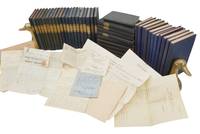
1938réf. 140946061London: No publisher 1938. Very Good. 41 volumes. Bound in varying blue cloth bindings most stamped in gilt. Includes handwritten diaries for 1896-1899 1901-1911 and 1913-1938. Very Good with light shelf wear a few volumes have staining to the covers else fine. Various ephemera laid-in including a note relating to his Czech passport numbered receipts from clients insurance cards pay scale rate cards applications for work letters of intent from prospective employees. An incredibly meticulously logged diary archive into the life and work of noteworthy London architect Paul Hoffmann likely born in Vienna in 1869 passing away in 1938. He was notably involved in Queen's Gate mansion blocks the Philimore Estate and Earl's Court in early 1900. In tiny ink script he kept a diligent yearly diary of his work until just ten days before his death on August 19th 1938 detailing his professional relationships as an architect nearly every day for four decades except Sundays. Includes names of clients colleagues and accounts of his projects. As for what he did in his spare time an intriguing 1902 article in the Anglo-American Press mentions that he was also a librettist and author of the opera "The Little Innocents" under the pen name Hugh Stranger. Hoffmann designed and maintained Capel House in 1905-06 now Cable House in London at 56 New Broad Street. His journal entries describe his work at Capel House including the annual building costs over the years applications for work at the House architect's insurance and more. Not only does this archive describe the day-to-day tasks of a busy architect but also keeps log of the outbreak of WWI from a Londoner's perspective. His diaries kept between 1914-1918 log important WWI dates. He declares that the "Banks are closed due to 'war scare' on July 31st1914. He logs that "Germany declares war on England" on August 5th 1914. An insurance slip by "The Government Scheme of Aircraft and Bombardment Insurance" laid-in his 1916 diary charged his account 1500 pounds on the 1st of February to insure Capel House from air raids. On June 13th 1917 he writes "Airplane bombs in city" -- later on the 7th of July he writes "2 airplane raids over London." He writes on Armistice Day November 11 1918 "Armistice between Germany & Allies unchanged." In the interim of air raids and bombings he still keeps a daily log of calls meetings and projects. One of his most noteworthy projects Roxburgh Mansions Kensington London constructed in 1899 were eventually destroyed in The Blitz of WWII. A remarkable archive for enthusiasts of late 19th & early 20th century London architecture. [No publisher] unknown books