8179 risultati
rif. 586971936. 4°-Quer 36 Blatt 56 eingeklebte Orig.-Photographien unterschiedlicher Grösse von 23 x17 cm 21 x 27 cm bis 7 x 11 cm unter anderem ein zweifach gefalzte Weitwinkelaufnahme total 22 x 76 cm des Aufmarsches auf dem Reichsparteitagsgelände OLdr. Mappe aussen wasserrändig innen tadellos ausser der gefalteten Photographie diese etwas fleckig. Die meisten der Aufnahmen vom Hitlers Leibphotographen Heinrich Hoffmann 1885-1957. Hitler ist 13 mal abgebildet. Die Aufnahmen zeigen nicht nur den Parteitag und entsprechende Aufmärsche sondern auch Gäste aus befreundeten Ländern. Ausserdem die Besichtigung der neuen Autobahn und ein Ausflug nach Berchtesgaden. - Kappeler Franz 1898 -1988. Stud. in Zürich Genf und Bern 1925 Dr. iur. Volontär an Zürcher Gerichten. Ab 1926 Mitarbeiter des Eidg. Polit. Departements EPD heute EDA 1936 Legationssekr. und 1939 Legationsrat bis 1944 Mitarbeiter des Schweizer Ministers zuerst von Paul Dinichert 1878-1954der wegen seiner kritischen Haltung zum Regime 1938 vom nazifreundlichen Hans Frölicher 1887-1961abgelöst wurde.in Berlin. Kappeler war massgeblich an den dt.-schweiz. Verhandlungen beteiligt die 1938 dazu führten dass in den Pässen dt. Juden der J-Stempel eingeführt wurde. Nach seiner Rückkehr nach Bern trat er in die Abt. für Finanzangelegenheiten ein und wirkte in zahlreichen Wirtschaftskomm. und -delegationen mit. Nach seiner Berufung nach Beirut vertrat er die Schweiz ab 1950 im Libanon in Syrien Irak und Jordanien. 1956 wurde er Minister 1960 Botschafter in Pretoria bis zu seiner Pensionierung im Jahr 1963. In seinen Schriften äusserte K. eine entgegenkommende Haltung sowohl gegenüber dem Dritten Reich als auch gegenüber Südafrika und dessen Apartheidregime. 010 1936 unknown
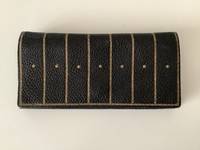
1922rif. 15058AB1922. Vienna Wiener Werkstätte ca. 1922. 9 : 175 cm. Black goadskin with gold embossment three-line gold stamp Wiener Werkstätte. This wallet was produced by the Wiener Werkstätte after a design by architect and designer Josef Hoffmann 18701956 between 1910 and 1928. It was the express wish of the founders of this institution that its range of products should encompass as many areas of life as possible. This is the idea of the Gesamtkunstwerk. Consequently the Wiener Werkstätte premises in Neustiftgasse 3234 also accommodated a leather workshop. This rectangular object is made of black leather and features a geometric decorative pattern in precious gold embossing. Together with the fine leather these gold ornaments provide the object with its thoroughly elegant and exquisite character as the Wiener Werkstätte designers devoted to even the smallest object the same attention as to larger ones. - One of the famous wallets designed by Josef Hoffmann made for the Wiener Werkstätte. hardcover
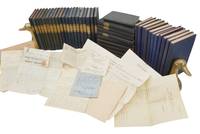
1938rif. 140946061London: No publisher 1938. Very Good. 41 volumes. Bound in varying blue cloth bindings most stamped in gilt. Includes handwritten diaries for 1896-1899 1901-1911 and 1913-1938. Very Good with light shelf wear a few volumes have staining to the covers else fine. Various ephemera laid-in including a note relating to his Czech passport numbered receipts from clients insurance cards pay scale rate cards applications for work letters of intent from prospective employees. An incredibly meticulously logged diary archive into the life and work of noteworthy London architect Paul Hoffmann likely born in Vienna in 1869 passing away in 1938. He was notably involved in Queen's Gate mansion blocks the Philimore Estate and Earl's Court in early 1900. In tiny ink script he kept a diligent yearly diary of his work until just ten days before his death on August 19th 1938 detailing his professional relationships as an architect nearly every day for four decades except Sundays. Includes names of clients colleagues and accounts of his projects. As for what he did in his spare time an intriguing 1902 article in the Anglo-American Press mentions that he was also a librettist and author of the opera "The Little Innocents" under the pen name Hugh Stranger. Hoffmann designed and maintained Capel House in 1905-06 now Cable House in London at 56 New Broad Street. His journal entries describe his work at Capel House including the annual building costs over the years applications for work at the House architect's insurance and more. Not only does this archive describe the day-to-day tasks of a busy architect but also keeps log of the outbreak of WWI from a Londoner's perspective. His diaries kept between 1914-1918 log important WWI dates. He declares that the "Banks are closed due to 'war scare' on July 31st1914. He logs that "Germany declares war on England" on August 5th 1914. An insurance slip by "The Government Scheme of Aircraft and Bombardment Insurance" laid-in his 1916 diary charged his account 1500 pounds on the 1st of February to insure Capel House from air raids. On June 13th 1917 he writes "Airplane bombs in city" -- later on the 7th of July he writes "2 airplane raids over London." He writes on Armistice Day November 11 1918 "Armistice between Germany & Allies unchanged." In the interim of air raids and bombings he still keeps a daily log of calls meetings and projects. One of his most noteworthy projects Roxburgh Mansions Kensington London constructed in 1899 were eventually destroyed in The Blitz of WWII. A remarkable archive for enthusiasts of late 19th & early 20th century London architecture. [No publisher] unknown
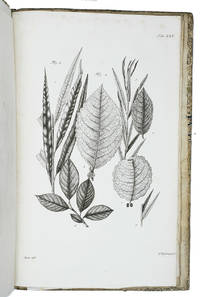
1785rif. M2H99OL1K649Leipzig: Siegfried Leberecht Crusius 1785. Blue sprinkled paper over boards vol. 1 and limp grey paper wrappers stab-sewn through the wrappers vol. 2. Preserved in a professionaly handmade box made for this book. Folio. With 24 engraved plates in vol. 1 numbered 1-24 and 6 engraved plates in vol. 2 numbered 25-29 31: all published all signed by I. Nuszbiegel after originals by the author except plate 31 which is signed by Johann Stephan Capieux. 2 volumes. Both volumes of the first and only edition of Hoffmann's monograph on willows published in instalments from 1785 to 1791 including the series of 30 engraved plates numbered as 31 made to accompany them showing willows their branches leaves and flowers. He describes different kinds of willows their varieties habitat and sizes. All descriptions refer to the plates so that readers could use them together.Georg Franz Hofmann was a German botanist and physician. He first served as professor of botany in Erlangen then professor of botany and director of the botanical garden in Göttingen. Finally he went to Moscow where he continued his botanical studies taking charge of the Imperial Academy of Science's botanical garden and herbarium.Plate 30 is never mentioned in the text or bibliographies so it was apparently never published or was misnumbered 31.With manuscript owner's inscriptions on the title-page of instalment 1 and on the title-page of vol. 1. With the title-page to vol. 1 misbound between instalments 3 and 4. Binding of vol. 1 slightly worn corners bumped. Paper wrappers of vol. 2 slightly frayed at the corners. With a small professional restoration to the foot of the spine. With some minor stains in each volume but still in good condition. Both volumes rarely found together of a remarkable monograph on willows with all the plates.l Hunt II 678; Johnston 565; Nissen BBI 893; Pritzel 4127; Stafleu & Cowan II 2879. Siegfried Leberecht Crusius, hardcover