9 575 résultats
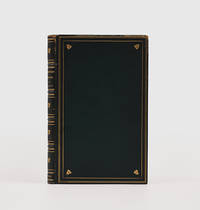
réf. 123472Cambridge Printed by W. Metcalfe and sold by Messrs. Gee & Bridges Market-Hill 1829. . First UK edition; 8vo; slightly toned and foxed; 19th-century dark blue straight-grained morocco gilt by Roger de Coverly inner dentelles gilt all edges gilt marbled endpapers sunning to spine and top quarter of boards; very good. This copy of Adonais was the first UK edition and second overall. It was printed in 1829 eight years after the death of John Keats to whom this elegy is dedicated. Keats and Shelley were introduced by a mutual friend in London in 1816. They began with a fairly tenuous friendship built upon both mutual admiration and rivalry. Yet the pair continued to exchange letters and when Shelley moved to Pisa with his wife the eminent Mary Shelley he invited Keats to stay with them upon the news of his failing health. As Keats made his way to their Italian home he stopped in Rome to recuperate from the journey however the final stages of tuberculosis were upon now upon him and he succumbed to the illness. Despite the morbid diagnosis many of Keats' friends and contemporaries attributed his death to a scathing review of his poem Hyperion by anonymous critic in the Quarterly Review which destroyed his spirit. In his poem Don Juan Byron writes ''Tis strange the mind that very fiery particle / Should let itself be snuffed out by an article.' By June 1821 a mere five months after the death of his friend Shelley published Adonais in Pisa. Shelley bemoaned his grief at the loss of a poet he respected so highly before urging the reader not to think only of Keats in death but to remember his life and work. Its British reprint in 1829 was an almost identical copy of the first edition this one also containing the preface which condemns the critic who caused such suffering to the poet. The Cambridge reprint of the work is often viewed as beings scarcer than the Pisan one W.M. Rosetti and remains one of history's most prominent elegies. Only a year later upon the death of Shelley some of his ashes were scattered alongside Keats' grave in Rome. This particular copy is finely bound by Roger de Coverly who was a celebrated binder of the Nineteenth Century and worked under Zaehnsdorf before beginning his own company is 1870 where he was commissioned several times by William Morris. Cambridge, Printed by W. Metcalfe, and sold by Messrs. Gee & Bridges, Market-Hill, 1829. hardcover
1903réf. ST17129-027Edinburgh: Printed by Turnbull and Spears for Otto Schulze & Co September 1903. No. 25 OF 40 COPIES printed on Japanese Vellum. 208 x 176 mm. 8 3/4 x 7". v 289 1 pp. 1 leaf colophon. MOST ATTRACTIVE DARK BROWN CRUSHED MOROCCO GILT BY OTTO SCHULZE & CO. stamp-signed on front turn-in covers with complex strapwork frame raised bands spine compartments with lobed centerpiece gilt lettering gilt-ruled turn-ins top edge gilt other edges untrimmed. With woodcut white-vine border on title page and on the first page of three poems large white-vine initial printed in red on title page numerous six-line white-vine initials throughout. Printed in red and black. Nearly invisible short scratch near head of front board a couple of corners gently bumped trivial internal imperfections but A VERY FINE COPY with virtually no signs of use inside or out. This collection of poems by the great Romantic rebel is a strictly limited deluxe production from Edinburgh publisher Otto Schulze clearly intended to capitalize on the allure of books produced by the great English private presses. Operating during the first 10 or 15 years of the 20th century Schulze usually had his books printed by George Robb or as here Turnbull and Spears with some copies then finely bound under his firm's name. Such bindings often were done for rather than by the publisher or bookseller whose name is stamp-signed on the volume but since our volume says that the binding is by--and not for--Schulze we can only assume that our publisher had an in-house binder. Whether in-house or outsourced bindings signed by Schulze are consistently attractive but are not common: since 1975 ABPC has listed six such morocco bindings two of them described as "elaborate" or "extra.". Printed by Turnbull and Spears for Otto Schulze & Co unknown
1903réf. ST17129-027Edinburgh: Printed by Turnbull and Spears for Otto Schulze & Co September 1903. No. 25 OF 40 COPIES printed on Japanese Vellum. 208 x 176 mm. 8 3/4 x 7". v 289 1 pp. 1 leaf colophon. MOST ATTRACTIVE DARK BROWN CRUSHED MOROCCO GILT BY OTTO SCHULZE & CO. stamp-signed on front turn-in covers with complex strapwork frame raised bands spine compartments with lobed centerpiece gilt lettering gilt-ruled turn-ins top edge gilt other edges untrimmed. With woodcut white-vine border on title page and on the first page of three poems large white-vine initial printed in red on title page numerous six-line white-vine initials throughout. Printed in red and black. Nearly invisible short scratch near head of front board a couple of corners gently bumped trivial internal imperfections but A VERY FINE COPY with virtually no signs of use inside or out. This collection of poems by the great Romantic rebel is a strictly limited deluxe production from Edinburgh publisher Otto Schulze clearly intended to capitalize on the allure of books produced by the great English private presses. Operating during the first 10 or 15 years of the 20th century Schulze usually had his books printed by George Robb or as here Turnbull and Spears with some copies then finely bound under his firm's name. Such bindings often were done for rather than by the publisher or bookseller whose name is stamp-signed on the volume but since our volume says that the binding is by--and not for--Schulze we can only assume that our publisher had an in-house binder. Whether in-house or outsourced bindings signed by Schulze are consistently attractive but are not common: since 1975 ABPC has listed six such morocco bindings two of them described as "elaborate" or "extra.". Printed by Turnbull and Spears for Otto Schulze & Co unknown books
1883réf. SCX3119-1Original Complete Edition stated. Sixteen pages. Dick's Standard Plays Number 431. Also called Frankenstein. Orange paper wrappers with engraved pictorial scene on cover. 1883 date from ISFDB. Title listed as Presumption or the Fate of Frankenstein as that is the well-known title. Listed as Frankenstein by Worldcat with date 1883. Peake wrote Presumption or the Fate of Frankenstein with additional elements to Shelley's story--first performed in 1823. Trinity College Dick's Standard Plays Collection: "By the mid-1860s Dicks' cheap reprints of Shakespeare led to another expansion of the flourishing business. Around the same time he began publishing 'Dicks' standard plays'. Over 1000 titles were published over a twenty-year period –averaging more than one a week! " John Dicks paperback
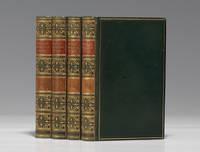
1839réf. 1297641839. First Edition. SHELLEY Percy Bysshe. The Poetical Works of Percy Bysshe Shelley. Edited by Mrs. Shelley. London: Edward Moxon 1839. Four volumes. 12mo later full dark green calf raised bands tan and rust morocco spine labels elaborately gilt-decorated spines marbled endpapers and edges. $4000.First edition of Mary ShelleyÕs important edition of her husbandÕs poetical works with engraved frontispiece portrait of the poet by Finden finely bound.After Percy Shelley's death in 1822 Mary Shelley devoted herself to writing his biography and publishing his manuscripts. She first attempted to publish Shelley's poems in 1824 but his father Sir Timothy Shelley prevented further publication of Shelley's writings for 15 years. ""In 1839 the obstacles to an authentic edition having been removedÉ Mrs. Shelley published what was then supposed to be a definitive edition in four volumes enriched with biographical notes and some very beautiful lyrics which had remained in manuscript"" DNB. Lowndes 2374. A beautifully bound set in excellent condition. hardcover
1839réf. 1297641839. First Edition. SHELLEY Percy Bysshe. The Poetical Works of Percy Bysshe Shelley. Edited by Mrs. Shelley. London: Edward Moxon 1839. Four volumes. 12mo later full dark green calf raised bands tan and rust morocco spine labels elaborately gilt-decorated spines marbled endpapers and edges. $4000.First edition of Mary ShelleyÕs important edition of her husbandÕs poetical works with engraved frontispiece portrait of the poet by Finden finely bound.After Percy Shelley's death in 1822 Mary Shelley devoted herself to writing his biography and publishing his manuscripts. She first attempted to publish Shelley's poems in 1824 but his father Sir Timothy Shelley prevented further publication of Shelley's writings for 15 years. ""In 1839 the obstacles to an authentic edition having been removedÉ Mrs. Shelley published what was then supposed to be a definitive edition in four volumes enriched with biographical notes and some very beautiful lyrics which had remained in manuscript"" DNB. Lowndes 2374. A beautifully bound set in excellent condition. hardcover books
1892réf. 3393Cambridge: Riverside Press 1892. Large Paper Edition Limited Edition. Leather Bound. Very Good. Large Paper Edition Limited Edition. Leather Bound. 8 vol. Percy Bysshe Shelley The Complete Poetical Works of Percy Blysshe Shelley. The text newly collated and revised and edited with a memoir and notes by George Edward Woodberry. Large Paper Edition. Limited Edition limited to 250 numbered copies of which this is No. 162. Top edges gilt. Raised bands. Bound in full midnight blue Morocco leather with gilt geometric borders on covers and spine panels. Leather and silk doublures on inner covers with gilt geometric patterns. Published: Cambridge; Riverside Press; 1892. H: 8 3/4" W: 6 1/8" D: 1 5/8". Riverside Press unknown
1832réf. 002493London: Edward Moxon 1832 1832. FIRST EDITION. 1 vol. 12mo 6-3/4" x 4-3/8" with the half-title and 2 page publisher's ad complete bound full red morocco ribbed gilt decorated spine covers triple ruled in gilt gilt dentelles by Zaehnsdorf and with their exhibition gilt stamp on the rear pastedown. Housed in a 1/4 red morocco backed clamshell slipcase gilt lettered spine Hinges rubbed but covers firm internally clean and bright A VERY GOOD COPY. Engraved bookplate of "Edward Huth Wykehurst Park" descendant of the great bibliophile Henry Huth. He was the last Huth to live at Wykehurst Park. Written to denounce the state of things that occasioned the notorious 'Peterloo Massacre' at Manchester in 1819 for publication in The Examiner but turned down by the editor Leigh Hunt ".because he thought that the public at large had not become sufficiently discerning to do justice to the sincerity and kind-heartedness of the spirit that walked in this flaming robe of verse." London: Edward Moxon, 1832 unknown
1829réf. 193186Cambridge: printed by W. Metcalfe and sold by Messrs. Gee & Bridges 1829. Shelley's lament for Keats First British edition second overall of Shelley's finest poem. "It was this second edition of Adonais. that was chiefly responsible for the first general enthusiasm over Shelley" Granniss p. 73. Keats died in Rome of consumption in February 1821 and by June Shelley had completed Adonais in Pisa. The publication of the British edition was arranged by and "indicative of the special enthusiasm for both Keats and Shelley of young men such as Richard Monckton Milnes Arthur Hallam and Alfred Tennyson" MacGillivray p. 104. Hallam championed the works of Keats and Shelley in Britain and professed them the "poets of sensation" p. 4. Tennyson wrote the great eulogy In Memoriam A.H.H. 1850 after Hallam's death in Vienna in 1833. The British edition is an exact reprint of the first edition of Adonais notwithstanding a few typographical corrections. The preface contains the famous condemnation of the critics whose adverse comments on Endymion were thought by Shelley to have caused the breakdown of Keats's health. William Michael Rossetti notes that "the Cambridge edition. is now still scarcer than the Pisan one" p. 39. Octavo 219 x 138 mm pp. 28. Late 19th-century green morocco by Rivière & Son spine lettered in gilt double gilt rule to board edges turn-ins decorated with gilt roll top edge gilt. Spine and edges sunned to brown couple of spots of wear occasional foxing. A very good copy. Granniss 72; MacGillivray N18; Wise p. 61. Arthur Hallam "On Some of the Characteristics of Modern Poetry and on the Lyrical Poems of Alfred Tennyson" 1831; William Michael Rossetti Shelley Adonais 1891. unknown
1880réf. 002339Reeves and Turner 1880 8 volumes. Frontispiece portrait in each volume six facsimiles and vignettes in the text. 8vo 22x14 cm 9x5½" period maroon half morocco and marbled boards gilt decorated spines with raised bands marbled endpapers top edges gilt others untrimmed. First edition of the Poetical Works together with the Prose Works. Finely bound set of this standard definitive edition of Shelley's works. Slight rubbing to a few edges; fine. 1st Edition. Hardcover. Fine/No Jacket. Reeves and Turner hardcover
1834réf. AQ26142Philadelphia: Carey Lea & Blanchard 1834. In two volumes. 261 13; 239pp 1. With five terminal leaves of advertisement ads to Vol. I. Uncut in original publisher's cloth- backed paper boards printed lettering-pieces. Rubbed worn to extremities and some surfaces loss to lettering-pieces especially that of Vol. I. Internally browned as with most American novels of this era with some creasing and water-marking especially to the end of Vol. I. From the library of William St. Clair with his pencilled inscription noting acquisition in Washington D.C. in 1990 to FFEP of Vol. I earlier pencilled inscription to the sprung pastedown of Vol. II. The first American edition - in original state - of Mary Wollstonecraft Shelley's 1797-1851 fifth published novel; published just a year after first American edition of her Frankenstein also issued by Carey Lea and Blanchard had appeared in the wake of the success of the Bentley's Standard Novels edition of 1831. Influenced by the success of Scott's historical Waverley Novels The Fortunes of Perkin Warbeck 1830 is set in fifteenth century England and presents a retelling of the events surrounding the struggles of the titular Royal pretender - who claimed to be Richard Duke of York - to wrest the English throne from Henry VII. It includes quotes from her late husband Percy Shelley's 'The Sensitive Plant' and Shakespeare's Sonnets amongst the chapter headings. Although it portrays Henry as ruthless and manipulative and Richard as seemingly idealistic and caring the novel enunciates Shelley's philosophy that in the end there is little difference between men who destroy nations in the interest of their own power. Carey and Lea's cost book notes that just 1000 copies of this first American edition were printed; it also suggests that the work was printed by Chauncey Goodrich despite the imprint of Edward Smith of Burlington appearing in the text itself. The extensive list of the publisher's other offerings included at the end of Vol. I feature inter alia early Carey and Lea editions of the six novels of 'Miss Austen' including the retitled first edition of Elizabeth Bennet; or Pride and Prejudice Philadelphia 1832. William St. Clair 1937-2021 British scholar and senior civil servant notable as the author of The Godwins and the Shelleys The Biography of a Family 1989 and The Reading Nation in the Romantic Period 2004. . First American edition. 12mo in 6s. Carey, Lea & Blanchard hardcover
1829réf. 84109London: J Brooks. A Rare copy certainly in original boards uncut with spine rubbed and repaired at some stage.This issue of the six weeks tour is very rare title with a new title page onlythe original issue was anonymous but this one has Shelley's name on the Title Page.The original label to spine is present but very worn.Outer boards are marked in places with ink stain to the top edge of the upper cover.There is one former owner's bookplate showing to the front pastedown.Contents remain clean for the most parta fragile binding but still holding.Deckled page edges or rough cut.The work is a travel narrative by the English Romantic Authors Mary Shelley and Percy Bysshe Shelley and describes a couple of trips taken by Mary Percy and Mary's stepsister Claire Clairmont one of which was across Europe in 1814 and one to Lake Geneva in 1816.The work is divided into 3 sections and the text consists of a journal four letters and Percy Shelley's famous poem 'Mont Blanc'.The text was mostly organised by Mary Shelley and in 1840 she revised the journal and the letters publishing them in a collection of Percy Shelley's writings.A wonderful collector's item12mo 183pp 1929 . Good. Hardcover. 1829. J Brooks hardcover
1819réf. 005113Livorno Italy: for C. And J. Ollier Vere Street Bond Street London 1819 1819. FIRST EDITION. 1 vol. 8-15/16" x 6-3/8" xiv104pp. bound in full red morocco ribbed gilt decorated spine covers triple ruled in gilt gilt dentelles top edge gilt others entirely uncut as issued by Zaehnsdorf with their exhibition stamp to the lower edge of the rear pastedown. Spine neatly rebacked retaining the original spine engraved bookplate of Edward Huth to front pastedown internally clean and bright a VERY GOOD copy. Edward Huth was born on 8 January 1847 the eldest son of the book collector Henry Huth 1815-1878. First edition of Shelley's dramatization of this dark tale of parricide child abuse and incest based on actual events and arguably the most enduring Romantic verse-play. Only 250 copies were printed according to Shelley himself. According to Granniss "With the exception of Queen Mab The Cenci is the only one of Shelley's works which reached a second edition during his lifetime ." On the other hand the play was never staged until the Shelley Society produced it on the occasion of Robert Browning's birthday on May 7 1886. [Livorno], Italy: for C. And J. Ollier, Vere Street, Bond Street, London, 1819 unknown
1900réf. 6430New York and London: Chiswick Press and Charles Whittingham and Co 1900. Later edition. Near Fine. A nearly Fine copy. Five small octavo volumes 6 1/2 x 4 inches; 165 x 102 mm. iii-lxvi 1-203 1 blank; vi 1-294 1 printers device 1 blank; iii-xii 1-380; iii-x; 1-345 1 printers device; iii-xiv 1-366 1 printers device 1 blank pp. Title-pages printed in black and red. With a memoir at the beginning of volume one. The last volume contains an index of first lines and a general index. Extra-illustrated by the insertion of twenty-six engraved plates including eight hand-colored. Handsomely bound almost certainly by The Harcourt Bindery ca. 1900 in full red morocco covers with double gilt border with fancy corner-pieces enclosing a spray of flowers elaborately stamped in gilt and with green morocco leaf inlays and buff morocco inlaid flowers. Spines with four raised bands decoratively tooled and lettered in gilt in compartments and with three olive green morocco flower inlays. Highly decorative gilt turn-ins surrounding an oval panel of green morocco decorated in gilt with a large central gilt flower with inlaid red morocco flower head green moire silk end-leaves all edges gilt. Minimal rubbing and repairs to the outer joints otherwise fine. Although unsigned the binding is almost certainly by The Harcourt Bindery. An exquisitely bound collection that celebrates the talents of Percy Bysshe Shelley 1792-1822 one of the most significant Romantic poets in the English language. Husband to Mary Shelley the author of Frankenstein and friend of Lord Byron Shelley moved in a radical literary circle and died a tragic early death. From sonnet to epics he is celebrated for his moving philosophical verse such as famous poems Queen Maub Ozymandias Mont Blanc Ode to the West Wind or Prometheus Unbound. Since 1900 The Harcourt Bindery of Boston has made fine cloth and leather art bindings by hand and it remains the largest for-profit hand bookbindery in the U.S. When it was founded in 1900 Boston was home to over 47 book binderies and 1452 craftsmen Harcourt Bindery. Since its founding the binder has weathered the Depression WWII and changing hands three times between 1927 and 1931. Not only does the Harcourt Bindery offer professional services but it also offers educational courses to keep the arts of hand binding and book making alive. Near Fine. Chiswick Press and Charles Whittingham and Co unknown
1900réf. 6430New York and London: Chiswick Press and Charles Whittingham and Co 1900. Later edition. Near Fine. A nearly Fine copy. Five small octavo volumes 6 1/2 x 4 inches; 165 x 102 mm. iii-lxvi 1-203 1 blank; vi 1-294 1 printers device 1 blank; iii-xii 1-380; iii-x; 1-345 1 printers device; iii-xiv 1-366 1 printers device 1 blank pp. Title-pages printed in black and red. With a memoir at the beginning of volume one. The last volume contains an index of first lines and a general index. Extra-illustrated by the insertion of twenty-six engraved plates including eight hand-colored. Handsomely bound almost certainly by The Harcourt Bindery ca. 1900 in full red morocco covers with double gilt border with fancy corner-pieces enclosing a spray of flowers elaborately stamped in gilt and with green morocco leaf inlays and buff morocco inlaid flowers. Spines with four raised bands decoratively tooled and lettered in gilt in compartments and with three olive green morocco flower inlays. Highly decorative gilt turn-ins surrounding an oval panel of green morocco decorated in gilt with a large central gilt flower with inlaid red morocco flower head green moire silk end-leaves all edges gilt. Minimal rubbing and repairs to the outer joints otherwise fine. Although unsigned the binding is almost certainly by The Harcourt Bindery. An exquisitely bound collection that celebrates the talents of Percy Bysshe Shelley 1792-1822 one of the most significant Romantic poets in the English language. Husband to Mary Shelley the author of Frankenstein and friend of Lord Byron Shelley moved in a radical literary circle and died a tragic early death. From sonnet to epics he is celebrated for his moving philosophical verse such as famous poems Queen Maub Ozymandias Mont Blanc Ode to the West Wind or Prometheus Unbound. Since 1900 The Harcourt Bindery of Boston has made fine cloth and leather art bindings by hand and it remains the largest for-profit hand bookbindery in the U.S. When it was founded in 1900 Boston was home to over 47 book binderies and 1452 craftsmen Harcourt Bindery. Since its founding the binder has weathered the Depression WWII and changing hands three times between 1927 and 1931. Not only does the Harcourt Bindery offer professional services but it also offers educational courses to keep the arts of hand binding and book making alive. Near Fine. Chiswick Press and Charles Whittingham and Co unknown books
1931réf. 002976New York: Grosset & Dunlap 1931. Book. Illus. by Universal Photoplay. Fine. Hardcover. Photoplay Edition. Photoplay edition illustrated with scenes from the Universal Photoplay starring Boris Karloff. Book is as new with no marks of any kind. The unrestored dustjacket is fine and bright with light rubbing to the flap folds. The scarcest of all the Grosset & Dunlap photoplay editions. Extremely rare in this condition. Book is protected in a custom cut clear mylar cover. All books are carefully wrapped and shipped in a box. Grosset & Dunlap hardcover
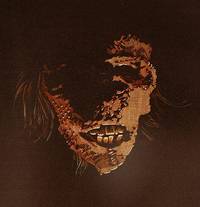
réf. 06938West Hatfield Massachusetts: Printed by Harold McGrath at Pennyroyal 1983. Barry Moser's Favorite of All His Pennyroyal Books "It Holds Together as a Unit a Coherent Whole" With an Additional Suite of the Wood Engravings Each Signed by Moser MOSER Barry illustrator. PENNYROYAL PRESS. SHELLEY Mary Wollstonecraft. Frankenstein; or The Modern Prometheus. The 1818 Text in Three Volumes. Illustrated by Barry Moser and with Essays by Ruth Mortimer Emily Sunstein Joyce Carol Oates and William St. Clair. West Hatfield Massachusetts: Printed by Harold McGrath at Pennyroyal 1983. One of 350 numbered copies this being No. 75 signed by Barry Moser. With an additional suite of the wood engravings each individually signed in pencil by the artist. Folio 13 1/2 x 10 inches; 342 x 254 mm. xvi 282 2 blank 1 colophon 3 blank pp. Illustrated with fifty-two wood engravings by Barry Moser several printed in multiple colors. The text based upon the copy of the 1818 first edition in the Smith College Library reproduces Mary Shelley's novel in its original three-volume form; obvious typographical errors and names variously spelled in the original have been corrected. Printed by Harold P. McGrath at Pennyroyal in Poliphilus and Blado types with Wilhelm Klingsporschrift on Pulegium archival paper manufactured by the Strathmore Paper Company Woronoco Massachusetts. Bound by Sam Ellenport at the Harcourt Bindery Boston in publisher's quarter tan morocco over maroon cloth boards spine ruled in gilt and blind the blind rules extending onto the covers with burgundy morocco lettering label titled in gilt after calligraphy by Yvette Rutledge. Top edge gilt. A very fine copy. The additional suite of Moser's wood engravings each signed in pencil by the artist is preserved in the original maroon cloth portfolio. Book and portfolio housed together in the publisher's maroon cloth slipcase. The Pennyroyal Frankenstein occupies a particularly important place among Barry Moser's celebrated illustrated books. When asked to name his favorite of his own productions Moser chose this one. As he later explained: "I'm often asked which of my books is my favorite and I usually respond with the single word Frankenstein." His reason was not simply the quality of the individual illustrations but the success of the book as an integrated work of typography illustration and book design: "It is my favorite because it more than the others exemplifies what I hold to be ideal: it holds together as a unit a coherent whole with type text and images well-balanced and well paced." The volume also represented an important technical development for Pennyroyal. Moser noted that Frankenstein marked the first use of multiple-color block prints in a Pennyroyal book as well as his first collaboration with Joyce Carol Oates who would subsequently contribute introductions to his editions of Dr. Jekyll and Mr. Hyde and Dracula. Throughout the volume Moser's austere black-letter headings generous typography and expanses of white paper contrast dramatically with the dense blacks of his engravings while selected images introduce carefully controlled passages of color. The result superbly demonstrates what Moser himself considered the great achievement of the book: the harmonious balance of "type text and images" within a single coherent design. Moser's conception deliberately avoids the familiar cinematic iconography of Frankenstein's creature. Instead his engravings return the story to the darker psychological world of Shelley's novel: images emerge from heavy fields of black faces are partially concealed or isolated and the creature is suggested through fragments shadows and expression rather than through the conventional Hollywood image. The additional suite is especially desirable. Removed from the typography of the book and individually signed by Moser the engravings can be appreciated as independent works of graphic art providing a particularly striking complement to the illustrated text. A superb production from the mature Pennyroyal Press and by Moser's own assessment the book that most completely realized his ideal of the illustrated book as a unified work of art. Dwyer Pennyroyal 29. West Hatfield [Massachusetts]: Printed by Harold McGrath at Pennyroyal, 1983 unknown
réf. 06938West Hatfield Massachusetts: Printed by Harold McGrath at Pennyroyal 1983. Barry Moser's Favorite of All His Pennyroyal Books "It Holds Together as a Unit a Coherent Whole" With an Additional Suite of the Wood Engravings Each Signed by Moser MOSER Barry illustrator. PENNYROYAL PRESS. SHELLEY Mary Wollstonecraft. Frankenstein; or The Modern Prometheus. The 1818 Text in Three Volumes. Illustrated by Barry Moser and with Essays by Ruth Mortimer Emily Sunstein Joyce Carol Oates and William St. Clair. West Hatfield Massachusetts: Printed by Harold McGrath at Pennyroyal 1983. One of 350 numbered copies this being No. 75 signed by Barry Moser. With an additional suite of the wood engravings each individually signed in pencil by the artist. Folio 13 1/2 x 10 inches; 342 x 254 mm. xvi 282 2 blank 1 colophon 3 blank pp. Illustrated with fifty-two wood engravings by Barry Moser several printed in multiple colors. The text based upon the copy of the 1818 first edition in the Smith College Library reproduces Mary Shelley's novel in its original three-volume form; obvious typographical errors and names variously spelled in the original have been corrected. Printed by Harold P. McGrath at Pennyroyal in Poliphilus and Blado types with Wilhelm Klingsporschrift on Pulegium archival paper manufactured by the Strathmore Paper Company Woronoco Massachusetts. Bound by Sam Ellenport at the Harcourt Bindery Boston in publisher's quarter tan morocco over maroon cloth boards spine ruled in gilt and blind the blind rules extending onto the covers with burgundy morocco lettering label titled in gilt after calligraphy by Yvette Rutledge. Top edge gilt. A very fine copy. The additional suite of Moser's wood engravings each signed in pencil by the artist is preserved in the original maroon cloth portfolio. Book and portfolio housed together in the publisher's maroon cloth slipcase. The Pennyroyal Frankenstein occupies a particularly important place among Barry Moser's celebrated illustrated books. When asked to name his favorite of his own productions Moser chose this one. As he later explained: "I'm often asked which of my books is my favorite and I usually respond with the single word Frankenstein." His reason was not simply the quality of the individual illustrations but the success of the book as an integrated work of typography illustration and book design: "It is my favorite because it more than the others exemplifies what I hold to be ideal: it holds together as a unit a coherent whole with type text and images well-balanced and well paced." The volume also represented an important technical development for Pennyroyal. Moser noted that Frankenstein marked the first use of multiple-color block prints in a Pennyroyal book as well as his first collaboration with Joyce Carol Oates who would subsequently contribute introductions to his editions of Dr. Jekyll and Mr. Hyde and Dracula. Throughout the volume Moser's austere black-letter headings generous typography and expanses of white paper contrast dramatically with the dense blacks of his engravings while selected images introduce carefully controlled passages of color. The result superbly demonstrates what Moser himself considered the great achievement of the book: the harmonious balance of "type text and images" within a single coherent design. Moser's conception deliberately avoids the familiar cinematic iconography of Frankenstein's creature. Instead his engravings return the story to the darker psychological world of Shelley's novel: images emerge from heavy fields of black faces are partially concealed or isolated and the creature is suggested through fragments shadows and expression rather than through the conventional Hollywood image. The additional suite is especially desirable. Removed from the typography of the book and individually signed by Moser the engravings can be appreciated as independent works of graphic art providing a particularly striking complement to the illustrated text. A superb production from the mature Pennyroyal Press and by Moser's own assessment the book that most completely realized his ideal of the illustrated book as a unified work of art. Dwyer Pennyroyal 29. West Hatfield [Massachusetts]: Printed by Harold McGrath at Pennyroyal, 1983 unknown books
1832réf. 187536London: Edward Moxon 1832. Ye are many - they are few First edition of Shelley's incendiary reaction to the 1819 Peterloo Massacre and one of the earliest explicit formulations of nonviolent resistance to state oppression: "Rise like lions after slumber / In unvanquishable number! / Shake your chains to earth like dew / Which in sleep had fall'n on you: / Ye are many - they are few." "Satirical yet visionary" ODNB Shelley's ballad was published ten years after his death. He sent the manuscript to Leigh Hunt in 1819 hoping to publish the poem in his literary and political journal The Examiner. Hunt withheld it later explaining that the public "had not become sufficiently discerning to do justice to the sincerity and kind-heartedness of the spirit that walked in this flaming robe of verse" preface. The passage of the 1832 Reform Act created a more favourable political climate and Hunt at last brought the poem into print through Edward Moxon who the following year married Charles Lamb's adopted daughter Emma Isola and would later be tried and found guilty of blasphemous libel for publishing Shelley's Queen Mab in his 1840 edition of the Poetical Works. Octavo pp. xxx 48 ii ads. Original pebble-grain green cloth spine label printed in black edges untrimmed. Ownership signature of John Danson dated 1836 to front free endpaper; his inscription dated 1888 and clipped catalogue descriptions to front endpapers. Minor ink stain and old label to front cover marks and pencil annotations to contents. A very good copy. Granniss 80; Tinker 1905; Wise p. 71. hardcover
1845réf. FRNK2NDUS"Frankenstein: or The Modern Prometheus" by Mary Wollstonecraft Shelley H.G. Daggers 1845. Second American Edition. Quarter leather over marbled boards. Lacking title page and dedication pg 3; contains Preface titled "Preface to the Present American Edition" v-x and full text 114pp. 8vo. Conforms to all physical characteristics of the Daggers edition especially the distinctive double column formatting See OCLC 6720124. All extremities quite rubbed especially leather corners and edges of spine. Internally foxed throughout. Binding secure and no writing apart from one signature on FFEP. Good. H.G. Daggers hardcover
1843réf. 146431October 1843. Unpublished autograph letter: "Gentlemen. You would greatly oblige me." An unpublished autograph letter from Mary Shelley to the publishers Longman Brown Green & Longmans. Dated October 1843 White Cottage Putney where she had moved the previous month she requests some specific volumes from Lardner's Cabinet Cyclopædia a project to which she had contributed a few years prior. This letter was recently extracted from a volume and so was not known to the editors of her correspondence. Dionysius Lardner's Cabinet Cyclopaedia was a mammoth 133-volume publication published between 1829 and 1846 to which many eminent figures of the day including Sir Walter Scott and Thomas Moore contributed. The Cyclopaedia was organized into nine "cabinets" or areas rather than the alphabetic organization of the Encyclopaedia Britannica. Bound in cloth and priced at six shillings each the volumes were an affordable authoritative reference work. Shelley who contributed to Italian Lives 1835; Spanish and Portuguese Lives 1837; and French Lives 1839 was the only woman among the 38 acknowledged contributors. In this letter she writes: "Gentlemen you were good enough to let me have when writing for the Cyclopedia several of its historical series but they were not then complete. I have seven volumes of the Hist. of England by Sir James Mackintosh - and 2 of Moore's Hist of Ireland. You would greatly oblige me if you would complete them for me." Thomas Moore contributed four volumes on the History of Ireland and Mackintosh ten on the History of England. Single sheet 179 x 114 mm written on one side and mounted 274 x 202 mm. In excellent condition. hardcover
1829réf. 12061033 Somerset Street London: 23 December 1829. A disdainful review of "an ardent Shelleyan" A scarce signed letter from Mary Shelley to John George Cochrane the Scottish editor and publisher of the Foreign Quarterly Review. Shelley is unforgiving in her response to a request for a review of Stendhal's Promenades dans Rome: "I have not forgotten or neglected my task but M. Beylses' book is so trite so unentertaining - so very commonplace that I have found it quite impossible to do anything with it". Shelley and Stendhal shared a complete devotion to Italy. For Shelley her travels through Italy were a pilgrimage to "a land not only beautiful and exotic but sacred to what she considered the greatest civilization human beings had ever created heir to the Greeks" Sunstein p. 152. Stendhal while similarly enchanted by the country's rich history and culture used his travels as a springboard to muse on his own philosophies - many of which were antagonistic to Shelley's worldview. On reading Stendhal's Promenades Shelley must have been pained to see her beloved Italy used as a justification for political and moral standpoints she disavowed. Stendhal was not so icy towards Shelley and her late husband. In her biography of Mary Sunstein paints a picture of Stendhal as "an ardent Shelleyan" who drew on Mary and her husband for his novel Armance: "Proud reserved but passionate noble-minded her brow too prominent her principles too elevated she never lies but is forced into caution to preserve her integrity in an alien society that prizes money rank and appearances". While their circles overlapped it's uncertain that they ever met. Stendhal falsely claimed in one of his works to have met Percy Bysshe Shelley and it is likely that he avoided close contact with the poet's widow. This letter is one of 21 autograph letters acquired from the Mary Shelley specialist Professor Jean de Palacio of the University of Lille - this small clutch aside autograph letters from Mary Shelley very seldom come to market. Single leaf 182 x 111 mm. Remains of wax seal generally faded and spotted small patch of tape repair to verso fair condition. Emily Sunstein Mary Shelley: Romance and Reality 1989. unknown
1820réf. 194489London: C. and J. Ollier 1820. To love and bear; to hope till Hope creates / From its own wreck the thing it contemplates. First edition second issue with "miscellaneous" spelled correctly on contents page. This lyrical drama revisits the Greek myth of Prometheus who defying the gods gave fire to humanity resulting in his eternal punishment and suffering at the hands of Zeus. Inspired by the classical Prometheia a trilogy of plays attributed to Aeschylus Shelley's play focuses on Prometheus's release from captivity. The "Miscellaneous Poems" section includes some of the shorter lyrical masterpieces for which Shelley is best remembered such as "The Cloud" "Ode to the West Wind" and "To a Skylark". Octavo 222 x 139 mm. Contemporary green pebble-grain full morocco spine with gilt-ruled compartments with gilt titles and raised bands triple gilt fillet border turn-ins elaborately gilt-rolled top edge gilt. Minor rubbing to spine ends and corners of boards: a very good copy. hardcover
1901réf. ST20827London: Printed at the Ballantyne Press for Vale Press 1901-02. ONE OF 300 COPIES on paper and 10 on vellum. 240 x 145 mm. 9 1/2 x 5 3/4". Three volumes. VERY PRETTY GREEN CRUSHED MOROCCO GILT BY BAYNTUN-RIVIERE stamp-signed on front turn-ins covers framed by long-stemmed pansies raised bands spine compartments with pansy centerpieces densely gilt turn-ins marbled endpapers top edge gilt other edges untrimmed. Fine elaborate woodcut initials and four pages with intricate borders all by Charles Ricketts. Ransom p. 436; Tomkinson p. 170. A breath of shelfwear to tail edges occasional trivial foxing but A BEAUTIFUL SET clean and fresh internally in unworn bindings. This is a particularly beautiful English set being printed in London by one of the most important Arts & Crafts private presses and being bound in Bath by an eminent long-lived bindery. The Vale Press was founded--and closely supervised by--Charles Ricketts who was perhaps the most significant figure in the private press movement after William Morris. From 1896-1903 Ricketts ran the Vale Press which produced books that in Cave's words were "far truer to the spirit of fifteenth-century printing than Kelmscott work." The Press issued nearly 50 titles and both its impressive output and considerable artistic success can be attributed to the fact that Ricketts who was remarkably skilled as a designer painter and illustrator was in control of every facet of the operation. Tomkinson observes that "although the actual printing was done on the premises of the Ballantyne Press the Vale books were built entirely on Mr. Ricketts' design under his personal supervision on a press set apart for his sole use; the founts decorations illustrations including the engraving on the wood watermarks and pagination were all the work of Mr. Ricketts and it is doubtful if in the history of printing books have been made which reflect the invention and work of one man more explicitly than do the Vale books." Our bindings are the work of a firm created by the merger of two venerable English binderies. Founded in Bath in 1894 the Bayntun bindery has provided beautiful bindings for bibliophiles for more than 130 years. In 1937 Bayntun acquired the Riviere bindery which had been in business since 1829 and began signing its bindings "Bayntun-Riviere" as here. It is now the last of the great Victorian trade binderies still in family ownership. Although he lived only 30 years Shelly 1792-1822 left an enduring legacy. His remarkable lyricism powerful imagination energetic espousal of political change and vision of the consequential role of the poet he said "poets are the unacknowledged legislators of the world" combined to exert lasting influence on the poets who came after him. The pansy motif used here--for the marginal decoration in the text as well as in the all-over design of the bindings--is especially apt: in his poem "Remembrance " Shelley wrote "Pansies let MY flowers be" emphasis his. [Printed at the Ballantyne Press for] Vale Press unknown
1901réf. ST20827London: Printed at the Ballantyne Press for Vale Press 1901-02. ONE OF 300 COPIES on paper and 10 on vellum. 240 x 145 mm. 9 1/2 x 5 3/4". Three volumes. VERY PRETTY GREEN CRUSHED MOROCCO GILT BY BAYNTUN-RIVIERE stamp-signed on front turn-ins covers framed by long-stemmed pansies raised bands spine compartments with pansy centerpieces densely gilt turn-ins marbled endpapers top edge gilt other edges untrimmed. Fine elaborate woodcut initials and four pages with intricate borders all by Charles Ricketts. Ransom p. 436; Tomkinson p. 170. A breath of shelfwear to tail edges occasional trivial foxing but A BEAUTIFUL SET clean and fresh internally in unworn bindings. This is a particularly beautiful English set being printed in London by one of the most important Arts & Crafts private presses and being bound in Bath by an eminent long-lived bindery. The Vale Press was founded--and closely supervised by--Charles Ricketts who was perhaps the most significant figure in the private press movement after William Morris. From 1896-1903 Ricketts ran the Vale Press which produced books that in Cave's words were "far truer to the spirit of fifteenth-century printing than Kelmscott work." The Press issued nearly 50 titles and both its impressive output and considerable artistic success can be attributed to the fact that Ricketts who was remarkably skilled as a designer painter and illustrator was in control of every facet of the operation. Tomkinson observes that "although the actual printing was done on the premises of the Ballantyne Press the Vale books were built entirely on Mr. Ricketts' design under his personal supervision on a press set apart for his sole use; the founts decorations illustrations including the engraving on the wood watermarks and pagination were all the work of Mr. Ricketts and it is doubtful if in the history of printing books have been made which reflect the invention and work of one man more explicitly than do the Vale books." Our bindings are the work of a firm created by the merger of two venerable English binderies. Founded in Bath in 1894 the Bayntun bindery has provided beautiful bindings for bibliophiles for more than 130 years. In 1937 Bayntun acquired the Riviere bindery which had been in business since 1829 and began signing its bindings "Bayntun-Riviere" as here. It is now the last of the great Victorian trade binderies still in family ownership. Although he lived only 30 years Shelly 1792-1822 left an enduring legacy. His remarkable lyricism powerful imagination energetic espousal of political change and vision of the consequential role of the poet he said "poets are the unacknowledged legislators of the world" combined to exert lasting influence on the poets who came after him. The pansy motif used here--for the marginal decoration in the text as well as in the all-over design of the bindings--is especially apt: in his poem "Remembrance " Shelley wrote "Pansies let MY flowers be" emphasis his. [Printed at the Ballantyne Press for] Vale Press unknown books