9 566 résultats
réf. 21690London: T. Hookham Jun. and C. and J. Ollier. 1817. First edition first printing of Mary Shelley's first book. First edition first printing of Mary Shelley's first book. Contemporary half calf over marbled paper covered boards ruled decorated and with titles in gilt to the spine. Marbled endpapers. Bookplate of Charles Dodd to the front pastedown. Bound without half title. Pencil ownership inscription and notes concerning the present copy by the author William St Clair to the blank reverse of the front endpaper. An attractive example the binding square and firm the upper hinge skillfully refurbished. The contents with spotting mostly confined to the prelims but occasionally throughout are otherwise in excellent condition with good margins. Bound with "The Traveller's Guide to France and the Netherlands" by John Sugden published by T. Boosey in 1817. Half title present but without the map. Scarce account of the Shelley's two trips into Europe in 1814 and 1816. Lowndes 2374; R. Ingpen Shelley in England p.444: "From the day that Mary joined the lot with Shelley they kept a joint dairy. From this journal . Mary compiled a little account of this journey and their later visit to the Continent which was later published in 1817". Divided into three sections the text consists of a journal four letters and a poem. Primarily the work of Mary it includes several contributions from Percy including the preface and two letters but most notably the first publication of his celebrated poem Mont Blanc. Despite mostly favourable reviews the book sold poorly and when Charles Ollier the co-publisher went out of business in 1823 his inventory included 92 copies of the work. William St Clair in his penciled note to the present copy writes "The fact that these two books are bound together in Regency style suggests that this was one of the few copies of the "Six Weeks Tour" which was sold at the time of publication as distinct from being remaindered later". Further details and images for any of the items listed are available on request. All items are catalogued by humans. Lucius Books welcomes direct contact with our customers. London: T. Hookham, Jun., and C. and J. Ollier. 1817 hardcover
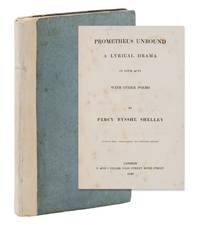
1820réf. 140949221London: C. and J. Ollier 1820. First edition. Near Fine. First edition typical second issue with "Miscellaneous" spelled correctly on Table of Contents; leaf is a cancel as noted by Forman. 222 2 pp. Bound in the original drab blue boards issued by the publisher no label; half-title and rear ad leaf present. Near Fine with light edge wear light soiling to boards corners slightly softened with some loss of paper at edges from wear. Foxing throughout contents with a few irregular folds and a small chip to the upper corner of pp 219-220. A lyrical drama adapted from Aeschylus' classical drama trilogy Prometheia. Driven by radical idealism and a future Utopia Shelley alters the ending so that Prometheus does not reconcile with his oppressor Jupiter. Instead Jupiter a representation of tyrannical authority is overthrown. Exceptionally scarce in the original boards and uncommon in the trade. Forman 59. C. and J. Ollier unknown
1820réf. 140949221London: C. and J. Ollier 1820. First edition. Near Fine. First edition typical second issue with "Miscellaneous" spelled correctly on Table of Contents; leaf is a cancel as noted by Forman. 222 2 pp. Bound in the original drab blue boards issued by the publisher no label; half-title and rear ad leaf present. Near Fine with light edge wear light soiling to boards corners slightly softened with some loss of paper at edges from wear. Foxing throughout contents with a few irregular folds and a small chip to the upper corner of pp 219-220. A lyrical drama adapted from Aeschylus' classical drama trilogy Prometheia. Driven by radical idealism and a future Utopia Shelley alters the ending so that Prometheus does not reconcile with his oppressor Jupiter. Instead Jupiter a representation of tyrannical authority is overthrown. Exceptionally scarce in the original boards and uncommon in the trade. Forman 59. C. and J. Ollier unknown books
1823réf. 117880London: G. and W.B. Whittaker 1823. Rare first edition of Shelley's second novel which has been called "a meditation on political psychological and sexual power" and is considered by many to be her finest work. 12mo. bound in 19th century three quarter calf over marbled boards by Bumpus gilt titles and tooling to the spine morocco spine labels raised bands. In very good condition contemporary name. A very sharp example. Valperga "was a novel surprisingly long in its gestation " and possibly concurrent with Frankenstein . "Although not published until 1823 its inception actually dates from six years earlier. 'I first thought of it in our library in Marlow' Mary Shelley wrote as she was completing it in 1821." See: Curran Stuart. Cambridge Companion to Mary Shelley". The preface details some literary sources for this historical tale of the fourteenth-century despot Castruccio Castracani. In terms of historical fiction it represents a feminine counterpart to the male romanticism of Sir Walter Scott. Ref: Block p 213; Summers A Gothic Bibliography p. 541. G. and W.B. Whittaker hardcover
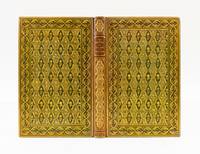
1829réf. ST17129-039London: Printed for John Brooks 1829. 229 x 152 mm. 9 x 6". xxxii 1 leaf section title 270 2 pp. without the initial blank. LUXURIOUS OLIVE GREEN MOROCCO VIGOROUSLY AND SPLENDIDLY GILT BY ZAEHNSDORF stamp-signed on front doublure and with the firm's oval exhibition stamp on rear endleaf covers framed by multiple plain and decorative rules and garlands of palm and olive branches large central panel densely tooled with 13 horizontal rows of either four or five elegant floral sprigs of various shapes some within flower-framed ovals others on a stippled background; flat spine gilt in similar fashion gilt titling TAN MOROCCO DOUBLURES with intricate central gilt arabesque on a field semé with gilt dots and daggers tan morocco endleaves with gilt border top edge gilt and beautifully gauffered to match the floral design on the covers. From the collection of Cornelius J. Hauck though apparently with his bookplate removed. Granniss 45. Spine sunned toward brown a ubiquitous problem with green morocco very slight rubbing to joints top inch of rear joint a little more significantly so front flyleaf with small closed tear at fore edge title page with small mended half-inch tear in the same place but a very desirable copy nonetheless the text clean and pleasing and the riotously embellished binding almost flaming with gold. With distinguished provenance this is a glittering exhibition binding that makes a memorable display with its fine and dense pointillé ground its exquisitely gauffered top edge and its especially refined floral and leafy ornamentation being particularly notable. A spiritual odyssey of lovers divided and seeking reunion "The Revolt of Islam" is Shelley's longest work despite its title the poem has little if anything to do with Islam though religion is generally addressed. The work was issued late in 1817 as "Laon and Cythna" but certain passages of that piece disturbed the publisher who demanded that they be changed or removed. Shelley reluctantly agreed and his alterations included the substitution of the present title. We have the Brooks edition with a new title page using the text of the first edition second issue with the fly title correctly bound as d1 and the preface ending on p. xxi. As Granniss indicates "the original quires and cancel leaves of the work fell into the hands of John Brooks who issued them in 1829 with a new title." Our volume comes from the illustrious collection of Cincinnati businessman arborist and philanthropist Cornelius J. Hauck 1893-1967 whose fortune was made in the family brewery; the auction of his library at Christie's in 2006 totaled more than $12.4 million this item was lot #593 selling for $3360. Printed for John Brooks unknown
1829réf. ST17129-039London: Printed for John Brooks 1829. 229 x 152 mm. 9 x 6". xxxii 1 leaf section title 270 2 pp. without the initial blank. LUXURIOUS OLIVE GREEN MOROCCO VIGOROUSLY AND SPLENDIDLY GILT BY ZAEHNSDORF stamp-signed on front doublure and with the firm's oval exhibition stamp on rear endleaf covers framed by multiple plain and decorative rules and garlands of palm and olive branches large central panel densely tooled with 13 horizontal rows of either four or five elegant floral sprigs of various shapes some within flower-framed ovals others on a stippled background; flat spine gilt in similar fashion gilt titling TAN MOROCCO DOUBLURES with intricate central gilt arabesque on a field semé with gilt dots and daggers tan morocco endleaves with gilt border top edge gilt and beautifully gauffered to match the floral design on the covers. From the collection of Cornelius J. Hauck though apparently with his bookplate removed. Granniss 45. Spine sunned toward brown a ubiquitous problem with green morocco very slight rubbing to joints top inch of rear joint a little more significantly so front flyleaf with small closed tear at fore edge title page with small mended half-inch tear in the same place but a very desirable copy nonetheless the text clean and pleasing and the riotously embellished binding almost flaming with gold. With distinguished provenance this is a glittering exhibition binding that makes a memorable display with its fine and dense pointillé ground its exquisitely gauffered top edge and its especially refined floral and leafy ornamentation being particularly notable. A spiritual odyssey of lovers divided and seeking reunion "The Revolt of Islam" is Shelley's longest work despite its title the poem has little if anything to do with Islam though religion is generally addressed. The work was issued late in 1817 as "Laon and Cythna" but certain passages of that piece disturbed the publisher who demanded that they be changed or removed. Shelley reluctantly agreed and his alterations included the substitution of the present title. We have the Brooks edition with a new title page using the text of the first edition second issue with the fly title correctly bound as d1 and the preface ending on p. xxi. As Granniss indicates "the original quires and cancel leaves of the work fell into the hands of John Brooks who issued them in 1829 with a new title." Our volume comes from the illustrious collection of Cincinnati businessman arborist and philanthropist Cornelius J. Hauck 1893-1967 whose fortune was made in the family brewery; the auction of his library at Christie's in 2006 totaled more than $12.4 million this item was lot #593 selling for $3360. Printed for John Brooks unknown books
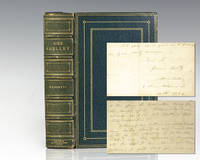
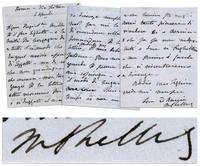
1890réf. 133425London: W. H. Allen & Co 1890. First edition of Lucy Madox Rossetti's biography of Mary Shelley; extra-illustrated and with an autograph letter signed by Mary Shelley laid in. Octavo bound in full crushed levant morocco by Bayntun with gilt titles and tooling to the spine in six compartments within raised gilt bands quadruple gilt ruling to the front and rear panels gilt turn-ins and inner dentelles marbled endpapers all edges gilt extra-illustrated with 77 engraved plates of portraits and views 11 of which are hand-colored including a frontispiece portrait of Percy Bysshe Shelley. With a fragment of an autograph letter signed and entirely in the hand of Mary Shelley laid in which reads in full ".to this office the publication being for the benefit of his Widow who at an advanced age & in bad health is left totally unprovided. Many of my father's correspondents have kindly placed in my hands letters of his for the purpose of publication. I looked over the volumes of correspondence with the Revd. Dr. Samuel Parr which you have published & find that you have not. Will you be so good as to. me by an early answer. I am Yours Obediently Mary Shelley 4 Lowes Belgrave St. 23 Sep 1836." After her father's death in April 1836 at the age of 80 Mary began assembling his letters for a memoir for publication as he had requested in his will but after two years of work she abandoned the project. The present letter was likely sent to a publisher before Shelley abandoned the project. From the library of renowned English bibliophile Edward Hailstone with his gilt morocco bookplate to the pastedown. In very good condition. An exceptional example of this rare work; highly desirable with a letter signed by Shelley. English novelist Mary Wollstonecraft Shelley remains best-known for her gothic horror novel Frankenstein which remains widely read and is widely regarded as the first true science-fiction story. The circumstances of its composition are by now well known: 19-year old Mary was in Switzerland with Percy Shelley Byron and Byron's physician John Polidori on that famous evening in 1816 when the discussion turned to one of Shelley's favorite topics the supernatural. Byron proposed that all members of the party write a romance or tale dealing with the subject. The resulting efforts were Polidori's The Vampyre Byron's unfinished narrative about a vampire and Mary Shelley's Frankenstein "the most famous English horror novel… a defining model of the Gothic mode of fiction and… the first genuine science fiction novel the first significant rendering of the relations between mankind and science through an image of mankind's dual nature appropriate to an age of science" Clute and Nicholls Encyclopedia of Science Fiction 1099. W. H. Allen & Co unknown
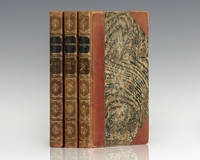
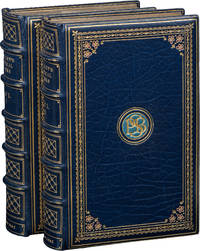
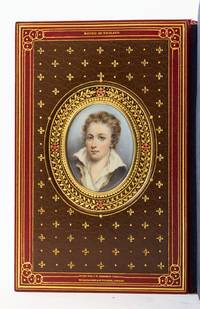
1892réf. 989London: Reeves & Turner 1892. Third Edition. 2 vols. A reprinting of the 1839 original the edition selected by Sangorski & Sutcliffe England's premier bindery as the best choice for the binding they planned based on its typeface paper size and inclusion of all the notes by Shelley's wife Mary an essential source for the study of Percy's work. A fastidiously executed dark blue crushed morocco gilt binding. The outside covers with central gilt panel formed by multiple plain and decorative rolls with cornerpiece clusters of three inlaid lavender morocco pansies front boards with central inlaid cerulean morocco medallion stamped with the poet's gilt monogram rear boards with lavender morocco medallion stamped with a gilt pansy within the quote "Pansies let my flowers be" from "Remembrance" raised bands spine compartments gilt in a latticed pattern. Inside the Doublures are in sky blue morocco the one at the front of the first volume is a Cosway style miniature portrait under glass replicating the 1819 portrait by Amelia Curran now hanging in England's National Portrait Gallery one of the few contemporaneous likenesses of Shelley and the chief source today for Shelley's countenance. The portrait is framed by a laurel wreath set with 6 jewels 3 moonstones and 3 rubies and surrounded by a pointillé field punctuated by foliate sprays terminating in 46 white flowers the other 3 doublures with rows of gilt floral and foliate stamps and a trio of inlaid white blossoms in each corner the bindings with a total of 132 large and small floral inlays ivory moiré silk endleaves all edges gilt and delicately gauffered. Frontispiece in each volume vignette title pages. A fine set in a luscious binding of a body of literature graced with a lyricism "unmatched elsewhere in English verse in its ethereal ideal beauty" -Day. A clipped inscription in Shelley's hand is tipped in. Reeves & Turner unknown
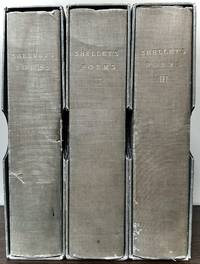
1894réf. 314918Hammersmith: Kelmscott Press 1894. One of 250 copies. Printed in red and black ornamental woodcut title borders and initials. 3 vols. 8vo. Original full limp vellum spines stamped in gold issued without silk ties. Light foxing to edges long list of signatures inked to first two blanks of volume one otherwise a fine copy. Housed in custom cloth chemises and blue morocco backed slipcases. One of 250 copies. Printed in red and black ornamental woodcut title borders and initials. 3 vols. 8vo. A very nice copy of the magnificent Kelmscott edition of the poems of Shelley with an interesting New York provenance likely from the 1920s. Includes signatures on the two preliminary blank leaves of a number of New York businessmen and philanthropists many with connections to Temple Emanu-El among them: Sam Sherrington Dudley D. Sicher Samuel J. Bloomingdale 1873-1968; son of Lyman Felix M. Warburg Herbert J. Martin Jonah Goldstein J. Edwin Goldman Leo Sulzberger Ralph Samuel Henry F. Samstag Louis J. Rosenbach William Goldman L.A. Ansbacher H.A. Guinzburg d. 1928 Fred M. Stein S.M. Goldberg Manny Strauss Albert J. Lehmann Jos. Gutman Solomon Lowenstein 1877-1942 Z.D. Bernstein Bernard Rosenwald Edwin S. Lorsch Herman Lissner Cyrus L. Sulzberger 1858-1932 Maunie Goodman J.W. Frankel Joseph Wellen Herman Sanders. Peterson A29; Ransom 29 29a 29b. Provenance: From the estate of Arthur Lehmann Kelmscott Press unknown
1892réf. 989London: Reeves & Turner 1892. Third Edition. 2 vols. A reprinting of the 1839 original the edition selected by Sangorski & Sutcliffe England's premier bindery as the best choice for the binding they planned based on its typeface paper size and inclusion of all the notes by Shelley's wife Mary an essential source for the study of Percy's work. A fastidiously executed dark blue crushed morocco gilt binding. The outside covers with central gilt panel formed by multiple plain and decorative rolls with cornerpiece clusters of three inlaid lavender morocco pansies front boards with central inlaid cerulean morocco medallion stamped with the poet's gilt monogram rear boards with lavender morocco medallion stamped with a gilt pansy within the quote "Pansies let my flowers be" from "Remembrance" raised bands spine compartments gilt in a latticed pattern. Inside the Doublures are in sky blue morocco the one at the front of the first volume is a Cosway style miniature portrait under glass replicating the 1819 portrait by Amelia Curran now hanging in England's National Portrait Gallery one of the few contemporaneous likenesses of Shelley and the chief source today for Shelley's countenance. The portrait is framed by a laurel wreath set with 6 jewels 3 moonstones and 3 rubies and surrounded by a pointillé field punctuated by foliate sprays terminating in 46 white flowers the other 3 doublures with rows of gilt floral and foliate stamps and a trio of inlaid white blossoms in each corner the bindings with a total of 132 large and small floral inlays ivory moiré silk endleaves all edges gilt and delicately gauffered. Frontispiece in each volume vignette title pages. A fine set in a luscious binding of a body of literature graced with a lyricism "unmatched elsewhere in English verse in its ethereal ideal beauty" -Day. A clipped inscription in Shelley's hand is tipped in. Reeves & Turner unknown books
1894réf. 314918Hammersmith: Kelmscott Press 1894. One of 250 copies. Printed in red and black ornamental woodcut title borders and initials. 3 vols. 8vo. Original full limp vellum spines stamped in gold issued without silk ties. Light foxing to edges long list of signatures inked to first two blanks of volume one otherwise a fine copy. Housed in custom cloth chemises and blue morocco backed slipcases. One of 250 copies. Printed in red and black ornamental woodcut title borders and initials. 3 vols. 8vo. A very nice copy of the magnificent Kelmscott edition of the poems of Shelley with an interesting New York provenance likely from the 1920s. Includes signatures on the two preliminary blank leaves of a number of New York businessmen and philanthropists many with connections to Temple Emanu-El among them: Sam Sherrington Dudley D. Sicher Samuel J. Bloomingdale 1873-1968; son of Lyman Felix M. Warburg Herbert J. Martin Jonah Goldstein J. Edwin Goldman Leo Sulzberger Ralph Samuel Henry F. Samstag Louis J. Rosenbach William Goldman L.A. Ansbacher H.A. Guinzburg d. 1928 Fred M. Stein S.M. Goldberg Manny Strauss Albert J. Lehmann Jos. Gutman Solomon Lowenstein 1877-1942 Z.D. Bernstein Bernard Rosenwald Edwin S. Lorsch Herman Lissner Cyrus L. Sulzberger 1858-1932 Maunie Goodman J.W. Frankel Joseph Wellen Herman Sanders. Peterson A29; Ransom 29 29a 29b. Provenance: From the estate of Arthur Lehmann Kelmscott Press unknown books
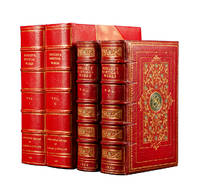
1892réf. ST18713London: Printed at the Ballantyne Press for Reeves & Turner 1892. Third Edition with the Notes of Mary Wollstonecraft Shelley. 188 x 122 mm. 7 3/8 x 4 3/4". Two volumes. Edited by H. Buxton Forman. PARTICULARLY FINE RED CRUSHED MOROCCO GILT AND ONLAID BY SANGORSKI & SUTCLIFFE stamp-signed on front turn-in covers framed by multiple plain and decorative rolls cornerpieces with the gilt torch of liberty extending obliquely from an onlaid green morocco heart bracketed by volutes front boards with central onlaid citron morocco medallion stamped with the poet's gilt monogram rear boards with onlaid citron morocco pansy surrounded by a gilt collar with the quote "Pansies let my flowers be" from "Remembrance"; raised bands spine compartments with onlaid green morocco quatrefoil at center volutes at corners volume I with FRONT DOUBLURE OF BROWN MOROCCO semé with rows of alternating quatrefoils and dots at center A MINIATURE PORTRAIT OF SHELLEY UNDER GLASS framed by a laurel wreath inlaid with four red morocco cinquefoils navy blue moiré silk endleaves all edges gilt and delicately gauffered. Housed together in a fleece-lined red cloth drop-back box. Frontispiece in each volume vignette title pages. Front flyleaves with engraved bookplates of Edward Laurence Doheny and Carrie Estelle Doheny. A FLAWLESS AND SPARKLING SET. This is the outstanding Doheny copy in lovely bindings of a body of literature graced with a lyricism Day asserts is "unmatched elsewhere in English verse in its ethereal ideal beauty." While the notes of Shelley's wife appended here have aroused considerable denigration she is accused among other things of making her husband's verse less political than it actually was her editorial work is nevertheless professional and has remained an essential source for the study of Shelley's work. As Betty T. Bennett explains "biographers and critics agree that Mary Shelley's commitment to bring her husband the notice she believed his works merited was the single major force that established Shelley's reputation during a period when he almost certainly would have faded from public view." Thanks to her efforts Shelley 1792-1822 is one of the best-known English poets and an icon of the Romantic movement. According to DNB our editor Henry Harry Buxton Forman 1842–1917 "channelled a general enthusiasm into a minute study of textual details for which his careful and exacting temperament was ideally suited. His patient application produced impressive editions of Shelley" who was along with Keats Forman's main literary interest. After studying under and then working for Douglas Cockerell Francis Sangorski and George Sutcliffe founded their own bindery in 1901 and continued in a successful partnership until 1912 when Francis tragically drowned. Despite this loss the firm grew and prospered employing a staff of 80 by the mid-1920s and becoming perhaps the most successful English bindery of the 20th century. The "Cosway" binding with painted miniatures inlaid in handsome morocco apparently originated with the London bookselling firm of Henry Sotheran about 1909 the year G. C. Williamson's book entitled "Richard Cosway" was remaindered by Sotheran and presumably given this special decorative treatment. The name "Cosway"--referring to the British miniature painter Richard Cosway 1742-1821--was then used to describe any book so treated whoever its author. This set was bound by Sangorski & Sutcliffe for book dealer J. W. Robinson of Los Angeles who supplied many books for the superb collection of Estelle Doheny 1875-1958 one of the most distinguished women book collectors of the 20th century whose magnificent library was especially rich in fine bindings. Volumes from her collection are sought after for their especially fine condition. [Printed at the Ballantyne Press for] Reeves & Turner unknown
1892réf. ST18713London: Printed at the Ballantyne Press for Reeves & Turner 1892. Third Edition with the Notes of Mary Wollstonecraft Shelley. 188 x 122 mm. 7 3/8 x 4 3/4". Two volumes. Edited by H. Buxton Forman. PARTICULARLY FINE RED CRUSHED MOROCCO GILT AND ONLAID BY SANGORSKI & SUTCLIFFE stamp-signed on front turn-in covers framed by multiple plain and decorative rolls cornerpieces with the gilt torch of liberty extending obliquely from an onlaid green morocco heart bracketed by volutes front boards with central onlaid citron morocco medallion stamped with the poet's gilt monogram rear boards with onlaid citron morocco pansy surrounded by a gilt collar with the quote "Pansies let my flowers be" from "Remembrance"; raised bands spine compartments with onlaid green morocco quatrefoil at center volutes at corners volume I with FRONT DOUBLURE OF BROWN MOROCCO semé with rows of alternating quatrefoils and dots at center A MINIATURE PORTRAIT OF SHELLEY UNDER GLASS framed by a laurel wreath inlaid with four red morocco cinquefoils navy blue moiré silk endleaves all edges gilt and delicately gauffered. Housed together in a fleece-lined red cloth drop-back box. Frontispiece in each volume vignette title pages. Front flyleaves with engraved bookplates of Edward Laurence Doheny and Carrie Estelle Doheny. A FLAWLESS AND SPARKLING SET. This is the outstanding Doheny copy in lovely bindings of a body of literature graced with a lyricism Day asserts is "unmatched elsewhere in English verse in its ethereal ideal beauty." While the notes of Shelley's wife appended here have aroused considerable denigration she is accused among other things of making her husband's verse less political than it actually was her editorial work is nevertheless professional and has remained an essential source for the study of Shelley's work. As Betty T. Bennett explains "biographers and critics agree that Mary Shelley's commitment to bring her husband the notice she believed his works merited was the single major force that established Shelley's reputation during a period when he almost certainly would have faded from public view." Thanks to her efforts Shelley 1792-1822 is one of the best-known English poets and an icon of the Romantic movement. According to DNB our editor Henry Harry Buxton Forman 1842–1917 "channelled a general enthusiasm into a minute study of textual details for which his careful and exacting temperament was ideally suited. His patient application produced impressive editions of Shelley" who was along with Keats Forman's main literary interest. After studying under and then working for Douglas Cockerell Francis Sangorski and George Sutcliffe founded their own bindery in 1901 and continued in a successful partnership until 1912 when Francis tragically drowned. Despite this loss the firm grew and prospered employing a staff of 80 by the mid-1920s and becoming perhaps the most successful English bindery of the 20th century. The "Cosway" binding with painted miniatures inlaid in handsome morocco apparently originated with the London bookselling firm of Henry Sotheran about 1909 the year G. C. Williamson's book entitled "Richard Cosway" was remaindered by Sotheran and presumably given this special decorative treatment. The name "Cosway"--referring to the British miniature painter Richard Cosway 1742-1821--was then used to describe any book so treated whoever its author. This set was bound by Sangorski & Sutcliffe for book dealer J. W. Robinson of Los Angeles who supplied many books for the superb collection of Estelle Doheny 1875-1958 one of the most distinguished women book collectors of the 20th century whose magnificent library was especially rich in fine bindings. Volumes from her collection are sought after for their especially fine condition. [Printed at the Ballantyne Press for] Reeves & Turner unknown books
1843réf. 020641Rome 6 April 1843. Letter. Mild crease from mailing. Near Fine. A three-page AUTOGRAPH LETTER SIGNED "Mary Shelley" written in Italian on one sheet of an 8" x 5" piece of paper folded to 4" x 5" dated 6 April 1843. A rough translation: "Esteemed Sir. Thank you so much for your card -- and your kindness. I feel ashamed thinking about all the inconvenience that you are experiencing due to that annoying matter strikethrough of Tozzetti but I am pleased that he is not obtaining all he was looking for. He deserved nothing. Thank you for the letter -- maybe others will come for us either sent to your address or simply to Florence. Would you graciously send someone to the post office to ask for our letters and send them here. My debt I would come and pay. I hope it is not too big to be a burden on my conscience and I will find a way to repay it. strikethrough I hope that the weather has improved and that Nerina feels better. I would really love to see you and Nerina again. And who knows if I won't see both in England but first it is easy that we will meet in Florence. Goodbye dear sir. Please consider me your servant and friend. M Shelley." The recipient Tuscan nobleman Bartolomeo Cini was married to Nerina King daughter of Irish writer Margaret King who was a favored pupil of Mary's mother Mary Wollstonecraft. Mary Shelley was in correspondence with him in regard to getting his assistance to retrieve letters by her husband Percy that were sent to King. Shelley's 1840s travels through Europe with her son Percy and his friends formed the basis of her travelogue RAMBLES IN GERMANY AND ITALY IN 1840 1842 AND 1843. unknown
1991réf. SBBIH-7VCM4QJ3W37ENelson Thornes Ltd 1991. paperback. Acceptable. Please see the condition note after this for details if this is missing please consider Acceptable to mean poor quality that could include major staining water damage writing missing dustjacket etc etc. Our books are dispatched from a Yorkshire former cotton mill. We list via barcode/ISBN so please note that the images are stock images and may not be the exact copy you receive furthermore the details about edition and year might not be accurate as many publishers reuse the same ISBN for multiple editions and as we simply scan a barcode or enter an ISBN we do not check the validity of the edition data when listing. If you're looking for an exact edition please don't order at least not without checking with us first although we don't always have time to check. We aim to dispatch prompty the service used will depend on order value and book size. We can ship to most countries see our shipping policies. Payment is via Abe only. Nelson Thornes Ltd paperback
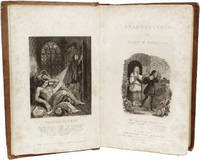
1839réf. 005001London: Richard Bentley 1839 1839. THIRD EDITION FOURTH PRINTING of the first revised edition of Shelley's masterpiece and the last to contain an illustration with the first printing of the engraved frontis and additional engraved title-page dated 1831. The frontis depicting the creature coming to life. Bound in the publisher's original blind stamped straight grained brown/maroon cloth engraved bookplate of Arnold Henry Robson to front pastedown. Spine expertly relined inner hinges strengthened spine and cover edges slightly sunned text clean and bright some minor foxing or offsetting to the engraved frontis and title-page overall still a GOOD copy of a book becoming increasingly difficult to find. According to RBH only 4 copies of this printing have appeared at auction in the last 25 years. In her introduction Shelley contextualizes the creation of her tale: "It proved a wet ungenial summer and incessant rain often confined us for days to the house. Some volumes of ghost stories translated from the German into French fell into our hands. 'We will each write a ghost story' said Lord Byron; and his proposition was acceded to" This printing was apparently issued with and without the additional engraved frontis dated 1831. We can only assume that additional copies of the 1831 frontis had finally run out with this printing. OCLC/WorldCat locate 9 copies of the 1839 edition 7 without the engraved frontis and only 2 with. London: Richard Bentley, 1839 hardcover
1895réf. 24707Hammersmith: Kelmscott Press 1895. First Edition. Vellum. Three gray cloth slipcases house the three vellum set. Near fine. 3 Vols. 412 399 421 pages. 21 x 14.5 cm. Limited edition one of 250 copies of an edition o 256 printed in Golden type in red and black black only in first volume woodcut title-page in volume one facing page with full woodcut page border and a few three-quarter and smaller woodcut page-borders with numerous 10-line and smaller initial capitals. Ellis was skeptical the three volume production would be profitable. After further consultation with Algernon Charles Swinburne Morris and Ellis decided to move forward with its production. One of the few Kelmscott productions without cloth ties. Instead to keep the vellum covers from spreading each volume has an added protection a front insert at the volume fore-edge. PETERSON A29. Kelmscott Press unknown
1895réf. 140947413Hammersmith: Kelmscott Press 1895. Limited Edition. Near Fine. Limited edition one of 250 copies on paper from a total edition of 256. Three volumes 8vo. Bound in publisher's full limp vellum with yapped edges and spines lettered in gilt printed in Golden type on Flower paper ornamental woodcut borders to title page and facing page. Edited by F. S. Ellis. Near Fine with light darkening to vellum light spotting armorial bookplates to front pastedowns. An excellent set. Unlike other Kelmscott titles of the period Shelley's Works was issued without silk ties; according to Morris's secretary Sydney Cockerell "The ties were omitted from the Shelley as an experiment as some people don't care for them. Kelmscott Press unknown
1895réf. 140947413Hammersmith: Kelmscott Press 1895. Limited Edition. Near Fine. Limited edition one of 250 copies on paper from a total edition of 256. Three volumes 8vo. Bound in publisher's full limp vellum with yapped edges and spines lettered in gilt printed in Golden type on Flower paper ornamental woodcut borders to title page and facing page. Edited by F. S. Ellis. Near Fine with light darkening to vellum light spotting armorial bookplates to front pastedowns. An excellent set. Unlike other Kelmscott titles of the period Shelley's Works was issued without silk ties; according to Morris's secretary Sydney Cockerell "The ties were omitted from the Shelley as an experiment as some people don't care for them. Kelmscott Press unknown books
1895réf. 24707Hammersmith: Kelmscott Press 1895. First Edition. Vellum. Three gray cloth slipcases house the three vellum set. Near fine. 3 Vols. 412 399 421 pages. 21 x 14.5 cm. Limited edition one of 250 copies of an edition o 256 printed in Golden type in red and black black only in first volume woodcut title-page in volume one facing page with full woodcut page border and a few three-quarter and smaller woodcut page-borders with numerous 10-line and smaller initial capitals. Ellis was skeptical the three volume production would be profitable. After further consultation with Algernon Charles Swinburne Morris and Ellis decided to move forward with its production. One of the few Kelmscott productions without cloth ties. Instead to keep the vellum covers from spreading each volume has an added protection a front insert at the volume fore-edge. PETERSON A29. Kelmscott Press unknown books
1886réf. 6240London: Reeves & Turner 1886. Second edition. Fine. Two octavo volumes 7 1/4 x 4 11/16 inches; 184 x 119 mm. 572; 580 pp. A spectacular ca. 1920 Cosway-Style binding by Sangorski & Sutcliffe for the J.L. Hudson Company stamp-signed in gilt on rear turn-in. Full red crushed levant morocco over beveled boards covers lavishly gilt in the Art Nouveau style with inlaid green and light brown morocco inlays. The first volume with a central green morocco medallion with Percy Bysshe Shelley's initials in gilt. The second volume with a central green morocco medallion with the phrase "Pansies/Let My Flowers Be" stamped in gilt. Spines with five raised bands elaborately decorated and lettered in gilt in compartments four of which have onlaid green morocco flowers. Double gilt-ruled board edges and elaborate gilt turn-ins dark blue watered silk liners and endleaves all edges gilt and gauffered. The first volume with a front doublure of dark blue crushed levant morocco multi-ruled in gilt. In the center is a superb gilt framed hand-painted portrait miniature 3 x 2 3/8 inches; 76 x 60 mm. of Percy Bysshe Shelley. The miniature is surrounded by a rectangular recessed frame with eight onlaid red morocco flowers and twenty-four onlaid beige morocco leaves. The front and back joints of both volumes have been expertly and almost invisibly repaired. Housed in a custom-made felt lined half red morocco with a red felt divider clamshell case two spines paneled and lettered in gilt in compartments. A wonderful early Sangorski & Sutcliffe Cosway-style binding. The miniature is of exceptional quality and is quite possibly the work of Miss C.B. Currie. The J. L. Hudson Company commonly known simply as Hudson's was a retail department store chain based in Detroit Michigan. Hudson's flagship store on Woodward Avenue in Downtown Detroit was constructed beginning in 1911 with additions throughout the years before being 'completed' in 1946. The building was named after the company's founder Joseph Lowthian Hudson and was demolished on October 24 1998. In 1961 it was the tallest department store in the world and at one time claimed to be the second-largest department store after Macy's in the United States by square footage. The Grand River Avenue Book Shop was on the Mezzanine floor. The story of the Sangorski & Sutcliffe Bindery reads like something out of a novel-when two of Douglas Cockrell's talented apprentices Frances Sangorski and George Sutcliffe were laid off during an economic downturn they began working out of an attic. Eventually their bindery would be famous for its intricate multicolored leather inlays and elaborate gold and jeweled bindings. Although named after the English miniaturist Richard Cosway 1742-1821 the desirable "Cosway Binding" with its jewel-like portrait miniature set into a fine binding was first developed at the turn of the century by J.H. Stonehouse director of London's Henry Sotheran Booksellers. Their miniatures were painstakingly crafted by the talented painter Miss C. B. Currie 1849-1940. As the style grew in popularity other publishing houses quickly began to reproduce this technique-each developing their own desirable take on the aesthetic-referred to as "Cosway style.". Fine. Reeves & Turner unknown
1886réf. 6240London: Reeves & Turner 1886. Second edition. Fine. Two octavo volumes 7 1/4 x 4 11/16 inches; 184 x 119 mm. 572; 580 pp. A spectacular ca. 1920 Cosway-Style binding by Sangorski & Sutcliffe for the J.L. Hudson Company stamp-signed in gilt on rear turn-in. Full red crushed levant morocco over beveled boards covers lavishly gilt in the Art Nouveau style with inlaid green and light brown morocco inlays. The first volume with a central green morocco medallion with Percy Bysshe Shelley's initials in gilt. The second volume with a central green morocco medallion with the phrase "Pansies/Let My Flowers Be" stamped in gilt. Spines with five raised bands elaborately decorated and lettered in gilt in compartments four of which have onlaid green morocco flowers. Double gilt-ruled board edges and elaborate gilt turn-ins dark blue watered silk liners and endleaves all edges gilt and gauffered. The first volume with a front doublure of dark blue crushed levant morocco multi-ruled in gilt. In the center is a superb gilt framed hand-painted portrait miniature 3 x 2 3/8 inches; 76 x 60 mm. of Percy Bysshe Shelley. The miniature is surrounded by a rectangular recessed frame with eight onlaid red morocco flowers and twenty-four onlaid beige morocco leaves. The front and back joints of both volumes have been expertly and almost invisibly repaired. Housed in a custom-made felt lined half red morocco with a red felt divider clamshell case two spines paneled and lettered in gilt in compartments. A wonderful early Sangorski & Sutcliffe Cosway-style binding. The miniature is of exceptional quality and is quite possibly the work of Miss C.B. Currie. The J. L. Hudson Company commonly known simply as Hudson's was a retail department store chain based in Detroit Michigan. Hudson's flagship store on Woodward Avenue in Downtown Detroit was constructed beginning in 1911 with additions throughout the years before being 'completed' in 1946. The building was named after the company's founder Joseph Lowthian Hudson and was demolished on October 24 1998. In 1961 it was the tallest department store in the world and at one time claimed to be the second-largest department store after Macy's in the United States by square footage. The Grand River Avenue Book Shop was on the Mezzanine floor. The story of the Sangorski & Sutcliffe Bindery reads like something out of a novel-when two of Douglas Cockrell's talented apprentices Frances Sangorski and George Sutcliffe were laid off during an economic downturn they began working out of an attic. Eventually their bindery would be famous for its intricate multicolored leather inlays and elaborate gold and jeweled bindings. Although named after the English miniaturist Richard Cosway 1742-1821 the desirable "Cosway Binding" with its jewel-like portrait miniature set into a fine binding was first developed at the turn of the century by J.H. Stonehouse director of London's Henry Sotheran Booksellers. Their miniatures were painstakingly crafted by the talented painter Miss C. B. Currie 1849-1940. As the style grew in popularity other publishing houses quickly began to reproduce this technique-each developing their own desirable take on the aesthetic-referred to as "Cosway style.". Fine. Reeves & Turner unknown books
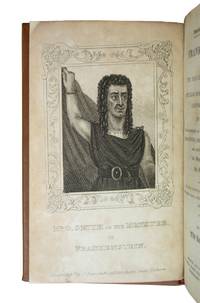
1826réf. 69696London: J. Duncombe 1826. MILNER Henry M. . Frankenstein; or The Man and the Monster!. A Peculiar Romantic Melo-Dramatic Pantomimic Spectacle in Two Acts. Founded principally on Mrs. Shelley's singular Work entitled Frankenstein; or The modern Prometheus; and partly on the French piece "Le magicien et le monstre" by H. M. Milner. The only edition correctly marked from the prompter's book; with the stage business situations and directions. As performed at the London Theatres. London: J. Duncombe 1826. Full Description: SHELLEY Mary Wollstonecraft. MILNER Henry M. compiler. Frankenstein; or The Man and the Monster!. A Peculiar Romantic Melo-Dramatic Pantomimic Spectacle in Two Acts. Founded principally on Mrs. Shelley's singular Work entitled Frankenstein; or The modern Prometheus; and partly on the French piece "Le magicien et le monstre" by H. M. Milner. The only edition correctly marked from the prompter's book; with the stage business situations and directions. As performed at the London Theatres. London: J. Duncombe 1826. First edition. Twelvemo 5 5/8 x 3 1/2 inches; 142 x 90 mm. 28 pp. Engraved frontispiece of 'Mr. O. Smith as the Monster in Frankenstein' which is the first pictorial representation of Frankenstein's monster in print. Woodcut diagram at end showing 'Disposition of the Characters when the Curtain falls.' Full modern tan sheep. Front board lettered in gilt. Newer endpapers. Some minimal toning to frontispiece and some offsetting to the title-page. Otherwise about fine. This edition is preceded only by the first two editions of Shelley's work and appears five years before her third edition. "First performed at the Coburg theatre July 3 1826." "The play was first performed at the Royal Cobourg Theatre now better known as The Old Vic with Mr. O. Smith as the Monster. An engraved frontispiece - reportedly the first-ever illustration of Frankenstein's Monster - shows a muscular Smith wearing what can be best described as a toga and sporting a long head of curly locks with practically none of the tropes that we now associate with the character. To their credit Shelley did describe the Monster as having "lustrous black and flowing" hair but the clothing is noticeably different from the dishevelled garments that the character wears in the novel." The Independent Greg Evans. HBS 69696. $15000. J. Duncombe unknown
1826réf. 69696London: J. Duncombe 1826. MILNER Henry M. . Frankenstein; or The Man and the Monster!. A Peculiar Romantic Melo-Dramatic Pantomimic Spectacle in Two Acts. Founded principally on Mrs. Shelley's singular Work entitled Frankenstein; or The modern Prometheus; and partly on the French piece "Le magicien et le monstre" by H. M. Milner. The only edition correctly marked from the prompter's book; with the stage business situations and directions. As performed at the London Theatres. London: J. Duncombe 1826. Full Description: SHELLEY Mary Wollstonecraft. MILNER Henry M. compiler. Frankenstein; or The Man and the Monster!. A Peculiar Romantic Melo-Dramatic Pantomimic Spectacle in Two Acts. Founded principally on Mrs. Shelley's singular Work entitled Frankenstein; or The modern Prometheus; and partly on the French piece "Le magicien et le monstre" by H. M. Milner. The only edition correctly marked from the prompter's book; with the stage business situations and directions. As performed at the London Theatres. London: J. Duncombe 1826. First edition. Twelvemo 5 5/8 x 3 1/2 inches; 142 x 90 mm. 28 pp. Engraved frontispiece of 'Mr. O. Smith as the Monster in Frankenstein' which is the first pictorial representation of Frankenstein's monster in print. Woodcut diagram at end showing 'Disposition of the Characters when the Curtain falls.' Full modern tan sheep. Front board lettered in gilt. Newer endpapers. Some minimal toning to frontispiece and some offsetting to the title-page. Otherwise about fine. This edition is preceded only by the first two editions of Shelley's work and appears five years before her third edition. "First performed at the Coburg theatre July 3 1826." "The play was first performed at the Royal Cobourg Theatre now better known as The Old Vic with Mr. O. Smith as the Monster. An engraved frontispiece - reportedly the first-ever illustration of Frankenstein's Monster - shows a muscular Smith wearing what can be best described as a toga and sporting a long head of curly locks with practically none of the tropes that we now associate with the character. To their credit Shelley did describe the Monster as having "lustrous black and flowing" hair but the clothing is noticeably different from the dishevelled garments that the character wears in the novel." The Independent Greg Evans. HBS 69696. $15000. J. Duncombe unknown books
réf. 25259ELondon: Simpkin Marshall Hamilton Kent & Co n.d. From the library of author Nathanael West signed by him “Nathanael von Wallenstein Weinstein” with his bookplate designed by his then future brother in law S.J. Perelman while they were students together at Brown University. The bookplate shows a bearded man with tears flowing down his cheeks as he embraces a donkey’s head with a banner at the top with West’s birth name reading “Nath: v. Wallenstein Weinstein” and another at the bottom “Lieb’ ich wass andere lieben” with translates to “Do I love what others love” A very good copy bound in full light brown leather with decorative and title gilt-stamping to the front board and spine with some repair by an expert conservationist. Thin 2” split to the front hinge a bit of darkening to the spine and some wear to the spine folds and edges. West is the author of the classic age-defining novels ‘A Cool Million’ ‘The Day of the Locust’ and ‘Miss Lonelyhearts.’ Sidney Joseph Perelman popularly known as S. J. Perelman 1904 – 1979 was one of the most widely read literary icons of the Golden Age of American Humor. His New Yorker pieces fiction and collected essays are legendary for their biting wit and mastery of caricature and language. He was the brother-in-law of the writer Nathanael West with whom he shared a close relationship up until West’s death in a car accident in 1940 at age thirty-seven and whose memory and literary reputation he devoted himself to maintaining. Enclosed in a handsome custom full dark blue cloth clamshell box with gilt-stamped leather label to the spine. Simpkin, Marshall, Hamilton, Kent & Co hardcover