HOKUSAI, KatsushikaBiblio.com

2 744 résultats
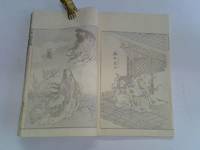
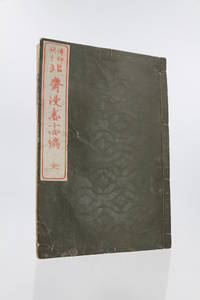
réf. 91077502Nagoya 1875 Kitano. Buff stitched wrs. 19 double-leaves = 56 p. woodblock color plates: Sumi grey black & pink old old worm holes restored excellent registry impression very good contents clean firmly bound 15.9 x 22.7 cm . RARE . . . . HOKUSAI'S FAMOUS MANGA . . . CARICATURES OF EDO 1604-1868 PERIOD GENRE . . . CUSTOMS DAILY LIFE MEN WOMEN SAMURAI MONKS . . . A DELIGHTFUL LOOK AT COMMONERS! . GENERAL SUBJECTS OF THE MANGA: People fauna flora landscape the past grotesque ghosts technology architecture clothing customs activities scenery wildlife all aspects of daily life of common people. . A charming work with characters portraits Sumo wrestlers people going about daily activities games play time landscape scenery hunting with a rifle cannon & other arms pistol archery equipment shrines Gods &c. This delightful issue is full of fascinating drawings genre illustrations of the common people at work play and enjoying life. Illustrations of deities Gods rock landscapes. . CONTENTS OF THIS ISSUE: . PEOPLE: pilgrims in a rain storm coolie carrying goods on a lonely mountain road. Two coolies rest in a cave overlooking a mountain temple with boats on the bay. A coolie passes a giant mountain waterfall 2 page vertical. Coolies climbing a giant 'holy' tree to enter a hollow along with other. . A downpour catches three coolies unaware. Native Japanese Junks or sampans on the sea in rough weather. . ANIMALS: birds crane two sea-going turtles make their way. . LANDSCAPE/SCENERY: snowy mountains ocean waves pounding the rocks walking the highway: two coolies on foot a Samurai rides a horse small villages and fire watch-tower small inlet with sail boats plying the sea sacred fruit plum tree. Bamboo forest and mountain views. Mt. Fuji and surrounding scenery. Landscape examples of mountains bridges unusual rock formations and highlands. Mt. Fuji in a tremendous rain storm. A rainstorm on the sea with crashing waves. . NOTE: Not all examples has the border title page. . CONDITION: The book is bound in the publisher's original buff blind-stamped stiff stitched wrappers with red title slip. . The covers as usual are a bit dusty with a bit of minor wear to the extremities and corners. The red-printed title slip a bit dusty a bit rubbed as usual with a small chip at upper left corner. . The contents clean with very good impression and excellent registry color and overall appeal. . There were some small old worm holes which have been expertly restored from the inside barely visible without scrutiny. very minor overall effect. Please review photos posted to our website. . Otherwise this is an above average example with excellent graphics very good impression and excellent registry. . BIBLIOGRAPHY: . MICHENER James A.: THE HOKUSAI SKETCH-BOOKS: SELECTIONS FROM THE MANGA. Toda Kenji: DESCRIPTIVE CATALOGUE OF JAPANESE AND CHINESE ILLUSTRATED BOOKS IN THE RYERSON LIBRARY OF THE ART INSTITUTE OF CHICAGO p.254-5. J. Hillier: ART OF HOKUSAI IN BOOK ILLUSTRATION pp.96-112. D. Chibbett: A DESCRIPTIVE CATALOGUE OF THE PRE-1868 JAPANESE BOOKS.p.33 item #85. H. Kerlin: CATALOGUE OF PRE-MEIJI JAPANESE BOOKS & MAPS IN PUBLIC COLLECTIONS IN THE NETHERLANDS p.226-239 item #546 for most all editions & variants. J.S. Edgren: CATALOGUE OF THE NORDENSKIOLD COLLECTION OF JAPANESE BOOKS IN THE ROYAL LIBRARY : p.285 #874 HICKMAN B. ed.: JAPANESE CRAFTS: MATERIALS AND THEIR APPLICATIONS. Selected early papers from the Japan Society of London. Written 1892 and 1915: p.33 #83. . . unknown
réf. 46621ca. mid 19th century. Early printing. Softcover. g- to g. Large octavo. Unpaginated. String-bound blue paper wrappers. This is an early printing of the 11th volume of the classic monumental work by Hokusai 1760-1849 originally issued in 15 volumes between 1812-1878. The large range of content depicted in this volume includes evocative and engaging images ranging from artists animals mythical beasts sumo wrestlers farmers domestic scenes landscapes and weaponry including firearms. All images beautifully printed in b/w and hues of light pink. The introduction to this volume is by Ryutei Tanehiko 1783-1842 the acclaimed playwright many of whose works were originally illustrated by Hokusai. Text In Japanese. Wrappers with rubbing to extremities and with some small closed tears. Interior with some water staining and some worming throughout. Wrappers and interior in good- to good condition overall. unknown
réf. 46621ca. mid 19th century. Early printing. Softcover. g- to g. Large octavo. Unpaginated. String-bound blue paper wrappers. This is an early printing of the 11th volume of the classic monumental work by Hokusai 1760-1849 originally issued in 15 volumes between 1812-1878. The large range of content depicted in this volume includes evocative and engaging images ranging from artists animals mythical beasts sumo wrestlers farmers domestic scenes landscapes and weaponry including firearms. All images beautifully printed in b/w and hues of light pink. The introduction to this volume is by Ryutei Tanehiko 1783-1842 the acclaimed playwright many of whose works were originally illustrated by Hokusai. Text In Japanese. Wrappers with rubbing to extremities and with some small closed tears. Interior with some water staining and some worming throughout. Wrappers and interior in good- to good condition overall. unknown books
1912réf. 2090202122800891Not Available 1912. Soft Cover. Fine. Number of books: 2 Not Available paperback
1969réf. 5261Tokyo: Gakubundo Gabundo 1969. Shohan Limited Edition. Near Fine/Chemise and Box Very Good. Hokusai. Large 4to. Pp. 285 Lavishly illustrated with 27 color plates some folding. Other brush drawings with rice-paper tissue guards. Original morocco-backed cloth gilt characters stamped on spine. Edition limited to 800 copies. In the orange cloth chemise with purple silk ties. Gilt-stamped lettering on spine has partially flaked; chemise shows very slight wear and soiling. Withal a presentable well-preserved copy. In the publisher's box with printed wood veneer title label on lid top panel and side panels. An uncommon publication with the last recorded auction sale in the West at Sothebys London 1977. Scarce. Gakubundo [Gabundo] unknown
réf. 15742bKatano Toshiro Nagoya 1878. 55 Holzschnitte auf Reispapier Kartoniert leicht berieben. - sonst gutes Exemplar / Text japanisch/ dieser fünfte Band beschäftigt sich hauptsächlich mit Tempelarchitektur religiösen Zeremonien Oni Dämonen der Folklore u. a. - unknown
1836réf. 911941836. EHON Hokusai 北斎 artist. Wakan EHON SAKIGAKE Shohen 和漢絵本éåˆç·¨. Tempo 7 1836. Hanshihon 22.6 cm x 15.7 cm. Unusually tan covers with a deeply incised blind-stamped cloud pattern on front and rear covers. The paper label is present glued to the inside front cover. Could these be alternative original covers A complete copy with the title page pasted to the inner front cover Hokusai's own two page preface dated 1836 30 sheets of images and 1 sheet of colophon and ads. It has the "77 year old" Hokusai with his "Gakyou Rojin" moniker indicating the book itself was soon to appear followed by 3 sequels. only two were done. It also lists the block carvers. Egawa and Sugita. masters of the craft. Also see Hillier's ART OF THE JAPANESE BOOK for his appreciation of this work. The bookstore list often found at the end appears not to have been bound in or was lost. Very minor soiling throughout. Very good impressions. An early printing of this important and often reprinted work. The Wakan EHON SAKIGAKE was the first volume of Hokusai's so-called "warrior trilogy". It is a visual epitome of traditional Japanese and Chinese historical heroes from the legendary to the flesh and blood. It is a brilliant example of Hokusai's ability to create visual narrative by capturing the moment which evokes the character most perfectly to the viewer. In an older clasped chitsu case. unknown
1836réf. 911941836. EHON Hokusai 北斎 artist. Wakan EHON SAKIGAKE Shohen 和漢絵本éåˆç·¨. Tempo 7 1836. Hanshihon 22.6 cm x 15.7 cm. Unusually tan covers with a deeply incised blind-stamped cloud pattern on front and rear covers. The paper label is present glued to the inside front cover. Could these be alternative original covers A complete copy with the title page pasted to the inner front cover Hokusai's own two page preface dated 1836 30 sheets of images and 1 sheet of colophon and ads. It has the "77 year old" Hokusai with his "Gakyou Rojin" moniker indicating the book itself was soon to appear followed by 3 sequels. only two were done. It also lists the block carvers. Egawa and Sugita. masters of the craft. Also see Hillier's ART OF THE JAPANESE BOOK for his appreciation of this work. The bookstore list often found at the end appears not to have been bound in or was lost. Very minor soiling throughout. Very good impressions. An early printing of this important and often reprinted work. The Wakan EHON SAKIGAKE was the first volume of Hokusai's so-called "warrior trilogy". It is a visual epitome of traditional Japanese and Chinese historical heroes from the legendary to the flesh and blood. It is a brilliant example of Hokusai's ability to create visual narrative by capturing the moment which evokes the character most perfectly to the viewer. In an older clasped chitsu case. unknown books
1886réf. 1886Tokio, 1886. 1 volume in-folio ((46,3 x 31,5 cm), broché cousu à la japonaise le tout sur papier du Japon, couverture illustrée. Album de 31 PLANCHES DE DESSINS GRAVÉS SUR CUIVRE dont 2 gravés sur les plats de la couverture : L'étudiant, écoliers, officier, soldat, matelot, fonctionnaire, jeune garçon lisant, Bonzes, agent de Police, servante, facteur,d eux femmes jouant au volant, une femme coiffant une autre, une lavandière, marchand de remèdes, pêcheur à la ligne, marchand de Puéta, cuisinière, cheval de bât, etc. - NOTICE HISTORIQUE : Georges Bigot (1860-1927) est formé à Paris au moment de l’essor du « Japonisme » dans les arts graphiques. Suite à l’ouverture du Japon au commerce extérieur, les années 1870 voient en effet arriver en France de nombreux objets d’art japonais, en particulier les « Manga » (ou carnets de croquis) d’Hokusai (1760–1849). D’Hokusai, les artistes français copient les scènes de vie gravées sur le vif, très expressives, et le traitement de la faune et la flore à la façon des estampes japonaises. Bigot arrive au Japon en 1882 et s’installe à Tokyo, avec la volonté délibérée de ne pas vivre dans les enclaves étrangères mais au sein du petit peuple de la ville. En 1886, il tire de cette expérience une série intitulée « Croquis Japonais » mettant en scène des personnages aux traits individualisés dans la vie quotidienne de ce début de l’ère Meiji (1868-1912). Il observe cette société japonaise bouillonnante et en publie caricatures et périodiques satiriques. Cette ère nouvelle a transformé le Japon, jusque-là régi par un régime féodal, l'a ouvert aux étrangers et introduit de grands changements. Bigot refusant la vision idéalisée d'un Japon, en marche vers le modernisme, se heurte aux tracasseries d'un gouvernement japonais de plus en plus nationaliste, qui le contraindra à partir en 1899, quelques semaines avant la suppression des concessions étrangères. Ses publications sont finalement interdites à la vente dès 1900, tandis qu'en France il s'est tout simplement fait oublier. Les nombreux albums de caricatures et les différents périodiques qu'il laissera derrière lui vaudront bien des années plus tard d'être reconnu comme le « caricaturiste de l'ère Meiji ». Il est considéré par la jeune génération de dessinateur de Manga, comme un des pères de ce genre. - L'ALBUM : Bigot utilise ici une technique typiquement occidentale, l’eau-forte (façon de graver le métal en y faisant pénétrer de l’acide), qu’il imprime en noir et blanc, à l’opposé des estampes japonaises gravées sur bois et si colorées.
1922réf. 012354Paris Henri Floury 1922 In-8 Demi-reliure ancienne Edition originale
1816réf. 82935Edo [Tokyo] 1816 | 15.50 x 22.50 cm | cousu
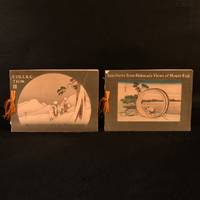
1905réf. 1033H30Tokyo: T. Hasegawa c1905-1914. Paperback. Very Good Indeed. 6" by 8". Utagawa Hiroshige; Katsushika Hokusai. Two very scarce early Hasegawa woodblock albums comprising twenty-four beautifully printed reproductions after Hiroshige and Hokusai in the striking original pictorial wrappers. In the publisher"s original dark grey pictorial paper wrappers bound in the Japanese manner with orange silk ties. Masterpieces by Hiroshige Collection II forms the second part of Hasegawa"s three-volume series devoted to Hiroshige. The complete Hiroshige series comprised three such albums the first appearing in 1904 the present second collection around 1905 and the third in 1914. The second volume Selections from Hokusai"s Views of Mount Fuji is undated and without a colophon as issued. Dated here using Jisc from a copy held at the University of Oxford Libraries. Masterpieces by Hiroshige contains twelve colour woodblock reproductions including The View from the Tea-house at Yoshida Hodogaya Tamagawa Fukagawa Yedo Kajikazawa The Foot of Fuji Tago-no-ura Noborito Ejiri Mishima-goye Lake Kawaguchi and Koishikawa Yedo. Selections from Hokusai"s Views of Mount Fuji comrpomises twelve colour woodblock reproductions selected from Hokusai"s celebrated Fuji landscapes. The contents comprise Mishima in the Morning Fog; Tsukuda The White-bait Fishing; Asuka-yama under the Snow; and Yokkaichi in a Violent Wind among others. Utagawa Hiroshige 1797-1858 was one of the great masters of nineteenth-century ukiyo-e landscape printing. Katsushika Hokusai 1760-1849 was among the most influential Japanese artists of the Edo period his Thirty-six Views of Mount Fuji becoming one of the defining achievements of ukiyo-e. In the publisher"s original pictorial paper wrappers bound in the Japanese manner with orange silk ties. Externally smart. Wraps age toned with light rubbing. Slight edge wear to extremities resulting in minor creasing and loss. Loss to head and tail of backstrips exposing binding. Internally firmly bound. Retaining the delicate tissue guards with slight creasing to one or two guards. Leaves age toned more so to perimeters. Very Good Indeed T. Hasegawa paperback
1816réf. 82935Edo Tokyo Tokyo 1816. Fine. Edo Tokyo Tokyo 1816 15.50 x 22.50 cm cousu Rare first edition fifth volume of Hokusai's Mangas or Sketch Books. 15 volumes were published between 1815 and 1878 the fifth volume contains approximately 30 subjects most on double pages in black grey and flesh tones. Accordion-fold volume bound with stitching black cover some creasing to board edges rubbing and small lacks. The red printed label is lacking to this copy. The first and last pages detached from boards. Creases small lacks and discolouration to boards. Minor soiling. Hokusai's mangas treat various subjects the artist depicts Japan of the period from everyday scenes to amusing moments combining a great variety of subjects: the present volume focuses on temple architecture their ceremonies contemplative scholars ladies from the Heian period 784-1192 nobles samurai lords as well as divinities and onis demons. One will also note a magnificent view of Mount Fuji and an impressive storm scene at sea. These different subjects were intended to serve as learning manuals for use by young artists they would also serve as model collections for artisans and would even become a sort of illustrated encyclopedia of life and daily living in Japan during the Edo period 1603-1868. We should recall that the technique of Japanese printmaking is very close to the original drawing since the ink drawing was applied to a piece of wood that the engraver hollowed out following precisely the lines of the drawing which was itself destroyed by this operation. hardcover
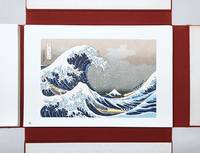
1970réf. 190192Tokyo: Kyodo News Agency 1970. A global icon An attractive homage to Hokusai's famous ukiyo-e series including the famous Great Wave Off Kanagawa as well as the supplementary ten views. Considered Hokusai's masterpiece the Thirty-Six Views remain the defining representation of 19th-century Japonism. The Great Wave is the most widely reproduced non-Western artwork in the world. The Kyodo News Agency periodically released lithographed sets of the Thirty-Six Views in the post-war period when interest in Japanese culture and art was booming. This set is pleasingly fresh retaining all the lustre of Hokusai's splendid originals. 46 lithographed prints 257 x 372 mm each tipped-in on 299 x 441 mm window-frame folder 2 printed sheets of text 305 x 450 mm. Housed in original red cloth folding case 311 x 458 x 43 mm lined with silver-flecked paper title label on front panel white bone toggles. Prints bright and well-preserved text sheets lightly toned and creased. A near-fine set in the very good case with some sunning wear at extremities. hardcover
1849réf. 79449Eirakuya Toshiro | Edo [Tokyo] 1849 | 15.60 x 22.60 cm | cousu
1878réf. 2111902160200037Edited by Toshiro Katano 1878. Soft Cover. Fine. Number of pages: 58 pages Size: 24.5cmx16.2cm 58p Number of books: 1 Edited by Toshiro Katano paperback
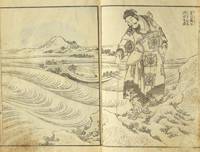
1849réf. 79449Edo Tokyo Tokyo: Eirakuya Toshiro 1849. Fine. Eirakuya Toshiro Edo Tokyo Tokyo 1849 15.60 x 22.60 cm cousu Rare first edition translated as ""Croquis de Hokusaï"" volume 14. 15 volumes were actually published covering Hokusaï's work. The first was published in 1815 and the last posthumously in 1878. The final volume is considered apocryphal by some art historians. The 30 double-leaf volume contains around 39 engravings 12 of which are double-page spreads including many animated landscapes real and mythological animals. There are 3 colors: beige gray and black. It is difficult to determine wether it is a first or a later print run as this detail made no difference in Japanese book collecting. The publisher reprinted volumes as needed. We do know however that the publisher produced several issues of this book between 1849 and 1878. Volume in acordeon bound by a seam. Bronze-green cover with title label. Rubbing to front cover. Interior very fresh and clean. Printed on mulberry paper. A brown stain on the first 2 leaves. A good copy. Hokusai manga deal with a variety of subjects from scenes of everyday life to war scenes as well as typical Japanese legends animals and flowers. ""It is generally considered that after a period of intense production Hokusai selected his sketches very carefully and even redrew a number of them arranging them in the order we know today. However Michener maintains that the layout of the various sketches on a given plate was actually decided by the engravers and editors not by Hokusai himself."" Japanese printmaking technique remains very close to the original drawing's aesthetic since the ink drawing was affixed to a piece of wood that the engraver carved out precisely following the lines of the drawing which was itself destroyed in the process. It was these volumes of drawings that made Hokusai's reputation in the Western world. Hokusai Katsushika was a prolific and well-known Edo period printmaker whose prints among others inspired the French avantgarde at the end of the 19th century. Eirakuya Toshiro unknown
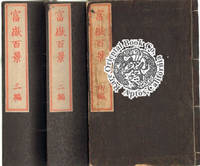
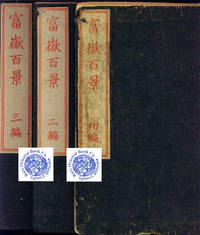
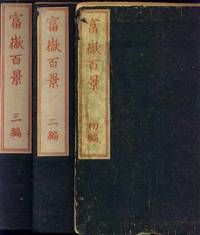
réf. 84211709Tokyo 1877 Hayashi. Black stitched stiff wrs.vol.3 only woodblock printed very good clean covers firmly boundvery excellent registry very good impression colors:Sumi black & grey 16.1 x 24 cm. Meiji 10th. year =1877. . . . . FUGAKU HYAKKEI: 100 VIEWS OF MT. FUJI . . . HOKUSAI'S MOST FAMOUS BOOK ON JAPAN'S SACRED SYMBOL . . . COLOR WOODBLOCK-PRINTED ON HAND-MAID WASHI PAPER . . . HIS GREATEST CLASSIC ! . THE ARTIST: KATSUSHIKA Hokusai 1760-1849: Hokusai's most famous work in book form illustrating a profusion of views of Mt. Fuji from all perspectives. . Hokusai was Japan's most famous Edo period illustrator of Japanese genre landscape scenery and of the daily lives and occupations of the commoners. His works are full of cheerfulness humor optimism and he had a knack of capturing the true nature of his time people and life style. He was affectionately called the "MAD MAN ON DRAWING" by the Japanese. His works continue to fascinate the world over ! . This book was also the prototype for his great color woodblock print series of multiple views of Mt. Fuji. . A delightful and impressive work considered a classic for nearly 200 years. . This monograph is devoted to Japan's most sacred Mt. Fuji in all its glory portrayed in various seasons and as seen by common folk as they go about their daily lives and daily occupations and along the Tokaido highway. . THE INTRODUCTION: The introduction was written by Hokusai on the first two pages of each volume. . THE COMPLETE SET OF 3 VOLUMES: The collation is: 252525 double folded leaves or 150 pages in all with illustrations of Mt. Fuji on 144 pages 6 pages of Japanese text. . The history of the various editions and volume count are complex the work was originally issued complete in two volumes which included all pages found in the 3 volume set. The set of 3 volumes is no different than those bound in 2 volumes it is simply a matter of combining pages into two or three bindings. The binding format was a choice made by publishers & their binders. The usual format is 3 volumes numbered 1 2 & 3. There are 3 volumes bound into a single binding and other variants contents by and large is the same. . THE SUBJECT: MT. FUJI JAPAN'S MOST SACRED SYMBOL: . The work is marvelous it shows Mt. Fuji portrayed in the daily life of the common people. . In the spring time how ordinary Japanese sat outdoors and viewed the cherry blossoms with Mt. Fuji in the background. Mt. Fuji was always present in daily life as a background. . The composition artistry and skill of Hokusai is without parallel. The book illustrates his unique talent and drawing skills. His artistry pictured Mt. Fuji in myriad scenes early morning evening rain and cloudy days. The mystical quality of Mt. Fuji demonstrates the great respect Hokusai felt showing the great grandeur of the sacred mountain. . Hokusai used acute visual composition concepts insight and visionary-like "Avant-garde" talent to impress viewers to identify with the splendor of Mt. Fuji. . Hokusai is still hailed as Japan's greatest artist of the 19th century. His woodblock printed books and printed command solid prices. . THE EDITIONS: There were two main editions: the FIRST EDITION published in 1834-5 was bound in pink stiff stitched covers commonly called "FALCON FEATHERS." All later editions are reprints with various dates bound in yellow blue purple green black and several other variants. Contents remains the same it would be a matter of quality of impression. The later editions do not always have a colophon or date. Some editions do show publisher's information and date. Other copies may have been rebound omitting the colophon. . There is no 'standard' relationship between date and color of binding however we have had many editions and copies information below reflects this history: . In 1875 Meiji 8th year reprint bound in either yellow covers with green printed title slips or blue covers with red printed title slips. . In 1877 Meiji 10th year reprint in black covers with red printed title slips. . A late final reprint in 1940 with yellow covers. . All of the above were woodblock printed editions on Washi hand-made paper. The contents is identical regardless of edition. The volume size varied by a few centimeters mostly a difference of the top or bottom margins. . The quality of the reprints are determined by the freshness of the impression and registry. As the original woodblocks wore down and warped they were replaced with new blocks. Some later editions were printed from very worn poor quality original blocks others from a mixed variety of old and new blocks quality varies in each copy. . Please visit our website to see the editions currently in stock. Photos posted to our website may not reflect the exact copies in stock but are 'generic' examples of the contents. . NOTE: Not all copies are identical contents each have specific and unique condition and different cover colors all about the same size. . SIZE: Depending on edition the First Edition was typically bound 15.5 x 22.5 cm. The Meiji editions were about 15.3 x 24.2 cm. with a very minor difference in size dependent on which publisher printed & bound their copies. There are minor size differences by edition the images remain the same size it was strictly a matter of larger margins in later editions. . For the most part this set was uniformly bound each with title slips. The Meiji title slips were red Kanji on a red bordered white Washi paper. . THE ENGLISH TRANSLATION OF FUGAKU HYAKKEI: There was a complete English translation of the 3 volume set and each of its pages. Please visit our website and search for F.V. Dickins 1960 edition which may be in stock. See below for more details. . CONDITION NOTE: General: Unless otherwise stated bound in the original publisher's stitched stiff yellow or other color covers with green or red printed title slip. . The registry and impressions are excellent most likely early pulls off the woodblocks. . We may have different dated editions each copy has been described not all are in the same condition dates also vary. Please inquire about any particular copy for more details. Photos posted to our site are 'generic' and represent general examples of the contents & illustrations. Please review photos posted to our website. . The 1877 edition has a small mend at the last page the colophon in vol. 3 else very clean nice. . Color photos of a generic example are posted to our website copies vary please read the individual copy notes for subtle differences. . SPECIFIC COPY DETAILS: . Copy 6. This is an early edition with soft Washi paper and excellent registry and imression clearly an early pull off the woodblocks. . Bound in the publisher's variant orange color with the green printed title slip. The covers have the typical soil common for a famous book by a Hokusai a famous artist which is nearly 200 years old. The covers have the usual vertical minor wrinkles & bends. The pages show the usual touch of lower right corner 'thumbing.' . Some old minor and bit of tiny worming in top margin & top text from beginning to page 15; a similar small hole in the upper plates beginning from the front through to page 16; a similar small hole in the heel below the lower margin from page 7-13 of no impact to the image other two also of little impact to the image. Else the book is solidly bound without issues. Cover title in green ink. . There is a boksellers advertisement inside the front and back covers. Copy 7: Exceptionally bright & clean example a tiny bit of dustiness to the covers else excellent. Cover title slip in green ind.Contents are pristine. Cover . Copoy 8: Similar to above but with English written on the front covers:"Peole In Landscape" & Mabel D. Ely." Else the front & back covers have some minor dustiness typical signs of wear and feint marks contents remains pristine. Dated Meiji 8th year 1875. Copy 9: Excellent black covers very clean & solid with red ink printed title slip. Contents prestine. Dated Meiji 10th. year 1877. . REFERENCES: . DICKINS TRANSLATION: TWO EDITIONS: WITH ENGLISH TRANSLATION & ILLUSTRATIONS: a. F.V. Dickins.: FUGAKU HIYAKU-KEI: sic OR A HUNDRED VIEWS OF FUJISAMA FUJI BY HOKUSAI. London in 1880. This book contained 3 original woodblock illustrated volumes of Hokusai's book FUGAKU HYAKKEI. . b. A 1960 reprint of the above. H. Kerlen: CATALOGUE OF PRE-MEIJI JAPANESE BOOKS & MAPS . for more bibliographic details item #396 pp.163-166. BROWN Louise N.: BLOCK PRINTING AND BOOK ILLUSTRATION IN JAPAN p.183 she cites two entries. Henry Smith II: HOKUSAI ONE HUNDRED VIEWS OF MT. FUJI pp.21-22 outline of the editions. K. Toda: THE RYERSON COLLECTION OF JAPANESE AND CHINESE . ILLUSTRATED BOOKS p.263. L. Dawes: CATALOGUE OF JAPANESE ILLUSTRATED BOOKS p.47. FORRER Matthi. comp. et al.: HOKUSAI AND HIS SCHOOL: Paintings Drawings And Illustrated Books. See item 110 and associated photos. RIJKSMUSEUM: HOKUSAI AND HIS SCHOOL: Japanese Prints c. 1800-1840. see pp. 58-59 #87 & photos. Jack Hillier: no. 241 p.278. --. : HOKUSAI: no. 110 --. : THE ART OF JAPANESE BOOK ILLUSTRATION p.213-225 . plates 195-208 Kraft: VOL.3 NO. 185-=195; VOL. 4 NO.36 R. Keyes: EHON: The Artist and the Book in Japan: pp.218-223 i.e. exhibit #54 color plates: figures 54.1-54.5. KSM: Kaiga 7-18-1 Forrer: 170-177 . !! NOT LISTED IN: C. Mitchell: THE ILLUSTRATED BOOKS OF THE NANGA MARUYAMA SHIJO AND OTHER RELATED SCHOOLS OF JAPAN. . . unknown
réf. 29012301Edo 1850 Suharaya. Original grey stitched wrs. 2 vol.set grey covers title slips faint Takai Ranzan commentator and author vol.1: pp.2-28; vol.2: pp. 29-49title page supplied in facsimile vol. 1 as is 15.5 x 23 cm. Third Edition . . . . HOKUSAI ILLUSTRATES THE CONFUCIAN CLASSIC . . . ON FILIAL PIETY The famous and celebrated Chinese Confucian classic HSIAO-CHING XIAO QING was a well-know treatise in Japan and it was imported from China centuries ago. The original classic was done in Chinese in one volumes with 18 chapters. . The contents are the teachings of Confucius on filial piety given as a talk with his pupil Tseng Ts'an. It is thought that the work was written by some pupils of Confucius listening to his master's talk with Tseng Ts'an. See Toda below. . TITLE: The alternate title as per Kerlin is EHON KOBUN KOKYO. The wood blocks were carved by Egawa Sentaro. The work was compiled by Goshatei Kizan. . THE ARTIST: KATSUSHIKA HOKUSAI 1760-1849: The work is signed Zen Hokusai I-itsu ga. . Hokusai was Japan's most famous Edo period illustrator of Japanese genre landscape scenery and of the daily lives and occupations of the commoners. His works are full of cheerfulness humor optimism and he had a knack of capturing the true nature of his time people and life style. He was affectionately called the "MAD MAN ON DRAWING" by the Japanese. His works continue to fascinate the world over ! . THE ILLUSTRATIONS: The work has 25 illustrations in vol.1 and 2 in vol. 2. For exact collation see Kerlin & Toda below. . EDITION: The first edition was issued in 1834 and is very difficult to obtain. The contents of the first and third editions of 1850 remain the same. See Dr. Lane who refers to the 1864 second edition on p. 308 item #241 per citation below. In any case the first and third editions are identical in size illustration count. . CONDITION: This set is bound in the original orange stitched wrappers with the usual minor rubbing to the covers dusty and a bit minor soil. . Contents a bit dusty usual but minor thumbing some old worming mostly in margins illustrations are by and large not affected. Vol. 1 a few pages have a few small worm holes not major. Vol. 2 last two illustrations have 3.4 cm. worm in lower part of page. . With a facsimile of the title page stitched into volume one new end papers inside front covers. . BIBLIOGRAPHY: . K. Toda: THE RYERSON COLLECTION OF JAPANESE AND CHINESE ILLUSTRATED BOOKS p.265 bottom of page. H. Kerlin: CATALOGUE OF PRE-MEIJI JAPANESE BOOKS.see item number 281 KSM kyokun kyoten 1-493-1 Jack Hillier.: ART OF HOKUSAI BOOK ILLUSTRATION: item #242 no. 142 p.108 plate 190 shows the title page of this book now provided from this resource in facsimile. Text begins on p. 208-208. Per Hillier: ".a few brilliant improvisations including the charming title-page with opposing panels of crows on a plain ground and plovers in reserve on a black ground." He continues on p.208-209: "One of them illustrations is Basho showing the great haiku poet standing on a dangerous cliff-ledge path leading to the infamous Hanging Bridge of Kiso. He is in the very pose bent over a supporting stick that Hokusai adopted in a famous self-portrait and the haiku by Basho." Basho is illustrated as plate 191 on p.209. Kraft: vol.2 no. 72 1864 edition; vol. 3 NO. 110 Richard Lane; HOKUSAI LIFE AND WORK plate 315 on p.247; pp. 248 308 #241. He also refers to the 1864 second edition on p. 308 item #241. It would appear the first and third editions are identical in size & illustration count. . . unknown
réf. 84211708Nagoya 1875 Katano. Yellow stitched wrappers vol.3 only title slip covers slightly dusty/former owner's name else contents excellent impressions & registrycolors grey Sumi & black bright firm and solid example. RARE . . . . FUGAKU HYAKKEI: 100 VIEWS OF MT. FUJI . . . HOKUSAI'S MOST FAMOUS BOOK ON JAPAN'S SACRED SYMBOL . . . COLOR WOODBLOCK-PRINTED ON HAND-MAID WASHI PAPER . . . HIS GREATEST CLASSIC ! . THE ARTIST: KATSUSHIKA Hokusai 1760-1849: Hokusai's most famous work in book form illustrating a profusion of views of Mt. Fuji from all perspectives. . Hokusai was Japan's most famous Edo period illustrator of Japanese genre landscape scenery and of the daily lives and occupations of the commoners. His works are full of cheerfulness humor optimism and he had a knack of capturing the true nature of his time people and life style. He was affectionately called the "MAD MAN ON DRAWING" by the Japanese. His works continue to fascinate the world over ! . This book was also the prototype for his great color woodblock print series of multiple views of Mt. Fuji. . A delightful and impressive work considered a classic for nearly 200 years. . This monograph is devoted to Japan's most sacred Mt. Fuji in all its glory portrayed in various seasons and as seen by common folk as they go about their daily lives and daily occupations and along the Tokaido highway. . THE INTRODUCTION: The introduction was written by Hokusai on the first two pages of each volume. . THE COMPLETE SET OF 3 VOLUMES: The collation is: 252525 double folded leaves or 150 pages in all with illustrations of Mt. Fuji on 144 pages 6 pages of Japanese text. . The history of the various editions and volume count are complex the work was originally issued complete in two volumes which included all pages found in the 3 volume set. The set of 3 volumes is no different than those bound in 2 volumes it is simply a matter of combining pages into two or three bindings. The binding format was a choice made by publishers & their binders. The usual format is 3 volumes numbered 1 2 & 3. There are 3 volumes bound into a single binding and other variants contents by and large is the same. . THE SUBJECT: MT. FUJI JAPAN'S MOST SACRED SYMBOL: . The work is marvelous it shows Mt. Fuji portrayed in the daily life of the common people. . In the spring time how ordinary Japanese sat outdoors and viewed the cherry blossoms with Mt. Fuji in the background. Mt. Fuji was always present in daily life as a background. . The composition artistry and skill of Hokusai is without parallel. The book illustrates his unique talent and drawing skills. His artistry pictured Mt. Fuji in myriad scenes early morning evening rain and cloudy days. The mystical quality of Mt. Fuji demonstrates the great respect Hokusai felt showing the great grandeur of the sacred mountain. . Hokusai used acute visual composition concepts insight and visionary-like "Avant-garde" talent to impress viewers to identify with the splendor of Mt. Fuji. . Hokusai is still hailed as Japan's greatest artist of the 19th century. His woodblock printed books and printed command solid prices. . THE EDITIONS: There were two main editions: the FIRST EDITION published in 1834-5 was bound in pink stiff stitched covers commonly called "FALCON FEATHERS." All later editions are reprints with various dates bound in yellow blue purple green black and several other variants. Contents remains the same it would be a matter of quality of impression. The later editions do not always have a colophon or date. Some editions do show publisher's information and date. Other copies may have been rebound omitting the colophon. . There is no 'standard' relationship between date and color of binding however we have had many editions and copies information below reflects this history: . In 1875 Meiji 8th year reprint bound in either yellow covers with green printed title slips or blue covers with red printed title slips. . In 1877 Meiji 10th year reprint in black covers with red printed title slips. . A late final reprint in 1940 with yellow covers. . All of the above were woodblock printed editions on Washi hand-made paper. The contents is identical regardless of edition. The volume size varied by a few centimeters mostly a difference of the top or bottom margins. . The quality of the reprints are determined by the freshness of the impression and registry. As the original woodblocks wore down and warped they were replaced with new blocks. Some later editions were printed from very worn poor quality original blocks others from a mixed variety of old and new blocks quality varies in each copy. . Please visit our website to see the editions currently in stock. Photos posted to our website may not reflect the exact copies in stock but are 'generic' examples of the contents. . NOTE: Not all copies are identical contents each have specific and unique condition and different cover colors all about the same size. . SIZE: Depending on edition the First Edition was typically bound 15.5 x 22.5 cm. The Meiji editions were about 15.3 x 24.2 cm. with a very minor difference in size dependent on which publisher printed & bound their copies. There are minor size differences by edition the images remain the same size it was strictly a matter of larger margins in later editions. . For the most part this set was uniformly bound each with title slips. The Meiji title slips were red Kanji on a red bordered white Washi paper. . THE ENGLISH TRANSLATION OF FUGAKU HYAKKEI: There was a complete English translation of the 3 volume set and each of its pages. Please visit our website and search for F.V. Dickins 1960 edition which may be in stock. See below for more details. . CONDITION NOTE: General: Unless otherwise stated bound in the original publisher's stitched stiff yellow or other color covers with green or red printed title slip. . The registry and impressions are excellent most likely early pulls off the woodblocks. . We may have different dated editions each copy has been described not all are in the same condition dates also vary. Please inquire about any particular copy for more details. Photos posted to our site are 'generic' and represent general examples of the contents & illustrations. Please review photos posted to our website. . The 1877 edition has a small mend at the last page the colophon in vol. 3 else very clean nice. . Color photos of a generic example are posted to our website copies vary please read the individual copy notes for subtle differences. . SPECIFIC COPY DETAILS: . Copy 6. This is an early edition with soft Washi paper and excellent registry and imression clearly an early pull off the woodblocks. . Bound in the publisher's variant orange color with the green printed title slip. The covers have the typical soil common for a famous book by a Hokusai a famous artist which is nearly 200 years old. The covers have the usual vertical minor wrinkles & bends. The pages show the usual touch of lower right corner 'thumbing.' . Some old minor and bit of tiny worming in top margin & top text from beginning to page 15; a similar small hole in the upper plates beginning from the front through to page 16; a similar small hole in the heel below the lower margin from page 7-13 of no impact to the image other two also of little impact to the image. Else the book is solidly bound without issues. Cover title in green ink. . There is a boksellers advertisement inside the front and back covers. Copy 7: Exceptionally bright & clean example a tiny bit of dustiness to the covers else excellent. Cover title slip in green ind.Contents are pristine. Cover . Copoy 8: Similar to above but with English written on the front covers:"Peole In Landscape" & Mabel D. Ely." Else the front & back covers have some minor dustiness typical signs of wear and feint marks contents remains pristine. Dated Meiji 8th year 1875. Copy 9: Excellent black covers very clean & solid with red ink printed title slip. Contents prestine. Dated Meiji 10th. year 1877. . REFERENCES: . DICKINS TRANSLATION: TWO EDITIONS: WITH ENGLISH TRANSLATION & ILLUSTRATIONS: a. F.V. Dickins.: FUGAKU HIYAKU-KEI: sic OR A HUNDRED VIEWS OF FUJISAMA FUJI BY HOKUSAI. London in 1880. This book contained 3 original woodblock illustrated volumes of Hokusai's book FUGAKU HYAKKEI. . b. A 1960 reprint of the above. H. Kerlen: CATALOGUE OF PRE-MEIJI JAPANESE BOOKS & MAPS . for more bibliographic details item #396 pp.163-166. BROWN Louise N.: BLOCK PRINTING AND BOOK ILLUSTRATION IN JAPAN p.183 she cites two entries. Henry Smith II: HOKUSAI ONE HUNDRED VIEWS OF MT. FUJI pp.21-22 outline of the editions. K. Toda: THE RYERSON COLLECTION OF JAPANESE AND CHINESE . ILLUSTRATED BOOKS p.263. L. Dawes: CATALOGUE OF JAPANESE ILLUSTRATED BOOKS p.47. FORRER Matthi. comp. et al.: HOKUSAI AND HIS SCHOOL: Paintings Drawings And Illustrated Books. See item 110 and associated photos. RIJKSMUSEUM: HOKUSAI AND HIS SCHOOL: Japanese Prints c. 1800-1840. see pp. 58-59 #87 & photos. Jack Hillier: no. 241 p.278. --. : HOKUSAI: no. 110 --. : THE ART OF JAPANESE BOOK ILLUSTRATION p.213-225 . plates 195-208 Kraft: VOL.3 NO. 185-=195; VOL. 4 NO.36 R. Keyes: EHON: The Artist and the Book in Japan: pp.218-223 i.e. exhibit #54 color plates: figures 54.1-54.5. KSM: Kaiga 7-18-1 Forrer: 170-177 . !! NOT LISTED IN: C. Mitchell: THE ILLUSTRATED BOOKS OF THE NANGA MARUYAMA SHIJO AND OTHER RELATED SCHOOLS OF JAPAN. . . unknown
réf. 84211707Edo 1875 Suharaya. Yellow stitched wrappersvol.3 only title slip very bright & clean copy woodblock printed the contents excellent impressions & registry colors grey Sumi & black exceptionally cleanfirm and solid example. RARE . . . . FUGAKU HYAKKEI: 100 VIEWS OF MT. FUJI . . . HOKUSAI'S MOST FAMOUS BOOK ON JAPAN'S SACRED SYMBOL . . . COLOR WOODBLOCK-PRINTED ON HAND-MAID WASHI PAPER . . . HIS GREATEST CLASSIC ! . THE ARTIST: KATSUSHIKA Hokusai 1760-1849: Hokusai's most famous work in book form illustrating a profusion of views of Mt. Fuji from all perspectives. . Hokusai was Japan's most famous Edo period illustrator of Japanese genre landscape scenery and of the daily lives and occupations of the commoners. His works are full of cheerfulness humor optimism and he had a knack of capturing the true nature of his time people and life style. He was affectionately called the "MAD MAN ON DRAWING" by the Japanese. His works continue to fascinate the world over ! . This book was also the prototype for his great color woodblock print series of multiple views of Mt. Fuji. . A delightful and impressive work considered a classic for nearly 200 years. . This monograph is devoted to Japan's most sacred Mt. Fuji in all its glory portrayed in various seasons and as seen by common folk as they go about their daily lives and daily occupations and along the Tokaido highway. . THE INTRODUCTION: The introduction was written by Hokusai on the first two pages of each volume. . THE COMPLETE SET OF 3 VOLUMES: The collation is: 252525 double folded leaves or 150 pages in all with illustrations of Mt. Fuji on 144 pages 6 pages of Japanese text. . The history of the various editions and volume count are complex the work was originally issued complete in two volumes which included all pages found in the 3 volume set. The set of 3 volumes is no different than those bound in 2 volumes it is simply a matter of combining pages into two or three bindings. The binding format was a choice made by publishers & their binders. The usual format is 3 volumes numbered 1 2 & 3. There are 3 volumes bound into a single binding and other variants contents by and large is the same. . THE SUBJECT: MT. FUJI JAPAN'S MOST SACRED SYMBOL: . The work is marvelous it shows Mt. Fuji portrayed in the daily life of the common people. . In the spring time how ordinary Japanese sat outdoors and viewed the cherry blossoms with Mt. Fuji in the background. Mt. Fuji was always present in daily life as a background. . The composition artistry and skill of Hokusai is without parallel. The book illustrates his unique talent and drawing skills. His artistry pictured Mt. Fuji in myriad scenes early morning evening rain and cloudy days. The mystical quality of Mt. Fuji demonstrates the great respect Hokusai felt showing the great grandeur of the sacred mountain. . Hokusai used acute visual composition concepts insight and visionary-like "Avant-garde" talent to impress viewers to identify with the splendor of Mt. Fuji. . Hokusai is still hailed as Japan's greatest artist of the 19th century. His woodblock printed books and printed command solid prices. . THE EDITIONS: There were two main editions: the FIRST EDITION published in 1834-5 was bound in pink stiff stitched covers commonly called "FALCON FEATHERS." All later editions are reprints with various dates bound in yellow blue purple green black and several other variants. Contents remains the same it would be a matter of quality of impression. The later editions do not always have a colophon or date. Some editions do show publisher's information and date. Other copies may have been rebound omitting the colophon. . There is no 'standard' relationship between date and color of binding however we have had many editions and copies information below reflects this history: . In 1875 Meiji 8th year reprint bound in either yellow covers with green printed title slips or blue covers with red printed title slips. . In 1877 Meiji 10th year reprint in black covers with red printed title slips. . A late final reprint in 1940 with yellow covers. . All of the above were woodblock printed editions on Washi hand-made paper. The contents is identical regardless of edition. The volume size varied by a few centimeters mostly a difference of the top or bottom margins. . The quality of the reprints are determined by the freshness of the impression and registry. As the original woodblocks wore down and warped they were replaced with new blocks. Some later editions were printed from very worn poor quality original blocks others from a mixed variety of old and new blocks quality varies in each copy. . Please visit our website to see the editions currently in stock. Photos posted to our website may not reflect the exact copies in stock but are 'generic' examples of the contents. . NOTE: Not all copies are identical contents each have specific and unique condition and different cover colors all about the same size. . SIZE: Depending on edition the First Edition was typically bound 15.5 x 22.5 cm. The Meiji editions were about 15.3 x 24.2 cm. with a very minor difference in size dependent on which publisher printed & bound their copies. There are minor size differences by edition the images remain the same size it was strictly a matter of larger margins in later editions. . For the most part this set was uniformly bound each with title slips. The Meiji title slips were red Kanji on a red bordered white Washi paper. . THE ENGLISH TRANSLATION OF FUGAKU HYAKKEI: There was a complete English translation of the 3 volume set and each of its pages. Please visit our website and search for F.V. Dickins 1960 edition which may be in stock. See below for more details. . CONDITION NOTE: General: Unless otherwise stated bound in the original publisher's stitched stiff yellow or other color covers with green or red printed title slip. . The registry and impressions are excellent most likely early pulls off the woodblocks. . We may have different dated editions each copy has been described not all are in the same condition dates also vary. Please inquire about any particular copy for more details. Photos posted to our site are 'generic' and represent general examples of the contents & illustrations. Please review photos posted to our website. . The 1877 edition has a small mend at the last page the colophon in vol. 3 else very clean nice. . Color photos of a generic example are posted to our website copies vary please read the individual copy notes for subtle differences. . SPECIFIC COPY DETAILS: . Copy 6. This is an early edition with soft Washi paper and excellent registry and imression clearly an early pull off the woodblocks. . Bound in the publisher's variant orange color with the green printed title slip. The covers have the typical soil common for a famous book by a Hokusai a famous artist which is nearly 200 years old. The covers have the usual vertical minor wrinkles & bends. The pages show the usual touch of lower right corner 'thumbing.' . Some old minor and bit of tiny worming in top margin & top text from beginning to page 15; a similar small hole in the upper plates beginning from the front through to page 16; a similar small hole in the heel below the lower margin from page 7-13 of no impact to the image other two also of little impact to the image. Else the book is solidly bound without issues. Cover title in green ink. . There is a boksellers advertisement inside the front and back covers. Copy 7: Exceptionally bright & clean example a tiny bit of dustiness to the covers else excellent. Cover title slip in green ind.Contents are pristine. Cover . Copoy 8: Similar to above but with English written on the front covers:"Peole In Landscape" & Mabel D. Ely." Else the front & back covers have some minor dustiness typical signs of wear and feint marks contents remains pristine. Dated Meiji 8th year 1875. Copy 9: Excellent black covers very clean & solid with red ink printed title slip. Contents prestine. Dated Meiji 10th. year 1877. . REFERENCES: . DICKINS TRANSLATION: TWO EDITIONS: WITH ENGLISH TRANSLATION & ILLUSTRATIONS: a. F.V. Dickins.: FUGAKU HIYAKU-KEI: sic OR A HUNDRED VIEWS OF FUJISAMA FUJI BY HOKUSAI. London in 1880. This book contained 3 original woodblock illustrated volumes of Hokusai's book FUGAKU HYAKKEI. . b. A 1960 reprint of the above. H. Kerlen: CATALOGUE OF PRE-MEIJI JAPANESE BOOKS & MAPS . for more bibliographic details item #396 pp.163-166. BROWN Louise N.: BLOCK PRINTING AND BOOK ILLUSTRATION IN JAPAN p.183 she cites two entries. Henry Smith II: HOKUSAI ONE HUNDRED VIEWS OF MT. FUJI pp.21-22 outline of the editions. K. Toda: THE RYERSON COLLECTION OF JAPANESE AND CHINESE . ILLUSTRATED BOOKS p.263. L. Dawes: CATALOGUE OF JAPANESE ILLUSTRATED BOOKS p.47. FORRER Matthi. comp. et al.: HOKUSAI AND HIS SCHOOL: Paintings Drawings And Illustrated Books. See item 110 and associated photos. RIJKSMUSEUM: HOKUSAI AND HIS SCHOOL: Japanese Prints c. 1800-1840. see pp. 58-59 #87 & photos. Jack Hillier: no. 241 p.278. --. : HOKUSAI: no. 110 --. : THE ART OF JAPANESE BOOK ILLUSTRATION p.213-225 . plates 195-208 Kraft: VOL.3 NO. 185-=195; VOL. 4 NO.36 R. Keyes: EHON: The Artist and the Book in Japan: pp.218-223 i.e. exhibit #54 color plates: figures 54.1-54.5. KSM: Kaiga 7-18-1 Forrer: 170-177 . !! NOT LISTED IN: C. Mitchell: THE ILLUSTRATED BOOKS OF THE NANGA MARUYAMA SHIJO AND OTHER RELATED SCHOOLS OF JAPAN. . . unknown
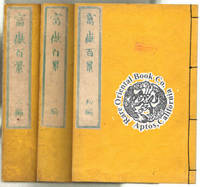
1875réf. 912491875. EHON Katsushika HOKUSAI. FUGAKU HYAKKEI. 100 Views of Fuji. Meiji 8 1875. Aichi Katano Toshiro. 3 vols. Yellow covers. 15.7 x 22.6 cm. Paper labels. This Meiji reprint of Hokusai's classic is in very good condition with original yellow covers and title labels. The impressions are fair to good and preserve the remarkable aesthetic sense of the master. The original blocks cut some 40 years earlier are here used by skilled printers to produce a fair example of the original work. unknown
1875réf. 912491875. EHON Katsushika HOKUSAI. FUGAKU HYAKKEI. 100 Views of Fuji. Meiji 8 1875. Aichi Katano Toshiro. 3 vols. Yellow covers. 15.7 x 22.6 cm. Paper labels. This Meiji reprint of Hokusai's classic is in very good condition with original yellow covers and title labels. The impressions are fair to good and preserve the remarkable aesthetic sense of the master. The original blocks cut some 40 years earlier are here used by skilled printers to produce a fair example of the original work. unknown books
réf. 85004003Tokyo 1868 Suzuki. Stitched pink stiff wrs. very good 31 woodcuts of heroic Japanese & Chinese figures Japanese text indigo-blue Chitsu case colored frontispiece signed Gakyo Rojin Manji 15.5 x 23 cm. IMPORTANT HOKUSAI WORK ! . . . ONE OF HOKUSAI'S MOST FAMOUS ILLUSTRATED BOOKS . . . ON CHINESE & JAPANESE HISTORIC HEROES . . This important work shows the human body moving under the heavy armor and the flow of Hokusai's 1760-1849 skilled and fluid brush. An exciting and action-packed Samurai illustrated book. Shows a number of Japanese and Chinese heroes as they struggle to suppress evil and encounter over- whelming robust and fierce opponents. Toki Kintaro struggled with a giant bronze-casted Buddhist temple Bell; other heroes struggle and fight with Inoshishi wild boar; tiger; suppressing a great wild stallion and huge spider; a giant dragon-snake; devils; Sumo; butchering one's enemy; haunted by living Yurei ghost; ogres; Fu-dog and one blood- curdling scene of a person holding a newborn baby by the feet over a boiling cauldron while he split it's stomach shows the blood flowing into the "soup" while a colleague looks on in delight; Buddhist saints and Goddess; seeking salvation refuge and Nirvana under a freezing cold waterfall in fervent prayer; suffering a barrage of arrows and assailants. . A most dramatic and emotional work of the strongest Heroes and most powerful warriors as they wield their all-mighty Samurai swords. Executed with the greatest of skill as only Hokusai could do. Contains one double-page preface thirty double-page and two single illustrations. The entire book printed on double-folded leaves by woodblocks printed on hand-made Washi paper. . Showing Hokusai's brilliant imagination and ability to fantasize. Books of this high caliber and unique subject condition and vintage are always S C A R C E. . THE ARTIST: KATSUSHIKA HOKUSAI 1760-1849: Hokusai was Japan's most famous Edo period illustrator of Japanese genre landscape scenery and of the daily lives and occupations of the commoners. His works are full of cheerfulness humor optimism and he had a knack of capturing the true nature of his time people and life style. He was affectionately called the "MAD MAN ON DRAWING" by the Japanese. His works continue to fascinate the world over ! . THE VARIANT EDITIONS: We have become aware of the fact that there is a strong possibility that each of the two variant copies may have slightly different plates. For example the current copy in hand does not have plates 212 nor 214 as cited in Hillier above. One needs to have the luxury of having both variants on their desk and compare page by page to note actual and complete differences. Our copy is consecutively numbered per Kerlen and so we know that it is complete but a variant to what Hillier saw in one of the museums cited on his "Acknowledgement" page. All other illustrations he cited are present. . Color photos are posted to our website. . BIBLIOGRAPHY: . A famous work cited in many standard references we list a few of the many works.: . J. Hillier: THE ART OF HOKUSAI IN BOOK ILLUSTRATION plates: 209 210 212 214 215; text on pp.227-231. Because Hiller understood this book to be of exceptional importance has devoted substantial space to this title which is part of a major trilogy on the subject of great Japanese and Chinese heroes. This genre was called the "Toshisen" and done in the final decade of Hokusai's artistic life 1840-1849. There are two versions of the First Edition relating to the first illustration opposite the title page: a. Sumi-zuri or black and white uncolored plate. b. Saishiki or colored version. The Saishiki type was strictly a made-to-order version for wealthy merchants; the Sumi-zuri being the more common of the two variants. H. Kerlen: CATALOGUE OF PRE-MEIJI JAPANESE BOOKS AND MAPS IN PUBLIC COLLECTIONS IN THE NETHERLANDS item #312 p.126-127. K. Toda: THE RYERSON COLLECTION OF JAPANESE AND CHINESE ILLUSTRATED BOOKS p.263. KSM KAIGO 1-494-2 Kraft: vol. 1 no. 125 J. Hillier: no.245 p.278 . . unknown
réf. 84211706Tokyo 1836-7 Eirakuya. Orange stitched stiff wrs.vol. 3 only woodblock printed very goodcover edges & corners bit scuffed contents clean excellent impressions and registry colors: grey Sumi blackfirm solidly bound16.5 x 2.8 cm. . . . . FUGAKU HYAKKEI: 100 VIEWS OF MT. FUJI . . . HOKUSAI'S MOST FAMOUS BOOK ON JAPAN'S SACRED SYMBOL . . . COLOR WOODBLOCK-PRINTED ON HAND-MAID WASHI PAPER . . . HIS GREATEST CLASSIC ! . THE ARTIST: KATSUSHIKA Hokusai 1760-1849: Hokusai's most famous work in book form illustrating a profusion of views of Mt. Fuji from all perspectives. . Hokusai was Japan's most famous Edo period illustrator of Japanese genre landscape scenery and of the daily lives and occupations of the commoners. His works are full of cheerfulness humor optimism and he had a knack of capturing the true nature of his time people and life style. He was affectionately called the "MAD MAN ON DRAWING" by the Japanese. His works continue to fascinate the world over ! . This book was also the prototype for his great color woodblock print series of multiple views of Mt. Fuji. . A delightful and impressive work considered a classic for nearly 200 years. . This monograph is devoted to Japan's most sacred Mt. Fuji in all its glory portrayed in various seasons and as seen by common folk as they go about their daily lives and daily occupations and along the Tokaido highway. . THE INTRODUCTION: The introduction was written by Hokusai on the first two pages of each volume. . THE COMPLETE SET OF 3 VOLUMES: The collation is: 252525 double folded leaves or 150 pages in all with illustrations of Mt. Fuji on 144 pages 6 pages of Japanese text. . The history of the various editions and volume count are complex the work was originally issued complete in two volumes which included all pages found in the 3 volume set. The set of 3 volumes is no different than those bound in 2 volumes it is simply a matter of combining pages into two or three bindings. The binding format was a choice made by publishers & their binders. The usual format is 3 volumes numbered 1 2 & 3. There are 3 volumes bound into a single binding and other variants contents by and large is the same. . THE SUBJECT: MT. FUJI JAPAN'S MOST SACRED SYMBOL: . The work is marvelous it shows Mt. Fuji portrayed in the daily life of the common people. . In the spring time how ordinary Japanese sat outdoors and viewed the cherry blossoms with Mt. Fuji in the background. Mt. Fuji was always present in daily life as a background. . The composition artistry and skill of Hokusai is without parallel. The book illustrates his unique talent and drawing skills. His artistry pictured Mt. Fuji in myriad scenes early morning evening rain and cloudy days. The mystical quality of Mt. Fuji demonstrates the great respect Hokusai felt showing the great grandeur of the sacred mountain. . Hokusai used acute visual composition concepts insight and visionary-like "Avant-garde" talent to impress viewers to identify with the splendor of Mt. Fuji. . Hokusai is still hailed as Japan's greatest artist of the 19th century. His woodblock printed books and printed command solid prices. . THE EDITIONS: There were two main editions: the FIRST EDITION published in 1834-5 was bound in pink stiff stitched covers commonly called "FALCON FEATHERS." All later editions are reprints with various dates bound in yellow blue purple green black and several other variants. Contents remains the same it would be a matter of quality of impression. The later editions do not always have a colophon or date. Some editions do show publisher's information and date. Other copies may have been rebound omitting the colophon. . There is no 'standard' relationship between date and color of binding however we have had many editions and copies information below reflects this history: . In 1875 Meiji 8th year reprint bound in either yellow covers with green printed title slips or blue covers with red printed title slips. . In 1877 Meiji 10th year reprint in black covers with red printed title slips. . A late final reprint in 1940 with yellow covers. . All of the above were woodblock printed editions on Washi hand-made paper. The contents is identical regardless of edition. The volume size varied by a few centimeters mostly a difference of the top or bottom margins. . The quality of the reprints are determined by the freshness of the impression and registry. As the original woodblocks wore down and warped they were replaced with new blocks. Some later editions were printed from very worn poor quality original blocks others from a mixed variety of old and new blocks quality varies in each copy. . Please visit our website to see the editions currently in stock. Photos posted to our website may not reflect the exact copies in stock but are 'generic' examples of the contents. . NOTE: Not all copies are identical contents each have specific and unique condition and different cover colors all about the same size. . SIZE: Depending on edition the First Edition was typically bound 15.5 x 22.5 cm. The Meiji editions were about 15.3 x 24.2 cm. with a very minor difference in size dependent on which publisher printed & bound their copies. There are minor size differences by edition the images remain the same size it was strictly a matter of larger margins in later editions. . For the most part this set was uniformly bound each with title slips. The Meiji title slips were red Kanji on a red bordered white Washi paper. . THE ENGLISH TRANSLATION OF FUGAKU HYAKKEI: There was a complete English translation of the 3 volume set and each of its pages. Please visit our website and search for F.V. Dickins 1960 edition which may be in stock. See below for more details. . CONDITION NOTE: General: Unless otherwise stated bound in the original publisher's stitched stiff yellow or other color covers with green or red printed title slip. . The registry and impressions are excellent most likely early pulls off the woodblocks. . We may have different dated editions each copy has been described not all are in the same condition dates also vary. Please inquire about any particular copy for more details. Photos posted to our site are 'generic' and represent general examples of the contents & illustrations. Please review photos posted to our website. . The 1877 edition has a small mend at the last page the colophon in vol. 3 else very clean nice. . Color photos of a generic example are posted to our website copies vary please read the individual copy notes for subtle differences. . SPECIFIC COPY DETAILS: . Copy 6. This is an early edition with soft Washi paper and excellent registry and imression clearly an early pull off the woodblocks. . Bound in the publisher's variant orange color with the green printed title slip. The covers have the typical soil common for a famous book by a Hokusai a famous artist which is nearly 200 years old. The covers have the usual vertical minor wrinkles & bends. The pages show the usual touch of lower right corner 'thumbing.' . Some old minor and bit of tiny worming in top margin & top text from beginning to page 15; a similar small hole in the upper plates beginning from the front through to page 16; a similar small hole in the heel below the lower margin from page 7-13 of no impact to the image other two also of little impact to the image. Else the book is solidly bound without issues. Cover title in green ink. . There is a boksellers advertisement inside the front and back covers. Copy 7: Exceptionally bright & clean example a tiny bit of dustiness to the covers else excellent. Cover title slip in green ind.Contents are pristine. Cover . Copoy 8: Similar to above but with English written on the front covers:"Peole In Landscape" & Mabel D. Ely." Else the front & back covers have some minor dustiness typical signs of wear and feint marks contents remains pristine. Dated Meiji 8th year 1875. Copy 9: Excellent black covers very clean & solid with red ink printed title slip. Contents prestine. Dated Meiji 10th. year 1877. . REFERENCES: . DICKINS TRANSLATION: TWO EDITIONS: WITH ENGLISH TRANSLATION & ILLUSTRATIONS: a. F.V. Dickins.: FUGAKU HIYAKU-KEI: sic OR A HUNDRED VIEWS OF FUJISAMA FUJI BY HOKUSAI. London in 1880. This book contained 3 original woodblock illustrated volumes of Hokusai's book FUGAKU HYAKKEI. . b. A 1960 reprint of the above. H. Kerlen: CATALOGUE OF PRE-MEIJI JAPANESE BOOKS & MAPS . for more bibliographic details item #396 pp.163-166. BROWN Louise N.: BLOCK PRINTING AND BOOK ILLUSTRATION IN JAPAN p.183 she cites two entries. Henry Smith II: HOKUSAI ONE HUNDRED VIEWS OF MT. FUJI pp.21-22 outline of the editions. K. Toda: THE RYERSON COLLECTION OF JAPANESE AND CHINESE . ILLUSTRATED BOOKS p.263. L. Dawes: CATALOGUE OF JAPANESE ILLUSTRATED BOOKS p.47. FORRER Matthi. comp. et al.: HOKUSAI AND HIS SCHOOL: Paintings Drawings And Illustrated Books. See item 110 and associated photos. RIJKSMUSEUM: HOKUSAI AND HIS SCHOOL: Japanese Prints c. 1800-1840. see pp. 58-59 #87 & photos. Jack Hillier: no. 241 p.278. --. : HOKUSAI: no. 110 --. : THE ART OF JAPANESE BOOK ILLUSTRATION p.213-225 . plates 195-208 Kraft: VOL.3 NO. 185-=195; VOL. 4 NO.36 R. Keyes: EHON: The Artist and the Book in Japan: pp.218-223 i.e. exhibit #54 color plates: figures 54.1-54.5. KSM: Kaiga 7-18-1 Forrer: 170-177 . !! NOT LISTED IN: C. Mitchell: THE ILLUSTRATED BOOKS OF THE NANGA MARUYAMA SHIJO AND OTHER RELATED SCHOOLS OF JAPAN. . . unknown