1552?-1599, Spenser, Edmund,Biblio.com

1936 risultati
rif. ria9781019937518_inpHardcover. New. New Book; Fast Shipping from UK; Not signed; Not First Edition; The Fairy Queen is a famous epic poem by the English poet Edmund Spenser. It tells the story of the knights of the court of Gloriana the Faerie Queene and their various quests and adventures. The poem is a masterpiece of allegory and hardcover
1930rif. 52242Stratford-on-Avon: Printed at the Shakespeare Head St. Aldates Oxford & Published for the Press by Basil Blackwell 1930. Number 83 of 350 sets. Woodcuts by Hilda Quick headings and initials by Joscelyne Gaskin. 8 vols. 8vo. Half green calf over Cockerell marbled boards covers very slightly faded otherwise fine. Quick Hildsa. Number 83 of 350 sets. Woodcuts by Hilda Quick headings and initials by Joscelyne Gaskin. 8 vols. 8vo. Printed at the Shakespeare Head St. Aldates Oxford & Published for the Press by Basil Blackwell unknown
1902rif. 20084Boston and New York: Houghton Mifflin and Company Printed at the Riverside Press 1902. Number 234 of 419 copies printed. 2 sepia engravings on china laid down after design by E. H. Blaishfield decorations. 1 vols. Folio. Original yellow boards. In the rare original dust jacket partially unopened. Some light soiling of binding and jacket darkening of endpapers some short tears on jacket and pencilled identification written on jacket spine else an excellent copy of this very attractive work. Number 234 of 419 copies printed. 2 sepia engravings on china laid down after design by E. H. Blaishfield decorations. 1 vols. Folio. Scarce in dust jacket. Houghton Mifflin and Company [ Printed at the Riverside Press] hardcover
1902rif. 249933Boston and New York: Houghton Mifflin and Company Printed at the Riverside Press 1902. 2 sepia engravings on china laid down after design by E. H. Blaishfield decorations. 1 vols. Folio. Original yellow boards. In the rare original dust jacket partially unopened. Some light soiling of binding and jacket darkening of endpapers some short tears on jacket and newer label identification written on jacket spine else an excellent copy of this very attractive work. 2 sepia engravings on china laid down after design by E. H. Blaishfield decorations. 1 vols. Folio. BR Works #85. Scarce in dust jacket. BR Works #85 Houghton Mifflin and Company [ Printed at the Riverside Press] hardcover
1923rif. 5188Waltham Saint Lawrence: Golden Cockerel Press 1923. NO. 99 OF 320 COPIES 8vo pp. 46 4. Colour woodcut frontispiece and 2 colour woodcut plates included in pagination. Original pale blue boards backed in ecru cloth paper label to spine. Binding a little soiled and toned. Bookplate of Francis E. Bliss to pastedown. An early work from the Golden Cockerel Press with attractive woodcuts by Ethelbert White which were nevertheless unpopular with press proprietors Hal and Gay Taylor and were ‘universally condemned’ Cave and Manson History of The GCP p. XXX. This led directly to White’s replacement by Robert Gibbings in the Taylors’ next project and Gibbings’ subsequent acquisition and stewardship of the press over the next decade. Cave & Manson 14. Golden Cockerel Press hardcover
1930rif. 75969London: The Cresset Press 1930. Hardcover. Fair Condition. John Nash. A lovely production with coloured illustrations by John Nash and printed on hand made paper. The outside of this copy has suffered somewhat with the vellum darkened and the cloth boards heavily marked and bumped at the corners. Also on the rear board the cloth has peeled back a little from the opening edge exposing the board. The interior is bright and clean. Size: Folio. Illustrator: John Nash. Quantity Available: 1. Shipped Weight: Under 1 kilo. Category: Poetry; Inventory No: 75969. . The Cresset Press hardcover
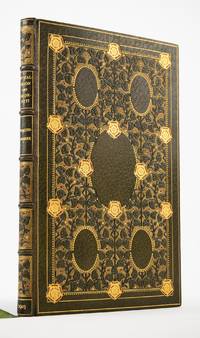
1903rif. ST20957London: John & E. Bumpus 1903. 211 x 140 mm. 8 1/2 x 5 1/2". 86 pp. LOVELY GREEN MOROCCO GILT AND INLAID FOR J. & E. BUMPUS stamped in gilt on rear turn-in LIKELY BY RIVIERE & SON upper cover with gilt fillet frame central panel with densely blind-stamped leafy vines on a gilt pointillé background accented with onlaid red morocco dots large oval at center and four smaller ovals all framed by gilt beads the central oval adorned with four gilt and onlaid red and white morocco Tudor roses 10 more such roses at corners and along the sides of outer frame lower cover with gilt fillet frame raised bands spine compartments with blind-stamped leafy sprig on pointillé ground with onlaid black ivory and red morocco dots gilt lettering turn-ins with gilt border gilt trio of leaves at corners all edges gilt. With engraved frontispiece portrait title page vignette two headpieces and two tailpieces. Upper cover and spine evenly faded to olive green likely from being displayed just a hint of bowing to boards but A VERY FINE COPY the text entirely clean fresh and bright and the binding unworn. This lovely printing of Spenserian poetry comes in an unusual and skillfully executed binding likely by Riviere & Son which was producing some of its very best work at the time of publication. The poems here were inspired by Spenser's courtship of and 1594 marriage to his second wife Elizabeth Boyle. Day calls "Amoretti" "a unique sonnet sequence in Renaissance England" and he is unreserved in his praise for "Epithalamion" calling it "the most beautiful nuptial poem in English and perhaps in any language." Spenser 1552 - 99 was the first modern English poet to achieve major stature and Day points out that those "influenced by Spenser are virtually a roster of the great English poets since his time" among them Milton Wordsworth Keats Rossetti and Tennyson. Bumpus bindings were done for the bookselling firm of John and Edward Bumpus founded in 1780. The firm long enjoyed a reputation as purveyors of fine and beautiful bindings without ever operating a bindery. Instead they outsourced the work to the best binders of the day including Riviere and Morrell the former being a likely choice here. The combination of swirling blind-stamped vines a densely stippled background and onlaid blossoms demonstrates creativity in design proficiency in a range of finishing techniques and meticulous execution. The five blank ovals on the upper cover bring to mind the layout of Cosway bindings a specialty of the Riviere firm in which those ovals would be filled with miniature paintings on ivory under glass. Cosway bindings could sometimes be ornate to the point of being overwhelming so the blank ovals here are a welcome moment of restraint amid the animation of the cover design. Apparently an earlier owner enjoyed displaying this binding--as who would not--and the leather has mellowed to an olive green--which may actually be a more pleasing foundation for the decoration than the original brighter green. Certainly the book saw no other use as the contents are as fresh as the day the volume left the printer. John & E. Bumpus unknown
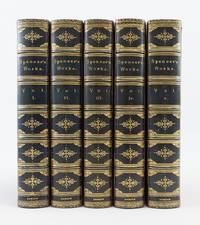
1862rif. ST19567-034London: Bell and Daldy 1862. 229 x 152 mm. 9 x 6". Five volumes. Edited by John Payne Collier. VERY ATTRACTIVE DEEP BLUE PEBBLE-GRAIN MOROCCO HANDSOMELY GILT covers with frames of one dogtooth and three plain rules raised bands spines in antique-style compartments with delicate scrolling cornerpieces and intricate central fleuron surrounded by small tools densely gilt floral turn-ins marbled endpapers all edges gilt. With frontispiece portrait of Spenser in volume I. Front pastedown with armorial bookplate of Herbert Lionel Bashford M. A. Dibon Lodge Godalming. See: Day "History of English Literature to 1660" pp. 187-89. Spines just a shade darker than covers a couple covers with a slightly blotchy appearance due to leather preservative but quite an attractive set in generally fine condition the text fresh and bright and the leather lustrous. The first modern English poet to achieve major stature Spenser ca. 1552-99 in Day's words demonstrated "with his fluency in many meters and stanzaic forms . . . that English was at least the equal to any other language as a vehicle of great poetry." While his poems particularly "The Faerie Queene" look backward as the culmination of the allegorical verse tradition of the Pearl Poet Langland and Chaucer he has influenced with "his fertile imagination and especially his sensuous imagery and melodic language" nearly every important English poet who followed him. Day DNB praises Collier's "Spenser" first published in 1862 as "an excellent edition with the completest life of the poet that had as yet appeared." Despite his great knowledge and love of early English authors Collier 1789-1883 suffered a certain diminished respect because of his propensity for textual fabrication. This was true particularly in the case of the notorious "Perkins folio" supposedly containing an early copy of Shakespeare's works with superior variant readings which turned out to be forged. Britannica comments that these "fabrications . . . may charitably . . . be attributed to literary monomania but . . . it is difficult to speak with patience of them so completely did they for a long time bewilder the chronology of Shakespeare's writings." Apart from its important content this set is quite lovely on the shelf. The bindings are unsigned but they have the feel and appearance of work done by James Hayday 1796-1872 one of the most prominent and productive English binders of the 19th century. The present set is typical of Hayday's decorative work for a large market using high quality leather and being liberal with gilt embellishment. Bell and Daldy unknown
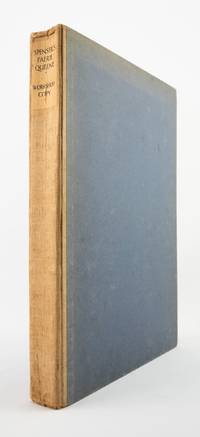
1923rif. ST21078Chelsea: Ashendene Press 1923. ST JOHN HORNBY'S WORKSHOP COPY there were 180 paper copies 150 of them for sale and 12 vellum copies of this edition. 440 x 307 mm. 17 1/4 x 12". 2 p.l. 406 2 pp. Original holland-backed blue paper boards flat spine with paper title label identifying this as a workshop copy. Housed in a fine modern drop-back box of blue cloth backed with holland paper labels on spine. Printer's device in colophon. Printed in red black and blue. Front pastedown with bookplate of St John Hornby and ex-libris of David Godine. Hornby 32; Franklin pp. 144-46 240-41. Covers with fading along the top a bit of foxing and extensive though light gray discoloration ends of spine lightly bumped and lower edges of bottom corners slightly rubbed both as expected but the volume completely solid and miles away from what one would imagine for a hefty book like this that would have been expected to incur uncareful use. Isolated very pale foxing and the most trivial signs of use internally. A REMARKABLE COPY the text in beautiful condition soundly protected in its unique binding. With its companion volume "Minor Poems" by Spenser this in Franklin's eyes is the "masterpiece" among the Ashendene folios; and the present distinctive--and presumably unique--copy comes from Charles Harry St John Hornby's own printer's workshop. Unlike most other copies which are typically found in the publisher's calf-backed vellum binding this copy is in the inexpensive and less substantial holland-backed boards that are now less and less commonly seen in large part because they have not stood up well over the years. The present copy somehow has done quite the opposite. In addition to the original Ashendene "Workshop Copy" designation on the spine label scattered finger smudges--perhaps those of Hornby himself--suggest its use in the printer's studio. In our experience this particular designation is extremely rare in connection with private press books in general and certainly for Ashendene volumes. Founded in 1895 by Hornby 1867-1946 the Ashendene Press issued 40 books plus additional minor pieces for four decades. Less elaborate in appearance and design than William Morris' Kelmscott volumes but more ornamental than the products of Cobden-Sanderson's Doves Press the Ashendene volumes have long been considered the most satisfying of English private press books. This volume was formerly in the collection of David R. Godine who founded the Godine Press in 1970 after training with printmaker Leonard Baskin and master printer Harold McGrath. Ashendene Press unknown
1974204 p., ill. n/b. Inv. 19243.
1937rif. 29078Madison Wisconsin Academy 1937 In-8 exemplaire non coupé, 342 pp text in english with plates