8040 resultados
1857ref. 6284New York: Currier & Ives 1857. Lithograph coloured by hand by Charles Parsons. A dramatic scene after Arthur Tait full of movement: a pair of retrievers quest for their master's quarry one successful holds aloft a bird the second has spotted the second injured bird. In the background their master urges them on. Tait spent the first three decades of his life in England and arrived in New York in 1850. A follower of Edwin Landseer and the style of the Pre-Raphaelites he established himself as a realistic painter of animals and sporting scenes. He kept a summer studio at a camp in the Adirondack Mountains where he painted sporting scenes. He and Nathaniel Currier sometimes hunted together. 'These wilderness scenes often composed around an anecdote appealed to a wide popular audience and from 1852 Currier & Ives as well as Louis Prang published a number of lithographs and chromolithographs of his work.' Grove / Artnet Conningham 151; Gale 164. Currier & Ives unknown
1857ref. 6284New York: Currier & Ives 1857. Lithograph coloured by hand by Charles Parsons. A dramatic scene after Arthur Tait full of movement: a pair of retrievers quest for their master's quarry one successful holds aloft a bird the second has spotted the second injured bird. In the background their master urges them on. Tait spent the first three decades of his life in England and arrived in New York in 1850. A follower of Edwin Landseer and the style of the Pre-Raphaelites he established himself as a realistic painter of animals and sporting scenes. He kept a summer studio at a camp in the Adirondack Mountains where he painted sporting scenes. He and Nathaniel Currier sometimes hunted together. 'These wilderness scenes often composed around an anecdote appealed to a wide popular audience and from 1852 Currier & Ives as well as Louis Prang published a number of lithographs and chromolithographs of his work.' Grove / Artnet Conningham 151; Gale 164. Currier & Ives unknown books
1848ref. 69954New York:: Ensigns sic and Thayer 1848. A few small and unobtrusive losses in the area of the portraits with old reinforcements on verso; some shallow marginal chipping. Generally bright and very attractive. . 29 x 21 inches. Printed ornamental borders; portraits of George Washington and Generals Taylor and Scott at top with patriotic views at the lower edge; Table of Distances in Mexico at the lower left corner; and border panels listing statistics of the States and Territories. . This map was issued several times from 1846-51 reflecting border changes resulting from the Mexican-American War. Ensigns [sic] and Thayer, unknown
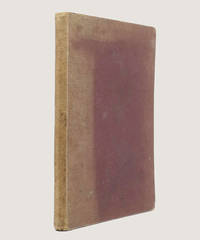
1877ref. 15283Sheffield & London M. Hurst; A. Heywood 1877-78. 1877. A COMPLETE RUN of 29 issues in 3 volumes bound as one. Quarto pp. 2 96; 2 96; 40 plus photograph portrait of football and cricket players mounted to title-page of each issue photographic frontispiece to volume 1 and 2 so 31 photographs in total. Contemporary morocco-grain maroon cloth; edges sprinkled red; white end-papers. Cloth faded to spine and upper board; corners bumped and rubbed; a few nicks to head of upper board. Very occasional spotting the Lilywhite portrait underdeveloped but otherwise internally rather clean. A very good copy. The complete run of a very early and exceedingly rare cricket and football magazine which includes match reports articles wood-engraved comics advertisements for sporting paraphernalia and portraits of famous sportsmen. The woodburytypes mounted to the title-page of each issue were also advertised for sale mounted as cards and are examples of some of the earliest football and sporting cards. The portraits include A. N. 'Monkey' Hornby who joined Blackburn Rovers in 1878; George Ulyett who played in goal for Sheffield Wednesday in 1883-84; Alfred Shaw who was both a cricketer and rugby footballer; the champion cyclist John Keen then fastest man in the world and cricketers such as W. G. Grace and James Lillywhite. The team portrait of the Sheffield Wednesday Football Club Cup Team shows the team just nine years after the club was founded in 1867 and includes James Lang the Scottish player who was arguably the first professional footballer in England. Complete runs of this short-lived periodical with every woodburytype are exceptionally difficult to find advertisements within the later volumes even acknowledge the scarcity of the publication. Jisc the union catalogue of over 100 major libraries across the UK and Ireland locates three copies of individual issues of the magazine only and in 1906 A. D. Taylor wrote that "Vols. I and 2 can frequently be met with at bookstalls but the odd five numbers in the final vol. are difficult to obtain making the complete set somewhat valuable". Taylor The Catalogue Of Cricket Literature p. 4. Sheffield & London, M. Hurst; A. Heywood, 1877-78. hardcover
1982ref. ZB393193Applied Science Publishers 1982-1988. Volumes 2-9 11-15; mostly in original paper wrappers price is for the lot. - If you are reading this this item is actually physically in our stock and ready for shipment once ordered. We are not bookjackers. Buyer is responsible for any additional duties taxes or fees required by recipient's country. Photos available upon request. Applied Science Publishers unknown
1970ref. ZB393567Applied Science Publishers 1970-93. volumes 1-63 complete volumes lacking vol. 38 partly bound ex library; PRICE IS FOR THE LOT. - If you are reading this this item is actually physically in our stock and ready for shipment once ordered. We are not bookjackers. Buyer is responsible for any additional duties taxes or fees required by recipient's country. Photos available upon request. Applied Science Publishers unknown
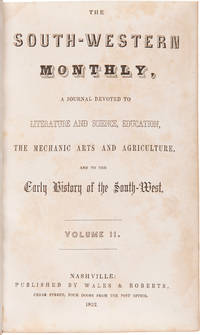
1852ref. 16070Nashville. 1852. Extremely Rare: A Remarkable Collection of Narratives A very rare complete set of this interesting and important Tennessee periodical containing all twelve articles entitled "Early History of the Southwest" which constitute the main interest of the magazine for modern readers. After the magazine ceased publication with the December 1852 issue the editors followed their intention stated in their last editorial and gathered all of the narratives into a book issued in January 1853 entitled INDIAN BATTLES MURDERS SEIGES sic AND FORAYS IN THE SOUTH-WEST. ".This was a collection of narratives by various authors. These had appeared separately as articles in the SOUTH WESTERN MONTHLY MAGAZINE printed in Nashville during the years 1851-52. The magazines are considered frontier periodicals of extreme rarity - the 1853 book.is all but unobtainable. Apparently few copies of the book were printed judging from the very few times one finds records of its sale." - Allen. The actual first appearances in print of all of the items in the book are the periodical versions. Articles include "Sketch of the Captivity of Col. Joseph Brown" "The Indian Massacres in the Vicinity of Bosley's Spring." "Indian Murders around Nashville - Narrative of John Davis Esq." "Scalping of Thomas Everett and his two sisters near Buchanan's Fort." "Indian Battles and Murders - Narrative of General Hall" "Perils attending emigration from Virginia to the West.burning of Sigler's Fort. Narrative of John Carr" "The levy of men sent out from North Carolina.narrative of Mr. Samuel Blair" "Narrative of John Rains" "Massacre at Cavet's Station." Virtually all of the narratives describe Indian fights in Tennessee between the 1780s and the War of 1812. An important rarity of warfare on the Old Southwest frontier. This set has a remarkably large number of plates; other sets we know of have far fewer. All seem to be remainders from New York publications used as illustrations without regard to text. Later three-quarter black morocco and cloth spines gilt with raised bands. Light rubbing and wear especially to edges and corners head of spine on second volume chipping slightly. Ownership inscription on verso of each frontispiece bookplate on rear pastedowns. First volume with ink stamp on pastedown and titlepage. Lightly foxed. Some light wear and soiling. Very good. HOWES W30 ref. ALLEN RARITIES 47. ALLEN IMPRINTS 3160. hardcover
1852ref. 16070Nashville. 1852. Extremely Rare: A Remarkable Collection of Narratives A very rare complete set of this interesting and important Tennessee periodical containing all twelve articles entitled "Early History of the Southwest" which constitute the main interest of the magazine for modern readers. After the magazine ceased publication with the December 1852 issue the editors followed their intention stated in their last editorial and gathered all of the narratives into a book issued in January 1853 entitled INDIAN BATTLES MURDERS SEIGES sic AND FORAYS IN THE SOUTH-WEST. ".This was a collection of narratives by various authors. These had appeared separately as articles in the SOUTH WESTERN MONTHLY MAGAZINE printed in Nashville during the years 1851-52. The magazines are considered frontier periodicals of extreme rarity - the 1853 book.is all but unobtainable. Apparently few copies of the book were printed judging from the very few times one finds records of its sale." - Allen. The actual first appearances in print of all of the items in the book are the periodical versions. Articles include "Sketch of the Captivity of Col. Joseph Brown" "The Indian Massacres in the Vicinity of Bosley's Spring." "Indian Murders around Nashville - Narrative of John Davis Esq." "Scalping of Thomas Everett and his two sisters near Buchanan's Fort." "Indian Battles and Murders - Narrative of General Hall" "Perils attending emigration from Virginia to the West.burning of Sigler's Fort. Narrative of John Carr" "The levy of men sent out from North Carolina.narrative of Mr. Samuel Blair" "Narrative of John Rains" "Massacre at Cavet's Station." Virtually all of the narratives describe Indian fights in Tennessee between the 1780s and the War of 1812. An important rarity of warfare on the Old Southwest frontier. This set has a remarkably large number of plates; other sets we know of have far fewer. All seem to be remainders from New York publications used as illustrations without regard to text. Later three-quarter black morocco and cloth spines gilt with raised bands. Light rubbing and wear especially to edges and corners head of spine on second volume chipping slightly. Ownership inscription on verso of each frontispiece bookplate on rear pastedowns. First volume with ink stamp on pastedown and titlepage. Lightly foxed. Some light wear and soiling. Very good. HOWES W30 ref. ALLEN RARITIES 47. ALLEN IMPRINTS 3160. hardcover books
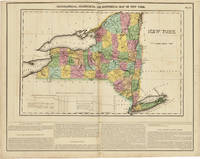
1823ref. 58505Philadelphia: H.C. Carey & I. Lea 1823. One of the Most Important Early Atlases Printed in the United States A handsome atlas of the Americas with individual color maps of each state in the Union including a seminal map of the West by Stephen H. Long. At the time of publication this was the best and most detailed atlas to be produced in the United States with substantial historical background text accompanying each map. Fielding Lucas the major Baltimore printer was the principal engraver. Among the most noted maps in the atlas is Major Stephen H. Long's "Map of Arkansa and other Territories of the United States." That map which depicts the Missouri basin between Nashville in the east the Mandan villages in the north and the Rocky Mountains in the west was based on the surveys conducted by Long on his expeditions of 1819 and 1820. The map published in Carey & Lea's atlas preceded the official account of that expedition by expedition botanist Edwin James which includes a smaller map with similar detail titled "Country drained by the Mississippi Western Section." Carey & Lea's 1823 publication of James' Account perhaps explains the prior inclusion of this map with Long expedition information in their atlas. On this famous map is the printed legend which would perpetuate a myth for many years to come identifying the high plains as the "Great American Desert." Carey & Lea's atlas was first issued in 1822; this is the second issue with revised states of three maps Maine North Carolina and Louisiana with the same printing of the remaining maps and a cancel title. Letterpress title copyright notice on verso 1p. advertisement verso blank 1p. table of contents verso blank. Forty-six double-page handcolored engraved maps of the United States all but one with borders of letterpress descriptive text; uncolored double-page engraved view showing the comparative heights of mountains throughout the world; handcolored double-page engraved table showing the comparative lengths of the principal rivers worldwide; five letterpress tables four double-page three of these handcolored; 18pp. of letterpress text. Mounted on guards throughout. Modern half calf and marbled boards spine gilt leather label. Dampstaining along lower edge causing chipping to initial leaves. Closed tear in bottom margin of first map repaired with tissue. Very light offsetting from maps. Some dust soiling light tanning and foxing. Good plus. HOWES C133 "aa." PHILLIPS ATLASES 1373a. SABIN 15055. WHEAT TRANSMISSISSIPPI 348 352. hardcover
1823ref. 58505Philadelphia: H.C. Carey & I. Lea 1823. One of the Most Important Early Atlases Printed in the United States A handsome atlas of the Americas with individual color maps of each state in the Union including a seminal map of the West by Stephen H. Long. At the time of publication this was the best and most detailed atlas to be produced in the United States with substantial historical background text accompanying each map. Fielding Lucas the major Baltimore printer was the principal engraver. Among the most noted maps in the atlas is Major Stephen H. Long's "Map of Arkansa and other Territories of the United States." That map which depicts the Missouri basin between Nashville in the east the Mandan villages in the north and the Rocky Mountains in the west was based on the surveys conducted by Long on his expeditions of 1819 and 1820. The map published in Carey & Lea's atlas preceded the official account of that expedition by expedition botanist Edwin James which includes a smaller map with similar detail titled "Country drained by the Mississippi Western Section." Carey & Lea's 1823 publication of James' Account perhaps explains the prior inclusion of this map with Long expedition information in their atlas. On this famous map is the printed legend which would perpetuate a myth for many years to come identifying the high plains as the "Great American Desert." Carey & Lea's atlas was first issued in 1822; this is the second issue with revised states of three maps Maine North Carolina and Louisiana with the same printing of the remaining maps and a cancel title. Letterpress title copyright notice on verso 1p. advertisement verso blank 1p. table of contents verso blank. Forty-six double-page handcolored engraved maps of the United States all but one with borders of letterpress descriptive text; uncolored double-page engraved view showing the comparative heights of mountains throughout the world; handcolored double-page engraved table showing the comparative lengths of the principal rivers worldwide; five letterpress tables four double-page three of these handcolored; 18pp. of letterpress text. Mounted on guards throughout. Modern half calf and marbled boards spine gilt leather label. Dampstaining along lower edge causing chipping to initial leaves. Closed tear in bottom margin of first map repaired with tissue. Very light offsetting from maps. Some dust soiling light tanning and foxing. Good plus. HOWES C133 "aa." PHILLIPS ATLASES 1373a. SABIN 15055. WHEAT TRANSMISSISSIPPI 348 352. hardcover books
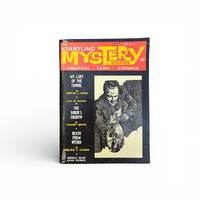
1967ref. 23327USA: Acme Startling Mystery Stories 1967. KING Stephen. "The Glass Floor" in 'Startling Mystery Stories' Fall No. 6. New York: ACME 1967. Octavo pulp magazine original pictorial wrappers measuring 18cm x 13.2cm - in very good rubbed condition with a small '1967' date to the front panel; signed and inscribed by the author in blue ink on the opening page of his story "To Debi All best Stephen King 7/25/82". The first commercial Stephen King appearance featuring the first published of his short stories originally written while still a student and preceding his breakthrough novel 'Carrie' 1974. 'The Glass Floor' represents an important formative work illustrating themes and narrative techniques that would later come to define King's career. Copies of this fragile pulp magazine seldom survive in collectible condition having been produced as ephemeral reading material. The present example is further distinguished by King's signature and dated inscription from 1982 a period during which he had already achieved international recognition lending an added layer of historical interest. A scarce and evocative item combining an early appearance in a now-elusive pulp publication with a contemporary authorial inscription and the holy grail of the most influential writers of modern fiction. Acme (Startling Mystery Stories) unknown
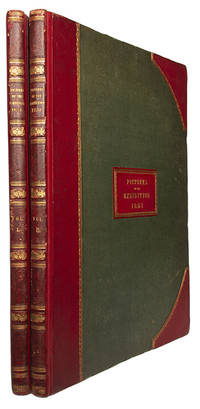
ref. 114198London Dickinson Brothers 1854. . First edition; 2 vols folio 59 x 44 cm; 55 chromo-lithograph plates including 2 frontispieces by Dickinson Brothers after Joseph Nash Louis Haghe and David Roberts finished by hand and heightened with gum arabic titles red and black with woodcut initials ex-library bookplates to pastedowns and stamps to title occasional minor creasing with a couple small tears to margins a touch of offsetting to guards otherwise plates clean and bright; contemporary half red morocco gilt rebacked with original spines laid down over green cloth boards gilt morocco title labels to upper boards spines lettered in gilt in five compartments all edges gilt inner hinges reinforced extremities a little bumped spines lightly rubbed a very good copy; 29; 29ff. The Great Exhibition housed within the 'Crystal Palace' embodied Prince Albert's vision to display the wonders of industry from around the world. This highly detailed and colourful sequence of images was published as a pictorial record of the hugely successful Great Exhibition of 1851 which ran in London's Hyde Park between May and October of that year. Originally conceived by the Royal Society for the Encouragement of Arts Manufactures and Commerce whose most famous patron was Prince Albert the exhibition set out to display the staggering progress that had been achieved in all of the Society's disciplines. The exhibition building itself was the source of worldwide acclaim: the famous 'Crystal Palace' designed by Joseph Paxton and built in cast-iron and plate-glass stretched symbolically 1851 feet in length and rose to 128 feet in the air. More than 100000 objects were displayed by over 14000 exhibitors from around the world grouped into four principal themes: Machinery Manufactures Fine Arts and Raw Materials. Included in the exhibits were full scale hydraulic presses steam engines carriages firearms porcelain enamels carpets textiles and even the 186 carat Kohi-Noor diamond among thousands upon thousands more artefacts many of which are shown in this sequence. Over six million people visited the exhibition during its relatively short opening period many of whom travelled to London from far-afield via the rapidly expanding railway network. Abbey Scenery 251. London, Dickinson Brothers, 1854. hardcover
ref. 05692London No. 39 Strand: M. Darly 1771. The Birth of the English Fashion Caricature Ninety-Six Superb Hand-Colored Etchings of Macaronis Fashionable Ladies and Georgian Eccentrics An Exceptionally Rare Complete Set of Mary and Matthew Darly's Celebrated Caricatures 1771-1773 From the Library of Prince Henry Duke of Gloucester in a Magnificent Rivière Binding DARLY Mary and Matthew. 24 Caricatures by Several Ladies Gentlemen Artists &c. 1771. And Vol. II of Caricatures Macaronies & Characters by Sundry Ladies Gentlemen Artists &c. London: M. Darly 1772. And Vol. III of Macaronies Characters Caricatures &c. Design'd by the Greatest Personages Artists &c. London: M. Darly 1772. And Vol. IV of Macaronies Characters Caricatures &c. By M. Darly. London: M. Darly 1773. First editions. Four octavo volumes bound in two 8 3/4 x 5 1/2 inches; 222 x 140 mm. Four finely hand-colored decorative engraved titles one leaf of engraved introductory text in Volume I and ninety-six superb contemporary hand-colored etched plates twenty-four in each volume. All plates mounted on stubs and interleaved. Some very occasional mainly marginal spotting; a light stain in the lower blank margin of plate 12 in Volume I; plates 2 and 3 in Volume II and plate 8 in Volume III with expertly repaired marginal tears. The plates generally exceptionally fresh with brilliant contemporary coloring. An extraordinarily fine and complete set certainly the finest example we have encountered. Early twentieth-century dark brown morocco by Rivière & Son. Covers elaborately paneled in gilt enclosing a richly gilt central lozenge; spines with five raised bands elaborately decorated and lettered in gilt in compartments; gilt-ruled board edges and richly gilt turn-ins; all edges gilt; marbled endpapers. The armorial bookplate of Prince Henry Duke of Gloucester on the front pastedown of each volume. A magnificent set. An exceptionally rare complete set of the four original volumes of caricatures published by Mary and Matthew Darly between 1771 and 1773 comprising ninety-six brilliantly hand-colored etchings that constitute one of the most important early collections of English social and fashion satire. The present collection represents a landmark in the development of British caricature. Published at the height of the extraordinary macaroni craze of the 1770s these spirited and frequently outrageous portraits ridicule the fashions affectations pretensions and eccentricities of Georgian society. Their subjects include extravagantly dressed young men fashionable ladies military officers clergymen lawyers tradesmen and a remarkable assortment of recognizable London characters. The figures are generally presented individually against deliberately minimal backgrounds their identities and personalities established through exaggerated physiognomy extravagant costume distinctive gestures and carefully selected accessories. This deceptively simple formula was ideally suited to the satirical portrayal of the fashionable world and helped establish a visual language that would be developed to extraordinary effect by the succeeding generation of British caricaturists. The term macaroni originally referred to a fashionable young Englishman who had returned from the Grand Tour with an excessive enthusiasm for Continental manners dress and sophistication. By the early 1770s however it had acquired a distinctly satirical meaning describing a man whose devotion to fashion and personal ornament had supposedly carried him beyond the bounds of conventional masculinity and good taste. Enormous powdered hairstyles miniature hats elaborately embroidered coats slender swords and affected postures became the identifying characteristics of the macaroni. The Darlys seized upon this phenomenon with remarkable commercial and artistic success. Their caricatures transformed the extravagances of contemporary dress into a form of popular entertainment appealing both to those who recognized the individuals portrayed and to a wider public delighted by the absurdities of fashionable society. Although many of the plates depict the familiar macaroni figure the scope of the collection extends considerably further. Among the numerous subjects represented are The City Tonsor The Turf-Macaroni The Oxford-Macaroni The Female Connoisseur The Macaroni Auctioneer The Macaroni Chimney Sweep and The Macaroni Preacher. Such images provide an extraordinary pictorial record of Georgian occupations social distinctions and public amusements filtered through the exuberant imagination of the eighteenth-century satirist. Particularly noteworthy is the prominent participation of women in the production of these prints. Mary Darly was not merely the wife of a successful print-seller but an artist engraver publisher and entrepreneur in her own right. Her work represents an important early contribution by a woman to the development of British graphic satire and the title of the first volume expressly acknowledges the participation of both ladies and gentlemen in the creation of its designs. Mary Darly fl. 1756-1779 sometimes described as the mother of English pictorial satire occupied a central position in the flourishing London print trade of the mid-eighteenth century. Working with her husband Matthew Darly fl. 1741-1778 a designer engraver and print-seller she helped establish caricature as a distinct and commercially successful branch of British printmaking. Matthew Darly had already acquired considerable prominence through his publications on ornament and decorative design including his association with Robert Manwaring's The Chair-Maker's Guide and George Edwards's A New Book of Chinese Designs. His involvement with satirical prints extended back at least to 1749 when he was questioned by the authorities concerning the distribution of caricatures directed against the Duke of Cumberland. By the 1760s Mary Darly had emerged as a publisher of satirical prints and the couple's establishment at 39 Strand became an important center for the production and sale of fashionable caricatures. The Darlys encouraged designs from both professional artists and talented amateurs including members of fashionable society itself an approach reflected in the deliberately inclusive wording of their engraved title-pages. Among artists associated with the Darly publications were Henry William Bunbury James Sayers Edward Topham Sir Edward Newenham Elizabeth Bridgetta Gulston and others. The contributions of aristocratic and amateur designers gave these caricatures a particularly intimate relationship with the fashionable society they mocked. The popularity of the Darly caricatures was such that the series was subsequently reissued including in 1776. Mary Darly's advertisements promoted the collection with characteristic confidence as "the most entertaining Work ever published in Europe." Despite their considerable contemporary popularity complete collections of these early Darly caricatures are now exceptionally scarce. The prints were intended to be enjoyed circulated and collected and individual examples have survived far more frequently than intact volumes. Their vulnerability to dispersal together with the frequent removal of particularly desirable images makes the survival of all ninety-six plates in their original four-volume sequence especially remarkable. The present set is further distinguished by its remarkably vivid contemporary hand-coloring the freshness of its impressions its handsome early twentieth-century Rivière binding and its distinguished royal provenance. Provenance: Prince Henry Duke of Gloucester 1900-1974 third son of King George V and Queen Mary and younger brother of Kings Edward VIII and George VI; his crowned armorial bookplate lettered "GLOUCESTER" on the front pastedown of each volume. Rarity: Exceptionally scarce particularly complete in all four volumes. Earlier bibliographical research located only three institutional examples of Volume I Yale University the Harry Ransom Center at the University of Texas and the University of Virginia and three of Volume II Los Angeles County Museum of Art Harvard University and Princeton University. These holdings should be reconfirmed against current institutional catalogues; they are not evidence of a complete census of surviving sets. [London] No. 39 Strand: M. Darly, 1771 unknown
ref. 05692London No. 39 Strand: M. Darly 1771. The Birth of the English Fashion Caricature Ninety-Six Superb Hand-Colored Etchings of Macaronis Fashionable Ladies and Georgian Eccentrics An Exceptionally Rare Complete Set of Mary and Matthew Darly's Celebrated Caricatures 1771-1773 From the Library of Prince Henry Duke of Gloucester in a Magnificent Rivière Binding DARLY Mary and Matthew. 24 Caricatures by Several Ladies Gentlemen Artists &c. 1771. And Vol. II of Caricatures Macaronies & Characters by Sundry Ladies Gentlemen Artists &c. London: M. Darly 1772. And Vol. III of Macaronies Characters Caricatures &c. Design'd by the Greatest Personages Artists &c. London: M. Darly 1772. And Vol. IV of Macaronies Characters Caricatures &c. By M. Darly. London: M. Darly 1773. First editions. Four octavo volumes bound in two 8 3/4 x 5 1/2 inches; 222 x 140 mm. Four finely hand-colored decorative engraved titles one leaf of engraved introductory text in Volume I and ninety-six superb contemporary hand-colored etched plates twenty-four in each volume. All plates mounted on stubs and interleaved. Some very occasional mainly marginal spotting; a light stain in the lower blank margin of plate 12 in Volume I; plates 2 and 3 in Volume II and plate 8 in Volume III with expertly repaired marginal tears. The plates generally exceptionally fresh with brilliant contemporary coloring. An extraordinarily fine and complete set certainly the finest example we have encountered. Early twentieth-century dark brown morocco by Rivière & Son. Covers elaborately paneled in gilt enclosing a richly gilt central lozenge; spines with five raised bands elaborately decorated and lettered in gilt in compartments; gilt-ruled board edges and richly gilt turn-ins; all edges gilt; marbled endpapers. The armorial bookplate of Prince Henry Duke of Gloucester on the front pastedown of each volume. A magnificent set. An exceptionally rare complete set of the four original volumes of caricatures published by Mary and Matthew Darly between 1771 and 1773 comprising ninety-six brilliantly hand-colored etchings that constitute one of the most important early collections of English social and fashion satire. The present collection represents a landmark in the development of British caricature. Published at the height of the extraordinary macaroni craze of the 1770s these spirited and frequently outrageous portraits ridicule the fashions affectations pretensions and eccentricities of Georgian society. Their subjects include extravagantly dressed young men fashionable ladies military officers clergymen lawyers tradesmen and a remarkable assortment of recognizable London characters. The figures are generally presented individually against deliberately minimal backgrounds their identities and personalities established through exaggerated physiognomy extravagant costume distinctive gestures and carefully selected accessories. This deceptively simple formula was ideally suited to the satirical portrayal of the fashionable world and helped establish a visual language that would be developed to extraordinary effect by the succeeding generation of British caricaturists. The term macaroni originally referred to a fashionable young Englishman who had returned from the Grand Tour with an excessive enthusiasm for Continental manners dress and sophistication. By the early 1770s however it had acquired a distinctly satirical meaning describing a man whose devotion to fashion and personal ornament had supposedly carried him beyond the bounds of conventional masculinity and good taste. Enormous powdered hairstyles miniature hats elaborately embroidered coats slender swords and affected postures became the identifying characteristics of the macaroni. The Darlys seized upon this phenomenon with remarkable commercial and artistic success. Their caricatures transformed the extravagances of contemporary dress into a form of popular entertainment appealing both to those who recognized the individuals portrayed and to a wider public delighted by the absurdities of fashionable society. Although many of the plates depict the familiar macaroni figure the scope of the collection extends considerably further. Among the numerous subjects represented are The City Tonsor The Turf-Macaroni The Oxford-Macaroni The Female Connoisseur The Macaroni Auctioneer The Macaroni Chimney Sweep and The Macaroni Preacher. Such images provide an extraordinary pictorial record of Georgian occupations social distinctions and public amusements filtered through the exuberant imagination of the eighteenth-century satirist. Particularly noteworthy is the prominent participation of women in the production of these prints. Mary Darly was not merely the wife of a successful print-seller but an artist engraver publisher and entrepreneur in her own right. Her work represents an important early contribution by a woman to the development of British graphic satire and the title of the first volume expressly acknowledges the participation of both ladies and gentlemen in the creation of its designs. Mary Darly fl. 1756-1779 sometimes described as the mother of English pictorial satire occupied a central position in the flourishing London print trade of the mid-eighteenth century. Working with her husband Matthew Darly fl. 1741-1778 a designer engraver and print-seller she helped establish caricature as a distinct and commercially successful branch of British printmaking. Matthew Darly had already acquired considerable prominence through his publications on ornament and decorative design including his association with Robert Manwaring's The Chair-Maker's Guide and George Edwards's A New Book of Chinese Designs. His involvement with satirical prints extended back at least to 1749 when he was questioned by the authorities concerning the distribution of caricatures directed against the Duke of Cumberland. By the 1760s Mary Darly had emerged as a publisher of satirical prints and the couple's establishment at 39 Strand became an important center for the production and sale of fashionable caricatures. The Darlys encouraged designs from both professional artists and talented amateurs including members of fashionable society itself an approach reflected in the deliberately inclusive wording of their engraved title-pages. Among artists associated with the Darly publications were Henry William Bunbury James Sayers Edward Topham Sir Edward Newenham Elizabeth Bridgetta Gulston and others. The contributions of aristocratic and amateur designers gave these caricatures a particularly intimate relationship with the fashionable society they mocked. The popularity of the Darly caricatures was such that the series was subsequently reissued including in 1776. Mary Darly's advertisements promoted the collection with characteristic confidence as "the most entertaining Work ever published in Europe." Despite their considerable contemporary popularity complete collections of these early Darly caricatures are now exceptionally scarce. The prints were intended to be enjoyed circulated and collected and individual examples have survived far more frequently than intact volumes. Their vulnerability to dispersal together with the frequent removal of particularly desirable images makes the survival of all ninety-six plates in their original four-volume sequence especially remarkable. The present set is further distinguished by its remarkably vivid contemporary hand-coloring the freshness of its impressions its handsome early twentieth-century Rivière binding and its distinguished royal provenance. Provenance: Prince Henry Duke of Gloucester 1900-1974 third son of King George V and Queen Mary and younger brother of Kings Edward VIII and George VI; his crowned armorial bookplate lettered "GLOUCESTER" on the front pastedown of each volume. Rarity: Exceptionally scarce particularly complete in all four volumes. Earlier bibliographical research located only three institutional examples of Volume I Yale University the Harry Ransom Center at the University of Texas and the University of Virginia and three of Volume II Los Angeles County Museum of Art Harvard University and Princeton University. These holdings should be reconfirmed against current institutional catalogues; they are not evidence of a complete census of surviving sets. [London] No. 39 Strand: M. Darly, 1771 unknown books