10.104 resultados
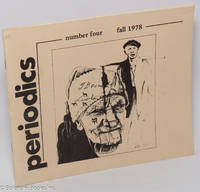
1978ref. 304036Vancouver: Paul de Barros & Daphne Marlatt 1978. Pamphlet. 80p. 8.5x7.25 inches landscape layout prose-poems fiction essays letters journal entries etc. illustrations very good booklet in stapled tan pictorial wraps. Paul de Barros & Daphne Marlatt unknown books
1936ref. 728071936 Ed. J. Ferenczi & Fils, Editeurs - coll. Police N° 144, 1936, 1 volume in-12 de 64 pages, broché.
1902pp. viii, 345 +Plus 16 plates of illustrations. 12mo. 200mm. Original publisher's full maroon cloth binding with gilt lettering and green, white, black, and light yellow cavalry officer decoration. Spine lettered in gilt. Cover color is good. Gilt is bright. Spine rubbed. Corners slightly bumped. Contents clean. Hardbound. Very Good. Richard Harding Davis (1864-1916) was an American journalist and writer of fiction and drama, known foremost as the first American war correspondent to cover the Spanish-American War, the Second Boer War, and the First World War. His writing greatly assisted the political career of Theodore Roosevelt. The illustrators here were among the most important and popular of the time. NW60
1904pp. x, 265 +Plus 6 leaves of plates. 12mo. 200mm. Original publisher's pictorial full maroon cloth binding lettered Stamped with Publisher's insignia in gilt. Top edge gilt. Spine lettered in gilt. Gilt is bright on cover but boards soiled and damp stained. Spine faded and slightly soiled. Some wear to base and head of spine. Corners bumped. Front hinge cracked. Richard Harding Davis (1864-1916) was an American journalist and writer of fiction and drama, known foremost as the first American war correspondent to cover the Spanish-American War, the Second Boer War, and the First World War. His writing greatly assisted the political career of Theodore Roosevelt. He also played a major role in the evolution of the American magazine. His influence extended to the world of fashion, and he is credited with making the clean-shaven look popular among men at the turn of the 20th century. Howard Chandler Christy (1872-1952) was an American artist and illustrator, famous for the "Christy Girl" - a colorful and illustrious successor to the "Gibson Girl" - who became the most popular portrait painter of the Jazz Age era. Manuscript ownership of 'Gay W. Good' on inside flyleaf. Contents clean. Hardbound. Good. NW62
1908pp. (v), 216 +Plus 6 plates of illustrations. 12mo. 210mm. Original publisher's full purple-blue cloth binding with gilt, white and green design depicting a mysterious woman. Spine lettered and decorated similarly in gilt. Cover color is good but gilt is mildly rubbed. Spine is heavily faded and soiled near head of spine. Corners slighty bumped. Ownership stamp on inside paste down 'Property of Mary Olivette' Contents clean. Hardbound. Very Good+. Richard Harding Davis (1864-1916) was a popular American war journalist and writer of fiction and drama. 'Vera' is a mystery with a spiritualism theme. Unusual and striking pictorial binding. BAL 4548. NW59
1908pp. (v), 216 +Plus 6 plates of illustrations. 12mo. 210mm. Original publisher's full purple-blue cloth binding with gilt, white and green design depicting a mysterious woman. Spine lettered and decorated similarly in gilt. Cover color is good. Gilt is bright. Spine faded. Corners slightly bumped. Contents clean. Hardbound. Very Good. A remarkable book by Richard Harding Davis (1864-1916), an American journalist and writer of fiction and drama, known foremost as the first American war correspondent to cover the Spanish-American War, the Second Boer War, and the First World War. His writing greatly assisted the political career of Theodore Roosevelt. NW60
ref. 086232825X.Gpaperback. Good. Access codes and supplements are not guaranteed with used items. May be an ex-library book. paperback
ref. 69218, Brepols, 2026 Hardback, 2 vols, 1000 p., 178 x 254 mm, Illustrations:32 col., 2 tables b/w., Language(s):English. *New . ISBN 9782503607153.
ref. 100-17528Consolidated Music Publishers Inc. Paperback. New. Consolidated Music Publishers, Inc paperback
ref. 0781453305.Gpaperback. Good. Access codes and supplements are not guaranteed with used items. May be an ex-library book. paperback
ref. REDDOZYXJ4LCDavid C. Cook Publishing Company. paperback. New. in x in x in. David C. Cook Publishing Company paperback
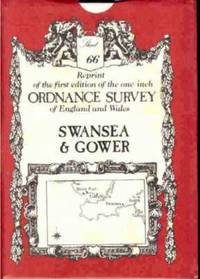
ref. 0715350676.Gmap. Good. Access codes and supplements are not guaranteed with used items. May be an ex-library book. unknown
ref. GOR007958856Paperback. Acceptable. paperback
ref. 0715344900.Gmap. Good. Access codes and supplements are not guaranteed with used items. May be an ex-library book. unknown
ref. 4773Roger et Chernoviz éditeurs, 1911. In-4, 302 pages, reliure d'editeur percaline rouge tres decorée , iconographie in texte , tranche doré, plats décorés ,toutes tranches dorées , parfait etat photos sur demande
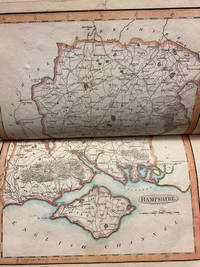
1804ref. 66958London: Darton and Baker 1804. 8vo.Map. Unpaginated with 46 double page maps. Recased with cloth spine and original card boards. Wear to the edges of the boards particularly the corners with fragment of original title label tipped to the front reading Atlas. Some pencil notes to the endpapers. Stain affecting the bottom edge of the leaves runs through the volume particularly affecting maps 25-29 and 34-41. Very Scarce title containing 46 hand coloured maps engraved by B. Baker OCLC records just a single copy at Cambridge. This copy lacks the Middlesex map which looks to be inserted later in this copy so perhaps a binders error. Only one auction recorded 45 years ago and that was lacking several maps. . Good. Cloth Spine. 1804. Darton and Baker 1804 hardcover
ref. 05692London No. 39 Strand: M. Darly 1771. The Birth of the English Fashion Caricature Ninety-Six Superb Hand-Colored Etchings of Macaronis Fashionable Ladies and Georgian Eccentrics An Exceptionally Rare Complete Set of Mary and Matthew Darly's Celebrated Caricatures 1771-1773 From the Library of Prince Henry Duke of Gloucester in a Magnificent Rivière Binding DARLY Mary and Matthew. 24 Caricatures by Several Ladies Gentlemen Artists &c. 1771. And Vol. II of Caricatures Macaronies & Characters by Sundry Ladies Gentlemen Artists &c. London: M. Darly 1772. And Vol. III of Macaronies Characters Caricatures &c. Design'd by the Greatest Personages Artists &c. London: M. Darly 1772. And Vol. IV of Macaronies Characters Caricatures &c. By M. Darly. London: M. Darly 1773. First editions. Four octavo volumes bound in two 8 3/4 x 5 1/2 inches; 222 x 140 mm. Four finely hand-colored decorative engraved titles one leaf of engraved introductory text in Volume I and ninety-six superb contemporary hand-colored etched plates twenty-four in each volume. All plates mounted on stubs and interleaved. Some very occasional mainly marginal spotting; a light stain in the lower blank margin of plate 12 in Volume I; plates 2 and 3 in Volume II and plate 8 in Volume III with expertly repaired marginal tears. The plates generally exceptionally fresh with brilliant contemporary coloring. An extraordinarily fine and complete set certainly the finest example we have encountered. Early twentieth-century dark brown morocco by Rivière & Son. Covers elaborately paneled in gilt enclosing a richly gilt central lozenge; spines with five raised bands elaborately decorated and lettered in gilt in compartments; gilt-ruled board edges and richly gilt turn-ins; all edges gilt; marbled endpapers. The armorial bookplate of Prince Henry Duke of Gloucester on the front pastedown of each volume. A magnificent set. An exceptionally rare complete set of the four original volumes of caricatures published by Mary and Matthew Darly between 1771 and 1773 comprising ninety-six brilliantly hand-colored etchings that constitute one of the most important early collections of English social and fashion satire. The present collection represents a landmark in the development of British caricature. Published at the height of the extraordinary macaroni craze of the 1770s these spirited and frequently outrageous portraits ridicule the fashions affectations pretensions and eccentricities of Georgian society. Their subjects include extravagantly dressed young men fashionable ladies military officers clergymen lawyers tradesmen and a remarkable assortment of recognizable London characters. The figures are generally presented individually against deliberately minimal backgrounds their identities and personalities established through exaggerated physiognomy extravagant costume distinctive gestures and carefully selected accessories. This deceptively simple formula was ideally suited to the satirical portrayal of the fashionable world and helped establish a visual language that would be developed to extraordinary effect by the succeeding generation of British caricaturists. The term macaroni originally referred to a fashionable young Englishman who had returned from the Grand Tour with an excessive enthusiasm for Continental manners dress and sophistication. By the early 1770s however it had acquired a distinctly satirical meaning describing a man whose devotion to fashion and personal ornament had supposedly carried him beyond the bounds of conventional masculinity and good taste. Enormous powdered hairstyles miniature hats elaborately embroidered coats slender swords and affected postures became the identifying characteristics of the macaroni. The Darlys seized upon this phenomenon with remarkable commercial and artistic success. Their caricatures transformed the extravagances of contemporary dress into a form of popular entertainment appealing both to those who recognized the individuals portrayed and to a wider public delighted by the absurdities of fashionable society. Although many of the plates depict the familiar macaroni figure the scope of the collection extends considerably further. Among the numerous subjects represented are The City Tonsor The Turf-Macaroni The Oxford-Macaroni The Female Connoisseur The Macaroni Auctioneer The Macaroni Chimney Sweep and The Macaroni Preacher. Such images provide an extraordinary pictorial record of Georgian occupations social distinctions and public amusements filtered through the exuberant imagination of the eighteenth-century satirist. Particularly noteworthy is the prominent participation of women in the production of these prints. Mary Darly was not merely the wife of a successful print-seller but an artist engraver publisher and entrepreneur in her own right. Her work represents an important early contribution by a woman to the development of British graphic satire and the title of the first volume expressly acknowledges the participation of both ladies and gentlemen in the creation of its designs. Mary Darly fl. 1756-1779 sometimes described as the mother of English pictorial satire occupied a central position in the flourishing London print trade of the mid-eighteenth century. Working with her husband Matthew Darly fl. 1741-1778 a designer engraver and print-seller she helped establish caricature as a distinct and commercially successful branch of British printmaking. Matthew Darly had already acquired considerable prominence through his publications on ornament and decorative design including his association with Robert Manwaring's The Chair-Maker's Guide and George Edwards's A New Book of Chinese Designs. His involvement with satirical prints extended back at least to 1749 when he was questioned by the authorities concerning the distribution of caricatures directed against the Duke of Cumberland. By the 1760s Mary Darly had emerged as a publisher of satirical prints and the couple's establishment at 39 Strand became an important center for the production and sale of fashionable caricatures. The Darlys encouraged designs from both professional artists and talented amateurs including members of fashionable society itself an approach reflected in the deliberately inclusive wording of their engraved title-pages. Among artists associated with the Darly publications were Henry William Bunbury James Sayers Edward Topham Sir Edward Newenham Elizabeth Bridgetta Gulston and others. The contributions of aristocratic and amateur designers gave these caricatures a particularly intimate relationship with the fashionable society they mocked. The popularity of the Darly caricatures was such that the series was subsequently reissued including in 1776. Mary Darly's advertisements promoted the collection with characteristic confidence as "the most entertaining Work ever published in Europe." Despite their considerable contemporary popularity complete collections of these early Darly caricatures are now exceptionally scarce. The prints were intended to be enjoyed circulated and collected and individual examples have survived far more frequently than intact volumes. Their vulnerability to dispersal together with the frequent removal of particularly desirable images makes the survival of all ninety-six plates in their original four-volume sequence especially remarkable. The present set is further distinguished by its remarkably vivid contemporary hand-coloring the freshness of its impressions its handsome early twentieth-century Rivière binding and its distinguished royal provenance. Provenance: Prince Henry Duke of Gloucester 1900-1974 third son of King George V and Queen Mary and younger brother of Kings Edward VIII and George VI; his crowned armorial bookplate lettered "GLOUCESTER" on the front pastedown of each volume. Rarity: Exceptionally scarce particularly complete in all four volumes. Earlier bibliographical research located only three institutional examples of Volume I Yale University the Harry Ransom Center at the University of Texas and the University of Virginia and three of Volume II Los Angeles County Museum of Art Harvard University and Princeton University. These holdings should be reconfirmed against current institutional catalogues; they are not evidence of a complete census of surviving sets. [London] No. 39 Strand: M. Darly, 1771 unknown books
ref. 05692London No. 39 Strand: M. Darly 1771. The Birth of the English Fashion Caricature Ninety-Six Superb Hand-Colored Etchings of Macaronis Fashionable Ladies and Georgian Eccentrics An Exceptionally Rare Complete Set of Mary and Matthew Darly's Celebrated Caricatures 1771-1773 From the Library of Prince Henry Duke of Gloucester in a Magnificent Rivière Binding DARLY Mary and Matthew. 24 Caricatures by Several Ladies Gentlemen Artists &c. 1771. And Vol. II of Caricatures Macaronies & Characters by Sundry Ladies Gentlemen Artists &c. London: M. Darly 1772. And Vol. III of Macaronies Characters Caricatures &c. Design'd by the Greatest Personages Artists &c. London: M. Darly 1772. And Vol. IV of Macaronies Characters Caricatures &c. By M. Darly. London: M. Darly 1773. First editions. Four octavo volumes bound in two 8 3/4 x 5 1/2 inches; 222 x 140 mm. Four finely hand-colored decorative engraved titles one leaf of engraved introductory text in Volume I and ninety-six superb contemporary hand-colored etched plates twenty-four in each volume. All plates mounted on stubs and interleaved. Some very occasional mainly marginal spotting; a light stain in the lower blank margin of plate 12 in Volume I; plates 2 and 3 in Volume II and plate 8 in Volume III with expertly repaired marginal tears. The plates generally exceptionally fresh with brilliant contemporary coloring. An extraordinarily fine and complete set certainly the finest example we have encountered. Early twentieth-century dark brown morocco by Rivière & Son. Covers elaborately paneled in gilt enclosing a richly gilt central lozenge; spines with five raised bands elaborately decorated and lettered in gilt in compartments; gilt-ruled board edges and richly gilt turn-ins; all edges gilt; marbled endpapers. The armorial bookplate of Prince Henry Duke of Gloucester on the front pastedown of each volume. A magnificent set. An exceptionally rare complete set of the four original volumes of caricatures published by Mary and Matthew Darly between 1771 and 1773 comprising ninety-six brilliantly hand-colored etchings that constitute one of the most important early collections of English social and fashion satire. The present collection represents a landmark in the development of British caricature. Published at the height of the extraordinary macaroni craze of the 1770s these spirited and frequently outrageous portraits ridicule the fashions affectations pretensions and eccentricities of Georgian society. Their subjects include extravagantly dressed young men fashionable ladies military officers clergymen lawyers tradesmen and a remarkable assortment of recognizable London characters. The figures are generally presented individually against deliberately minimal backgrounds their identities and personalities established through exaggerated physiognomy extravagant costume distinctive gestures and carefully selected accessories. This deceptively simple formula was ideally suited to the satirical portrayal of the fashionable world and helped establish a visual language that would be developed to extraordinary effect by the succeeding generation of British caricaturists. The term macaroni originally referred to a fashionable young Englishman who had returned from the Grand Tour with an excessive enthusiasm for Continental manners dress and sophistication. By the early 1770s however it had acquired a distinctly satirical meaning describing a man whose devotion to fashion and personal ornament had supposedly carried him beyond the bounds of conventional masculinity and good taste. Enormous powdered hairstyles miniature hats elaborately embroidered coats slender swords and affected postures became the identifying characteristics of the macaroni. The Darlys seized upon this phenomenon with remarkable commercial and artistic success. Their caricatures transformed the extravagances of contemporary dress into a form of popular entertainment appealing both to those who recognized the individuals portrayed and to a wider public delighted by the absurdities of fashionable society. Although many of the plates depict the familiar macaroni figure the scope of the collection extends considerably further. Among the numerous subjects represented are The City Tonsor The Turf-Macaroni The Oxford-Macaroni The Female Connoisseur The Macaroni Auctioneer The Macaroni Chimney Sweep and The Macaroni Preacher. Such images provide an extraordinary pictorial record of Georgian occupations social distinctions and public amusements filtered through the exuberant imagination of the eighteenth-century satirist. Particularly noteworthy is the prominent participation of women in the production of these prints. Mary Darly was not merely the wife of a successful print-seller but an artist engraver publisher and entrepreneur in her own right. Her work represents an important early contribution by a woman to the development of British graphic satire and the title of the first volume expressly acknowledges the participation of both ladies and gentlemen in the creation of its designs. Mary Darly fl. 1756-1779 sometimes described as the mother of English pictorial satire occupied a central position in the flourishing London print trade of the mid-eighteenth century. Working with her husband Matthew Darly fl. 1741-1778 a designer engraver and print-seller she helped establish caricature as a distinct and commercially successful branch of British printmaking. Matthew Darly had already acquired considerable prominence through his publications on ornament and decorative design including his association with Robert Manwaring's The Chair-Maker's Guide and George Edwards's A New Book of Chinese Designs. His involvement with satirical prints extended back at least to 1749 when he was questioned by the authorities concerning the distribution of caricatures directed against the Duke of Cumberland. By the 1760s Mary Darly had emerged as a publisher of satirical prints and the couple's establishment at 39 Strand became an important center for the production and sale of fashionable caricatures. The Darlys encouraged designs from both professional artists and talented amateurs including members of fashionable society itself an approach reflected in the deliberately inclusive wording of their engraved title-pages. Among artists associated with the Darly publications were Henry William Bunbury James Sayers Edward Topham Sir Edward Newenham Elizabeth Bridgetta Gulston and others. The contributions of aristocratic and amateur designers gave these caricatures a particularly intimate relationship with the fashionable society they mocked. The popularity of the Darly caricatures was such that the series was subsequently reissued including in 1776. Mary Darly's advertisements promoted the collection with characteristic confidence as "the most entertaining Work ever published in Europe." Despite their considerable contemporary popularity complete collections of these early Darly caricatures are now exceptionally scarce. The prints were intended to be enjoyed circulated and collected and individual examples have survived far more frequently than intact volumes. Their vulnerability to dispersal together with the frequent removal of particularly desirable images makes the survival of all ninety-six plates in their original four-volume sequence especially remarkable. The present set is further distinguished by its remarkably vivid contemporary hand-coloring the freshness of its impressions its handsome early twentieth-century Rivière binding and its distinguished royal provenance. Provenance: Prince Henry Duke of Gloucester 1900-1974 third son of King George V and Queen Mary and younger brother of Kings Edward VIII and George VI; his crowned armorial bookplate lettered "GLOUCESTER" on the front pastedown of each volume. Rarity: Exceptionally scarce particularly complete in all four volumes. Earlier bibliographical research located only three institutional examples of Volume I Yale University the Harry Ransom Center at the University of Texas and the University of Virginia and three of Volume II Los Angeles County Museum of Art Harvard University and Princeton University. These holdings should be reconfirmed against current institutional catalogues; they are not evidence of a complete census of surviving sets. [London] No. 39 Strand: M. Darly, 1771 unknown
ref. X7-WA2D-LVGNNew. unknown
1935ref. 721091935 in-12 broché - 1935 - 64 pages - Ed. Ferenczi & Fils, Editeurs - coll. Police et Mystère
ref. 69205, Brepols, 2026 Hardback, 312 pages, 156 x 234 mm, English text. *New.
1825ref. 434577Edinburgh : Daniel Lizars 1825. 1st edition. Hardcover. Good copy in marbled boards backed in gilt-blocked spine with raised bands. Covers and spine dust-toned bumped and rubbed as with age. Some foxing to the first and last pages. Previous owner's bookplate inside. Physical description; 302 p. ; 19 cm. Subjects; Macculloch John 1773-1835. Highlands and Western Isles of Scotland. Macculloch John. Highlands Scotland Description and travel. Western Isles Scotland Description and travel. Highland Region Scotland Description and travel. Edinburgh : Daniel Lizars hardcover
ref. 69217, Brepols, 2026 Hardback, 355 pages, 216 x 280 mm, Illustrations:5 b/w, 13 col., 1 tables b/w., Language(s):English. *New . ISBN 9782503597614.
ref. DADAX0945417853New unknown
Hardback with dusjacket, IX 502 pages., 46 b/w ill. 400 colour ill., 220 x 280 mm, Languages: French. ISBN 9782930054179. Contributions to the Study of the Flemish Primitives(CSFP 12) Until now, little was known about manuscript illumination in Hainault before the arrival of Simon Marmion at Valenciennes around 1458. This monograph intends to bridge that gap by highlighting the work of Marc Caussin, a Hainault miniaturist active in Valenciennes from the 1430s to the 1470s. An existing Cambrai missal paired with by a highly detailed contractual account has led to the attribution of fourteen manuscripts to Caussin. Alongside standard devotional books, Caussin illuminated more personalized commissions such as a copy of the Chroniques martiniennes for Philippe de Croy, count of Chimay. Caussin also worked for other renowned bibliophiles, the most illustrious being the Duke of Burgundy himself, Philip the Good. Caussin?s activity could be placed in context thanks to an abundance of archival sources. Some fifty documents give unique information concerning his family background and his professional network in Hainault and other cities in the southern Netherlands. Exploited for all the richness of their content, the manuscripts grouped around Marc Caussin have allowed us to reconstruct an artistic, social, religious and intellectual milieu about which very little was previously known.