Peeters PublishersBiblio.com

9939 resultados
ref. 9042929553.Gpaperback. Good. Access codes and supplements are not guaranteed with used items. May be an ex-library book. paperback
2005ref. 219361Peeters Publishers 2005. 1st. paperback. New. 0x0x0. Peeters Publishers paperback
2002ref. 219451Peeters Publishers 2002. 1st. paperback. New. 104x19x145. Peeters Publishers paperback
2012ref. 492421Peeters Publishers 2012. 1st. paperback. New. 0x0x0. Peeters Publishers paperback
2004ref. 219541Peeters Publishers 2004. 1st. paperback. New. 0x0x0. Peeters Publishers paperback
2009ref. 219581Peeters Publishers 2009. 1st. paperback. New. 0x0x0. Peeters Publishers paperback
1993ref. 219441Peeters Publishers 1993. 1st. paperback. New. 105x19x150. Peeters Publishers paperback
2003ref. Q-1592443230Wipf & Stock Pub 2003-09-01. Paperback. New. In shrink wrap. Looks like an interesting title! Wipf & Stock Pub paperback
ref. 1592443230.Gpaperback. Good. Access codes and supplements are not guaranteed with used items. May be an ex-library book. paperback
1792ref. 6504London: Robert Sayer & Co 1792. Mezzotints. A fine highly decorative pair of anonymous mezzotints. By the middle of the seventeenth century the bow was no longer considered a viable weapon of war in Europe although as late as 1808 Napoleon's army in Poland faced a force including 1500 archers on horseback. However Archery as a sport survived and prospered and a number of quite exclusive toxophilic societies were formed. Through the eighteenth and much of the nineteenth century archery enjoyed an enviable reputation as a genteel pursuit that both men and women could take part in with decorum. The present pair of plates depicts two archery matches: the first a men's match shows the four male contestants dressed in the uniform of their society. The central figure is just about to release an arrow at an unseen but clearly distant target. His companions stand around another stretched canvas target just behind the central bowman. The second image of a ladies' match shows four contestants all dressed in similar costume. The central figure standing behind one target draws her bow and looks to the distance where a man standing by the second target signals where her last arrow hit. Robert Sayer & Co unknown
1792ref. 6504London: Robert Sayer & Co 1792. Mezzotints. A fine highly decorative pair of anonymous mezzotints. By the middle of the seventeenth century the bow was no longer considered a viable weapon of war in Europe although as late as 1808 Napoleon's army in Poland faced a force including 1500 archers on horseback. However Archery as a sport survived and prospered and a number of quite exclusive toxophilic societies were formed. Through the eighteenth and much of the nineteenth century archery enjoyed an enviable reputation as a genteel pursuit that both men and women could take part in with decorum. The present pair of plates depicts two archery matches: the first a men's match shows the four male contestants dressed in the uniform of their society. The central figure is just about to release an arrow at an unseen but clearly distant target. His companions stand around another stretched canvas target just behind the central bowman. The second image of a ladies' match shows four contestants all dressed in similar costume. The central figure standing behind one target draws her bow and looks to the distance where a man standing by the second target signals where her last arrow hit. Robert Sayer & Co unknown books
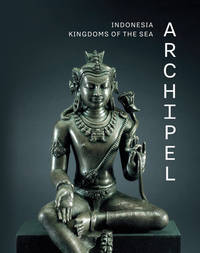
ref. BN389911Archipel Indonesia Kingdoms of the Sea Archipel Indonesia Kingdoms of the Sea Snoeck Publishers Belgium unknown
ref. 0876545886New. New. Satisfaction Guaranteed or your money back. unknown
ref. 0876545886.Gpaperback. Good. Access codes and supplements are not guaranteed with used items. May be an ex-library book. paperback
ref. 9056622021.Gpaperback. Good. Access codes and supplements are not guaranteed with used items. May be an ex-library book. paperback
ref. 47618Various publishers & dates. Extensive photographic archive documenting events on both sides of the U.S.-Mexico Border during the Mexican Revolution focused primarily on the Border Wars in Texas and the Veracruz Incident of 1914 comprised entirely of contemporary images all but a few of which are original vintage prints. The collection includes: • Sixty-one commercially-produced real-photo postcards ca. 14cm x 9cm or the reverse; • Six commercially-printed postcards using non-photographic processes same dimensions; • Three carte-de-visite portraits ca 9cm x 6cm mounted to cards; • Eight small-format photographs ranging from 14cm x 8cm to 11cm x 16cm of which three appear to be commercial images; • Three 8x10 20cm x 25cm photographic prints printed at some later date from original plates but apparently not contemporary; • One vintage 4x6 10cm x 16cm photograph mounted on board. All but a dozen or so images are captioned in the negative and most are additionally captioned in pencil in a later hand on verso. Approximately half the images include no photo credit; of those that do we have identified the following photographers: W.H. Horne D.W. Hoffman Walter P. Hadsell Van Zile & Chalk and L.O. She. Condition is generally Very Good. Two of the photo postcards are damaged with abrasions to significant portions of image area; the remainder show various degrees of edge wear aging and creasing but by and large image quality remains excellent. None of the postcards are postally used though a few include brief contemporary notes on verso. The refusal of Mexican President Porfirio Dîaz to cede power to his rival Francisco Madero in the elections of 1910 resulted in a violent large-scale revolt by campesinos and leftists setting off the thirty-year long Mexican Revolution. American involvement in the conflict began in 1911 when President William H. Taft under the guise of heightening border security moved to back Díaz against the rebels. The resulting mobilization - Taft sent more than 20000 American troops nearly a quarter of all American forces to the Mexican border with especially heavy concentrations in Texas and New Mexico - was to that date the largest mobilization of American military forces in peacetime. At the same time many Americans whose sympathies were not aligned with the Díaz dictatorship including anarchists wobblies Native Americans and more than a few soldiers of fortune went south to fight on the side of the rebels. The resulting border conflict which took place over nearly a decade occasionally pitting American insurrectos against American Federal troops resulted in thousands of Mexican and hundreds of American deaths. The Border Wars reached their climax around the period 1912-1914 which happened to coincide with a near-hysterical vogue for postcards among the American public. The result is that the Mexican Revolution is perhaps the first major armed conflict to have been extensively photo-documented in real time and certainly the first to have had a significant mass audience for that documentation. At least three hundred commercial photographers have been identified in association with the Mexican Revolution and they produced tens of thousands of images ranging from the relatively innocuous e.g. peaceful street and harbor scenes in Veracruz to the horrific lynchings and sidewalk cremations. This entire range of content is represented in the current collection along with portraits of most of the key players on the Mexican side including El Presidente Porfirio Díaz; his primary rival and successor Francisco Madero; Madero's successor by coup Victoriano Huerta; and various military figures including General Juan Navarro Felipe Angeles Ramírez and numerous others. Many of these semi-professional images though produced with commercial intent "professional" remains a guarded term in the context of what was essentially battlefield exploitation photography are valuable for their almost off-hand depictions of violent day-to-day life on the contested border including the casual destruction and acceptance of death from both sides that seemed to define this conflict. Of particular note are numerous of photographs of African-American troops the so-called "Buffalo Soldiers" as well as at least one image depicting Native American soldiers in uniform. Locales represented include Camp Grossmont in California; El Paso and Laredo in Texas and their cross-border sister cities Juarez and Nuevo Laredo; Veracruz site of the American incursion of 1914 known as the "Veracruz Incident"; and various unidentified encampments and battle sites in both Texas and Mexico. A wide-ranging and compelling photographic collection documenting not only a key period in U.S. military diplomacy - one which for better or worse set the tone for American-Mexican relations for the succeeding century - but also a tangible manifestation of the first widespread public incarnation in America of the picture-postcard as a vehicle for both propaganda and photojournalism. unknown
ref. 47618Various publishers & dates. Extensive photographic archive documenting events on both sides of the U.S.-Mexico Border during the Mexican Revolution focused primarily on the Border Wars in Texas and the Veracruz Incident of 1914 comprised entirely of contemporary images all but a few of which are original vintage prints. The collection includes: • Sixty-one commercially-produced real-photo postcards ca. 14cm x 9cm or the reverse; • Six commercially-printed postcards using non-photographic processes same dimensions; • Three carte-de-visite portraits ca 9cm x 6cm mounted to cards; • Eight small-format photographs ranging from 14cm x 8cm to 11cm x 16cm of which three appear to be commercial images; • Three 8x10 20cm x 25cm photographic prints printed at some later date from original plates but apparently not contemporary; • One vintage 4x6 10cm x 16cm photograph mounted on board. All but a dozen or so images are captioned in the negative and most are additionally captioned in pencil in a later hand on verso. Approximately half the images include no photo credit; of those that do we have identified the following photographers: W.H. Horne D.W. Hoffman Walter P. Hadsell Van Zile & Chalk and L.O. She. Condition is generally Very Good. Two of the photo postcards are damaged with abrasions to significant portions of image area; the remainder show various degrees of edge wear aging and creasing but by and large image quality remains excellent. None of the postcards are postally used though a few include brief contemporary notes on verso. The refusal of Mexican President Porfirio Dîaz to cede power to his rival Francisco Madero in the elections of 1910 resulted in a violent large-scale revolt by campesinos and leftists setting off the thirty-year long Mexican Revolution. American involvement in the conflict began in 1911 when President William H. Taft under the guise of heightening border security moved to back Díaz against the rebels. The resulting mobilization - Taft sent more than 20000 American troops nearly a quarter of all American forces to the Mexican border with especially heavy concentrations in Texas and New Mexico - was to that date the largest mobilization of American military forces in peacetime. At the same time many Americans whose sympathies were not aligned with the Díaz dictatorship including anarchists wobblies Native Americans and more than a few soldiers of fortune went south to fight on the side of the rebels. The resulting border conflict which took place over nearly a decade occasionally pitting American insurrectos against American Federal troops resulted in thousands of Mexican and hundreds of American deaths. The Border Wars reached their climax around the period 1912-1914 which happened to coincide with a near-hysterical vogue for postcards among the American public. The result is that the Mexican Revolution is perhaps the first major armed conflict to have been extensively photo-documented in real time and certainly the first to have had a significant mass audience for that documentation. At least three hundred commercial photographers have been identified in association with the Mexican Revolution and they produced tens of thousands of images ranging from the relatively innocuous e.g. peaceful street and harbor scenes in Veracruz to the horrific lynchings and sidewalk cremations. This entire range of content is represented in the current collection along with portraits of most of the key players on the Mexican side including El Presidente Porfirio Díaz; his primary rival and successor Francisco Madero; Madero's successor by coup Victoriano Huerta; and various military figures including General Juan Navarro Felipe Angeles Ramírez and numerous others. Many of these semi-professional images though produced with commercial intent "professional" remains a guarded term in the context of what was essentially battlefield exploitation photography are valuable for their almost off-hand depictions of violent day-to-day life on the contested border including the casual destruction and acceptance of death from both sides that seemed to define this conflict. Of particular note are numerous of photographs of African-American troops the so-called "Buffalo Soldiers" as well as at least one image depicting Native American soldiers in uniform. Locales represented include Camp Grossmont in California; El Paso and Laredo in Texas and their cross-border sister cities Juarez and Nuevo Laredo; Veracruz site of the American incursion of 1914 known as the "Veracruz Incident"; and various unidentified encampments and battle sites in both Texas and Mexico. A wide-ranging and compelling photographic collection documenting not only a key period in U.S. military diplomacy - one which for better or worse set the tone for American-Mexican relations for the succeeding century - but also a tangible manifestation of the first widespread public incarnation in America of the picture-postcard as a vehicle for both propaganda and photojournalism. unknown books
1959ref. 34336Weimar, Böhlau, 1959. 64 Seiten. Mit einer gefalteten Karte im Anhang. 4°. Halbleinen mit goldgeprägtem Rückentitel. Vorderdeckel etwas lichtrandig, Ränder minimal bestossen. Gutes Exemplar. 1. Aufl.
ref. M8266Bibliothèque Générale 59. IFAO Le Caire 2019. First edition. In-4 xiii & 279 pages. Original softcover as new. Language: French/Français. This book ships from Europe shipping costs will be updated accordingly BCI. Relevant subjects: Egypt: Travelers & Egyptologists Pyramids Tombs Temples & Towns. unknown
1954ref. 35388Zürich u. Stuttgart, Artemis Verlag, 1954. Broschur, 356 Seiten, 2 Bl. 8°. (minimal angerändert). Gutes Exemplar. 1. Aufl.
ref. 1885590199.Gpaperback. Good. Access codes and supplements are not guaranteed with used items. May be an ex-library book. paperback
2001ref. mon0000067513Collins 2001-03-05. Paperback. Very Good. 2.0305 in x 11.9289 in x 8.3756 in. SLIGHT DAMAGE TO COVER BUT INTERNAL CONTENTS EXCELLENT CONDITION Collins paperback
ref. GOR002451273Paperback. Acceptable. paperback
1915377 p. Plus frontis. Original publisher's full cloth pictorial binding in green. Cover stamped in gilt with color illustration, gilt on spine. Slight fading of spine. A clean and tight example. 8vo. 200mm. Hardbound. Very Good. NW66
1967ref. 58848Moscow Russia: Progress Publishers; Et Al. As New. Paperback. FREE UPGRADE to Courier/Priority Shipping Upon Request – – IN STOCK AND IMMEDIATELY AVAILABLE FOR SHIPMENT - AS NEW THE TEXT BLOCK IS PRISTINE CLEAN UNMARKED AND IN EXCELLENT CONDITION - - Text in English. 248 pp. With 244 ills. 67 col. . 18 x 15 cm. -- with a bonus offer-- . 1967. Progress Publishers; Et Al paperback