Laaksonen, Touko [Ill.]Antiquariat.de
912 résultats
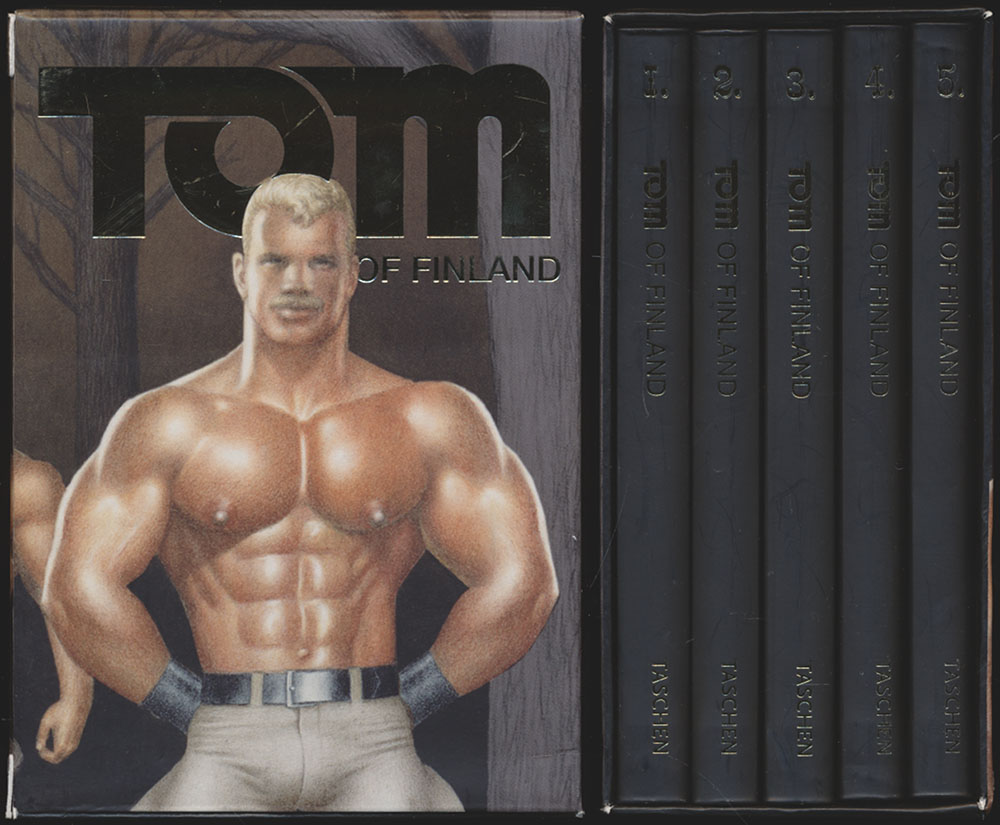
réf. 8797EBKöln, London, Los Angeles, Madrid, Paris und Tokyo, Taschen. Klein-8°. 15 x 11 cm. Unpaginiert. Original-Broschuren im Original-Pappschuber.
1978Features: Campari ad features photos of Steve Gibson, Joan Gringer, Mort Goldstein, Lea McIntyre, Jeff Landis, Iby Korody, John Gray, Greta Westfall, and James Barker; The Dionne Years - Looking back on the almost mythic 1930s birth and upbringing of the Dionne quintuplets - article with great photos; An Affectionate look back at comic artist Tad [T.A.] Dorgan; Nice color-photo ad for the Buick Electra (blue coupe); Is the S.E.C. Selling Wall Street Short?; Vantage cigarette ad features impression of Mike Barbano of Atlanta; Treasures of Pompeii - Unearthed artifacts are on tour; Aesthetic realism Foundation ad lists the names of 57 men and woman who have converted from homosexuality; Getting On a Good Footing - What experts say about foot problems, many of which have been brought on by jogging; Hair Today, Gone Tomorrow - Beauty tips; Wiener Backhendl recipe; Fashion photos of dresses and "vests with a view"; Many ads for summer camps; and more. 104 pages. Excellent color and black and white photo reproductions including fabulous fashion ads, and more. Faint school stamp upon front cover. Light wear. A quality vintage copy. Book
1965Features: Ambush - the Vietcong are having great success with it - a reporter describes how it works and the attempts to counter it; Is homosexuality a crime? - Britain grapples with the issue; How Hitler's War ended for a German Boy - Hans-Jurgen Stueck's experience; The loneliness of Kwame Nkrumah , the President of Ghana; A Fantasy that Paid Off - Disneyland is 10 years old this summer. Unmarked. Average wear. A sound copy. Book
1896réf. 124891896 P;, Georges Carré, éditeur, 1896, 1 vol. in-8 (255 x 160) reliure de l'époque 1/2 percaline verte à la Bradel, pièce de tiitre en maroquin noir, fleuron et date en queue dorés, plats de papier "oeil de chat", de (2) ff. (faux-titre et titre) - 372 pp.Bords de la pièce de titre légèrement accidentés, coins émoussés, papier jauni, bel exemplaire par ailleurs.
1879réf. 125653Paris Cinqualbre 1879 1 vol. relié in-4, demi-chagrin brun, dos à nerfs, tête dorée, couvertures parcheminées conservées, non rogné, VI + 386 pp. Edition originale de cette évocation épique de la tradition au XIXème siècle des lutteurs de foires et d'arènes dans le midi de la France. Etonnante et remarquable illustration par Rodolphe Julian comprenant 7 vignettes et 16 belles eaux-fortes hors-texte qui magnifient la sensualité des corps virils. C'est, selon notre confrère Jacques Desse, l'un "des sommets de l'iconographie homophile" (Catalogue "Archives gaies" chez les Libraires Associés). Quelques rousseurs éparses. Très bon exemplaire en reliure de l'époque. Vicaire, II, 404.
1879réf. 125653Paris Cinqualbre 1879 1 vol. relié in-4, demi-chagrin brun, dos à nerfs, tête dorée, couvertures parcheminées conservées, non rogné, VI + 386 pp. Edition originale de cette évocation épique de la tradition au XIXème siècle des lutteurs de foires et d'arènes dans le midi de la France. Etonnante et remarquable illustration par Rodolphe Julian comprenant 7 vignettes et 16 belles eaux-fortes hors-texte qui magnifient la sensualité des corps virils. C'est, selon notre confrère Jacques Desse, l'un "des sommets de l'iconographie homophile" (Catalogue "Archives gaies" chez les Libraires Associés). Quelques rousseurs éparses. Très bon exemplaire en reliure de l'époque. Vicaire, II, 404.
1950réf. 0021741950 Une page et demi (135 X 208 mm).
1952réf. 3406Paris Société des Amis du livre moderne 1952 in-4 en feuilles Paris, Société des Amis du livre moderne, 1952. 33,5 x 26 cm, in-4, XVII (I), 169 (4) pp., 54 lithographies originales en noir dont 10 à pleine page et 1 à double page, en feuilles sous couverture blanche rempliée portant le titre lithographié en vert, chemise et étui.
1786réf. 46404051Paris, Barrois, 1786 ; in-8, demi-toile. (Reliure du XIXe). 1 f., V pp., (1) p., 295 pp., (1) p.ÉDITION ORIGINALE de la traduction de Henri Jansen (La Haye 1741 - Paris 1812) qui fut d’abord libraire à Paris, puis bibliothécaire de Talleyrand.Ce recueil contient plusieurs textes considérés comme le fondement de l’archéologie moderne : Réflexions sur l’imitation des artistes grecs dans la peinture et la sculpture, Réfléxions sur le sentiment du Beau dans les ouvrages de l’Art et sur les moyens de l’acquérir. Ces dernières sont adressées à Friedrich von Berg, beau jeune homme blond de vingt-cinq ans en qui Winckelmann voyait incarné la beauté grecque et à qui il écrivit des lettres pasionnées. Jansen donne aussi dans ce recueil : La lettre adressée à Wincklemann au sujet des Réflexions sur l’imitation des artistes grecs, Description de deux momies du Cabinet Electoral d’Antiquités à Dresde, Eclaircissements sur les Réflexions sur l’imitation des artistes grecs pour servir de réponse à un lettre sur ces réflexions, réponse pleine d’érudition, mais dénuée de persiflage, et De la Grâce dans les ouvrages d’art.Les deux premiers traités sont une apologie du corps masculin, idéalisé par la sculpture gréco-romaine. Rappelons que Winckelmann fut assassiné à Trieste par un jeune voyou qu’il avait entraîné dans son hôtel. Michel Larivière dans Homosexuels célèbres cite la phrase de Goethe dans l’essai qu’il consacré à Wincklemann : “Jamais, il ne m’a semblé plus vif et plus charmant que dans les instants où nous le trouvons en relation avec de beaux jeunes garçons” en acceptant la théorie selon laquelle seuls ceux qui sont émus par le nu masculin peuvent apprécier l’art antique.
réf. awd-1059Affiche originale d’une projection à La Pagode de ce film du cinéaste brésilien Alberto Cavalcanti, imprimée en rose et noir sur papier blanc par Richier-Laubier. Pliure centrale sans gravité (38/60,4 cm).t
1932réf. 46401903Paris , Ferenczi, 1932 ; in-12, demi-chagrin prune, coins, tête dorée, non rogné, couverture et dos. (Rel. de l’époque). 249 pp., 1 f.ÉDITION ORIGINALE. Ce roman “un livre manifestement difficile à écrire, mais que Colette réussira avec un tact étonnant” Pichois. parut d’abord en feuilleton dans l’hebdomadaire Gringoire à partir du 4 dec. 1931 ; la publication en sera brusquement interrompue le 25 dec. Le directeur H. de Carbuccia, avertit l’auteur que texte déplaisait à son public et qu’il le coupait purement et simplement. Colette voulut le poursuivre en justice, puis renonça. Le texte complet parut chez Ferenczi. L’ouvrage analyse avec beaucoup de compréhension les amours homosexuelles. Le livre reparaitra ensuite sous le titre Le Pur et l’Impur. “C’est le plus difficile de ses livres, et le plus nouveau. Je doute qu’on ait écrit sur les sens, et singulièrement le sexuel, sur leur souveraineté et leur tristesse, rien de si pénétrant” Maurice Gondeket. UN DES 80 EXEMPLAIRES SUR HOLLANDE VAN GELDER. Pour la genèse, les tribulations éditoriales et les variantes de ce texte, voyez les importantes notes dans les Oeuvres de Colette Pléiade. Édition Pichois 1991 - tome III pp. 1501-1583.
réf. 94126Paris, Aux Editions du Baniyan, 1960, 1 volume in-4 de 295x235 mm environ, 220 pages, en feuillets libres sous chemise rempliée et emboîtage de l'éditeur. Exemplaire N° 30/490, un des 75 exemplaires sur Rives, numérotés de 16 à 90, auxquels on a joint deux suites des gravures, l'une en bistre et l'autre en noir. Pointes sèches originales de G. Barret. Etui légèrement insolé avec petit accroc, sinon bon état.
1909réf. AMA-543Paris, Grasset, 1909. in 12, demi-chagrin chocolat à 5 nerfs, filet à froid sur les plats, tête dorée, couverture et dos conservés, ex-libris, envoi. 210 pp.-(1)f.
réf. 21211[Alès, PAB], 1973. In-12, non paginé, en feuilles, couverture originale imprimée.
réf. L15490Amsterdam, 1946. In-8 en feuilles. 5 dessins présentés par Jean Boullet (Marrakech 1946). E.O. Petit tirage. Édition numérotée hors commerce.
1910réf. 2537AOhne Ort u. Verlag [d.i. Paris, J. Chevrel], (1910). 8°. 140 S. mit zahlreichen Illustrationen im Text von van Maele. HMaroquin d. Zt. auf 5 Bünden mit goldgepr. RTitel und Kopfgoldschnitt. Die Orig.-Broschur mit eingebunden.
1932réf. 5370AParis, ohne Verlag, 1932. Gr.8°. 91 S. und 18 erotische Steinzeichnungen auf Tafeln. Orig.-Broschur.
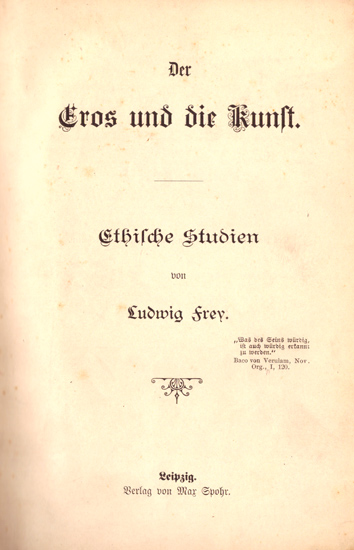
1896réf. 3784BLeipzig, Max Spohr, o.J. [1896]. 8°. 1 Bl., 354 S. Priv. HLeinen (um 1920) mit goldgepr. RTitel.
1979réf. 1046541979 7 N°0: Paris, Editions du Triangle, février 1979, 301x213mm, 4p., plié non coupé. Numéro gratuit.N°1, Paris, Editions du Triangle, avril 1979, 301x213mm, 16p., en feuilles. Mensuel prix 5 francs.(104654)
1979réf. bj1612Tartas Pierre de Sélection Abraxas-libris Livre en feuillets 1979 In-folio (29x39 cm), ouvrage en feuillets sous couverture argentée imprimée à froid (et représentant les portes de la prison) et sous emboîtage, chaque page est dans un ton ocre vert et propose une impression de murs de prison en fond, le poème d'Oscar Wilde est illustré de compositions originales de Bernard Locca ; notre exemplaire (n°77), signé par l'artiste et l'éditeur, comporte une suite des 5 doubles planches tirées sur grand vélin d'Arches et signées par l'artiste. Bien complet de la planche double supplémentaire inédite ; excellent état pour ce rare ensemble. Livraison a domicile (La Poste) ou en Mondial Relay sur simple demande.
1985réf. 237841985. Mexican crime journalism and the representation of homosexuality in Denuncia! comic archive of 6 issues 1970s to 1990 documenting the language through which a mass market weekly associated homosexual men with murder sexual transgression jealousy sadism and social danger during the first decade of the AIDS crisis. Published in Mexico City by 4 Editores Denuncia! combined lurid painted covers with illustrated crime narratives and editorials that presented individual cases as warnings about wider social conditions. Several issues here make homosexuality central to that formula: "Homosexuales muertos a puñaladas" converts the stabbing deaths of homosexual men into spectacle while other editorials explicitly place homosexual behavior beside bloodshed sexual violence and "sadismo." The issues appeared as Mexico's homosexual liberation movement was confronting both older forms of police and social repression and the new stigmatization produced by HIV/AIDS which scholarship has identified as reinforcing public associations between homosexuality pathology and deviance during the mid 1980s. Archive of six issues of Denuncia! Mexico City: 4 Editores 1970s to 1990 illustrated throughout with painted color covers and black and white comic style interior narratives. 1 Denuncia! Año 8 No. 410 June 10 1985. "Pandillas Infernales." The editorial condemns urban gangs as an expression of social disorder while the illustrated feature stages male violence through street confrontation and the language of delinquency. 2 Denuncia! Año 9 No. 469 July 28 1986. "Ambiciosa Traidora." Its editorial frames a woman's sexual and economic ambition as a moral problem while the cover story participates in the magazine's recurring treatment of sexuality betrayal and violence as interconnected forms of transgression. 3 Denuncia! Año 9 No. 475 September 8 1986. "Celos Asesinos." The editorial declares jealousy the cause of repeated tragedy and the illustrated story dramatizes intimate violence through the figure of the jealous woman. 4 Denuncia! "Homosexuales Muertos a Puñaladas." Año 2 No. 55 1970s. The issue places the murder of homosexual men at the center of its illustrated crime narrative the opening page reproducing a newspaper headline dominated by the word "HOMOSEXUALES." The framing identifies the victims first through sexual identity and then through the violence inflicted upon them preserving the vocabulary by which homosexuality itself could become part of the sensational content of a murder story. 5 Denuncia! "Amores Pervertidos." Año 2 No. 139 1970s. The editorial states that political literature has studied "numerosos hechos de sangre ejecutados por homosexuales" and describes violence and "sadismo" as characteristic of these crimes. Its illustrated opening labels the subject "AMORES PERVERTIDOS" converting same sex desire into a category of criminal and sexual abnormality rather than treating homosexuality as incidental to the case. 6 Denuncia! Año XIII No. 658 March 12 1990. "Sensualidad Maldita." The editorial warns that "Los seres débiles y enfermizos deben ser tratados con cuidado y sensibilidad" presenting emotional or sexual vulnerability through a language of sickness and instability. The issue extends the magazine's continuing mixture of sexuality danger moral judgment and violent consequence into the opening year of the 1990s. The six issues span a consequential period in the public history of homosexuality in Mexico. Organized homosexual liberation had become publicly visible by the late 1970s with Mexico City's first homosexual pride march held in 1979 and activist print networks circulating political arguments sexual health information international news and representations of homosexual life outside the categories supplied by mainstream media. By the middle of the following decade gay social and commercial spaces were increasingly visible in Mexico City and contemporary cultural listings advertised gay discos and travesti performances; one 1985 newspaper account described homosexuals as gaining new public spaces despite the persistence of sex based marginalization. HIV/AIDS simultaneously altered that trajectory. Scholarship on the Mexican movement identifies 1984 as the beginning of a period of diminished visibility in which the epidemic intensified the public association of homosexuality with illness and reinforced older ideas of sexual perversity and pathological nonconformity. Moderate wear to covers rubbing creasing edge and spine wear toning scattered staining small tears and losses and occasional markings or labels; bindings remain intact and interior text and illustrations generally legible. Overall good condition. Six issues documenting how Mexican popular crime publishing framed homosexuality through violence pathology moral judgment and sexual sensationalism during the same decade in which homosexual activists were constructing a competing public language of liberation community health and rights. unknown
1985réf. 237841985. Mexican crime journalism and the representation of homosexuality in Denuncia! comic archive of 6 issues 1970s to 1990 documenting the language through which a mass market weekly associated homosexual men with murder sexual transgression jealousy sadism and social danger during the first decade of the AIDS crisis. Published in Mexico City by 4 Editores Denuncia! combined lurid painted covers with illustrated crime narratives and editorials that presented individual cases as warnings about wider social conditions. Several issues here make homosexuality central to that formula: "Homosexuales muertos a puñaladas" converts the stabbing deaths of homosexual men into spectacle while other editorials explicitly place homosexual behavior beside bloodshed sexual violence and "sadismo." The issues appeared as Mexico's homosexual liberation movement was confronting both older forms of police and social repression and the new stigmatization produced by HIV/AIDS which scholarship has identified as reinforcing public associations between homosexuality pathology and deviance during the mid 1980s. Archive of six issues of Denuncia! Mexico City: 4 Editores 1970s to 1990 illustrated throughout with painted color covers and black and white comic style interior narratives. 1 Denuncia! Año 8 No. 410 June 10 1985. "Pandillas Infernales." The editorial condemns urban gangs as an expression of social disorder while the illustrated feature stages male violence through street confrontation and the language of delinquency. 2 Denuncia! Año 9 No. 469 July 28 1986. "Ambiciosa Traidora." Its editorial frames a woman's sexual and economic ambition as a moral problem while the cover story participates in the magazine's recurring treatment of sexuality betrayal and violence as interconnected forms of transgression. 3 Denuncia! Año 9 No. 475 September 8 1986. "Celos Asesinos." The editorial declares jealousy the cause of repeated tragedy and the illustrated story dramatizes intimate violence through the figure of the jealous woman. 4 Denuncia! "Homosexuales Muertos a Puñaladas." Año 2 No. 55 1970s. The issue places the murder of homosexual men at the center of its illustrated crime narrative the opening page reproducing a newspaper headline dominated by the word "HOMOSEXUALES." The framing identifies the victims first through sexual identity and then through the violence inflicted upon them preserving the vocabulary by which homosexuality itself could become part of the sensational content of a murder story. 5 Denuncia! "Amores Pervertidos." Año 2 No. 139 1970s. The editorial states that political literature has studied "numerosos hechos de sangre ejecutados por homosexuales" and describes violence and "sadismo" as characteristic of these crimes. Its illustrated opening labels the subject "AMORES PERVERTIDOS" converting same sex desire into a category of criminal and sexual abnormality rather than treating homosexuality as incidental to the case. 6 Denuncia! Año XIII No. 658 March 12 1990. "Sensualidad Maldita." The editorial warns that "Los seres débiles y enfermizos deben ser tratados con cuidado y sensibilidad" presenting emotional or sexual vulnerability through a language of sickness and instability. The issue extends the magazine's continuing mixture of sexuality danger moral judgment and violent consequence into the opening year of the 1990s. The six issues span a consequential period in the public history of homosexuality in Mexico. Organized homosexual liberation had become publicly visible by the late 1970s with Mexico City's first homosexual pride march held in 1979 and activist print networks circulating political arguments sexual health information international news and representations of homosexual life outside the categories supplied by mainstream media. By the middle of the following decade gay social and commercial spaces were increasingly visible in Mexico City and contemporary cultural listings advertised gay discos and travesti performances; one 1985 newspaper account described homosexuals as gaining new public spaces despite the persistence of sex based marginalization. HIV/AIDS simultaneously altered that trajectory. Scholarship on the Mexican movement identifies 1984 as the beginning of a period of diminished visibility in which the epidemic intensified the public association of homosexuality with illness and reinforced older ideas of sexual perversity and pathological nonconformity. Moderate wear to covers rubbing creasing edge and spine wear toning scattered staining small tears and losses and occasional markings or labels; bindings remain intact and interior text and illustrations generally legible. Overall good condition. Six issues documenting how Mexican popular crime publishing framed homosexuality through violence pathology moral judgment and sexual sensationalism during the same decade in which homosexual activists were constructing a competing public language of liberation community health and rights. unknown books
1973réf. 10998Paris, Flammarion, 1973. Grand in-8 de [2]-153-[5] pages, demi-maroquin caramel à coins, dos (passé) à nerfs, tête dorée, couvertures et dos conservés. La reliure est signée M. Cornu.
réf. 11735An. Girard, éditeur (pour les disques « Columbia). Sans date. [1934]. Plaquette grand in-8° carrée, agrafée. 12 pages. 9 photographies, tirées en héliogravure, in et hors texte, de Damia par Germaine Krull. E.O. (pas de grand papier). Légères traces de pliures ; bon état. Rare. /// Notre catalogue " Henri Béraud " est disponible sur simple demande.
1954TWO UNPUBLISHED SIGNED LETTERS, ONE FROM FBI DIRECTOR J. EDGAR HOOVER AND ONE FROM FBI ASSISTANT DIRECTOR CLYDE TOLSON, DOCUMENTING THEIR SHARED PERSONAL LIFE. ***** The first letter is from J. Edgar Hoover, on his exclusive FBI director letterhead, to close personal friend Marie Zografos, widow of George Zografos (who had been the catering manager at the St. Moritz Hotel in New York.) In this letter, dated April 24, 1954, Hoover thanks Zografos--quite poetically--for her Easter card. Signed "Edgar" in his characteristic blue ink. ***** The second letter is from Clyde Tolson, the assistant director and Hoover's partner (in every sense, apparently), on his personal letterhead. It is dated February 28, 1955 and addressed to Marie's sister, Beulah Wagner, and offers condolences upon Marie's death. It is signed "Clyde", also in blue ink. IT COMES WITH THE ORGINAL ENVELOPE, FROM THE OFFICE OF THE DIRECTOR (!). UNIQUE DOCUMENTATION, IN PERFECT CONDITION.