Laura SimpsonMareMagnum
Arthur BertschiLivre Rare Book
Escales du bonheur Poèmes
1934ref. CC526Lausanne 1934 In-8° de 44 pp., Accompagné d'un envoi et d'un ex-libris

Aux Vieux livres de Gustave · Thonon les bains, Francia25,00 €
1790 resultados
1870Manuscript commonplace book created at the York House - where Charles Dickens reputedly wrote some of his novels - by a woman called Laura Simpson, daughter of Malton solicitor Alfred Simpson, Esq., who was also appointed Bailiff of the Borough of Malton in 1856 by 6th Earl Fitzwilliam, owner of the York House, the most important historic house in Malton. Miss Laura signs and dates the front endpaper on 30 August 1872, and again to its verso on 2 February 1873, though dated entries range from 1870 to 1875. 8vo. 68 pages featuring manuscript entries and newspaper clippings of various subject matters. Quarter calf over brown and yellow marbled boards. Volume measures approximately 16,5 x 19,5 cm. Very good condition. The volume was created by a young woman who evidently lived at York House in Malton which has an interesting connection to Charles Dickens from only twenty-five years earlier. Her father having close ties with the owner of the Fitzwilliam Malton Estate, it is quite conceivable that he met or knew the great author personally. Laura Simpson is the daughter of Alfred Simpson, Esq., a solicitor, Chairman of the Malton Burial Board, and Bailiff of the Borough of Malton, whose residence was at Yorkersgate, presumably being a tenant of the York House owing to the Simpson-Fitzwilliam family connection through an earlier marriage. York House is an impressive 17th century home in Malton where Charles Dickens reputedly wrote many of his novels, where he certainly found inspiration for some of his characters. The reason for Charles Dickens' association with Malton, and York House in particular, was his long friendship with Charles Simpson, solicitor. The Smithson family had their offices on Chancery Lane in Malton and they also shared a practice in London. The death of Charles Simpson's father in 1829, had necessitated his brother Henry to return to Malton and take over the family business, whereas Charles remained in London. It is whilst residing in London that Smithson & Dickens met. Thomas Mitton, a friend of Dickens had persuaded him to act as surety on a loan to purchase a one-third stake of Smithson & Dunn. In 1840, Henry followed his father and brother John to his grave. Charles was compelled to leave London and take over both the Chancery Lane practice and the duties of the town Bailiff previously carried out by his father and brother. Dickens visited Malton often in the 1840s. He delighted audiences with his readings wherever he went. He read in Malton, in what was said to be a theatre, on one of his visits. Manuscript
1835The original joint manuscript travel diary, from 1835 to1840, of Mr. and Mrs. Hermann and Adelheid Garlichs, who settled in America and became founders of the Evangelical congregations. 8vo. 50 pages in manuscript. In addition, inversely there are 18 pages in manuscript by the same two writers, the first entry with a date as early as 1796 and possibly made by Adelheid's mother. The center of the volume contains 6 pages of recipes written by a family member in 1873, the year of Adelheid's death. All text is in German. Black paper boards, with floral cameo surrounding Adelheid's initials A.v.B. and the year 1835 tooled in gilt to front. With the stamp of the Steinlacke von Borries family library to front pastedown. Volume measures approximately 20 x 17,5 x 1 cm. Some wear to boards, otherwise in very good condition, an important primary source account of emigration to Missouri. Hermann Garlichs (1807-1865) was a German theologian and pastor, first arriving in America in 1833. He founded the first Protestant congregations west of the Mississippi and was the first president of the "German Evangelical Church Association of the West" in the USA. He was married to Adelheid von Borries. The couple's life became the subject of emigration research. In Anglo-Saxon literature, his name is sometimes seen as to Herman Garlichs, or Garlich. He grew up in Bremen in a wealthy Protestant family home, his father being a merchant. After completing his doctorate in philosophy, he was employed as an educator on the Steinlake estate of the district administrator C. L. Philip of Borries, and fell in love the administrator's daughter of the house, Adelheid von Borries (1815-1873). In 1833, when Garlichs was invited to go to America, miss Borries was only 16. As such, he emigrated there without her, but with Meller and Westerkappelner emigrants. Garlichs was inspired by Gottfried Duden's well-known descriptions of the good conditions in Missouri at that time. Duden was a Prussian lawyer who visited St. Louis, Missouri, in 1824 in search of land tracts for German settlements. Both Duden and his traveling companion, Ludwig Eversmann, purchased farms about fifty miles west of St. Louis. Duden spent nearly three years in the United States, reading, exploring the country, and writing letters while the Americans that he hired cleared his land and ran his farm. Duden returned to Germany in 1827. The result of this experiment was Report on a Journey to the Western States of North America [Bericht u¨ber eine Reise nach den westlichen Staaten Nordamerika's], which was published in Germany in 1829 to convince Germans to immigrate to Missouri. Duden described the advantages of moving to Missouri, and further provided advice on how to successfully create a new life in the United States. Duden's book was one of a large number of German books about America, but his was one of the most widely read. Germans faced many problems at home, including corrupt rulers, high taxes, and a lack of available land, thus Duden's account of the spacious expanse of Missouri plains sound very enticing to his fellow countrymen. Together with a few other missionaries who would become notable in the history in America, he made the voyage and settled in Missouri. Garlichs founded the first Protestant congregations west of the Mississippi in 1833 before he was ordained, i.e. as a lay preacher, in the small towns of Femme Osage and St. Charles. Originally known as the Deutsche Evangelische Kirchegemeinde, it was the first Evangelical congregation west of the Mississippi River. It still stands today, and has two church cemeteries, the first dating back to the 1830's and located next to the present-day school. Femme Osage was the mother-church for six other congregations: Friedens (St. Charles, 1834), Harmonie (Warrenton, 1842), St. Peter (Washington, 1844), Immanuel (Holstein, 1839), St. John (Cappeln, 1857), and Bethany (Schluersburg, 1844). In 1835 Hermann Garlich returned to Westphalia, married Adelheid von Borries, and was ordained a priest in Bielefeld. He subsequently went back to Femme Osage with his new wife. Unlike most immigrants to Missouri at the time, in 1835 the Garlichs travelled to America as privileged passengers. Apart from the expected rough seas now and again, and Adelheid missing her family, the voyage was a pleasant one. The newlywed couple had a first class room, and dined with the captain. The ship carried only 119 passengers. They reported that the ship was supplied with 100 chickens, 2 pigs, 2 geese, pigeons and ducks for fresh meat. Adelheid studied English and discussed theology with her husband. Hermann entertained the other passengers by playing the violin. Their joint diary records a theatrical performance by the steerage passengers. Initially, the couple, like the other settlers, lived in very simple conditions in a wooden hut five miles from the town. The more elaborate Garlichs house, at Femme Osage, St. Charles County, MO, is now listed as a Historic American Building. Hermann Garlichs is buried at Green-Wood Cemetery in Kings County, Brooklyn, New York. He died at the young age of 58. The famed but elusive original volume - this is the joint diary of Hermann Garlichs and his wife Adelheid, made in their original hands, describing the voyage overseas, their arrival in America, settling in the unmissionized wilds of Missouri in hopes of a better life, and glimpses of daily life as it was for their first five years as founding evangelists in this vast land of opportunity and hope.
1813Manuscript letter by Sir Richard Croft, Physician to King George III and the Royal Family, accoucheur (obstetrician), and British peer, describes complications of a pregnancy four years before the "triple obstetrical tragedy" Princess Charlotte which has become his unfortunate infamy. 8vo. 2 pages in manuscript. Double leaf measuring approximately 12 x 18,5 cm, watermarked with the year 1811, with integral address, two postal ink stamps and a lovely red wax seal. Very faint age-toning only to sections of the leaf exposed for mailing, otherwise in very good condition, beautifully preserved and highly relevant to the writer's occupation as a manmidwife and the complications of pregnancy and birthing in the early nineteenth century. "Sir Richard Croft (1762-1818) physician and man-midwife gained notoriety after his involvement in the labor of Princess Charlotte, which resulted in her death. He never shook off the shame of the tragedy, and shot himself three months later." (Oxford DNB). Manuscript signed letter from the Royal Physician and Male Midwife to the late Princess Charlotte, Sir Richard Croft, who is remembered for causing the "Triple Obstetrical Tragedy" of 1817, in which is a primary source account of early nineteenth century complications and precepts surrounding pregnancy and child deliveries. The writer is Sir Richard Croft, 6th Baronet (9 January 1762 - 13 February 1818), English physician to the British Royal Family and the obstetrician to Princess Charlotte, who is famed for his role in "the triple obstetrical tragedy" of her death in 1817. He received his medical training from, among others, his father-in-law, Dr. Thomas Denman, a preeminent obstetrician in London whose textbook on childbirth had been first published in 1788. He graduated with his MD from the University of Oxford in 1789. Croft was appointed the personal physician of King George III. He was also a member of the Medical and Chirurgical Society of London, and Physician to the Lying-in Charity on Old Burlington Street. He was the primary accoucheur or midwife to Princess Charlotte, granddaughter of the reigning King George III. Manuscript
1704Manuscript leaf introducing an early work of translation by a Franciscan Friar of the Third Order, hand painted in full colour and featuring fascinating symbolism. Text is in Latin. Leaf measures approximately 34 x 49 cm. One soft fold, minor age-toning, otherwise in very good condition, a beautifully preserved hand painted document made at the turn of the 18th century. The present document suggests that as membership of the Franciscan Third Order grew rapidly, and no formal papal education was being received by those preaching in the streets, there was a need for some form of instruction or guidance. As such, some of the key and simple canonical documents began being written for the laymen/women to understand the principles. The symbolism features intimation of anti-slavery. Purposed with works of teaching the gospel, providing charity, and social well-being for the public, early members of the Franciscan Third Order were a community focused on truth and humility, striving to emulate Christ and model a pure life. The symbolism in the manuscript illustration of the present document is fascinating and enlightening, in particular the focal image top and center. This is an armorial motif depicting slavery, rather the Catholic church's purported desire to slavery. Unlike the standard Moor's head seen in the papal coat of arms seen since early days, the imagery here features an African tribal warrior chief, all seen but his legs, with a confident stance and holding a spear up high in declaration; this is drawn inside of a gold shield topped with the pope's mitre simplex headdress. As a whole, this could be interpreted as the Franciscan Third Order's support to abolish slavery. Some of the more common instances of symbolism are the red ribbons to signify the Blood which Christ, and the laurel leafs in a circular placement as in the ancient Greek custom of symbolising victory, honor, and peace, in this case being victory over sin, honor to the Holy one, and peace on earth. There are also two large gilt fleur-de-lis, which is often said to from 1244 in the arms of the Kings of France, although clearly used earlier as this document precedes the latter event by 40 years. In early Catholic-based examples such as the present leaf, the fleur-de-lis is believed to represent either the Trinity, or the lancehead of a spear such as which would have pierced the side of Jesus on the Cross. Manuscript
1861Nikolayevsk-on-Amur, Chita, Sretensk, Blagoveshchensk, TransBaikal villages, 17 May 1861 - 23 September 1880. Two manuscript journals of an English Engineer in Russian Far East, contracted to test and repair some of the pioneering steamships on the Rivers Amur and Shilka, and other important works in the Trans-Baikal region, beginning his work some 24 years before the founding of the Eastern Siberian Inland Navigation Company, and interacting several notables who were involved in the development projects. 8vo. The earliest volume comprises 113 pages of manuscript entries dating from 17 May 1861 to 22 July 1861 and then a few pages from and then from 1 January 1868 to 22 May 1870, with a tipped-in folding map of the Amur River. The subsequent volume contains 135 pages in manuscript and dates from 14 August 1876 to 23 September 1880. Cloth over marbled boards. Volumes measure approximately 19 x 24 cm and 17 x 20 cm, respectively. Map measures approximately 46 x 20 cm. Wear to boards, hinges loose, otherwise internally clean, an exceedingly scarce and early primary source account of early developments of steam navigation in the Far East of Russia. This account is very early for the region, particularly the inner reaches of the Amur river and its tributaries, where there were scarce inhabitants or even visitors, and thus are even fewer surviving manuscript accounts. It pre-dates the founding of the important "Eastern Siberian Inland Navigation Company" which would be founded in 1885, twenty-four years after the writer began his pioneering work. It also pre-dates the Trans-Siberian Railway which would be built between 1891 and 1916 under the supervision of Russian government ministers personally appointed by Tsar Alexander III and his son, the Tsarevich Nicholas (later Tsar Nicholas II). The writer's arrival occurs only three years after the Aigun Treaty in 1858, through which the area north of the Amur belonging to the Manchu Qing dynasty since the 1689 Treaty of Nerchinsk was suddenly ceded to Russia. The Amur River has formed Russia's border with China since the 1858 Aigun Treaty and the 1860 Treaty of Peking. A folding map compiled in 1858 according to contemporary Russian sources, delineates the winding route of the Amur River throughout the Russian-Chinese borderlands, from Lake Baikal, to the mountainous Transbaikal region, to the Sea of Okhotsk snd the Strait of Tartary. Manuscript
1801Four manuscript court documents pertaining to an American merchant ship captured in 1801 by a Spanish Privateer while on a voyage to Barcelona and Malaga with valuable cargo, the subsequent recapture by the American crew, and claim for compensation from the salvage of her cargo. Three folio, one octavo, all single-leafs. Two documents are split at folds, one of which has very minor loss to text, otherwise the lot in very good condition, clean and legible, a most interesting record of the event and proceedings in the Admiralty Court. The American Brig Eliza, formerly Schooner Maria, whose homeport was Charleston and master was Captain Joseph Michael, was destined for Barcelona and Malaga in June 1801, with a cargo belonging to an American merchant named John Seamy. Near Tarifa, in Cádiz Province, on 10 July she was seized by Spanish privateers and ordered to the Port of Algeciras. While at anchor there, Captain Michael, with the help of his crew, in particular a Benjamin Hubble, managed to re-take the ship from the Spanish. They immediately proceeded across the Bay to Gibraltar with the intention of selling the ship and cargo for personal gain. Refusal to acquiesce to the Spanish privateers would have resulted in extreme retribution for the American captain and crew if they had not succeeded in their escape, as mentioned in the documents as a reason to disallow the captain of any monetary gains for the recovered vessel. There was also intense fighting around Gibraltar, involving the French, Spanish, and British, therefore the Spanish were well-positioned and well-armed. It was the Battle of Algeciras Bay taking place, having begun only 4 days earlier on 6 July 1801. (It would end on the 12th). Adding to the eminent danger for the Americans, when the United States had declared independence, British diplomats were quick to inform the Barbary States that U.S. ships were open to attack. In May 1801, some 6 weeks before the incident described in the present documents, the First Barbary War had begun, a war between the alliance of the United States and several European countries, against the Northwest African Muslim states known collectively as the Barbary States. Prior to independence, American colonists had enjoyed the protection of the British Navy. The British no longer offered protection. The Mediterranean Sea was now a precarious place for Americans to sail. On 4 December 1801, four members of the crew, Benjamin Huddle, Robert Sherington, Thomas William, William Sesten, engaged a proctor to recover the ship and her cargo. His compensation would be half of the value of the salvage. Following the recovery voyage, accusations flowed freely and, a few months later, in December 1801, a trial in the Admiralty Court ensued. The proctor presented his case for the claimants. The result of the trial is not identified herein, but can be assumed in favour of the claimants, based on the final document, which is a "release of all claims" by the ship's new captain, Nathan Ells, who was a mate under Captain Michael, employed on the ship during the event in question.
1942Two signed membership documents formally accepting English geographer Monica Mary Cole into two scientific societies for the learned, the Royal Geographical Society and the Geologists' Association, respectively. 8vo. Two separate printed documents, three leafs combined, each document completed, signed and dated by the respective society's secretary. Leafs measure approximately 20,5 x 26 cm. Creasing to one document, otherwise in very good condition. Monica Mary Cole (1922-1994) was an English geographer, lecturer, and author, an intellectual woman and polyglot, whose legacy has been described by her colleagues as "a leader in her chosen field of academic research" who "scaled the heights of a profession that, even today, finds too few women as the incumbents of chairs." She left the Royal Geographical Society £10,000 for it to establish a research travel grant for young female physical geographists. The Archives of the Royal Holloway, University of London holds a collection of papers relating to Cole. They include her personal papers and objects connected to her career as a geographer between 1967 and 1970. During her distinguished career she produced pioneering works in the fields of biogeography and geobotany, remote sensing and terrain analysis, and mineral exploration. Her research spanned Central and Southern Africa, Brazil, Venezuela, Australia, China and Finland. Cole was not the archetypal quiet and contemplative academic. She was a larger-than-life character, and people loved to be around her. She was elected as a Fellow in the Royal geographical Society on 22 June 1942. The following year, on 6 December 1943, she also became an elected member of the Geologists' Association of London. The present documents are her official membership declaration papers from each of these societies. In 1947, Miss Cole was appointed geography lecturer under Bill Talbot at the University of Cape Town. She conducted a detailed land utilisation survey on the soils and crop yield affected by climate anomalies in Elgin, Western Cape, which was called "one of the most thorough and useful land utilization surveys carried out anywhere in South Africa" by Stanley Jackson, in The Geographical Journal.
[Berlin], 22 February [1895]. Rudolf Diesel's retained copy of his own signed manuscript letter to Samuel Breslauer, following up on previous correspondence concerning the installation of his prototype diesel engine, during the design stage. Text is in German. 4to. Single leaf, 4 lines of text on onion skin paper measuring approximately 30 x 24 cm. Minor age-toning, otherwise in very good condition. Rudolf Christian Karl Diesel (1858-1913), needing no introduction, was a German inventor and mechanical engineer who is world-famous for having invented the Diesel engine. At the time of this letter, Diesel was diligently working on altering and perfecting his 1893 engine design. This design would later be known as the diesel engine. The first prototype Motor 150/400, had been completed 12 July 1893. Initial tests proved it to be a successful concept. By October 1895, after the first prototype had been converted into the second prototype Motor 220/400, it had become clear that, a completely new engine had to be designed from scratch. On 20 February 1896, Krupp, Maschinenfabrik Augsburg, and Diesel, decided to start the development of the new engine. The new engine was supposed to be a 250 mm bore engine with a 400 mm stroke. On 5 March 1896, Diesel filed a patent application for supercharging; on 26 March, it was decided to build the new engine with a supercharger. In order to improve the efficiency of the development process, a new design bureau was built directly into Diesel's Augsburg testing laboratory. Several young engineers worked there, including Imanuel Lauster. On 30 April 1896, after Lauster had completed the drawings, the workshop at Augsburg began making parts for the engine. The first successful Diesel engine Motor 250/400, designed by Rudolf Diesel, was officially tested in 1897 by German industrial engineer Moritz Schröter. Schröter concluded, "we are beholding a quite marketable machine that has been thoroughly designed with great attention to every single detail." At this time, several firms bought licences for building legal copies of the Motor 250/400. It is now on display at the German Technical Museum in Munich. The recipient of the correspondent is Samuel Breslauer (1870-1942), a lawyer, journalist and editor, who rose to be head of the Politics department for the Berlin newspaper "Berliner Lokal Anzeiger", a daily newspaper with one of the highest national circulations of its time. Breslauer is remembered as one of the numerous Jews who were captured and deported camp during the holocaust. Surely his public role would have made him an immediate target by the German extremist leader. In August 1942, Breslauer and his wife Bertha were taken to the Theresienstadt concentration camp where they both died, she within four days.
Rudolf Diesel's retained copy of his own signed manuscript letter to Samuel Breslauer, concerning the installation of a gas engine. Text is in German. 4to. Two single leafs, 2 pages of text on onion skin paper measuring approximately 30 x 24 cm. Minor age-toning, otherwise in very good condition. In this correspondence, Diesel describes alterations being made to the design of his first prototype, making comments on the compressor, transmission, and the lighting system (ignition), among other things. The second prototype, described here, would be built by October the same year. The specific plan for this engine model is noted in the upper margin: Plan F.B.930. Rudolf Christian Karl Diesel (1858-1913), needing no introduction, was a German inventor and mechanical engineer who is world-famous for having invented the Diesel engine. At the time of this letter, Diesel was diligently working on altering and perfecting his 1893 engine design. This design would later be known as the diesel engine. The first prototype Motor 150/400, had been completed 12 July 1893. Initial tests proved it to be a successful concept. By October 1895, after the first prototype had been converted into the second prototype Motor 220/400. After testing, and always seeking to improve, again it was decided that a completely new engine had to be designed from scratch. On 20 February 1896, Krupp, Maschinenfabrik Augsburg, and Diesel, decided to start the development of the new engine. The new engine was supposed to be a 250 mm bore engine with a 400 mm stroke. On 5 March 1896, Diesel filed a patent application for supercharging; on 26 March, it was decided to build the new engine with a supercharger. In order to improve the efficiency of the development process, a new design bureau was built directly into Diesel's Augsburg testing laboratory. Several young engineers worked there, including Imanuel Lauster. On 30 April 1896, after Lauster had completed the drawings, the workshop at Augsburg began making parts for the engine. The first successful Diesel engine Motor 250/400, designed by Rudolf Diesel, was officially tested in 1897 by German industrial engineer Moritz Schröter. Schröter concluded, "we are beholding a quite marketable machine that has been thoroughly designed with great attention to every single detail." At this time, several firms bought licences for building legal copies of the Motor 250/400. It is now on display at the German Technical Museum in Munich. The recipient of the correspondent is Samuel Breslauer (1870-1942), a lawyer, journalist and editor, who rose to be head of the Politics department for the Berlin newspaper "Berliner Lokal Anzeiger", a daily newspaper with one of the highest national circulations of its time. Breslauer is remembered as one of the numerous Jews who were captured and deported camp during the holocaust. Surely his public role would have made him an immediate target by the German extremist leader. In August 1942, Breslauer and his wife Bertha were taken to the Theresienstadt concentration camp where they both died, she within four days.
1865A numbered (278) and printed document granting financial compensation to a slave owner in Suriname, by the Dutch government, signed in the original by numerous parties including the Gouverneur de Kolonie Suriname [Governor of Suriname] Van Lansberge, the Administrateur van Financienvan Het Ministerie van Kolonien te s-Gravenhague [Finance Administrator for the Ministry of the Colonies, at The Hague], and the recipient of the funds who is not only a slave owner but well-known chirurgeon A.D. Charlouis. Text is in Dutch. With steel engraved colonial coat of arms, official ink stamps, the embossed stamp of the "Klein Kolonie Suriname" government. Single leaf measuring approximately 26,5 x 13 cm. Very good condition, beautifully preserved, a scarce and historical slavery document with notable signature. The present document is interesting, as is was made almost two years after the official abolition of slave ownership in Suriname, which reveals the lengthy time period over which this process was stretched. The government's primary concern was not the freedom of the enslaved people; it was the preservation of the plantation economy, lest there be a mass exodus of workers leaving the plantations. The latter was cited as the reason and justification for the mandatory employment contract which accompanied 'free status' of a slave. Chirurgeon Andries Daniel Charlouis (Emden, Lower Saxony 1820 - Paramaribo, Suriname 1880) is the recipient of this compensation. Historical evidence reveals that he had more slaves than what is represented with this document, and that he released them gradually. He was well-known in the field of medical science, particularly for his studies on medicinal matters and the indigenous people of South America; his name appears in numerous medical journals of the period. Reinhart Frans Cornelius van Lansberge (1804-1873), whose signature authorizes this document, was the Governor-General of Suriname from 1 August 1859 to 29 June 1867. Slavery was abolished in the Dutch West Indies during his governorship. Previous to this post, he was Governor of Curacao from 1855 to 1859, and formerly Dutch Consul-General Venezuela. Doctor Charlouis, whose original signature is found to verso, received 1935 guilders with this promissory note effective 15 August 1865. This figure represents the release of approximately 6 slaves. A manuscript annotation to upper left margin, penned in a West Germanic language, refers to the abolition act: "Opheffing der slavernij... 1863" [Elimination of slavery... 1863]. Red ink annotations reveal that this document was registered on 16 September 1865, and signed by a Geregistreerde referendaris J.C. Jaunen [registered secretary]. Additional annotations to the upper margin suggest that the funds were cashed in on 16 October 1865 "Betaalbaar te Amsterdam" [paybale to Amsterdam]. Also interesting to note, two of the signed annotations to verso, those of Charlouis and a witness, make reference to German plantation owner, banker Wilhelm Eduard Ruhmann at Paramaribo. As such, this transaction was most likely transacted at Surinaamsche Bank which had been founded earlier the same year, and the funds dispatched from there to the Dutch government in The Netherlands. The Netherlands abolished the Atlantic slave-trade in 1814. However, localized slavery continued for over half a decade. Slavery was finally abolished in Suriname and the Dutch West Antilles on 1 July 1863 with the Emancipation Act. On that day, about 35,000 slaves in Suriname and 12,000 slaves on the Dutch islands in the Caribbean were given their freedom, or rather a modified version of freedom. Freed men in Suriname come under state supervision for ten years with a mandatory employment contract on the plantations. The slave owners received financial compensation from the government upon releasing their slaves to this system. The Dutch government paid 300 guilders per slave to the owner for the "lost property". (In the Dutch East Indies, payments were far lower, 50 to 350 guilders depending on the age of the slave). The abolition of slavery was referred to as 'emancipation'. Parties were organized in which King William III was presented as a key figure and benefactor of the freed slaves.
Manuscript record of the unexpected arrival of the British HMS Mariner led by Commander Charles Mitchell Mathison in Japan, in 1849, with interest in making surveys around Edo (Tokyo), four years prior to Commodore Perry's arrival, and during Japan's period of isolation (Sakoku) during which most foreigners were prohibited entry in to the country and locals prohibited exit; containing also a description of Japanese castaway Otokichi who was on the British vessel, disguised as a Chinese to evade capital punishment, who later assisted Admiral James Stirling in establishing the 1854 Anglo-Japanese Friendship Treaty. Text is in Japanese. 8vo. 44 pages in manuscript, plus title page, on 23 unpaginated double leaves. Traditional karitoji binding ("semi-bound" meaning title page and contents without a book cover) string-stitched at spine, fukurotoji style ("bound-pocket" with folded leafs bound into spine), and opening from left to right. Complete in a single volume, measuring approximately 24 x 17 cm. A scant few ink marks to rear leaf margin, indication of some burrowing, unobtrusive to legibility, otherwise in very good condition, beautifully preserved, clean and bright, an exceedingly scarce work. Certainly an assertive manoeuvre, for the British to show up unannounced in the harbour of Edo, Japan was in the state of Sakoku ("locked country"), the isolationist foreign policy of the Tokugawa shogunate under which relations and trade between Japan and other countries were severely limited, and nearly all foreign nationals were barred from entering Japan, while common Japanese people were kept from leaving the country. The long-standing policy had been in place for over two centuries, since 1603, and would last a few more years after the departure of HMS Mariner. It was Commodore Perry in 1853, and his equally brazen arrival with his American Black Ships, that would force the opening of Japan to American trade through a series of treaties called the Convention of Kanagawa, ultimately ending the island's declaration of Sakoku, and facilitating other trade relations with Western nations. On 14 October, 1854, the first limited Anglo-Japanese Friendship Treaty was signed by Admiral Sir James Stirling and representatives of the Tokugawa shogunate (Bakufu). Yamamoto Otokichi (1818-1867), who was onboard HMS Mariner disguised as a Chinese interpreter during the ship's attempted entry in Japan, later played an instrumental role in establishing this treaty, providing Stirling with intel on language and culture during the negotiations. On 26 August 1858, the Anglo-Japanese Treaty of Amity and Commerce was signed by the Scotsman Lord Elgin and representatives of the Tokugawa shogunate for Japan, after the Harris Treaty was concluded. Britain obtained extraterritorial rights on Japanese with the British Supreme Court for China and Japan, in Shanghai. A British iron paddle schooner named Enpiroru was presented to the Tokugawa administration by Bruce as a present for the Emperor from Queen Victoria. A scarce compilation of records from the Japanese perspective on a pre-Perry interaction between Bakufu authorities and a British ship, with references to Otokichi. This manuscript collates four Japanese reports of the British ship the HMS Mariner, which arrived in Japan from Shanghai in May of 1849 to make a topographical survey of the area around Edo (modern-day Tokyo), led by Commander Charles Mitchell Mathison, who had entered the Royal Navy on 5 August 1819. The event marks a very early British appearance at Japan, also pre-dating by four years the imposing arrival of Commodore Perry and his American Black ships also intent on making surveys. The first record briefly describes the layout of the Mariner and the aim of its visit to Japan. It also mentions the considerable Japanese language abilities of the Chinese interpreter on board who explained things in a way that is easy to understand, he in fact being the Japanese castaway Yamamoto Otokichi (1818-1867). The second section records foreign ship sightings from daimyo with guardhouses on the Miura Peninsula. [daimto were the most powerful landholding magnates holding the largest sections of land] The third report describes the meeting of Commander Mathison and the Bakufu intendant Egawa Tarozaemon (1801-1855), a dispute over a map of Japan, and Japanese observations of the ship and the crew. The last report is a copy of Isenokami Abe's (Masahiro Abe: 1819-1857) message to the bugyo (magistrates) and metsuke (censors/inspectors) in which, with HMS Mariner in mind, he expresses concern about the increase in the number of foreign ship arrivals in recent years and the abandoning of the Edict to Repel Foreign Ships. Abe notes that if the edict is enforced again, while there is no illegality on the part of the foreign ships, a dispute could arise, thus cautioning the noble families on the coast to prepare defenses. [Only a few years after the arrival of HMS Mariner, Isenokami would play a major role in the signing of the Convention of Kanagawa, as a result of pressure from the Perry Expedition.]
1792Exceedingly rare and historically significant manuscript complete with manuscript drawings, made circa 1792, transcribing the banned controversial work by Hayashi Shihei which attributed coveted geographical regions to non-Japanese sovereigns, and which led the author to house arrest and his works destroyed by the Shogun. This work centers largely around the indigenous Ainu people and the people living in the Joseon Dynasty (Korea), thus being a very early account of Korea. All text is in Japanese. Author-published. 89 pages in manuscript including title page and end leaf. Indication of once being string-stitched at spine, opening from left to right. Leafs measure approximately 19 x 26 cm. SIGNIFICANT AMOUNT OF WORM BURROWING, some leaves lightly fused together as a result, MAPS NOT PRESENT, nonetheless a valuable historic addition for any library, being an exceedingly scarce surviving manuscript of the famous "Sangoku Tsuran Zusetsu" by Hayashi Shihei. One of the earliest attempts to define Japan's outer boundaries, and distinguish it from the neighboring nations, the book deals with Joseon Dynasty (Korea) and the Kingdom of Ryukyu (Okinawa), and Ezo (Hokkaido) and the Ogasawara Islands (Bonin Islands). The content of this work is as controversial today as it was when it was released by the author 235 years ago. A statue of Hayashi Shihei stands in his honour, however, in Kotodai Park, Sendai. This work was emphatically criticized, immediately banned, and destroyed by the shogunate, all but a very scant few copies, that is, which were kept in hiding by scholars who took it upon themselves to secretly transcribe the important writings, with the original in hand. This is one of those surviving secret manuscripts, which were so very few in number and are exceedingly scarce. Hayashi Shihei (1738-1793) was a Japanese military scholar, political theorist, military strategist, writer, and a retainer of the Sendai Domain. He was a samurai of the Sendai clan issued in 1785 (Tenmei 5). His name is sometimes transliterated, according to the Sino-Japanese reading, as Rin Shihei’'. Hayashi is known as one of the "Three Excelling Men of the Kansei Period" (Kansei no san-kijin). Circa 1785 he wrote the highly controversial "Sangoku Tsuran Zusetsu" [Illustrated General Survey of the Three Countries] which consisted of five maps and one text volume which detailed the customs of Korea, Ryukyu Kingdom, and Ezo country (Hokkaido), recounting an exploratory geographical survey of the regions that were then the frontiers of Japan, including Korea, Hokkaido, and the Ryukyu Islands, also providing descriptions of the inhabitants, including the Ainu. It contained, among other repugnant content in the eyes of the shogun, the attribution of Korean sovereignty over the Dokdo / Takeshima / Liancourt archipelago, and secondly, Chinese sovereignty over the Senkaku Islands [Diaoyu Islands] instead of recognizing it as part of the Ryukyu Kingdom (which had been a vassal state of the Satsuma Domain of Japan with 'de jure' status since 1609). Not a single publisher dared to put their name on the work, for fear of retribution, and thus, Hayashi released it independently in the years of 1787-1791, at his own expense. In 1792 [Kansei 4], the Tokugawa shogunate evaluated the content of this book, declared it a delusion, and banned it. The printings of Sangoku Tsuran Zusetsu also became collateral victim of this banning. Almost all the original woodblock-printed versions of Sangoku Tsuran Zusetsu were collected and destroyed. In 1787, he had published a second work of enlightened perspective and concern, titled ???? "Kaikoku Heidan" [Military Defense of a Maritime Nation]. This was a 16-volume work which brought to light the potential inadequacy in the military defense of Japan during the Edo period, specifically highlighting the island's vulnerability from the sea, as well as the need for Japan to adopt Western military science for improved defenses along Japanese frontiers, and the re-education of the samurai. Hayashi believed the nation's crisis was due to the repeated arrivals of foreign ships. He complained of a lack of organized drill exercises, and stressed the importance of choren, or teamwork drill, rather than mere individual martial training. He gave technical descriptions about shipbuilding, cannons and other military designs. He was especially critical of the Shogunate's sakoku national isolation policy. The work generated great interest, but it too, was banned in May 1792, on the grounds that national security matters were being discussed without official consent. This work having been published a few years prior, it was impossible to locate and destroy all printed copies, but the woodblocks were seized and destroyed with those of Sangoku Tsuran Zusetsu. Simultaneously, as his two works were banned and destroyed, Hayashi was placed under house arrest. He died the following year, 28 July 1783, at the young age of 54. There were rumours of suicide and speculations of decapitation by authorities, but no evidence for either has surfaced. Ironically, shortly after Hayashi was punished, a Russian ship arrived in Nemuro, and the shogunate was forced to take measures to protect the coast, as had been suggested in Hayashi's "Kaikoku Heidan". In spite of the shogunate's best efforts, a scant few of 'Sangoku Tsuran Zusetsu' survived, thanks to a handful of audacious erudite men, and manuscript transcripts of his maps began to circulate covertly in learned Japanese circles. This book also went from Nagasaki to Holland and Germany through Katsuragawa Hoshu (1751-1809), who was a physician to the Shogun from 1777 and an Edan scholar in Edo; it was subsequently translated into European languages in Russia. In 1872, it was translated into French by the German Oriental scholar Heinrich Klaproth. Shugun Tokugawa Ienari, who suppressed and destroyed these works, and who exiled the author to his home, reigned from 1787-1837. In the first year of his reign there were rice riots in Edo and Osaka. Later tragedy, the Great Fire of Kyoto and the Tenpo famine took place. And in his strict fashion, in 1817 he ordered the expulsion of Titia Bergsma, the first European woman to visit Japan. The Dutch and Chinese were allowed to visit the country, but only for trade, and no women were permitted. Bergsma never saw her husband again. Credit to Pierre Joppen of Paulus Swaen Gallery, whose research on the subject is exhaustive and from whom some of the above content has been copied.
1900Beirut, Damascus, Hama, Bhamdoun: 28 February 1900 - June 1901. Lot of 5 manuscript letters written and signed by Harvard anthropologist Henry Minor Huxley, concerning anthropological work performed for the Howard Crosby Butler Archaeological Expedition to the Middle East, as well as a noteworthy archaeological discovery of an ancient and curious stone inscription, its location guarded with secrecy by the few expedition members having this knowledge. 8vo. double-leafs varying in size. 24 pages combined, each letter signed in the original. Two letters are on hotel stationery. Occasional light creasing, otherwise in very good condition, clean and bright, a fascinating and candid primary source account. Writing to a trusted source, his mother, Huxley's reveals the discovery of an ancient inscription carved into an overturned stone, in a language possibly not yet identified, stating that he took the first photograph of it, and that only a select few expedition members are privy to knowing its location. His commentary on experiences with the local civilians and officials are straightforward and occasionally blunt. Henry Minor Huxley, A.M. accepted the offer to join the American Archaeological Expedition led by American archaeologist Howard Crosby Butler. The first part of the archaeological work took place from mid-October to mid-December 1899, and a second trip was made for continued work from March to June, 1900. In the summer of 1900, he was devoted to acquiring a working knowledge of the vernacular Arabic. Huxley's work, however, involved a broader scope. During this second trip, he was also tasked with the study of physical anthropology, as is apparent in the present correspondence. This work proved so valuable that Huxley, owing to the patronage of New York businessman and archeological enthusiast B.T. Babbitt Hyde, remained for another year to further these anthropological observations, independently. What does not appear to be officially documented in publications, but is highly fascinating, is what Huxley writes in his last letter of the present lot. That is, in June 1901, just prior to returning to America, he alone returned to the site of a stone inscription discovered during the earlier part of the expedition (presumably in 1899), to copy it, photograph it, and turn it back face down so that no others would see it. This would increase the likelihood that he and one other would have a better chance of being the first to decipher it.
1973SIGNED BY AUTHOR. 24x17 cm. 432 pages. Gilt hardcover with dust jacket. In good condition.
1991SIGNED BY THE AUTHOR. Includes black and white plates. 17x24 cm. 191 pages. Paperback. Cover slightly chafed in edges. Inner covers are stained. Else in good condition.
1988Signed by the author on the front endpaper. Size: 12mo - over 6¾" - 7¾" tall eng
19978vo, 483 pages, not illustrated. Signed by Deidre Purcell on the title page. eng
2002Octavo in black slipcase, black plastic spiral-bound; [54] p : col. ill. ; 21 cm. Signed by author. || Hebrew language -- Alphabet -- Religious aspects -- Spiritual life; Judaism; Cabala.
1934ref. CC526Lausanne 1934 In-8° de 44 pp., Accompagné d'un envoi et d'un ex-libris
1954ref. 26176Edition Emile-Paul 1954.In 12 carré de 592 p. Exemplaire sur papier bible sous une reliure en skyvertex bleu ciel sans la jaquette mais avec un envoi ,nom découpé, de alice andré Suarés ( la femme de l'auteur ?)
1945ref. AA589G.P. Maisoneuve 1945 In-12°de 158 pp., (1) f.
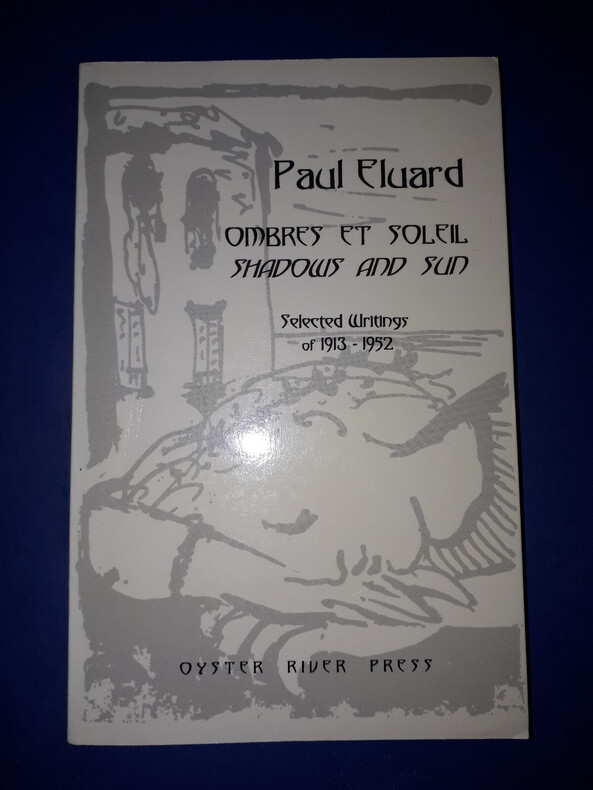
1995ref. AA542Oyster River Press, 1995 In-8° de 348 pp.,
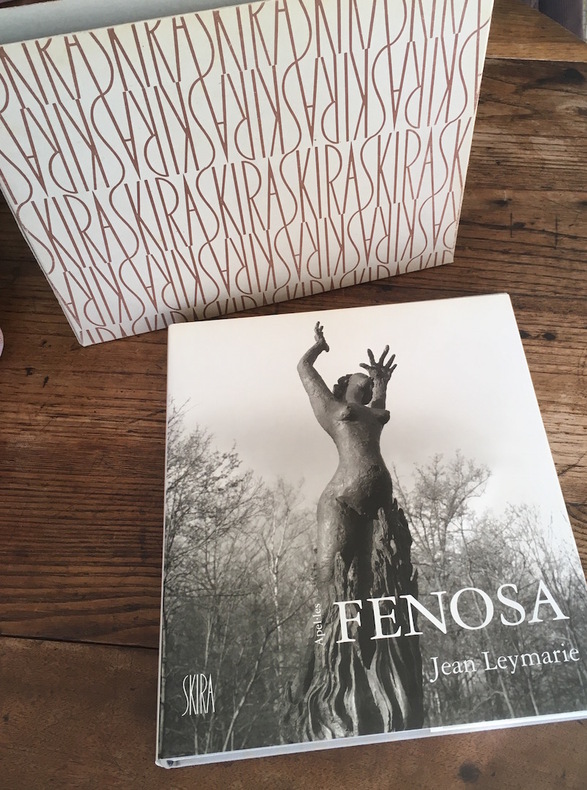
1993ref. POY-060225-8Editions d'Art Albert Skira, Genève, 1993. 200 pages, 204 illustrations. Relié pleine toile sous jaquette pelliculée. Parfait état de l'ouvrage (seule une pliure sur l'intérieur de la jaquette, voir photo). Dans son coffret. Exemplaire de lancement, joint le bon de commande des éditions Skira. Envoi (non signé) de Nicole FENOSA.
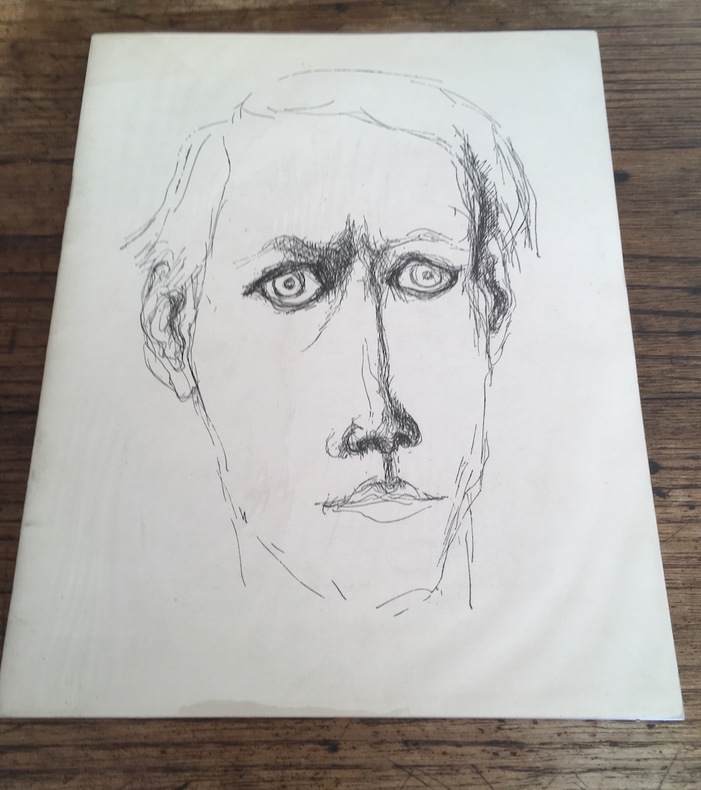
1963ref. POY-060225-7Plaquette de l'exposition "Des fenêtres et des miroirs", Galerie Pierre, Paris, février 1963. Non paginé (16 pages). Illustrations en noir, portrait. Couv. très légèrement jaunie (couverte). Intérieur frais et propre. Parfait état. Envoi autographe signé de Bernard Dufour.
1968ref. BB389Cristian Bourgeois éditeurs. 1968 In-8° de 128 pp.,