ThucydidesBiblio.com

938 résultats
1550réf. 111546London: William Tylle 1550. First edition of one one of the greatest of classic historical works. Folio bound in 19th century full vellum morocco spine label marbled endpapers title-page with elaboarate historiated woodcut border. In very good condition with light toning to the text. Rare and desirable in this condition. “The standards and methods of Thucydides as a contemporary historian have never been bettered. He began work at the very start of the events he records and the penetration and concentration which he devoted to his account of the ‘Peloponnesian War’ the war between Athens and Sparta from 431 to 404 B.C. were based on the conviction that it would prove the most important event in Greek history… He saw his history as a source of profit to ‘those who desire an exact knowledge of the past as a key to the future which in all probability will resemble the past.’ It was in this sense… that he called it… ‘a possession forever.’ This is exactly what it has become” PMM 102. William Tylle hardcover
1550réf. 111546London: William Tylle 1550. First edition of one one of the greatest of classic historical works. Folio bound in 19th century full vellum morocco spine label marbled endpapers title-page with elaboarate historiated woodcut border. In very good condition with light toning to the text. Rare and desirable in this condition. The standards and methods of Thucydides as a contemporary historian have never been bettered. He began work at the very start of the events he records and the penetration and concentration which he devoted to his account of the 'Peloponnesian War' the war between Athens and Sparta from 431 to 404 B.C. were based on the conviction that it would prove the most important event in Greek history. He saw his history as a source of profit to 'those who desire an exact knowledge of the past as a key to the future which in all probability will resemble the past.' It was in this sense. that he called it. 'a possession forever.' This is exactly what it has become" PMM 102. William Tylle hardcover books
1588réf. 4174Geneva: Excudebat Henricus Stephanus 1588 Folio: 35 x 22.5 cm. ¶6 ¶4 a-z6 aa-zz6 aaa-nnn6 ooo4 SECOND ESTIENNE EDITION. Printed in two sizes of the 'grecs du roi' types of Claude Garamond. There are numerous historiated initials and decorative head- and tail-pieces. The Estienne "Noli altum sapere" device appears on the title-page. A fine tall copy in contemporary blind-ruled vellum edges of the text block sprinkled red and blue. The text is in very nice condition with minor blemishes: lvs. l6 m3 and mm4 with small ink stains m2-3 sm. burn hole in margin ss2 small rust spot g3-5 v. light dampstain at corner light damp to lower outer margin of final few signatures title and verso of final leaf lightly soiled. Provenance: 1. Ownership inscription dated 1595 of the German jurist political philosopher and seven-time rector of the University of Tübingen Christoph Besold 1577-1638. Besold was a close friend of Johannes Kepler whom he met while studying at Tübingen at which time he purchased this book. Besold championed Kepler's theories while at Tübingen and in 1626 he participated in the trial of Kepler's mother who was accused of witchcraft and ultimately acquitted. As a political philosopher Besold proposed a form of mixed constitution in which the 'rights of majesty' are divided between the prince and the assembly of estates. For his evolving views see his "De consilio politico axiomata"1622 "De statu reipublicae mixtu"revised ed. 1625 and "Principium et finis politicae"1626. For his views on Democracy in particular see his 1623 "Discursus politici" esp. Chapter III "De Democratia". 2. Small stamp of the Donaueschingen Hofbibliothek library sold 1999-2001 on verso of the title. "Second Estienne edition generally considered the best sixteenth century edition of the greatest historian of Athens. For this new edition Estienne has corrected the Greek text and scholia as well as further revised Lorenzo Valla's Latin translation which is now printed on the same page with the Greek text in parallel columns while the Greek scholia are printed at the foot of the page. Estienne has also added marginal concordances to his first edition. Among the other important additions are Estienne's 'Proparasceue' Preparation to the reading of the Greek scholia which is to this day a most valuable exposition of the special vocabulary and technical terminology used by the Greek scholiasts; his annotations on the text and scholia of the first two books Renouard as well as Carter and Muir in PMM wrongly attribute these annotations to Isaac Casaubon; the Thucydidean Chronology of David Chytraeus and the Greek Life of Thucydides by Marcellinus with a Latin translation by Casaubon." Quoted from Schreiber's "The Estiennes" "The standards and methods of Thucydides as a contemporary historian have never been bettered. Thucydides has been valued as he hoped; statesmen as well as historians men of affairs as well as scholars have read and profited by him"PMM 102 Schreiber 216-217; Renouard 152-53 4; Moeckli 124; Hoffmann III 749; Printing and The Mind of Man 102 Excudebat Henricus Stephanus, books
1930réf. 48579Chelsea.: The Ashendene Press. 1930. Original publisher's full white pigskin by W. H. Smith & Son Ltd. with their signature gilt to rear turn-in banded spine with gilt title in six compartments. Folio. 408 x 282 mm. Printed title and 'Book I' to 'Book X' of Thucydides' text in English in red and black in Ptolemy type chapter summaries in Blado marginal chapter summaries and opening lines by Graily Hewitt in red the red initials from the alphabet designed by Eric Gill for the Ashendene Utopia final leaf with colophon and woodcut Ashendene device verso. The Ashendene Thucydides the final folio from the press.From the edition limited to 280 copies with this one of 260 on Batchelor 'knight in armour' Ashendene paper; 20 copies on vellum were also issued.The Greek text was translated by Benjamin Jowett Regius Professor of Greek at Oxford. The book is printed in Ptolemy with Blado marginal chapter summaries - the first time St John Hornby had used a different type for side-notes.This copy includes the original purchaser's invoice a single leaf 216 x 150 mm headed 'THE ASHENDENE PRESS / SHELLEY HOUSE CHELSEA' and made out to Mr. Jacques Steinitz / Warren Ohio'. Signed by St. John Hornby with two pence stamp and dated May 27th 1931 the cost is detailed as 15 Guineas.Ashendene XXXVII. The Ashendene Press. unknown
1588réf. 1936Geneva: Excudebat Henricus Stephanus 1588. SECOND ESTIENNE EDITION corrected by Estienne and with numerous additions. Printed in two sizes of the ‘grecs du roi’ types of Claude Garamond. There are numerous historiated initials and decorative head- and tail-pieces. The Estienne "Noli altum sapere" device appears on the title page. Hardcover. Fine. Bound in contemporary calf rebacked. The boards are framed by a single gold fillet. Central wreath-like cartouches also gilt are stamped at the centers of both boards. The text is in very good condition with good margins. There is however a bit of worming affecting the text in the first part. Second Estienne edition generally considered the best sixteenth century edition of Thucydides’ history of the Peloponnesian War. The war was fought from 431–404 BC “between the two leading city-states in ancient Greece Athens and Sparta. Each stood at the head of alliances that between them included nearly every Greek city-state. The fighting engulfed virtually the entire Greek world and it was properly regarded by Thucydides as the most momentous war up to that time. With Athens’ defeat . . . the most culturally advanced Greek state was brought into final eclipse.” Britannica "For this new edition Estienne has corrected the Greek text and scholia as well as further revised Lorenzo Valla's Latin translation which is now printed on the same page with the Greek text in parallel columns while the Greek scholia are printed at the foot of the page. Estienne has also added marginal concordances to his first edition. Among the other important additions are Estienne's ‘Proparasceue’ Preparation to the reading of the Greek scholia which is to this day a most valuable exposition of the special vocabulary and technical terminology used by the Greek scholiasts; his annotations on the text and scholia of the first two books Renouard as well as Carter and Muir in PMM wrongly attribute these annotations to Isaac Casaubon; the Thucydidean Chronology of David Chytraeus and the Greek Life of Thucydides by Marcellinus with a Latin translation by Casaubon." Quoted from Schreiber's "The Estiennes" "The standards and methods of Thucydides as a contemporary historian have never been bettered. Thucydides has been valued as he hoped; statesmen as well as historians men of affairs as well as scholars have read and profited by him"PMM 102. “Thucydides kept rigidly to his theme: the history of a war—that is a story of battles and sieges of alliances hastily made and soon broken and most important of the behaviour of peoples as the war dragged on and on of the inevitable “corrosion of the human spirit.” He vividly narrates exciting episodes and carefully describes tactics on land and sea. He gives a picture direct in speeches indirect in the narrative of the ambitious imperialism of Athens—controlled ambition in Pericles reckless in Alcibiades debased in Cleon—ever confident that nothing was impossible for them resilient after the worst disaster. He shows also the opposing picture of the slow steadiness of Sparta sometimes so successful at other times so accommodating to the enemy. “His record of Pericles’ speech on those killed in the first year of the war is the most glowing account of Athens and Athenian democracy that any leading citizen could hope to hear. It is followed in of course due chronological order by a minutely accurate account of the symptoms of the pestilence “so that it may be recognized by medical men if it recurs” and a moving description of the demoralizing despair that overtook men after so much suffering and such heavy losses—probably more than a quarter of the population most of it crowded within the walls of the city died. “Equally moving is the account of the last battles in the great harbour of Syracuse and of the Athenian retreat. In one of his best-known passages he analyzes by a most careful choice of words almost creating the language as he writes the moral and political effects of civil strife within a state in time of war. By a different method in speeches he portrays the hard fate of the town of Plataea due to the long-embittered envy and cruelty of Thebes and the faithlessness of Sparta and the harsh brutality of Cleon when he proposed to execute all the men of the Aegean island city of Mytilene. Occasionally he is forced into personal comment as on the pathetic fate of the virtuous and much-liked Athenian Nicias. “He had strong feelings both as a man and as a citizen of Athens. He was filled with a passion for the truth as he saw it which not only kept him free from vulgar partiality against the enemy but served him as a historian in the accurate narrative of events—accurate in their detail and order and also in their relative importance. He does not for example exaggerate the significance of the campaign he himself commanded nor does he offer a self-defense for his failure. Characteristically he mentions his exile not as an event of the war but in his “second preface”—after the peace of 421—to explain his opportunities for wider contacts. By the end of the 4th c. BC “the philosopher Theophrastus coupled Thucydides with Herodotus as a founder of the writing of history. Little is known of what the scholars of Alexandria and Pergamum did for his book; but copies of it were being made in considerable numbers in Egypt and so doubtless elsewhere from the 1st to the 5th century AD. By the 1st century BC as is clear from the writings of Cicero and Dionysius who vainly disputed his preeminence Thucydides was established as the great historian and since that time his fame has been secure.” Britannica. Excudebat Henricus Stephanus hardcover
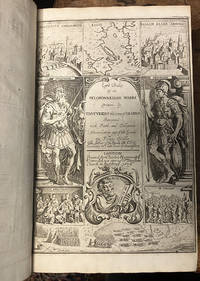
1676réf. 2710London: : Charles Harper 1676. SECOND EDITION. . Folio:. 31 x 20.5 cm. . π2 engraved and printed titles A4 a-d4 e2 B-Z4; Aa-Zz4; Aaa4. With five added maps and plates. Illustrated with the famous engraved title page showing Archidamos Perikles and the author with vignette views of Sparta Athens and a small map of Greece; and five engraved maps and views by Thomas Cecill entitled: "The Mappe of Ancient Greece" "Plataea" "Sphoicteria" "Antient Sicele According to the Description of Philip Chiuerius" and "Syracvse Beseeged by the Athenians". Bound in contemporary sprinkled calf ruled in compartments with decorative tools at each corner of the central panel. The hinges are starting the corners bumped but the binding is in overall good condition. The contents are in excellent condition: the leaves are bright and crisp the maps and plates are intact and present. Hobbes published his translation of Thucydides’ masterpiece in 1629 when he was in his early forties. Yet he tells us in the introduction that the translation once completed “lay long by” him indicating that it had been completed much earlier. “Hobbes was interested in Thucydides less for his style than his subject matter. Nor did he take up the study and translation of the Greek historian simply with a scholar’s antiquarian interest but with the humanist desire to learn and pass on the lessons of history to his contemporaries. He is not shy of speaking of the utility of history. He talks of Thucydides’ writings ‘as having in them profitable instruction for Noblemen and such as may come to have the managing of great and weighty actions.’ It is in the history of Thucydides that the purposes of history are most finely embodied: ‘For the principall and proper worke of History being to instruct and enable men by the knowledge of Actions past to beare themselves prudently in the present and providently towards the Future there is not extant any other merely humane that doth more fully and naturally performe it then this of my Author.’… “Hobbes had very definite ideas about the conclusions to be drawn from Thucydides. In the long introductory essay ‘Of the Life and History of Thucydides’ he derives from the history an account of the political opinions of its author: ‘For his opinion touching the government of the State it is manifest that he least of all liked the Democracy. And upon divers occasions hee noteth the emulation and contention of the Demagogues for reputation and glory of wit; with their crossing of each others counsels to the damage of the Publique; the inconstancy of Resolutions caused by the diversity of ends and power of Rhetorique in the Orators; and the desperated actions undertaken upon the flattering advice of such as desired to attaine or to hold what they had attained of authority and sway amongst the common people. Nor doth it appeare that he magnifieth anywhere the authority of the Few; amongst whom he saith every one desireth to be chiefe; and they that are undervalued beare it with lesse patience than in a Democracy; whereupon sedition followeth and dissultion of the government. Hee prayseth the government of Athens when it was mixed of the Few and the Many; but more he commendeth it both when Pisistratus raigned saving that it was an usurped power and when in the beginning of this Warre it was Democraticall in name but in effect Monarchicall under Pericles.’ “Thucydides here is represented as a closet royalist. The passage to which Hobbes is directly referring which must have been written after the final defeat of Athens in 404 is Thucydides summary account of the causes of her downfall in Book II. This is a long but crucial passage in Hobbes’ translation a shortcut to the lessons to be learnt from the larger narrative. While there are many factors that contributed to the political philosophy later developed by Hobbes not least his experience of civil disorder in Britain it might be argued that the political analysis here of the weakness of the Athenian democracy was influential in defining a problem to which the doctrine of Leviathan was the solution.”Robin Sowerby “Thomas Hobbes’ Translation of Thucydides” "The historical methods of Thucydides who lived in the fifth century B.C. have never been bettered. His severe standard of historical truth coupled with his passionate belief in the general significance of particular events have given his history of the tragic war between Athens and Sparta a universal value to statesmen and historians alike." Printing and the Mind of Man 219 Wing 1134 Charles Harper, unknown books
1588réf. 1936Geneva:: Excudebat Henricus Stephanus 1588. SECOND ESTIENNE EDITION corrected by Estienne and with numerous additions. Printed in two sizes of the ‘grecs du roi’ types of Claude Garamond. There are numerous historiated initials and decorative head- and tail-pieces. The Estienne "Noli altum sapere" device appears on the title page. Folio:. 32.2 x 21 cm. Collation: ¶6 ¶¶4 a-z6 aa-zz6 aaa-nnn6 ooo4. Bound in contemporary calf rebacked. The boards are framed by a single gold fillet. Central wreath-like cartouches also gilt are stamped at the centers of both boards. The text is in very good condition with good margins. There is however a bit of worming affecting the text in the first part. "The second Estienne edition is generally considered the best sixteenth century edition of the greatest historian of Athens. For this new edition Estienne has corrected the Greek text and scholia as well as further revised Lorenzo Valla's Latin translation which is now printed on the same page with the Greek text in parallel columns while the Greek scholia are printed at the foot of the page. Estienne has also added marginal concordances to his first edition. Among the other important additions are Estienne's “Proparasceue” Preparation to the reading of the Greek scholia which is to this day a most valuable exposition of the special vocabulary and technical terminology used by the Greek scholiasts; his annotations on the text and scholia of the first two books Renouard as well as Carter and Muir in PMM wrongly attribute these annotations to Isaac Casaubon; the Thycydidean Chronology of David Chytraeus and the Greek Life of Thucydides by Marcellinus with a Latin translation by Casaubon." Quoted from Schreiber's "The Estiennes" Schreiber 216-217; Renouard 152-53 4; Moeckli 124; Hoffmann III 749; Printing and The Mind of Man 102. Excudebat Henricus Stephanus, unknown books
1540réf. 8317Basileae Basel ex Officina Hervagiana 1557-1540. 2 works bound in one volume folio. pp. xx 310 ii blank; xxiv 178 iv blank with woodcut printer's device to verso of both final leaves. Greek text numerous early marginal notes and alternative readings in the first work occasional annotations in an early hand in the second. Near contemporary quarter pigskin over pasteboard rubbed. Johannes Herwagen was a protestant printer from Strasbourg. He became a citizen of Basel in 1528 and married Johann Froben's widow. Froben had made Basel a centre for the priting of Greek and Latin texts modelling his business on the example of scholar-printer Aldus Mantutius. Herwagen continued the tradition collaborating at first with his stepson Hieronymus Froben and his brother Nicholas Episcopius and printing under his own name from 1531. He was fined and expelled from the city in 1542 after having an affair with his stepson's wife but Landgrave Philip of Hesse Duke Christoph von Württemberg and the University of Basel campaigned for him so that he was pardoned in 1545 and a period of house arrest and a tavern ban were both lifted in 1547 by the City Council. He published the first edition in Greek of Euclid's Elements 1533 and other works such as Heliodorus' Aithiopika 1534. These are the third printings of the 'father of history' and of Thucydides in the original Greek. Book unknown
1676réf. 922London: Andrew Clark 1676. Second Edition. Folio 13" Tall Fine Leather Binding Bound by A.B. Buck. Near Fine. The History of the Grecian War: In Eight Books Written by Thucydides. Faithfully Translated from the Original by Thomas Hobbes of Malmsbury. Second Edition 1676. Printed in London by Andrew Clark for Charles Harper. A handsome beautifully bound 1676 second edition of Thomas Hobbes's landmark translation of Thucydides's History of the Peloponnesian War. Originally published in 1629 Hobbes's translation was his first published work and remains one of the most celebrated and muscular English translations of the great Greek historian. Complete with striking fold-out maps and detailed engravings this volume represents a brilliant intersection of classical history and 17th-century English political philosophy. The Hobbes Translation: Highly sought after by collectors of both classical history and political philosophy. Hobbes translated Thucydides to warn his fellow Englishmen against the dangers of democracy making this text a precursor to his later masterpiece Leviathan. Superb Cartography & Engravings: Features the magnificent "Mapp of Antient Greece" expressly designed by Thomas Hobbes himself alongside intricate fold-out plates depicting city fortifications regional maps and boasts a beautifully engraved architectural title page. Imprint: London: Printed by Andrew Clark for Charles Harper and are to be sold by him at the Flower-de-luce over against St. Dunstan's Church in Fleet-street MDCLXXVI 1676. Second Edition much Corrected and Amended. Large folio 13"x9" bound by A.B. Buck in full dark brown Morocco with six compartments and five raised bands to spine with bright gilt rule to bands. Binding and hinges are excellent new end papers and paste downs elaborate engraved frontispiece/title page depicting Thucydides and scenes from the Peloponnesian War. The text block is crisp with generous margins. Includes the dedication to Sir William Cavendish. The volume contains all fold-out maps and plans including the notable map of Ancient Greece by Hobbes himself and detailed engravings of fortified cities. Early neat ink marginalia/manuscript notes on the endpapers add a lovely touch of historical provenance. Pages are bright and clean with minimal age toning/foxing/soiling. Thomas Hobbes undertook this translation during a period of rising political tension in England. He chose Thucydides because in Hobbes's own view the Greek historian demonstrated the failures of democracy and the necessity of strong centralized authority. Because of this this translation is not just a classical history-it is a foundational text in the development of modern political thought. Key Conflicts & Campaigns within the Text The Archidamian War Books 1-5: This is the first decade of the conflict characterized by repeated Spartan invasions of Attica and Athenian naval raids on the Peloponnesian coast. It includes the famous account of the devastating Plague of Athens which killed the great Athenian leader Pericles. The Siege of Plataea Books 2-3: One of the most famous and harrowing sieges in ancient history. Thucydides provides incredible tactical details of the Spartan siege engines the Plataean counter-defenses and the ultimate desperate breakout attempt by the defenders in the dead of winter. The Mytilenean Revolt Book 3: A critical moment where the city of Mytilene attempts to break away from the Athenian Empire. This section contains the famous "Mytilenean Debate" a chilling discussion on the ethics of empire justice and whether to execute an entire rebel population. The Battle of Pylos and Sphacteria Book 4: A shocking Athenian victory where they managed to trap and capture elite Spartan hoplites on a small island. This completely upended the myth of Spartan invincibility as Spartans were expected to fight to the death rather than surrender. The Sicilian Expedition Books 6-7: Often considered the climax of Thucydides's narrative this covers Athens' disastrous hubristic attempt to conquer Syracuse in Sicily. It is a massive self-contained tragedy within the broader war ending in the total annihilation of the Athenian fleet and army. For collectors Books 6 and 7 are often considered the greatest pieces of military writing in antiquity. The Ionian War / The Oligarchic Coup Book 8: The final book covers the beginning of the end for Athens detailing naval warfare in the Aegean the intervention of the Persian Empire and the political collapse of the Athenian democracy into a short-lived oligarchy. Thucydides's manuscript abruptly cuts off in the year 411 BC. . Andrew Clark unknown
1550réf. 16998Venice: Laocoonte 1550. Contemporary Italian gold-tooled brown morocco with the author lettered in gold on the spine within an ornamental border a paneled design with two ornamental borders on both boards corner pieces in the inner panel gilt edges. 8vo. With a woodcut printer's device depicting the Laocoön Group on the title page and final leaf and several historiated woodcut initials in the text. First Italian translation of Thucydides' History of the Peloponnesian War one of the earliest scholarly works of history produced in the Western world. Unlike its predecessors it not only recorded the events of the war year by year in chronological order but also intended to provide an accurate factual account of events relying on eyewitness testimony and primary sources rather than legend or divine explanation. In addition the work also set out to examine underlying causes of war making it not just a record of events but also an important study of human nature and international relations.Francesco di Soldo Strozzi 16th century a Florentine nobleman and secretary to the Roman ambassador of Emperor Maximilian was a translator from both Greek and Latin. The present work which he translated from the original Greek is his most well-known. His translation was first published by Vincenzo Valgrisi at Venice in 1545 and another undated edition was printed by Baldassarre Constantini ca. 1545 which is identical to the present edition except for the type. Reflecting the growing Humanist interest in ancient Greek texts the History was first printed in Latin in 1483 by Johannes Vercellensis followed by the landmark Greek edition of Aldus Manutius in 1502. Translations into the European vernaculars soon followed: French Claude de Seyssel 1527 Italian Strozzi 1545 English Thomas Nicholls 1550 and Spanish Diego Gracián 1564. Strozzis translation is thus part of the earliest wave of vernacular translations making Thucydides' work accessible to a wider audience for the first time.With the library label of "S.A.R. il Duca di Genova" mounted on the front pastedown and a red library stamp in the margins of leaf 17 and 70. The binding is in excellent condition with only a few minor wormholes. The leaves are very slightly browned with occasional brown stains in the lower margin the lower margin of the title page has been professionally restored with loss of the imprint "M.D.L. In Vinetia" the lower margin of several other leaves has been restored without loss of text. Otherwise in good condition.l BMC STC Italian p. 672; EDIT16 40470; Mortimer Italian 499; OPAC SBN BVEE010161; USTC 859008; cf. Adams T-684 other ed.; Gamba 1714 other ed.; PMM 102 Latin ed. Estienne 1588. Laocoonte, hardcover
1930réf. 2610Chelsea: The Ashendene Press 1930. First Thus. Near Fine. This copy one of 260 printed on paper an additional 20 were printed on vellum. Bound in the original publisher's full white pigskin binding by W. H. Smith and Son lacking the slipcase. In Near Fine condition overall slight toning on the spine and a bit of rubbing at the base of the spine. Internal contents in Fine condition. Printed in black Ptolomey type with marginal chapter summaries in red Blado Italic type the first time St. John Hornby used a different type for the side-notes. Three-line initials from the alphabet designed by Eric Gill for "Utopia." Marginal chapter summeries and opening lines designed by Graily Hewitt printed in red. "When Thucydides set out to compose his work the writing of warfare was already a notable tradition launched with a bang by the legendary Homer about three centuries earlier.He was followed 300 years later by Herodotus who gave an account of the Persian Wars similarly rich in iconic battles and larger than life personalities on both sides of the conflict. With Thucydides the writing of war took a new direction. In contrast to the wars of Homer and Herodotus the armed conflict that concerned Thucydides was fought primarily among Greeks. It also involved events which occurred within the author's lifetime which introduced a contemporary dimension to the genre. Thucydides focused on offering a strong and authoritative account of the war its causes and its behind the scenes negotiations. To this end he largely left out the gods and religious explanations more generally.Instead he offered a deel analysis of human factors and motivations" Finley. In this sense Thucydides did more than leave historians with an account of the war published close to its conclusion; he created a new expectation for the genre of history and the work of historians. Ashendene Bibliography XXVII. Near Fine. The Ashendene Press unknown books
1564réf. 28293(Genova), Excudebat Henricus Stephanus, illustris viri Huldrichi Fuggeri typographus, 1564. Folio. Later red full calf, rebacked, soft boards. Inner hinges reinforced. T-p. w. repaired loss to lower right corner, not affecting text. Upper part of first about 100 leaves w. decreasing waterstaining w. very minor affect to text. Cont. owner's name to t-p. (""Ex libris Rabillone""). T-p. in red and black, woodcut printer's device to t-p., woodcut initials and vignettes, first part w. beautiful Greek script. Overall good condition. (16), 297, (2), 216, (8) pp.
1564réf. 28293Genova Excudebat Henricus Stephanus illustris viri Huldrichi Fuggeri typographus 1564. Folio. Later red full calf rebacked soft boards. Inner hinges reinforced. T-p. w. repaired loss to lower right corner not affecting text. Upper part of first about 100 leaves w. decreasing waterstaining w. very minor affect to text. Cont. owner's name to t-p. "Ex libris Rabillone". T-p. in red and black woodcut printer's device to t-p. woodcut initials and vignettes first part w. beautiful Greek script. Overall good condition. 16 297 2 216 8 pp. First edition thus. First part in Greek second part in Latin. "The Latin version is Valla's which Stephan published separately in 1564 but which usually accompanies the Greek text." Dibdin II:506. "The text was first printed by Aldus in 1502. The edition of Henri Estienne a member of the famous French family of printers who corresponded with scholars as an equal first came out in 1564. The edition cited the second edition 1588 was improved by the addition of a translation into Latin by Lorenzo Valla." PMM 102. This edition also contains Valla's excellent and famous translation being the second part of the work separately paginated pp. 1 - 216; in the second edition the translation is not printed separately but in parallel columns on the same pages as the Greek text. "Édition plus belle" Brunet V:844. Stephanus Estienne worked in Paris and Dibdin mentions the work as being printed in Paris whereas PMM states that it is printed in Genova. Brunet V:844 PMM 201 Dibdin II:506. Greasse 7:149. hardcover
1563réf. 1310180028Appresso G. Giolito de' Ferrari 1563-01-01. Hardcover. Good. Bound in contemporary vellum with gilt flourish. Some soiling to cover. Good binding. 463 p. ; 20 cm. Clean unmarked pages. History of the Peloponnesian War. Printer's devices engravings. Appresso G. Giolito de' Ferrari hardcover
1731réf. 4069A handsome copy in the original full vellum. Folding maps of ancient Greece & Sicily. ; Folio 27 x 41.5 cm; 343472848123 pages. All shipments through USPS insured Priority Mail. R. & J. Wetstein & Gul. Smith hardcover
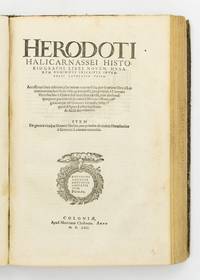
1562réf. 71711Coloniae Cologne: Apud Maternum Cholinum Execudebat Godefridus Cervicornus Printed by Godefridus Cervicornus for Maternus Cholius 1562. Hardcover. Very Good. Coloniae Cologne Apud Maternum Cholinum Execudebat Godefridus Cervicornus Printed by Godefridus Cervicornus for Maternus Cholius 1562 first thus. Folio 24 index 274 pages. Contemporary quarter vellum; early ink titles to the spine and to the top and leading edges; covers worn; marginal pencilling small worm hole throughout; some leaves tanned; occasional marginal stains; in very good condition internally excellent. A handsome Sammelband containing Lorenzo Valla's authoritative Latin translations of Herodotus' 'Histories' and Thucydides' 'History of the Peloponnesian War' also published by Maternus Cholius. The second title bound before the Herodotus is: 'Thucydides Laurentio Valla interprete. Nunc postremò correctus & ex Graeco innumeris locis emendatus quemadmodum ex Praefatione in proxima pagina uidere licet'. Basileae Basel Impensis Henrici Petri et Materni Collini Henricus Petrus and Maternus Cholinus 1564. Folio xii 370 2 integral blank pages; in comparable condition. Provenance: Old ownership details to the first title page: 'Sum Jacobi a Wachtendunck 1616. Ex liberali donatione R.D. Wildhelmi Ludolfi V.C. Ex donatione Jacobi a Wachtendungk factus ex libris name crossed out and illegible'. VD16 H 2516 Herodotus; VD16 T 1122 Thucydides. Apud Maternum Cholinum [Execudebat Godefridus Cervicornus] [Printed by Godefridus Cervicornus for Maternus Cholius] hardcover
réf. Z1-B-004-00744BiblioLife. Used - Like New. Used - Like New. Book is new and unread but may have minor shelf wear. Ships from UK in 48 hours or less usually same day. Your purchase helps support Sri Lankan Children's Charity 'The Rainbow Centre'. 100% money back guarantee. We are a world class secondhand bookstore based in Hertfordshire United Kingdom and specialize in high quality textbooks across an enormous variety of subjects. We aim to provide a vast range of textbooks rare and collectible books at a great price. Our donations to The Rainbow Centre have helped provide an education and a safe haven to hundreds of children who live in appalling conditions. We provide a 100% money back guarantee and are dedicated to providing our customers with the highest standards of service in the bookselling industry. BiblioLife unknown
1545réf. 00009254Venetia = Venice: Vincenzo Vaugris = Vincenzo Valgrisi 1545. First Italian edition. Hardcover. Near Fine. Small 8vo. 24 1-440 1 pp. Every other text page paginated. Recent early 20th century tan paper-covered boards. Title page with publisher's device woodcut initials final page of text with publisher's device on the reverse. Translated from the Italian on the title page: "With annotations and explanations of the historical places and most detailed alphabetized tables of all the wars the peace agreements the alliances formed the naval battles the daily events the cities taken the portents predicted and the leveled burned destroyed places that are recorded in history." Translated from the Greek into the Tuscan language by Francesco di Soldo Strozzi Fiorentino. A Manual of Classical Bibliography Joseph Moss 700. The Oxford Classical Dictionary 1134; 1516-1521. The first edition in Italian. Moss records this imprint as the first edition in Italian and writes that it has been reprinted several times both with and without dates. Adams records an undated Venetian imprint from Baldassar de Constantini Adams T-684 but not the Venetian Valgrisi imprint the Constantini imprint recorded by Adams shares the same collation as the Valgrisi imprint. Thucydides' Peloponnesian War is one of the first written histories dependent on eyewitness accounts and primary sources to be produced in the Western world. The work is divided into several parts: an introductory book a section on The Ten Years War focused on the conflict between Athens and Corinth the peace that followed this war The Peace of Nicias the Sicilian War the Plague that struck Athens with the last book Book 8 a portion of Thucydides history on the Decelean War. Thucydides intended his histories to describe the events that directly follow the ones recorded by Herodotus. He began writing the books soon after the Peloponnesian War started and recorded several of the events soon after they happened. From his 20s to his 50s Thucydides worked on his histories and the work reflects his changing perspective over time. His scientific exacting approach to describing the causes of the war and the fall of Athens along with his brief and concise prose all help his work to stand apart from the other historical writings of Classical Antiquity. Binding is Near Fine with two tiny splits to the paper over the joints leaves rarely show foxing with one or two corners missing not affecting the text marginal annotations or the catch words. Overall a nice clean copy. Vincenzo Vaugris [= Vincenzo Valgrisi] hardcover
2003réf. 24278Focus Publishing/R. Pullins Co Incus. New. Paperback. FREE UPGRADE to Courier/Priority Shipping Upon Request - IN STOCK AND IMMEDIATELY AVAILABLE FOR SHIPMENT - FLAWLESS COPY PRISTINE NEVER OPENED -- 90 pages; clean and crisp tight and bright pages with no writing or markings to the text. -- DESCRIPTION: This volume collects all of the surviving state funeral orations from Athens including Thucydides Gorgias Lysias Plato Menexenus Demosthenes and Hyperides. To stimulate student discussion and comparison For reference Lincoln's address at Gettysburg is included in an appendix. Translations are in English including introduction and notes as well as literary and historical commentary. -- AUTHOR: Jud Herrman is Assistant Professor of Classical Studies at Allegheny College. -- FROM THE INTRODUCTION: "Throughout the fifth and fourth centuries BC at the close of each campaign season the Athenian state honored its war-dead in a public burial ceremony choosing a prominent orator to give the keynote address. This volume collects all of the surviving state funeral orations from classical Athens. Like tragedy these speeches present an image of an idealized Athens. The narratives of past Athenian glories found in these speeches feature many of the same mythical tales that were also presented on stage. Like many of the plays the funeral orations emphasize important themes such as Athenian unity their aid to suppliants and their willingness to drive away foreign invaders to protect the other Greeks. The selective version of more recent history found in the funeral orations also highlights these same qualities by focusing on the role of Athens during the Persian Wars 490-479 when the city helped save the other Greeks from invading foreigners and by passing over other events such as the Peloponnesian War 431–404 in which Athens opposed fellow Greeks. Although nearly all of the surviving Greek tragedies are set in the distant mythical past the significant exception is Aeschylus’ Persians the audience in the theater would recognize aspects of contemporary Athens in the depiction of ancient Athenian heroes such as Theseus. The funeral orations draw similar connections more explicitly by presenting a continuous narrative tying the present generation with the great heroes of long ago." -- with a bonus offer--; 520-Herrm; Thucydides Gorgias Lysias Plato Menexenus Demosthenes and Hyperides; with Herrman Judson Translation Introduction notes Commentary Athenian Funeral Orations ; Translations are in English including Introduction notes and literary and histori . 2003. 1585100781 . Focus Publishing/R. Pullins Co Inc,us paperback
réf. 14881New York: Modern Library. As New. Paperback. FREE UPGRADE to Courier/Priority Shipping Upon Request - IN STOCK AND IMMEDIATELY AVAILABLE FOR SHIPMENT - ND; copyright 1951 -- with a bonus offer--; 014881; Thucydides; Crawley translator; Finley John H. Jr. introduction The Complete Writings of Thucydides : The Peloponnesian War . Modern Library paperback
1676réf. ThucydidesThucydides. The History of the Grecian War. Translated from the original Greek by Thomas Hobbes of Malmesbury. Second edition corrected and amended. London: Printed by Abel Swall for Charles Harper at the Flower-de-luce over against St. Dunstan's Church in Fleetstreet MDCLXXVI 1676. Folio large Binding: Contemporary or near-contemporary full calf ruled in panels spine in compartments. Condition: Exterior worn and rubbed with heavy surface wear/abrasion to boards and joints; nonetheless still a solid attractive folio. Internally clean as in the examples shown; complete including maps. Abel Swall, for Charles Harper hardcover
réf. Z1-C-077-00126William Heinemann Ltd. Used - Very Good. Ships from UK in 48 hours or less usually same day. Your purchase helps support Sri Lankan Children's Charity 'The Rainbow Centre'. Book has been well cared for. 100% money back guarantee. We are a world class secondhand bookstore based in Hertfordshire United Kingdom and specialize in high quality textbooks across an enormous variety of subjects. We aim to provide a vast range of textbooks rare and collectible books at a great price. Our donations to The Rainbow Centre have helped provide an education and a safe haven to hundreds of children who live in appalling conditions. We provide a 100% money back guarantee and are dedicated to providing our customers with the highest standards of service in the bookselling industry. William Heinemann Ltd unknown
1731réf. 73515Amstelaedami: apud R. & J. Wetstenios & Gul. Smith 1731. First edition large folio leaf 40.4 cm pp. 36 34 728 48 123 1; Greek and Latin text in parallel columns; engraved vignette title page printed in red and black engraved frontispiece engraved headpiece 2 engraved folding maps woodcut headpieces tailpieces initials and ornaments; contemporary full calf gilt-decorated spine in 7 compartments red morocco label in 1 a.e.g.; spine and label rubbed without loss of lettering joints cracked or starting internally crisp and clean. Dibdin II 4th ed. p. 509. "This edition was undertaken by Karl Andreas Duker at the express wish and entreaty of the publishers R. and J. Wetsten and Wm. Smith on account of the scarcity and high price of Hudson's at that time. The famous Joseph Wasse had prepared a variety of materials for this work by a careful revision of all the preceding editions: but he dying Duker was prevailed upon to complete it. The preface is by Duker; and although it is one of the most sumptuous and erudite productions which we have ever received from the continent and has long borne the distinguished title of " Editio optima;" yet says Harles "critici multa desiderant in hâc alias venustâ et præstanti editione" i.e. critics find much to be desired in this otherwise charming and excellent edition. apud R. & J. Wetstenios & Gul. Smith unknown
1546réf. 6591Frankfurt: Petrus Brubachius 1546. Later printing. Vellum. Very Good. 8vo. 460pp. With the final two leaves F7 with a woodcut printer's device on the recto and F8 a blank. BOUND WITH: Thucydides. CONVERSA EX THUCYDIDIS HISTORIA QUAEDAM IN LATINUM SERMONEM. Edited by Joachimo Camerario. Wittenberg: Johannes Crato. 1565. ff.78. Complete with the final two blank leaves. The two works bound in cont. vellum soiled hand lettered spine. I: Edited by Veit Winsheim. VD 16 ZV14511 Not in Adams or BL German STC. II: Edited by Joachimus Camerarius. VD16 T1132. Not in Adams or BL German STC. Petrus Brubachius hardcover books
2009Vol. 1: fine Vol. 2: light bumping to upper corners. Vol 3: very light soiling to spine. Light wear to one corner; vol. 4: light chip to top of spine else fine. Vol. 5: small chip to base of spine. Else fine. Set appears unread. Volumes range from VG+ to Fine. ; Publishing years 2008-2009. Isbns: 9025612359, 9025612369, 9025612423, 9025612474, & 9789025612528 ; 5 Volume Set COMPLETE. Supplementi Di Lexis; 2439 pages