ThucydidesBiblio.com

1.329 Ergebnisse
Best.-Nr. 1437353010.Gpaperback. Good. Access codes and supplements are not guaranteed with used items. May be an ex-library book. paperback
Best.-Nr. 1437444253.Ghardcover. Good. Access codes and supplements are not guaranteed with used items. May be an ex-library book. hardcover
Best.-Nr. 1017612803.Ghardcover. Good. Access codes and supplements are not guaranteed with used items. May be an ex-library book. hardcover
Best.-Nr. B9781018458489Hardback. New. hardcover
Best.-Nr. 1017617562.Gpaperback. Good. Access codes and supplements are not guaranteed with used items. May be an ex-library book. paperback
Best.-Nr. 101626559X.Gpaperback. Good. Access codes and supplements are not guaranteed with used items. May be an ex-library book. paperback
Best.-Nr. 1017610215.Ghardcover. Good. Access codes and supplements are not guaranteed with used items. May be an ex-library book. hardcover
Best.-Nr. 1390673472.Gpaperback. Good. Access codes and supplements are not guaranteed with used items. May be an ex-library book. paperback
Best.-Nr. 0656747366.Ghardcover. Good. Access codes and supplements are not guaranteed with used items. May be an ex-library book. hardcover
2026Best.-Nr. LRB550566Paris: Editions Recreasoft 2026 Lingua: Italiano. Circa 714 pagine. Italiano : Ristampa su richiesta. Edizione originale : 1735. Celebre storia della guerra del Péloponnèse attribuée a Tucidide e presentata in traduzione italiana con contributi eruditi di diversi editori e commentatori antichi. Opera di forte interesse storico e filologico apprezzata per il suo posto nella tradizione classica e per la ricezione umanistica del testo greco. Immagini del libro non contrattuali English : Print-on-demand reprint. Original edition : 1735. Celebrated history of the Peloponnesian War attributed to Thucydides and presented in Italian translation with scholarly contributions by several early editors and commentators. A work of strong historical and philological interest valued for its place in the classical tradition and the humanist reception of the Greek text. Book images are non-contractual. Editions Recreasoft. Softcover. New. Editions Recreasoft paperback
2026Best.-Nr. LRB25004694Paris: Editions Recreasoft 2026 Language: English. Approximately 520 pages. English : Print-on-demand reprint. Original edition : 1805. Classic study of ancient Greek historiography presenting the first volume of Thucydides' history of the Peloponnesian War in an English translation with three preliminary discourses. A reference work for the military and political history of ancient Greece valued for its philological and historical interest. Book images are non-contractual. Editions Recreasoft. Softcover. New. Editions Recreasoft paperback
Best.-Nr. 248024Oxford 1881. Large 8vo. XX 708; LXXXVIII 550 2 pp. Publisher’s full cloth bindings. Upper and lower part of the spine somewhat rubbed and with a couple of small tears. Corners a little bumped. Inner hinges reinforced with adhesive tapes. A little newer name 1911 on top of half-title. First volume’s first part with some few underlinings in the text and a couple of annotations in the margins with penn. Some fingerprints. . hardcover
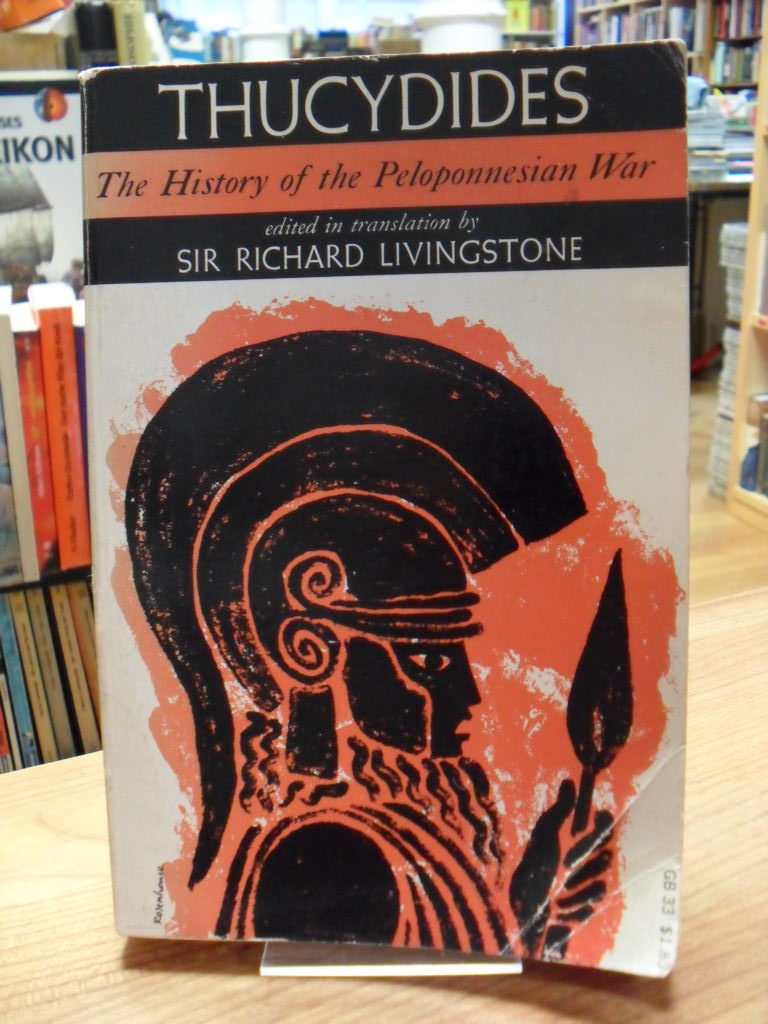
1991Best.-Nr. Q-0906515114Bristol Classical Press 1991-06-01. Paperback. New. In shrink wrap. Looks like an interesting title! Bristol Classical Press paperback
1991Best.-Nr. DADAX0906515114Bristol Classical Press 1991-06-01. paperback. New. 6.00x0.43x9.00. Buy with confidence. Excellent Customer Service & Return policy. Bristol Classical Press paperback
Best.-Nr. 72836CBHildesheim Olms 1972. Oln. Nachruck der Ausgabe Berlin 1858-60. Einband etwas fleckig. Hildesheim, Olms 1972. unknown
Best.-Nr. 64830CBHildesheim Olms 1972. Oln. Nachruck der Ausgabe Berlin 1858-60. Bezug von Rückendeckel bzw. Innendeckel mit 2 kleinen Fehlstellen. Hildesheim, Olms 1972. unknown
Best.-Nr. 57775K.W. Krüger's Verlagsbuchhandlung Berlin 1860/58. 2 vols in one. 3rd rev. and enlarged ed./2nd ed. 278222p. Half leather bound. Marbled edges. With authentication signatures from K.W. Krüger on verso title pages. Leather a bit scratched. Stamps on title page. Some pencil markings annotations and underlinings. hardcover
Best.-Nr. 63276CBHildesheim Olms 1972. Oln. Nachruck der Ausgabe Berlin 1858-60. Hildesheim, Olms 1972. unknown
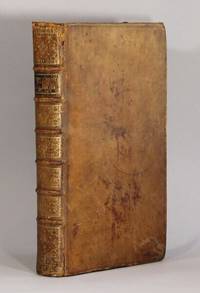
1731Best.-Nr. 73515Amstelaedami: apud R. & J. Wetstenios & Gul. Smith 1731. First edition large folio leaf 40.4 cm pp. 36 34 728 48 123 1; Greek and Latin text in parallel columns; engraved vignette title page printed in red and black engraved frontispiece engraved headpiece 2 engraved folding maps woodcut headpieces tailpieces initials and ornaments; contemporary full calf gilt-decorated spine in 7 compartments red morocco label in 1 a.e.g.; spine and label rubbed without loss of lettering joints cracked or starting internally crisp and clean. Dibdin II 4th ed. p. 509. "This edition was undertaken by Karl Andreas Duker at the express wish and entreaty of the publishers R. and J. Wetsten and Wm. Smith on account of the scarcity and high price of Hudson's at that time. The famous Joseph Wasse had prepared a variety of materials for this work by a careful revision of all the preceding editions: but he dying Duker was prevailed upon to complete it. The preface is by Duker; and although it is one of the most sumptuous and erudite productions which we have ever received from the continent and has long borne the distinguished title of " Editio optima;" yet says Harles "critici multa desiderant in hâc alias venustâ et præstanti editione" i.e. critics find much to be desired in this otherwise charming and excellent edition. apud R. & J. Wetstenios & Gul. Smith unknown
1731Best.-Nr. 73515Amstelaedami: apud R. & J. Wetstenios & Gul. Smith 1731. First edition large folio leaf 40.4 cm pp. 36 34 728 48 123 1; Greek and Latin text in parallel columns; engraved vignette title page printed in red and black engraved frontispiece engraved headpiece 2 engraved folding maps woodcut headpieces tailpieces initials and ornaments; contemporary full calf gilt-decorated spine in 7 compartments red morocco label in 1 a.e.g.; spine and label rubbed without loss of lettering joints cracked or starting internally crisp and clean. Dibdin II 4th ed. p. 509. "This edition was undertaken by Karl Andreas Duker at the express wish and entreaty of the publishers R. and J. Wetsten and Wm. Smith on account of the scarcity and high price of Hudson's at that time. The famous Joseph Wasse had prepared a variety of materials for this work by a careful revision of all the preceding editions: but he dying Duker was prevailed upon to complete it. The preface is by Duker; and although it is one of the most sumptuous and erudite productions which we have ever received from the continent and has long borne the distinguished title of " Editio optima;" yet says Harles "critici multa desiderant in hâc alias venustâ et præstanti editione" i.e. critics find much to be desired in this otherwise charming and excellent edition. apud R. & J. Wetstenios & Gul. Smith unknown books
1540Best.-Nr. 4885Basel: Ex Officina Hervagiana 1540. THIRD EDITION IN GREEK 1st ed. 1502. Hardcover. Fine. Bound in contemporary blind-tooled pigskin lightly soiled some surface abrasions discreet repairs to hinges. The binding is stamped with the date 1542 and the initial M. The boards are ruled in compartments with blind-stamped figurative rolls featuring female personifications of Prudence holding a mirror and Justice with her scales as well as Christ Moses and Lucretia plunging her a sword into hear breast. Further tools include interlocking sheaves of wheat and small pomegranates. A nice copy with broad margins. There is a little light dust-soiling to the margins of the first few leaves the final leaf and scattered instances in the upper margin elsewhere; a persistent light dampstain to the upper inner corner of the leaves; a wormhole to the outer blank margin occasionally developing into a short trail only entering the text in gatherings Z A and B. With minute contemporary annotations in the first three books. Printed in Greek with attractive woodcut Greek initials and Herwagen’s printer’s device on final leaf. This is the third printed edition of the Greek text of Thucydides edited by the renowned humanist Joachim Camerarius to whom Henri Estienne would dedicate in 1564 his own edition of Thucydides. In his introduction Camerarius tells us that he used a manuscript -brought to Italy from Constantinople over one-hundred years earlier- that had only recently come to Basel thanks to Herwagen. The text is followed by the scholia. “The standards and methods of Thucydides as a contemporary historian have never been bettered. Thucydides has been valued as he hoped; statesmen as well as historians men of affairs as well as scholars have read and profited by him. He began work at the very start of the events he records and the penetration and concentration which he devoted to his account of the ‘Peloponnesian War’ the war between Athens and Sparta from 431 to 404 B.C. were based on the conviction that it would prove the most important event in Greek history.”PMM 102. Ex Officina Hervagiana hardcover
1991Minor shelfwear to book with light knocking to 2 places. Foxing to textblock. ; 8.7 X 5.2 X 0.4 inches; 84 pages
1960Best.-Nr. 5640CBNew York, Oxford Press (= Galaxy Book), 1960. 8°, 400 S. (Text: Englisch), illustr. original Kartonage (Paperback), untere Ecke des Einbanddeckel mit größerem Eckknick, Einband mit leichten Knickspuren, an den Kanten leicht bestoßen, Einbandrückseite mit einer Beschabung, Einbanddeckelinnenseite und Titelseitenrückseite mit Notizen, wenige Seiten mit Randnotizen, erste
1588Best.-Nr. 4174Geneva: Excudebat Henricus Stephanus 1588. SECOND ESTIENNE EDITION corrected by Estienne and with numerous additions. Printed in two sizes of the ‘grecs du roi’ types of Claude Garamond. There are numerous historiated initials and decorative head- and tail-pieces. The Estienne "Noli altum sapere" device appears on the title page. Hardcover. Fine. A fine tall copy in contemporary blind-ruled vellum edges of the text block sprinkled red and blue. The text is in very nice condition lightly toned with minor blemishes A FEW small ink stains sm. burn hole in margin of one leaf ss2 small rust spot g3-5 v. light dampstain at corner light damp to lower outer margin of final few signatures title and verso of final leaf lightly soiled. Provenance: 1. Ownership inscription dated 1595 of the German jurist political philosopher and seven-time rector of the University of Tübingen Christoph Besold 1577-1638. Besold was a close friend of Johannes Kepler whom he met while studying at Tübingen at which time he purchased this book. Besold championed Kepler's theories while at Tübingen and in 1626 he participated in the trial of Kepler's mother who was accused of witchcraft and ultimately acquitted. As a political philosopher Besold proposed a form of mixed constitution in which the ‘rights of majesty’ are divided between the prince and the assembly of estates. For his evolving views see his “De consilio politico axiomata”1622 “De statu reipublicae mixtu”revised ed. 1625 and “Principium et finis politicae”1626. For his views on Democracy in particular see his 1623 “Discursus politici” esp. Chapter III “De Democratia”. 2. Small stamp of the Donaueschingen Hofbibliothek library sold 1999-2001 on verso of the title. Second Estienne edition generally considered the best sixteenth century edition of Thucydides’ history of the Peloponnesian War. The war was fought from 431–404 BC “between the two leading city-states in ancient Greece Athens and Sparta. Each stood at the head of alliances that between them included nearly every Greek city-state. The fighting engulfed virtually the entire Greek world and it was properly regarded by Thucydides as the most momentous war up to that time. With Athens’ defeat . . . the most culturally advanced Greek state was brought into final eclipse.” Britannica "For this new edition Estienne has corrected the Greek text and scholia as well as further revised Lorenzo Valla's Latin translation which is now printed on the same page with the Greek text in parallel columns while the Greek scholia are printed at the foot of the page. Estienne has also added marginal concordances to his first edition. Among the other important additions are Estienne's ‘Proparasceue’ Preparation to the reading of the Greek scholia which is to this day a most valuable exposition of the special vocabulary and technical terminology used by the Greek scholiasts; his annotations on the text and scholia of the first two books Renouard as well as Carter and Muir in PMM wrongly attribute these annotations to Isaac Casaubon; the Thucydidean Chronology of David Chytraeus and the Greek Life of Thucydides by Marcellinus with a Latin translation by Casaubon." Quoted from Schreiber's "The Estiennes" "The standards and methods of Thucydides as a contemporary historian have never been bettered. Thucydides has been valued as he hoped; statesmen as well as historians men of affairs as well as scholars have read and profited by him"PMM 102. “Thucydides kept rigidly to his theme: the history of a war—that is a story of battles and sieges of alliances hastily made and soon broken and most important of the behaviour of peoples as the war dragged on and on of the inevitable “corrosion of the human spirit.” He vividly narrates exciting episodes and carefully describes tactics on land and sea. He gives a picture direct in speeches indirect in the narrative of the ambitious imperialism of Athens—controlled ambition in Pericles reckless in Alcibiades debased in Cleon—ever confident that nothing was impossible for them resilient after the worst disaster. He shows also the opposing picture of the slow steadiness of Sparta sometimes so successful at other times so accommodating to the enemy. “His record of Pericles’ speech on those killed in the first year of the war is the most glowing account of Athens and Athenian democracy that any leading citizen could hope to hear. It is followed in of course due chronological order by a minutely accurate account of the symptoms of the pestilence “so that it may be recognized by medical men if it recurs” and a moving description of the demoralizing despair that overtook men after so much suffering and such heavy losses—probably more than a quarter of the population most of it crowded within the walls of the city died. “Equally moving is the account of the last battles in the great harbour of Syracuse and of the Athenian retreat. In one of his best-known passages he analyzes by a most careful choice of words almost creating the language as he writes the moral and political effects of civil strife within a state in time of war. By a different method in speeches he portrays the hard fate of the town of Plataea due to the long-embittered envy and cruelty of Thebes and the faithlessness of Sparta and the harsh brutality of Cleon when he proposed to execute all the men of the Aegean island city of Mytilene. Occasionally he is forced into personal comment as on the pathetic fate of the virtuous and much-liked Athenian Nicias. “He had strong feelings both as a man and as a citizen of Athens. He was filled with a passion for the truth as he saw it which not only kept him free from vulgar partiality against the enemy but served him as a historian in the accurate narrative of events—accurate in their detail and order and also in their relative importance. He does not for example exaggerate the significance of the campaign he himself commanded nor does he offer a self-defense for his failure. Characteristically he mentions his exile not as an event of the war but in his “second preface”—after the peace of 421—to explain his opportunities for wider contacts. By the end of the 4th c. BC “the philosopher Theophrastus coupled Thucydides with Herodotus as a founder of the writing of history. Little is known of what the scholars of Alexandria and Pergamum did for his book; but copies of it were being made in considerable numbers in Egypt and so doubtless elsewhere from the 1st to the 5th century AD. By the 1st century BC as is clear from the writings of Cicero and Dionysius who vainly disputed his preeminence Thucydides was established as the great historian and since that time his fame has been secure.” Britannica. Excudebat Henricus Stephanus hardcover books
1588Best.-Nr. 1936Geneva: Excudebat Henricus Stephanus 1588. SECOND ESTIENNE EDITION corrected by Estienne and with numerous additions. Printed in two sizes of the ‘grecs du roi’ types of Claude Garamond. There are numerous historiated initials and decorative head- and tail-pieces. The Estienne "Noli altum sapere" device appears on the title page. Hardcover. Fine. Bound in contemporary calf rebacked. The boards are framed by a single gold fillet. Central wreath-like cartouches also gilt are stamped at the centers of both boards. The text is in very good condition with good margins. There is however a bit of worming affecting the text in the first part. Second Estienne edition generally considered the best sixteenth century edition of Thucydides’ history of the Peloponnesian War. The war was fought from 431–404 BC “between the two leading city-states in ancient Greece Athens and Sparta. Each stood at the head of alliances that between them included nearly every Greek city-state. The fighting engulfed virtually the entire Greek world and it was properly regarded by Thucydides as the most momentous war up to that time. With Athens’ defeat . . . the most culturally advanced Greek state was brought into final eclipse.” Britannica "For this new edition Estienne has corrected the Greek text and scholia as well as further revised Lorenzo Valla's Latin translation which is now printed on the same page with the Greek text in parallel columns while the Greek scholia are printed at the foot of the page. Estienne has also added marginal concordances to his first edition. Among the other important additions are Estienne's ‘Proparasceue’ Preparation to the reading of the Greek scholia which is to this day a most valuable exposition of the special vocabulary and technical terminology used by the Greek scholiasts; his annotations on the text and scholia of the first two books Renouard as well as Carter and Muir in PMM wrongly attribute these annotations to Isaac Casaubon; the Thucydidean Chronology of David Chytraeus and the Greek Life of Thucydides by Marcellinus with a Latin translation by Casaubon." Quoted from Schreiber's "The Estiennes" "The standards and methods of Thucydides as a contemporary historian have never been bettered. Thucydides has been valued as he hoped; statesmen as well as historians men of affairs as well as scholars have read and profited by him"PMM 102. “Thucydides kept rigidly to his theme: the history of a war—that is a story of battles and sieges of alliances hastily made and soon broken and most important of the behaviour of peoples as the war dragged on and on of the inevitable “corrosion of the human spirit.” He vividly narrates exciting episodes and carefully describes tactics on land and sea. He gives a picture direct in speeches indirect in the narrative of the ambitious imperialism of Athens—controlled ambition in Pericles reckless in Alcibiades debased in Cleon—ever confident that nothing was impossible for them resilient after the worst disaster. He shows also the opposing picture of the slow steadiness of Sparta sometimes so successful at other times so accommodating to the enemy. “His record of Pericles’ speech on those killed in the first year of the war is the most glowing account of Athens and Athenian democracy that any leading citizen could hope to hear. It is followed in of course due chronological order by a minutely accurate account of the symptoms of the pestilence “so that it may be recognized by medical men if it recurs” and a moving description of the demoralizing despair that overtook men after so much suffering and such heavy losses—probably more than a quarter of the population most of it crowded within the walls of the city died. “Equally moving is the account of the last battles in the great harbour of Syracuse and of the Athenian retreat. In one of his best-known passages he analyzes by a most careful choice of words almost creating the language as he writes the moral and political effects of civil strife within a state in time of war. By a different method in speeches he portrays the hard fate of the town of Plataea due to the long-embittered envy and cruelty of Thebes and the faithlessness of Sparta and the harsh brutality of Cleon when he proposed to execute all the men of the Aegean island city of Mytilene. Occasionally he is forced into personal comment as on the pathetic fate of the virtuous and much-liked Athenian Nicias. “He had strong feelings both as a man and as a citizen of Athens. He was filled with a passion for the truth as he saw it which not only kept him free from vulgar partiality against the enemy but served him as a historian in the accurate narrative of events—accurate in their detail and order and also in their relative importance. He does not for example exaggerate the significance of the campaign he himself commanded nor does he offer a self-defense for his failure. Characteristically he mentions his exile not as an event of the war but in his “second preface”—after the peace of 421—to explain his opportunities for wider contacts. By the end of the 4th c. BC “the philosopher Theophrastus coupled Thucydides with Herodotus as a founder of the writing of history. Little is known of what the scholars of Alexandria and Pergamum did for his book; but copies of it were being made in considerable numbers in Egypt and so doubtless elsewhere from the 1st to the 5th century AD. By the 1st century BC as is clear from the writings of Cicero and Dionysius who vainly disputed his preeminence Thucydides was established as the great historian and since that time his fame has been secure.” Britannica. Excudebat Henricus Stephanus hardcover books