Thucydides, Thucydides,Biblio.com

1,055 results
ref. 45263730like new. unknown
ref. mon0000953104The Folio Society. Hardcover. New. in x in x in. New in shrink wrap The Folio Society hardcover
ref. 9701777like new. unknown
ref. Harper-9780674991217HARVARD UNIV PRESS. New. HARVARD UNIV PRESS unknown
ref. Harper-9780674991217HARVARD UNIV PRESS. New. HARVARD UNIV PRESS unknown
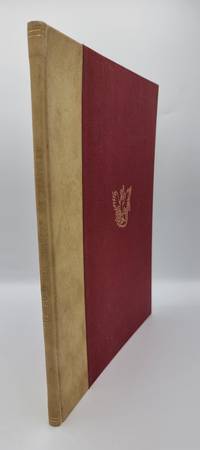
1948ref. 633060London: The Dropmore Press 1948. Hardcover. Very Good/No Jacket. SMALL QUARTO. - Limited Edition of 300 copies this being number 112 - Quarter bound in vellum over red cloth w/ gilt design to upper borad and titles to spine - Covers a little rubbed - Endpapers lightly foxed - 24 pages No Jacket London: The Dropmore Press hardcover
ref. 1414204973.Gpaperback. Good. Access codes and supplements are not guaranteed with used items. May be an ex-library book. paperback
ref. 1333005938.Gpaperback. Good. Access codes and supplements are not guaranteed with used items. May be an ex-library book. paperback
ref. 1390306119.Gpaperback. Good. Access codes and supplements are not guaranteed with used items. May be an ex-library book. paperback
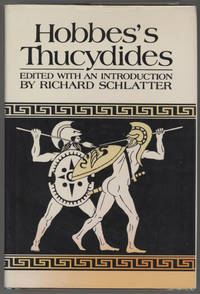
1975ref. 000014503New Brunswick New Jersey: Rutgers University Press 1975 1975. First edition. Hardcover. Very Good/Very Good. 8vo. 11 xii-xxviii 3 4-587 1 pp. Black cloth with gold lettering on the spine; yellow topstain. Yellow and black endpapers and pastedowns. With several full-page illustrations black and white photographs of Greek art and artefacts. A push to the top textblock a name on the free front endpaper; jacket is sunned and price-clipped. Rutgers University Press [1975] hardcover
ref. 036417501X.Ghardcover. Good. Access codes and supplements are not guaranteed with used items. May be an ex-library book. hardcover
ref. 9357275487.Gpaperback. Good. Access codes and supplements are not guaranteed with used items. May be an ex-library book. paperback
1974ref. 6111Connecticut: The Limited Editions Club 1974. Illustrated by A. Tassos. Signed by illustrator A. Tassos at rear of volume 2. Measuring approximately 10.75" x 7" with 247 & 461 numbered pages. Comes with original slipcase. These volumes are in very good plus condition. Minor bumping to both ends of spine. Interior pages are bright and clean. Slipcase is in good condition. Minor scuffing to both sides. The History of the Peloponnesian War is a historical account of the Peloponnesian War 431–404 BC which was fought between the Peloponnesian League led by Sparta and the Delian League led by Athens. Please view the many other rare titles available for purchase at our store. We are always interested in purchasing individual or collections of fine books. Inventory #O6-20. The Limited Editions Club unknown
2024ref. 004423Norwalk CT: Easton Press 2024. Hardcover. Near Fine. 8vo - over 7¾ - 9¾" tall. Gray full leather with bright gilt lettering and decoration. Trace wear only. All edges gilt. Binding sound interior clean. Silk moire eps. Satin ribbon bookmarker bound in. Unused publisher's bookplate laid in loose. No prev owner names or stamps. 707 pp b/w maps. Easton Press hardcover
1614ref. 31123Argentorati Strassburg: Sumptibus Lazari Zetzneri Bibliop. Lazarus Zetzner 1614. Very Good. Argentorati Strassburg: Sumptibus Lazari Zetzneri Bibliop. 1614. First Zetzner Edition. Octavo 17cm.; 19th-century roan over papier-peint boards marbled endpapers; 3266448pp. collated complete; folding map plate woodcut printer's device to title page initials throughout. Leather chipped and dried with smallish loss at spine crown and biopredation along rear joint and upper cover fore-edge very faint evidence of gilt spine titling only else a Very Good internally clean and sound example. Sumptibus Lazari Zetzneri Bibliop. [Lazarus Zetzner] unknown
1948ref. 14215London: Dropmore Press 1948. Frontispiece and initials by John O’Connor. Set by hand in Baskerville and printed by hand on an Albion press. Bound in publishers half vellum covers slightly sunned else a fine copy. One of 300 copies this being number 155. Dropmore Press unknown
1951ref. 1BislDc0024New York: The Modern Library 1951. Book. Very Good. Mass Market Paperback. Copyright 1951. 12mo or 12° Duodecimo: 6¾" x 7¾" tall. 516 pp. Solidly bound copy with moderate external wear crisp pages and clean text. Occassional pencil markings on text. First two pages are dog-eared. The Modern Library Paperback
1900ref. 5vHb0055Paris France: Librairie Hachette 1900. Book. Good. Decorative Hardcover. Copyright 1900. 16mo or 16° Sextodecimo: 5¾" x 6¾" tall. 288 pp. Solidly bound copy with moderate external wear. Moderate foxing on page edges. No dj. Text in Greek and French. Slightly bumped cover board corners. Librairie Hachette Hardcover
1731ref. 4069A handsome copy in the original full vellum. Folding maps of ancient Greece & Sicily. ; Folio 27 x 41.5 cm; 343472848123 pages. All shipments through USPS insured Priority Mail. R. & J. Wetstein & Gul. Smith hardcover
1980ref. CHAPthuTPWThe Franklin Library 1980-01-01. Leather Bound. Very Good. From the series "The 100 Greatest Books of All Time." Black leather with gilt decoration and four raised hubs on spine. Peach moire endpapers. Peach satin ribbon bound in as bookmark. Isolated light abrasion present to top and leading edge gilt. All text edges gilt corners sharp pages clean. The Franklin Library hardcover
1588ref. 4174Geneva: Excudebat Henricus Stephanus 1588. SECOND ESTIENNE EDITION corrected by Estienne and with numerous additions. Printed in two sizes of the ‘grecs du roi’ types of Claude Garamond. There are numerous historiated initials and decorative head- and tail-pieces. The Estienne "Noli altum sapere" device appears on the title page. Hardcover. Fine. A fine tall copy in contemporary blind-ruled vellum edges of the text block sprinkled red and blue. The text is in very nice condition lightly toned with minor blemishes A FEW small ink stains sm. burn hole in margin of one leaf ss2 small rust spot g3-5 v. light dampstain at corner light damp to lower outer margin of final few signatures title and verso of final leaf lightly soiled. Provenance: 1. Ownership inscription dated 1595 of the German jurist political philosopher and seven-time rector of the University of Tübingen Christoph Besold 1577-1638. Besold was a close friend of Johannes Kepler whom he met while studying at Tübingen at which time he purchased this book. Besold championed Kepler's theories while at Tübingen and in 1626 he participated in the trial of Kepler's mother who was accused of witchcraft and ultimately acquitted. As a political philosopher Besold proposed a form of mixed constitution in which the ‘rights of majesty’ are divided between the prince and the assembly of estates. For his evolving views see his “De consilio politico axiomata”1622 “De statu reipublicae mixtu”revised ed. 1625 and “Principium et finis politicae”1626. For his views on Democracy in particular see his 1623 “Discursus politici” esp. Chapter III “De Democratia”. 2. Small stamp of the Donaueschingen Hofbibliothek library sold 1999-2001 on verso of the title. Second Estienne edition generally considered the best sixteenth century edition of Thucydides’ history of the Peloponnesian War. The war was fought from 431–404 BC “between the two leading city-states in ancient Greece Athens and Sparta. Each stood at the head of alliances that between them included nearly every Greek city-state. The fighting engulfed virtually the entire Greek world and it was properly regarded by Thucydides as the most momentous war up to that time. With Athens’ defeat . . . the most culturally advanced Greek state was brought into final eclipse.” Britannica "For this new edition Estienne has corrected the Greek text and scholia as well as further revised Lorenzo Valla's Latin translation which is now printed on the same page with the Greek text in parallel columns while the Greek scholia are printed at the foot of the page. Estienne has also added marginal concordances to his first edition. Among the other important additions are Estienne's ‘Proparasceue’ Preparation to the reading of the Greek scholia which is to this day a most valuable exposition of the special vocabulary and technical terminology used by the Greek scholiasts; his annotations on the text and scholia of the first two books Renouard as well as Carter and Muir in PMM wrongly attribute these annotations to Isaac Casaubon; the Thucydidean Chronology of David Chytraeus and the Greek Life of Thucydides by Marcellinus with a Latin translation by Casaubon." Quoted from Schreiber's "The Estiennes" "The standards and methods of Thucydides as a contemporary historian have never been bettered. Thucydides has been valued as he hoped; statesmen as well as historians men of affairs as well as scholars have read and profited by him"PMM 102. “Thucydides kept rigidly to his theme: the history of a war—that is a story of battles and sieges of alliances hastily made and soon broken and most important of the behaviour of peoples as the war dragged on and on of the inevitable “corrosion of the human spirit.” He vividly narrates exciting episodes and carefully describes tactics on land and sea. He gives a picture direct in speeches indirect in the narrative of the ambitious imperialism of Athens—controlled ambition in Pericles reckless in Alcibiades debased in Cleon—ever confident that nothing was impossible for them resilient after the worst disaster. He shows also the opposing picture of the slow steadiness of Sparta sometimes so successful at other times so accommodating to the enemy. “His record of Pericles’ speech on those killed in the first year of the war is the most glowing account of Athens and Athenian democracy that any leading citizen could hope to hear. It is followed in of course due chronological order by a minutely accurate account of the symptoms of the pestilence “so that it may be recognized by medical men if it recurs” and a moving description of the demoralizing despair that overtook men after so much suffering and such heavy losses—probably more than a quarter of the population most of it crowded within the walls of the city died. “Equally moving is the account of the last battles in the great harbour of Syracuse and of the Athenian retreat. In one of his best-known passages he analyzes by a most careful choice of words almost creating the language as he writes the moral and political effects of civil strife within a state in time of war. By a different method in speeches he portrays the hard fate of the town of Plataea due to the long-embittered envy and cruelty of Thebes and the faithlessness of Sparta and the harsh brutality of Cleon when he proposed to execute all the men of the Aegean island city of Mytilene. Occasionally he is forced into personal comment as on the pathetic fate of the virtuous and much-liked Athenian Nicias. “He had strong feelings both as a man and as a citizen of Athens. He was filled with a passion for the truth as he saw it which not only kept him free from vulgar partiality against the enemy but served him as a historian in the accurate narrative of events—accurate in their detail and order and also in their relative importance. He does not for example exaggerate the significance of the campaign he himself commanded nor does he offer a self-defense for his failure. Characteristically he mentions his exile not as an event of the war but in his “second preface”—after the peace of 421—to explain his opportunities for wider contacts. By the end of the 4th c. BC “the philosopher Theophrastus coupled Thucydides with Herodotus as a founder of the writing of history. Little is known of what the scholars of Alexandria and Pergamum did for his book; but copies of it were being made in considerable numbers in Egypt and so doubtless elsewhere from the 1st to the 5th century AD. By the 1st century BC as is clear from the writings of Cicero and Dionysius who vainly disputed his preeminence Thucydides was established as the great historian and since that time his fame has been secure.” Britannica. Excudebat Henricus Stephanus hardcover
ref. 50658718like new. unknown
ref. 50661061like new. unknown
ref. 50629160like new. unknown
ref. 50026089like new. unknown