119 résultats
1947réf. 56552Madison WI: Univ. of Wisconsin School of Commerce Bureau of Business Research & Service 1947. Thick 4to. 4 viii 1 201 leaves including several large folding hand-coloured manuscript tables charts diagrams old scotch tape at folds as originally prepared. Green cloth gilt lettering stamped on front cover minor edgewear rubbing VG exemplar. An intriguing unpublished typescript manuscript of the American labor movement focusing on the forces that effected the labor movement’s growth and analyzing those forces or factors. The author felt that not enough efforts had been made historically prior to World War II on applying the science of statistical analysis to labor unions their membership and the potential impacts on the economic life of the United States. In addition he employs statistical analysis of the union membership by many different unions trades and occupations in order to measure the strength of the labor movement reducing dependence on the analysis of strike frequency threats of strikes elections or other factors which can be indeterminate. Although he does draw upon the work of Barnett “Growth of Labor Organization in the United States 1897-1914” and Wolman “The Growth of American Trade Unions 1880-1923” Current believed their numbers were flawed in the 19th Century and includes a substantial statistical analysis of how he corrects those numbers as well as those from other historical sources. Of additional interest are the two critical letters bound into the volume with the first from famed Wisconsin labor historian Selig Perlman 1888-1959 which notes that Current “is entitled to credit for ingenuity industry and optimism. The valuable part of the manuscript is the statistical one. . . and full credit for debunking some of the loose estimates of membership at the peaks of 1836 and 1872.” Perlman himself has received recently significant criticism regarding his racist views and limited understanding of the evolution of the labor movement which did not try to include race status ethnicity or other sociological factors. Perlman’s letter The second from W.D. Knight notes that Current’s study may impede on work underway for publication by Professor Moberly. Current 1923-2013 received his BA from the University of Wisconsin later worked for Kennedy Economic Development in Oregon and aided the Oregon Shakespeare Festival wrote on the conditions of migrant workers in the Willamette Valley in the 1950s and authored several works on philately and stamp cancels. Univ. of Wisconsin, School of Commerce, Bureau of Business Research & Service, hardcover
réf. 0037390London: n. p. No date. Softcover Paperback. Good Condition. 17cm x 14cm. i 47 1 33 leaves printed recto only 2 black and white plates. Side-stapled plain wrappers. Soho typescripts were clandestinely produced works of pornographic fiction associated with London's Soho book trade during the 1950s and 1960s. Typically typewritten duplicated by mimeograph and printed on one side of the paper only they were usually issued in simple stapled wrappers without publication details. Sold under the counter they formed part of Britain's illicit post-war pornography trade with retailers categorizing stock by theme using a shorthand folk-sexological vocabulary such as 'fladge' flagellation 'straight' 'B/W' interracial 'les' lesbian and 'Fem Dom' female domination. Produced as ephemeral publications and often read to destruction surviving examples are scarce and remain under-represented in institutional collections. This issue with two short stories the second with two erotic lesbian line drawings. Minor creasing to wrappers. Minor foxing. Lower hinge cracked text block still intact. Minor crossed-out annotation to lower wrapper. Category: Sexuality; Sexuality::Erotic Fiction; 20th Century: 1960s; Inventory No: 0037390. BZDB407 Sexuality; Sexuality::Erotic Fiction; 20th Century: 1960s; Unbranded SOHO TYPESCRIPT Special School / The New Governess n. p. paperback
réf. 0037391London: n. p. No date. Softcover Paperback. Fair Condition. 17cm x 14cm. ii 49 1 22 leaves printed recto only. Side-stapled plain wrappers. Soho typescripts were clandestinely produced works of pornographic fiction associated with London's Soho book trade during the 1950s and 1960s. Typically typewritten duplicated by mimeograph and printed on one side of the paper only they were usually issued in simple stapled wrappers without publication details. Sold under the counter they formed part of Britain's illicit post-war pornography trade with retailers categorizing stock by theme using a shorthand folk-sexological vocabulary such as 'fladge' flagellation 'straight' 'B/W' interracial 'les' lesbian and 'Fem Dom' female domination. Produced as ephemeral publications and often read to destruction surviving examples are scarce and remain under-represented in institutional collections. Some chipping and tears to wrappers edges. A few leaves in the second story loose or tender. Category: Sexuality; Sexuality::Erotic Fiction; 20th Century: 1960s; Inventory No: 0037391. BZDB407 Sexuality; Sexuality::Erotic Fiction; 20th Century: 1960s; Unbranded SOHO TYPESCRIPT Rubber Panties / The Country Boy n. p. paperback
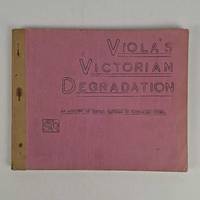
réf. 0037385London: n. p. No date. Softcover Paperback. Good Condition. 16.5cm x 20.5cm. 70 leaves printed recto only 10 black and white illustrations within the pagination. Lettered wrappers. Soho typescripts were clandestinely produced works of pornographic fiction associated with London's Soho book trade during the 1950s and 1960s. Typically typewritten duplicated by mimeograph and printed on one side of the paper only they were usually issued in simple stapled wrappers without publication details. Sold under the counter they formed part of Britain's illicit post-war pornography trade with retailers categorizing stock by theme using a shorthand folk-sexological vocabulary such as 'fladge' flagellation 'straight' 'B/W' interracial 'les' lesbian and 'Fem Dom' female domination. Produced as ephemeral publications and often read to destruction surviving examples are scarce and remain under-represented in institutional collections. Cover title: Viola's Victorian Degradation: An Account of Sexual Matters in Victorian Times. Lacking the side-staples spine reinforced with paper minor split at spine tail. Light vertical creasing and minor crossed-out annotations to wrappers lower panel. Category: Sexuality; Sexuality::Erotic Fiction; 20th Century: 1960s; Inventory No: 0037385. BZDB407 Sexuality; Sexuality::Erotic Fiction; 20th Century: 1960s; Unbranded SOHO TYPESCRIPT The Horrors of a Victorian Girl's Engagement n. p. paperback
réf. 0037387London: n. p. No date. Softcover Paperback. Very Good Condition. 16.5cm x 20.5cm. 56 leaves printed recto only. Side-stapled plain wrappers. Soho typescripts were clandestinely produced works of pornographic fiction associated with London's Soho book trade during the 1950s and 1960s. Typically typewritten duplicated by mimeograph and printed on one side of the paper only they were usually issued in simple stapled wrappers without publication details. Sold under the counter they formed part of Britain's illicit post-war pornography trade with retailers categorizing stock by theme using a shorthand folk-sexological vocabulary such as 'fladge' flagellation 'straight' 'B/W' interracial 'les' lesbian and 'Fem Dom' female domination. Produced as ephemeral publications and often read to destruction surviving examples are scarce and remain under-represented in institutional collections. Minor creasing and ink annotation to wrappers. Category: Sexuality; Sexuality::Erotic Fiction; 20th Century: 1960s; Inventory No: 0037387. BZDB407 Sexuality; Sexuality::Erotic Fiction; 20th Century: 1960s; Unbranded SOHO TYPESCRIPT Spankings. Headmaster's Tales. n. p. paperback
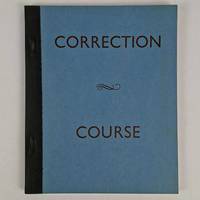
réf. 0037389London: n. p. No date. Softcover Paperback. Near Fine Condition. 19cm x 15.5cm. i 78 leaves printed recto only. Side-stapled cloth tape spine lettered covers. Soho typescripts were clandestinely produced works of pornographic fiction associated with London's Soho book trade during the 1950s and 1960s. Typically typewritten duplicated by mimeograph and printed on one side of the paper only they were usually issued in simple stapled wrappers without publication details. Sold under the counter they formed part of Britain's illicit post-war pornography trade with retailers categorizing stock by theme using a shorthand folk-sexological vocabulary such as 'fladge' flagellation 'straight' 'B/W' interracial 'les' lesbian and 'Fem Dom' female domination. Produced as ephemeral publications and often read to destruction surviving examples are scarce and remain under-represented in institutional collections. Minor tanning and ink annotation to lower cover. Category: Sexuality; Sexuality::Erotic Fiction; 20th Century: 1960s; Inventory No: 0037389. BZDB407 Sexuality; Sexuality::Erotic Fiction; 20th Century: 1960s; Unbranded SOHO TYPESCRIPT Correction Course n. p. paperback
réf. 0037388London: n. p. No date. Softcover Paperback. Very Good Condition. 17cm x 14cm. i 68 leaves printed recto only. Side-stapled plain wrappers. Soho typescripts were clandestinely produced works of pornographic fiction associated with London's Soho book trade during the 1950s and 1960s. Typically typewritten duplicated by mimeograph and printed on one side of the paper only they were usually issued in simple stapled wrappers without publication details. Sold under the counter they formed part of Britain's illicit post-war pornography trade with retailers categorizing stock by theme using a shorthand folk-sexological vocabulary such as 'fladge' flagellation 'straight' 'B/W' interracial 'les' lesbian and 'Fem Dom' female domination. Produced as ephemeral publications and often read to destruction surviving examples are scarce and remain under-represented in institutional collections. Minor creasing to wrappers. Category: Sexuality; Sexuality::Erotic Fiction; 20th Century: 1960s; Inventory No: 0037388. BZDB407 Sexuality; Sexuality::Erotic Fiction; 20th Century: 1960s; Unbranded SOHO TYPESCRIPT Sweet Satisfaction n. p. paperback
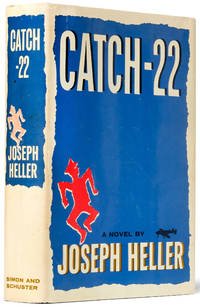
1961réf. L1587453 pages. Octavo 8 3/4" x 6" bound in original publisher's light blue cloth lettered in white to spine top edge stained red in an original red white and blue dust jacket designed by Paul Bacon. With souvenir typescript one page 11" x 8 1/2" signed in black ballpoint "Joseph Heller. Housed in a custom made enclosure. First edition with first state jacket. Souvenir typescript excerpt from chapter one of the great satirical novel Catch-22 beginning: "It was love at first sight. The first time Yossarian saw the chaplain he fell madly in love with him." signed by Heller in black ballpoint pen. Catch-22 is a satirical war novel by American author Joseph Heller. It is his debut novel. He began writing it in 1953 and the book was first published in 1961. Often cited as one of the most significant novels of the 20th century it uses a distinctive non-chronological third-person omniscient narration describing events from the points of view of different characters. The separate storylines are out of sequence so the timeline develops along with the plot. The novel satirizes military bureaucracy and greed. Condition: Some staining to cloth along top edge and at foot of spine. Jacket lightly rubbed with a few small tears along edges some with tape repairs to reverse small puncture to back panel at fold else very good in like jacket housed in custom orange-brown marbled cloth clamshell box. Souvenir typescript fine. Simon and Schuster hardcover
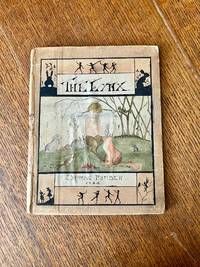
1923réf. 11753NP 1923. 33 typed pages with 21 good quality original ink drawings and lettering around the text. 10.5 x 8.3 inches. Watercolour illustration mounted to the front cover with blank ink drawings and lettering surrounding it. Some wear to the paper covered boards and chipping to the paper on the spine. Pages a bit loose but still all attached to the binding. An interesting self issued magazine with a very personal 6 page article of the writer's impressions of a trip to London plus puzzles letters poems and stories each with original ink illustrations. Page 2 has a list of the magazine subscribers with dates they are allowed to borrow and read and then pass to the next person. An interesting mix of articles and the standard of the accompanying artworks are generally very high. I can find no mention of this magazine anywhere so don't know who produced it where it was issued although a few references to Cambridge and the University may give some clues or how many numbers it ran for but is is a charming and well produced volume. ---- More photos available on request. NP 1923 hardcover
1968réf. bob356private 1968 Koln 1968 large paperback silver titles to purple covers 243 pages comes with Review Request letter dated 24th April 1969 from the British Council and a rewiew response letter from same dated 5th May 1969 to Dr Ellis Evans the well respected Oxford Don Academic and Linguist with his Signature to fep. rubbing wear to covers Otherwise inside in VERY GOOD CLEAN TIGHT READING ORDER. Full refund if not satisfied. 24 hour dispatch. If not pictured in this listing a scan of the actual book is available on request. Soft cover. Good. private paperback
1967réf. 9098New York: Hart - Multi-copy printing 1967. Quarto-sized typescript play 28.5 x 22.5 cm. 1-52 2-31 pages with some holograph corrections. The stage book based on the published book by the prolific American humorist Dan Greenburg. Originally published in 1964 Greenburg's work became the best-selling non-fiction book of 1965. The book and the subsequent musical dealt in familiar tropes of the Jewish woman and has more recently been considered anti-Semitic for doing so. This was Seymour Vall's stage book for the musical version produced for Broadway in 1967 with music by Michael Leonard and lyrics by Herbert Martin. How to Be. opened with Molly Picon in the lead at the Hudson Theater December 28th 1967 and closed January 13th 1968 after just 20 performances. Vall went on to have greater success on Broadway as a Producer on a 1972 revival of Stephen Sondheim's A Funny Thing Happened on the Way to the Forum. There are modest holograph corrections throughout though this is not signed and thus unclear who the annotator may have been. In blue metal post-bound binder titled in silver. Fine. Hart - Multi-copy printing unknown
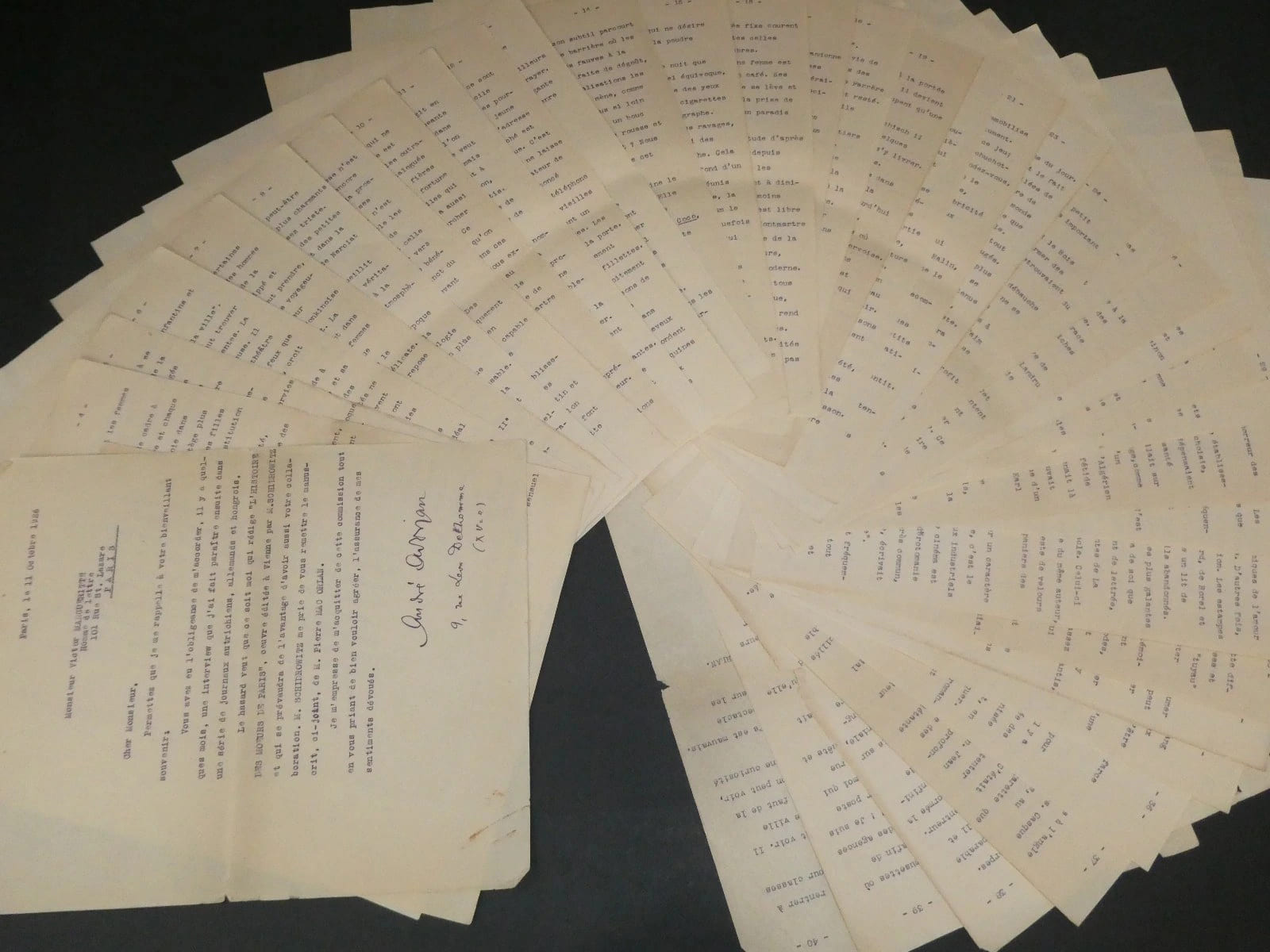
1926réf. 920056742031Pierre Mac Orlan - Tapuscrit - Moeurs de Paris, envoi à Victor Margueritte - 1926 Ecrivain français, auteur du Quai des brumes. Tapuscrit d'un texte de Pierre Mac Orlan. Le texte n'est pas daté ; il est accompagné d'une lettre d'envoi datée du 11 octobre 1926. Dactylographié à l'encre violette sur feuillets de papier crème, paginés de 4 jusqu'à 40, avec signature dactylographiée « Pierre MAC ORLAN » en fin de texte. Est jointe une lettre signée d'André Adorjan, dactylographiée avec signature et adresse autographes, adressée à Victor Margueritte, par laquelle il lui transmet ce texte de la part de Leo Schidrowitz, éditeur à Vienne d'une « Histoire des moeurs de Paris » à laquelle Victor Margueritte collabore également. Dans ce texte, Pierre Mac Orlan décrit le Paris secret de l'après-guerre : prostitution, maisons de rendez-vous, cocaïne et opium, nuits du Bois de Boulogne et cinéma clandestin. Etat : Bon état général, plis inhérents à l'envoi, traces de rouille de trombone en tête et en pied à gauche, plis et petites déchirures marginales. La 1ère page du tapuscrit n'est pas numérotée, puis la suivante est la numéro 4, ensuite les pages se suivent bien jusqu'à 40. Dimensions : 21,1 x 27,1 cm Nombre de pages : 39 pages
1952réf. 32919Rarissime tapuscrit original de 5 pages numérotés sur papier pelure, avec corrections manuscrites et signatures de Pierre Boileau et Thomas Narcejac. Ce texte sera édité aux éditions Matarasso en 1987 en tirage limité à 66 exemplaires numérotés sur Arches, avec illustrations d'Anne Proszynska-Hurel.
réf. c4982Paris, Les Editions de France, 1926 ; in-8° broché, couverture blanche illustrée en couleurs par L. Haffner au 1er plat, titre en noir; (4),322, (1)pp.Couverture jaunie avec petites déchirures, petits manques au dos en pied, le premier et le dernier feuillets jaunis, sinon rares piqûres sur les marges non rognées.
réf. c5934Tapuscrit in-4° , vers 1970 ;30 feuillets écrits au recto seulement, placés sous chemise de carton souple, dos de toile bleu vif.
réf. c6130Tapuscrit in-4° agrafé, vers 1960. 12 feuillets tapés au recto, titre en rouge, plusieurs passages soulignés en rouge. Quelques mots rayés.Petites déchirures en marge des feuillets sans perte de mot.
réf. 9761Ensemble de 3 tapuscrits ou copies de tapuscrits de Paul Gsell, en 5 dossiers. Diogène le Chien. Pièce en Trois actes. Tapusctit in-4° sous chemise ocre ou beige formant couverture, titre manuscrit au 1er plat par l'auteur, broché par ruban. 2 exemplaires, un de 144pp. , l'autre non paginé. Les 2 avec nombreuses ratures et corrections autographes de l'auteur. Cette comédie a été radiodiffusée en 1937, avec une musique de Henri-Emile Sauveplane (cf. BNF). Déchirures aux couvertures, on a joint des pages volantes d'un 3ème exemplaire incomplet. /
réf. 12156Fort dossier des archives d'Henri Iselin avec un tapuscrit : "Au vent de la Flibuste. Roman d'Aventures historiques et maritimes. Preface du Vice-amiral Misoffe " (titre manuscrit figurant sur la chemise servant de couverture). Sur le 1er feuillet intérieur le titre tapuscrit devient : "Henri Iselin. Aux vents de l'aventure… A travers l 'histoire de la Flibuste aux Antilles" (avec la mention manuscrite "illustrations de l'auteur"). Au verso de la 1ère couverture carte de visite commerciale en couleurs de Henri Iselin,avec son adresse manuscrite. Au total 234pp. Très rares ratures ou corrections de ponctuation.
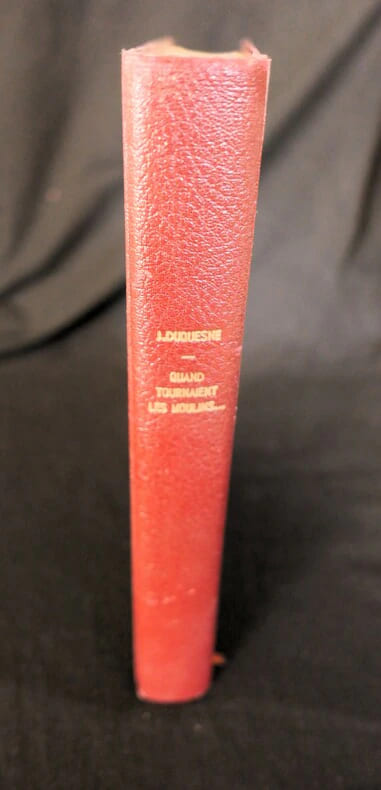
1959réf. 911959 Copie carbone d'un tapuscrit sd (1959), 186 pp en recto uniquement, reliure skyvertex, titres dorés, signet. envoi de l'auteur à Marcel Guillemyn, l'illustrateur, il s'agit donc de l'exemplaire de celui-ci. Marcel Guillemyn a été directeur de l'ancien musée de Roubaix. Versos un peu salis par les résidus de carbone, reliure un peu frottée, sinon bel exemplaire, l'un des deux seuls puisque roman jamais édité. Il s'agit d'un roman qui se situe dans le Roubaix textile du 17ème siècle.
réf. 103376Kenya, Ouganda, France (Génillé), juillet-octobre 1905, in-4, [1]-72 ff. tapuscrits et [3] ff. de table volants; 1 dessin à l'aquarelle en front, 93 photos argentiques contrecollées, 2 plans de trophées dessinés, 1 carte dépl. volante montée sur carton fort (déchirure centrale, sans perte), Demi-basane verte et étui de l'époque, monogramme "A.M" doré en pied du dos (dos insolé et décollé en partie), Précieux et rare journal tapuscrit d'un safari en Afrique de l'Est, rédigé à la première personne par une femme, Suzanne Cochin (1886-1930) : il s'agit du récit d'un voyage de 103 jours mené en compagnie de deux cousins d'une famille de la bourgeoisie française, Guy de La Motte Saint-Pierre (1871-1945) et son futur époux Henri (Henry) de La Motte Saint-Pierre (1881-1915). L'exploratrice y relate leur périple, leurs installations quotidiennes et leurs parties de chasse. Le récit est agrémenté de lettres et notes rapportées par Guy de La Motte, notamment ses traques à l'éléphant et au lion. L'ouvrage est illustré d'une aquarelle de la main de Suzanne en frontispice ("Campement de Djabiné au Kinantop") et de nombreuses photographies originales argentiques de petit et moyen formats (de 90 x 80 mm à 175 x 120 mm env.), représentant les paysages, villages et campements, la flore locale (baobab, bananiers, plantations de cocotiers, papyrus...), les habitants (guides-chasseurs, femmes du village de 'Mtondia, guerriers Massaï, chasseurs Kavirondo), des missionnaires, ainsi que les animaux abattus et les chasseurs posant près de leurs dépouilles. La plupart des clichés ont été réalisés par les voyageurs, sauf mention contraire : quelques-uns sont des agrandissements de photographies professionnelles. Trois feuillets volants tapuscrits indiquent les légendes des photographies. L'ouvrage s'accompagne d'une carte dépliante contrecollée sur carton, volante, sur laquelle sont indiqués en rouge les trajets des chasseurs français : par voie ferrée et par steamer; par étapes de la caravane; et les raids des principales grandes chasses. En tête de volume est contrecollé un carton d'invitation à une projection de vues prises par un conférencier anonyme, « X. », au cours de son « Voyage dans l'Est Africain Équatorial », à la Société Nationale d'Horticulture de France, le samedi 26 mai 1906. La carte a été délivrée par MM. Guy et Henry de La Motte Saint Pierre.* Les feuillets 67-72 comportent des tableaux de la faune rencontrée. En fin de volume, deux schémas dessinés à la plume précisent l'emplacement des trophées installés au retour des La Motte Saint-Pierre dans leurs salons à Génillé (Indre-et-Loire). ____________________________ La première partie du voyage se fait sur la côte (2-19 juillet); la seconde sur les hauts-plateaux (20 juillet - 20 septembre) et la troisième sur le Victoria Nyanza, avec le retour dans la foulée (21 septembre - 13 octobre). Ensemble, Suzanne, Henry et Guy suivent la piste de l'ivoire, traquent et tuent rhinocéros, hippopotames, oryx, lions, cobes ou encore gazelles; ils abattent des oiseaux et des servals par opportunité. Guy se révèle chasseur chevronné. Suzanne piège et tire les oiseaux. On voit les chasseurs français négocier des bijoux, objets et armes avec les habitants. On apprend par ailleurs qu'ils sont tenus de respecter les "game regulations", qui interdisent de tuer les femelles de certaines espèces; Guy note avec ironie et dédain que les chasseurs locaux Kavirondo du lac Victoria, eux, ne respectent pas cette règle lors de leurs propres parties de chasse (p. 61). Au fil des pages, on découvre la condition de femme dans une telle expédition ? Suzanne déplore notamment de ne pas pouvoir participer à la chasse au éléphants, qui "ne se prête pas davantage aux goûts sportifs d'une 'faible femme' " (p. 4); on découvre son goût pour la végétation tropicale et ses occupations d'aquarelliste, on apprend Couverture rigide
réf. 4354DB28 x 22,3 cm. 1 S.
1987réf. 2031DB(Paris), 1987. 4°. (2) 489 Bl. Mit zahlr. Abb. und z.T. gef. Karten. Orig.-Leinenbroschur mit handschr. Rückentitel. = Dissertation der "Université de Paris-Sud, Centre d'Orsay".
1966réf. 1952BBFrauenfeld, Vlg. Huber, 1966. 8°. 125 (3) S. Orig.-Pappband mit Schutzumschlag.
1940réf. 3010CB1940. Gr.-8°. (54) Bl. Mit 3 Tafeln (Originalzeichnungen) sign. AP. G. und 12 mont. Fotografien (9 x 7 cm). Leinenband der Zeit.
1935réf. 28309ABSt. Gallen, 1935. 4°. 1 Bl., 120 (2) S. Halbleinenband der Zeit (leicht bestossen).