AnonABAA
6 014 résultats
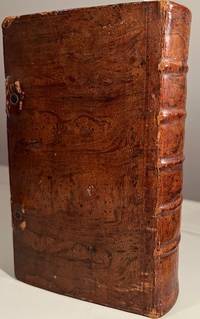
1813réf. 24057Germantown: Michael Billmeyer 1813. Third Improved Edition. In a Billmeyer binding of full calf over bevelled wooden boards with simple line tooling; original riveted clasps and leather straps in tact. No example in the Maser Coll. catalog or in Papantonio. Very good tight bright copy; a free endpaper with paper excision. The binding is exceptional. 12mo I - v vi - blank 1 - 572 22 - index pp; II - 2 3 - 55 1 - index pp. Printed in double columns. This copy with the signature of Catherine Stoner on a front free endpaper. An uncommon survival in such condition. Arndt #1952 & #1953; S&S #28887. Though listed as two works by Arndt they are normally found together as he states. Michael Billmeyer hardcover books
1900réf. 24033Unknown place ca1900. Very good with two small spots; some loss to border tassle decoration; two small repairs to the stitching. Stitched "table scarf" made up by joining four cotton panels of equal size that are decorated with dense copper thread embroidery designs each design is different. The whole meas. appx. 17 x 16 3/8 inches An unusual "table scarf" in the Arts & Crafts style. The design applied to plain cotton is made up of four equal size individual panels with elaborate embroidered designs - each in a distinct pattern - made with copper thread as are the tassles. Most likely a unique individual effort. Well crafted. unknown books
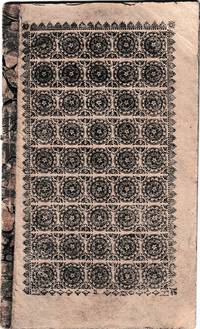
1822réf. 24087Ephrata: Joseph Bauman - attributed 1822. Original printed pictorial wrappers illustrated with a dense highly detailed geometric grid pattern; stitched as issued. Very good; backstrip reinforced with marbled paper overlay. 12mo 2 20 2 pp. A rare survival. One of two midwifery handbooks published post-1800 under this title in central Pennsylvania for the community of German immigrants and settlers. They were meant to be used and as a result did not survive - especially in this condition. These pamphlets did not achieve wide circulation in post-colonial America. Arndt #2534; S & S #7830. [Joseph Bauman - attributed] unknown books
1850réf. 24102Skippackville PA: Fast Job Press ca1850. As issued. Good; overall spotting; old folds; some separation along the folds with two letters affected; old nail hole at the top margin where it was once hung. Folio broadsheet printed recto and verso no watermark meas. appx. 520 x 215 mm. Rare - unlocated. Fast Job Press unknown books
1819réf. 24118English 18th - late 19th century. Very good; some sunning around the spine; small wear spots. A green moire silk book "chemise" with an elaborate border edging of metallic and cotton thread integrated in a "wave" pattern and a color silk thread needlework decoration "lozenge" shaped without outline applied to the front cover. It meas. appx. 175 x 115 mm. A handsome and unusual artifact. Rare. The term "chemise" is broadly applied to include those book coverings that were not created for and secured to an individual book but rather intended for interchangeable use on a variety of printed books notebooks or personal diaries. Internally the book would have been secured by the extended silk moire "pockets" sewn to the chemise covers into which a book cover could be slid - front and rear. The size and single decorative cover suggest an item that would have been personal to the owner - most likely a woman - and frequently carried closed cover facing out thereby displaying the decorative stitching. A summation of source information with references is Vanessa Robb's article available at: https://arhpee.typepad.com/Chemise%20bindings.pdf. Apparently no other examples of this type of cover have been indexed in public collections e.g. there is nothing akin to it in the Lefèvre catalog Livres en broderie . - restricted to only French examples - or in Davenport's study. The color needlework decoration is most likely 17th century Italian. The probability is that the needlework was a piece of salvage that survived into the 19th century and then was utilized as an applied decorative "plaque". Evidence for this is shown in the overlap of the wave pattern edging along all four edges of the front cover that appears to secure the needlework in place. The matrix for the needlework also shows through at one small spot and sits atop the green silk backing. The metallic and cotton thread edging is problematical to date. There is delicate couching securing it to the green silk backing. It could be as late as 1900 or much earlier. If later the overall design suits an "Arts & Crafts" motif given the indulgent use of earlier decorative needlework that this chemise exhibits. A most interesting survival. unknown books
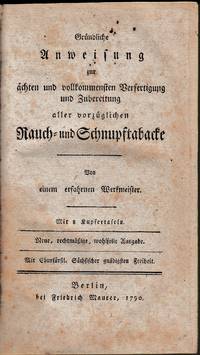
1790réf. 24081Berlin: Friedrich Maurer 1790. "New Edition" so stated BUT the First Edition. Somewhat later three-quarter leather. Very good; some rumpling to the plates. 12mo 6 3 - 171 1 - blank pp. 8 numbered folding plates on seven sheets. A detailed manual for the preparation of tobacco for smoking or as snuff. The author provides numerous recipes. But Arents points out the value of the book is in the illustrations. These display the tobacco mixing-churns racks moulders and presses for roll-tobacco kilns cutting machines and implements for manufacture. There is no earlier edition than 1790 recorded. The edition statement on the title page is most likely an advertising ploy. The 1802 printing is listed as the second edition. Absent from Engelmann and preceding anything in the handlist by 20 years; Arents #972 with an illustration; Immensack 39; VD18 - 90009053. Friedrich Maurer hardcover books
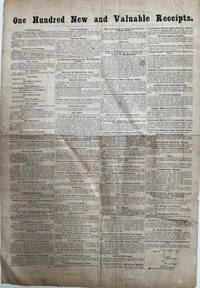
1870réf. 24090Pennsylvania ca1870. As issued. Very good; old folds with minor separations. Folio meas. appx. 485 x 328 mm.; milled paper no watermark. Printed in four columns. A general list of household recipes cures cleaning preparations white wash "whiskey vinegar" a way to compute interest - you get the idea.This sort of thing did not survive use for very long especially if folded instead of hung. Unlocated. unknown books
1771réf. 24054Philadelphia: Henrich Miller 1771. First Edition. Contemporary half-leather on paper covered boards. Some wear around the upper front joint of the binding; boards chafed; there is a loss of several letters and 4-5 words along the gutter of the last page of the Contents; the running title is also affected; on the verso an ornamental ruling line and the final letter "r" in the word Herausgeber. There is overall toning and some finger soiling to the first 5 leaves. Front free endpaper is torn; several pages loose in the first signature. 8vo 10 2 3 -184 pp. Vignette title the second title page with the frequently reproduced woodcut of a horse. Rare. One of the earliest American veterinary books in the colonial era. Though the horse is main subject the inclusion of all kinds of domestic farm animals insured its use in the rural Pennsylvania German farming towns. The medicinal recipes are presented in a thoroughgoing fashion with the admonition from the author that many botanical remedies in the available literature mainly the Philadelphischen Calender that always contained a section devoted to botanical cures and practice bear multiple names but are identical. Something his readers should be aware of when following the recipes. He also warns that general treatment and care of animals is as important as the suggested remedies on offer. Austin #2085; Evans #12692; Arndt #403; Tucher #2206 copy located apparently not complete. Henrich Miller hardcover books
1860réf. 24066Baltimore ca1860. Framed. Very good; some minor spotting to the periphary. Color pen & ink drawing meas. appx. 315 x 445 mm in the original contemporary frame; on glazed cotton. An unusual "cartoon" that features what appears to be Franklin Pierce astride a game-cock directing a spear pointed quill at a prostrate figure in the grasp of the animal. The election of 1852 was preceded by a contentious Democratic party convention in Baltimore - the origin of this cartoon when it surfaced at an estate sale in 1995. Until that time it had been folded and kept undisturbed. The result is its retention of the depth of the original color and very good condition. Although the attribution to the Pierce campaign cannot be certain it appears the most likely - especially with the game-cock. Pierce faced days of votes to secure his candidacy that was not by any means popular. Here he is shown subduing one of his opponents for the nomination. unknown books
1900réf. 23093New York: Underwood & Underwood ca1900. Unknown issue. Original printed box; as issued. Near Fine. Printed cloth slipcase with 30 stereoscopic views of the park and printed explanatory text on the verso of the mounts. An excellent early visual record of the park and its attractions. The views show the geysers bison dramatic scenery etc. The pamphlet of explanatory text is NOT present. Underwood & Underwood unknown books
1870réf. 24000Belgium ca1870. As accomplished; removed from a frame. There is some browning and minor staining all treatable but overall in generally fresh condition; fading and spotting minor stains to the color silk borders. There are NO rips tears losses etc. A magnificent 7 feet 5" x 11 inch sewing sampler exhibiting skill for lace making and associated decorative and serviceable sewing patterns. Cotton and silk pattern "panels" each appx. 7" long are imaginatively stitched in train making up the length of the sampler; mounted to a cotton backing; edged with color dyed silk satin finish borders. Ideally meant to be rolled and un-rolled for presentation Originating in a pre-WWII English collection. An extraordinary survival - at over 7 feet long - and as such most unusual. A demonstration sampler for a young girl having completed an advanced course of instruction and showing what she was capable of producing. One of the panels in the sampler attests to this by having the designation "2 Cours" utilized as stitched decoration. In addition to the more "common" decorative stitching patterns are examples of fine hand stitched lace decorative ruffled patterns etc. All executed with precision and exquisite skill. A similar sampler was sold in July 2018 at the provincial auction house of Hanson in the UK. Their description stated the item was "unique" and originated at Childonck convent in Flanders. The name is embroidered on one of the panels of their sampler and on a panel of the one being offered here; the selection of styles lace patterns embroidery etc. make the two appear similar. By the time this sampler was finished machine made lace with applied hand-made motifs challenged more expensive hand-made production. From the mid-16th century lace was the latest thing in textiles and female artisans of Flanders produced some of the most precious examples. The history of lace is one of predominantly women's craftsmanship. The church was historically a steady customer. By the late 19th century by "look" there was essentially no difference yet the demands of fashion and cachet of real lace as a signifier of status and wealth continued to drive demand for the true hand work. See chapter 11 in Cormack / Majer Threads of Power; Frieda Sorber P. Laces: Looking Through Antwerp Lace. unknown books
1848réf. 22152Vienna: Leopold Grund March 1848. As issued. Very good. Large 4to 4 pp.; bifolium. Report of events in Berlin during the uprising of 1848. World Cat entry states it was taken from reports in the Vossischen Zeitung. Clearly printed for a news hungry population in Vienna. OCLC cites 2 locations in Berlin - citing a Berlin printing only. Leopold Grund unknown books
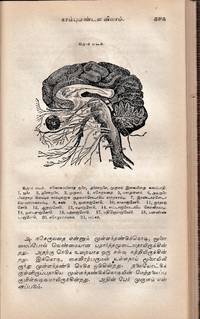
1857réf. 23027Madras: Printed and Published at the American Mission Press For the American Missions in Ceylon and South India 1857. Unknown. Original blind stamped horizontally ribbed pale pink cloth. Fine; trifle sunned. 12mo 206 4 pp. The text is illustrated throughout. There is one leaf 2 pp. of errata loosely inserted that is included in the page count. The text is in Sinhalese throughout. The Preface is signed in type S.F.G.; being S F Green who identifies himself through his location in Jaffna Ceylon Sri Lanka. The book is based on a free translation of an earlier work by Dr. Calvin Cutter. It is meant to provide basic medical knowledge and a clear idea of the structures of the human body and how the body functions. Portions of the text on individual organs and subjects were reprinted as individual pamphlets in 1877 at the mission press in Jaffna. Printed and Published at the American Mission Press, For the American Missions in Ceylon and South India hardcover books
1860réf. 23020French: Unique. ca1860. Contemporary black pebble grain calf. Very good; some rubbing and chafing to the binding. 4to 130 pp. unpaginated large folding ink drawing. Glazed paper that meas. 268 x 206 mm. Accomplished in a neat French script recto/verso in alternate columns with space for notes. The manuscript title leaf is absent. Beginning in the 1820s Henri-Gustave Delvigne a French military officer began experimenting with ways to improve the accuracy and function of the French army's percussion rifles. In short order he developed a design with a modified chamber and rifled barrel that would establish itself as the "Delvigne rifle". In the following years Claude Ètienne Minié would improve on the design through the introduction of a "cylindro-conical" bullet fired from a rifled barrel 1847. It would set a new standard in distance accuracy and lethality it was used extensively in the American Civil War. The work offered here provides the scientific basis - through tests - of the concept of rifling to impart spin to a projectile thereby improving stability in flight and accuracy and the introduction of cylindrical shapes as a basis for projectiles. The ms is not a derivative work but appears to record original tests the author at one point boasts of doing over 10000! shots from the rifles used and introduce new concepts e.g. oil coated projectiles or the issue of retro-fitting ordnance by rifling barrels. He does mention Delvigne on p. 126 in order to explain a figure on the accompanying plate. In all a unique competent and scientific inquiry concerning major improvements to firearms. Unique. unknown books
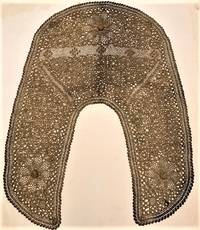
réf. 23049Unknown date and place French/Spanish. Carefully stitched to a cloth covered mounting board. Overall excellent but with some superficial darkening in small areas because of hair oil residue. Twisted metal-wire collar measuring appx. 60 x 47.5 cm. A complex finely woven twisted metal wire lace-work collar of indeterminate age and origin. The lace-work for want of a better descriptive term is minutely detailed and modelled after the examples from 16th century continental textile pattern books. It is decorated with elaborate three dimensional "rosettes" in a field of roundels varying in size and gauge of the wire utilized. Rebatos or collars included in early 17th century or late 16th century portraits of women seem close in style to the one offered here but the twisted wrapped wire construction argues for a later period . It was apparently worn at some time and then removed from the garment and preserved. See F Speelberg Met. Museum of Art Bulletin Fall 2015 Fashion & Virtue. hardcover books
1838réf. 22085Boston: Perkins & Marvin 1838. First Edition. Original publisher's green gilt stamped cloth. Good; some spotting and a bit of wear to the cover. 12mo 96 pp. last 7 pages are adverts A presentation of the principles of a successful business covering the usual things like credit purchases insurance but also store locations bonds and securities speculation. Coming on the heels of the 1837 panic one wonders how many sales the book had. S&S #50828; Kress C-4646. Perkins & Marvin hardcover books
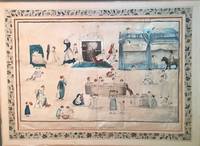
1820réf. 22081ca1820. Framed; acid free material but utilizing the original mat with its hand drawn and colored watercolor floral decoration. Very good; some age toning to the paper; occasional minor paper flaw. Original watercolor meas. appx. 270 x 395 mm. with excellent margins on all sides. What appears to be an English themed watercolor but having another French language title on the sheet that reads : Costume Anglois!. The paper is watermarked: I&E C / 1819. It is a delightful multi-subject view into an elaborate childhood nursery showing children and dogs in all kinds of circumstances. unknown books
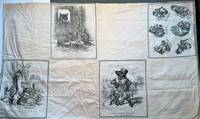
1940réf. 22104ca1940 . As issued. Very good overall with some light soiling. 52.25 inches long x 35.5 inches wide; comprised of ten black and white printed panels appx. 10.25 inches x 8.75 inches stitched together in an alternating pattern with white panels. The printed panels are scenes from well known children's rhymes or stories accompanied by several lines of printed representative text. The cotton base and printed panels are made from a sturdy cotton. What appears to be a child's cotton quilt cover decorated with black and white printed panels illustrating scenes from nursery rhymes or stories. The date is uncertain. unknown books
1800réf. 22099Paris ca1800. Contemporary half-leather. Good; some modest stains; ownership stamp; occasional close margin. 8vo appx. 300 pp. with assorted numeration. The following items are in the volume: 1 Précautions relatives a la dyssenterie . 8 pp. Imp. du dept. de la Guerre; 2 Instruction relative a la slaubrité des camps . 8 pp. Imp.de la Republique 1795; 3 Instruction sommaire sur les eaux minérales . 10 pp. 1795; 4 Loi. Qui fixe le traitement des Officiers de santé des armées 4 pp. Imp. de la Republique 1795; 5 Instruction sur les eaux minérales a l'usage des troupes 16 pp. Imp. de la Republique 1797; 6 Bulletin de lois de la republique #310 16 pp. nd; 7 Arrêté . concernant les hôpitaux militaires 104 pp. 1798; 8 Extract Journal Militaire 99pp. 1799; 9 Dept. de la Guerre . Conseil de santé des Armées. Aux Officiers de santé en chef des hôpitaux . 10 pp.; 1801; 10 . Conseil de santé aux officiers de santé . et aux chirurgiens-majors . 12 pp. Imp. de la Republique 1801; 11 Formulaire Pharmaceutique . 112 pp. Paris Méquignon 1804. There was an inadequate formulary of 63 pp. printed in 1793 another in 1799 - apparently a reprint. The balance of the contents covers the governance of military hospitals surgeons and physicians. Rare. hardcover books
1810réf. 21165Reutlingen: JJ Macken Buchhandlung 1810. Reprint. Contemporary half calf with marbled boards. Very good; some spotting. 8vo vi 7 - 164 last page incorrectly numbered 2 - contents pp. An anonymous guide for those who would marry in choosing an appropriate spouse. The author provides instruction on how to observe people in order to get to truly know them. What to expect Why does one wish to marry There was a previous printing in Berlin in 1809. No American holdings for either printing. JJ Macken, Buchhandlung hardcover books
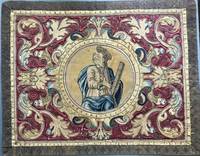
réf. 22057Italy Sixteenth century. Good with some modest surface abrasion and minor loss to a part of the applied stitched strapwork decoration; some light fading of original color in the thread of the portrait. Embroidered panel measuring appx. 454 x 570 mm. Apparels such as this were produced throughout Italy. The work would have been undertaken by a number of people to do the background portrait and decorative elements. A variety of thread was used. The piece is quite heavy indicating the use of metallic wire wrapped around silk thread. The border frame outermost perimeter is entirely metal wire thread. Color dyed silk thread is used in the portrait in order to effect "depth" and realism and to accomplish the figure's modelling. It is assumed that the subject is St. Anthony of Egypt given the cross that accompanies the figure. The strapwork foliate ornamentation is first seen in Islamic manuscripts and artwork; taken up in Italy where it was used in an array of decorative arts eventually to spread throughout Europe. unknown books
1833réf. 21111Philadelphia: James Kay ca1833. Unknown. Original publisher's gilt stamped roan. Good; some wear and chipping to the backstrip. 12mo Frontispiece Engraved title 2 - printed title 3 - 254 2 - adverts pp. A later printing indicated by the inclusion of the "Preface to the new edition". Atwater identifies three printings before 1836 that appear from our experience to be uncommon in trade. The anonymous author promises his readers that medical principles are few and easily understood. The preface states that the section of fevers and the teeth the second section of the book is entirely new. See Atwater #78 - #80. James Kay unknown books
1884réf. 21178Bristol UK 1884. Spine and front cover are gilt stamped; edges painted red. Near fine; a few minor scrapes. . 8vo. A compressed block of leather appx. 33 mm. thick machined and with gilt stamped decoration to look like a bound book. The rear cover is not finished and shows the original "hide" finish of the leather. An advertisement for the Avonside Tannery in Bristol England dated 1884. This is a solid block of compressed leather skillfully machined and decorated to resemble a bound book. unknown books
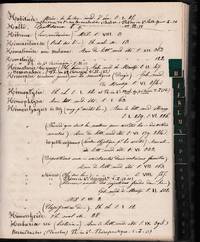
1850réf. 22054France: Unique ca1850. Contemporary half-leather marbled paper boards; fore-edge is letter indexed. Very good. 4to appx. 260 pp. Written in a clear French. An unusual alphabetical listing of medical terms that are acompanied with notations to their precise locations in the literature and medical periodicals of the period. The context contains everything from the common e.g. membrane to unique e.g. "mercurialisation". The annotations are detailed and precise. Unique hardcover books
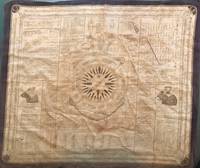
1890réf. 22046UK ca1890. As issued. Good; some light brown discoloration in sections; edges faded; printed text a bit faded; small hole in border inoffensive. Printed cotton scarf meas. appx. 31.5 x 27.5 inches; border appx. a 1.25 inch band of color on four sides. A printed cotton scarf with a naval theme. The date is derived from the depiction of the Webley Mark I revolver introduced into service in 1887 and the Lee Metford rifle introduced into service in 1888. A compass rose forms the central design motif around which is printed regulations weapon descriptions signals and coding some music seaman's proverbs full kit for what appears to be tropical engagements instructions in the use of the scarf as a temporary tourniquet etc. unknown books