628 resultados
1993ref. UTHECHA00acmfHarvard University Press 1993. Very Good. Theophrastus. Characters and Mimes: Cercidas and the Choliambic Poets. Herodas; Cercidas; Rusten Jeffery; Cunningham I. C. Cambridge Massachusetts: Harvard University Press 1993. 574pp. 16mo. Cloth. Book condition: Very good with gentle bumping. Dust Jacket Condition: Very good with bumped edges. In DJ protector. Harvard University Press hardcover books
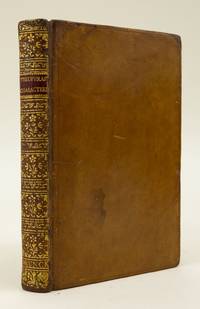
1557ref. ST16215jGeneva: Ex Officina Henrici Stephani 1557. 172 x 105 mm. 6 3/4 x 4 1/8". 4 p.l. 17-168 i.e. 152 pp. mispaginated but complete. Edited by Henri Estienne. Simple but appealing 18th century tan calf covers with triple gilt fillet border smooth spine divided into panels by plain and dotted gilt rules gilt starburst centerpiece gilt titling marbled endpapers. Printer's device on title page. Renouard 116:3; Schreiber 142; Dibdin II 500; Hoffmann I 287-88; Hoffmann III 524; USTC 450450. ◆Joints and extremities lightly rubbed minor offsetting from turn-ins to endpapers and flyleaves leaves with a touch of browning to head edge isolated small marginal spots or minor smudges but still an extremely pleasing copy clean and fresh internally in a well-preserved binding. Rarely seen in the marketplace this collection of Greek texts printed in the exquisite Estienne "grecs du roi" type includes four parts: the 23 "Characters" of Theophrastus along with that author's essay on the senses and perception; the pseudo-Aristotle "De Mirabilibus Auscultationibus" "On Marvellous Things Heard"; and an essay on springs rivers and pools by the first century A.D. Greek philosopher Sotion. In "Characters" Theophrastus ca. 371 - ca. 287 B.C. delineates such human foibles as gossiping grumbling and boasting while the text once attributed to Aristotle is a series of anecdotes about inexplicable phenomena in the natural world a genre of classical literature known as paradoxography. The classical texts are followed by the critical notes of Henri Estienne 1528 or 1531-91 who rivaled Aldus Manutius in combining publishing with scholarship. In discussing this work Dibdin says "whatever H. Stephen did is worth consulting." Henri also contributed to the typography used here the smallest size of the "grecs du roi" cut for his father Robert by Claude Garamond--it is based on the Greek script written by the precocious Henri when he was 10 years old. Ex Officina Henrici Stephani unknown books
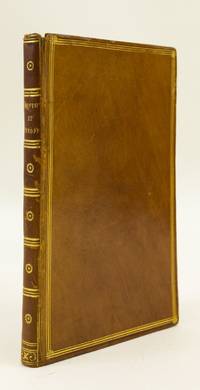
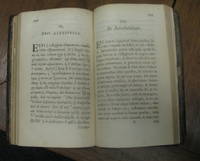
1754ref. 15495Oxford: Printed; and to be had of R. Clements and J. Fletcher…et al. 1754 First edition. Contemporary calf rubbed rebacked with old spine laid down. Octavo. Main text in Greek and Latin on facing pages. Extensive notes and observations in English. Covers rubbed corners worn. Armorial bookplate of William Frere 1775-1836 master of Downing College and later vice-chancellor of Cambridge University. Later pencil notations by a later student one dated 1932. A little light foxing. A good copy. The translator/compiler is Richard Newton 1676-1753 was educated at Christ Church College Oxford becoming a doctor of divinity in 1710. In 1710 he became principal of Hart Hall in Oxford where he tried to implement educational reforms. Running into opposition he oversaw its transformation into Hertford Colege. "Its statutes were the work of Newton and embodied his ideas on education… He would oversee tutors and students with equal strictness. Regular and rigorous academic exercises were to guarantee scholastic standards. Great power reposed in the principal who doubled as bursar. The principal in a manner more appropriate to a hall than to a college selected fellows. Future principals following Newton's own example were to be chosen exclusively from alumni of Westminster and Christ Church. Newton was keen too that an economical regime should attract undergraduates from less affluent backgrounds and compete for members against other colleges within the university. As principal he watched vigilantly over the domestic economy of the house. He calculated that the annual expenses of an undergraduate could be cut to about £31. He also waged an unavailing battle against the distractions that seduced the young from their studies. His frugal regimen at Hertford of 'small-beer and apple dumplings' was easily mocked"Oxford DNB. An able translator he produced this as part of his academic work and it was published posthumously. Printed; and to be had of R. Clements and J. Fletcher…[et al.], unknown books
1748ref. 48907Glasguae: exudebat Robertus Foulis 1748. 12mo pp. 52 34; text in Greek followed by the Latin; contemporary calf double gilt rules on covers enclosing a blind-decorated border gilt turn-ins spine decorated in blind and gilt marbled endpapers speckled edges; joints rubbed very good. Gaskell 120. exudebat Robertus Foulis unknown books
2009ref. 13523Milan: BUR 2009. First Edition. Original Wraps. Near Fine in Wraps. First Edition. Original Wraps. "Perfumes" is dedicated to aromatic plants and their uses in the art of ancient perfumery. The work which opens with a general introduction to odors their origins and classification presents a comprehensive and detailed discussion of the perfumes artificially produced by humans for the pleasure of smell. Theophrastus reviews the qualities of spices and the oils in which their fragrances are preserved describes the key stages in the preparation of scented ointments and scented powders and explains how perfumers store their products and the techniques they employ to sell them. Foreword by Simone Beta.--Publisher. From the collection of Brian Cotnoir alchemist artist and award-winning filmmaker. Author of Practical Alchemy: Guide to the Great Work The Emerald Tablet a series of Alchemical 'Zines Alchemical Meditations Alchemy: The Poetry of Matter and most recently On Alchemy: Essential Practices and Making Art as Alchemy. He has presented seminars and workshops around the world on various aspects of the alchemy. Khepri Press was started in 2014 as a place to organize and distribute his work. It is a very small press dedicated to alchemical book arts. Some of this work is publishable and others may exist only in manuscript or object form - alchemical results or talismans. Near fine light toning else tight bright and unmarred. Small 8vo. 210pp. Illus. b/w. Color printed wrappers. Former owner library stamp. Text in Italian. BUR unknown books
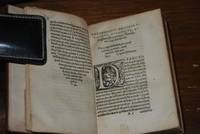
1528ref. 17850Strassburg: H. Sybold 1528. Apparently the reprint of an unrecorded 1525 edition. Small 8vo 96 unnumbered leaves printed in Roman types with Greek sidenotes. With 2 nice 9-line historicated initials. Bound in contemporary all-over bindstamped calf rebacked. Some marginal staining a very nice copy. Ritter Bib. Alsace. 2321; Hoffmann III 729; Pritzel Thesaurus Literaturae Botanicae 9187; Strasbourg Imprints p. 248 no. S3.1.2; not in Bird; Adams or the British Library Catalogue. Scarce the OCLC lists just three copies NLM VXG PPC. This is the first edition of Theophrastus to apparently be published specifically as a medical textbook. This contains books vi to ix of the De Historia Plantarum as well as the first three chapters of Pliny's Historia Naturalis. This was translated by Theodore Gaza 1400-1475 that was originally printed in 1483. H. S. Reed notes that Theophrastus was the founder of Botanical science and one of the greatest botanists of all time. The printer Seybold was himself a physician and "probably developed the publication of medical manuals on his own press as an adjunct to his practice . He was instrumental in incorporating the knowledge of the Greek physicians into the standard medical corpus"Chrisman Lay Culture Learned Culture 36 174. The interesting binding is tooled with borders of 2 double ruled frames enclosing strapwork with dots in the small rectangular spaces and large central panels different on the front and back covers of geometrical designs and acrons and a foliate pattern. The title is written on the edges in a contemporary hand. H. Sybold unknown books
1779ref. TK0066Frankfurt & Leipzig:: 1779 1779. 8vo. IV 246 20 pp. Engraved frontispiece title-vignette showing a bunch of grapes woodcut head & tailpieces index; title & final leaf each reinforced at hinge with white tape frontispiece is mounted on the adjoining newer free endsheet; waterstains. Later quarter vellum boards vellum tips; some staining to upper cover upper joint cracked. Good. Paracelsus' Natural Magic Magazine: containing as an extract from his writings all sorts of things for pleasure and benefit but especially economic arts and proven cures for humans and animals published for the general benefit. / This is an alchemical recipe book of concoctions for a myriad of needs some agricultural for using specific plants for medicinal cures treatments etc. each based on the writings of Paracelsus. A random sampling: p. 46 On the problem of caterpillars and how to prevent them from eating away your fruit trees. p. 36. How to catch large and small mice. p. How to fatten geese to give them large livers to make foie gras. p. 132. To remove stains from clothes. p. 150. How to give wine a sweet taste. p. 194 How to cultivate/make wine in the autumn. p. 210. Against the red aphid and fire. p. 162 The Queen's lemonade. p.---. How to make paper. p. 80. How to make beer pp. 176 more. A lot of attention is given to colors farben. / "Das Buch ist eine Sammlung von allerlei Zauberkunsten Recepten fur Menschen u. Thiere gegen Ungeziefer Hausmitteln u. s. w. auch sympathetischen Mitteln". - Spatere Ausgabe erstmals 1771 erschienen. – Erste u. letzte Bll. im Zuge der Neubindung im Falz verstarkt in den Randern gebraunt feuchtfleckig Titel starker u. zudem angestaubt insgesamt wohlerhalten. PROVENANCE: Koller auction 18 March 2015 lot 275. REFERENCES: Graesse Bibl. magica 49; Sudhoff 465. 1779 hardcover books
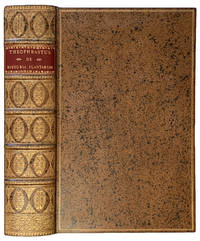
1644ref. M14453Amstelodami: apud Henricum Laurentium 1644. 1644. Folio in 6s. 20 418 417-694 495-529 730-994 997-1187 1 88 pp. Numerous mispaginations noted. With the magnificent engraved title and 600-700 decorative botanical woodcuts. Text in 2 columns index not paginated parallel texts in Greek and Latin. Bound recently in full antique-style speckled calf richly gilt-tooled in a masterfully elegant binding; some neat paper mends to gutter front & back leaves some leaves variously stained at edges in the rear pages 950-988 browned. New endleaves. The splendid Bodaeus van Stapel edition of Theophrastus' seminal work Enquiry into Plants beautifully illustrated with hundreds of fine woodcuts of all the known plants. This is the first edition by edited by Johannes Bodaeus van Stapel 1602-1636 who died prior to the book being issued. This edition of Bodaeus van Stapel is the most important and influential edition of Theophrastus. The book is the first comprehensive systematization all known plants and as such important in the history of plant science. Plants of the new world America Asia and Africa are included. / The editor Bodaeus van Stapel is known for this particular work the Latin version of Theophrastus' Historia plantarum the text completed before his death in 1636 and published posthumously in Amsterdam in 1644 by his father. / Thomas Frognall Dibdin wrote of this edition: "This edition displays great care and research; the notes are numerous and learned and all botanical information to be gleaned from Aristotle Pliny Dioscorides and other ancient writers seems to be embodied in this work. The conjectures of Scaliger Constantine and Salmasius and also incorporated; and although Haller has censured Bodaeus for occasionally wandering from his subject and introducing a few errors the present this edition of 1644 is nevertheless an edition well deserving of the curious botanist's attention: for it has collected into one body the opinions of the old writers on the subject of plants. It contains some wood-cuts of the rarer species which are much better uncoloured than coloured." - Thomas Frognall Dibdin An Introduction to The Knowledge of Rare and Valuable Editions of the Greek and Latin Classics . . . London 1808 vol. II p. 285. / This edition of Theophrastis is "one of the best and most thoughtfully prepared of all the editions of Theophrastis" - Hunt. / "It is interesting not only because of the brilliance of the editing but curiously enough to the American botanist as well for involving in the discussion certain species from Virginia other parts of the New World and Asia. The illustrations of these plants have been largely overlooked in botanical history because of their incidental presence in a work which might not be expected to contain anything of the sort. Some were merely borrowed from l'Ecluse or de Lobel but others seem original in this work." - Harley Harris Bartlett Fifty-five Rare Books for the botanical library of Mrs. Roy Arthur Hunt. Clements Library 1949. / SEE: Theophrastus. Enquiry into Plants. With an English translation by Arthur Hort. Cambridge: Harvard University Press 1916. / McDiarmid J. B. 'Theophrastus.' In: Dictionary of Scientific Biography edited by Charles Coulston Gillispie. New York 1976. Vol XIII pp. 328-334. / Morton Alan G. History of Botanical Science. London and New York 1981. / Negbi Moshe. 'The scientific cradle of botany - Theophrastus and other pioneers.' In: Israel Journal of Plant Sciences vol 58 pp. 309-18. 2010. / Sharples Robert W. Theophrastus of Eresus. Sources for this Life Writings Thought and Influence. Commentary Vol. 5. Sources on Botany. Leiden: Brill 1995. apud Henricum Laurentium, 1644. unknown books
1949ref. 37748St. Gallen: Zollikofer & Co 1949. Later printing. Hardcover. g to vg. Small Octavo. ca. 2400pp. Original half leather over vellum imitation paper boards with gilt lettering on label of spine. 6 Frontispieces 4 tipped-in 2 gravure. Missing Vol. 1. Paracelsus der Medizin- und Kulturhistoriker and Vol. 2. Der philosophischen Schriften erster Teil: Paracelsus als Metaphysiker Magier und Mystiker. Complete works an abbreviated version of this revolutionary medical doctor botanist alchemist astrologer and founder of the discipline of toxicology. Illustrated with facsimile reproductions from previous editions maps e.g. Paracelsus hiking paths and some tipped in gravures and references. Copy of Hohenheim genealogy laid into volume 2. Text in German some in Fraktur. Different shades of brown leather. All six volumes with elaborate Ex Libris Prince Roman Count de Sora on glossy paper pasted to free front endpaper. Light wear to heads and tails of leather spine small chips and tears at volumes 5 and 8 minor scuffing. Few clear tape remnants on inside covers. Minor stains to some foredges. Binding in overall good interior in very good condition. Zollikofer & Co hardcover books
2003ref. 1394662Delanco: The Classics of Medicine Library 2003. Special edition. Hardcover. Octavo 227 pages. In Very Good condition. Spine is brown with gold print raised bands. Boards in brown leather. Text block has gilt edges marbled endpapers brown ribbon marker. Pamphlet laid in: “Notes from the Editors” 14 pages. Reprint of the edition published by George Allen & Unwin London 1917. Text in Ancient Greek and English. NOTE: Shelved in Netdesk Column P. 1394662. FP New Rockville Stock. The Classics of Medicine Library hardcover books
1564ref. 60128vo. 112 ff pages 2 and 110-112 are blank. Bound in modern paneled calf with gilt-stamped fleurons on front and back covers raised bands. Generally good. The first edition of this plague treatise by Paracelsus Theophrastus Bombastus von Hohenheim 1493-1541 the "Luther of Medicine" and one of the key figures in the history of medicine. Written originally in Nördlingen in 1529-1530 it remained unpublished during Paracelsus' lifetime and subsequently taken up and edited for publication by the Paracelsian scholar Adam von Bodenstein 1528-1577. The latter dedicated it to Johann Rudolph Stör von Störenberg Abbot of Murbach and Luders. In addition to the study on pestilence the text includes two short works by Paracelsus: "Vom Preservatiff durch den Schwebel" and "Von der Mummia." In the primary tract Paracelsus for the first time presents his complex theory on the origins of the plague which he believed were the result of astrological and corporeal events set in motion by human sins. "This anthropocentric view of an individual disease is in harmony with Paracelsus' whole philosophy and indeed with Renaissance philosophy in general" Pagel p. 179. Paracelsus also postulates the importance of the principle of sulphur the corresponding agent of the planet Mars in pestilence's causation. He believed that sulphur hidden in three minerals—antimony arsenic and marcasite—affected three corresponding organs: the groin the axillae and the ears. The chapters on causation are followed by sections on remedies. The doctor must cure the agent causing the disease rather than the symptoms of the disease Paracelsus writes. Humoral pathology and its insistence on diet is of no use. "Paracelsus' plague remedies include sulphur spirit of vitriol sulphur sublimate and metals also—for external treatment of boils—toads and decoctions of beetles designed to remove the evil of magnetic attraction but herbs and drugs as prescribed by Ficino and Agrippa are greatly amplified and still appear in a prominent place" Pagel pp. 180-181 n. 151. The editor of this volume Adam von Bodenstein was one of the key figures in the revival of Paracelsian ideas in the German lands in the middle of the sixteenth century. A son of a radical reformer he believed in transmutation of metals into gold and played a key role in the publication of over 80 works by Paracelsus. For his Paracelsianism he was excluded from the faculty and council of Basel University. OCLC records US copies at NYAM NLM Wash. U and UMn. Karl Sudhoff Bibliographia Paracelsica Berlin 1894 60; Walter Pagel Paracelsus: An Introduction to Philosophical Medicine in the Era of the Renaissance Boston 1982 2nd revised edition; Georgiana D. Hedesan "Alchemy Potency Imagination Paracelsus's Theories of Poison" in John Arrizabalaga Ole Peter Grell Andrew Cunningham eds. It All Depends on the Dose: Poisons and Medicines in European History. The History of Medicine in Context Series New York 2018 pp. 81-102; Peter J. Forshaw "'Paradoxes Absurdities and Madness:' Conflict over Alchemy Magic and Medicine in the Works of Andreas Libavius and Heinrich Khunrath" Early Science and Medicine vol. 13 no. 1 2008 pp. 53-81. Paul Messerschmidt hardcover books
1599ref. ST16215hLugduni Lyon: Excudebat Guichard Julliéron apud Antoine de Harsy 1599. Editio Altera Second Edition; EDITIO PRINCEPS of books 24-28. 173 x 109 mm. 6 7/8 x 4 1/4". 12 p.l. 349 1 pp. 24 leaves.Edited by Isaac Casaubon. 18th century French polished calf smooth spine gilt in compartments with central floral sprig surrounded by leaf tools gilt lettering of owner's name Brunck at tail of spine red morocco label marbled endpapers older repairs to joints. Printer's device on title page. Text in Greek and Latin. Title page with ink ownership inscription of Bibliothèque Villelufpen and Richard Brunck; isolated ink marginalia in Hebrew Arabic Greek or Latin. Dibdin II 501; STC French 419; Graesse VII 125; USTC 158510. ◆A couple of short scratches and two small water stains to upper board shallow chip to head of spine leaves somewhat browned due to paper quality a couple of tiny rust spots but a very good copy clean and fresh internally in a sound binding. From the library of a notable--and perhaps notorious--classical scholar this is an important edition of the Greek philosopher's "Characters" with Isaac Casaubon's revisions to his translation and commentary of 1592 and the addition of five sections printed here for the first time that Casaubon had recently discovered at the Palatine Library. One of the earliest known works of psychology "Characters" contains pithy descriptions of the various types of human foibles noted by the Oxford Companion for their "remarkable vivacity and keenness of observation." A pupil of Aristotle and the master's successor as head of the school of Peripatetic philosophy Theophrastus ca. 371 - ca. 287 B.C. wrote widely on a number of subjects ranging from ethics to physics to botany he is considered the "father" of the last discipline. He would have considered these descriptions of such characters as "The Flattering Man" "The Stupid Man" and "The Oligarch" a minor work but it is one that has weathered the centuries. The present translation and commentary marked a milestone in the life of the great classical scholar Isaac Casaubon 1559-1614. Sandys says "It is not until we reach his commentary on the 'Characters' of Theophrastus 1592 that we find a work that is marked by his distinctive merit an interpretation of a text of the most varied interest founded on wide reading and consummate learning. It was a work that won the highest praise from Scaliger." Dibdin called the commentary "a rich mine of Grecian literature." Former owner Richard François Philippe Brunck 1729-1803 was a classical scholar of considerable note who devoted his leisure to the critical revision of the Greek poets. According to Britannica "He spent considerable sums of money in publishing editions of the Greek classics." Flaunting the established mode of editing and criticism he did not hesitate to make clarifying changes to difficult or inscrutable passages of text--whether these alterations were supported by manuscript authorities or not. Deprived of his royal pension by the French Revolution Brunck was forced to sell portions of his library in 1790 and again in 1801. Excudebat Guichard Julliéron apud Antoine de Harsy unknown books
1585ref. D11004Frankfurt am Main: Apud heredes Andreae Wecheli heirs of Andreas Wechel MDLXXXV 1585. Hardcover. Very Good. 4to 210 x 149mm. 16 blank leaves at front and back 4 318 2 pages including final leaf with Wechel printers device. Title also with Wechels woodcut printers device a pegasus soaring over a caduceus pair of cornucopia and shaking hands AW monogram twice. Edited by Friedrich Sylburg. Dedicated to French scholar Joseph Justus Scaliger 1540-1609. Latin dedication notes and index. Greek text 18th-century calf marbled endpapers and red edges rebacked; light edgewear light marginal foxing title lightly browned. Likely remaining for several generations at the library of Balliol College Taylor Institution Oxford number B.181 deaccessioned sometime in the early 20th century two bookplates on front pastedown. Collection of Francis Howard Forbes 1881-1957 professor of Greek language and literature at Amherst College his round pictorial bookplate of Attic-style scribes on front pastedown. This particular copy was cared for by Oxford institutions for a good part of its history then crossed into a New England personal library of a classical scholar sometime in the early 20th century. This is the self-contained volume from the 1584-1587 collected edition of the works of Aristotle in Greek and the Metaphysica of Theophrastus. Friedrich Sylburg 1536-1596 was a German classical scholar who made important contributions to several popular Greek texts of the later sixteenth century like Estiennes Greek Thesaurus. In 1583 Sylburg resigned from an educational post he held at Lich and moved to Frankfurt to work as leading active editor for the enterprising Wechel publishers. The humanist printers flourished in three distinct cities; Paris Frankfurt and Hanau. Andreas Wechel settled the firm in Frankfurt and distinguished it mainly by publishing neo-Latin literature classical philology and works by Ramus and his followers. The relationship between Sylburg and the Wechel printers was a seamless match; this 1585 edition of Aristotle was praised for its great critical power and finesse. It is widely regarded as the authoritative edition of its kind. Sound example of a sixteenth century published work on Aristotelian principles born from the inventive relationship between scholar and press.Fabricius-Harles III 444; Hoffmann I 275 and 289. Apud heredes Andreae Wecheli (heirs of Andreas Wechel) hardcover books
1941ref. 21571München : Langen Müller, 1941. 959 S. 8°. 1. - 50. Tsd. d. Volksausg. OLwd mit Buntpräg. ohne SU.
1980ref. 131326Frankfurt am Main: Insel-Verlag, 1980. 500 S. ; 23 x 13,5 cm ; Halbleinen.
1893ref. 99227HBLondon:, William Wesley and Son, 1893. 1 Bl., 46 Seiten, OHftg., 22 x 14 cm.
1924ref. 22437Heilbronn : W. Seifert, 1924. 263 S. : Mit Abb. auf 13 Taf. ; brauner Org.-Halbleinen mit farb. Kopfschnitt und mont. Rückenschild
1967ref. 1203212Georg Olms Verlagsbuchhandlung; Hildesheim, 1967. XXXII; 87 Seiten; 21,5 cm; kart.
1992ref. 1168331Stuttgart: Teubner, 1992. 293 S. Originalleinen.
1965ref. 260198BBIngelh., Boehringer, 1965. 4°. Mit zahlr. Abb. 42 S. OLwd. m. OU. - Gutes Ex.
1967ref. 157142Darmstadt: Wissenschaftliche Buchgesellschaft 1967. 402 Seiten. 8° (17,5-22,5 cm). Orig.-Leinenband mit goldgeprägtem Rückentitel. [Hardcover / fest gebunden].
1991ref. 157140Darmstadt: Wissenschaftliche Buchgesellschaft 1991. 402 Seiten. 8° (17,5-22,5 cm). Orig.-Leinenband mit goldgeprägtem Rückentitel. [Hardcover / fest gebunden].
1976ref. 157141Darmstadt: Wissenschaftliche Buchgesellschaft 1976. 402 Seiten. 8° (17,5-22,5 cm). Orig.-Leinenband mit goldgeprägtem Rückentitel. [Hardcover / fest gebunden].
1995ref. 146307Stuttgart: Steiner 1995. 227 Seiten. Gr. 8° (22,5-25 cm). Orig.-Broschur. [Softcover / Paperback].
1790ref. 50949Leipzig, bei Engelhart Beniain Schwickert, 1790. neue, umgearbeitete Ausgabe 304 Seiten , 21 cm, Hardcover/Pappeinband