6 865 résultats
réf. EXE-124Paris, Hors-commerce, [1924]. Grand in-8 demi-maroquin, dos & couverture conservés (Duhayon). Edition Originale. Tiré à petit nombre sur Alfa.
1972réf. 14689Paris Maeght Éditeur 1972. Folio. 28 pp. Illustrated in colour and b/w. Containing 3 original lithographs by Marc Chagall frontcover and 2 other 1 double-page. unknown
1972réf. 14689Paris, Maeght Éditeur, 1972. Folio. 28 pp. Illustrated in colour and b/w. Containing 3 original lithographs by Marc Chagall, frontcover and 2 other (1 double-page).
réf. 31433Paris, Gallimard, 31 mars 1924. Un volume in-quarto tellière, broché, 254 pp., plus table.
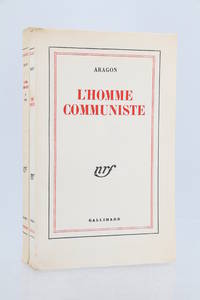
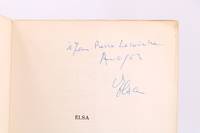
1959réf. 92377Paris: Gallimard 1959. Fine. Gallimard Paris 1959 18.7 x 23.7 cm Broché First edition one of 105 numbered copies on wove paper the only large-paper copies after 35 on Holland paper.Press clippings laid in having left a slight offset on the colophon page at the end of the volume.A pleasing copy.Signed presentation inscription from Louis Aragon to Jean-Pierre Lecointre further enhanced by Elsa Triolet's autograph signature. Gallimard unknown
1946réf. 84242Paris: Gallimard 1946. Fine. Gallimard Paris 1946-1953 12 x 19 cm 2 volumes brochés First edition one of 55 numbered copies on vellum for each volume deluxe copies. Spines very lightly sunned without detriment handsome set. Gallimard hardcover
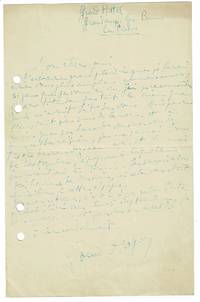
1914réf. 75566Grandcamp-les-Bains Grandcamp-Maisy 1914. Fine. Grandcamp-les-Bains Grandcamp-Maisy s. d. ca 1914-1920 13.50 x 21 cm une page sur un feuillet remplié Autograph letter signed addressed to a correspondent whom we have not been able to identify. Written from the Grand Hôtel de Grandcamp-les-Bains Calvados in blue ink on a folded sheet of white paper. A transverse fold inherent to the posting of the letter and four small perforations affecting the text but not impeding its reading. The mention of Grandcamp-les-Bains - where Aragon seems to have been only once during the summer of his seventeenth year - and the signature - of an early form - lead us to think that the letter could have been written in the summer of 1914. Philippe Forest in his biography of Aragon confirms that it was indeed at Grandcamp-les-Bains where his family had rented fifty rooms in a large seaside hotel to accommodate family and friends that the future poet learned the news of mobilization. The handwriting less rounded than on manuscripts prior to the 1920s however seems to us later and we are therefore not in a position to confirm the date of 1914. unknown
1931réf. 014802Paris José Corti 1931 In-12 Agrafé Ed. originale
1980réf. 1033571980 Paris, Gallimard, 1980, In-8, 543 pp., plein cuir rouge, dos à 5 nerfs, étui (D.H. Mercher).Edition originale exemplaire n°2/65 sur vergé blanc de Hollande Van Gelder, premier papier.(103357)
réf. mon0000152048Hucitec 1/1/2015 12:00:00 AM. paperback. Very Good. 0.6299 in x 7.0079 in x 5.0394 in. A clean and tight copy. wrapped in plastic Hucitec paperback
réf. 21718Paris, NRF, 1928. In-4, 236 pp., broché, couverture originale imprimée (minuscule manque au premier plat de couverture).
réf. 22746Paris, Edité pour la Libre pensée révolutionnaire de France par le Bureau d'éditions et de diffusion, 1932, in-8, br. sous couv. illustrée, n.p. Edition originale. 16 images de Georges Adam. Violent pamphlet antireligieux d'Aragon publié peu après la parution de* Front rouge*, dont Breton avait encore pris la défense dans "Misère de la poésie", et de celle du tract "Paillasse" dans lequel Aragon fut cette fois accusé par les surréalistes de "lâcheté intellectuelle et d'arrivisme". Très peu diffusé pour des raisons circonstancielles, "Aux Enfants rouges" ne fut intégralement republié qu'en 2007 (*Œuvres poétiques complètes*, Pléiade, t. I). Rare.
1967réf. 115739Paris Gallimard 1967 1 vol. relié in-8, demi-maroquin rouge à coins bordé d'un filet doré, dos à fins nerfs, tête dorée, couvertures et dos conservés (Alix), 515 pp. Édition originale de ce roman hétérogène qui mêle fiction, poèmes en prose, souvenirs, critiques, journal intime... Le narrateur, linguiste à la retraite, tente de reconstituer l'image de son ex-femme. Mais le souvenir faisant défaut, il donne vie à un double allégorique de sa mémoire, Marie-Noire... Un des 160 exemplaires numérotés sur vélin pur fil Lafuma-Navarre, dans une parfaite reliure signée.
1924réf. 115714Paris Gallimard 1924 1 vol. relié in-4 tellière, demi-maroquin bordeaux à coins, dos à fins nerfs, tête dorée, non rogné, couvertures et dos conservés (Semet & Plumelle), 254 pp. Édition originale de ce recueil de contes et saynètes surréalistes qui s'ouvre sur une fantaisie, "Quelle âme divine !", rédigée par Aragon à l'âge de huit ans. Un des 108 exemplaires de tête réimposés sur vergé Lafuma-Navarre et parmi ceux-ci un des 100 réservés aux bibliophiles de la Nouvelle Revue française (n° XXXIII, imprimé pour le libraire Camille Bloch). Très bel exemplaire, parfaitement relié.
1962réf. 46499Paris.: Au Cercle du Livre Précieux. 1962. Original publisher's full white vellum title and vignette in blind to front cover reduced matching title and vignette in gilt to spine grey endpapers white silk placemarker t.e.g. vellum-edged grey paper board slipcase; spine with wear and discolouration. 8vo. 252 x 168 mm. Half-title in red and black leaf with original engraving by Hans Bellmer verso as frontispiece printed title in red and black 5 leaves with Préface by André Pieyre de Mandiargues and text of 'Le Con d'Irène' leaf with justification and final leaf with achevé d'imprimer recto and publisher's credit verso. Louis Aragon's 'Le Con d'Irène' with Hans Bellmer's original engraving.From the edition limited to 700 numbered copies on vélin d'Arches pur Chiffon each with the frontispiece engraving by Hans Bellmer; several hors commerce copies were also issued.First published pseudonymously in 1928 with etchings by André Masson 'Le Con d'Irène' has been described as 'un essai sérieux de prose pornographique' Cramer. A second edition designed and illustrated by Hans Bellmer was published in 1952 after a facsimile of the first was issued in 1948 before the present edition also illustrated by Bellmer. Of considerable notoriety the novel's pseudonymous Albert de Routisie was identified as Louis Aragon adding to his oeuvre of erotic works that also included - with Benjamin Péret - the explicit '1929'.'Pendant trois mois l'auteur a parcouru notre grande colonie interrogeant administrateurs officiers colons. Pour la clarté de ses exposés comme par la valeur de sa documentation ce livre intéresse le spécialiste et le profane. Selon le mot d'un grand emmerdeur 'Le Con d'Irène' devrait être mis entre les mains de tous nos futurs administrateurs éducateurs et officiers coloniaux.' Aragon writing in André Breton's copy of the first edition. Au Cercle du Livre Précieux. hardcover
réf. EXE00534Paris, Gallimard, 1929. Grand in-8° demi-maroquin noir, dos & couverture conservés. Edition originale. Tirage limité à 255 exemplaires, celui-ci est l’un des 170 sur vergé d’Arches.
1942réf. CAT001047Mexico: Publicacaciones Herrerieas 1942. First Edition. Hardcover. Very Good Condition. 3 volumes rebound in green cloth backed marbled boards with a bit of wear at corners. Modest browning to pages chips to final pages in vol 2 stains to endpapers; very good or better overall. 992pp; 959pp; 284pp. Dated 1942 1943 1943. Illustrated with photos and drawings including detailed step by step instructions in a number of instances. Arranged alphabetically but idiosyncratically vol 1 is A vol 2 B-Z vol 3 added recipes. A mammoth collection of recipes collected under the supervision of journalist editor film maker he was the assistant director on Eisenstein's ¡Que viva Mexico! in 1932 and gastonome Agustín Aragón Leiva who was a dedicated enthusiast for regional Mexican cuisine later credited by Diana Kennedy with introducing her to many local foods and allowing her the use of his library -reportedly the most extensive culinary library in Mexico and a sort of Grimod de la Reyniere figure in Mexican cuisine in his later years. Rare with the third volume - 6 copies in OCLC none with the final volume. Size: 8vo. 3-volume set complete. Quantity Available: 1. Shipped Weight: 2-3 kilos. Category: Cooking Wine & Dining; Inventory No: CAT001047. Publicacaciones Herrerieas hardcover
1964réf. SBBIH-W4VCXOEK427CFondo de Cultura Económica. 1964. hardcover. Good. Our good condition books are generally good for reading but not for gifting or collecting. They could have imperfections such as creasing fanning inscriptions margin notes yellowing staining on edge or cover or pages bumps scuffs etc etc sometimes multiple of these. It's a wide category that encompasses anything that isn't almost-new down to anything that is slightly better than poor. We would NOT recommend gifting Good books - these should be considered reading copies. Our books are dispatched from a Yorkshire former cotton mill. We list via barcode/ISBN so please note that the images are stock images and may not be the exact copy you receive furthermore the details about edition and year might not be accurate as many publishers reuse the same ISBN for multiple editions and as we simply scan a barcode or enter an ISBN we do not check the validity of the edition data when listing. If you're looking for an exact edition please don't order at least not without checking with us first although we don't always have time to check. We aim to dispatch prompty the service used will depend on order value and book size. We can ship to most countries see our shipping policies. Payment is via Abe only. Fondo de Cultura Económica. hardcover
réf. 18812Paris, Librairie José Corti, Juillet 1930 à mai 1933. 6 volumes reliés, demi-maroquin parme à coins, non rognés, couvertures conservées.
1944réf. 21641S.l. Paris: Éditions F.T.P.F. Francs-Tireurs et Partisans Français 1944. Limited Edition. Near Fine. THE EMBOSSED TYPOGRAPHY OF THE RESISTANCE PRESS HE SURREALIST TRANSFORMED INTO A WITNESS OF WAR. A primary artifact of the French literary Resistance this copy is the premiere example No. 1 of 25 of the special issue on Papier Alfa. Composed during the German occupation Aragon's poem is a harrowing and defiant invocation of national identity notable for its early and direct naming of the deportations and Auschwitz. Published by the Éditions F.T.P.F.-an imprint of the armed Resistance-this pamphlet was produced under the semi-clandestine conditions of the Liberation era. The title typography is executed in a distinctive tactile relief reflecting the urgent and irregular printing constraints of wartime France. CONDITION: Near Fine -- An exceptional survival for such a fragile pamphlet. The octavo is tight and square with a clean text block showing only light even age-toning. A small chip is noted at the lower edge of the rear wrap and a faint pencil notation appears at the lower corner of the final page. The original glassine wrapper is present and well-preserved having been stored separately to protect the tactile embossed title. SCHOLARLY INFLUENCES: The Witness of Auschwitz: Composed during the German occupation Aragon's poem is notable for its early and direct naming of the deportations and the camps. It represents a critical juncture where Surrealist poetry transformed into political testimony. Tactile Typography: The title is executed in a distinctive tactile relief reflecting the urgent and irregular printing constraints of wartime France. This 'raised printing' is a physical fingerprint of clandestine production. The No. 1 Specimen: As the first copy of the most limited state this specimen was likely intended for a high-ranking member of the Resistance or a central figure in Aragon's immediate Surrealist circle. Author: Louis Aragon was the leading poetic voice of the clandestine Resistance. Je vous salue ma France was written as the "Chant National" for the Liberation. Bibliographic Scarcity: While major institutions hold the standard issue this tirage de tête of 25 copies is effectively unrecorded in major bibliographical databases. It represents a foundational acquisition for any archive specializing in WWII Clandestine Imprints or French Modernism. While OCLC records 7 institutional holdings for the standard issue none specify this limited 25-copy state. KEY FEATURES Limitation: Copy No. 1 of only 25 numbered copies on Papier Alfa. Visuals: Unique embossed and tactile title typography; raised printing visible on recto. Imprint: Éditions F.T.P.F. affiliated with the Forces Françaises de l'Intérieur. Historical: Direct references to the Resistance imprisonment and Auschwitz. Specs: In-8° 8 unnumbered pages; 21 cm. HISTORICAL SIGNIFICANCE -- Louis Aragon was the leading poetic voice of the clandestine Resistance. Je vous salue ma France was written as the 'Chant National' for the Liberation. This specific printing by the F.T.P.F. the armed wing of the Communist Resistance highlights the intersection of political militancy and high-art production. As Copy No. 1 this specimen was likely intended for a high-ranking member of the Resistance or a central figure in the Surrealist/Communist circle. SUBJECTS: Aragon Louis FranceHistory - German occupation 1940-1945; World War II Literature and the war French Resistance Imprints Clandestine publishing France Poetry Resistance Literature Wartime Printing French Modernism. BIBLIOGRAPHIC REFERENCE: FRBNF31726841 standard issue. Éditions F.T.P.F. (Francs-Tireurs et Partisans Français) unknown
1944réf. 21641S.l. Paris: Éditions F.T.P.F. Francs-Tireurs et Partisans Français 1944. Limited Edition. Near Fine. THE EMBOSSED TYPOGRAPHY OF THE RESISTANCE PRESS HE SURREALIST TRANSFORMED INTO A WITNESS OF WAR. A primary artifact of the French literary Resistance this copy is the premiere example No. 1 of 25 of the special issue on Papier Alfa. Composed during the German occupation Aragon's poem is a harrowing and defiant invocation of national identity notable for its early and direct naming of the deportations and Auschwitz. Published by the Éditions F.T.P.F.-an imprint of the armed Resistance-this pamphlet was produced under the semi-clandestine conditions of the Liberation era. The title typography is executed in a distinctive tactile relief reflecting the urgent and irregular printing constraints of wartime France. CONDITION: Near Fine -- An exceptional survival for such a fragile pamphlet. The octavo is tight and square with a clean text block showing only light even age-toning. A small chip is noted at the lower edge of the rear wrap and a faint pencil notation appears at the lower corner of the final page. The original glassine wrapper is present and well-preserved having been stored separately to protect the tactile embossed title. SCHOLARLY INFLUENCES: The Witness of Auschwitz: Composed during the German occupation Aragon's poem is notable for its early and direct naming of the deportations and the camps. It represents a critical juncture where Surrealist poetry transformed into political testimony. Tactile Typography: The title is executed in a distinctive tactile relief reflecting the urgent and irregular printing constraints of wartime France. This 'raised printing' is a physical fingerprint of clandestine production. The No. 1 Specimen: As the first copy of the most limited state this specimen was likely intended for a high-ranking member of the Resistance or a central figure in Aragon's immediate Surrealist circle. Author: Louis Aragon was the leading poetic voice of the clandestine Resistance. Je vous salue ma France was written as the "Chant National" for the Liberation. Bibliographic Scarcity: While major institutions hold the standard issue this tirage de tête of 25 copies is effectively unrecorded in major bibliographical databases. It represents a foundational acquisition for any archive specializing in WWII Clandestine Imprints or French Modernism. While OCLC records 7 institutional holdings for the standard issue none specify this limited 25-copy state. KEY FEATURES Limitation: Copy No. 1 of only 25 numbered copies on Papier Alfa. Visuals: Unique embossed and tactile title typography; raised printing visible on recto. Imprint: Éditions F.T.P.F. affiliated with the Forces Françaises de l'Intérieur. Historical: Direct references to the Resistance imprisonment and Auschwitz. Specs: In-8° 8 unnumbered pages; 21 cm. HISTORICAL SIGNIFICANCE -- Louis Aragon was the leading poetic voice of the clandestine Resistance. Je vous salue ma France was written as the 'Chant National' for the Liberation. This specific printing by the F.T.P.F. the armed wing of the Communist Resistance highlights the intersection of political militancy and high-art production. As Copy No. 1 this specimen was likely intended for a high-ranking member of the Resistance or a central figure in the Surrealist/Communist circle. SUBJECTS: Aragon Louis FranceHistory - German occupation 1940-1945; World War II Literature and the war French Resistance Imprints Clandestine publishing France Poetry Resistance Literature Wartime Printing French Modernism. BIBLIOGRAPHIC REFERENCE: FRBNF31726841 standard issue. Éditions F.T.P.F. (Francs-Tireurs et Partisans Français) unknown books
réf. 24991Paris, Gallimard, 20 juillet 1967. Fort in-8, broché, non coupé, 520 pp.