ARAGON.Livre Rare Book

6 854 résultats
réf. 2876Gallimard, Paris, 1944. Un volume broché (14,5 x 21cm) de 519 pages. Édition originale, un des 88 exemplaires numérotés sur pur fil, tirage de tête après 13 hollande. Couverture usée, dos roussi et un peu passé, la page 377 a été habilement et discrètement restauré. Sinon bon exemplaire. Envoi autographe signé d'Aragon à Yves Breton. Rare.
1962réf. B-21-120027Éditions Lazar-Vernet Paris 1962. Hardcover. Limited edition of 250 numbered copies N. 169. This complete portfolio features 14 original etchings by renowned artists including Chagall Magnelli Zadkine Gilioli Ubac Bissière Jacobsen Fiorini Max Ernst Bona Braque Dufour Lepatre and Vieillard. Each etching is accompanied by an unpublished poem written specifically to complement the corresponding artwork by poets such as Arp Mandiargues Follain Aragon Paulhan and others. Ref: Vallier 183 Kornfeld 121 Spies / Leppien 85. Editions Lazar-Vernet hardcover
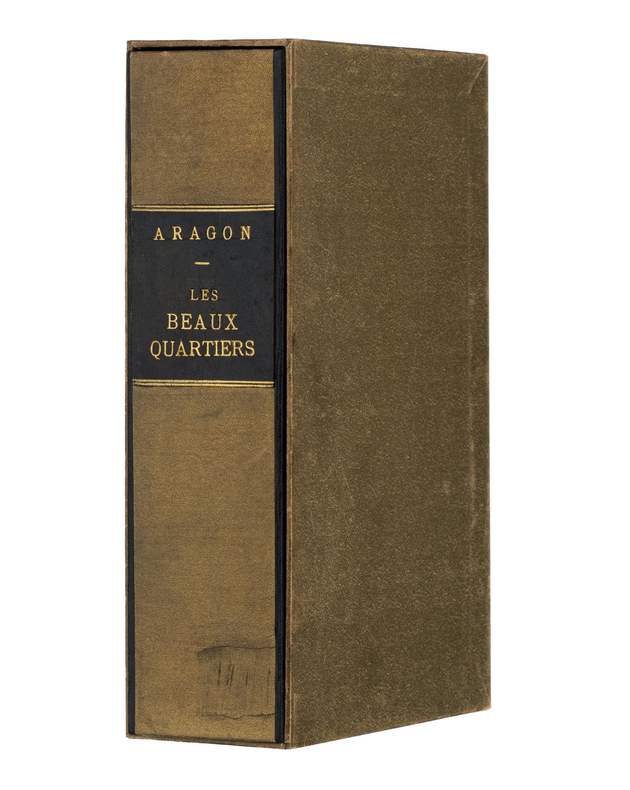
1936réf. 1367Paris, Denoël et Steele, 1936. Fort vol. in-8° (25 x 15 cm) broché, 57 pages, couverture imprimée en noir et rouge,sous chemise et emboîtage doré. Édition originale tirée à 143 ex. numérotés. L'un des 25 ex. sur pur fil Lafuma, celui-ci le n°10 (tirage de tête avec 7 Chine). "Les Beaux Quartiers" est le deuxième roman du cycle "Le Monde réel" qui a débuté par "Les Cloches de Bâle". Aragon a écrit cette oeuvre à la veille de la deuxième guerre mondiale et y a dépeint des pans entiers de la société française de 1913. DESCRIPTION DE L'ŒUVRE : Le roman raconte l'histoire de deux frères, Edmond et Armand Barbentane, issus de la petite bourgeoisie provinciale du Sud de la France, qui montent à Paris dans les années qui précèdent le première guerre mondiale ; de multiples autres personnages, femmes ou hommes, gravitent autour d'eux. Avec eux, en un impressionnant tourbillon, nous découvrons la vie mondaine et demi-mondaine de la capitale, la bourgeoisie d’argent, la misère crasse des laissés pour compte, le monde des hôpitaux et de la rue, la prostitution, les maisons de jeux, le chantage, les ors, la boue, la police corrompue et celle qui ne l’est pas. Les grands débats y ont une place plus grande encore qu’en province, l’imminence de la guerre y est encore plus flagrante, plus oppressante, les mouvements de grève y sont matés avec davantage de ruse et de violence. La fresque sociale et politique n’y est pas développée au détriment des personnages qu’Aragon prend le temps de faire vivre, espérer, souffrir. L’étau qui les broie et souvent les brise ne cesse d’actionner ses mâchoires infernales : nécessités économiques, politiques, amoureuses et, pour les hommes, omniprésentes contraintes de l’amour-propre qui les taraude et les étouffe comme des vêtements trop étroits et des chaussures trop petites. Cette oeuvre, classique dans sa forme, alterne un style fort, truculent, à l’imprécision suggestive quand il le faut et une prose poétique au charme puissant, au balancement estropié et allusif cher à Aragon. Elle est le couronnement magistral du 19ème siècle réaliste par le 20ème siècle bouillonnant de créativité linguistique : il y a du ZOLA en lui lorsqu’il dépeint les Halles et du BALZAC lorsqu’il enserre ses personnages dans la noirceur des complots et du chantage. On pense à PROUST aussi dans son déploiement fantastique, mais on pense surtout à ARAGON, qu’on le découvre ou qu’on le relise.
réf. 923728Editions Pierre Seghers - Collection Poésie 44 Paris 1944 In-8 carré ( 195 X 145 mm ) de 82 pages, broché sous couverture imprimée rempliée, chemise et étui. EDITION ORIGINALE, 1 des 120 exemplaires de tête numérotés sur vergé d'Arches ( N°85 ). Quelques taches claires principalement sur les dernières gardes, bel exemplaire.Ce recueil contient notamment: "La Rose et le Réséda", "Il n'y a pas d'amour heureux", "Ballade de celui qui chanta dans les supplices" écrit en hommage à Gabriel Péri et "Le Conscrit des Cent Villages".
1952réf. 0031071952 Sans lieu [Paris], Chez l'Auteur [Jean-Jacques Pauvert], 1952. In-8 (142 X 227 mm) broché, couverture rempliée imprimée en rouge et noir, dos muet ; 107 pages. Le cinquième feuillet (pages 9-10) est manquant, découpé par l’éditeur, comme pour tous les exemplaires. Il contenait l'achevé d'imprimer avec la mention "Éditions J.-J. Pauvert", et a été supprimé par crainte des foudres de la censure et d'une éventuelle condamnation. Infimes rousseurs dans les barbes.
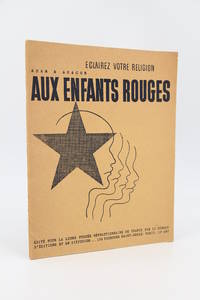
1932réf. 86460Paris: Bureau d'Éditions et de Diffusion 1932. Fine. Bureau d'Éditions et de Diffusion Paris 1932 18 x 23.50 cm agrafé First edition. Illustrated with 16 drawings by Georges Adam. A superb copy of this rare booklet by Louis Aragon a true ""anti-clerical anti-capitalist anti-colonialist anti-patriotic"" Pierre Juquin catechism for the children of the exploited working masses. ""On June 25 1932 the Imprimerie centrale completed printing for the Bureau des éditions et de diffusion 132 Faubourg Saint-Denis Paris a beautiful pamphlet now a bibliophilic rarity . On the cover a large red star - an important and recurrent image in Aragon's work - appears imprinted on children's brains. Sixteen quatrains droll and didactic punctuated for ease of reading alternate with drawings by Georges Adam whose nearly expressionist mockery reminiscent of Rouault's paintings overturns taboos and myths."" Aragon. Un destin français 1897-1939 After breaking with the Surrealists Aragon threw himself wholeheartedly into the Journal de la lutte antireligieuse. He wrote this pamphlet from Moscow and published it on the Party's presses to ignite the fervor of proletarian youth. French poet Jacques Prévert would later follow a similar path with his play Émasculée conception. Anticlerical activism within French Communist associations was in full swing at the time: every symbol and events of religious life were reinterpreted through the lens of class struggle. ""Red baptisms"" were organised forming a community of ""Godless"" children drawing their name from the Association of Godless Workers who corresponded with their Soviet counterparts. Aragon contributed to these new rituals with this particularly radical children's book deemed excessively antipatriotic by Maurice Thorez which he would later disavow at the end of his life. Bureau d'Éditions et de Diffusion unknown
1944réf. 87421Les Editions de Minuit Comité national des écrivains | s. l. [Aurillac] [circa aout] 1944 | 13.50 x 19 cm | broché
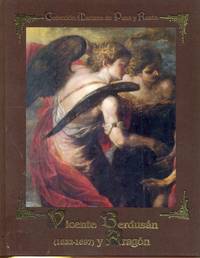
2006réf. 93580Caja de Ahorros de La Inmaculada. New. 2006. Hardcover. 8496007855 . FREE UPGRADE to Courier/Priority Shipping Upon Request - IN STOCK AND IMMEDIATELY AVAILABLE FOR SHIPMENT - FLAWLESS COPY BRAND NEW PRISTINE NEVER OPENED -- - Text in Spanish. 206 pages. Catalogue Raisonne Catalog Raisonné Complete Works Catalogo Razonado Obra Completa Raisonnee Caja de Ahorros de La Inmaculada hardcover
1927réf. 48608Paris. 1927. Original publisher's red printed wrappers stapled as issued titles to front cover in black. 12mo. 194 x 144 mm. Leaf with drop-head title printed text in English throughout final leaf with printed signatures of various Surrealists. The very scarce offprint of 'Hands Off Love' issued in defence of Surrealism's hero Charlie Chaplin after his divorce and the publication of Lita Grey Chaplin's scandalising 'The Complaint of Lita'.Charlie Chaplin's divorce from Lita Grey Chaplin was concluded in August 1927 but her divorce complaint i.e. 'The Complaint of Lita' listed above had been made public - likely by Lita's lawyers at her behest - and a grand scandalous furore resulted. 'Hands Off Love' largely an expression of distaste at the hypocrisy of the scandal and in defence of Chaplin was printed first in the literary review 'Transition' in September 1927 before its appearance as this offprint. It appeared again later and in French in 'La Révolution Surréaliste' in October 1927.The full list of signatories is as follows: Maxime Alexandre Louis Aragon Jacques Baron Jacques-André Boiffard André Breton Jean Carrive Robert Desnos Marcel Duhamel Paul Eluard Max Ernst Jean Genbach Camille Goemans Paul Hooreman Eugene Jolas Michel Leiris Georges Limbour Georges Malkine André Masson Max Morise Pierre Naville Marcel Noll Paul Nougé Elliot Paul Benjamin Péret Jacques Prévert Raymond Quénau sic Man Ray Georges Sadoul Yves Tanguy Roland Tual Pierre Unik.'Hands Off Love' is very scarce and we locate copies in France at the Bibliothèque Nationale and the Biliothèque Kandinsky only; in the US we trace examples at MoMA the Getty Indiana and the Ransome Center. unknown
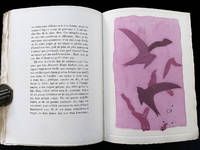
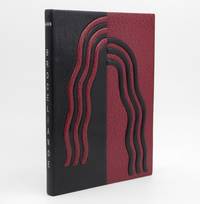
1980réf. 77750Sous étui bordé et sous chemise en demi-maroquin à petits recouvrements. Reliure maroquin noir à encadrement. Plats ornés de décor reprographique dans les tons sépia légèrement chiné et rehaussé de noir, des formes superposées se découpent en un graphisme de trames entrecroisées. Tête dorée. Couverture et dos conservés. Reliure signée C. HONNELAITRE - 1987.
1950réf. 87220s. d. [circa 1950] | 21 x 30 cm | une page sur un feuillet
2010réf. 81721España: Lampreave s. XV - 2010. Lampreave unknown
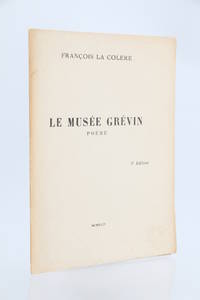
1944réf. 87421s. l. Aurillac: Les Editions de MinuitComité national des écrivains 1944. Fine. Les Editions de Minuit Comité national des écrivains s. l. Aurillac circa aout 1944 13.50 x 19 cm broché First deluxe edition of this masterpiece of Resistance literature one of 100 numbered copies on coated paper the only deluxe copies. A small fold at the foot of the first cover also affecting the following leaves minute foxing in the right margin of the first cover. First published probably simultaneously in the northern zone as a leaflet by ""Les éditions de Minuit"" and in the southern zone as a handmade brochure the cover was wallpaper inaugurating the famous ""Bibliothèque française"" this long poem would subsequently appear for the first time in volume form in October 1943 before it was decided to finally produce a deluxe edition sold for 100 francs instead of 10 francs for the ordinary edition ""intended to honor the financial contributions of Resistance bibliophiles."" Le Musée Grévin considered upon its publication as ""Les Châtiments of 1943"" Les étoiles Dec. 1943 no. 14 would remain with Paul Éluard's Liberté ""one of the masterpieces of clandestine literature."" In L'Intelligence en guerre published in 1945 Louis Parrot would write about it: « ce poème traversé d'images éblouissantes est en même temps qu'une condamnation sans appel des traîtres une prière un acte de fois envers leurs malheureuses victimes. Il peint en termes vengeurs les misérables qui les livrèrent aux bourreaux et évoque le visage de tant de femmes françaises torturées. » This pivotal poem is indeed one of the very first public evocations and the first literary one of the Auschwitz camp: « Aux confins de Pologne existe une géhenne dont le nom siffle et souffle une affreuse chanson. Ausschwitz ! Ausschwitz ! Ausschwitz ! ô syllabes sanglantes ! Ici l'on vit ici l'on meurt à petit feu. On appelle cela l'exécution lente. Une part de nos curs y périt peu à peu ». Exceptional copy printed on fine paper a true act of war whose perilous operation to procure luxury paper in a France where the Nazis controlled printing paper production through the Comité d'organisation des industries arts et commerces du livre COIACL can only be imagined. Les Editions de MinuitComité national des écrivains unknown
réf. 21880Paris, Gallimard, 1944. In-4, 519 pp., broché, couverture originale imprimée (frottements, dos lavé).
réf. 17960Madrid, Antonio Marin, 1766.
1966réf. 103358Paris N.R.F. 1966 328x255mm 37pp., 7 feuillets non chiffrés, une planche hors-texte, plein maroquin rouge, titre doré au dos, couvertures et dos conservés, étui (D. Mitterrand).Edition originale illustrée de dessins dans le texte d'André Masson. Un des 20 exemplaires réimposés sur Japon Impérial (n°19), premier papier comportant une eau-forte d'André Masson numérotée et signée (Saphire 71).Envoi autographe signé d’Aragon à Colette et Jacques Duhamel, ministre des affaires culturelles de 1971 à 1973 dans les gouvernements Chaban-Delmas et Pierre Messmer.On joint deux lettres tapuscrites signées de Pablo Neruda, adressées à Jacques Duhamel:-L’une datée du 26 octobre 1971 remerciant le Ministre de ses félicitation suite à l’attribution du Prix Nobel qu’il obtint le 21 du même mois.-L’autre datée du 12 février 1973 lui expliquant les raisons de l’abandon de son poste d’Ambassadeur du Chili et son départ de la France.(103358)
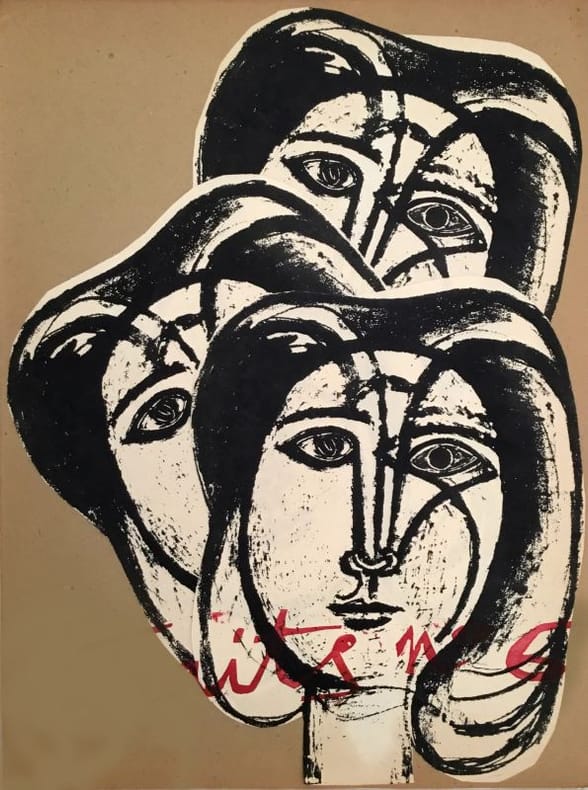
1947réf. 104416Paris 1947 10 Paris, Le cercle des arts de l'Union de la jeunesse républicaine de France, 1947-1952, formats et présentations divers.Publication artisanale, dirigée par F.Giusti, entièrement manufacturée par de jeunes artistes et des étudiants en art appartenant à v l'Union de la jeunesse républicaine de France proche du parti communiste français, TRAITS paraît à des dates difficiles à déterminer. Ses huit premiers numéros sont présentés dans des chemises aux couvertures illustrées notamment de bois gravés et de collages. Louis Aragon, Paul Colin, Gimond, Francis Jourdain, Fernand Léger, Marcel Lods, André Marchand, Matisse, Léopoldo Mendez, Henry Moore, Paul Nelson, Richard J. Neutra, Auguste Perret, Paul Eluard, Marcel Gromaire, Le Corbusier, Pablo Picasso, Candido Portinari, Marc Saint-Saëns y collaborèrent. (104416)
1950réf. 872201950. Fine. It has to be said that we are publishing here this masterpiece deliberately ignored by those who write literary history and which makes existentialist teeth grind or simply spoilt teeth as an example sure that it will not be in vain. s. d. circa 1950 21 x 30 cm une page sur un feuillet Autograph manuscript by Louis Aragon one page in blue ink on a leaf. Precious study by Louis Aragon accompanying the serial publication in Les Lettres Françaises of Marceline Desbordes-Valmore's novel L'Atelier d'un peintre 1833. Aragon rehabilitates the female poet-novelist canceled from the history of literature and snubbed by Existentialists placing her in the tradition of socialist realism. Autograph manuscript by Louis Aragon one page in blue ink on one leaf. Numerous crossed out words and rewritings. Slight rusting due to a paper clip slight shadows of an ink transfer from another page. Published in Les Lettres Françaises episode 16 23 February 1950. In 1949 Aragon chose to publish 'L'Atelier d'un peintre' serially with his own comments. The Cold War made socialist realism the official literary genre for Communist cultural policy: 'For Aragon reading Marceline Desbordes-Valmore is above all reading the history of a generation of a people. More precisely he made Marceline an incarnation of the unfinished Republic of a world still under construction and one that was tending towards freedom. To understand Marceline Aragon invites us to 'date her writings' and not be content to confine her to a single period of her life but to try to find an explanation for her stances which were as different as the regimes during the gestation of the Republic in the nineteenth century'. Aghbarian Lina 'Aragon éditeur de Marceline Desbordes-Valmore' Recherches croisées Aragon - Elsa Triolet no. 14. Of all his comments accompanying 'L'Atelier d'un peintre' this is one of his most polemical: Aragon opposes the Surrealists by contesting Lautréamont's distate of the Romantics with whom Desbordes-Valmore was associated. The writer criticizes the hasty rejection of her work which nevertheless has counterparts in modern literature: 'The Atelier that Aragon reopens with the publication of this novel to rework it to reveal it to give it a second life closer to his own concerns after having disentangled it from its time and emptied it of its Romantic religiosity to lay bare its richness which lies in the feminist cause defended by Marceline Desbordes-Valmore . . For her Ondine the literary character was a transposition of the missing child her son the son of Henri de Latouche her lover. Ondine is thus three times hybrid androgynous real and imaginary daughter and mother at the same time and Léonard her inverted double the one she would have liked to be in order to succeed in the forbidden world of painting. Aragon doubles androgyny with homosexuality as seen in Yorick's phrase 'Talma doubles my existence'. Among other allusions he refers to Henri Miller's Sexus an allusion is made about this work in this manuscript Aragon cultivates the theme of duality on which the whole novel is built. Without abandoning the imaginary world of the novel he seeks to bring out the realistic side of this romantic novel hidden in the shadow of the lyrical novel. In a word Aragon reverses the order of the foreground and background: the romanticism of Marceline Desbordes-Valmore's novel becomes secondary and the historical background takes precedence' ibid. 'We have now come to the night scene in the Place Vendôme which is one of the most intense the most beautiful minutes of the novel of the other century. I know that not everyone will agree. It's come to my attention that there are people who are superbly distracted from L'Atelier d'un peintre and find it wrong that we should publish a story in which there is absolutely nothing of what THEY are looking for in novels and it's possible that those who c unknown
réf. 15172Paris, 1919 - 1920. 12 numéros brochés, couvertures jaunes.
réf. 51-5565Paris: Les éditeurs français réunis 1960. Folio. 27 x 38 cm One of 291 numbered copies. Sheets loose as issued in original wraps textured boards and slipase. 28 original lithographs some in color. Light foxing on cover but not elsewhere. OCLC no. 765770638; Monod no.7050.LÉGER Fernand & ARAGON Louis. Mes Voyages avec un poème d'Aragon et des lithographies de l'auteur. In-folio en ff. couv. imprimée rempliée sous chemise et étui. Complet des 28 lithographies de Fernand Léger en noir ou en couleurs. Tirage à 291 exemplaires sur vélin d'Arches ; n°124. Qqs rousseurs sur la couv. très rares petites rousseurs sur qqs pages. Bon exemplaire. [Paris]: Les éditeurs français réunis, 1960. paperback
1946réf. 0123With an Important Inscription by Aragon Explicating the History of the Text Aragon Louis 1897-1982. La Naissance de la Paix par Rene Descartes: ballet danse au chateau royal de Stockholm le jour de la naissance de Sa Majeste 1649. Paris: Bibliotheque Francaise pour les amis de l'auteur J. Dumoulin 1946. Copy #128 of 300 signed by Aragon. In addition this copy bears a full-page inscription Aragon. 4to. Original wrappers glassine. 34p. plus colophon. With an inscription which reveals the bibliographic history of the original translation: "Your father has requested that I write a poem on the dance for you. It is not possible because I am incapable but this book is on dance. It is a description of a ballet by Rene Descarte written in 1649 for the birthday of the Queen of Sweden. There must be a manuscript in Stockholm but I based my writing on a manuscript which existed before the war in the Bibliotheque Nationale which has since vanished. Here I have expanded the text with comments. For precious Sandra for when she is a big girl who will charm the world with her dancing. Signed Aragon 18 June 1977." When Rene Descartes was 54 he went to Stockholm at the invitation of Queen Christina. It is said that because Descartes refused to dance at a court ball Queen Christina charged him with writing the verses for a court ballet La Naissance de la Paix. The ballet was composed for performance on 8 December 1649 the 23rd birthday of the Queen. It celebrates the Peace of Westphalia at the end of the Thirty Years' war which was more or less won by Sweden. According to a recent study by Richard Watson "the evidence of Descartes' authorship is virtually nonexistent. Almost certainly the ballet was written by Helie Poirier a professional writer of French verse." References: Watson Richard A. Descartes's Ballet 2007. Dumoulin books
1630réf. 8926Napoles: Lázaro Scorrigio 1630. Hardcover Tapa dura. 213x157mm. 8½x6¼". Napoles Lázaro Scorrigio 1630. 2 obras en un volumen. En 4º 213 x 157mm. -I: 8 152 pp. -II: 20 1991 pp. Reencuadernado en pergamino de época guardas renovadas. Primera edición del "Espejo del Duque de Alcalá" y segunda edición la primera 1628 del "Exemplar de la constante paciencia" las dos obras de la constancia política y educación de príncipes de Francisco Lanario y Aragón duque de Carpiñano. Estos tratados posiblemente contratados por el Conde Duque de Olivares se encargaron para refutar las tesis de fray Juan de Santa María y su Tratado de la República. Lázaro Scorrigio hardcover
1932réf. 48563Paris.: Bureau d'Editions et de Diffusion. 1932. Original publisher's tan printed wrappers stapled as issued titles and illustration in black to front cover advertisements to rear. Small 4to. 230 x 184 mm. Leaf with title eight leaves with caricature vignettes by Georges Adam and verse by Aragon recto only two per page final leaf with achevé d'imprimer. André Breton's copy of this very scarce plaquette destined for the children of workers and noted for its virulent 'anticlérical anticapitaliste anticolonialiste antipatriotique' sentiments.This rare pamphlet by Louis Aragon was intended for the children of the exploited masses and as noted by Pierre Juquin was 'anticlérical anticapitaliste anticolonialiste antipatriotique'.Aragon had thrown himself into anti-clericalism after his break with Surrealism and wrote the verses accompanied by Adam's caricatures in Russia. The pamphlet was printed on the presses of 'L'Imprimerie Centrale'.'Pour faire oublier la Commune / Le Sacré-Coeur a vu le jour. / Un beau soir il aura son tour / Ce gâteau blanc comme lune!' From the text.Also included inserted loose is André Breton's membership card filled out in his own hand in black ink giving his address in rue Fontaine and signed beneath for the 'Union Fédérale des Libres-Penseurs Revolutionnaires de France'. A bifolium of blue card the front cover features the vignette of the 'Union' which matches the vignette for Aragon's plaquette. The membership card features Marx's famous slogan 'La Religion c'est l'opium du Peuple!' and a quotation from Lenin as well as fifteen stamps of the Union indicating membership or attendance at meetings nine dated '1932' and three dated '1931' and inscribed 'Octobre' 'Novembre' 'Décembre'.Aragon's plaquette is scarce: we locate copies at the Bibliothèque Nationale in France the Bibliothèque Génève in Switzerland as well as copies at Syracuse Duke Yale Bowdoin and the University of California in the US. Bureau d'Editions et de Diffusion. unknown
1942réf. 373129Neuchâtel: Éditions de la Baconn¡ère 1942. First edition no. 1993 of the trade issue edition of 4080. Frontispiece portrait of Aragon after a drawing by Matisse. 55 1 8 pp. 8vo. Decorative purple and black morocco boards stamped in silver on spine original wrappers bound in signed Leroux at front turn-in. Fine. Flannel-lined chemise. First edition no. 1993 of the trade issue edition of 4080. Frontispiece portrait of Aragon after a drawing by Matisse. 55 1 8 pp. 8vo. This long-form Aragon poem divided into seven sections was the third iteration of Éditions de la Baconniere's "rouge" series "Les poètes de Cahiers du Rhône" notable for their red wrappers and limited issue. This copy is further distinguished by a custom morocco binding n purple and black morocco by the celebrated book artist Georges Leroux who had been a poet prior to becoming a binder in 1959 A pencil note on an interior page cites a 1914 Pablo Picasso painting titled "Tête" but the design does not correspond to work of that title or imagery from that period. Instead it very closely resembles Picasso's 1958 painting "Tête de femme" - subsequently reworked as a series of linocut prints of the same name in 1962 - a timeframe which also aligns more closely with the start of Leroux's bookbinding career. A gorgeous example of French bespoke binding by a master of the craft. Éditions de la Baconn¡ère unknown
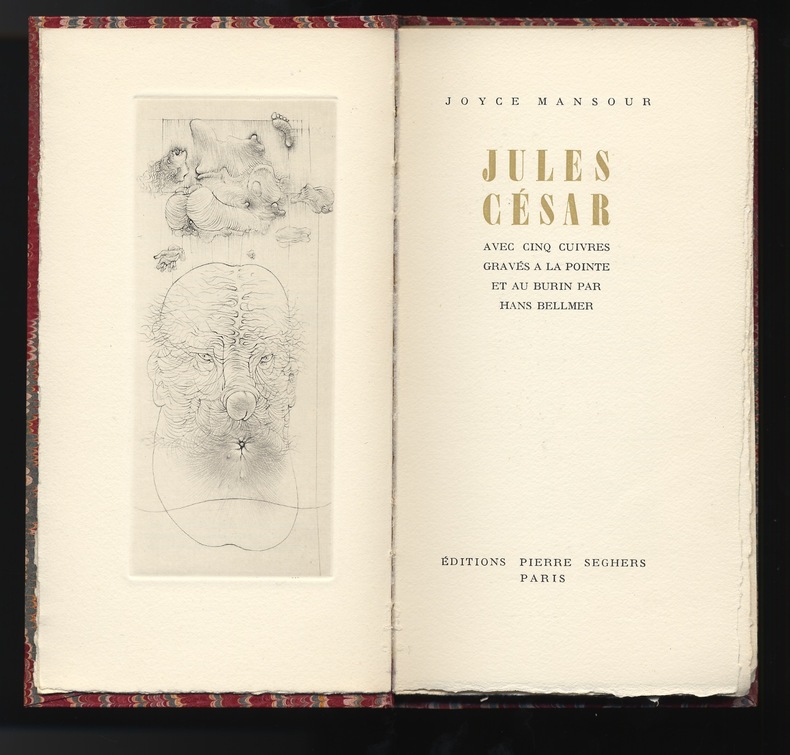
1955réf. 2213Pierre Seghers, Paris 1955. Un volume in-8 (21,3 x 11,3) broché sous cartonnage de papier marbré de l’éditeur, 70 pages, étiquette de papier bleu, portant le titre, contrecollée au dos, étui éditeur. Édition originale. 1/99 ex. num. sur vélin de Rives, le n° 5. - 5 SUPERBES GRAVURES SUR CUIVRE DE HANS BELLMER à la pointe-sèche et au burin. - Tirage total à 106 : 1 ex. unique, 6 Japon, 99 vélin de Rives + 7 H.C. L'exemplaire porte UN TRÈS BEL ENVOI À L'ENCRE DE JOYCE MANSOUR sur un feuillet liminaire. Référence : Mandiargues, Hans Bellmer, Œuvre gravé, 31-33, reproduit. -- ENGLISH DESCRIPTION: Hans BELLMER - MANSOUR, Joyce : JULES CÉSAR. With 5 etchings by Hans Bellmer (1955). Pierre Seghers, Paris 1955. A volume 8° (21.3 x 11.3) in the publisher's marbled paperboard cover, 70 pages, blue paper label, bearing the title, laminated on the back, in the publisher's slipcase. First edition, first printing. 5 SUPERB ORIGINAL ETCHINGS BY HANS BELLMER with drypoint and chisel. Edition: 1/99 ex. number on Rives vellum (n°5) (total print run of 106: 1 unique, 6 Japan, 99 Rives vellum + 7 H.C.). L'un des ouvrages illustrés par Hans Bellmer parmi mes préférés ! Cet exemplaire avec une belle dédicace manuscrite de Joyce Mansour. One of my favorites… and more and more, so since meeting him is rare… With a dedicace in ink by Joyce Mansour. Reference: Mandiargues, Hans Bellmer, engraved works, 31-33, reproduced.