6865 risultati
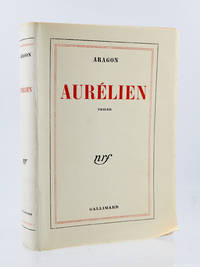
1948rif. 328702Paris: Gallimard 1948. First. hardcover. fine. Small 8vo full garnet crushed levant both covers decorated with important design of stars and gold white and blue fillets leading toward a central abstract figure gilt over uncut edges by P.L. Martin original wrappers bound in. Morocco edged chemise and slipcase. Paris: Gallimard FRS Limited First Edition. Fine. Number IV of only 14 large-paper copies on papier velin de Hollande in a handsome binding by one of the great modern masters. Gallimard unknown books
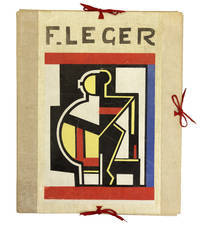
1959rif. N - 2026 - 13Contrastes 13 Aquarelles Gouache Lavis Crayon. Edition Au Vent d'Arles Paris 1959. Preface by Louis Aragon. Large portfolio with 13 pochoirs realized by Daniel Jacomet after Leger art works. Limited and numbered edition of 300 copies in Arabic 20 out of commerce in Roman numbered HC I to HC XX printed in Richard de Bass paper especially watermarked for this edition. Loose as issued and collected in the original pictorial cloth portfolio folder with Leger artwork. Published after Leger with the supervision of Nadia Leger Ref. Monod 7049. Au Vent d'Arles
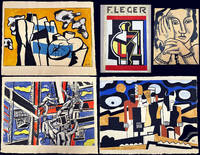
1959rif. N - 2026 - 13Contrastes 13 Aquarelles Gouache Lavis Crayon. Edition Au Vent d'Arles Paris 1959. Preface by Louis Aragon. Large portfolio with 13 pochoirs realized by Daniel Jacomet after Leger art works. Limited and numbered edition of 300 copies in Arabic 20 out of commerce in Roman numbered HC I to HC XX printed in Richard de Bass paper especially watermarked for this edition. Loose as issued and collected in the original pictorial cloth portfolio folder with Leger artwork. Published after Leger with the supervision of Nadia Leger Ref. Monod 7049. Au Vent d'Arles books
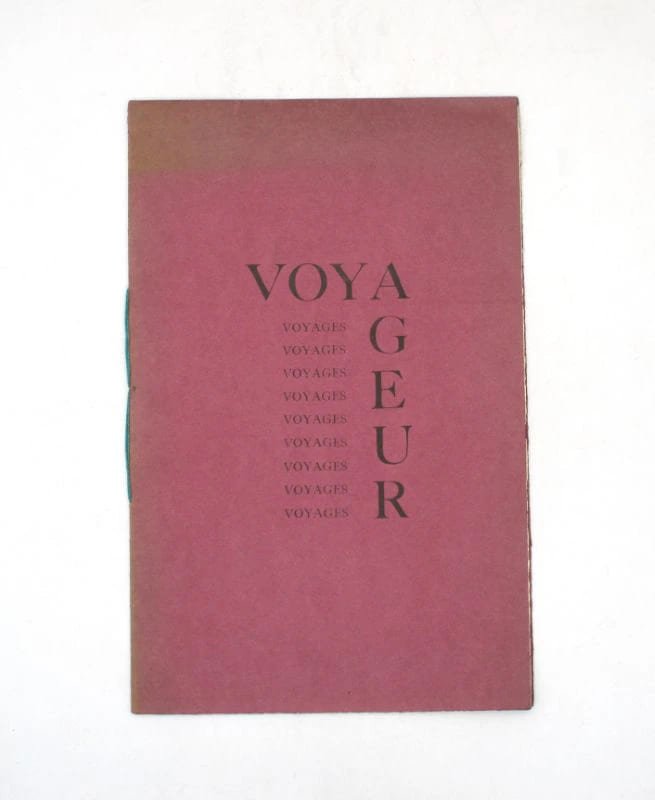
rif. 23806[La Chapelle-Réanville, The Hours Press], 1928. In-4, non paginé, broché, couverture originale imprimée (marges et dos de la couverture légèrement insolés).
1944rif. 79256Gallimard | Paris 1944 | 14.50 x 21 cm | broché
1959rif. 1733531959. LEGER Fernand. Contrastes. With a préface by Louis Aragon entitled "La Lumière de Léger". Illustrated with 13 pochoir plates. Folio 508 x 393 mm loose as issued in the publisher's illustrated linen portfolio. Paris: Aux Vent d'Arles 1959. A spectacular portfolio of pochoir plates after Leger paintings executed by Daniel Jacomet whose atelier made some of the finest pochoirs. Very scarce because presumably most copies have been dismembered. Number 79 of 320 numbered copies. unknown
1959rif. 1733531959. LEGER Fernand. Contrastes. With a préface by Louis Aragon entitled "La Lumière de Léger". Illustrated with 13 pochoir plates. Folio 508 x 393 mm loose as issued in the publisher's illustrated linen portfolio. Paris: Aux Vent d'Arles 1959. A spectacular portfolio of pochoir plates after Leger paintings executed by Daniel Jacomet whose atelier made some of the finest pochoirs. Very scarce because presumably most copies have been dismembered. Number 79 of 320 numbered copies. unknown books
1944rif. 79256Paris: Gallimard 1944. Fine. Gallimard Paris 1944 14.50 x 21 cm broché First edition one of 88 numbered copies on pur fil paper deluxe copies after 13 on Holland paper. Rare and very handsome copy. Gallimard unknown
1915rif. 92341s. l. 31 mars 1915 | 15.3 x 19.7 cm | Un feuillet
1915rif. 92341n. l. 1915. Fine. Aragon's Earliest Known Poem: The Birth of a Poet Soon to be Buried Beneath the Shells of the Great War n. l. 31 mars 1915 15.3 x 19.7 cm Un feuillet Autograph poem by Louis Aragon signed and dated 31 March 1915. Fourteen lines written in pencil on a single leaf with unpublished autograph calculations on the verso. Published in 2008 by Michel Apel-Muller in Le Continent Aragon special issue of LHumanité 2008 p. 17 and reissued under the title Poème in Le Rayonnement international dAragon Strasbourg coll. Recherches croisées Aragon / Elsa Triolet no. 16 2018 p. 251. Numerous traces of handling with vertical and horizontal folds that have caused minor paper losses without affecting the text. A precious fragment of literary history this sonnet published only in 2008 is the earliest known poem by Aragon according to its discoverer Michel Apel-Muller. Aragon wrote this lyrical reverie inspired by Baudelaires Parisian tableaux and by the Parnassian poets at the age of eighteen. He gifted it to his schoolfriend and inspiration for his novel Anicet Pierre Maison who succumbed to the Spanish flu in 1918 after fighting in the war. The Seine The pontoons draw away toward the hill That bounds the horizon with a bluish silhouette. The river bends at the foot of the quivering slope Of April reborn amid the hawthorn. In the red reflection of the setting sun Rises the factory black smoking and alive. The smoke and the sky are tinged with sanguine; A house stands and smiles at the passer-by. How life rises from this valley and how The work of nature and the labour of man Unite in a tone of evening rust! One senses amid the peace and the silence The song of birds that will rise from the vale To bring love to human suffering. translation our own Absent from accounts of Aragons life up to Philippe Forests most recent biography the sonnet was given to Pierre Maison this schoolfriend who had enlisted ahead of his call-up and who like Apollinaire succumbed to the Spanish flu in 1918. Aragon portrayed him in Anicet before burying the painful memory by assuming the characters identity in the famous phrase Anicet is me. Before André Breton and Drieu La Rochelle it was with Pierre Maison that he shared a profound intellectual friendship. Paradoxically this newly discovered princeps sonnet by Aragon comes accompanied by a rare wealth of context. The verses can be read in the light of a letter itself long unpublished addressed to Pierre Maison a few months later. This sprawling letter reveals that this poetic landscape of the Seine is in fact a memory: I thought of our good old discussions of days gone by. The memory came back to me as I was defending Wagner from the day we had gone down the Seine together talking about The Flying Dutchman Do you remember The weather was fine but the sun had something indefinably sad about it and the new spring resembled an autumn. When we stopped on the bank past Javel the sun was already low though it was not yet five oclock sic. Its rays already weakened and horizontal came from behind the distant hill where the houses along the Seine cling the river vanishing swiftly around a bend. Despite the dark green mass of the trees on the opposite bank bent over the flowing water everything seemed covered with an imperceptible tinge of rust: one might have said sic it was the dusty grip of the great city so near at hand upon the countryside. rise. And behind in an evening haze the hills of Meudon rose tier upon tier their woods concealing arbours and open-air taverns. This bleak landscape animated only by the movement of the Seine still lives on intensely in my memory. Aragon makes an almost literal reference to the poem which had captured on the spot this aesthetic emotion of the young student during an escapade among a band of high-spirited companions soon to be separated by the war: Aragon reminded me in unknown
1939rif. 1435Paris, NRF, Gallimard, 1939. in-4 (260 x 200 mm) broché, toutes marges, 70 pages, couverture imprimée rempliée. ÉDITION ORIGINALE TRÈS RARE de ce recueil contenant : "Trois chevaux aigus. Nous sommes. Nulle rupture. À l'ombre de ma porte. Poème perpétuel. L'or et l'eau froide. Trois poèmes inachevés. Les vainqueurs d'hier périront". Tirage : 5 Japon nacré + 15 vergé d'Arches. Celui-ci l' un des 15 ex. numérotés sur vergé d'Arches (n°12), SIGNÉ PAR PAUL ÉLUARD ET MAX ERNST, ACCOMPAGNÉ DE 4 SUPERBES LITHOGRAPHIES ORIGINALES À PLEINE PAGE TIRÉES EN NOIR SUR VERGÉ DE HOLLANDE DE MAX ERNST (seuls les 20 premiers exemplaires en grand papier contiennent ces lithographies). - Note bibliographique et historique : Max Ernst avait prévu une série de douze lithographies, mais seules quatre d’entre elles furent publiées dans l’édition de luxe à petit nombre. Un an plus tôt, en 1938, désapprouvant ses positions trotskystes, Éluard avait rompu avec Breton : À sa suite Max Ernst quitte le groupe surréaliste outré d’avoir à subir l’exigence de « saboter la poésie de Paul Éluard par tous les moyens » (in Centre Georges Pompidou, Paul Éluard et ses amis peintres, 1982, p.109).
1524rif. 7312Valencia 1524. Hardcover Tapa dura. 320x220mm. 12½x8¾". Manuscrito. Dado en Valencia a 23 días del mes de diciembre de 1524. En folio 320 x 220mm. 6 hojas sobre pergamino. Escritura cursiva. 32 líneas por página. Letras iniciales doradas. Firma autógrafa de Germana de Foix. Guardas de papel. Manuscrito de excepcional importancia dado por Germana de Foix viuda de Fernando el Católico reina de Aragón y Lugarteniente General en el Reino de Valencia en nombre del Emperador Carlos V y de su madre Doña Juana actúa como "Lugarteniente general de este dicho reyno de Valencia" y hace relación de los graves desmanes cometidos por las Germanías y a las familias valencianas a las que concede el indulto imponiéndoles una fuerte sanción económica. La rebelión de las Germanías fue un conflicto que se produjo en los reinos de Valencia y Mallorca a comienzos del reinado de Carlos I entre 1519 y 1523. Tuvo lugar paralelamente a la rebelión de las Comunidades de Castilla. Fue un movimiento social y político complejo de origen urbano pero que se extendió por todo el territorio con tintes antiseñoriales y que desencadenó una guerra civil. Gran parte de los artesanos y campesinos se enfrentaron a los señores territoriales y sus vasallos con especial presencia de los mudéjares. El emperador apoyó al bando señorial que fue el que finalmente salió victorioso. Tras la toma en marzo de 1522 de la ciudad de Valencia y la ejecución de los rebeldes con su líder Vicente Peris al frente la rebelión de las Germanías tocaba a su fin. Únicamente Játiva y Alcira quedaron bajo dominio agermanado lo que dio lugar a un rebrote de la rebelión esta vez acaudillada por un misterioso personaje conocido por "El Encubierto". Sin embargo tras el asesinato en Burjasot de "El Encubierto" en mayo de 1522 por dos seguidores suyos para cobrar la recompensa ofrecida por el virrey y la caída de Játiva y Alcira se produce la derrota definitiva de los agermanados nombrándose virreina de Valencia a Germana de Foix la cual gobernó duramente hasta su muerte. Germana de Foix Foix Francia 1488 - Liria Valencia 1536 esposa de Fernando II de Aragón El Católico fue reina consorte de Aragón 1505-1516 tras enviudar se casó con Juan de Brandeburgo en 1519. A lo largo de su reinado Germana de Foix ejerció como lugarteniente general durante las ausencias del rey Fernando y en 1523 fue nombrada virreina de Valencia 1523-1536 por el Emperador Carlos V cargo que ejerció hasta su muerte. Instalada como virreina de Valencia en el Palacio Real reprimió desde allí con severidad y brutal fuerza el movimiento de las germanías. Finalmente el día 23 de diciembre de 1524 Germana concedió un indulto a los "perayres" en este documento oficial que es considerado como uno de los primeros redactados en castellano en el Reino de Valencia. En el documento se hace una relación de las familias valencianas que lucharon con los rebeldes en las Germanías y se les concede indulto a cambio de fuertes sanciones económicas incautación de bienes tierras y astronómicas multas algunas de entre 1-2 millones de ducados en conceptos de indemnización y daños causados cantidades imposibles de pagar tanto a particulares como a gremios y gobiernos municipales implicados en la revuelta. hardcover
1976rif. 2091202133212860Maeght Editor 1976. Soft Cover. Fine. Volume: 1 Maeght Editor paperback
1974rif. Aragon-10-1.Édition originale de L’ŒUVRE POÉTIQUE D' ARAGON, imprimée à 10 000 exemplaires et reliés dans une toile traitée à la soie spécialement teinte gris perle à la demande de l'auteur. Dos lisse avec titres et tomaison, in octavo (18 x 23), illustrations couleurs et noir et blanc hors textes. État : très bon.
PARIS, Lib.Bachelin-Déflorenne - 1875 - In-8 - Reliure 1/2 chagrin rouge, coins frottés - Dos à nerfs - T. XI - IV & 522 pages, y compris table - Très propre