HARLOVE, Clarisse - Eloge de RichardsonLivre Rare Book

5 160 résultats
1766réf. 1124581766 A Paris, Chez les Libraires Associés - M. DCC. LXVI. (1766) - 7 volumes in-12 (10x16cm environ), reliure pleine peau brune, caissons et fleurons dorés au dos avec pièce de titre - xxxii / 244 pp. + 222 pp. / 224 pp. + 207 pp. / 188 pp. + 184 pp. / 232 pp. + 232 pp. / 223 pp. + 220 pp. / 300 pp. + 192 pp. / 216 pp. - Avec figures (bandeaux, lettrines, cul-de-lampe et gravures)
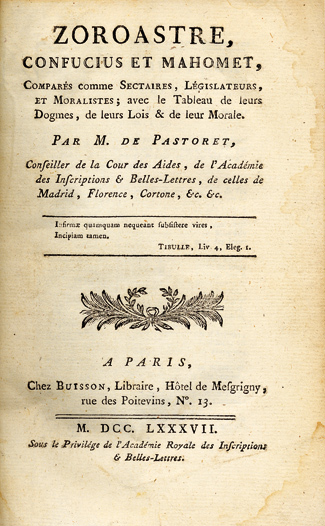
1787réf. 15507Paris, Buisson, 1787 ; in-8 ; demi-veau havane, dos à faux-nerfs décoratifs dorés, fleurons dorés, pièce de titre vert foncé décorée et dorée, plats de papier peint rose (reliure de l'époque) ; (8), 477, (1) pp.
réf. awd-1072Paris, Atelier EXB, 2020. In-12 br. à l’italienne, jaquette en couleurs dépliable en affichette illustrée, coffret noir de l’éditeur tapissé de velours bleu (272 pp.).
1905réf. 92396Calmann-Lévy | Paris 1905 | 17 x 25.7 cm | En feuilles sous chemise et étui
réf. 10541 En feuillets, sous couverture imprimée rempliée d'édition. Renfort au dos. 33 x 26 cm, [4]-93-[3] p. Paris, Le Vasseur et Cie, collection Le Livre d'Artiste, MCMXXXVII [1937].
réf. 10541 En feuillets, sous couverture imprimée rempliée d'édition. Renfort au dos. 33 x 26 cm, [4]-93-[3] p. Paris, Le Vasseur et Cie, collection Le Livre d'Artiste, MCMXXXVII [1937].
in-8, pp. 45, (3), leg. cartone rustico coevo. Con una grande tavola ripieg. f.t. incisa in rame raffigurante ''L'isola del Maritaggio''. Prima edizione della traduzione italiana di opera apparsa per la prima volta nel 1705 in francese. Si conoscono tre differenti tirature di questa edizione rispettivamente con 40, 43 o 45 pagine numerate. Il volume è strutturato come un libro di viaggio, illustrando nel dettaglio il percorso della felicità coniugale attraverso il porto dell'amore, quello dei cattivi consigli e degli interessi personali. I viaggiatori vengono invitati a fissare la loro dimora nella ''Provincia dei gelosi'', nella ''Gran Provincia di Cornovaglia'' o in quella dei ''Malcontenti''. E' impossibile lasciare l'isola se non attraverso la penisola della vedovanza o del divorzio o trasferendosi nell'isola della bigamia. Curioso e divertente libo satirico sull'amore e sul matrimonio, opera di Le Noble(1643-1711), scrittore francese votato ai pamphlets e alla satira, imprigionato alla Conciergerie per atti fraudolenti, ne evase e per questo venne bandito dalla Francia per 9 anni, morendo in povertà. Ottimo esemplare, estremamente fresco.. Cioranesco II, 42504 (prima edizione francese 1705). Fromm IV 14905 (edizione tedesca 1736)..
1586In-8°; cc. 12, un legno al frontespizio, senza legatura. Nota di possesso manoscritta all’ultima pagina, e tracce di nota manoscritta al frontespizio.
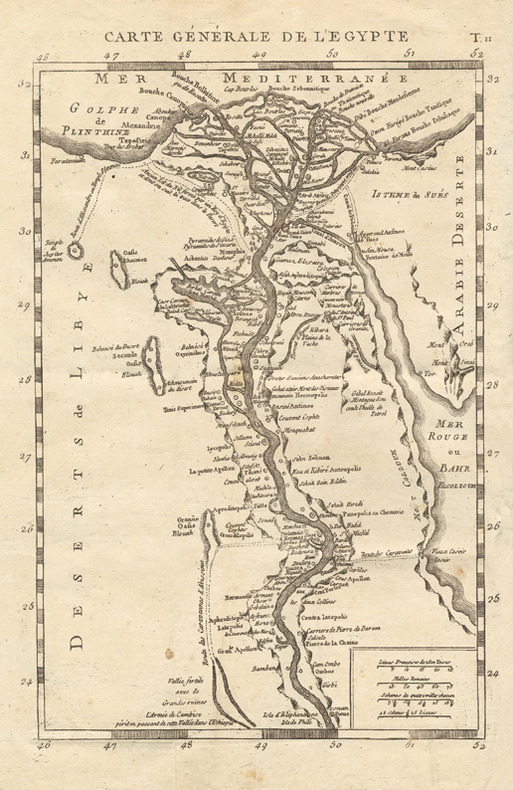
1786réf. 16502Paris, Onfroi, 1786 ; 3 tomes in-8 ; demi-veau havane, dos à faux-nerfs décoratifs et pièces de titre et tomaison vieux-rouge, tranches mouchetées ; IV, 351 ; 308 ; 308 pp. et 4 planches dépliantes dont 3 cartes géographiques.
réf. 88296aaf(o.O., o. Verlag) Von neuem gedrukt (in der Schweiz), o.J. (18. Jh.), in-8vo, 48 S., einige Ecken geknickt, ansonsten guter Zustand, Original-Pappband d. Z., in florales Buntpapier gebunden, am Rücken etwas aufgeplatzt. Umschlag leicht fleckig, festes Exemplar.
réf. 102760aaf1820, kl. in-8vo (11x10 cm), Front. (Darstellung des Paares auf einem Boot im Sturm, von der Hand des Autors gemalt) + Titel + 106 unnum. Bl., handgeschrieben in feiner deutscher Kurrentschrift d. Z. auf handgezogenem Papier mit Wasserzeichen (Wappenadler mit Reichsinsignien), grüner Maroquinband mit ornamentalen Goldfileten auf Deckeln und reicher Goldprägung auf Rücken, Goldschnitt, sehr schönes Exemplar.
réf. 8681nouvelle édition 6 parties en 3 volumes plein maroquin rouge à nerfs, titre, tomaison, date en pied, caissons dorés. Triple filet doré encadrant les plats. Double filet doré sur les coupes. Garde en moire rouge, avec une large dentelle dorée, en encadrement, tranchefile cousue, en fils en soie, charnière intérieure en maroquin rouge. Très belle Reliure, non signée, mais d’un Maître. Volume 1 : faux-titre, frontispice de COCHIN, titre avec vignette gravée d’EISEN, XXII, 563 pages. Volume 2 : faux-titre, frontispice de J.M MOREAU le JEUNE titre avec vignette gravée d’EISEN. 563 pages. Volume 3 : faux-titre, frontispice d’EISEN, titre orné d’une vignette d’EISEN, 597 pages. Non rogné, très grandes marges,tête dorée. 20 en-têtes d’EISEN, 3 frontispices par COCHIN, MOREAU Le JEUNE, EISEN. Chez Musier fils, libraire 1774. Episode biographique déguisé et travesti en pastorale grecque conte les malheurs et péripéties qui empêchèrent et retardèrent le mariage de Le Vayer avec Melle Séverin
[Medicina-Cesena] (cm. 21) piena pergamena originale con vecchio rinforzo al dorso ben restaurato.-- cc. 8 nn., pp. 567, (1 bianca); cc. 6 nn., pp. 414 + 1 c. bianca. Bellissimo frontis architettonico-figurato con allegorie e mascheroni. Dedica del traduttore a Ferdinando Dè Medici datata 13 Maggio 1595. Opera veramente singolare che tratta di malattie e passioni del corpo, matrimonio, parto, amore e gelosia, doveri del marito e della moglie, casa, famiglia ecc. La seconda parte è maggiormente dedicata alla medicina. Descrive le varie parti del corpo umano, usi e costumi, pensiero di Galeno, Platone e Aristotele; termina con Epicurei e Ateisti. Al frontis è scritto "Seconda Impressione" ma nonostante accurate ricerche non abbiamo trovato notizia di edizioni italiane anteriori. Anche Michel-Michel cita solo questa nostra senza averla potuta vedere e senza una seconda parte. Per confronti con edizioni francesi vedi: Wellcome I 3668, Durling 2737, Graesse IV 106, Brunet III 837. Lievissimi aloni a qualche carta all' inizio e in fine, per il resto esemplare molto bello fresco e nitido. Manca a tutta la bibliografia consultata compreso Bm. Stc. e Autori Italiani del '600. Una sola copia scompleta in Michel-Michel VII 12.[f64] Libro
1849réf. BK0018Ferrisburgh Vermont 1849. Autograph letter signed "Anne R. M." to her husband Lloyd Minturn in San Francisco "Upper California." 8 pp.; approximately 1700 words. With stampless cover bearing a black "NEW-YORK / 40" datestamp of January 17 and manuscript routing "per Cherokee. Significant edge wear and central vertical crease; text generally clear and complete. An intimate Christmas letter from Anna Robinson Minturn of Ferrisburgh Vermont to her husband Lloyd then engaged in the hotel and real estate business at Pueblo San José during the California Gold Rush. Writing on the anniversary of his departure Anna describes the four-month-old son Lloyd had never seen questions whether California's speculative "mania" could last and repeatedly urges him to return home. Lloyd Minturn had traveled to California in January 1849 with David Lion Gardiner and other eastern emigrants. By November Gardiner reported that Minturn was "at Pueblo San Jose keeping a hotel and speculating in real estate."1 Anna's references to Lloyd's hotel and stables their rental and the uncertain recovery of his investment relate directly to his California business. He later appears in San Francisco as a member of the Committee of Vigilance of 1851 with his place of business on California Street and his residence at the Mansion House.2 Anna begins writing late on Christmas day imagining a future holiday spent with Lloyd "by thy quiet fire-side in Vermont-with thy wife and darling child with thee." Returning to the letter three days later she reflects on the year since his departure: "Oh how much I think about thee as the anniversary of thy departure comes round . When I think of thee my dearest ask then what a weary dreary time it seems . Our little darling improves so rapidly is so very lovely that I can hardly bear to have thee away." News that another California emigrant Dr. Stone had returned safely made Lloyd's absence still more painful. Although she understood that "the object of thy pilgrimage" at last appeared attainable Anna wondered why the management of his property could not be entrusted to an agent asking why "Mr. Ruckle" cannot "receive the rents & pay the former owner and send thee thy portion of the profits." However she immediately checks her own advice with an observation on marriage and gender: "You men know so much more how these things work than we so that it is rather labor wasted to advise much and I do hate to see a woman trying to rule her husband-don't thee" Anna feared that Lloyd might remain away sacrificing his domestic life only to lose the anticipated reward. Her skepticism extends to the Gold Rush itself: "I do hope though that the man who has taken your property will be able to pay you-that would be so bad to stay away so long-sacrificing so much & lose thy reward entirely-don't thee suppose this mania in California will end much as the land speculation did here seems to me it must. I hope thee won't get drawn in." Much of the letter is devoted to their infant son whose birth Lloyd may initially have learned of from another returning emigrant because of the "shamefully neglected" Pacific mails. At four months the boy weighed eighteen and one-quarter pounds and had "cheeks as hard as little apples." Anna encloses a lock of his hair explaining that she had kissed it before sending it. The contrast between California and the Vermont household runs throughout the letter. Anna describes the snow distant mountains sleighing baked apples and buckwheat cakes while Lloyd remains in a place known to her mainly through contradictory reports and unreliable correspondence. She cites Bayard Taylor's account of portions of California as suitable wheat country while noting that other observers claimed wheat could not be grown there at all remarking on the "contradictory accounts about California" that make it hard to "tell what to believe." Her anxiety was heightened by reports of cholera progressing toward California. She closes by asking Lloyd to protect his health and praying that he might be restored to her "in sound health both body & soul." Anna was a daughter of Rowland Thomas and Rachel Robinson of Rokeby the prominent Ferrisburgh Quaker family whose home later became known for its role in the Underground Railroad. Other letters from Anna to Lloyd during his California absence survive at the Bancroft Library and the Smithsonian.3 Overall a substantial and affecting account of the Gold Rush from the perspective of a wife left behind. 1 David Lion Gardner Letter to Juliana McLachlan Gardiner November 30 1849 David Gardiner Letters BANC MSS 2006/127 box 1.The Bancroft Library University of California Berkeley. 2 Anna Robinson Minturn Letters to Lloyd Minturn 1849-1851 Warshaw Collection of Business Americana Subject Categories: Steamboats box 1 folder 6 J-L Archives Center National Museum of American History Smithsonian Institution Washington DC. 3 Anna R. Minturn "Anna R. Minturn to Mr. Lloyd Minturn Ferrisburgh December 2 1849" California Gold Rush Letters BANC MSS C-B 547 box 5 The Bancroft Library University of California Berkeley. . unknown
1849réf. BK0018Ferrisburgh Vermont 1849. Autograph letter signed "Anne R. M." to her husband Lloyd Minturn in San Francisco "Upper California." 8 pp.; approximately 1700 words. With stampless cover bearing a black "NEW-YORK / 40" datestamp of January 17 and manuscript routing "per Cherokee. Significant edge wear and central vertical crease; text generally clear and complete. An intimate Christmas letter from Anna Robinson Minturn of Ferrisburgh Vermont to her husband Lloyd then engaged in the hotel and real estate business at Pueblo San José during the California Gold Rush. Writing on the anniversary of his departure Anna describes the four-month-old son Lloyd had never seen questions whether California's speculative "mania" could last and repeatedly urges him to return home. Lloyd Minturn had traveled to California in January 1849 with David Lion Gardiner and other eastern emigrants. By November Gardiner reported that Minturn was "at Pueblo San Jose keeping a hotel and speculating in real estate."1 Anna's references to Lloyd's hotel and stables their rental and the uncertain recovery of his investment relate directly to his California business. He later appears in San Francisco as a member of the Committee of Vigilance of 1851 with his place of business on California Street and his residence at the Mansion House.2 Anna begins writing late on Christmas day imagining a future holiday spent with Lloyd "by thy quiet fire-side in Vermont-with thy wife and darling child with thee." Returning to the letter three days later she reflects on the year since his departure: "Oh how much I think about thee as the anniversary of thy departure comes round . When I think of thee my dearest ask then what a weary dreary time it seems . Our little darling improves so rapidly is so very lovely that I can hardly bear to have thee away." News that another California emigrant Dr. Stone had returned safely made Lloyd's absence still more painful. Although she understood that "the object of thy pilgrimage" at last appeared attainable Anna wondered why the management of his property could not be entrusted to an agent asking why "Mr. Ruckle" cannot "receive the rents & pay the former owner and send thee thy portion of the profits." However she immediately checks her own advice with an observation on marriage and gender: "You men know so much more how these things work than we so that it is rather labor wasted to advise much and I do hate to see a woman trying to rule her husband-don't thee" Anna feared that Lloyd might remain away sacrificing his domestic life only to lose the anticipated reward. Her skepticism extends to the Gold Rush itself: "I do hope though that the man who has taken your property will be able to pay you-that would be so bad to stay away so long-sacrificing so much & lose thy reward entirely-don't thee suppose this mania in California will end much as the land speculation did here seems to me it must. I hope thee won't get drawn in." Much of the letter is devoted to their infant son whose birth Lloyd may initially have learned of from another returning emigrant because of the "shamefully neglected" Pacific mails. At four months the boy weighed eighteen and one-quarter pounds and had "cheeks as hard as little apples." Anna encloses a lock of his hair explaining that she had kissed it before sending it. The contrast between California and the Vermont household runs throughout the letter. Anna describes the snow distant mountains sleighing baked apples and buckwheat cakes while Lloyd remains in a place known to her mainly through contradictory reports and unreliable correspondence. She cites Bayard Taylor's account of portions of California as suitable wheat country while noting that other observers claimed wheat could not be grown there at all remarking on the "contradictory accounts about California" that make it hard to "tell what to believe." Her anxiety was heightened by reports of cholera progressing toward California. She closes by asking Lloyd to protect his health and praying that he might be restored to her "in sound health both body & soul." Anna was a daughter of Rowland Thomas and Rachel Robinson of Rokeby the prominent Ferrisburgh Quaker family whose home later became known for its role in the Underground Railroad. Other letters from Anna to Lloyd during his California absence survive at the Bancroft Library and the Smithsonian.3 Overall a substantial and affecting account of the Gold Rush from the perspective of a wife left behind. 1 David Lion Gardner Letter to Juliana McLachlan Gardiner November 30 1849 David Gardiner Letters BANC MSS 2006/127 box 1.The Bancroft Library University of California Berkeley. 2 Anna Robinson Minturn Letters to Lloyd Minturn 1849-1851 Warshaw Collection of Business Americana Subject Categories: Steamboats box 1 folder 6 J-L Archives Center National Museum of American History Smithsonian Institution Washington DC. 3 Anna R. Minturn "Anna R. Minturn to Mr. Lloyd Minturn Ferrisburgh December 2 1849" California Gold Rush Letters BANC MSS C-B 547 box 5 The Bancroft Library University of California Berkeley. . unknown books
Hanoviae [Hannover], imprimebant Haeredes Guil. Antonii, 1614, in-8, legatura seicentesca in piena pergamena floscia, titolo calligrafato al dorso (dorso che presenta una lieve mancanza) pp. [16], 690. Con marca tipografica in xilografia sul frontespizio. Seconda edizione di questo trattato sul matrimonio del celebre giurista, uno dei maggiori di tutti i tempi. Bruniture causate dal tipo di carta usato. Qualche mancanza dovuta a tarlo a non molti margini bianchi (in pochissimi casi toccate una o due lettere). Ex-libris Filippo Vassalli.
1946réf. 44767Paris Editions du Rameau d (1946) In-8, en feuilles, couverture illustre (embotage de l'diteur).76 miniatures d'Henry Lemari, colories au pochoir par Beaufum. Tirage limit 750 exemplaires numrots. Un des 720 exemplaires sur papier pur fil.
1946réf. 39949Paris Editions du Rameau d (1946) In-8, en feuilles, couverture illustre (embotage de l'diteur).76 miniatures d'Henry Lemari, colories au pochoir par Beaufum. Tirage limit 750 exemplaires numrots. Un des 720 exemplaires sur papier pur fil.
réf. 38256Chez Ruault, Paris en 1785. Comédie représentée pour la première fois,par les Comédiens français ordinaires du Roi, le mardi 27 avril 1784.In-8 broché.Année de l'originale où il en parût beaucoup.199 pages après la préface de Beaumarchais. Approbations de Bret, Coqueley, Lenoir.Ex-libris Georges Vergand, ( journaliste parlementaire) par Brunelleschi.Liste des 12 libraires avis de l'éditeur face à la page de titre.Nom d'appartenance à la plume,ancien,en haut du faux-titre.rnOuvrage à l'intérieur très propre.Tranches un peu émoussées.Couverture d'attente usagée.Un coffret en demi-cuir à coins avec dos orné et caractères dorés pour l'auteur,le titre et la date en pied, protége le livre. (Tchémerzine Tome II,2ème volume page 16.)
1945Features: X for Escape - Photo-illustrated article (part 2 of 2) by Flt.-Lieut. Tony Pengelly describes the dramatic Great Escape from Luft Stalag III involving 83 prisoners, 50 of whom were later shot - basis for the classic WWII film The Great Escape starring Steve McQueen; Shakedown - Political favours and liquor licences; Life with Ivan - How does the average Russian live?; Marriages Mended - Domestic Relations Judge H.S. Mott has a 90% success rate; The Mine That Shook the World - A vivid photo-illustrated report on Eldorado, the super-secret mine in the Arctic which produces the raw material for atomic bombs; King Size Tenor - Lauritz Melchior, mighty tenor of the "Met"; Russia - A Split Personality; Backstage Ottawa - the taxpayer wins a battle; Big Business Farmer - George Wesley of Wrentham, Alberta, farms 16,000 acres in Alberta and grows enough wheat to feed a small city; The Truth About Epilepsy - Robert H. Feldt, M.D., has made immense strides toward taming this dreaded brain disease; Man of Many Voices - Meet Mercer (One-Man Cast) McLeod, first radio actor to sell a Canadian-recorded program for U.S. broadcasting; If You Should Get Venison - cooking tips; and more. Short Stories: World Premiere; Uncle Alfred; For These Thy Gifts. Nice ad for: C-I-L; Imperial Oil (How an oil well works); Good Year (with color illustration of firemen and forest fire); Snyder's Furniture; G.E. Electric Blankets (& Electric Flying Suits); Aunt Jemima Pancakes; Westinghouse in the electrical age 1920-1945; Life Savers (nice one-page color ad); Chase & Sanborn - featuring Charlie McCarthy in colour; Waterman's Taperite pen; Once-page colour-illustrated ad by Carling's honouring Jack Miner of Kingsville, Ontario; T.S. Simms "Pure Badger" shaving brushes; Lovely 1946 Ford (dark red) ad inside back cover; B.C. Apples ad on back cover features charming colour illustration of young lass holding basket of fruit. 72 pages. Unmarked with average wear. A quality copy of this historic vintage issue. Book
1821réf. 28066Paris Théodore Le Clerc 1821 fort vol. petit in-12 maroquin rouge, dos lisse orné de filets dorés gras et maigres, de fleurons et d'étoiles dorés, filets et palmettes dorés encadrant les plats entièrement recouverts d'un décor aux petits fers, doré et mosaïqué, inscription dorée au centre, tranches dorées [Rel. de l'époque], qqs rouss., petit défaut de papier p. 587
réf. 237428Paris, Imprimerie Impériale, 1853 in-4, [4]-73 pp., veau vert, dos à nerfs, filets dorés, encadrement d'une double rangée de filets dorés en encadrement des plats, armes au centre, tranches dorées (reliure de l'époque).
1741réf. 40883Paris chez Paulus-du-Mesni 1741 In-8, veau mouchet havane, plats encadrs de trois filets dors avec de petites fleurs pousses or aux angles, dos nerfs orn petits fers dors et portant une pice de titre mosaque en veau brun, roulette pousse or sur les coupes et sur les encadrements intrieurs, doublures et gardes de papier marbr, tranches rouges (Canape).Seconde dition revue, corrige et augmente de plusieurs arrts, dcisions et exemples. Cet ouvrage tudie en particulier les clauses envisager pour se dfendre contre le voluptueux qui ne souhaite que satisfaire sa passion, l'ambitieux possd du dsir de donner un nouvel clat sa condition, l'avare qui par une espce de tyrannie, cherche uniquement les biens prissables, etc.
1873réf. 002816Paris, Librairie des Bibliophiles, Jouaust, 1873
1608In-8°; pp. (4) 147, un legno con motto al frontespizio, legatura in cartonato. Alcune parti sono in italiano, altre in francese. Il testo descrive lo svolgimento dei festeggiamenti, con le entrate dei principi, i balletti, i tornei ecc.; si elencano i combattiment a piedi e a cavallo, i premi, le regole, organizzati in onore delle nozze che si tennero a Torino; tra questi anche Des courses au faquin che si tennero a piazza Castello, e Le combat a la barriere. Si trattò di un doppio matrimonio, di Margherita con Francesco IV Gonzaga, e di Isabella con Alfonso d’Este. I capitoli: Les entrees, Les mariages, Les despences, Les Balets, Les cartels, Les combats.