5409 risultati
rif. 32126Paris Chez Janet et Cotelle, Libraires 1820 in 8 (22x14) 2 volumes reliures à la bradel cartonnées rouge de l'époque, XXIII et 864 pages, pagination continue. Nouvelle édition augmentée, revue et corrigée, avec quelques notes de l'auteur et des éditeurs. Bel exemplaire
1905353 - 384, viii [ads] pages. Features: Many nostalgic ads; Seen on the Stage - including photos of Maude Adams, Raymond Hitchcock, Ethel Barrymore, and Bruce McRae; Working directions for Vogue weekly pattern No. 317; Ad for the Surrey Type One Ramber car by Thomas B. Jeffery & Company; Lovely one-page illustrated ad for the Arnold Print Works of New York, featuring their Superfine Organdie and Grecian Voileplus fabrics; Lovely one-page illustrated ad for Rajah and Burlingham fabrics and silks; American Women and Marriage (article); Several one-page illustrations of current fashion; Well-Dressed Man section includes photos of walking coat, waistcoat of suit, fancy white waistcoat, and novel handkerchief; Fabulous Peck & Peck Hosiery ad on back cover features seven wonderful illustrations of contemporary decorated ladies stockings (No. 68 through 74); many current news snippets on a variety of topics. Unmarked with average wear. Please note: large clipping of toque from page 367 affects centerfold illustration on other side of page. Front cover loose but present. Back cover nearly loose. A worthy copy of this charming vintage issue. Book
1732Previous owners' names to front end papers. Browning to end papers. No creasing to covers. Spine strip almost complete but spine and covers very well rubbed. A fairly clean tight copy with rubbing to all corners. Hinges lightly shaken. 36 page Appendix, part in Latin' plus 244pp. Extremely scarce. The first feature is called Some Memoirs of the Life of Robert Feilding Esq, The second is The Case of Barbara Dutchefs of Cleaveland. She could be the wife of Robert Feilding. Frontispiece is a portrait of Richard Feilding Esq. With three more Cases.
1909rif. 002673Paris, Calmann-Lévy, 1909
1784rif. RO80145513LONDRES / NYON. 1770 - 1773 - 1784. In-16. Relié. A restaurer, Couv. légèrement passée, Dos satisfaisant, Intérieur acceptable. 137 + 108 + 31 pages. Ouvrage en cours de reliure, tranches rouges. Une partie du cuir du dos a été conservée.. . . . Classification Dewey : 306.8-Mariage et famille
1688Le 3 incisioni cm 23x32 raffigurano le scene della rappresentazione che si tenne al teatro della Pergola di Firenze, incise da Arnold van Westerhout da Jacopo Chiavistelli
1822rif. PHO-1567Paris, Chez Nepveu,1822, 2 volumes (sur 3) in-16, 2ff.-139pp.,2ff.-206pp., relié demi basane époque , dos lisse avec titre et tomaison , coins usés , frottements, accrocs aux coiffes(T2),petit manque (T3), illustré de 11 gravures , dont certaines dépliantes , représentant des cérémonies de mariages et enterrements ,mœurs et costumes des japonais ,le tome 2 s’occupe des cérémonies funéraires tandis que le tome 3 est consacré aux mémoires et anecdotes des Djogouns, tome 2 et 3 seul, quelques rousseurs.
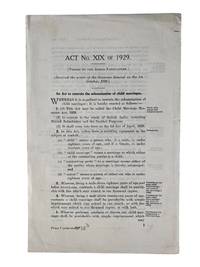
1929rif. 219671929. Government of India An Act to Restrain the Solemnisation of Child Marriages 1929 documents the legal system created to restrict child marriage in British India and supports research into women's rights colonial law childhood and social reform in South Asia. The Act commonly known as the Sarda Act after reformer Har Bilas Sarda reveals how legislation sought to regulate marriage age through statutory definitions penalties and enforcement provisions. It provides primary-source evidence for the study of Indian feminist legal history colonial governance and campaigns against patriarchal marriage customs. Government of India. An Act to Restrain the Solemnisation of Child Marriages. Calcutta: Government of India Central Publication Branch 1929. First edition. Official pamphlet printing of Act No. XIX of 1929 passed by the Indian Legislature and assented to by the Governor General on October 1 1929. The Act defines "child" "child marriage" "contracting party" and "minor" sets age thresholds for boys under eighteen and girls under fourteen and establishes penalties for adult men contracting child marriages as well as for those who solemnize arrange or permit such ceremonies. Its jurisdiction extends across British India including British Baluchistan and the Santhal Parganas with enforcement beginning April 1 1930. The printed price of "1 anna or 1½d" indicates official distribution for public and administrative use. The pamphlet documents a legal enforcement system for marriage reform through statutory age limits criminal penalties and responsibility assigned to adult men parents priests and other facilitators demonstrating the process by which colonial law entered debates over gender childhood and personal status. The timing is significant because Indian social reformers and women's rights advocates used the late colonial legal arena to challenge early marriage and forced domestic subordination. Minor edge creasing; overall very good condition. A concise official printing of a foundational statute in South Asian women's rights law and the legal history of childhood protection. unknown
1929rif. 219671929. Government of India An Act to Restrain the Solemnisation of Child Marriages 1929 documents the legal system created to restrict child marriage in British India and supports research into women's rights colonial law childhood and social reform in South Asia. The Act commonly known as the Sarda Act after reformer Har Bilas Sarda reveals how legislation sought to regulate marriage age through statutory definitions penalties and enforcement provisions. It provides primary-source evidence for the study of Indian feminist legal history colonial governance and campaigns against patriarchal marriage customs. Government of India. An Act to Restrain the Solemnisation of Child Marriages. Calcutta: Government of India Central Publication Branch 1929. First edition. Official pamphlet printing of Act No. XIX of 1929 passed by the Indian Legislature and assented to by the Governor General on October 1 1929. The Act defines "child" "child marriage" "contracting party" and "minor" sets age thresholds for boys under eighteen and girls under fourteen and establishes penalties for adult men contracting child marriages as well as for those who solemnize arrange or permit such ceremonies. Its jurisdiction extends across British India including British Baluchistan and the Santhal Parganas with enforcement beginning April 1 1930. The printed price of "1 anna or 1½d" indicates official distribution for public and administrative use. The pamphlet documents a legal enforcement system for marriage reform through statutory age limits criminal penalties and responsibility assigned to adult men parents priests and other facilitators demonstrating the process by which colonial law entered debates over gender childhood and personal status. The timing is significant because Indian social reformers and women's rights advocates used the late colonial legal arena to challenge early marriage and forced domestic subordination. Minor edge creasing; overall very good condition. A concise official printing of a foundational statute in South Asian women's rights law and the legal history of childhood protection. unknown books
1772rif. 823451772. London: T. Spilsbury for J. Ridley 1772. London: T. Spilsbury for J. Ridley 1772. "The Stagnation of Matrimony": A Radical 1772 Proposal to Reform the Marriage Market Marriage. Great Britain. Considerations on the Causes of the Present Stagnation of Matrimony Under the Following Heads. I. The Unreasonable Degree of Influence and Authority which Most Parents Exercise Over Their Children in the Concern of Marriage. II. The High and Elegant Education that is Given to Young Women Beyond the Compass of Their Fortunes and Stations of Life. III. The Debauchery and Extravagance of Young Men. IV. The General Luxurious and Expensive Taste of the Times. All of Which are Evils That Seem to Call for the Attention of Parliament. London: Printed by T. Spilsbury for J. Ridley 1772. iii-vii 1 71 1 pp. Complete. Octavo 8-1/4" x 5-1/4". Stab-stitched pamphlet in plain wrappers. Front wrapper detached small tears and chips to fore-edges of wrappers moderate toning small holes to a few leaves affecting legibility of one word on p. 47. A complete and crisp example of Georgian street literature. $450. Only edition. Only edition. A fascinating and remarkably modern critique of the social and legal barriers to marriage in late 18th-century England. The anonymous author identifies four primary "evils" calling for Parliamentary intervention: parental tyranny over-education male vice and economic luxury a general culture of expensive tastes that makes marriage financially daunting. The author moves beyond mere complaint to offer specific legal remedies including the abolition of the celibacy requirement for fellows at Oxford and Cambridge and a lowering of the age of consent. The work argues for a return to "the simplicity of nature" by allowing young people to follow their affections before they are corrupted by the "pride of life." OCLC and the ESTC locate 10 copies 5 in North America 1 in a law library Library of Congress. English Short-Title Catalogue T68641. unknown
1772rif. 823451772. London: T. Spilsbury for J. Ridley 1772. London: T. Spilsbury for J. Ridley 1772. "The Stagnation of Matrimony": A Radical 1772 Proposal to Reform the Marriage Market Marriage. Great Britain. Considerations on the Causes of the Present Stagnation of Matrimony Under the Following Heads. I. The Unreasonable Degree of Influence and Authority which Most Parents Exercise Over Their Children in the Concern of Marriage. II. The High and Elegant Education that is Given to Young Women Beyond the Compass of Their Fortunes and Stations of Life. III. The Debauchery and Extravagance of Young Men. IV. The General Luxurious and Expensive Taste of the Times. All of Which are Evils That Seem to Call for the Attention of Parliament. London: Printed by T. Spilsbury for J. Ridley 1772. iii-vii 1 71 1 pp. Complete. Octavo 8-1/4" x 5-1/4". Stab-stitched pamphlet in plain wrappers. Front wrapper detached small tears and chips to fore-edges of wrappers moderate toning small holes to a few leaves affecting legibility of one word on p. 47. A complete and crisp example of Georgian street literature. $450. Only edition. Only edition. A fascinating and remarkably modern critique of the social and legal barriers to marriage in late 18th-century England. The anonymous author identifies four primary "evils" calling for Parliamentary intervention: parental tyranny over-education male vice and economic luxury a general culture of expensive tastes that makes marriage financially daunting. The author moves beyond mere complaint to offer specific legal remedies including the abolition of the celibacy requirement for fellows at Oxford and Cambridge and a lowering of the age of consent. The work argues for a return to "the simplicity of nature" by allowing young people to follow their affections before they are corrupted by the "pride of life." OCLC and the ESTC locate 10 copies 5 in North America 1 in a law library Library of Congress. English Short-Title Catalogue T68641. unknown books
rif. M88Folio ca. 32x195 cm or 12 ¾ x 7 ¾ in. 2 pp. Brown ink on blueish laid paper. Fold marks paper slightly age-toned but overall a very good letter written in a legible hand. Interesting original manuscript letter providing an insight into an early legal dispute over the confirmation of what looks like a common law marriage in the Oregon Territory. Written by a resident of Oregon City who concealed his identity under the letters “R.J.G.” the letter is addressed to “Mr. Harding” – most likely Benjamin Franklin Harding 1823-1899 a notable Oregonian attorney and politician. In 1852 Harding established the “Harding and Grover” law firm in Salem; in 1855-59 served as the Secretary of the Oregon Territory. During the American Civil War Harding took the office of the US Senator from Oregon 1862-65. In the letter the author refuses the claim of an unnamed woman to be his alleged wife apparently common-law and declares that he can prove that she is in fact the wife of another man and that he is going “to defend myself which I shall do regardless of consequences.” In the beginning of the letter the author notes that the “claimant” lived “at Judge Olney’s” who was Cyrus Olney 1815-1870 then the 6th Associate Justice of the Oregon Supreme Court 1853-58. Later Olney served as a delegate to the Oregon Constitutional Convention 1857 and served in the Oregon House of Representatives. Overall an interesting early original letter regarding legal disputes over the confirmation of common-law marriages in the Oregon Territory. The text of the letter: “Mr. Harding Sir On account of your protestations of friendship I think it strange that you did not apprise me of your agency in depositing in … Office that petition. I have said that I was willing the complainant should marry that I never would distrust her that I would not lay a straw in her way. I am informed that she was so informed while living at Judge Olney’s. She has been influenced to make application for a Bill probably on account of such intelligence. Now it is a well founded belief that she would have been married last fall had I not come back when I did and that too without a Bill. She has taken the wrong step to succeed. No lawful marriage exists between us and hence she cannot obtain a Bill from me. I am certainly correct in this view. I consulted the law and lawmakers last fall in reference to this matter as I was determined to take lawful steps and found that I was free from her in every sense of the word. She wishes to marry again I am willing that she should impose upon some other man if she feels safe in so doing and can find one as foolish as I have been. The complainant is not my wife but the wife of one Mr. Walker as I shall prove to the court. Can you not see that she endangers herself you know the penalty I presume. I don’t wish her to suffer this penalty I wish her no harm whatsoever but if this affair goes to court its result may prove fatal to her happiness to her parents and to yours and family. It has proven an unfortunate affair to us all and I presume that neither party wishes any more than a quiet future and freedom from each other. She is not bound to me nor I to her. It would be for her welfare and happiness to immediately withdraw as she has the power of doing her complaint and then here or elsewhere apply for a Bill from Mr. Walker or if she prefers marry without such application. In either event I shall not disturb her. If she obtains a Bill from Walker she will be safe as there is no public record of our marriage nor were witnesses present at the solemnization. If she does not withdraw her Bill she forces me to defend myself which I shall do regardless of consequences. If I did not know that we are free from each other by virtue of the law then I should have long since applied. Take my word for it she cannot obtain a Bill from me by virtue of her relation to Mr. Walker. But if she blindly persists in her present application then I must meet her and answer for my horrid abuse! I have suggested this by advice of one of my legal friends and by virtue of my own feelings toward her. If you have any doubt of the propriety of this course call and see me and others. If the matter stops here you must act promptly for additional costs are making. Respectfully R.J.G.” unknown
2008Audio CD New Release item. Pls. allow a minimum of 4 - 6 weeks as this is hi p from CD Manufacturers.
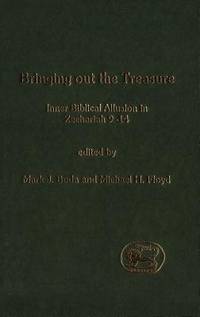
2003rif. x-0826466699Sheffield Academic Pr 2003. Hardcover. New. 1st edition. 400 pages. 9.25x6.25x1.00 inches. Sheffield Academic Pr hardcover
rif. DADAX1555531717New unknown
rif. 22706Palais Bourbon Paris 20 March 1836. One page 8vo bifolium good condition. From the celebrated manuscript collection of Richard Monckton Milnes Lord Houghton. Text: "The Baroness de Feucheres presents her compliments to Mr Wesmacott and has much pleasure in sending a Snuff Box which Capt. Manby said she might venture to offer him. She begs he will consider it merely as a souvenit underlined and by no means as an inducement for him to make any concession in his political opinions." Pinniger and Westmacott also conducted a court case involving the Baroness's large estate reported in detail in the "Annual Register" etc. Palais Bourbon Paris, 20 March 1836. unknown
rif. 40602Paris.Imprimerie Nationale.1853.In-4 cartonné avec caractères dorés.73 p.On ajoute deux poèmes avec dédicace de l'Auteur ( signature peu lisible )à l'occasion de la naissance du Prince Impérial. BE.
rif. 6811imprimerie spécialisée dans les menus,6 rue Servan,Paris, sans date,vers 1920.Très bel album pour représentant de commerce.Format grand in 4,11 feuillets de bristol, feuillets intercalaires de papier cristal légendés. Cartonnage d’éditeur,demi-toile verte,titre doré sur le premier plat.L’Album contient un étonnant ensemble de 100 modèles de superbes menusgaufrés, imprimés,en or,en argent ou en couleurs, avec une typographie et des ornements très typique des années 20,ainsi que des cartes de table et de visite.Le tout,classé par série et mode d’impression,est contrecollé et en parfait état de conservation.On joint 3 albums,in 8 étroit broché, Novembre 1931 mai 1932(tarif) janvier 1939 tarif producteur en suspension de taxe. Peu courant
(In fine: In Firenze, Iacopo Grazioli impresse nella sua stamperia, a dì 29 settembre 1789), in-4 grande, cartonatura coeva (qualche consunzione, lievi sgualciture) con titolo a stampa su tassello di carta al dorso, tagli spruzzati, pp. 146, [2]. Con stemma in ovale e grande finale incisi in rame in inchiostro color seppia. Contiene: da p. 15: De' riti nuziali de' Greci dissertazione di Francesco Fontani; da p. 67: Componimenti poetici di autori vari. Minime tracce di tarlo al margine interno bianco di poche carte. Bellissima pubblicazione.
Due tomi in folio (cm 24 x 35), solide legature in mezza pergamena con angoli, titoli su tassello in oro al dorso, Pp (16), 776; (8), 736, (202); al verso dell'ultima carta del secondo tomo, registro di entrambi i tomi e dati tipografici ripetuti. Splendidi frontespizi architettonici incisi in rame riccamente adorni di allegorie, motti, emblemi, Vergine con Bambino, lo stemma dell'A. Esemplare in buone condizione di celebre opera sul contratto di matrimonio, interno fresco, qualche macchietta sporadica, lievi bruniture, annotazioni coeve con "maniculae" ed altre, più rade e posteriori, in matita rossa e a matita nera. L'A. (1534-1614), di nobile famiglia comasca, si laureò "in utroque jure" all'università di Bologna; docente all'università di Padova per ventisei anni, fu uditore della Sacra Rota per dieci. Partecipò ai due conclavi del 1605. Fu camerlengo del Sacro Collegio fino alla morte. Giureconsulto di chiara fama, le sue opere furono autentici "best sellers" nel corso dei secoli decimosesto e decimosettimo. Sette esemplari censiti in SBN, variamente mutili, e con collazione inesatta. Bibliografia sull'A.: Cardella, Lorenzo. Memorie storiche de' cardinali della Santa Romana Chiesa. Rome: Stamperia Pagliarini, 1793, VI, 40-41; Chacón, Alfonso. Vitae, et res gestae Pontificvm Romanorum et S. R. E. Cardinalivm ab initio nascentis Ecclesiae vsque ad Vrbanvm VIII. Pont. Max. 2 volumi. Romae: Typis Vaticanis, 1630, II, col. 1890-1891; Gauchat, Patritium. Hierarchia Catholica Medii et Recientoris Aevi, Münich: Sumptibus et Typis Librariae Regensbergianae, 1935; ristampa, Padova: Il Messaggero di S. Antonio, 1960, IV, 5, 45 e 50. Sapori n. 1755 (ma esemplare mutilo) · ·
rif. 88309aafBerne, Chancellerie de Berne, 1780, 64x43 cm, sur papier plié, avec belle initiale (motif floral et ours de Berne) et vignette (armoirie de Berne) en xylographie, au dos: légende ms. dans une écriture du temps, bon état.
rif. EXE0TOU6Paris, Kieffer, 1930. In-4° broché, couverture jaune illustrée. Nombreuses illustrations en couleurs dans le texte. Tiré à 350 exemplaires, celui-ci sur vélin enrichi d'une gouache originale inédite signée par Touchet.
rif. est279t5Dimension extérieur : 55,8 x 40 cm. Cuvette : 50 x 35,5 cm. Magnifique gravure au burin d'époque, peinte d’après Rubens, dessinée par Jean-Marc Nattier et gravée par Antoine Trouvain. En excellent état général. A Paris chez le Seigneur Nattier, peintre de l'académie royale rue Frementeau. Gravure accompagnée d'un texte : Le Grand Duc Ferdinand épouse la Princesse en vertu de la procuration du Roy Henri IV que Bellegarde Grand Ecuier de France lui avoit apportée. Dossat et Silleri avoient negotié ce mariage et le Cardinal Aldobrandin Légat du Pape en fait la ceremonie dans l’Eglise Sta Maria del fiore. L’himenée porte la queue à la Reine qui est accompagnée de la Grande Duchesse et des principales Dames de sa Cour. Et de l’autre côté est la Noblesse Françoise qui avoit suivi le Marquis de Silleri Ambassadeur.
Lugduni, Arnaud, 1674, in-folio, tutta pergamena coeva, nervetti, cartello in pelle con scritte oro sul dorso. Tagli spruzzati in rosso. Bella marca tipografica incisa sul frontespizio.
1680rif. A97795Paris, chez Estienne Michallet 1680 [8] + 200 + [8] pp., avec table de matières (7pp.), 1e édition, vignette gravée sur la page de titre, reliure plein-cuir d'époque à 5 nerfs (titre et décorations dorés au dos, manque de cuir aux bouts du dos, qqs. traces d'usage, coins touchés), texte frais avec des rares vagues taches, 16cm., bon exemplaire (reliure modeste, texte et intérieur en bon/très bon état), rare, [Un des premiers livres qui traite des cérémonies nuptiales des peuples divers: juifs, catholiques, protestants, grecs, coptes, Mahometans (musulmans), Abyssins, Sabéens, Bengalois, Bienagar, Barbares, Canadois, Canarins, Ceylanois, Conchinois, Flamans, Guianois, Iaponnais, Lapons, Moluquoi, Mexiquains, Negres de Serrelione, Tartares precopites, etc. // One of the first book regarding nuptial rites from various people all over the world. Text in French], A97795