5 409 résultats
1773In -8°, pp. XXVIII (ma ne manca una all’inizio, forse bianca, forse di occhiello), 203, (1), pelle con nervi al dorso. Il trattato, in seconda edizione, si riferisce al “marriage act” del 1753 fu la prima legge, in Inghilterra e Galles, a richiedere una cerimonia formale per il matrimonio (in precedenza amministrato dalla Chiesa).
réf. 0752423924.Gpaperback. Good. Access codes and supplements are not guaranteed with used items. May be an ex-library book. paperback
1958réf. 977T99New York: The Heritage Press 1958-1961. Hardback. Fine. 11.5" by 8"; 10.5" by 7". Rene Ben Sussan. Two smart copies of these translated novels from The Heritage Press with colour illustrations from Greek artist Rene Ben Sussan. Two volumes. The Heritage Press. Each volume is issued with a copy of Sandglass a monthly periodical for members of the Heritage Club being number VI: 23 and number VII: 26. Both volumes are illustrated by Rene Ben Sussan a Greek illustrator active from the 1920s to the 1960s. His most widely seen works are his illustrations for the various "Limited Editions Club" and "Heritage Press" series of small print runs of handmade and hand-bound books. This set contains: Chronicle of the Cid 1958. Illustrated with sixteen colour plates and numerous in-text images. Collated complete. A translation of the adventures surrounding Rodrigo Diaz de Vivar known as the Cid Campeador from various historical texts including the "Cronica General de Espana". The novel depicts the life and exploits of the Cid a formidable knight and national hero of medieval Spain who valiantly battled against the Moors. Translated from the Spanish by Robert Southey an English poet of the Romantic school one of the Lake Poets and Poet Laureate from 1813. With an introduction from Sir Victor Sawdon Pritchett a British writer and literary critic. Eugenie Grandet 1961. Illustrated with a colour frontispiece title vignette seven colour plates and numerous in-text colour images. Collated complete. Exploring the themes of wealth avarice and familial duty in a provincial French town this story centers around the character of Monsieur Grandet a wealthy and miserly wine-grower and his only daughter Eugenie whose life is shaped by her father's overwhelming greed and ambitions. Written by Honore de Balzac a French novelist and playwright. Translated from the French by Ellen Marriage an English translator from French notably of Balzac's novels. Chronicle of the Cid is bound in the original patterned paper covered boards with Eugenie Grandet bound in the original quarter cloth with patterned paper covered boards. Externally excellent. Chronicle of the Cid is also bound with the original paper covered slip case. In very good indeed condition with light wear and minor bumping to the extremities and the odd small mark. Internally firmly bound. Pages are very bright and clean throughout. Fine The Heritage Press hardcover
19188th edition. Good in brown cloth, gilt. Cover spine frayed at the bottom edge. 15249. eng
réf. 45348710-nnew. unknown
réf. B9781017104257Hardback. New. hardcover
réf. 1017110425.Gpaperback. Good. Access codes and supplements are not guaranteed with used items. May be an ex-library book. paperback
réf. 1017104255.Ghardcover. Good. Access codes and supplements are not guaranteed with used items. May be an ex-library book. hardcover
réf. 1019023139.Ghardcover. Good. Access codes and supplements are not guaranteed with used items. May be an ex-library book. hardcover
réf. 1142516652.Gpaperback. Good. Access codes and supplements are not guaranteed with used items. May be an ex-library book. paperback
Published during the 2nd World War, 176 pages, page edges browned. eng
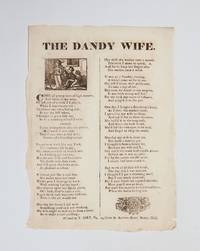
1828réf. 5421London: T. Birt 1828. First edition. Single sheet measuring 250 x 185mm and printed in two columns to recto. Some edgewear to margins not affecting text; a bit of foxing and toning largely confined to margins. A scarce and delicate survivor OCLC documents only one example at the National Library of Scotland. The present is the only example on the market. The Dandy Wife is narrated by a man who aimed "to choose me out a loving wife" at the age of twenty-one but whose experience becomes a warning to "all young men of high renown": "If you want a tidy wife Beware of a boarding school." What unfolds is a satire of how the marriage economy is affected when women have access to knowledge -- intellectual and physical -- and how by meeting a man's superficial expectations a woman can fulfill her own more pressing needs. Thinking that a boarding school girl will have the innocence submissiveness and domestic skill he desires the narrator selects a wife from among their ranks. Thinking only of what he can obtain from such a bargain he is unprepared for what an educated woman brings into his house. The Dandy Wife he describes understands the commodity value of her own beauty and material adornment and that these are her key means for acquiring wealth of her own. "She takes one-half of what I earn In drinking gin and tea; Besides such frills and furbelows My Dandy Wife does wear.Her sleeves upon her dandy gown Oh! Lack they're such a size You'd think they were two balloons that in the air would rise." Aside from staying on par with fashion trends her clothing assists her in avoiding domestic tasks she abhors. She refuses to do laundry more than monthly and through ridiculous cooking failures she rapidly establishes that the kitchen is not a showcase for her skillset. Accustomed to a life of learning she is not trained to conduct domestic business. By the ballad's end it becomes clear that the Dandy Wife was savvier in managing a marriage than her husband was. For not only does her superior intellect help her carve out a more satisfying role but she also has physical knowledge that predates him: "The day that I was married I thought I'd got a charming maid But I was much deceived.For scarce five months we'd married been When she had a darling son. T. Birt unknown
1828réf. 5421London: T. Birt 1828. First edition. Single sheet measuring 250 x 185mm and printed in two columns to recto. Some edgewear to margins not affecting text; a bit of foxing and toning largely confined to margins. A scarce and delicate survivor OCLC documents only one example at the National Library of Scotland. The present is the only example on the market. The Dandy Wife is narrated by a man who aimed "to choose me out a loving wife" at the age of twenty-one but whose experience becomes a warning to "all young men of high renown": "If you want a tidy wife Beware of a boarding school." What unfolds is a satire of how the marriage economy is affected when women have access to knowledge -- intellectual and physical -- and how by meeting a man's superficial expectations a woman can fulfill her own more pressing needs. Thinking that a boarding school girl will have the innocence submissiveness and domestic skill he desires the narrator selects a wife from among their ranks. Thinking only of what he can obtain from such a bargain he is unprepared for what an educated woman brings into his house. The Dandy Wife he describes understands the commodity value of her own beauty and material adornment and that these are her key means for acquiring wealth of her own. "She takes one-half of what I earn In drinking gin and tea; Besides such frills and furbelows My Dandy Wife does wear.Her sleeves upon her dandy gown Oh! Lack they're such a size You'd think they were two balloons that in the air would rise." Aside from staying on par with fashion trends her clothing assists her in avoiding domestic tasks she abhors. She refuses to do laundry more than monthly and through ridiculous cooking failures she rapidly establishes that the kitchen is not a showcase for her skillset. Accustomed to a life of learning she is not trained to conduct domestic business. By the ballad's end it becomes clear that the Dandy Wife was savvier in managing a marriage than her husband was. For not only does her superior intellect help her carve out a more satisfying role but she also has physical knowledge that predates him: "The day that I was married I thought I'd got a charming maid But I was much deceived.For scarce five months we'd married been When she had a darling son. T. Birt unknown books
1964316p. Inked ownership of Donald Freeman. 8vo. Original full cloth binding, faded at edges. Original dust jacket, faded. Hardbound. "Man's inhumanity to woman". WOMEN2 BOX 2
192732 pages. Features: Fun photos of children inside front cover; Debt - Our Biggest National Industry/Money - Our Most Costly Commodity - Can the Price of Money Be Decreased?; The Backstage Story of the Marion Talley Drama - article with photo; Morality That Was First Military - army commanders long ago discovered principles now claimed by pacifists; Where the People of the British Isles Came From; Books That Started the Bells Ringing; Henry Ford's Page - Businessmen are leaders of social movements; Editorials - the McNary-Haugen Bill is vetoed, Judge Ben Lindsey of Denver advocates trial marriage, Madame Schumann-Heink denies endorsing a cigarette (being aimed at women); Skiing in the Bavarian Alps; Paid - A Billion Dollars for Beauty - Sleuths of Science Still on the Trail of Elixir of Youth; Benjamin Franklin as an Abolitionist - fascinating article; Intimate Glimpses of Elbert Hubbard - photo-illustrated article; Chats with Office Callers; I Read in the Papers; News Bits; Nice dog/puppy photos inside back cover. Somewhat above-average wear. Unmarked. Middle page loose but present. A worthy vintage copy. Bonus: Blank 8.5" x 5.5" subscription renewal form laid-in. Book
réf. 102292964X.Ghardcover. Good. Access codes and supplements are not guaranteed with used items. May be an ex-library book. hardcover
1962An early men's publication in the model of Playboy. 74 pages with color and black and white photos. Features: The Kama Sutra - A Marriage Manual for the Maharajah, article by Gary Jennings; Navy Blues - Three-page pictorial essay on a sailor's one-day pass; Photo feature on Dina Frost, a native of Johannesburg, South Africa; Red River Red River - fiction by W.W. Russell; How to Bag a Starlet - humor by Jason McNichols; Photo essay of Mirian Mickelson and Conrad Pringle rehearsing for the Dance of Life; Wine, Women and Rhyme - article by Morton J. Golding on how skill with words can get you plenty of action; Frank Sinatra Speaks - interview with Jay Rosenburg; The Rose Mustache - fiction by H.C. Neal; Dear Old Dad - satire by Lee Steeger; Photographic essay of new Italian starlet Rosanna Schiaffino in"Two Weeks in Another Town" boat scene with George Hamilton; A Myth Punctured - fiction by H.D. Birns; Reduction AD - fantasy by A.M. Andres; Photo essay of Miss Louise (Lou) Lawson; Surfing photos from Hawaii; Photos of Bernardin training actress Francoise Brion how to strip; and more. Unmarked with moderate wear. A sound vintage copy. Book
1994Cover somewhat worn; text clean , tight and bright Used
réf. EuH275-BBlackwell 1999. Hbk 209pp an unread copy excellent in sleeve-protected dj as new. Blackwell 1999, hardcover
19863 pages have indent from paperclip. Very light pencil marginalia to a few pages. Dustjacket has minor shelfwear and rubbing. ; Little has been published on the Roman family, a subject of central importance to political as well as social history. It was the family that determined political power; it was within the family that the distinctive relationships of one citizen to another were forged and exemplified. The Family in Ancient Rome provides an overview of the state of research by presenting some of the most important work being done in this area. In addition to a survey of the literature on all aspects of the Roman family, the book begins with a general picture of the main features of the family. More specialized essays deal with the legal evidence, wills and property rights which were of particular importance for the position of women; with the link between property disposition, dowry, and divorce; with the authority of the male head of the household and its relation to political power; with the status of children born of unions between slaves and citizen; and with the rearing of, and attitudes toward, children. ; 288 pages; Isbn: 0801418739
1986Scholar's blindstamp and name to ffep (Robert Brown). Dustjacket has minor shelfwear and rubbing. ; Little has been published on the Roman family, a subject of central importance to political as well as social history. It was the family that determined political power; it was within the family that the distinctive relationships of one citizen to another were forged and exemplified. The Family in Ancient Rome provides an overview of the state of research by presenting some of the most important work being done in this area. In addition to a survey of the literature on all aspects of the Roman family, the book begins with a general picture of the main features of the family. More specialized essays deal with the legal evidence, wills and property rights which were of particular importance for the position of women; with the link between property disposition, dowry, and divorce; with the authority of the male head of the household and its relation to political power; with the status of children born of unions between slaves and citizen; and with the rearing of, and attitudes toward, children. ; 288 pages; Isbn: 0801418739
1998Very minor shelfwear to book. DJ has minor edgewear and light water-staining. ; The family, Cynthia Patterson demonstrates, played a key role in the political changes that mark the history of ancient Greece. From the archaic society portrayed in Homer and Hesiod to the Hellenistic age, the private world of the family and household was integral with and essential to the civic realm. Early Greek society was rooted not in clans but in individual households, and a man's or woman's place in the larger community was determined by relationships within those households. The development of the city-state did not result in loss of the family's power and authority, Patterson argues; rather, the protection of household relationships was an important element of early public law. The interaction of civic and family concerns in classical Athens is neatly articulated by the examples of marriage and adultery laws. In law courts and in theater performances, violation of marital relationships was presented as a public danger, the adulterer as a sexual thief. This is an understanding that fits the Athenian concept of the city as the highest form of family. The suppression of the cities with the ascendancy of Alexander's empire led to a new resolution of the relationship between public and private authority: the concept of a community of households, which is clearly exemplified in Menander's plays. Undercutting common interpretations of Greek experience as evolving from clan to patriarchal state, Patterson's insightful analysis sheds new light on the role of men and women in Greek culture. ; 286 pages
1998Very minor shelfwear to book. 1 corner lightly bumped. Former owner's name on ffep. DJ has minor edgewear and light creasing. ; The family, Cynthia Patterson demonstrates, played a key role in the political changes that mark the history of ancient Greece. From the archaic society portrayed in Homer and Hesiod to the Hellenistic age, the private world of the family and household was integral with and essential to the civic realm. Early Greek society was rooted not in clans but in individual households, and a man's or woman's place in the larger community was determined by relationships within those households. The development of the city-state did not result in loss of the family's power and authority, Patterson argues; rather, the protection of household relationships was an important element of early public law. The interaction of civic and family concerns in classical Athens is neatly articulated by the examples of marriage and adultery laws. In law courts and in theater performances, violation of marital relationships was presented as a public danger, the adulterer as a sexual thief. This is an understanding that fits the Athenian concept of the city as the highest form of family. The suppression of the cities with the ascendancy of Alexander's empire led to a new resolution of the relationship between public and private authority: the concept of a community of households, which is clearly exemplified in Menander's plays. Undercutting common interpretations of Greek experience as evolving from clan to patriarchal state, Patterson's insightful analysis sheds new light on the role of men and women in Greek culture. ; 286 pages
1998Very minor shelfwear to book and DJ. ; The family, Cynthia Patterson demonstrates, played a key role in the political changes that mark the history of ancient Greece. From the archaic society portrayed in Homer and Hesiod to the Hellenistic age, the private world of the family and household was integral with and essential to the civic realm. Early Greek society was rooted not in clans but in individual households, and a man's or woman's place in the larger community was determined by relationships within those households. The development of the city-state did not result in loss of the family's power and authority, Patterson argues; rather, the protection of household relationships was an important element of early public law. The interaction of civic and family concerns in classical Athens is neatly articulated by the examples of marriage and adultery laws. In law courts and in theater performances, violation of marital relationships was presented as a public danger, the adulterer as a sexual thief. This is an understanding that fits the Athenian concept of the city as the highest form of family. The suppression of the cities with the ascendancy of Alexander's empire led to a new resolution of the relationship between public and private authority: the concept of a community of households, which is clearly exemplified in Menander's plays. Undercutting common interpretations of Greek experience as evolving from clan to patriarchal state, Patterson's insightful analysis sheds new light on the role of men and women in Greek culture. ; 286 pages
1979réf. 2136642Harmondsworth: Penguin Books 1979. 446, (2) Seiten. With some Illustrations. 8° (17,5-22,5 cm) Orig.-Broschur. [Softcover / Paperback].