36 665 résultats
1855réf. 54160London, 1855. 8vo. Entire volume 16, second series of ""The Annals..."" present, bound in a very nice red half morocco with richly gilt spine. A nice, clean, fresh, and sturdy copy. A vague stamp to title-page (London Institution) and a blindstamped marking to top of first leaf of contents (Cranbrook Institute of Science). Pp. 184-196. [Entire volume: VII, 472 pp. + 11 plates].
1864réf. 564j1976Bruxelles: Imprimerie de A. Mertens et Fils. Fair with No dust jacket as issued. 1864. First Edition. Hardcover. Is this book the plagiarized source of The Protocols of the Learned Elders of Zion "In his 1870 autobiography Maurice Joly 1829-1878 described how he conceived the idea of a dialogue between Montesquieu and Machiavelli. At that time it was forbidden to openly criticize the regime of Napoleon III but in this way it would be possible through the mouth of Machiavelli to expose the Emperor's motives and methods stripped of the usual camouflage. Thus this book was printed in Belgium and smuggled into France but was immediately seized by the police banned and Joly arrested. Thus few copies survive. Joly's reflections on the despotism of Napoleon III provide insights applicable to authoritarian regimes of today. Moreover something of Joly's insights even survived when his book was transformed into The Protocols of the Elders of Zion thus The Protocols often seem to forecast twentieth-century authoritarianism." - pages 73-76 of Warrant for Genocide by Norman Cohn in which he claims over 160 passages in the Protocols are clearly based on passages in Joly. "The Protocols of the Wise Men of Zion were first circulated in Russia in the early years of the twentieth century purportedly an account of a meeting between Jewish leaders in the fall of 1897. A horrible plot to undermine society overthrow governments and destroy Christianity is revealed. The 'minutes' are copied verbatim from A Dialogue in Hades Between Machiavelli and Montesquiou written by Maurice Joly. The 'Protocols' merely substituted the word 'Jew' for Joly's own devils." - Footnotes to pages 423-424 of Mein Kampf Reynal & Hitchcock 1939. Others argue that Joly's work was not the source of The Protocols. We leave it to the reader to decide. 4 i-iii iv 337 1 1 errata p. 18.0 x 12.4 cm. Text in French. Tight maroon quarter leather binding with new leather spine and leather title label. Wear to periphery of older marbled boards which are probably not original. Bookplate of Dr. J.A. Van Praag 1895-1969 inside front board. Van Praag was a lecturer at the University of Amsterdam when he acquired this book in 1931 and wrote his name atop the first blank leaf along with a comment about the purported connection of the book to The Protocols. He also wrote Joly's name on the title page. Pencil notes on pages 47 80 and 94. Evidence of moisture exposure to endpapers and more moderately to contents. Negligible if any waviness to contents. All text clearly legible with pages intact. Includes new custom acid-free clamshell with leather title label upon spine. A rare first edition example of this most contentious work. Provenance: Acquired from an Israeli dealer who purchased it at an Israeli auction which only sells books offered by Israelis. Our research indicates that at least some of Van Praag's books were looted by the Nazis in 1941. Apparently he retired in 1966 and attempted to rebuild his library. However after a fire in his widow's home in 1970 part of the library was destroyed or damaged and she sold the remaining books. We have no definitive way of knowing if this book was looted from Van Praag or if it was if he ever re-acquired it. Perhaps he did re-acquire it only to have it exposed to moisture per our description by firefighting efforts in his widow's home; 12mo . Imprimerie de A. Mertens et Fils hardcover
1838réf. 89310Arthus Bertrand | Paris 1838-1852 | 14.5 x 23.5 cm & 18,8 x 28 cm & 35 x 53 cm | 12 volumes reliés
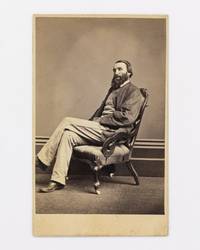
1866réf. 135300Adelaide: Townsend Duryea 1866. Adelaide Townsend Duryea printed circa 1866; original negative circa 1863. An albumen paper photograph 90 × 59 mm mounted on the original card 102 × 62 mm with 'T. Duryea Photographer to His Excellency 66 King William St. Adelaide' printed on the verso under the Vice-Regal Coat of Arms. 'Townsend Duryea began making cartes de visite in late 1862 or early 1863 and was advertising his "new" style of carte in May 1863' Bob Noye AGSA website. The portrait taken in Duryea's Adelaide studio shows Stuart after his epic crossing of the continent of Australia: he is visibly depleted - emaciated even - with his injured hand positioned awkwardly in his lap. The accident that caused this permanent injury occurred on 25 October 1861 the day the main party of the successful sixth expedition departed Adelaide. Stuart later described it in a letter to Charles Sturt: 'the accident I received from one of the horses being in a state of strangulation and endeavoured to release him reared up struck me in the temple knocked me senseless and springing again with his hind feet on my right hand has disabled me for life' Ian Mudie: 'The Heroic Journey of John McDouall Stuart' 1968 page 171. It is a most evocative image of the great explorer towards the end of his life. The negative number 18592/3 is inscribed in ink on the verso below Duryea's imprint. This particular imprint dates to around 1866 see Noye and the negative number is consistent with this date. Noye notes that 'A carte with a number belonging to a much earlier number range would be a reprint from an old negative held in storage'; this suggests that this photograph is not printed from the original negative perhaps lost damaged or destroyed. This further suggests that this photograph is printed from a negative produced by rephotographing an existing print of the portrait of Stuart taken earlier by Duryea. This would explain why Stuart has what appears to be his left hand in his lap: the image is printed in reverse. It was likely produced after news of the explorer's death in London on 5 June 1866 had reached Adelaide. A small item of local news 'Mr T. Duryea's Studio' in the 'South Australian Register' on 23 November 1866 lends weight to this possibility: 'A visitor to Adelaide may spend a very pleasant and profitable half-hour in Mr Duryea's photographic studio where a number of elegant photographs in every style of art are displayed. Mr. Duryea also exhibits some superior examples of photographs worked up in water-colours which are soft and some of them exquisitely finished. Amongst these there is a fine portrait of the late J.M. Stuart the explorer'. This carte de visite is clearly not that exhibition piece but it is most definitely a fine portrait. Townsend Duryea unknown
1871réf. 89766Imprimerie Mourès & Cie | Le Caire 1871 | 34.5 x 50.2 cm | Relié
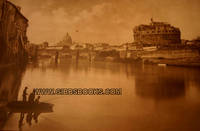
1870réf. 053004-KItaly 1870. Book. Illus. by Giacomo Brogi. Very Fine. No Binding. Albumen Mammoth Print c. 1870's By Giacomo Brogi 1822- 1881 Italian. Very rare photographic image by this artist in the original restored frame . This is not one of the standard tourist pictures that you find but a true work of art by this master photographer. Both Brogi and the Alinari Brothers worked as photographers and took the standard architecture ruins photos in Italy most being small 8"x10" Albumen prints but they did art photography also and to find one is a rare treat . This piece shows three men in a row boat on the Tiber River with Castel Saint`Angelo Mausoleum of Adrian on the right the Saint`Angelo bridge to the castle in the middle in the far distance you can see St. Peter's Dome . Looking around the photo the men in the boat you can see their reflection in the water. With sheep on the right shore and the clouds rolling by above it all this is a very importain photographic image by this artist . Please call for more information on this and other works of art. Size: 32 x 23. unknown
1820réf. 69056Paris, Pierre Didot l'ainé, 1806 1820 4 volumes grand in-folio, demi chagrin fauve, dos à nerfs ornés de filets dorés reliure fin XIXe s., faux titre gravé, 1 portrait de SAS le Prince de la Paix d'après Steven, XLVI pp. dont le titre, 72 pp., 1 f. n. ch. et LXXXVIII planches - Faux-titre, titre, pp. de 73 à 132, planches de LXXXIX à CLXXXIX - Faux-titre, titre, XLV pp., 36 pp. et XC planches - Faux-titre, titre, XCI pp., 38 pp. et LXX planches, 2 cartes doubles de l'Espagne et du Portugal. Soit 272 planches hors texte.
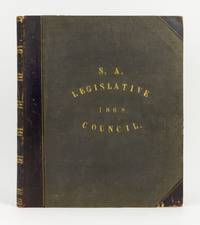
1868réf. 142860Adelaide: Townsend Duryea 1868. First Edition. Hardcover. Very Good. Adelaide Townsend Duryea 1868. A large quarto album approximately 415 × 365 mm containing 18 albumen paper portraits each approximately 280 × 210 mm mounted on the rectos of cloth-hinged thick card leaves interleaved with guards plus one leaf of letterpress see below. Contemporary half roan and cloth lettered and tooled in gilt with a binder's ticket on the front pastedown 'Bound at the "Register" Office Grenfell Street Adelaide'; covers slightly worn; leaves slightly cockled; one guard missing; most photographs lightly discoloured near the right-hand edge; a few light spots of foxing mainly to the guards and the versos of the mounts and some minor signs of age and handling but overall in excellent condition. The subjects include some of the most prominent figures in early colonial South Australia. In order of appearance the portraits depict John Morphett President Henry Ayers Charles Hervey Bagot John Henry Barrow Charles George Everard John Baker William Wedd Tuxford Thomas Elder William Peacock William Morgan Thomas Hogarth John Tuthill Bagot Thomas English Henry Mildred John Crozier William Parkin John Hodgkiss and Emanuel Solomon. The 'South Australian Advertiser' for 20 August 1868 records that: 'Mr. Duryea is preparing a parliamentary group containing the members of both Houses of the Legislature which promises to be an effective affair. The members of the Council have already given him sittings and a fine series of portraits is the result'. In the subsequent months Duryea exhibited the photographs at his King William Street studio but most accounts refer to them assembled as a group around Morphett. This photo-collage with the portraits all heavily cropped is almost certainly the basis for a contemporary carte de visite published by Duryea see SLSA B 9258. However most of the images in this album appear to be rare or even unrecorded in their uncropped form; indeed the only other examples we located were of Henry Ayers and Charles Hervey Bagot. It is also rare to find photographs of early colonists at all let alone of this size quality and quantity. The guard leaves for the portraits of Morphett Hogarth J.T. Bagot and Mildred contain manuscript biographical details in a single hand. Although we have not identified the writer it is likely to be one of the eighteen MLCs as he refers to 'our chamber' in the entry for Morphett. The portrait of C.H. Bagot is accompanied by a similar short biography but this time in letterpress and misspelling his middle name as 'Harvey'. C.H. Bagot English Mildred Crozier Parkin and Solomon are identified in another hand on the mounts beneath the image. Townsend Duryea] hardcover
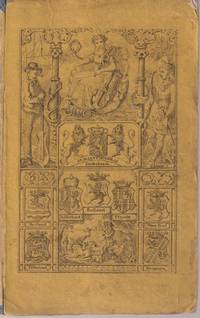
1839réf. 11053Coblenz: Verlag Von K. Baedeker. Very Good-. First Edition. Hardcover. Yellow boards a bit browned and worn. Spine ends and corners lightly chipped. Pages clean and tight with occasional browned pages not affecting contents; In 1839 with the publication of Holland Belgium and Rheinreise 3rd Edition the Baedeker series was launched. An extremely rare book in the original Biedermeier boards including a list of Baedeker's books in front and with a steel engraved fold out map in the back; 16mo 6" - 7" tall; 212 pages . 1839. Verlag Von K. Baedeker hardcover
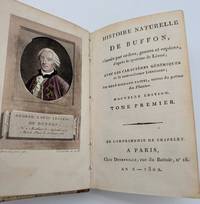
1803réf. 71345Paris: De L'Imprimerie de Crapelet 1803. Nouvelle Édition. Leather Bound. Very Good. Twenty-fourmo 13.5 cm Contemporary 3/4 brown leather with speckled paper over boards. Pale red and green gilt stamped leather spine labels. Six gilt ruled compartments on the spines. Illustrated plates the majority with tissue-guards. This specific set has a frontispiece portrait of Buffon 781 illustrated plates and 5 folding tables the exact number of plates found in each volume is available upon request. Text in French. Extremities very lightly rubbed and soiled. A couple of boards with small red stains. Spines sporadically mottled. Occasional minor chipping to spine ends and a handful of spine labels with loss. Underlying boards peeking through at corners. Endpapers have a previous owner's red ink stamps a small faint ink stamp in black and minute contemporary numerical notations. Stitching visible in gutters here and there. Pp. 125-130 volume 12 are partially detached. Pp. 29-32 volume 44 and pp. 93-96 volume 77 are completely detached but present. Skillful repair to fore-edge margin of p. 169 volume 59. Pages bound out of sequence in volume 59 between p. 136 and p. 185. Periodic printing errors occur in the set's pagination. In a handful of plates the sky in the background appears stained and there is a bit of red staining to plate at p. 258 in volume 70. Two reptile illustrations in volume 42 are a trifle trimmed at the head. Additional Collation Notes: Curiously volumes 56-65 are the only volumes in which the plates are numbered. In volume 58 I believe plate 15 is mislabeled as 13 and it is found between plates 23 and 24. The books are very structurally sound and the pages are strikingly clean and bright. Contents: Théorie de la Terre. Époques de la Nature; Discours Généraux; Quadrupèdes; Oiseaux; Histoire Naturelle des Minéraux; Histoire Naturelle des Poissons; Histoire Naturelle des Reptiles; Histoire Naturelle des Insectes; Histoire Naturelle des Coquilles; Histoire Naturelle des Vers; Histoire Naturelle des Crustacés; Histoire Naturelle des Végétaux. An edition published posthumously of Buffon's most famous work. Buffon's Histoire Naturelle was continued in part by others after his death. It was translated into various languages and read throughout Europe. French naturalist George-Louis Leclerc de Buffon 1707-1788 Comte de Buffon is viewed as the most influential biologist of the 18th century epitomizing the revolutionary changes the Enlightenment brought to the study of nature. The title of Count was bestowed on him by Louis XV in recognition of his accomplishments rather than by birth. He is most famous for Histoire Naturelle a comprehensive work on natural history first begun in 1749. De Buffon began his studies at the College of Godrans in Dijon where he was only an average student. Originally his father wanted him to have a legal career however in 1728 he went to Angers where he studied medicine botany and mathematics. In 1739 he was appointed keeper of the Jardin du Roi the royal botanical garden now the Jardin des Plantes and of the accompanying museum. There he was tasked with creating a catalog of the royal collections in natural history which he transformed into an undertaking to produce a record of the whole of nature. This became his monumental work Histoire Naturelle Générale et Particulière which was the first modern effort to methodically present all existing knowledge in the subjects of natural history geology and anthropology in one publication. Buffon's ideas challenged traditional biological classification and introduced theories of evolutionary thought roughly one hundred years before Darwin. Comte de Buffon is also remembered for his argument that the world had a lengthy history rather than being only a few thousand years old as the naturalists of the 1600s believed. In addition he felt that scientific writing should be energetic and graceful in style thereby allowing his work to be accessible to a wide audience in Europe and beyond. Buffon's work articulated that species were different throughout the world that the planet was much older than the Bible suggested and that plant and animal species were related in intricate ways. Buffon's bold way of looking at the world laid the groundwork for later revolutionary thinkers who are responsible for much of what we know about the natural world. An attractive set of a pivotal work of the Enlightenment richly illustrated with numerous hand-colored plates. De L'Imprimerie de Crapelet unknown
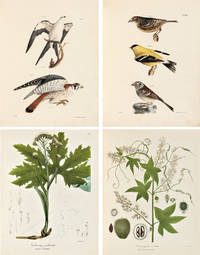
1894réf. WRCAM28514Albany 1894. Thirty volumes described below. Original cloth gilt-stamped in the earlier volumes in the series several volumes rebacked with original backstrips laid down. Several volumes with minor nicks or tears in cloth but overall a very good set of a work seldom found in decent condition. A complete set of one of the great monuments of American science and natural history illustration of the 19th century. It is virtually impossible to assemble all of the volumes in this set as they were issued across more than half a century and are generally found in poor condition because the bindings were not adequate for the weight of the heavy text blocks. Many of the volumes were issued in two states with the plates either colored or uncolored. In this set all possible plates some 539 are colored. The New York Natural History and Geological Survey was established by the state legislature in 1836 under the direction of James Ellsworth DeKay. By far the most ambitious scientific project undertaken in the United States up to that time it was designed to be issued in six sections: Zoology Botany Mineralogy Geology Agriculture and Paleontology. After six years of preparation volumes began to appear in 1842. The first four parts a total of twelve volumes were issued in 1842-44 and the five volumes of the Agriculture section between 1846 and 1854. The final section Paleontology began publication in 1846 but under its editor James Hall it took on a life of its own. Hall managed to turn it into a long career in his position as state paleontologist ultimately issuing thirteen volumes where only one had been planned originally. Without Hall's genius as a lobbyist for additional state funds the entire project would have been wrapped up in the 1850s. Instead he was still in office at age eighty-three when the final volumes were published. NATURAL HISTORY OF NEW YORK is notable for its vast array of color plates and in later volumes its use of other innovative forms of natural history illustration. In all it contains several thousand plates colored and uncolored making it a project on the same scale as the Pacific Railroad Survey. The present set contains 539 handcolored lithographs. The set is much less well known because far fewer volumes were produced than the U.S. government publications but it clearly was the model on which the great U.S. surveys of the 1850s were based. Some sections of the set are particularly desirable and more difficult to obtain while others were produced in very small editions. An essential work for any collection of early American science or American illustration especially color plates. A synopsis of the set with notes on illustration and rarity is given below. A detailed collation of the set is given in Meisel. Part I. ZOOLOGY OF NEW YORK: OR THE NEW YORK FAUNA; COMPRISING DETAILED NOTICES OF ALL THE ANIMALS HITHERTO OBSERVED WITHIN THE STATE OF NEW YORK. This series was edited by James Ellsworth DeKay. Vol. I. Mammalia. Albany. 1842. Thirty-three plates. These plates are usually found uncolored as here. A colored issue does exist but is extremely rare. Vol. II. Birds. Albany. 1842. 141 handcolored plates. Vol. III. Reptiles and Amphibians. Albany. 1842. 102 plates. These plates are usually found uncolored as here. The extremely rare colored issue of this volume is probably the hardest segment or issue to find of the NATURAL HISTORY. Vol. IV. Reptiles and Amphibians. Albany. 1842. The text volume for the preceding. Vol. V. Mollusca and Crustacea. Albany. 1844. Fifty-three handcolored plates. Part II. A FLORA OF THE STATE OF NEW YORK COMPRISING FULL DESCRIPTIONS OF ALL THE INDIGENOUS AND NATURALIZED PLANTS HITHERTO DISCOVERED IN THE STATE. Albany. 1843. Two volumes. 161 handcolored plates. This section was edited by the noted botanist John Torrey. Not surprisingly the beautiful colored lithographs of flowers have made this one of the most sought after sections of the NATURAL HISTORY. Part III. MINERALOGY OF NEW YORK; COMPRISING DETAILED DESCRIPTIONS OF THE MINERALS HITHERTO FOUND IN THE STATE OF NEW YORK AND NOTICES OF THEIR USES IN THE ARTS AND AGRICULTURE. Albany. 1842. Eight uncolored plates. This section was edited by Lewis C. Beck. Part IV. GEOLOGY OF NEW YORK. Prepared by various authors. Vol. I. Mather William W.: Part I.first geological district. Albany. 1842. Forty-two handcolored plates. Vol. II. Emmons Ebenezer: Part II.second geological district. Albany. 1842. Fifteen uncolored plates. Vol. III. Vanuxem Lardner: Part III.third geological district. Albany. 1842. No plates only illustrations in text. Vol. IV. Hall James: Part IV.fourth geological district. Albany. 1843. Nineteen uncolored plates. Part V. AGRICULTURE OF THE STATE OF NEW YORK; COMPRISING AN ACCOUNT OF THE CLASSIFICATION COMPOSITION AND DISTRIBUTION OF THE SOILS AND ROCKS AND THE NATURAL WATERS OF THE DIFFERENT GEOLOGICAL FORMATIONS. This section was edited by Ebenezer Emmons. Vol. I. Part I. Albany. 1846. Twenty-one uncolored plates. Vol. II. Analysis of Soils Plants and Cereals. Albany. 1849. Forty-two uncolored plates. Vol. III. Fruits. Albany. 1851. Text only. Vol. IV called "Atlas" to Volume III. Fruits. Albany. 1851. Ninety-five handcolored plates. This volume is also highly sought after for its plates of fruits from upper New York State prefiguring the many fruit illustrations which began to be produced in Rochester in the mid1850s. Vol. V. Injurious Species of Insects. Albany. 1854. Forty-seven handcolored plates. Part VI. PALAEONTOLOGY OF NEW YORK. This section was edited throughout by James Hall. Vol. I. Organic Remains lower division. Albany. 1846. 100 uncolored plates. Vol. II. Organic Remains middle division. Albany. 1852. 104 uncolored plates. Vol. III. Part I. Organic Remains.lower Helderberg group. Albany. 1859. No plates. Vol. III. Part II. Atlas for above. Albany. 1861. 143 uncolored plates. Vol. IV. Fossil Brachiopoda. Albany. 1867. Sixty-three uncolored plates. Vol. V Part 1 Vol. 1. Lamellibranchiata. Albany. 1884. No plates. Vol. V Part 1 Vol. 2. Lamellibranchiata. Albany. 1885. Ninety-six plates. Vol. V Part 2 Vol. 1. Gasteropoda. Albany. 1879. No plates. Vol. V Part 2 Vol. 2. Gasteropoda. Albany. 1879. 120 uncolored plates. Vol. VI. Corals and Bryoza. Albany. 1887. Sixty-seven uncolored plates. Vol. VII. Trilobites. Albany. 1888. Sixty- four uncolored plates. Vol. VIII Part 1. Paleozoic Branchiopoda. Albany. 1892. Forty-four uncolored plates. Vol. VIII Part 2. Paleozoic Branchiopoda. Albany. 1894. Eighty-four plates. The final eight volumes of this series are much harder to find than the first four having been issued much later and in smaller editions. The final two volumes comprising Volume VIII are extremely rare. MEISEL II pp.613-18. ANB 6:356 De Kay 9:861 Hall. REESE STAMPED WITH A NATIONAL CHARACTER 73. BLUM PICTURING NATURE 199-209. hardcover books
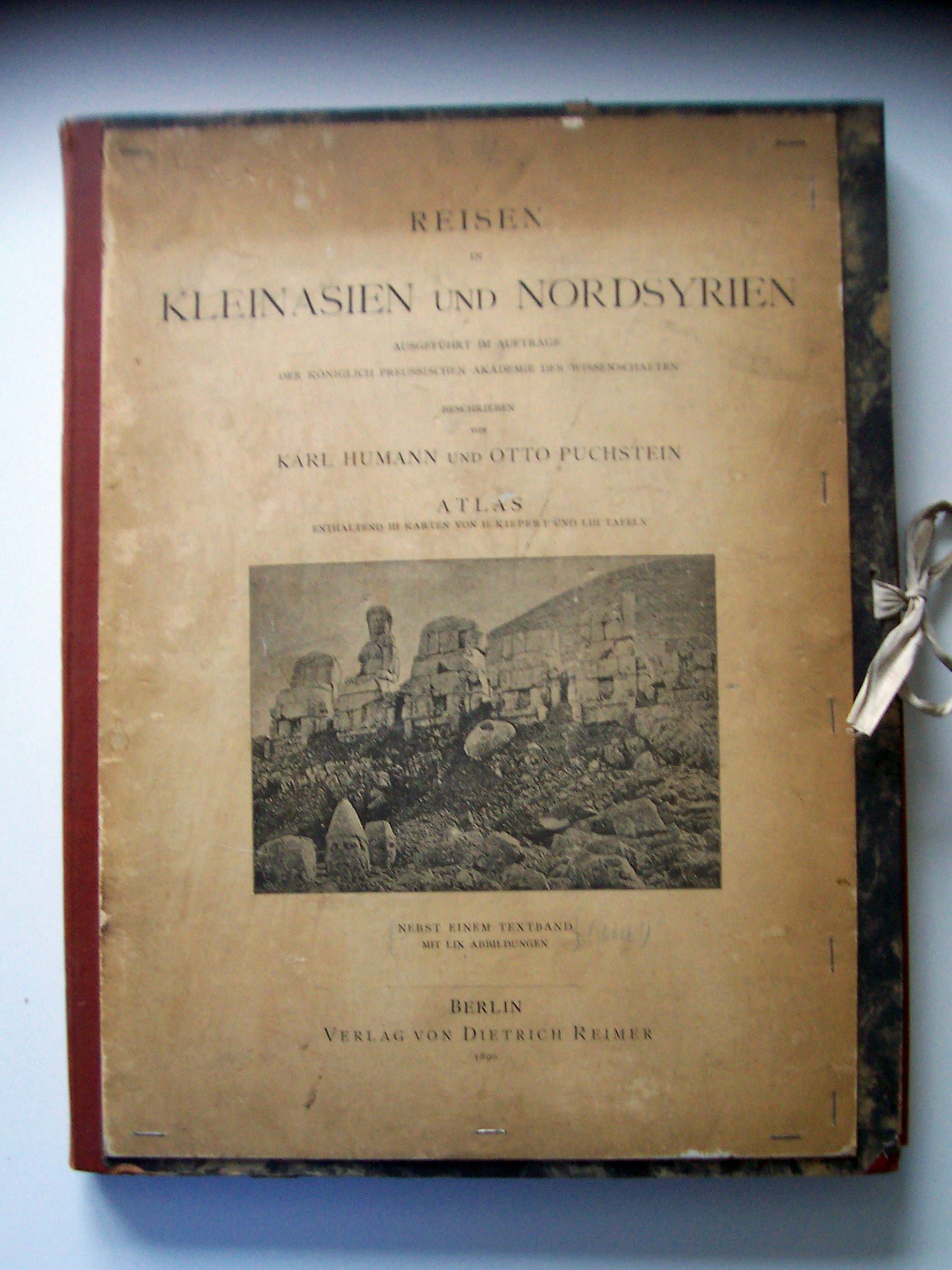
1890réf. 250306Berlin, Reimer, 1890. Fol. M. 3 (davon 1 zweiteilig) gef. Ktn., 53 Taf. Tit.-Bl., 2 Bl. Ehem. Bibl.-Ex. in Hlwd.-Mappe m. mont. Original-Deckel (diese bestoßen, gebräunt u.m. Resten Rsign., Innendeckel m. Bibl.-Tekt.). Tit.-Blatt m. handschrftl. Anmerk., stärker gebräunt und am Rand knickspurig. Taf. randgebräunt, teils braunfleckig und jede m. Stempel auf Rückseite. [3 Warenabbildungen]
1856réf. 12958NY: Derby & Jackson. Very Good with no dust jacket. 1856. Second Edition; First Printing. Hardcover. The spine is dulled with wear to the spine ends & corners light rubbing to the covers. ; Inside the front cover is an inscription gifting the book to Jefferson Davis from "M. P. Abbott . " Also inside the front cover is an inscription telling how the owner's brother was a forager with the Union Army who took the book from Davis' library at his brother's plantation near Vicksburg where it had been moved deemed safer than on his plantation. An anti-slavery book from Jefferson Davis' own library. Wonder what he was thinking when he read it. Brings to mind all the conflicts he had when he took his post with the Confederacy. What an association! ; 12mo 7" - 7½" tall; 298 pages . Derby & Jackson hardcover
1887réf. 42771887. Leather. Very Good. 9.5 x 12.5. Original Public Opinion Journal Complete RARE Huge Set Collection of 1887 to 1906 38 Volumes in 33 Bindings made up of 988 weekly journals over 35000 pages over 400 pounds. Condition: Good to Fine most in Very Good #3 through #29 are half leather and paper or half leather and buckram #30 through #40 are dark green cloth bound. Some of the leather volumes have spine cracks hinge surface cracks 4 volumes have hinge repair #3 through #18 are of a dark red leather binding all leather treated with Klucel G consolidate. volumes 21 to 40 are exlibrary and have gilt lettering of library on spine cover and some stamps inside those some have loose weekly title pages 9.5 x 12.5 tall. Over 400 pounds Motto of: A Comprehensive Summary of The Press Throughout the World on all Important Current Topics Washington D.C. and New York N.Y. Each of the 40 Volumes which is usually 6 months of 26 weekly journals has a nice Index at the beginning. Public Opinion was a lower circulation and is now scarce to find. Most of the volumes include the great advertisements that were in the individual journals first First Ford Advertisement ever. Two days after Ford Motor Company was formed. 1903 FordMobile Advertisement Advertisements 1903 Haynes-Apperson many 1903 up Oldsmobile pistols and guns Radium Spinthariscope Wabash Trains Woodrow Wilson etc. Olive Redpath mentioned in Theater section etc hardcover
1805réf. 36079(København, ca. 1805-08). 4to. Varierende bladstørrelser. Trykflade ca. 20x15 cm. Med 59 kobberstukne og håndkolorerede dragtplancher samt 6 tillægsplancher i tusch og akvarel. Alle med dansk og tysk tekst under billedet. Indlagt i bogæske af helshirt.
1814réf. 89342Chez les marchands de nouveautés | Vérédishtad [Paris] s. d. [ca 1814] | 14 x 22.3 cm | 4 volumes reliés sous deux étuis
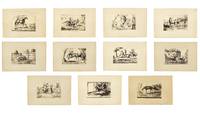
1864réf. 142931Adelaide: The Author 1864. Fine. Adelaide The Author 1864. Eleven albumen paper photographs approximately 88 × 134 mm mounted on the recto of individual cards approximately 165 × 240 mm neatly captioned below the plate with the title at the head of the first one with all captions by George Hamilton himself. A few light spots and marks to some of the cards; essentially in fine condition with the photographs uniformly rich in colour. The Art Gallery of South Australia has all 11 original artwork - pen and ink with wash - in its collection. The 'Adelaide Observer' on Saturday 27 August 1864 contains a review of Hamilton's recently self-published book 'a well-conceived well-written neatly-printed and elegantly-illustrated brochure under the above title'. It describes at length the illustrations '11 in number photographed from the author's drawings by Colonel Biggs Mr. Baines and Professor Hall and they bear ample evidence of the artistic taste as well as the correct judgment displayed in the spirited originals'. Robert Holden 'Photography in Colonial Australia. The Mechanical Eye and the Illustrated Book' 1988 describes this book and one other Molesworth Jeffrey's 'Various Exercises and Fragments in Metre by Divers Authors' Hobart 1864 as being the 'first recorded use of original photographs as illustrations in commercially produced and dated books' in Australia. His descriptive bibliography records that the published work indeed contains 'Photographs of eleven drawings . by Colonel Briggs sic from rough sketches by the author. It would appear that these images were printed eleven to a sheet and then arranged in random order throughout the text'. His collation of the three copies in the State Library of South Australia indicates the individual print sizes range from 20 × 35 mm to a maximum of 40 × 60 mm. The present offering clearly predates the published use of these images and its presentation is much to be preferred. The first and most obvious difference is the superior size and quality of the prints. However the captions greatly enhance the images; when they are read and viewed in the intended order numbers 1-11 are lightly pencilled in the top right-hand corner of the cards this becomes a proto-photobook of the highest order . and far from being a prosaic account of how to look after a horse as the title might suggest it is a searing indictment of the widespread ill-treatment of horses. 'Mr. Hamilton proceeds with pen and pencil to describe and portray some of the trials a horse has to undergo from the time his liberty is first invaded in the bush until in the last scene of all that ends this painful history he is reduced to the drudgery of a hackney car'. See Ferguson 10180b and 10181a; Holden 50 and 51 plus pages 13-21. Both bibliographies contain errors. 11 items. The Author] unknown
1857réf. 59-178n.p. 1857 1857. 544p. Unpublished manuscript of hand written text with folding line drawings of artillery. Author was an officer of the Royal Marine Artillery. 7 x 8 ½ inches. Old ¾ leather. Gilt decoration on on spine. Edgewear. Very Good Copy. Hardcover. Very Good. n.p. 1857 Hardcover
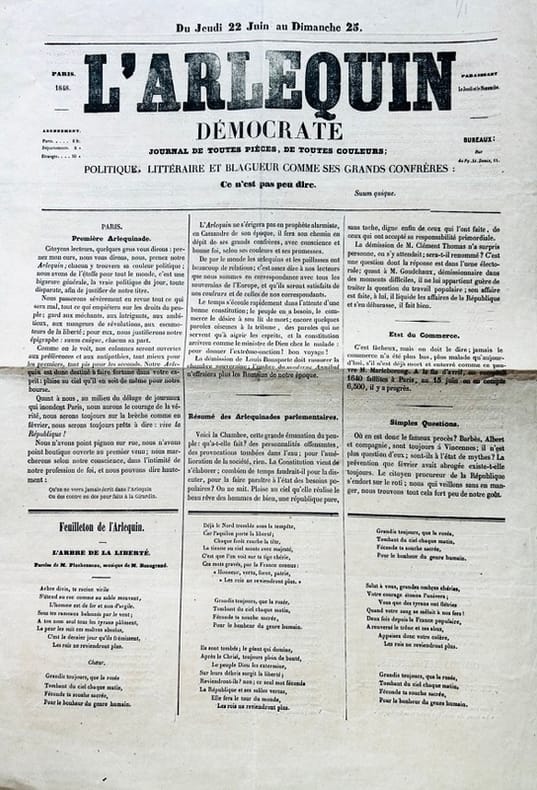
1848réf. 11076, , 1848-1849. Collection de 80 titres in-4 et in-folio, en feuilles.
1861réf. 89248Arthus Bertrand | Paris s. d. [1861] | 16.3 x 25 cm & 49,5 x 64,5 cm | 1 volume broché + 1 volume broché sous coffret
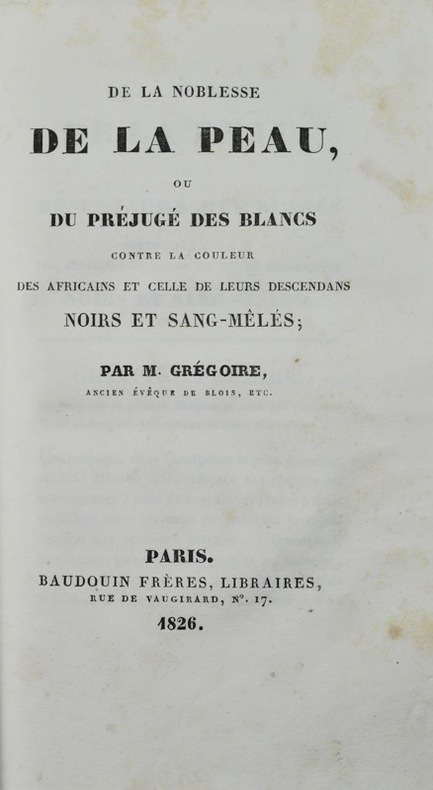
1814réf. 9590, , 1814-1831. 19 pièces reliées en 1 vol. in-8, sommaire manuscrit sur la garde supérieure, demi-toile verte chagrinée, dos lisse orné (reliure de l'époque).
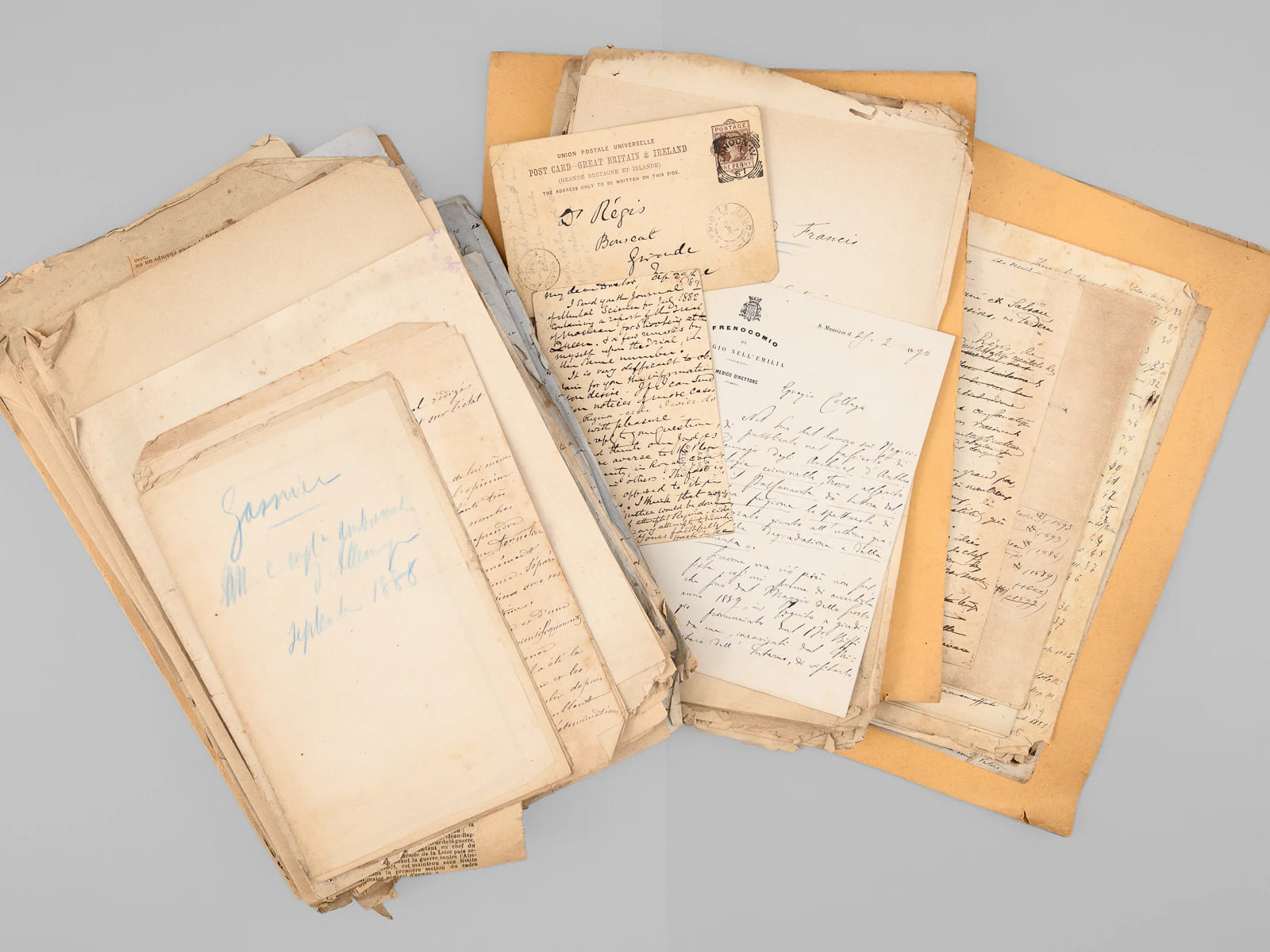
1889réf. 72004Ensemble sous 3 chemises cartonnées: Premier dossier réunissant les courriers (18 L.A.S., 2 lettres tapuscrites signées, 9 feuillets tapuscrits en anglais, attribuable à Daniel Hack Tuke et qq. prospectus) ; Second dossier de 56 ff. autographes format in-8 et in-4 contenant de nombreuses notes et brouillons pour son ouvrage et ses articles sur les régicides : Troisième dossier d’environ 280 ff. manuscrits (autographes du docteur Emmanuel Régis ou d'autres mains de divers scripteurs, copistes ou traducteurs) et divers documents imprimés joints recueillant les sous-dossiers consacrés aux régicides. Détail du contenu : ] Important lot d'archives comprenant plus de 336 feuillets manuscrits, souvent autographes, du Professeur et aliéniste Emmanuel Régis (brouillons, notes de travail, relevés de notes sur les assassins politiques pour son ouvrage sur les "Régicides"), divers documents imprimés joints et de nombreux lettres autographes signées (L.A.S.) d'intervenants majeurs parmi lesquels Augusto Tamburini (1 L.A.S.), Daniel Hack Tuke (2 L.A.S. et un document autographe signé), Rodolfo Laschi (1 L.A.S.), Henry Coutagne (1 L.A.S.), le journaliste Georges Montorgueil (4 L.A.S.), 2 journaux américains (Gilliams Press Syndicate & The Associated news) : - Augusto Tamburini: lettre en italien rédigée depuis l'asile d'aliénés de Reggio Emilia par le célèbre psychiatre italien Augusto Tamburini, adressée au Dr Emmanuel Régis au sujet du cas de Giovanni Passannante (l'anarchiste ayant tenté d'assassiner le roi Humbert I d'Italie en 1878). LAS de 2 pp. sur 2 ff. à en-tête «FRENOCOMIO DI REGGIO NELL’EMILIA - IL MEDICO DIRETTORE» «S. Maurizio il 21. 2. 1890 Egregio Collega Nel suo bel lavoro sui Regicidi pubblicato nel fascicolo di Gennajo degli Archives d’Anthropologie Criminelle, trovo asserito che « il Passannante dà tuttora dalla sua prigione lo spettacolo di un forzato giunto all’ultimo grado della degradazione e della demenza ». L’uomo ora ciò più non soffre, così mi preme di avvertirla che fino dal Maggio dello scorso anno 1889, in seguito a giudizio pronunciato dal Mr Biffi e da me, incaricati dal Ministero dell’Interno, di visitarlo, il Passannante come affetto da delirio sistematizzato persecutivo e ambizioso allucinatorio, è stato dal Bagno di Portoferrajo trasferito al Manicomio Criminale dell’Ambrogiana, instituito dallo stesso Ministero dell’Interno, dove trovasi sotto cura e custodia psichiatrica. Poiché veggo ch’Ella sta per pubblicare un volume sullo stesso argomento, io Le ho scritto perché, s’Ella crede, voglia rettificare l’asserto, tenuto conto che il voto da Lei emesso era già stato soddisfatto. Gradisca, Egregio Collega, con perfetta stima e considerazione». [ Traduction: «Dans votre bel ouvrage sur les Régicides publié dans le fascicule de janvier des Archives d’Anthropologie criminelle, je trouve affirmé que « Passannante offre encore depuis sa prison le spectacle d'un forçat arrivé au dernier degré de la dégradation et de la démence ». Cet homme ne souffre plus de cela désormais, aussi tenais-je à vous avertir que dès le mois de mai de l'année dernière 1889, à la suite du jugement rendu par le Biffi et moi-même, chargés par le ministère de l'Intérieur de l'examiner, Passannante — atteint d'un délire systématique de persécution et d'ambition allucinatoire — a été transféré du bagne de Portoferraio vers l'asile d'aliénés criminels de Montelupo (L'Ambrogiana), créé par ce même ministère de l'Intérieur, où il se trouve actuellement sous soins et garde psychiatriques. Voyant que vous êtes sur le point de publier un ouvrage sur ce même sujet, je vous écris afin que vous puissiez, si vous le jugez bon, rectifier cette affirmation en tenant compte du fait que le vœu que vous aviez émis avait déjà été exaucé…]En 1878, Passannante avait tenté de poignarder le roi Humbert I . Condamné à mort, sa peine fut commuée en prison à vie. Enfermé dans la prison de Portoferraio (île d'Elbe) dans des conditions inhumaines (cellule sous le niveau de la mer, sans lumière, enchaîné), ce régime provoqua sa folie complète. Face au scandale public, le gouvernement italien chargea Augusto Tamburini et Serafino Biffi d'examiner le détenu. Ils conclurent à sa folie (délire de persécution et d'ambition) et obtinrent son transfert à l'asile d'aliénés criminels de Montelupo Fiorentino (Villa L'Ambrogiana). Tamburini rectifie ici l'information auprès d'Emmanuel Régis pour la mise à jour de son futur livre Les Régicides.- Daniel Hack Tuke (2 L.A.S. et un document autographe signé): Daniel Hack Tuke (1827–1895), célèbre médecin et aliéniste anglais, inventeur du mot»psychothérapie», coauteur d'ouvrages majeurs de référence en psychiatrie au XIX siècle et éditeur du Journal of Mental Science. Première C.P.: “Lyndon Lodge Hanwell, London April 5, 1889 I am very sorry to have been so long in sending you the note on Régicide &c., but you will receive the M.S. in a few days (probably Wednesday). I have found it very difficult to obtain the particular information you require. There is no book in which the information is given, so that I have referred to many”. Yours, Hack Tuke [ Traduction: Je suis très désolé d'avoir tardé à vous envoyer la note sur le régicide, etc., mais vous recevrez le manuscrit dans quelques jours (probablement mercredi). J'ai trouvé très difficile d'obtenir les informations particulières dont vous avez besoin. Il n'existe aucun livre contenant ces informations, si bien que j'ai dû me référer à beaucoup». Deuxième C.P. « Apr 29th / 89 My dear Doctor, I send you the Journal of Mental Science for July 1882 containing a report of the trial of Maclean for shooting at the Queen, & a few remarks by myself upon the trial, in the same number. It is very difficult to obtain for you the information you desire. If I can send you notices of more cases of Regina-cide I will do so with pleasure. In reply to your question, I do not think our judges are more averse to the plea of insanity in Royal cases than in others. The fact is, they are opposed to it in all cases. I think that now, as much justice would be done in cases of attempted Regina-cide as in ordinary attempts to murder. Yours faithfully Hack Tuke» [ Traduction: Mon cher Docteur, Je vous envoie le Journal of Mental Science de juillet 1882 contenant un compte-rendu du procès de Maclean pour avoir tiré sur la Reine, ainsi que quelques remarques de ma part sur ce procès dans le même numéro. Il est très difficile d'obtenir pour vous les informations que vous désirez. Si je peux vous envoyer des notices sur d'autres cas de régicide ("Regina-cide"), je le ferai avec plaisir. En réponse à votre question, je ne pense pas que nos juges soient plus opposés au plaidoyer de folie dans les cas royaux que dans les autres. Le fait est qu'ils y sont opposés dans TOUS les cas. Je pense qu'aujourd'hui, autant de justice serait rendue dans les cas de tentative de régicide que dans les tentatives ordinaires de meurtre ]. 9 feuillets tapuscrits en anglais, attribuable à Daniel Hack Tuke (avec son nom et adresse au crayon sur l’un des feuillets), relatifs à plusieurs régicides, sont présents dans le dossier (Mc’Naughten , Hadfield, Bellingham, Margaret Nicholson, Oxford and Francis)Le procès de Roderick Maclean (1882) concerne la tentative d'assassinat de la reine Victoria à Windsor. Maclean fut déclaré « non coupable pour cause de démence » (Not guilty by reason of insanity), ce qui incita la reine à faire modifier la loi anglaise via le Trial of Lunatics Act de 1883 (« guilty, but insane »). - Rodolfo Laschi 1 L.A.S. de 2 pp.: « Avv. RODOLFO LASCHI PIAZZA S. NICOLÒ, 1 VERONA Verona, Monsieur, J’ai reçu Votre aimable lettre du e je Vous remercie pour avoir bien voulu vous mettre d’accord avec moi au sujet de la question posée sous mon nom au prochain Congrès d’Anthropologie Criminelle. La communication que j’avais l’honneur de présenter au Congrès, aura pour but d’exposer le résultat d’une étude faite sur le mouvement réactionnaire en France, dans ses rapports avec la race, le génie, la densité de la population, l’alimentation, etc... Cet étude n’est qu’un petit extrait d’un gros ouvrage qui paraîtra prochainement à Turin, pour le quel j’ai l’honneur d’avoir collaborateur M. le prof. Cesare Lombroso et qui traite précisément du Crime politique au point de vue anthropologique, juridique et sociologique ; naturellement un des chapitres s’occupe aussi des fanatiques politiques (fous, mattoïdes, passionnés) étudiés en rapport de leur état mental. - Mais de cette partie j’ai déjà donné comunication au premier Congrès de Rome e Vous pouvez la voir resumée dans les Actes du Congrès même pubbliés en ; c’est pour cela que Votre comunication, loin de faire double emploi avec la mienne, ne pourra que donner des nouveaux et certainement précieux matériaux aux recherches déjà faites dans l’argument et en confirmer les résultats. En attendant le plaisir de faire votre personnelle connaissance au Congrès, veuillez agréer, Monsieur, l’expression de mes sentiments les plus distingués. Avv. Rodolfo Laschi»Juriste et avocat véronais, disciple proche de Cesare Lombroso et figure clé de l'École italienne de criminologie, Rodolfo Laschi évoque ici le célèbre traité « Le Crime politique et les révolutions par rapport au droit, à l'anthropologie criminelle et à la science du gouvernement » (Il delitto politico e le rivoluzioni), coécrit par Cesare Lombroso et Rodolfo Laschi et qui sera publié à Turin (Fratelli Bocca) en 1890. Dans son courrier, Laschi emploie le terme « mattoïdes » (mattoidi), un néologisme typiquement lombrosien désignant des individus à la frontière entre le génie, l'excentricité et la folie morale, très fréquemment associés dans leurs théories aux illuminés politiques et aux auteurs d'attentats.- Henry Coutagne (1846-1895), médecin légiste et collaborateur d’Alexandre Lacassagne aux «Archives de l’anthropologie criminelle et des sciences pénales», 1 L.A.S. de 2 pp.: «Archives de l’anthropologie criminelle et des sciences pénales. Rédaction au laboratoire de médecine légale de la Faculté de médecine de Lyon Lyon, le 20 mai 1889 Mon cher confrère, J’ai transmis votre lettre au Dr Magitot, secrétaire général du congrès, 8 rue des Saints-Pères à Paris, qui s’empressera certainement de vous inscrire comme membre et vous enverra le programme avec un bulletin d’adhésion que vous n’aurez qu’à lui renvoyer avec 20 francs. Votre communication est d’autant mieux en situation que Laschi, avocat italien, est déjà inscrit pour un travail sur le crime politique. Je vous prie de vouloir bien tenir votre promesse relativement à « L’Encéphale », et nous serions heureux de recevoir de vous soit dans ce journal, soit ailleurs, les critiques que vous jugerez méritées par nos Archives. Nous faisons de notre mieux et en somme de « mauvaises », dont l’application de l’adage : « nul n’est prophète en son pays ». Je crois que nous avons plus d’abonnés à Buenos-Ayres qu’à Paris ! La publication du congrès nouspoussera, je crois, en avant. En attendant le plaisir de vous voir à Paris, je vous prie de me croire votre tout dévoué confrère Henry Coutagne»La lettre fait le lien avec le document de Rodolfo Laschi présenté précédemment : l'expéditeur confirme à Régis que l'avocat italien Laschi est déjà inscrit pour présenter ses recherches sur le crime politique au congrès de Paris. Les «Archives de l’Anthropologie Criminelle » : Revue scientifique phare fondée à Lyon en 1886 par Lacassagne, rivale directe de la revue italienne de Lombroso (Archivio di psichiatria).- Georges Montorgueil 4 L.A.S. «: L’Éclair Journal Politique Quotidien Indépendant. Rédaction 10 Rue du Faubourg Montmartre Paris. Monsieur, Je me trouve empêché d’avoir une entrevue avec Lebrun. J’ai fait demander à M. de Valles, juge d’instruction, de vous autoriser à un titre scientifique quelconque à voir cet anarchiste. J’ignore encore ce qu’il décidera. Dès que j’aurai sa réponse, je vous la transmettrai. Votre interview a produit une très grande et très heureuse impression. Agréez, monsieur, l’assurance de mes sentiments dévoués. Georges Montorgueil» / «Cher Monsieur, M. de Valles a qui j’ai fait part de votre désir serait très heureux de vous voir. Je ne songe pas [… ], mais vos travaux l’ont frappé. Écrivez-lui, dites-lui que vous devez avoir un entretien avec lui, M. de Valles, il vous donnera certainement audience. Alors, une fois là, vous le convaincrez de faire plus. Agréez, monsieur et cher Docteur, de mes sentiments dévoués. G. M.» / «Cher maître, On publie un peu partout une opinion de Lombroso en contradiction avec la vôtre, au moins sur un point essentiel. Sur une contradiction, votre avis serait précieux. Je le sollicite [… ] de votre ordinaire bienveillance. Ce serait grand profit pour le public qui vous a prêté dans cet important débat une oreille [… ] Veuillez agréer, cher maître, l'expression de mes sentiments dévoués et respectueux. Georges Montorgueil» / Cher docteur, J’ai tellement songé à vous que mon article est resté sur le marbre [ … ] Nous serions très heureux d’avoir une impression de vous à ce sujet. N’êtes vous pas très qualifié pour parler comme il sied de la mentalité de ces fanatiques? [… ] je me tiendrai à votre disposition si vous me prenez un rendez-vous […] Georges Montorgueil»Nom de plume d'Octave Lebesgue, grand reporter, chef des informations puis rédacteur en chef au journal L'Éclair, Georges Montorgueil était célèbre pour ses grands dossiers d'actualité et ses ouvrages illustrés. Il évoque ici Ernest de Valles, juge d'instruction parisien réputé, chargé de grands dossiers criminels et d'attentats anarchistes à la fin des années 1890 et au début des années 1900. Pour contourner les règles administratives strictes du dépôt ou de la prison de la Santé, Montorgueil suggère de faire valoir le profil de chercheur et d'universitaire du Dr Régis (« à un titre scientifique quelconque »), afin que la visite ne passe pas pour une simple démarche journalistique ou de curiosité sensationnaliste, mais tout en même temps manifeste l’influence de la grande presse sur la justice et sa prise en compte de la psychiatrie moderne.- 2 courriers tapuscrits datés du 20 et 22 août 1900 de deux agences de presses américaines. L'été 1900 a été marqué par l'assassinat du roi d'Italie Humbert Ier, le 29 juillet 1900, par l'anarchiste Gaetano Bresci après une série de régicides anarchistes en Europe (notamment la mort de l'impératrice Sissi en 1898 ou du président Sadi Carnot en 1894). Le XIIIe Congrès international de médecine s’est tenu à Paris du 2 au 9 août 1900. Emmanuel Régis y a présenté des travaux majeurs sur les régicides, la régicidomanie et la psychologie des criminels politiques/anarchistes et les deux lettres d'agences de presse américaines de Philadelphie et New York montrent la vitesse à laquelle les débats psychiatriques européens sur le régicide ont suscité la curiosité des médias aux États-Unis, inquiets des montées anarchistes (le président américain McKinley sera d'ailleurs assassiné un an plus tard, en septembre 1901, par l'anarchiste Leon Czolgosz).- Charpentier (probablement le docteur Auguste Charpentier, célèbre alieniste français du XIX siècle, médecin-chef à l'asile de Bicêtre«Mon cher ami J’ai égaré l’observation que j’avais prise de Gasnier et que je vous avais apportée au congrès ; mais vous aviez disparu. Vous recevrez en même temps que ce mot, copie de tout ce que j’ai pu faire réunir par [… ] Michel. Je viens de faire photographier Gasnier, Je vous l’enverrai après. Gasnier a réalisé par une attaque d’apoplexie une hémiplégie gauche consécutive. Le diagnostic est cérébral. Cette attaque remonte à un mois à peu près. Dans l’intervalle entre les quinze jours consécutifs à son entrée dans mon service et son apoplexie, un médecin ignorant les motifs de sa séquestration l’eût mis en liberté tant était grand son calme, sa possession de lui-même, tant était nette sa lucidité d’esprit. Il avait refusé absolument toute visite de famille pour éviter toute émotion. A vous. Charpentier»Autres courriers reçus du Dr Ferrus, ami et aliéniste parisien, de Debrit, correspondant suisse le remerciant en 1904 au nom de M. Bouvier et de la Société Jean-Jacques Rousseau pour son article sur Jean-Jacques, de E. Graves, érudit de Mantes lui fournissant des détails sur Louvel, plusieurs lettres d’un confrère bordelais le renseignant sur les régicides dans les pays de langue germanique, d’un collègue palois critique, etc…- A la suite de cette correspondance, on trouve un dossier de 56 ff. autographes format in-8 et in-4 contenant de nombreuses notes et brouillons pour son ouvrage et ses articles sur les régicides, dont un brouillon de lettres datée du 8 septembre 1901 adressée au rédacteur en chef de la Petite Gironde et prenant pour argument l’attentat tout récent contre le Président Mac Kinley. Dans un autre brouillon, probable compte-rendu manuscrit d’un tiers, on évoque son ouvrage sur les Régicides: «Cet ouvrage, qui fait partie de la bibliothèque de Criminologie, a pour objet l’étude psychologique et médico-légale des Régicides, plus exactement les individus qui, en dehors de toute secte et de toute conjuration, ont assassiné ou tenté d’assassiner un monarque ou un puissant du jour. Il est basé sur l’observation comparative de plus de 80 fanatiques célèbres, passés ou présents, dont l’histoire pathologique jusqu’ici mal connue, a été établie aux sources les plus sûres et les plus établies». On y explique que l’auteur plaidant pour le placement en asile d’aliénés pour ces assassins, les derniers coupables de ce type de crime «ont été unanimement déclarés irresponsables et internés. L’auteur pense que son mémoire n’est pas resté absolument étranger à ce résultat et que, désormais, les régicides, types mieux connus, seront traités non plus en criminels mais en malades».- Dossier d’environ 280 ff. et divers documents imprimés joints recueillant les sous-dossiers consacrés aux régicides:- MacLean attentat contre la Reine Victoria 2 mars 1882 ( 9ff.)- Mariotti (c. Freycinet 1885) (6 ff. dont 2 ms.)- Passanante (agression du Roi Humbert 17 novembre 1878) (24 ff. in-8 «Considérations sur le procès de Passanante por le Professeur Cesar Lombroso directeur du Cabinet de Psichiatrie (sic) et de médecine légale dans la Royale Université de Turin», 3 ff. in-4, 13 ff. in-4 (Expertise médico-légale des professeurs ThomasVerga, Biffi, Buonomo, Tamburini, secrétaire Tamburini) manifestement traduits par un scripteur de langue italienne native- Guillaume Parry (att. contre la reine Elizabeth d’Angleterre 1584), 3 ff.- Balthazar Gérard (att. De Guillaume le Taciturne 10 juillet 1584) 4 ff.- Jacques Clément (att. De Henri III 1er août 1589) 13 ff. in-4 et in-8- Nicole Mignon Jean de Lille 1600-1605: 1 f.- De Paris l’Aîné att. De Lepelletier de St Fargeau 20 janvier 1793: 2 ff.- Charlotte Carlemigellix att. du député Féraud 1er prairial an III: 1 f.- John Wilkes Booth ass. du Président Lincoln 1865 : 4 ff.- Guiteau ass. du Président Garfield 2 juillet 1881: 17 ff.- Aubertinass. De Jules Ferry(11 ff. et une coupure de presse)- Santiago Salvador (anarchiste) att. Du Liceo 7 nov. 1893 : Journal Le petit Parisien du 29 juillet 1894- Angiolello (Espagne): 2 ff.- Affaire Baffier: Rapport de MM. Les Docteurs Brouardel et Motet Experts Commis 1887 (rapport lithographié de 19 pp.)- W. Channing. L’etat mental de Czolgosz: 16 ff.- Procédure de Soleyman El-Khaleby, assassin de Kléber: 9 ff.- Mariotti: 2 ff.- Perrin att. contre M. Carnot 5 mai 1889: recueil de coupures de presse dont «L’Intransigeant»du 9 mai 1889- Lucas, attentat contre Louise Michel janvier 1888: 2 ff. de journaux- Galeoti assassin de l’archevêque Martinez Izquierdo 18 avril 1886 (4 ff. avec forte déchirure à la liasse)- Cocher Moore att. contre Edouard Lockroy 14 août 1893 (coupures de presse)- Gasnier septembre 1888 (8 ff. avec forte déchirure à la liasse)- Staps et Schulz : 130 ff. manuscrits, dont traduction française au moins partielle et inédite d'un ouvrage allemand paru à Berlin en 1843 (Berlin 1843, Librairie du Cabinet de lecture berlinois), et extraits d'ouvrage divers (Savary, Bourienne...) consacré à deux cas célèbres de régicides/attentats politiques sous la période napoléonienne Frédéric Staps (Friedrich Staps), jeune illuminé protestant qui tenta d'assassiner Napoléon Ier avec un couteau à Schönbrunn en octobre 1809. Déclaré sain d'esprit à l'époque par le médecin de Napoléon (Corvisart) malgré son fanatisme mystique, il fut fusillé et Charles Jean Frédéric Schulz (Carl Johann Friedrich Schultz)fusillé à Kyritz en septembre 1807 sur ordre du gouvernement français
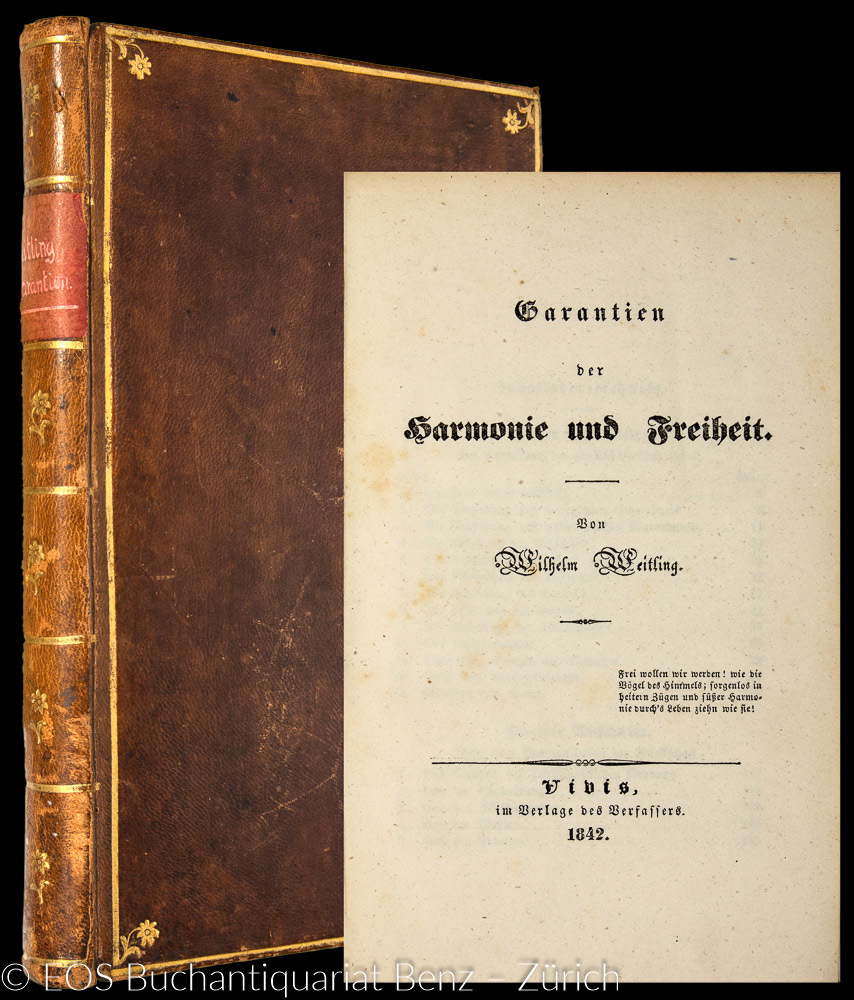
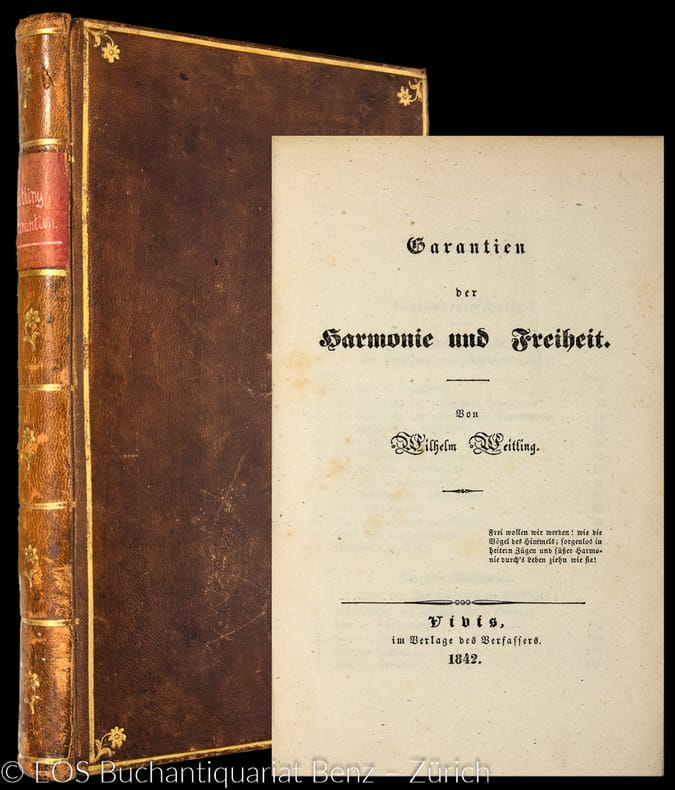
1842réf. 7561CBVivis (d. i. Vevey), im Verlag des Verfassers, 1842. 8°. XII, 264 S. Lederband der Zeit mit Rückenschild und schlichter Deckel- und Rückenvergoldung. + Wichtig: Für unsere Kunden in der EU erfolgt der Versand alle 14 Tage verzollt ab Deutschland / Postbank-Konto in Deutschland vorhanden +, 7561CB|7561CB_2 [2 Warenabbildungen]
1842réf. 7561CBVivis (d. i. Vevey), im Verlag des Verfassers, 1842. 8°. XII, 264 S. Lederband der Zeit mit Rückenschild und schlichter Deckel- und Rückenvergoldung.
1861réf. 5032Hong Kong : London Mission Society Press c1861 ; Shanghai : Shanghai Shangye Yingshuguan n.d. 1861. Hardcover. Very Good. 1 298 378 pp. ; bound in Chinese fashion with folded sheets right to left in a western-style mid-nineteenth century cloth board cover binding with decorations ; James Legge the famous Scottish sinologist and missionary of the London Missionary Society was born in Huntly Aberdeenshire Scotland on Dec 20th 1815. He graduated from Highbury Theological College in 1837 joined the London Missionary Society in 1838 and went to Malacca in 1839 as a missionary. In 1843 Legge arrived in Hong Kong and remained there until 1873 except for three short trips back to Scotland. In 1876 Legge became the first professor of Chinese at the University of Oxford and died in 1897 ; This is the first volume of Legge's monumental translation of nine sacred books of Chinese literature in a very probable 1st edition 1st Chinese printing with mixed asian and western binding materials and containing the texts of the da xue or Great Learning zhung yong Moderation or Doctrine of the Mean lung yü The Analects of Confucius and meng zi Mencius ; with Chinese text printed at top translation in the middle and commentary at bottom ; while this is clearly Legge's text the author's name is given in Chinese fashion as Gu Lu or loosely translated "Watchman Deer" which more probably and properly should be rendered "Lu Gu" for "Leg-ge" ; The difficulties of printing this first volume were recounted by the author's daughter: "The printing office being under his control he had to superintend the publication and binding of his works and to send to England for paper printing ink etc. Among his minor worries was the fact that the volumes of Classics had to come out in various bindings. Uniformity of binding could not be secured because materials were scanty in Hong Kong. Also owing to the lack of English booksellers he had to get the storekeepers to sell the Classics on commission among their other wares. On one occasion the ship containing all his printing paper and ink struck upon a rock and went down within sight of her anchorage in Hong Kong harbour. Her masts sticking up above the sea were visible from his verandah. 'It gave me quite a turn he said my first thought was that the fates were fighting against my getting oin with the publication of my volumes. I have since been able to look the event in the face. There must be some delay in the commencement of printing but I shall be so much more advanced with my manuscripts that we can start with five men instead of three. I had engaged Sow-lung and two other men to begin printing on the first of June. If he begins now in November or December with four other men we shall be in six months nearly as far as we should have been. In the meantime I telegraph by the mail--Replace invoice immediately sending one half by Suez Canal and one half round Cape--this will divide the risk.' After printing the books in Hong Kong he had to write to England for cases to be sent out in which to pack them and send them to England to his bookseller. 'Four hundred cases for one volume ought to be here any day and four hundred for the other volume next month. Those cases will cost me about fifty pounds.' .Another time certain cases of his books.arrived after having been for a long time under water in the hold. 'I insured them for £250--I shall claim for at least £80. Meantime the ruin of many books and the spoiling of others is a great vexation.' He sent several of his books to a friend to sell in Amoy and received the following letter: 'Alas for your Classics. Macgregor delivered them in the condition he got them out of the wreck. I had them put in the sun and thoroughly dried but I could not offer them to subscribers. The mould has got into the inside and even if rebound they will never be sightly. It is a sad loss.' ; after Legge's death in 1897 in a sermon given by Dr. Edkins at Shanghai Legge's work was described as: "His object was to unf [Hong Kong : London Mission Society Press, c1861] ; ??????? [Shanghai : Shanghai Shangye Yingshuguan, n.d. hardcover