713.867 risultati
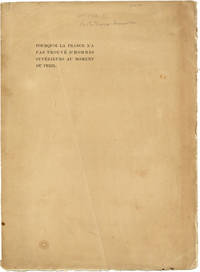
1871rif. 47582Rome: Forzani et C. 1871. First Edition. Folio 33cm.; publisher's tan printed card wrappers; 18pp. Wrapper lightly soiled faint vertical creasing a few tiny chips to spine ele Very Good internally fresh and fine save the crease. Polemical attack on the state of the French university system written in March 1871 two months after the end of the disastrous for the French Franco-Prussian War. As Pasteur argues whereas in Germany universities proliferated across the country France "stymied by revolution was always occupied with the sterile search for a better form of government giving only distracted attention to her institutions of higher learning" p. 9 our translation. At the root of all this was the regime of Napoleon I who in the early years of the 19th century neglected the country's twenty-eight extant institutions of higher learning in favor of his Université de France a disastrously centralized state-run institution that he established in 1808. The University suffered greatly during the Restoration and with it the quality of education so that by 1868 only £8000 were being spent for "true academic purposes" across the country cf. W. Chandler Roberts et al "Journal of the Society for Arts Vol. 32 no. 1655 August 8 1884 p. 905 creating a lacuna of learned and innovative thinkers to match Germany's. Perhaps in order to combat this downward trend Pasteur later founded the Pasteur Institute in 1887 serving as its director until his death in 1895. This appears to be the only separate appearance of Pasteur's tract published abroad and distributed to various foreign leading scientific figures among these "Darwin's Bulldog" Thomas Henry Huxley who makes mention of this work in an address delivered in October of that same year. The essay appeared again in print in 1947 following an even more disastrous encounter with Germany in a collection titled "Pour l'Avenir de la Science Française." This publication quite scarce with four physical copies noted in OCLC as of February 2020. COPAC adds one copy at the LEC Library UK. Forzani et C. unknown books
1916rif. 44105New York: The Naval History Society / De Vinne Press 1916. First Limited Edition. Limited to 650 hand-numbered copies. Octavo 24cm in publisher's slipcase. Half parchment over paper-covered boards; lxxviii269pp; frontispiece 4 inserted leaves of plates. Minimal aging to parchment spine else Fine in a lightly worn slipcase. Prospectus laid in. The seventh volume in the series. The Naval History Society / De Vinne Press unknown books
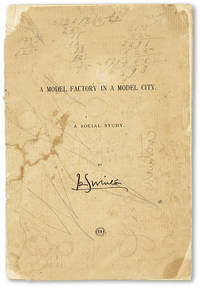
1887rif. 44983New York: Brown Green & Adams 1887. First Edition. Quarto 29cm.; publisher's tan printed side-stitched wrappers; 16pp.; steel-engravings throughout including one full-page. Lacking rear wrapper upper wrapper separated but present the whole covered in contemporary pencil scribbles and faint dampstaining a few shallow losses not appoaching text. Fair to Good condition. Promotional work describing the amenities of the company factory and town founded by the American Waltham Watch Company in Waltham Massachusetts. The author John Swinton 1829 - 1901 was born outside Edinburgh Scotland and arrived in the United States by way of Canada as a young man having apprenticed as a typesetter for the Montreal newspaper the "Witness." After arriving in New York City Swinton worked for numerous newspapers among them the "Times" and it was during this period he first became interested in labor politics even running unsuccessfully for mayor on the Industrial Political Party ticket in 1874. In 1883 Swinton founded the pro-labor journal "John Swinton's Paper" though due to lack of support and an outright boycott organized by the Knights of Labor the editor and his family was facing penury by 1887. In that year he published the final issue of his "Paper" and wrote the present pamphlet presumably to stave off the wolf at the door. The present piece depicts Waltham's company town in superlative language opening with the statement that "In the State of Massachusetts there is not a lovelier or more attractive town than Waltham" p. 5. Perhaps the only dampening feature is an illustration of the factory floor on which a small child is smilingly employed. For additional biographical information see the DAB Vol. 18 p. 252. Brown, Green & Adams] unknown books
1895rif. 44165New York December 8th 1895. Autograph letter signed on recto and verso of single cream laid sheet 22x14.5cm.; approx. 85 words; dated 26 West 61st N.Y. Dec 8th and simply addressed to "Parker" presumably Stanton's friend and fellow-suffragist Parker Pillsbury 1809-1898 who with Stanton had co-edited the women's rights newsletter "The Revolution" twenty years earlier. Faint mail folds small unobtrusive archival paper remnants to two corners from having been previously mounted else Near Fine and still quite fresh. Brief contemporary 1897 pencil note at bottom edge "Mrs. Stanton - born Nov. 12 1815 Now past 82 - C.E.R." though based on contents we would place this letter as having been written around 1895. Brief but significant missive addressed to Parker Pillsbury the American minister and women's suffrage advocate regarding a copy of Stanton's "Woman's Bible" she had just sent him. "I wonder if I could interest them a "Mrs. White" and one other sufficiently in the Woman's Bible to sell ten or twenty copies in there sic respective woman's clubs It is published at my expense hence I am trying to push its circulation." The controversial "Woman's Bible" a series of commentaries pertaining to the portions of the Bible relating to women was published in two parts in 1895 and 1898 and composed almost entirely by Stanton alone her committee of Bible revisors finding the project too controversial and harmful to the cause of women's suffrage. Clearly at the time of writing this letter the book was still meeting with resistance thus our placing the date at around 1895 Stanton turning to Pillsbury as a potential source of influential and wealthy patrons she inquires "Is Mrs. White still living & working Is that rich woman that Mr. illegible used to visit in Maine living". But by 1897 the book had become a best seller though many of the members of the women's suffrage movement would continue to distance themselves from it. This letter quite significant as a testimony to the aging Stanton organizer of the historical 1848 Seneca Falls Convention and her continuing indefatigable efforts and initial lack of support in getting this work circulated. See Tracy A. Thomas "Elizabeth Cady Stanton and the Feminist Foundation of Family Law" 2016 pp. 15 & 223. unknown books
1926rif. 38323London and elsewhere: Various Publishers 1926. Fifteen pieces including printed periodicals and ephemera. Contents generally fresh and well-preserved; a few with original folds from distribution; Very Good. The majority housed in a custom folding cloth chemise and quarter-morocco slipcase. Includes: • The British Gazette. Vol 1 no 1 - Vol 1 no 8 all issued. Lon: HMSO May 5- May 13 1926. All issues in excellent state of preservation with slight tenderness but no tears or loss at the horizontal and vertical mailing folds. • Strike Bulletin. Bradford: TheYorkshire Observer. 2 issues. no. 1 May 5 1926 & no. 6 May 11 1926. Mimeographed sheets corner stapled; 5pp 6pp. Horizontal folds at bottom 2" whether from storage or distribution uncertain. "Cessation of work by the whole Technical and Labouring staff of "The Yorkshire Observer" - without notice and in flagrant disregard of their contracts of service - has made it necessary for us to present these small sheets instead of a normal newspaper." • London Daily Express. 2 issues. Nos. 8126-27 May 12-13 1926; 1 4pp. Both issues severely abbreviated due to work stoppages. • Mayfair Bulletin. Giving the Latest Strike Home & Foreign News. 14th May 1926. Lon: April Showers Ltd. Mimeographed on pink paper corner stapled with horizontal folds from distribution. • Broadside: Emergency Bulletin! Strike to Continue - No prospect of Early Settlement. Sans imprint. Letterpress recto-only; ca 26 x 21cm 10" x 8"; type in single column below double rule. Announces a number of emergency measures to replace striking transportation newspaper and dairy workers including the pending appearance of The British Gazette. OCLC locates one copy only British Library. • Handbill: Hurley's Library Free Bulletin. Obtainable twice daily at Hurley's Newspaper Counter without charge. May 10 1926; ca 25cm x 10cm 10" x 4"; printed both sides of sheet. Announces latest strike news; verso bears headline: "Hurley's - our Library Service is Not on Strike!" WITH "British Gazette / Latest Strike News / British Gazette / Official" A printed broadside presumably intended for newspaper outlets 30" x 20" boldly printed in large typefaces with accompanying official HMG crests. Clean and strong some creases from previous folding and some very light spots of browning here and there a very good example with no evidence of having been used "in the field". Issued during the May 5th to May 13th run of The Gazette edited by the famously even-handed Winston Churchill in attempt to push public opinion against well the rest of the public and back in the direction of people who were absolutely not the public. Very definitely counting as one of Churchill's less glorious exploits underlining the fact that you can be a good man an honest man a strong politician and a wealthy landowning member of the aristocracy.but it's impossible to be all of them at the same time. Not recorded in OCLC. A scarce survival. Important archive of primary documents relating to the 1926 General Strike in Great Britain which though brief and a failure from the syndicalist point of view would nonetheless be the only General Strike in British history. The event also established a pattern for Tory suppression of radical labour including the use of "emergency" legislative measures and the mass distribution of propaganda through state-run media. Ironically the strike also presaged a massive sweep to power of the Labour Party in the years immediately following a wave which was at least in part a response to the repressive measures employed by the Conservatives against the Trades Union Congress in the General Strike. Of primary interest here is the complete run of eight issues of The British Gazette a government propaganda sheet edited and including numerous contributions by Winston Churchill who was at this time Chancellor of the Exchequer. Depending upon one's point of view the Gazette marked something of a low-point in Churchill's career: though it claimed to be filling a journalistic void created by striking newspaper workers Churchill's paper was more or less a pure exercise in disinformation filled with intentional inaccuracies intended to build public sentiment against the strikers and to demoralize participants in the strike. Prime Minister Stanley Baldwin was said to have given Churchill the Gazette job ".to keep him busy and to keep him from doing worse things" see John M. Davidson Memoirs of a Conservative; the newspaper's prevarications so galled professional journalists that one was moved to write: "One of the worst outrages which the country had to endure - and to pay for - in the course of the strike was the publication of the British Gazette. This organ throughout the seven days of its existence was a disgrace alike to the British Government and to British journalism" Kingsley Martin in The New Statesman May 15 1926. Also included here are several other private news sheets indicative of the hunger for information felt by British populace suddenly without any reliable source of news; and a broadside without imprint but likely issued by HMSO as a prospectus of sorts announcing the imminent publication of the Gazette. Various Publishers unknown books
1970rif. 37676New York: Claro Music Corp 1970. First Edition. Bifolium 30.5cm; white and red wrappers with music and lyrics printed in black internally; 4pp. Fine. Original sheet music for the official theme song of the Women's Liberation movement co-written by Betty Friedan and noted children's author Jacquelyn Reinach. The song was written in advance of the Women's Strike for Equality on August 26 1970 sponsored by NOW and celebrating the 50th anniversary of the passing of the Nineteenth Amendment which effectively gave American women the right to vote. OCLC notes 11 holdings. Claro Music Corp unknown books
1945rif. 27390New York: Wendell Malliet and Company 1945. First Edition. Slim octavo 21cm.; original cloth in pale grey dust jacket printed in maroon; 41pp. A fine copy. In the original dustwrapper unclipped priced $1.50 at lower front panel; very lightly worn with a short closed tear to top edge of upper panel spine a shade darkened; Near Fine. A book-length cycle of ".Poems Inspired by the Negro's Fight for Democratic Rights" authored by a young Jewish-American lawyer/poet. The book is dedicated to the memory of Franklin D. Roosevelt; the African-American composer Hall Johnson contributes a brief foreword; Eleanor Roosevelt is quoted in a blurb on front jacket panel. Uncommon in dustwrapper especially in such nice condition. Wendell Malliet and Company unknown books
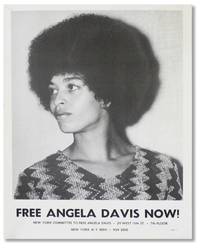
1971rif. 19764New York: New York Committee to Free Angela Davis n.d. but ca.1971. Original lithographed poster measuring 42.5cm x 54.5cm 16.75" x 21.5". White stock with black and white photographic image at center and text printed in black at lower margin. Fine. Poster produced by the NY Committee to Free Angela Davis reproducing a well-known and often-used black & white image of Davis in a dashiki. Not separatey listed in OCLC though we note variations of the poster in the Rossman Family Collection at the OMCA and an example of the present copy held at the LOC. New York Committee to Free Angela Davis unknown books
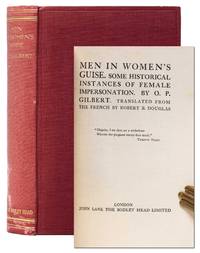
1926rif. 8227London: John Lane 1926. First edition. Very Good . Translated from the French by Robert Bruce Douglas 1848 - 1927 though seemingly unpublished before this edition. Complete with six plates including frontispiece. xv 1 284 4 ads pp. A Very Good copy. Publisher's red cloth. Spine somewhat faded with some splotches of discoloration. Top edge red. Minor toning to endpapers otherwise very clean throughout. A work on crossdressing and transgender identity centering five French historical figures: the Chevalier d'Éon 1728 - 1810 the diplomat and spy who received legal recognition as female by King Louis XVI; Abbé de Choisy 1644 - 1724 Philip of Orleans 1640 - 1701 Abbé d'Entragues and Jenny de Savalette de Lange 1786 - 1856. The work authored by Oscar Paul Gilbert 1898 - 1972 takes a sympathetic even affirming approach to these figures and their identities. The work is notably sympathetic even affirming: in the introduction Gilbert writes "If there is an inexorable desire to be a man or a woman and to wish it with all one's heart and soul ought we to shrug our shoulders contemptuously because the wish appears to us cowardly or childish There are many unhappy persons to whom life is a weary load and whose heart is heavy with an inexpressible tenderness because they have not the personality they desire; because their brain and heart belong to a sex which is not their own." Though title of the work implies that its subject is crossdressing which is today understood as distinct from transgender identity the author's lucid description of gender dysphoria and his treatment of multiple figures who could reasonably be categorized as transgender women situates this work well within the context of transgender history. Men in Women's Guise was published during a period of expansion in the understanding of transgender identity following the establishment of Magnus Hirschfeld's Institute for Sexual Science the first organization to offer medical transition services and to advocate for the rights of transgender people. The period between the publication of Hirschfeld's The Transvestites 1910 "the first book-length treatment of transgender phenomena" Stryker and the Nazi crackdown on Hirschfeld's work in the 1930s saw a brief flurry of publications on transgender life written by both allies like Hirschfeld and Gilbert and transgender people themselves. Hirschfeld published several works on the science of transgender medicine following The Transvestites and several trans people published their memoirs including Jennie June's Autobiography of an Androgyne 1918 and The Female Impersonators 1922 and Lili Elbe's Fra Mand til Kvinde 1931. All of these works including Men in Women's Guise long predate the wave of midcentury works on transgender identity published in the wake of Christine Jorgensen's highly publicized transition in 1951. Publications on transgender life became much more common throughout the 1970s and beyond; any work predating World War II is notably early and is likely quite scarce. Very Good . John Lane unknown books
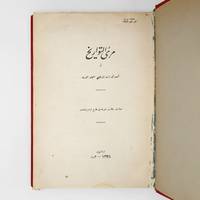
1911rif. 373896Istanbul: Bab ʻAli Cadeh Sindh Matbaʻah Sindh Ṭabaʻ ul-Mas̲edar 1911. Second printing of vols. 1-3. 152; 109; 112; 124 1 pp. 1 vols. 8vo. Green cloth. Toning to paper some minor marginal flaws. Very good. Second printing of vols. 1-3. 152; 109; 112; 124 1 pp. 1 vols. 8vo. Bab ʻAli Cadeh Sindh, Matbaʻah Sindh Ṭabaʻ ul-Mas̲edar unknown books
1919rif. 373897Istanbul: Maarif Nezâreti Matbaa-i Âmire 1919. 4 2 blank 3-509 pp. Vol. 1 of 2. 1 vols. 8vo. Red cloth. Very good. 4 2 blank 3-509 pp. Vol. 1 of 2. 1 vols. 8vo. Though the end of the text suggests a further volume is forthcoming the second volume was published only in 1928. OCLC: 777709606 Leiden Maarif Nezâreti, Matbaa-i Âmire unknown books
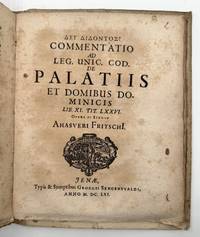
1661rif. 372198Cologne: Kinchium 1661. Mallinckrot: Engraved additional title dated 1639. 20 125 11pp. Kortholt: 8 56pp. Fritsch: 6 74 2pp. 4to. Early drab paper boards alla rustica binding on three cords manuscript title on spine text uncut. Foxing and heavily toned. Provenance: Princes of Liechtenstein armorial bookplate. Mallinckrot: Engraved additional title dated 1639. 20 125 11pp. Kortholt: 8 56pp. Fritsch: 6 74 2pp. 4to. Mallinckrot's monograph published on the occasion of the celebration of the second centenary of Gutenberg's invention is the first thorough investigation of the early testimonies to the discovery of printing with the author in favor of Mainz against Haarlem. The work contains the first use of the word "incunabula" in connection with printing. The additional title engraved by Loeffler includes portraits of Gutenberg Faust and Shakespeare and a scene in a printing shop. The second work here bound following Mallinckrot is Protestant theologian Kortholt's study on the origins of mathematics and astronomy asserting the Greeks were taught by Chaldeans and Egyptians. Bigmore & Wyman 2:16 Kinchium unknown books
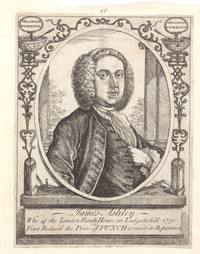
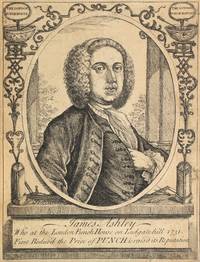
rif. 267136London: Thomas Worlidge n.d. ca mid-18th century. Engraved portrait of James Ashley in cartouche flanked by ornate pedestals supporting two punch bowls with engraved caption as above by Thomas Worlidge. 1 vols. 7-9/16 x 5-3/4 in. A strong impression laid down light creases from prior folding small pin hole near engraved caption. Engraved portrait of James Ashley in cartouche flanked by ornate pedestals supporting two punch bowls with engraved caption as above by Thomas Worlidge. 1 vols. 7-9/16 x 5-3/4 in. Scarce trade card of James Ashley proprietor of the London Coffee House and Punch-House 1731-1776 who was "London's leading purveyor of Punch in the eighteenth century" Wondrich Punch p. 65 and "the world's first celebrity mixologist the first man to become famous for compounding and selling a mixed drink" ibid p. 172. Ashley a former cheese merchant opened his Punch-House in 1731 in Ludgatehill London. Extensive advertising in London papers as well as the distinct ornate pedestals surmounted by iron punch bowls which flanked its entrance made the London Punch-House one of the most well-known drinking establishments in the city. Clientele included Hogarth Boswell Oliver Goldsmith and Benjamin Franklin. A large sign outside of the Punch-House echoes the caption on this trade card "Pro bono publico. James Ashley in 1731 first reduced the price of punch raised its reputation and brought it into universal esteem." Ashley did indeed reduce the price of punch - from 8 shillings for punch made from a quart of arrack to 6 shillings - but his great innovation was to offer punch in smaller portions in servings as small as two ounces. These small servings made to order for the customer were the precursor to the modern cocktail. This trade card is engraved by Ashley's friend Thomas Worlidge 1700-1766 dubbed "the English Rembrandt" who also engraved portraits of Ashley's wife and one Mrs. Graywood the bar-keep at the London Punch-House. Not in ESTC Thomas Worlidge unknown books
rif. 267079London: Thomas Worlidge mid-18th century. Engraved portrait of James Ashley in cartouche flanked by ornate pedestals supporting two punch bowls with engraved caption as above by Thomas Worlidge. 7-9/16 x 5-3/4 in. A strong impression with very slight rubbing and discoloration. Engraved portrait of James Ashley in cartouche flanked by ornate pedestals supporting two punch bowls with engraved caption as above by Thomas Worlidge. 7-9/16 x 5-3/4 in. Scarce trade card of James Ashley proprietor of the London Coffee House and Punch-House 1731-1776 who was "London's leading purveyor of Punch in the eighteenth century" Wondrich Punch p. 65 and "the world's first celebrity mixologist the first man to become famous for compounding and selling a mixed drink" ibid p. 172. Ashley a former cheese merchant opened his Punch-House in 1731 in Ludgatehill London. Extensive advertising in London papers as well as the distinct ornate pedestals surmounted by iron punch bowls which flanked its entrance made the London Punch-House one of the most well-known drinking establishments in the city. Clientele included Hogarth Boswell Oliver Goldsmith and Benjamin Franklin. A large sign outside of the Punch-House echoes the caption on this trade card "Pro bono publico. James Ashley in 1731 first reduced the price of punch raised its reputation and brought it into universal esteem." Ashley did indeed reduce the price of punch - from 8 shillings for punch made from a quart of arrack to 6 shillings - but his great innovation was to offer punch in smaller portions in servings as small as two ounces. These small servings made to order for the customer were the precursor to the modern cocktail. This trade card is engraved by Ashley's friend Thomas Worlidge 1700-1766 dubbed "the English Rembrandt" who also engraved portraits of Ashley's wife and one Mrs. Graywood the bar-keep at the London Punch-House. Not in ESTC Thomas Worlidge unknown books
1793rif. 325411New- York: Printed by Friar McLean No. 41 Hanover-Square 1793. First edition printed in an edition of 200 copies; the introduction states: "In Friary Wednesday November 13th 1793 On Motion resolved That the Thanks of the Society be presented to Brother Samuel L. Mitchill. That two hundred copies of Brother S. L. Mitchill's Oration be printed. for use of the Members of the Friary. 34pp. A good copy. The fragile marbled wrappers are worn on spine and extremities of covers with loss to most of spine revealing sewning on spine upper edge of front cover and the entire text pages have an early uneven two-inch brown stain with some tears and loss to paper at blank top margin of first few printed pages. The stain is visible on unprinted verso of front cover and front flyeaf and at unprinted top margin of title page and all text pages in upper blank margin only-- the printed text is complete and entire printed text is quite fresh and clean. First edition printed in an edition of 200 copies; the introduction states: "In Friary Wednesday November 13th 1793 On Motion resolved That the Thanks of the Society be presented to Brother Samuel L. Mitchill. That two hundred copies of Brother S. L. Mitchill's Oration be printed. for use of the Members of the Friary.". 34pp. A rare publication; unrecorded by OCLC with no citation for this publication. OCLC cites seven other individual publications by Samuel L. Mitchell including the following: -- The life exploits and precepts of Tammany the famous Indian chief : being the anniversary oration pronounced before the Tammany Society or Columbian Order in the old Presbyterian church in the city of New-York on Tuesday the 12th May 1795. New- York: Printed by J. Buel . 1795. A biography in 36 pages. -- Some of the memorable events and occurrences in the life of Samuel L. Mitchill etc. New York : s.n. 1826. -- An address to the citizens of New-York : who assembled in the Brick Presbyterian Church to celebrate the twenty-third anniversary of American independence. New-York Printed and sold by George F. Hopkins at Washington's Head 84 Maiden-Lane.1800. -- A discourse on the character and services of Thomas Jefferson more especially as a promoter of natural and physical science. Pronounced by request before the New York Lyceum of Natural History on the 11th October 1826. Printed by Friar McLean, No. 41, Hanover-Square unknown books
1898rif. 54189New York: Orcutt Co 1898. Lithograph in colors 49cm x 32.5cm 19" x 12-3/4". Printed on thin coated stock text in three lines below large central image of a bearded laborer. Small marginal loss at left away from printed area; a few small marginal tears small area of ink specks at left of image. Overall Very Good. The artwork is unsigned; date and artist supplied by us see below. Original newsstand advertising poster for the April 1898 issue of Century illustrated with a dramatic portrait of a coal worker by the prominent Canadian-American illustrator Jay Hambidge 1867-1924. The portrait is one of a dozen or so by Hambidge published to illustrate an article by Henry Edward Drood on the recent disruptions in the Pennsylvania anthracite fields. In its magazine appearance this portrait is captioned "A Factor in the Problem Italian" and illustrates a passage by Drood on the problems of immigrant enfranchisement: ".A vote of the English-speaking man who reads these words will carry no more weight in deciding the destinies of our nation than the ballot cast by any one of thousands of foreigners who have become naturalized citizens as a matter of business; who care nothing for our country except as a place wherein to make money.who believe firmly in witchcraft and are content to eat and sleep and fight among themselves like so many half-domesticated animals." Despite its ungenerous intent this modern viewer senses a quiet dignity in the eyes of Hambidge's subject leaving a far better impression to posterity than Drood's xenophobic ranting. An atrractive example. The poster does not appear to be separately catalogued by any OCLC member institution. Orcutt Co unknown books
1931rif. 24326n.p.: The Central Press Association 1931. The cartoon shows a young man trying to solicit a pretty neighbor's help while a black handyman rushes to an inopportune rescue. 1 vols. 10-1/2 x 10-1/2 inches. The cartoon shows a young man trying to solicit a pretty neighbor's help while a black handyman rushes to an inopportune rescue. 1 vols. 10-1/2 x 10-1/2 inches. A vintage cartoon by the artist who later created the popular comic strip "Skeets". The Central Press Association unknown books
1854rif. 14986Boston: Little Brown 1854. Seventh Edition. 3 vols. 8vo. Dark brown 3/4 morocco raised bands on spine marbled sides and endpapers t.e.g. some light foxing mostly to prelims else fine and attractive. With the signature in each volume of Geo. Shea and the dates 1858 and 1859: an endpaper note identifies him as being a judge. Seventh Edition. 3 vols. 8vo. A nice copy of a large-type edition of this standard and important work. Shea was the Chief-Justice of the Marine Court. Little, Brown unknown books
1900rif. 28014London: Various publishers 1900. First Editions. 8 vols. 8vo. Bound in 3/4 brown polished calf t.e.g. by Bickers & Son London. With the bookplate of R.D. Jackson. First Editions. 8 vols. 8vo. Various publishers unknown books
1838rif. 35862Paris: F. Bonnaire; Dupuis Dumarsais 1838. First editions of vols. I-IV; second edition of vol. V. Illustrated with folding charts maps facsimiles and numerous engravings after Johannot Raffet and others. 5 vols. 8vo. Mid-nineteenth-century quarter calf and blue marbled boards. Bookplates. Some rubbing to extremities. First editions of vols. I-IV; second edition of vol. V. Illustrated with folding charts maps facsimiles and numerous engravings after Johannot Raffet and others. 5 vols. 8vo. F. Bonnaire; Dupuis Dumarsais unknown books
1740rif. 36937La Haye: La Veuve Le Vier et Pierre Paupie 1740. First edition. Engraved allegorical frontispiece by Schley. 2 parts in one volumes. 1 vols. 4to. Contemporary French mottled calf gilt spine marbled endpapers. Upper joint starting at bottom and apart from some minor toning this is a lovely unsophisticated copy in contemporary dress. First edition. Engraved allegorical frontispiece by Schley. 2 parts in one volumes. 1 vols. 4to. Printed by Prosper Marchand a Huguenot publisher and journalist who fled France in 1709 the work appeared at the 300th anniversary of the invention of printing. Marchand writes that he produced the book "a la sollicitation de quelques amis qui ont cru que le troisième jubile ou la troisième année séculaire de l'imprimerie reveilleroit infailliblement la curiosité du publique touchant l'origine de ce bel art at the request of some friends who believed that the third jubilee or the tercentenary of printing would infallibly wake the public curiosity concerning the origin of this beautiful art." The allegorical frontspiece by J.V. Schley show Minerva and Mercury descending from Heaven granting the gift of printing to Germany who in turn gives it to England Holland France and Italy. Bigmore & Wyman II p. 22 La Veuve Le Vier et Pierre Paupie unknown books
1931rif. 24346n.p.: The Central Press Association 1931. The cartoon shows a black man asleep in bed dreaming about being asleep on a bed of roses and on a tropical isle. 1 vols. 10-1/2 x 10-1/2 inches. Fine. The cartoon shows a black man asleep in bed dreaming about being asleep on a bed of roses and on a tropical isle. 1 vols. 10-1/2 x 10-1/2 inches. A vintage cartoon by the artist who later created the popular comic strip "Skeets". The Central Press Association unknown books
1754rif. 28549Londres: Aux dépens de la Compagnie 1754. First edition. 2 vols. 12mo. Contemporary mottled calf leather spine labels. Despite a small chip at foot of spine of volume I this is a very pretty set. First edition. 2 vols. 12mo. Barbier II 827 Aux dépens de la Compagnie unknown books
1940rif. 9388London: Printed by Order of the Trustees 1940. 1992 Reprint Edition by Maurizio Martino one of 450 copies NYC NY. 1 vols. 8vo. Brick red cloth. New. 1992 Reprint Edition by Maurizio Martino one of 450 copies NYC NY. 1 vols. 8vo. A fine reprint of this invaluable reference work conveniently bound in four volumes. Printed by Order of the Trustees unknown books
1769rif. 36938Leipzig; Wien: Johan Paul Krauss 1769. First Edition. With 24 folding plates. xxv 436 12 index & errata; xl 524 18 index & errata. 1 vols. 8vo. Contemporary three quarter red morocco and marbled boards spine label. Exterior worn tear at foot of spine internally tight and clean. A very good copy. First Edition. With 24 folding plates. xxv 436 12 index & errata; xl 524 18 index & errata. 1 vols. 8vo. Includes notices of Berlin artists graphic arts engravers early woodcuts & woodcut books history of printing and account of a journey through Lower Saxony Westphalia & and Holland. Part Two with striking images from early printed books such as the "Eagle of John" from Ars Memorandi includes "a dissertation on the earliest forms of wood-cutting as applied to the illustration . Heinecken conjectures that Gutenberg took the idea of printing from the playing-card makers who are said to have been the first engravers of historical subjects intermingled with texts. . Heinecken is of opinion that their first productions were taken from wooden blocks." Bigmore & Wyman. Bigmore & Wyman p.320 Johan Paul Krauss unknown books