713.867 risultati
1933rif. S9171London:: British Museum 1933 1936. 1933. Second edition. Two volumes. 4to. xi 245 68; 59 pp. Frontis. index. Gilt-stamped olive cloth. Fine. appendix: Printed wrappers; edges slightly torn corner fold on back cover. Very good. British Museum, 1933, 1936. hardcover books
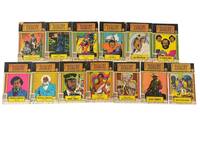
1983rif. 237451983. Bertram Fitzgerald's Golden Legacy 1983 reprint of the 1966-1976 first printing near complete in thirteen of sixteen issues documenting an effort to create an illustrated Black history curriculum for young readers during and after the civil rights movement. Fitzgerald born in Harlem and trained as an accountant developed the series in response to the omission and distortion of Black achievement in conventional school histories and in the illustrated literature he had encountered as a child. Its stated purpose was explicit: "The intention of our publication is to implant pride and self-esteem in black youth while dispelling myths in others." Fitzgerald consequently built a historical sequence extending from ancient African kingdoms and the Haitian Revolution through slavery abolition Reconstruction civil rights leadership exploration literature and invention using the visual vocabulary of the comic book to place Black historical actors at the center of the narrative. Coca-Cola purchased issues in quantity beginning early in the run and distributed copies through schools libraries churches and organizations including the NAACP and National Urban League; approximately nine million copies of the sixteen volume series were ultimately published. Golden Legacy. Vols. 1 through 12 and 15. New York City: Fitzgerald Publishing Co. 1983. Near complete 13 issues of the illustrated Black history magazine. Illustrated wrappers 4to approximately 32 pages each extensively illustrated in full color by a changing group of writers and artists many of them Black. 1 Golden Legacy. Vol. 1 1966. The Saga of Toussaint L'Ouverture and the Birth of Haiti establishing the series with the Haitian Revolution and the leadership of Toussaint L'Ouverture. 2 Golden Legacy. Vol. 2 1967. The Saga of Harriet Tubman "The Moses of her People" presenting Tubman through enslavement escape and her work guiding others to freedom. 3 Golden Legacy. Vol. 3 1967. Crispus Attucks and the Minutemen placing Attucks within the revolutionary generation and the struggle for American independence. 4 Golden Legacy. Vol. 4 1968. The Life of Benjamin Banneker recounting the career of the Black mathematician astronomer surveyor and almanac maker. 5 Golden Legacy. Vol. 5 1969. The Life of Matthew Henson devoted to the Arctic explorer and his role in expeditions toward the North Pole. 6 Golden Legacy. Vol. 6 1969. Alexander Dumas and Family extending the series beyond the United States through the history of the Dumas family and the Black ancestry of the French novelist. 7 Golden Legacy. Vol. 7 1969. Frederick Douglass Part One. 8 Golden Legacy. Vol. 8 1970. Frederick Douglass Part Two. The paired issues give Douglass the most extended individual treatment in the series following his passage from enslavement to abolitionist authorship and political leadership. 9 Golden Legacy. Vol. 9 1970. The Life of Robert Smalls recounting the life of the formerly enslaved Civil War mariner who later served in Congress. 10 Golden Legacy. Vol. 10 1970. Joseph Cinque and The Amistad Mutiny treating the 1839 revolt aboard La Amistad and the legal struggle that followed. 11 Golden Legacy. Vol. 11 1970. Men of Action White Wilkins & Marshall bringing the chronology into twentieth century civil rights history through Walter White Roy Wilkins and Thurgood Marshall. 12 Golden Legacy. Vol. 12 1972. Black Cowboys recovering Black participation in the history and mythology of the American West. 13 Golden Legacy. Vol. 15 1972. Ancient African Kingdoms moving beyond biography to present African civilization before the Atlantic slave trade. Fitzgerald began Golden Legacy at a moment when Black parents educators publishers and civil rights organizations were challenging school curricula that marginalized African American history. The series answered that problem through popular print rather than a conventional textbook: historical protagonists appear heroically in full color action sequences while the subjects themselves move across national and chronological boundaries from Haiti Africa and Russia to slavery abolition western expansion Reconstruction the modern civil rights movement and twentieth century invention. Fitzgerald initially encountered difficulty financing and distributing the project; corporate support from Coca-Cola beginning with the early volumes enabled bulk distribution and access to improved printing while later volumes attracted additional commercial sponsorship. The NAACP National Urban League and New York City Board of Education were among the institutions associated with or endorsing the series placing Golden Legacy within the broader effort to make Black history available to children outside the limits of existing textbooks. Some loss to covers some staining internally sound and mostly clean. Overall good to very good condition. A near complete archive of the illustrated curriculum through which a Black independent publisher recast African and African American history for a generation of young readers from the height of the civil rights movement through the American Bicentennial. unknown books
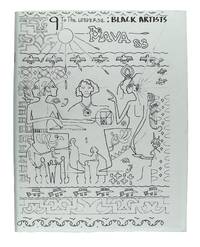
1983rif. 50199Philadelphia: Black History Museum UMUM Publishers 1983. Near Fine. Philadelphia: Black History Museum UMUM Publishers 1983. First Edition. Quarto 27.5cm; illustrated wraps featuring cover design by Isaac Foy; 89pp.; black and white photographs and illustrations. A touch of rubbing to covers with partially-removed museum store sticker to rear. A group festschrift to support and celebrate Black artists divided into three panels the first celebrating Selma Burke Roy DeCarava and Tom Feelings the second dedicated to Art Institutions Collections Patrons and Galleries and concluding with "New Voices in the Tradition - Historians Critics.". Black History Museum UMUM Publishers unknown books
1979rif. 73722Hohhot: Chinese Society for the Study of Mongolian History 1979. Large 8vo pp. 16 630 2; text illustrations; text in Chinese; original printed paper wrappers; a few square inches of loss to lower wrapper text clean and sound good. Includes the text of speeches given and selected papers presented at the conference. Chinese Society for the Study of Mongolian History unknown books
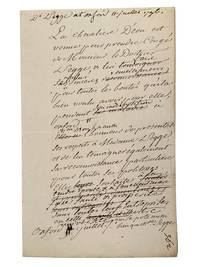
1796rif. 231691796. Transgender and Cross-DressingLGBTQ D'Eon de Beaumont Charlotte Geneviève. Autograph Letter Signed 11 July 1796 written and signed by one of the earliest recorded transgender women in Europe in her feminine title offering direct manuscript evidence of her self-identification as a woman with the female title and pronouns "La chevaliere d'Eon" and "Mlle d'Eon". The letter dates to D'Eon's time in England after her diplomatic career military service and public gender transition made her one of the most documented transgender individuals of the eighteenth century. Though some accounts claim D'Eon's gender transition was a hoax or political ruse this quiet and courteous social note confirm D'Eon's personal identity as a woman. D'Eon de Beaumont Charlotte Geneviève. 11 July 1796. 2 manuscript pages on one sheet. 4.5 x 7.5 inches. In French. Autograph letter written from Oxford and addressed to "Dr. Legge at Oxford 11/juillet 1796" thanking Dr. Legge for "toutes les bontés" all the kindnesses shown during d'Eon's stay and extending respects to "Madame Legge." D'Eon refers to herself in the third person with explicitly feminine language opening with "La chevaliere d'Eon est venue prendre congé" later stating "Mlle d'Eon a aussi l'honneur de présenter ses respects." The letter praises Legge for his moral and medical goodstanding describing his "savoir" "bienveillance" and "douceur" toward his patients and calling him in effect a physician to humanity. The letter reads in full: "Dr. Legge at Oxford 11 July 1796 The Chevalier d'Eon has come to take her leave of Dr. Legge and to offer him her most sincere thanks for all the kindnesses he was good enough to show her during her stay in Oxford. Mlle d'Eon also has the honor of presenting her respects to Mrs. Legge and of expressing to her as well her particular gratitude for all her courtesies. She wishes the devoted wife and her husband health and prosperity in all their endeavors at this illustrious university which honors her just as much as Mr. Legge does. Oxford July May Fortune-after the storms of her past life-enable her one day to demonstrate her gratitude to him; this gratitude will always remain as fervent as her attachment to Dr. Legge who-through his knowledge his benevolence of heart and his zeal and gentleness toward his patients-truly deserves to be called the Physician of the Human Race in the moral as well as the physical sense." Health and financial difficulties plagued the Chevalier after she relocated permanently to England in 1785. She was often confined to her bed by illness and old injuries including a broken leg suffered during her years as a spy. With her pension abolished her dueling career ended by poor health and many of her old acquaintances in France lost to exile or execution D'Eon turned to her community in England and her faith to keep her spirits high. Her friends and acquaintances provided her with both solace and financial support when she was unable to pay her debts. Correspondence from this point in her life indicates that D'Eon had a deep belief in the manifestation of God as one's community and expressed profound gratitude in her letters to those keeping her from destitution. By 1796 d'Eon had lived publicly as a woman for decades following the international scandal that surrounded her gender in the 1770s. This letter reflects her identity in personal social correspondence worlds away from the scandal and political intrigue surrounding her initial transition. The manuscript offers insight into a transgender woman's feminine identity and pronouns in her own hand while her gender was publicly subject to rumor debate and trial. Faint soiling and tanning to edges; legible throughout; intact and well preserved. An unusual firsthand document of an early transgender pioneer identifying herself with feminine pronouns in eighteenth century Europe. unknown books
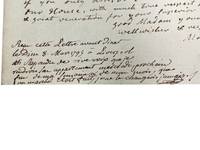
1795rif. 231141795. Transgender and Cross-DressingLGBTQ D'Eon de Beaumont Charlotte Geneviève. Autograph Note Signed 8 March 1795 written and signed by one of the earliest recorded transgender women in Europe. The letter dates to D'Eon's time in England after her diplomatic career military service and public gender transition made her one of the most documented transgender individuals of the eighteenth century. D'Eon de Beaumont Charlotte Geneviève and Mary Watterison. 8 March 1795. 1 manuscript pages on one sheet bifolded. Approx. 8 x 12.5 inches. In English and French. Manuscript letter written from Mary Watterison to Madam D'Eon with a note in D'Eon's hand below signed "D". Watterison writes to D'Eon explaining that she can no longer afford to continue renting her a room at the agreed upon price and that D'Eon will have to vacate the room by the following Wednesday or pay more for her rent. D'Eon writes a note below stating that she responded in person and will leave the apartment rather than changing their deal. The letter reads in part: "1795 My good madam / I am sure your considerate liberality of heart will not only pardon but applaud what nesesety only could compel me to inform you. Which is that the great loss I find from letting the lodgings at the prise I first agreed too is such as I realy cannot afford. for indeed the prise is not equel even to the trouble of our servants without reconing a farthing for the rooms.And now my dr Madam as I never wish to gain anything by you therefore hope you are too good to wish me to lose by you you must pardon me if I say I realy consider myself as a cleer looser of 10/6 per week for the past time you have been here if you give me no more then first proposed therefore must beg you to have other lodgings by next Wednesday or else promise to pay me after the rate of a guinea per week besides five.with much true respect for you person great veneration for you superior talants. I am good Madam your most sincere wellwisher respectful humble servt. / Mary Watterison." Below in Chevalier D'Eon's hand in French translated "Received this letter before dinner on Sunday March 8 1795 in Liverpool. Responded in person that I would return her apartment next Wednesday at the end of my week of my month that I never change a done deal / D." Financial difficulties plagued the Chevalier after she relocated permanently to England in 1785. With her pension abolished her dueling career ended by poor health and many of her old acquaintances in France lost to exile or execution D'Eon turned to her community in England for survival. Her friends and acquaintances provided her with both solace and financial support when she was unable to pay her debts though she always remained dignified proud and unwilling to be taken advantage of as evidenced by her statement at the end of the letter: "I never change a done deal." In correspondence from this point in her life D'Eon expresses both grave financial anxiety and profound gratitude to those keeping her from destitution as well as a deep belief in the manifestation of God as one's community. By 1795 D'Eon had lived publicly as a woman for decades following the international scandal that surrounded her gender in the 1770s. The manuscript offers insight into D'Eon's life and financial difficulties in England while her gender was publicly subject to rumor debate and trial. Notably though expressing frustration and displeasure with D'Eon Mary Watterison always uses the feminine title "Madam" indicating a consistent respect for her gender identity. Soiling and tanning to edges particularly at upper right margin; legible throughout; intact and well preserved. An unusual firsthand document of an early transgender pioneer identifying herself with feminine pronouns in eighteenth century Europe. unknown books
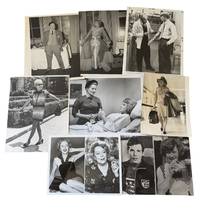
1968rif. 235351968. Transgender public identity and Christine Jorgensen press photo archive depicting the first widely publicized trans woman in American mass media from staged publicity and television retrospectives to dramatized scenes from The Christine Jorgensen Story. Jorgensen became internationally known after the New York Daily News reported her transition on December 1 1952 following hormone treatment and surgery in Denmark under Dr. Christian Hamburger. Her celebrity developed through nightclub work interviews autobiography campus speaking and television appearances giving mid-century American audiences a named public figure through whom they first encountered medical transition gender identity and the social consequences of legal recognition. The Christine Jorgensen Story released in 1970 by United Artists and based on her 1967 autobiography moved that life into commercial cinema at a time when trans identity was still usually treated by the press as spectacle rather than self-definition. Photo archive of 8 silver gelatin press photographs each approximately 8" x 10" United States and London circa 1968-1977. Christine Jorgensen appears in formal and public settings including a London arrival or press appearance with hat coat gloves handbag and fur and an ABC publicity sheet for the program "2nd Edition of Whatever Became Of" identifying her as having "went into show business after making front-page headlines with a sex change." Verso captions identify a September 10 1970 London appearance connected to the Loews premiere of The Christine Jorgensen Story while two film stills show John Hansen as George Jorgensen receiving a locket from Aunt Thora and a clinical scene with a doctor examining the young Jorgensen's arm. Additional portraits and press subjects broaden the group beyond Jorgensen alone including a photo of Erika Schineggar a former top Austrian skier who later identified as "Erik" and an individual in both masc and femme attire expanding this archive to the greater trans identity during the 1960s and 1970s. Jorgensen's visibility came decades before most American jurisdictions allowed straightforward amendment of sex markers and her rejected 1959 marriage license application in New York became one of the best-publicized examples of how state records could deny recognition to a trans woman's adult life. The group anchors institutional collecting in the concrete media channels that made trans identity public to broad audiences: wire-service captions television publicity staged film biography and celebrity portraiture. Light handling wear creasing stamps caption sheets pasted press captions and editorial markings; overall in good condition. The Jorgensen sequence especially the 1970 London premiere material and the ABC "Whatever Became Of" publicity places her after the first wave of sensational coverage and inside the later television culture that revisited celebrity lives. unknown books
1900rif. 223161900. Early twentieth century Mexico documented in photographs and real photo postcards depicting rural life Indigenous labor archaeological sites and urban landscapes during the decades surrounding the Mexican Revolution. The images record scenes of everyday activity alongside monumental remains of ancient Mesoamerican civilizations illustrating the cultural landscape of Mexico during a period when tourism archaeology and national identity formation increasingly emphasized the country's Indigenous heritage. Photographs of markets domestic work agricultural labor and village life provide visual evidence of social conditions and cultural practices within rural communities during the early twentieth century. Archive of thirty nine black and white real photo postcards and photographs dating from approximately the 1900s through the 1920s. Many images contain captions printed in the negative in English or Spanish identifying locations and subjects. Several photographs depict well known archaeological sites including views of the Pyramid of the Sun at Teotihuacan and detailed images of the carved serpent heads of the Temple of Quetzalcoatl. Other photographs document rural environments and community life including images labeled "Xochimilco Mex." showing canal traffic and canoe riders navigating the waterways near Mexico City. One real photo postcard captioned "Haciendo tortillas" depicts Indigenous women preparing tortillas over open fires surrounded by cooking vessels and firewood. Additional photographs show thatched roof dwellings agricultural labor including men harvesting agave plants and scenes of local marketplaces. A group portrait depicting Mexican soldiers alongside women and children suggests the presence of military or political activity during the revolutionary era. The photographs reflect a period when Mexico's archaeological monuments and Indigenous communities were increasingly photographed by travelers ethnographers and publishers producing visual material for both domestic and international audiences. After the Mexican Revolution of 1910-1920 intellectual and political movements promoting indigenismo emphasized Indigenous heritage as a central component of Mexican national culture while archaeological research at sites such as Teotihuacan gained international attention. Real photo postcards circulated widely during this period and served both as souvenirs and as documentary images of landscapes monuments and local communities. Photographs and postcards generally measure approximately 3 x 5 inches and remain preserved as loose prints. Minor edge wear and surface toning visible with occasional curling at the corners; most images retain strong contrast and clarity. Overall very good condition. The archive provides a varied photographic record of Mexican cultural life Indigenous communities and archaeological sites in the early twentieth century. unknown books
1968rif. 224131968. African American Education Chernow Fred and Carol. Reading Exercises in Negro History. Elizabethtown PA: The Continental Press Inc. 1968. Educational programs designed to support mid-20th century classroom instruction in African American history and literacy comprising of 3 programs; Reading Exercises in Negro History Volumes 1 and 2 along with the rare companion Teacher's Guide. This series is explicitly designed for elementary-level readers with content written at a fourth-grade level and focused on biographical narratives of Black achievement across fields such as science government literature education and civil rights. Each volume includes illustrated reading selections followed by multiple-choice comprehension questions and vocabulary drills intended to foster critical thinking and independent learning. Each measure 8.25" x 11" and have 12-63 pages. Volume 1 profiles figures such as Robert Sengstacke Abbott Marian Anderson W.E.B. Du Bois Katherine Dunham Langston Hughes Thurgood Marshall Gordon Parks and Carter G. Woodson. The volume opens with a structured guide "To the Teacher" noting that "Reading Exercises in Negro History presents short biographical sketches of famous American Negroes" and is intended both to train students for standardized reading tests and to "point up the success of individuals in overcoming obstacles and the contributions Negroes have made to American and world culture." The accompanying Teacher's Guide provides teaching strategies suggested discussion questions answer keys vocabulary aids and interdisciplinary correlations to maximize classroom effectiveness. Notably it explains that the reading series helps students struggling with written formats common to testing emphasizing the importance of understanding word meaning in context. The volumes were co-authored by Fred B. Chernow then Assistant Principal for the Board of Education City of New York and Carol Chernow both of whom were active in educational publishing and curriculum development. The inclusion of this history-based literacy tool in 1968 a year marked by the assassination of Martin Luther King Jr. and the expansion of Black Studies programs reflects broader shifts in educational philosophy and curriculum reform following the Civil Rights Movement. An important pedagogical artifact from the integration era this archive offers insight into how Black history was being introduced to primary classrooms in the late 1960s. Some dog eared corners and minor wear to covers and original library stamps. Teacher's Guide has fragile binding. Text and pages clean. Overall very good condition. A leading elementary educational guide in Black studies during the Civil Rights era. unknown books
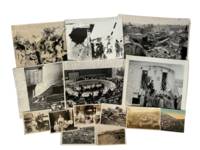
1930rif. 205761930. Archive of fourteen photographs documenting the Palestinian experience across two critical historical periods: pre-state Palestine in the 1930s and the internationalization of the Palestinian question in the 1970s. The collection combines early regional views and later press photography to present a sustained visual record of displacement conflict and diplomatic engagement. The archive's later component consists of six large-format press photographs approximately 7" x 9" to 8.25" x 11" each with typed captions on recto or verso. These images document key moments in the 1970s including Palestinian guerrilla presence amid bombed urban environments the aftermath of attacks on refugee camps such as Ein Helweh in Lebanon and scenes of civilians navigating destroyed housing and infrastructure. Several photographs capture the material conditions of displacement including makeshift shelters rubble-filled streets and densely damaged residential quarters. A central group of images documents the Palestinian presence at the United Nations in 1974 situating the conflict within an international diplomatic framework. One photograph shows the General Assembly chamber during the vote recognizing Palestinian representation recording the outcome 89 in favor 8 against with 37 abstentions. Another depicts the United Nations Security Council in session as it debates and condemns Israeli military actions in Lebanon following retaliatory strikes. Additional images show the arrival of the Palestinian delegation in New York marking a key moment in the formal political recognition of Palestinian claims on the global stage. Complementing these are eight earlier photographs from 1930s Palestine and surrounding regions including city views such as Nazareth and Nablus as well as refugee encampments and vernacular urban environments prior to the establishment of the State of Israel. These earlier images present densely built hillside cities traditional architectural forms and early patterns of settlement and displacement providing historical context for the later press material. Taken together the archive offers a rare longitudinal visual record linking pre-1948 Palestine with the later period of armed conflict refugee crisis and international diplomacy. The juxtaposition of early regional views with later press documentation underscores both continuity and transformation in the Palestinian experience across the 20th century. This material holds strong research value for Middle Eastern history refugee studies conflict and war photography and the history of international organizations. It is particularly valuable for examining how the Palestinian question was documented visually across both local and global contexts from lived environments to diplomatic representation at the United Nations. unknown books
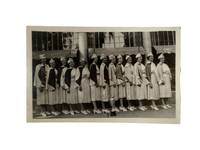
1930rif. 204911930. A vintage Silver gelatin photograph of thirteen nurses posing with trophy. Circa 1930s. Photograph measures approx. 4.75" by 5.75". Photographer stamp "R412" and" La Brea Larja" paper insignia printed on verso. Image shows thirteen female nurses of varying ages posed in a line facing right with faces toward camera and smiling with a double handled trophy on sidewalk in foreground. Nurses are dressed in their work long sleeved white satin uniforms and white shoes with white satin capes and caps. Capes are folded back to show inner lining which vary in color from person to person. Overall very good condition. 1930s nurses in satin uniforms pose proudly with their trophy. unknown books
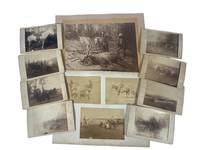
1840rif. 197251840. 19th century photographs of frontier life document settlement labor travel and Indigenous presence in the developing American West during the later decades of westward expansion. Twelve albumen photographs depict wagons traveling across open terrain ranch buildings and campsites cattle branding hunters with game Native riders on horseback and families living in rudimentary dwellings. Several photographs were produced by photographer Abraham Bogardus of New York a studio photographer active during the mid to late nineteenth century whose work circulated widely through photographic prints and studio images. The images together record the daily material realities of life in western territories including transportation subsistence hunting and the building of homesteads. Archive of twelve original albumen photographs ranging in size from approximately 4 x 5 inches to 8.25 x 11 inches mounted on large 11.5 x 14 inch mats. Nine of the smaller photographs carry the imprint of Bogardus Photographer 363 Broadway corner of Franklin Street New York. Three photographs are mounted together on a single large sheet whose verso contains a political cartoon and an additional albumen studio photograph of a circus performer. The photographs portray a variety of frontier scenes including horses and mules with wagon travelers ranch properties outdoor campsites and cattle branding activities. One photograph shows two hunters standing beside a stag with large antlers following a successful hunt. Another image depicts a family gathered outside a log cabin with a rock pile nearby the figures dressed in nineteenth century clothing including long dresses and western work wear such as wide brimmed hats and boots. A further image shows a Native woman on horseback wrapped in a shawl while transporting two children in a small wooden cage structure attached to a dragging pole behind the horse. Photographic documentation of western settlement expanded rapidly in the later nineteenth century as photographers recorded landscapes communities and everyday activities associated with frontier life. These photographs capture both settler environments and Indigenous presence during a period when western territories were undergoing rapid economic development and population change through ranching migration and agricultural settlement. Scenes of wagon travel homestead construction and hunting illustrate the physical labor and subsistence practices required for frontier survival while the photograph of a Native rider with children evokes the mobility and adaptation of Indigenous communities during a time of profound disruption caused by U.S. expansion across western lands. Twelve albumen photographs mounted on mats measuring approximately 11.5 x 14 inches. Minor cracking and foxing visible on several mounts with light toning on a few images; mounts remain firm and photographs retain clear detail. Overall condition very good. unknown books
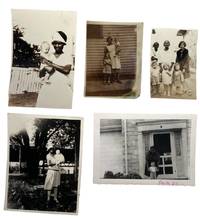
1929rif. 197761929. Anonymous photographs of Black nannies caring for white children produced c. 1920s-1940s document the racialized structure of domestic labor in the United States during the Jim Crow period and provide primary-source evidence for the study of African American women's work childcare and social relations within white households. The images show African American women in sustained caregiving roles-holding infants supervising toddlers and participating in daily routines-within domestic and semi-domestic settings such as porches yards and household grounds. The archive supports research into the history of Black women's labor the normalization of interracial domestic intimacy under segregation and the systematic marginalization of Black caregivers whose identities were frequently excluded from family records even as their labor remained central to white household life. Archive of 9 original silver gelatin and sepia-toned photographs c. 1920s-1940s ranging in size from approximately 3.5" x 2" to 4.5" x 3.5". The images include a nanny in a white dress and hat holding an infant near a tree; two nannies posed with five children of varying ages; a toddler seated with his nanny on a porch; and a sepia photograph of a nanny wearing a large white apron holding one child while embracing another. Identified subjects include "Jane Wharton of Dallas Texas" as an infant with her nanny and a 1929 verso inscription naming "Jeene Warren Wells Green" held by a Black woman wearing a dotted dress cardigan and headscarf. A loose album leaf contains three mounted photographs including a seated Black woman with two white boys beneath a caption reading "Mam Maw tells us a Story" and additional scenes of the same children engaged in play and manual activity. Another image bears the verso annotation "Blanche and Indian Baby" suggesting removal from a larger scrapbook context. Across the group inscriptions consistently identify the white children while leaving the Black caregivers unnamed. The photographs align with documented patterns of African American women's labor in domestic service from the late nineteenth through mid-twentieth century when Black women and girls were employed in white households as maids cooks and nursemaids under conditions shaped by segregation and limited economic opportunity. Historical records note that African American girls often entered domestic labor at young ages performing childcare and household work that extended into lifelong employment within white families. The consistent omission of caregivers' names in favor of the children's identities reflects broader social hierarchies that prioritized white family lineage while rendering Black labor invisible in personal and archival records. This archive offers concentrated visual evidence of those dynamics preserving scenes of caregiving that illuminate both the intimacy and inequality embedded in domestic labor systems of the period. Light wear and minor handling marks present; inscriptions remain legible; overall very good condition. unknown books
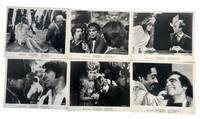
1971rif. 199641971. LGBTQ Film Early 1970s film about the lives of a group of gays who meet in a New York City bar on Christmas Eve. Archive of 6 original vintage silver gelatin photos used as lobby cards in movie theaters. American International Pictures 1971. All measure 8" x 10" and are in glossy black and white. The film was important for providing a time capsule look at New York's gay culture in Greenwich Village in the 1970s. But it also treated its characters with respect leaning into homosexual men and women discussing their relationships openly and frankly just like any adults would do. The film was both written and directed by Mervyn Nelson who was praised for his portrayal of "gender fog" regarding the transgender character named Karen played by Andy Warhol actress Candy Darling. Photos feature various still images from the film including its stars James Murdock and Paul Blake along with the dramatic fight scene involving Candy Darling. All feature the title of the film stars production credits and the American International copyright with date in the lower white margins. All in very good condition. unknown books
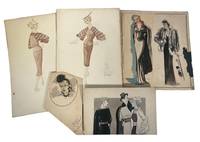
1920rif. 199741920. Vernacular fashion illustration archive circa 1920s-1950s documents the evolution of women's dress and stylistic ideals across early and mid-twentieth-century design with emphasis on silhouette material and aspirational presentation. The drawings capture shifts from the elongated androgynous forms associated with 1920s and 1930s fashion to the structured tailoring and fitted garments of the postwar period. Elements such as exaggerated shoulders cinched waists and coordinated ensembles situate the works within broader developments in women's fashion including the influence of tailored suits and formal eveningwear. The illustrations also record accessory culture including gloves hats and jewelry positioning dress within a larger system of social signaling and presentation tied to class gender norms and modern consumer identity. United States and possibly Europe circa 1920s-1950s. Archive of six original gouache and pencil fashion illustrations on hard mat boards and one on thick watercolor paper each measuring approximately 10 x 7 to 10 x 15 inches. Several works bear artist signatures or initials including examples signed "Virginia" and "G. Wichner." Two dated compositions from April 11 1954 depict coordinated ensembles including a rose-toned set with a pencil skirt and structured blazer rendered with detailed attention to tailoring and fabric accents. Other illustrations include multi-figure studies of women in draped garments with belted waists a single-figure composition in a long gown with fur coat and elongated cigarette holder and portrait studies featuring headpieces veils and bold cosmetic styling. Use of shading color variation and line work emphasizes fabric texture garment movement and body form. Produced during a period of significant transformation in women's fashion these illustrations align with the development of modern fashion media including editorial illustration design sketching and commercial garment production. The visual emphasis on proportion tailoring and accessorization reflects the increasing codification of fashion as both industry and cultural expression in the twentieth century. As original works the drawings provide insight into the processes of design visualization and stylistic interpretation supporting research into fashion history gender presentation and visual culture. Light handling wear to mounts and sheets; overall very good condition. unknown books
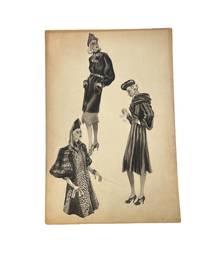
1951rif. 200661951. Fashion Women's fashion design sketches dated 1951 document the rapid transformation of female dress following the end of wartime rationing and the international adoption of Christian Dior's "New Look" silhouette. These drawings show designers experimenting with narrow waists structured bustlines wide skirts and dramatic outerwear styles that defined postwar femininity and reshaped global fashion culture in the late 1940s and early 1950s. Such instructional sketches provide visual evidence of how couture aesthetics circulated through design schools and professional training environments during a moment when fashion industries in Europe and the United States were rebuilding after World War II. Archive of fifteen original women's fashion design sketches executed on nine illustration boards measuring approximately 11 x 14 inches. Drawings are rendered in pencil ink watercolor and collage techniques and depict coats dresses trench coats and daywear ensembles characteristic of early 1950s style. Several boards include multiple designs including sheath dresses with high necklines and plunging backs bell sleeved coats trimmed with fur and children's pinafore dresses worn over blouses. One design shows a woman wearing a flight jacket cravat and pleated trousers recalling mid century women adopting traditionally masculine tailoring. One board bears the signature "Reindel" on the verso. Designs prominently feature hourglass silhouettes associated with Dior's New Look including cinched waists sloped shoulders and flared skirts. Other garments incorporate menswear inspired coats and tailored outerwear reflecting the hybridization of wartime practicality and postwar luxury. Boards show light foxing and minor handling marks. Very good condition. A visual teaching archive illustrating postwar fashion design practice during the early Cold War era. unknown books
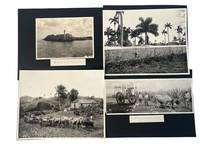
1900rif. 202981900. Photographers unknown. Cuban rural photographs early 20th century. This group documents agricultural labor family life and rural landscapes in Cuba prior to the Cuban Revolution recording work practices and domestic environments tied to farming economies that shaped the island's social structure. The images show ox-driven cultivation tobacco production and multi-generational presence within agricultural settings providing visual evidence of how rural Cuban communities organized labor and daily life before the political and economic transformations of the mid-twentieth century. Inclusion of a Havana harbor view further situates these rural scenes within a broader geographic context connecting countryside production with national infrastructure. Four original black-and-white silver gelatin photographs mounted on black mats with manuscript captions measuring approximately 4.75 x 6.75 inches to 7.5 x 10 inches. Images include oxen tilling soil in tropical farmland with workers riding wooden-wheeled wagons while family members stand near a thatched dwelling surrounded by palm trees. One photograph shows six children standing atop an ox cart drawn by two animals with hemp fields extending into the background and adult workers and dogs in the foreground. Another image depicts a laborer standing before a large tobacco crop covered with protective cloth with palm trees and huts visible behind. A landscape view of Castillo del Morro overlooks the entrance to Havana Harbor connecting agricultural life with a major coastal landmark. These photographs align with the structure of rural Cuban economies in the early twentieth century when agriculture particularly tobacco and related crops relied on manual labor and animal power within plantation and smallholder systems. Visual documentation of fieldwork transport methods and domestic settings provides primary evidence for the study of labor organization family roles and environmental conditions in pre-revolutionary Cuba. The combination of agricultural scenes and a Havana harbor landmark situates local labor within wider economic and geographic networks. Minor surface wear; mounts and photographs remain intact with clear imagery and legible captions. Overall very good condition. unknown books
rif. 19016Women's Mobility in Suffrage Times Photo Archive. Collection of 4 photographs of women on horses and bicycles; sizes range from 3" x 4" to 8" x 6.5" including a cabinet card with a photographer's mat measuring 8" x 10." In the age of women's suffrage means of travel and mobility were synonymous with social autonomy and self-sufficiency. Because it was considered progressive and unconventional suffragettes often rode horses to demonstrations. Similarly bicycles became a symbol of freedom and independence; early feminists Elizabeth Cady Stanton and Susan B. Anthony famously declared that "woman is riding to suffrage on the bicycle." Their efforts were well worth it; today women make up the majority of licensed drivers in America. The feminists pictured here sport expressions of pride and determination as if they already know they are making history. Very good condition. unknown books
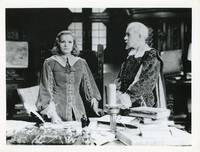
1933rif. 193461933. Mamoulian Rouben Queen Christina 1933 documenting early Hollywood engagement with gender nonconformity and queer-coded historical narrative through the portrayal of Queen Christina of Sweden. The material reflects LGBTQ cultural expression within pre-Code American cinema illustrating themes of cross-dressing same-sex intimacy and female autonomy and offering insight into how studio productions navigated historically grounded narratives of gender and sexuality prior to strict enforcement of the Hays Code. It supports research into queer film history gender performance in cinema and the adaptation of historical figures associated with non-normative identities. Archive of five original black and white silver gelatin photographs measuring approximately 7 x 9 inches to 8 x 10 inches depicting Greta Garbo in costume as Queen Christina. The images show Garbo dressed in masculine attire including trousers structured shirts with stiff collars and wide-brimmed hats emphasizing the character's cross-dressed presentation within the film. As studio-issued stills the photographs capture staged moments highlighting Christina's movement between masculine and feminine modes of appearance. The visual material reflects key narrative elements including courtly settings and interpersonal interactions and corresponds to well-known scenes in which gender ambiguity and same-sex intimacy are implied including a moment of physical closeness between Christina and a female companion that drew attention from censors. Three photographs date to the original 1933 release while two later prints from the 1940s indicate continued circulation and promotional use. Five photographs. The historical Queen Christina 1626-1689 known for rejecting conventional gender roles and for documented intimate relationships with women provided a foundation for cinematic exploration of gender fluidity in this production. Released during the pre-Code era Queen Christina occupies a period when Hollywood films could engage more openly with themes of sexuality and identity before regulatory constraints intensified. Minor folds to borders and corners light surface wear and verso stamps and markings present; images remain clear; overall very good condition. A focused visual archive documenting early large-scale cinematic representation of gender nonconformity and queer-coded identity. unknown books
1972rif. 192111972. Brown Geoff. I Want What I Want 1972 Panther edition of Brown's 1966 novel follows Wendy Ross as she leaves her father's home and attempts to live independently as a woman in working-class Britain. Brown depicts experiences that were unusual subjects for mainstream British fiction of the period: wearing women's clothing in secret violence from a disapproving father encounters with psychiatry living publicly as a woman relationships and the desire for gender-affirming surgery. First published in 1966 the novel preceded a period of greater transgender visibility in British film and television and was adapted for cinema in 1972; the British Film Institute has identified the resulting film as an early example of a transgender storyline in British cinema. Brown Geoff. I Want What I Want. London: Panther Books Ltd. 1972. Mass-market paperback. 224 pages. Pictorial wrappers show a man facing a mirror in which a woman appears as his reflection visually rendering the division between the identity assigned to the protagonist and Wendy's life as a woman. The front-cover tagline states "Roy was different from most boys---he was a girl." Panther's rear-wrapper copy further centers Wendy's desire to determine her own life including her wish to dress as a woman and obtain surgery. The paperback appeared the same year as John Dexter's film adaptation starring Anne Heywood as Roy/Wendy Harry Andrews and Jill Bennett. Originally published by Weidenfeld & Nicolson in 1966 I Want What I Want belongs to a comparatively small body of mid-twentieth-century British fiction centered on a transgender protagonist rather than introducing gender variance only as a comic or incidental device. Brown's narrative gives sustained attention to Wendy's attempts to establish a female identity despite paternal violence psychiatric intervention and the practical difficulties of transition. The 1972 film brought the story to a wider medium; contemporary and later responses have differed sharply over its treatment with the Monthly Film Bulletin criticizing the adaptation as exploitative while the BFI has subsequently emphasized the compassion shown toward Wendy. Pages clean and bright. Overall very good condition. A 1972 paperback edition preserving Panther's explicit transgender marketing of Brown's 1966 novel in the year of its film adaptation. unknown books
1970rif. 194751970. Warhol Andy. Trash 1970 documents the intersection of underground cinema LGBTQ performance culture and the New York avant garde film scene associated with Warhol's Factory during the late 1960s and early 1970s. Six promotional lobby cards for the film depict cast members including transgender performer Holly Woodlawn and actor Joe Dallesandro both central figures in the circle of artists and performers surrounding Warhol's studio and filmmaking projects. The film directed by Paul Morrissey and produced within Warhol's filmmaking enterprise follows a heroin addicted character living in a New York tenement environment and became one of the most widely circulated and commercially successful productions associated with Warhol's experimental film output. Six original photographic lobby cards issued in connection with the release of Trash in 1970. Five cards display the printed title of the film and the name Andy Warhol along the lower margin. The images feature Holly Woodlawn in heavy makeup posing in various scenes from the film often alongside actor Joe Dallesandro who portrays the central character. One lobby card shows Dallesandro with actress Jane Forth posed in an intense promotional portrait. The photographs present performers associated with Warhol's Factory an artistic collective that produced numerous experimental films and performances during the late 1960s and early 1970s. The film Trash emerged during a period when underground cinema challenged the narrative conventions and censorship boundaries of mainstream American filmmaking. Warhol's Factory served as a collaborative artistic space where filmmakers performers musicians and visual artists created works that explored sexuality gender identity and the social realities of urban life. Holly Woodlawn a transgender actress who became widely recognized for her appearances in several Warhol associated films became one of the most visible transgender performers in American cinema during this era. Actors such as Joe Dallesandro and Jane Forth similarly became recognizable figures within the Factory's filmmaking circle appearing in multiple productions that helped define the aesthetics of New York underground film culture. Six photographic lobby cards produced for theatrical promotion of the film. Minor handling wear consistent with exhibition use. Overall condition very good. unknown books
1931rif. 194831931. Winsloe Christa. Mädchen in Uniform 1931 stands among the earliest narrative films to portray romantic attachment between women and remains a foundational work in the history of LGBTQ cinema. Written by Christa Winsloe and directed by Leontine Sagan with production support from Carl Froelich the German film centers on a girls' boarding school where emotional bonds between students and a female teacher challenge the rigid discipline of the institution. Actress Hertha Thiele played the central student role and her performance became closely associated with the film's exploration of female same sex desire and youthful rebellion within an authoritarian educational environment. The surviving publicity photographs in this archive preserve visual documentation of Thiele's portrayal of the character whose emotional intensity helped make the film internationally recognized. Archive of six items associated with Mädchen in Uniform. Four photographic postcards measuring approximately 3.5 x 5.5 inches depict portraits of actress Hertha Thiele in costume from the film presenting her in uniform with direct or contemplative gazes toward the camera. One small black and white photograph measuring approximately 1 x 2 inches also depicts Thiele. The archive additionally includes a German pamphlet measuring approximately 6 x 9 inches promoting another Thiele film titled Das Erste Recht des Kindes The First Right of the Child. The postcards functioned as publicity images circulated during the early distribution of the film and emphasize Thiele's central role in the production. Mädchen in Uniform achieved international attention upon its release and became known for its frank portrayal of emotional intimacy between female characters during a period when cinematic depictions of homosexuality were rare. The film circulated widely outside Germany but also faced censorship concerns in some regions due to its subject matter. After the rise of the Nazi regime the film was banned in Germany as culturally undesirable and several individuals associated with the production faced persecution due to Jewish identity or opposition to the regime. Many prints were reportedly destroyed during this period contributing to the film's later reputation as a landmark work preserved despite political repression. Hertha Thiele herself declined participation in Nazi propaganda films and maintained distance from the regime's cultural apparatus. Four photographic postcards one small photograph and one German film pamphlet. Minor edge wear consistent with early twentieth century photographic ephemera. Overall condition very good. unknown books
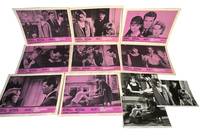
1962rif. 194741962. United Artists Corporation The Children's Hour 1962 documents one of the earliest major Hollywood films to center on the social consequences of accusations of lesbianism presenting same-sex desire within a framework of rumor stigma and institutional fallout. Based on the 1934 play by Lillian Hellman the film situates its narrative around two female educators whose lives are disrupted by a student's claim foregrounding the cultural climate of suspicion and moral scrutiny surrounding homosexuality in mid-20th-century America. The material supports research into LGBTQ representation in early mainstream cinema and the portrayal of sexuality through narratives of accusation and social punishment. Archive of 11 items including 8 lobby cards and 3 original studio photographs issued by United Artists Corporation. Lobby cards measure approximately 11 x 14 inches and are printed in a distinctive pink and black palette while the studio photographs measure approximately 9.5 x 7 inches and are black and white. The images feature principal actors Audrey Hepburn and Shirley MacLaine in classroom domestic and interpersonal scenes emphasizing emotional tension and social isolation central to the film's narrative. The visual material highlights key dramatic moments and character interactions reinforcing the themes of accusation and consequence. The studio photographs retain captions and production identifiers though several examples show trimming along the lower margins affecting portions of the printed information. Produced during a period when explicit representation of homosexuality remained heavily restricted under Hollywood production codes The Children's Hour occupies a significant position in the gradual emergence of LGBTQ themes within mainstream film. Its focus on the destructive impact of rumor and moral judgment reflects broader mid-century anxieties surrounding sexuality and reputation while also marking an early attempt to address these issues within a serious dramatic framework. The archive provides insight into how such themes were visually marketed to audiences through restrained yet suggestive imagery. Minor edge wear to lobby cards; studio photographs exhibit trimming along lower margins; images remain sharp and well-preserved; overall very good. A cohesive group of promotional materials from a landmark early Hollywood film engaging themes of lesbian identity and social stigma. unknown books
1894rif. 182811894. Imperial size albumen photo of students and faculty at the Albany Business College. 1894. This very large photograph measures 24 x 20 inches. The image consist of 4 smaller group photos showing 35 subjects total including 5 female Graduates. Names of all the subjects listed at the bottom. The albumen is mounted to photographer's board. Although women did own and operate businesses during the 19th century many of them were apprenticed or self-taught as educational opportunities were limited. For a graduating class to include women at all much less 5 makes this group exceptionally scarce. Financial independence through business acumen provides a level of freedom women were not often allowed within a patriarchal society as rigid as 19th century America. Dampstains to side of photographer mat board does not affect photographic image. Toning and foxing to mat. One corner clipped. Light sunning. Features are crisp and details clear. Overall very good condition. unknown books
1918rif. 182991918. Fairmont High School Diploma for female student. 1918. Measures 14 x 20 inches. Certificate reads in part "This diploma certifies that Edna Lillian Squires has completed the course of study prescribed by the Board of Education of this District for the High School and is entitled to all the honors and privileges of a Graduate of this Institution." Beneath the decorative text displaying the school's name across top is an illustration of the state seal of West Virginia at the time. The early 20th century saw new educational opportunities for American women who upon graduating from high school could attend integrated colleges. Educational activists like Catharine E Beecher advocated fiercely against for women's right to enter any college based on the belief that gender equality was contingent on the quality of female education and institutional opportunities to support it. Light foxing does not affect text or image. Includes state seal and original stamp from school board with ribbon still attached. Overall good condition. unknown books