Albedyll, Georg vonAntiquariat.de

1317 risultati
1904rif. 1091Berlin, Mittler und Sohn 1896-1904. Graue, silbergepr. illustr. OLn.-Bde. XVI, 620, 113 und XII, 840, 192 S. Mit sehr zahlreichen Textabbildungen sowie zus. 13 (12 mit Uniformbildern) farblithographischen Tafeln, 10 großformatigen Faltkarten (alle in Bd. 1) und 10 weiteren Tafeln in scharz-weiß (Portraits u. a.). 4°. Die Einbände an den Buchrücken fachmännisch restauriert bzw. hinterlegt. Stellenweise vereinzelt gering fleckig und bestoßen. Gut erhaltene Bände.
1747rif. 00JT32nFrance 1747. In 1747 the Marquis A.M. De Roquepines requests an absolute leave of his superior officer for reasons of poor health. It appears he is so ill that he is putting his affairs in order. Research finds the very same Roquepines becomes the Marechal de Camp. Very Good. 8vo - over 7¾" - 9¾" tall. Manuscript. unknown
1984rif. 6747246 numéros in-4 agraphés ou brochés (depuis 1987), 8e RPIMa, Castres, 1984-2004. Liste des numéros, par année : 1984 Février-Mars, Avril-Mai-juin, Juillet-Septembre, Octobre-Décembre ; 1985 Janvier-Février-Mars, Avril-Mai-juin, Juillet-Octobre, Nov-Décembre ; 1986 Janvier-Avril, Mai-Août, Septembre-Décembre ; 1987 Janvier-Mai ; 2e semestre ; 1988 1er semestre, 2e semestre ; 1989 1er semestre, 2e semestre ; 1990 1er semestre, 2e semestre ; 1991 1er semestre, 2e semestre ; 1992 1er semestre, 2e semestre ; 1993 1er semestre, 2e semestre ; 1994 1er semestre, 2e semestre ; 1995 1er semestre, 2e semestre ; 1996 1er semestre, 2e semestre ; 1997 2e semestre (seul) ; 1998 1er semestre, 2e semestre ; 1999 1er semestre, 2e semestre ; 2000 1er semestre, 2e semestre ; 2001 1er semestre, 2e semestre ; 2002 1er semestre, 2e semestre ; 2003 1er semestre, 2e semestre ; 2004 1er semestre, 2e semestre
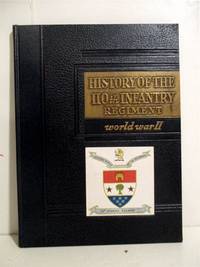
1950116 pages. Circa 1950. Many full-page black and white reproductions of photos. Minor blemish on back cover otherwise clean and unmarked with moderate wear. Tight and square. A quality copy of this precious reference. Book
1875rif. 22602Berlin, Meidinger, [1875/76]. 2. Auflage. Armee-Ausgabe. OHLdr. 98 S. 50 Bll. (Tafeln) 4°. Mit 50 farblithogr. Tafeln sowie zahlr. Holzschnitt-Illustr. nach Menzel, Burger, Lüders u.a. im Text. Angestaubt. Exemplar. Ebd. beschabt. Stellenw. -auch stärker- stock-, finger-/fleck. Vorsatz mit Eintragungen v. alter Hd.
1958[6], 229 pages. Black and white photographic plates, including frontis portrait of Officer Commanding Lieut.-Col. Earle P. Hall, C.D. Footnotes. An authoritative account of the regiment compiled from a wide variety of sources, including the Department of National Defence, The Department of Veterans Affairs, the Public Archives of Canada, and elsewhere. Prior owner's name and dates upon front free endpaper. Moderate wear to publisher's red cloth lettered in black. Binding intact. No dust jacket, presumably as issued. 24 x 16cm. A sound copy of this informative history. Dornbusch 277, Cooke [3] p252. Book
1989Signed, without inscription, by author upon title page. 42, [2] one-sided pages. Black and white reproductions of photos, maps, and many fascinating wartime documents. Undated but appears to be circa 1989. "I compliment you on your vivid account of your capture and escape at Verrieres Ridge. It is fascinating and very well expressed. I wouldn't suggest you change a word." - Col. C.C.I. Merritt V.C. Author's address ink stamped inside back cover, otherwise clean and unmarked. A sound copy of this important and dramatic personal WWII account. Book
1951Complete set of eight colour plates dated 1951 by artist. Printing date not stated. Each illustration depicts a regimental member in ceremonial dress. Regiments illustrated include: The Argyll and Sutherland Highlanders, The Seaforth Highlanders, The Toronto Scottish Regiment, The Canadian Scottish Regiment, The 48th Highlanders, The Black Watch - Royal Highland Regiment of Canada; The Calgary Highlanders, and The Essex Scottish. Colour portion of plates measures 8.5" x 6.5". Mat backing for each plate measures 13" x 10". All illustrations stored in sturdy original manilla folder. All plates in pristine condition. Moderate wear to storage folder. An excellent set. Book
rif. ORD-20382Francfort & Leipsic. 1761. S.l. 1767. Paris. Lacombe. 1771. 3 ouvrages en 1 volume in-12 (104 x 168 mm) plein veau brun scarifié, dos à 5 nerfs très orné, pièce de titre maroquin rouge, gardes peignées, tranches rouges, ex-libris manuscrit de Joannes Carolus Ledesma, 13 planches repliées pour le 1er titre, le dernier ouvrage se divise en 3 parties: 1 Traité de la Cavalerie de Xénophon, 2: Essai sur la Théorie de l'Éuitation, 3: Discours sur les rapports de l'équitation avec la Physique, la Géométrie, la Méchanique et l'Anatomie. 3ff., 164, (4)-132 - VI, 216 pp. Dos de reliure un peu râpé, papier du dernier ouvrage très lgt bruni mais bon exemplaire, exempt de rousseurs.
rif. 007094Helvetius ; Claude-Marie Guyétant ; Lamy, ancien soldat du régiment d'Auvergne ; Joseph Mathon de la Cour ; Germain-Hyacinthe de Romance de Mesmon ; « Mélanges » contenant, dans l'ordre des auteurs : 1. Le Bonheur, poème en six chants ; 2. Le Génie vengé ; 3. Précis historique sur le régiment d'Auvergne depuis sa création jusqu'à présent. Précédé d'une épitre aux manes du chevalier d'Assas ; 4. Par quelles causes et par quels degrés les lois de Lycurgue se sont altérées chez les Lacédémoniens jusqu'à ce qu'elles ayent été anéanties ; 5. De la Lecture des romans, fragment d'un manuscrit sur la sensibilité. Volume in-8. Londres, s.n., 1772. [4]-CXX-116p. La Haye & Paris, s.n., 1780. [2]-16p. Clostercamp, s.n., 1783. front.-51p. Lyon & Paris, Durand & Vallat, 1767. [4]-100-[2]p. Edition originale posthume de la pièce d'Helvetius, sans le feuillet d'errata qui manque souvent. La longue préface est du à Saint-Lambert qui a retrouvé la pièce dans les papiers d'Helvetius. Edition originale de la pièce de Guyétant. Né en 1748, il publia cette pièce à la louange de Voltaire puis devint le secrétaire du marquis de Villette. Edition originale rare du texte sur le régiment d'Auvergne et Louis d'Assas, célèbre chevalier mort lors de la bataille de KlosterKampen en 1760, bien complet de son frontispice dépliant. Cet ouvrage ne se rencontre que très rarement et a bénéficié de deux tirages qui ne diffèrent que par le nom de l'auteur sur la page de titre (L*** au lieu de Lamy comme sur le nôtre). L'ouvrage est publié tardivement (23 ans après la mort d'Assas) et s'inscrit, après Voltaire en 1769, dans une lignée d'ouvrages sur Assas et le régiment. Le frontispice représente « Le Curtius Français ou la mort du chevalier d'Assas ». En effet, la victoire eut lieu car avant de mourir, le chevalier aurait eu le temps de dire : « A moi, l'Auvergne, c'est l'ennemi ! » (version contestée). Seuls deux exemplaires répertoriés sur CCfr et WorldCat (BnF & BM Lyon - ce dernier numérisé sur googlebooks). L'ouvrage contient quelques notes marginales d'époque, à l'encre. Edition originale de l'ouvrage de Mathon, couronné par l'Académie des Inscriptions. Le dernier ouvrage est en première édition séparée d'un texte de Mesmon paru dans le Journal de Lecture. Reliure demi-basane, dos à nerfs orné, pièce de titre maroquin, tranches rouges, petits défauts. Bon exemplaire avec un texte rare.
1945rif. 78-2163BAlbert Love 1945 1945. 1st ed. About 120p. Photos. Rgiment of the 28th Division. Defense of Wiltz in the bulge. Oversize. Blue cloth. Fine Copy. 1st. Hardcover. Fine. Book. Albert Love, 1945 Hardcover
1790rif. B4011London: Captain Sutherland J. Johnson 1790. Occaisional light browning but otherwise a very good copy. . Binding: Expertly rebacked in a brown half calf saving the original marbled boards. 5 Raised bands in 6 compartments. Tooled gilt lettering on two. Notes: Blackmer 1623; Weber 618 Size: 8vo 130mm x 210mm Category: Book Voyages General;Book Mediterranean;Book Near East Turkey; Captain Sutherland, J. Johnson hardcover
rif. 17022The account of 'Events in 1855 and 1856' dated by Wrench from Park Lodge Baslow Derbyshire 1902. The duplicated letter dated 12 December 1880. The printed advertisement for talk at the School Baslow and dated 14 January 1881. Wrench was the son of a clergyman and well connected being presented to the Prince of Wales and staying at Chatsworth in his old age. His obituary in the British Medical Journal 27 April 1812 describes how he went out to the Crimea in 1854. 'He had been gazetted Assistant Surgeon to the 34th Regiment in November and joined it on its arrival in the Crimea. He served during the terrible winter of that year and was present at the capture of the quarries the successful assault on the Redan of June 18th and the final capture of Sebastopol on September 8th 1855. He was mentioned in despatches and received the Crimean medal and clasp for Sebastopol and the Turkish medal.' Wrench's own account of his experiences in the Crimea Item One below – entirely unpublished – is a personal one vividly-written and full of detail. It does not appear to be present in the collection of his family papers at Nottingham University Library. ONE: Manuscript consisting of 'Events in 1855' 4pp and '1856 12pp making a total of 16pp. 8vo on twelve leaves attached with a stud. In good condition on aged and dogeared paper. The first page of the 1855 manuscript is headed '12 sic Pages in this Year' but comprises four numbered pages. The beginning of account sets the scene and gives an indication of the level of detail: 'The 1st Janry found me doing duty with the 28th Foot or Slashers in the 3rd. Divt of the army before Sebastopol having landed at Balaclava from the Ship "Queen of the South" on the 20th. Nov. 1854. On the 6th July I was ordered to do duty with the 50th. Foot but as I did not wish to move the weather being very bad and my tent being as comfortable or rather as little uncomfortable as it could be made except to join my own Regt. the 34th. to which I had been gazetted on the 1st. of December 1854. I applied to be sent to it and was ordered to join which I did on 9th of Janry.' The account is made up from diary entries and is none the less vivid and interesting for that: 'On the following morning a wounded Russian named Alexo was brought into our Hospital and we amputated his leg he did really well and was eventually exchanged at Odessa. Poor Jordan's death threw a great damp on the Regiment as he was the first Officer we had had killed. On the 9th. of April being Easter Monday the 2nd. Bombardment took place. It was a fearfully wet windy day so that no one was able to go out to see what damage was done. On the 10th. I was on trenches and the noise was terrific but nothing to what I have since heard. I had a very narrow escape from a round shot which hopped over the parapet close to where I was.' In June 'after 68 hours bombardment an assault was made on the Quarries by ourselves . I did not go down till about 8 with Robinson Scott & Peel and 100 men. We were marching about the Trenches half the night and were finally sent to the middle ravine just below Mamelon. The scene there was most horrible the ground being strewn with dead & wounded. English French & Russians. One poor Russian boy was dragged up by two Zouaves but fainted just opposite to where we were lying. I got a light and found he was shot through the belly and that nothing could be done for him. I gave him some water and he lie sic by me some time but died before morning. I got an amulet off his neck & his cap pouch which I sent home'. The 1856 account begins in dramatic style: 'The first entry in this Diary relates to the explosion which took place within the British Lines during the Siege of Sebastopol. Feb 3rd. I was not many hundred yards from this explosion when it took place & will here relate now Janry 1900 my recollection of it. It took place in Novr. or Decr. 1855. I had just come in from a ride & had given my horse to my Batman when I noticed a vast cloud of smoke shoot up from the Right Siege train an open air arsenal about 500 yds from my house - a tremendous noise of explosion followed & knowing that there would be a rain of missiles from above to fall immediately I jumped under my doorway - hoping the strong lintel would protect me . a shower of fragments fell around me rattling on my iron roof - and wounding many men in the Regiment - 70 men were killed by the explosion some over half a mile off. The artillery horses were passing in front of my door to water & stampeded hurting several men in their rush. Both my horse and my dog bolted. I got the horse back in a few hours - but my dog taken sic a few weeks before out of Sebastopol returned to her old home and was found there weeks afterwards I brought her to England My house that I had just finished building myself did not sustain much damage. .' The account continues packed with incident. At one point he writes: 'I had written the above in 1859 and continue it forty one years after November 4 1900. The events & fights of May 1856 being written so legibly in my brain that I can read much of what we did & said. Alas all the actors except myself are passed away. My notice has been called to the excursion by reading an Illustrated article in a magazine named "Travel" in which Dr. Hy. Lansell has been describing a tour taken last year over the same ground - so little altered from what I saw in 1856 that his description would do for mine'. The diary concludes in fine style. On 2 May 1856 he goes to Yalta where he finds 'the daughters of the English Clerk of the Works of Prince W's Palace were keeping the Hotel a very rough primitive structure low stone built rooms with a long rough wooden verandah overlooking the lovely Bay - We enjoyed an excellent dinner of Turbot & Oyster Sauce & a bottle of excellent local wine like Hock - as we returned we went over the Emperor's Villa Orianda . One day when I remember seeing for the first time a Persian horizontal Water Wheel in a very pretty village embosomed in Walnut Trees where also I bought an embroidered linen neck scarf which I still possess - On another occasion I accompanied Best & Chapman to the Alma & where I picked up the Russian Cannon Ball now on top of the Study Clock - I tried hard to get someone to accompany me to Bagshi Serai & Chuphut Kale but I had to go alone - I wonder now how I dare. For it was in the heart of the Enemies Country. I remember the Priest spit when I went near them in the Church in the Rock and I rode home at night through the Russian Camp on the river Balbec. I certainly felt no fear but that was the Ignorance of youth'. A final note more than half a page long records a meeting at Chatsworth in 1902 with Grand Duke Michael and his wife the Countess Torby. TWO: Duplicated letter by Wrench a hectograph in purple ink intended for circulation among his 'dear children'. 4pp. 12mo. Bifolium. In fair condition on aged and lightly-creased paper. Signed 'E. M. Wrench'. At the beginning is a half-page drawing by Wrench captioned 'Russian Soldier - In the Valley of the Shadow of Death. near Sebastopol - 1855 on Black Sea in the distance'. He describes a lecture he gave at Bakewell the previous Monday on the Siege of Sebastopol beginning 'I began by describing the terrible state of the hospital at Balaclava in November 1854. I had a ward full of wounded from Inkerman with bad cases of fever & cholera - All the windows had been blown out by the great storm of November the 14th. The sick had no beds and often nothing to eat until 3 or 4 oclock in the afternoon. The harbour of Balaclava was crowded with steamers while the coast near was strewn with the wrecks of the 21 ships that had gone down in the storm. .' The letter continues with much valuable detail and a drawing of a 'Section of "sunk" tent with fire place' on the third page. In the final paragraph he reports that 'Lord Edward Cavendish M.P. took the chair at my lecture. The room was quite full and some of the audience had come 8 or 10 miles to hear me.' THREE: Printed handbill advertisement with duplicated illustration another purple hectograph by Wrench on reverse joke featuring two soldiers and a horse and cart. 1p. 12mo. In good condition on lightly-aged paper. The printed advertisement is crisply printed and the date '14th' is added in red ink. It reads: 'A Lecture will be delivered in the School Baslow On Friday January 14th. 1881 At 7.30 p.m. By E. M. Wrench F.R.G.S. entitled Personal recollections of the Siege of Sebastopol. Illustrated by Drawings &c. Admission One Penny. No Change given at the Door.' The account of 'Events in 1855 [and 1856]' dated by Wrench from Park Lodge, Baslow [Derbyshire], 1902. The duplicated letter dat unknown
2008Sm. folio, First Edition, with very numerous photographs and maps in the text; cloth, backstrip lettered in silver, a fine copy in unclipped dustwrapper. SIGNED BY THE AUTHORS ON TITLE. The first detailed and dedicated account of 21st IPC, the pathfinder unit of 1 British Airborne. Its role was to arrive at the drop zones in advance of the main body of troops to set up electronic and visual markers pin-pointing the dropping area for the oncoming aircraft. Being first on the ground the pathfinders were to use their initiative and make their own decisions: in short, to be independent. A valuable addition to the literature of MARKET GARDEN. EXTREMELY SCARCE, ESPECIALLY IN SIGNED FORM
19588vo., First Edition, with 48 plates on 24, and 13 full-page maps (one double-page) in the text; handsomely bound in full dark red crushed morocco, sides with gilt frame border, back with raised bands, second and fourth compartments ruled and lettered in gilt, all other compartments tooled in gilt with 'airborne Pegasus' emblem, gilt top, hand-made endpapers, ribbon marker, an elegant copy ideal as a gift or for presentation. An elegant copy. This classic memoir by the commander of 1 Airborne Division remains the best eye-witness account of the most poignant (and by far the most documented) airborne operation in history. Includes transcripts of the airborne corps instruction, confirmatory notes of GOC's verbal orders, glider and unit allotments and 1 Airborne Div OOB. Enser, p.36.
1925rif. 84-383Stalling 1925. 1925. 5 vols. 1185p total. Photos. Maps. "Die Truppenteile des ehemalihen preussischen kontigents. Der Schriftenfolge 143. Band Infanterie-Regiment 26. Erinnerungsblatter deutscher Regimenter. Die Anteilnahme der Truppenteile der ehemaligen deutschen Armee am Weltkriege bearbeitet unter Benutzung der amtlichen Kriegstagebucher". Vol. I: Missing map in pocket. SIGNED & warmly inscribed by Von Vorman in Vol. I. Red cloth. Some sunning. Heavy. Near Fine Set. Signed by Author. Hardcover. Near Fine. Book. Stalling, 1925. Hardcover
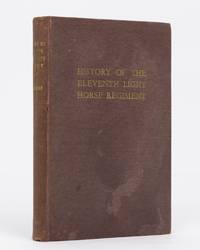
1921rif. 122313Melbourne: Alexander McCubbin 1921. First Edition. Hardcover. Very Good. Melbourne Alexander McCubbin 1921. Octavo 343 1 colophon pages plus 3 maps 2 folding 86 plates and 7 folding maps in a rear endpocket. Decorated cloth a little stained on the rear cover and lightly stained and sunned on the spine; endpapers offset; trifling signs of age and use; a very good copy internally excellent. The two-page foreword by Lieutenant-General Sir Harry Chauvel describes the author thus: 'Lieut.-Colonel Olden is well qualified to undertake the work as joining the Regiment on its inception he served with it throughout the War and though twice wounded was never long away from duty. He temporarily commanded it during the absence wounded of Colonel Todd on more than one occasion notably during the 2nd Battle of Gaza and finally succeeded to the command after the death of Colonel Todd'. He was awarded the DSO. Dornbusch 399; Fielding and O'Neill page 233; Trigellis-Smith 280. Alexander McCubbin hardcover
1942rif. 129472Brisbane: William Brooks and Co 1942. First Edition. Hardcover. Fair/Fair. Brisbane William Brooks and Co. 1942. Octavo xvi 186 pages with an illustration and 4 maps plus 67 pages of plates containing 108 plates in all; the regimental colour patch is printed in three colours on the title page. Maroon sand-grain cloth lettered in gilt on the spine and front cover; cloth a little stained and rubbed with two small worm holes to the spine and front cover with some short tracks visible on the front pastedown; edges marked; binding a little shaken and cracked between some gatherings; trifling remnants of the original tipped-in plain opaque paper dustwrapper on the leading edges of the pastedowns as often; minimal adhesive residue to one page from an old insert; paper a little tanned; some scattered foxing; overall a decent copy. This is a rare item with provenance from two light horsemen. An inscription on the front free endpaper reads: 'Originally owned by the late 868 Corporal Jack Ledlie but given to me by his widow Olive. Clive Kynaston. 512 - 12th ALH'. A second inscription in the same hand at the head of one of the contents pages indicates that he later presented the book to '2/14 QMI' Queensland Mounted Infantry. The author was Signal Sergeant of the Regiment. Dornbusch 393; Fielding and O'Neill page 233; Trigellis-Smith 282. William Brooks and Co hardcover
1832rif. 2352London: Thomas and William Boone 1832. First edition. Hardcover. Very Good. To Which is Prefixed A Reply to Various Opponents; Together With Observations Illustrating Sir J. Moore’s Campaigns. 8vo full calf raised bands and gilt titles and decoration on spine. Marbled endpapers and edges. A uniformly bound set of mixed editions mainly first. 1832-1840 with vol.s I & II second edition 1832 vol.s III 1831 IV 1834 V 1836 & VI 1840 first editions. Vol. I lxxix 618pp illustrated with 8 plates; vol. II xi 530pp with 8 plates; vol. III xiii 640pp with 12 plates; vol. IV xvi 589pp with 9 plates; vol. V lxxxvi 622pp with 8 plates; vol. VI cv 710pp with 10 plates corner of a couple of pages missing with no loss of text looks like an error during binding. A little damp staining to the base of a couple of volumes. With occasional pencil notes inside and a little age toning generally to the plates. Occasional chipping small tear to a couple of plates. An extensive history of the war the political machinations battlefields state of the countries involved strategy letters state of the various armies etc. Vol VI has prefixed Several Justificatory Pieces in reply to criticism. From the collection of George Gilbert Ramsay of Glasgow University with his personal bookplate on the front pastedowns. A very attractive matching set of these volumes in excellent condition with a fine provenance.Heavy and may require extra overseas postage. Thomas and William Boone hardcover
1982rif. 2091202133105888Automobile Regiment History Publishing Society 1982. Soft Cover. Fine. Volume: 1 Automobile Regiment History Publishing Society paperback
1890rif. 17551Paris, Garnier Frères, 1890 ; fort in-8, cartonnage polychrome sur fond kaki, titre doré, dos décoré et doré, second plat décoré en noir, plats biseautés, tranches dorées ; (4), 1138 pp. , 54 illustrations aquarellées à la main, dont 16 hors-texte, 30 en-tête et 8 dessins in-texte, 7 vignettes en noir et blanc.
rif. 467539 planches dépliantes de 32 cms sur (pour certaines) 100 cms - 1917 - Bel ensembleJOINTS: Ouvrage en chinois - In-4 long - 8 pages sur papier "soie" - Couverture illustrée avec mention "Louis Grillet, Chef de Bataillon, Péking, 28 novembre 1917.Photographies de l'époque :"Bataille de Parnot & Personnage". Ces 2 photographies avec mention chacune (au dos) "10 décembre 1895, offert à Mr Grillet à titre de remerciements..." & "A Mr Grillet, from his friend...".
1754rif. 1273981754 Chez Prault, Fils l'aîné et Jombert à Paris - 1754 (Première édition) - 1 vol in-4 - Plein veau marbré de l'époque, 5 nerfs, titre, tomaison et fleurons/caissons en doré. - 204 pages - 25 gravures en noir & blanc pour la plupart rempliées réunies en fin de volume - Toutes tranches rouges
rif. 17021Two duplicate letters one dated from Park Lodge Baslow Derbyshire on 23 December 1907 and 'Christmas 1907'; and the other from the same place 'Aug 1909' and 13 September 1909. Third duplicate and typescript without place or date. Wrench was the son of a clergyman and well educated and well connected being presented to the Prince of Wales and staying at Chatsworth in his old age. His obituary in the British Medical Journal 27 April 1912 describes how after service in the Crimea 'he was transferred to the 4th Lancers went to Madras with that regiment in the following month and served with it during the whole of the Indian Mutiny. For his services in India he received the Indian medal and clasp for Central India. He returned to England in 1860 and married in 1861 his cousin the daughter of Mr. William Kirke of Markham Hall Nottinghamshire'. The four items in the present collection are all in good condition on lightly-aged paper. The three duplicates - all closely and neatly written in a vivid and informative style - are among ones produced by Wrench for circulation within his family there being copies in the collection of Wrench papers in Nottingham University Library. They comprise two letters and a narrative account. The typescript by an unnamed individual is not present at Nottingham. None of the four items is in the Imperial War Museum catalogue. ONE: Duplicate of Autograph Letter by Wrench 'Edwd M Wrench M.V.O - F.R.C.S. late asst Sugeon 12 R Lancers'. Dated at beginning 23 December 1907 and at end 'Christmas 1907 - Park Lodge Baslow Derbyshire'. The letter describes the 'Jubilee commemoration' at the Royal Albert Hall and is headed 'My last Parade'. It begins: 'It was indeed well done The dinner to the surviving Veterans who fought in the Indian Mutiny campaign in 1857 given by the proprietors of the London Daily Telegraph a procession of heart stirring episodes from the Inspection by F.M. Lord Roberts on the steps of the Albert Memorial where I found private Meredith of the 24th who was with me in the trenches at the assault on the Redan Sebastopol June 18 1855 to the surging chorus by the thousands in the Albert Hall of Auld Lang Syne near the end of what Lord Curzon in his thrilling speech said was a "ceremony" rather than a festival a speech that made the tears tremble on my eyelids. They overflowed at the solemn sounding of the "last post" recalling to my memory in the words of the poet O Hara a charge of the 12th Lancers I rode with at the battle of Banda .'. He names others present including 'Col Robertson . he was still the bravest of the brave for though 86 he was in velvet Levee dress silk stockings & pumps without a great coat. He told me he was a teetotaller his picturesque appearance attracted Lord Roberts eye and drew a heavy fire on us not of rifles but of snap shot cameras the result of which has been my portrait in such good company scattered by the hundreds of thousands in The Daily Mirror of Decr 24 . I have looked down the barrel of a loaded musket near enough to see a Sepoys yellow eyes taking aim at the butt end and ridden with cannon balls hopping over my head like balls in a cricket ground I cannot compare my perils during the Sepoy Mutiny to many others of the Kirke family'. 2pp. 8vo. TWO: Duplicate of Autograph Letter by Wrench 'Ed M Wrench'. Dated at beginning 'Park Lodge Baslow Aug 1909' and at end 13 September 1909. 3pp. 8vo. The letter begins: 'Having recently discovered that General W A Franks Major-General William Astell Franks 1838-1929 now living at Northland Road Southampton was present when Uncle Henry Kirke died when fleeing from the Mutineers of his Regt. 12 BNI in 1857 I took the liberty of writing to him he very kindly responded to my enquiries & I feel sure the information he has afforded will be interesting adding much to our scanty knowledge of that terrible time.' There follow extended transcriptions from Franks's letters: '. I saw him the day he died . he was on his horse but rolling about on it . he looked at me with a vacant stare & was deadly pale. I could see he was dying. Shortly after he fell off his horse he was the only one of our party that was buried all the rest being left where they fell .'. Of his own activities Wrench notes: 'I had gone to India almost direct from the Crimea in the year previous 1856. I was assistant Surgeon in the 12th Lancers so was never in the same danger as the Officers of the Native Regiments though I had my share of dangers . and had men blown to pieces by shell not a dozen yards from me . We went not as is said to revenge the Mutiny but to protect the loyal natives of which there were many & restore order yet in one battle we killed 500 rebels and looted two Palaces from one at Kabula we took 40 cart loads of gold & silver; my share of which was £750 . 0 . 0 so I have no personal grievance'. He continues with reference to the Battle of Banda and 'hunting rebels in the jungles'. THREE: Narrative account titled 'Cousin Henry Kirkes story of his escape from Mutineers June 1857'. The account begins: 'In 1857 Uncle Henry was commanding the Head Quarters of the 12th Bengal N.I. at Nowgong now spelt Naogaon Aunt Kirke Henry & St George were with him - He greatly distrusted the Sepoys and when he heard of the mutiny at Barrackpoor in April he immediately sent Aunt & St George off to the Hills just in time for they left Meerut only two days before the fatal 10 May'. A gripping account follows filled with incident: '. At the beginning of June Uncle heard that the left wing of his regiment stationed at Jhansi about sixty miles distant had killed the officers and all the Christian women and children there; Uncle forthwith ordered a parade and addressed the men. He told them of the mutiny of their comrades at Jhansi and added "Now I will let any man that wishes go and join the mutineers but let those who are true come and swear by the Colours". The whole 500 cheered and swore they would be true to him and the Colours. Two days afterwards they broke out into open mutiny shot the Regtl. Sergeant Major and made the officers fly for their lives. . The Europeans ten officers two ladies riding on Uncle's charger and a baby that Henry carried in front with a man riding behind him started for Banda. They asked a Brahmin the way he refused unless they gave him a rupee this Henry did when he ran off demanding another and swore by his gods that if given this he would be faithful but having got it he called to some villagers to come and kill the Faringhees for they had lots of money and so they would be rich for life. Some of the officers wished to shoot the man but Henry dissuaded them but presently the ruffian threw his lathi or club at the ladies horse which reared and they fell off. The man ran forward to kill them when Henry shot him through the back of the head he fell on his face. The villagers turned the dead man over and the two rupees fell out of his mouth when Henry heard them say "It is true they are rich for see they have loaded their guns with rupees". .'. 3pp. 8vo. FOUR: Mimeographed typescript titled '"Not to Revenge but to Protect."' 18pp. 8vo. Containing a transcriptions of Item One pp.16-18 and Item Three pp.4-9 and of passages from Item Two pp.13-15 with a commentary by a knowledgeable but unrelated party. Two duplicate letters, one dated from Park Lodge, Baslow, Derbyshire, on 23 December 1907 (and 'Christmas 1907'); and the other unknown
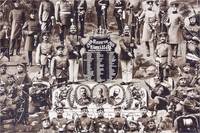
rif. 3733807Metz Alsace-Lorraine German Empire: Gebrüder Notton Römerstr. 10 1908. Composite silver process photograph. Mount: 18¾ x 23½ inches. Image: 14¼ x 17¾ inches. Light rubbing to edges of mount with minor wear at bottom right; margins foxed; small mark at bottom extending faintly into image; very good. This is a rich and complex composite photograph from 1908 captioned with the words “Zur Erinnerung an Meine Dienstzeit” which translates to “In remembrance of my service time.” It was created for the 10th Company 8th Württemberg Infantry Regiment Grand Duke Frederick of Baden’s Regiment—possibly light infantry as in “Jäger infanterieregiment.” This regiment was based in Strasbourg in Alsace-Lorraine and served within the Imperial German Army. The surnames of these men are: Baibel Baierl Bauer Berger Jos. Burger Joh. Bumb Büchel Dirr Dirschedl Echtler Feibler Forster Fuchs Gaibl Ganslmeier Gundel Habender Hagl Haub Haüselmeier Herzog Hiemer Huber Jacob Janker Keim Kirchbauer Klemm Knott Kopp Kraus Kreckl Kübel Laubhardt Laubenbacher Lautner Lippert Maier Joh. Maier Seb. Merkel Miehling Moosburger Petermann Pfeilschifter Pflug Prior Rachl Rauschecker Ries Rommel Schmid Schmidt Schnabel Scholz Schraudolf Schweiber Stegmeier Sutter Ulm Weber Weindl Wenniger Wohlfarth Zieringer Zeilinger Zirngibl. The photograph presents a multitude of uniformed soldiers in a staged setting designed to resemble a military encampment or a gathering. The arrangement of soldiers is not casual but highly structured with officers shown with swords and details prominently positioned in the foreground. Many of the men are shown hoisting enormous beer steins with rather serious expressions. The photograph also features regimental flags and other military regalia which were symbols of pride and unity for the unit. The arrangement of soldiers in rows with some seated and others standing is typical of military portraiture of the time intended to display the order and discipline of the troops. The backdrop of the photograph features a bucolic scene a blend of a real outdoor setting and painted backdrops. This kind of photography allowed for the superimposition of studio-taken images onto a different background giving the impression that all individuals were present at a single location. Such methods were used to create cohesive unit photographs when it was not possible to gather everyone at once. The inclusion of phrases like “Mit Gott für König und Vaterland” With God for King and Fatherland reinforces the patriotic sentiment of the era and the soldiers’ commitment to their country and monarch. Other phrases such as “Die Well ist grofs Die Welt ist schön; Wer weifs ob wir uns wiedersehn!” “The world is big the world is beautiful; Who knows if we will see each other again!” reinforce the romanticism of military service. From a photographic history perspective the image represents the advancements in photo montage techniques at the turn of the 20th century. The image quality clarity and composition indicates that the photographers Gebruder Notton used a large-format camera which was capable of capturing detailed group portraits. A rather remarkable photograph encapsulating the military ethos of the German Empire during a period of intense nationalism and militarism leading up to the First World War. unknown