1432 risultati
rif. GF15411Manuscrit sur papier (16,5 X 22 cm) avec cachet de cire rouge signé, situé et daté : "à Longwy le 9 mai 1699" -
rif. GF15414Manuscrit sur papier (15,5 X 19,5 cm) avec cachet de cire rouge signé, situé et daté : "à Camby le 23 octobre 1699" -
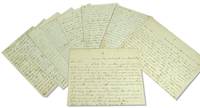
1862rif. 72838np: np 1862. Civil War letter archive comprising 78 chronologically arranged letters the majority from Corporal Christopher C. Mead of the 12th New Jersey Regiment to his wife Hannah dated November 12 1862 to May 29 1864. Two letters comprise correspondence between Christopher and Hannah in March and April 1864; Hannah authored two additional letters in May 1864. Three letters are incomplete. Most bear penciled numbers on the front apparently added by a previous handler. The correspondence is generally legible though some letters have faded more than others; overall the paper is in good condition. The archive also includes three undated and unsigned letter fragments; an unsigned letter dated June 18 1863; a September 16 1862 letter addressed to "Uncle Christopher" concerning family matters accompanied by a note reading "Mrs. Hannah Mead Woodstown Salem Co. New Jersey Please forward"; and a four-page indenture dated 1811 and signed by James Mead. The most striking letters are Corporal Mead's fist hand account at the Battle at Gettysburg with vivid description of Picket's charge written on July 6th. Shortly after Pickett's Charge at Gettysburg Mead. an active participant in the battle. writes his wife Hannah: ".The next day was the severest of the fighting. Skirmishing was kept up until about noon when the rebels opened with about 80 pieces of artillery upon us which was kept up for about 3 hours when they succeeded in silencing one of our batteries; the artillery fight which was about a half mile apart ours being on a hill theirs masked in the woods the ground between us was lower than either of the artillery positions. After they had succeeded in silencing in silencing the battery they began to pour out of the woods in 3 lines of battle and a line of skirmishers in advance of them. In all 18 reg's strong approaching our front they made a splendid approach with their colors flying in the breeze. I was about the center of our line at the point of which they were approaching and had a fair view of them although they had silenced our battery. Thanks be to God of our Nation we had more in reserve for them. Well charged with great and canister shot which was opened upon them with terrible effect. But as their ranks were terribly thinned by the artillery fire yet they closed up quickly their ranks and marched on like brave determined men to accomplish their purposes. On they came driving our skirmishing line before them like so many frightened sheep. Although they fought well until they saw there was no chance then they fell back quickly as they possibly could; and as soon as the rebs came in range of our guns of our line of battle which laid behind piles of rails and stones four deep we opened on them and they fell like grain before the reaper which nearly annihilated them and all that came as far as our line of battle came as prisoners and of the 18 stand of colors they so nobly brought out only one seen to go back." Letter from Gettysburg recounts the Battle of Pickett's Charge. During Pickets Charge Mead writes "But as their ranks were terribly thinned by the artillery fire yet they closed up quickly their ranks and marched on like brave determined men to accomplish their purposes. On they came driving our skirmishing line before them like so many frightened sheep. Although they fought well until they saw there was no chance then they fell back quickly as they possibly could; and as soon as the rebs came in range of our guns of our line of battle which laid behind piles of rails and stones four deep we opened on them and they fell like grain before the reaper which nearly annihilated them and all that came as far as our line of battle came as prisoners and of the 18 stand of colors they so nobly brought out only one seen to go back." From Longacre page 135 "Several minutes under the storm of Federal bullets reduced Lowrances and Lane's brigades to bloody fragments. A handful managed to reach the wall before they went down riddled with balls. Their comrades at last convinced of the futility of it all began to flee. Many fell dead the moment they turned their backs to the enemy. Others hugged the ground in the hope of surviving the hail of lead long enough to surrender." Pickett's Charge July 3 1863 also known as the Pickett-Pettigrew-Trimble Assault was a major Confederate infantry attack against Union positions under Major General George G. Meade on the final day of the Battle of Gettysburg. Ordered by General Robert E. Lee and directed by Lieutenant General James Longstreet approximately 12500 Confederate soldiers advanced nearly three-quarters of a mile across open ground toward the center of the Union line on Cemetery Ridge. Preceded by a heavy artillery bombardment the assault was met by intense Union artillery and rifle fire and was repulsed with more than 50 percent Confederate casualties. The failed attack effectively ended Lee's invasion of Pennsylvania and forced the Confederate Army's retreat to Virginia. Popularly named for Major General George Pickett whose division formed the center of the assault the charge is often regarded as a major turning point of the Civil War and is associated with the "high-water mark of the Confederacy" referring to the farthest point reached by Confederate forces. Mead writes from Hanover County Virginia late May 1864. Soon after he fought in the Battle of Cold Harbor May 31 - June 12 1864 where Mead was killed. Battle of Cold Harbor May 31-June 12 1864 was a major engagement of the Union Army's Overland Campaign against Richmond. At the crossroads of Cold Harbor roughly ten miles northeast of Richmond General Ulysses S. Grant's Army of the Potomac launched repeated assaults against entrenched Confederate forces under General Robert E. Lee culminating in a devastating attack on June 3. The Union assaults failed to break the Confederate defenses and resulted in more than 17000 casualties. Grant subsequently disengaged crossed the James River and moved toward Petersburg a vital railroad and manufacturing center that guarded the approaches to Richmond. Although Cold Harbor was a costly Union defeat Grant's continued advance ultimately placed Confederate forces under sustained pressure around Richmond and Petersburg. np unknown
1864rif. 58358Various places including Methuen Lawrence Andover Boston and Lowell Massachusetts 1864-1865. modern calf antique with original gilt-lettered label "Company Clothing" laid down on front panel. Folio. Two pages list "Price of Clothing Camp & Garrison Equipage Year 1864." Following are 204 pages one to a soldier listing name company place and date of enlistment articles of clothing issued value itemized date of clothing issue and signature of soldier and witness. In some cases date of discharge desertion or demise is also noted. A "colored" under cook is also listed along with the soldiers. hardcover
1862rif. 72838np: np 1862. Civil War letter archive comprising 78 chronologically arranged letters the majority from Corporal Christopher C. Mead of the 12th New Jersey Regiment to his wife Hannah dated November 12 1862 to May 29 1864. Two letters comprise correspondence between Christopher and Hannah in March and April 1864; Hannah authored two additional letters in May 1864. Three letters are incomplete. Most bear penciled numbers on the front apparently added by a previous handler. The correspondence is generally legible though some letters have faded more than others; overall the paper is in good condition. The archive also includes three undated and unsigned letter fragments; an unsigned letter dated June 18 1863; a September 16 1862 letter addressed to "Uncle Christopher" concerning family matters accompanied by a note reading "Mrs. Hannah Mead Woodstown Salem Co. New Jersey Please forward"; and a four-page indenture dated 1811 and signed by James Mead. The most striking letters are Corporal Mead's fist hand account at the Battle at Gettysburg with vivid description of Picket's charge written on July 6th. Shortly after Pickett's Charge at Gettysburg Mead. an active participant in the battle. writes his wife Hannah: ".The next day was the severest of the fighting. Skirmishing was kept up until about noon when the rebels opened with about 80 pieces of artillery upon us which was kept up for about 3 hours when they succeeded in silencing one of our batteries; the artillery fight which was about a half mile apart ours being on a hill theirs masked in the woods the ground between us was lower than either of the artillery positions. After they had succeeded in silencing in silencing the battery they began to pour out of the woods in 3 lines of battle and a line of skirmishers in advance of them. In all 18 reg's strong approaching our front they made a splendid approach with their colors flying in the breeze. I was about the center of our line at the point of which they were approaching and had a fair view of them although they had silenced our battery. Thanks be to God of our Nation we had more in reserve for them. Well charged with great and canister shot which was opened upon them with terrible effect. But as their ranks were terribly thinned by the artillery fire yet they closed up quickly their ranks and marched on like brave determined men to accomplish their purposes. On they came driving our skirmishing line before them like so many frightened sheep. Although they fought well until they saw there was no chance then they fell back quickly as they possibly could; and as soon as the rebs came in range of our guns of our line of battle which laid behind piles of rails and stones four deep we opened on them and they fell like grain before the reaper which nearly annihilated them and all that came as far as our line of battle came as prisoners and of the 18 stand of colors they so nobly brought out only one seen to go back." Letter from Gettysburg recounts the Battle of Pickett's Charge. During Pickets Charge Mead writes "But as their ranks were terribly thinned by the artillery fire yet they closed up quickly their ranks and marched on like brave determined men to accomplish their purposes. On they came driving our skirmishing line before them like so many frightened sheep. Although they fought well until they saw there was no chance then they fell back quickly as they possibly could; and as soon as the rebs came in range of our guns of our line of battle which laid behind piles of rails and stones four deep we opened on them and they fell like grain before the reaper which nearly annihilated them and all that came as far as our line of battle came as prisoners and of the 18 stand of colors they so nobly brought out only one seen to go back." From Longacre page 135 "Several minutes under the storm of Federal bullets reduced Lowrances and Lane's brigades to bloody fragments. A handful managed to reach the wall before they went down riddled with balls. Their comrades at last convinced of the futility of it all began to flee. Many fell dead the moment they turned their backs to the enemy. Others hugged the ground in the hope of surviving the hail of lead long enough to surrender." Pickett's Charge July 3 1863 also known as the Pickett-Pettigrew-Trimble Assault was a major Confederate infantry attack against Union positions under Major General George G. Meade on the final day of the Battle of Gettysburg. Ordered by General Robert E. Lee and directed by Lieutenant General James Longstreet approximately 12500 Confederate soldiers advanced nearly three-quarters of a mile across open ground toward the center of the Union line on Cemetery Ridge. Preceded by a heavy artillery bombardment the assault was met by intense Union artillery and rifle fire and was repulsed with more than 50 percent Confederate casualties. The failed attack effectively ended Lee's invasion of Pennsylvania and forced the Confederate Army's retreat to Virginia. Popularly named for Major General George Pickett whose division formed the center of the assault the charge is often regarded as a major turning point of the Civil War and is associated with the "high-water mark of the Confederacy" referring to the farthest point reached by Confederate forces. Mead writes from Hanover County Virginia late May 1864. Soon after he fought in the Battle of Cold Harbor May 31 - June 12 1864 where Mead was killed. Battle of Cold Harbor May 31-June 12 1864 was a major engagement of the Union Army's Overland Campaign against Richmond. At the crossroads of Cold Harbor roughly ten miles northeast of Richmond General Ulysses S. Grant's Army of the Potomac launched repeated assaults against entrenched Confederate forces under General Robert E. Lee culminating in a devastating attack on June 3. The Union assaults failed to break the Confederate defenses and resulted in more than 17000 casualties. Grant subsequently disengaged crossed the James River and moved toward Petersburg a vital railroad and manufacturing center that guarded the approaches to Richmond. Although Cold Harbor was a costly Union defeat Grant's continued advance ultimately placed Confederate forces under sustained pressure around Richmond and Petersburg. np unknown books
rif. 206471s.l.n.d. (1790) in-8, 8 pp., broché, sous couverture d'attente orange.
rif. GF15424Manuscrit sur papier (18,5 x 29 cm) avec cachet de cire rouge signé, situé et daté : "à Montechevou au Comté de Montbéliard le 20 février 1678"
First edition, small 4to, [8], 36pp., orig. red publishers cloth, some light staining.
2002rif. LFA-126730010Publication de 52 pages, format 215 x 300 mm, illustrée, brochée, bon état
1922rif. 299991922 Gap, Imprimerie Brun et Piallat, 1922, in 8° broché, 118 pages ; couverture défraichie.
1920rif. 48301920 Paris Imprimerie R. Hermieu 1920 In-8° broché, couverture illustrée.
1923rif. 53891923 Lyon - Paris B. Arnaud imp. c. 1923 In-4° demi-chagrin rouge, dos à nerfs orné, titre doré en plein, couvertures conservées. Reproductions photographiques in-texte.
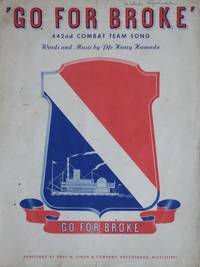
1944rif. List2436Hattiesburg: Earl M. Finch 1944. Sheet music measuring 12 x 9 inches 4 pp. Signature of a Nabuko Hayashida on front cover. Slight tears at fold some toning two small pinholes very good overall quite attractive. Very Good. In Hawaii in May 1942 a battalion of Nisei volunteers was assembled for service in World War Two despite earlier failures of efforts to recruit Japanese-Americans due to the Army’s labeling of Nisei recruits as 4-C enemy aliens. Designated as the 100th Infantry Battalion they were deployed to North Africa in June 1943 integrating with the 34th Division in active combat. Their subsequent deployment to Italy in September 1943 exposed them to intense warfare earning them the moniker of the "Purple Heart Battalion" due to their notably high casualty rate. In January 1943 the U.S. War Department officially declared the establishment of the segregated 442nd Regimental Combat Team RCT which was comprised of Nisei volunteers originating from Hawaii and the mainland. The culmination of this initiative transpired in June 1944 when the 442nd RCT merged forces with the 100th Infantry Battalion in Europe subsequently absorbing the latter into its structure. The notable achievements of Nisei soldiers in combat operations prompted the reinstatement of the draft in January 1944 specifically targeting Nisei detainees to augment the ranks of the 442nd. Over time the 442nd RCT expanded to encompass the 2nd 3rd and 100th Battalions; the 522nd Field Artillery Battalion; the 232nd Engineering Company; the 206th Army Band; Anti-Tank Company; Cannon Company; and Service Company. Offered here is a very scarce piece of sheet music entitled “Go For Broke” which was written by the Hawaiian musician Harry Hamada reflecting the slogan of the 442nd and performed by Shelby and others during the war as part of efforts to boost morale. Hamada would feature in the 1951 movie “Go For Broke” as Masami alongside several other veterans of the 442nd. This publication of “Go For Broke” is from 1944 seven years before the movie’s release. The piece is dedicated to Colonel C.W. Pence. Hamada was a Hawaiian musician who performed with a band called the Shelby Hawaiians or the Shelby Serenaders. They performed as early as 1943. The Hattiesburg Mississippi merchant Earl M. Finch who ran an Army and Navy store close to Camp Shelby befriended Hamada and other members of the 442nd and acted as a sponsor for the group and eventually published this version despite his business being a dry goods merchant house and not a publishing house. The group with the support of Finch performed throughout the country to lift morale. At some point Hamada penned this composition likely in 1944 as we find no reference to it in 1943 articles and Finch published it - Hamada’s composition would become the theme song of the 442nd and Hamada would perform at the Halloran General Hospital in New York and the Walter Reed Hospital in Washington D.C. in 1944 likely performing this composition. Another composition called “Go For Broke” exists as well and it is unclear to what degree Hamada’s work caught on among the regiment. We find two records of Finch’s published version of the composition one listed as part of an online remembrance of the 442nd by the Smithsonian Institution https://americanhistory.si.edu/explore/stories/day-remembrance-70-years-after-executive-order-9066 which appears to have been on loan from the National Japanese American Historical Society and another copy held at Stanford though not listed in OCLC. Finch’s story is also interesting and is the subject of a remembrance on a 100th Battalion History page online https://www.100thbattalion.org/history/stories/earl-finch/. We find no copies listed in OCLC. Overall a very scarce piece of Japanese-American wartime history. Earl M. Finch unknown
1944rif. List2436Hattiesburg: Earl M. Finch 1944. Sheet music measuring 12 x 9 inches 4 pp. Signature of a Nabuko Hayashida on front cover. Slight tears at fold some toning two small pinholes very good overall quite attractive. Very Good. In Hawaii in May 1942 a battalion of Nisei volunteers was assembled for service in World War Two despite earlier failures of efforts to recruit Japanese-Americans due to the Army’s labeling of Nisei recruits as 4-C enemy aliens. Designated as the 100th Infantry Battalion they were deployed to North Africa in June 1943 integrating with the 34th Division in active combat. Their subsequent deployment to Italy in September 1943 exposed them to intense warfare earning them the moniker of the "Purple Heart Battalion" due to their notably high casualty rate. In January 1943 the U.S. War Department officially declared the establishment of the segregated 442nd Regimental Combat Team RCT which was comprised of Nisei volunteers originating from Hawaii and the mainland. The culmination of this initiative transpired in June 1944 when the 442nd RCT merged forces with the 100th Infantry Battalion in Europe subsequently absorbing the latter into its structure. The notable achievements of Nisei soldiers in combat operations prompted the reinstatement of the draft in January 1944 specifically targeting Nisei detainees to augment the ranks of the 442nd. Over time the 442nd RCT expanded to encompass the 2nd 3rd and 100th Battalions; the 522nd Field Artillery Battalion; the 232nd Engineering Company; the 206th Army Band; Anti-Tank Company; Cannon Company; and Service Company. Offered here is a very scarce piece of sheet music entitled “Go For Broke” which was written by the Hawaiian musician Harry Hamada reflecting the slogan of the 442nd and performed by Shelby and others during the war as part of efforts to boost morale. Hamada would feature in the 1951 movie “Go For Broke” as Masami alongside several other veterans of the 442nd. This publication of “Go For Broke” is from 1944 seven years before the movie’s release. The piece is dedicated to Colonel C.W. Pence. Hamada was a Hawaiian musician who performed with a band called the Shelby Hawaiians or the Shelby Serenaders. They performed as early as 1943. The Hattiesburg Mississippi merchant Earl M. Finch who ran an Army and Navy store close to Camp Shelby befriended Hamada and other members of the 442nd and acted as a sponsor for the group and eventually published this version despite his business being a dry goods merchant house and not a publishing house. The group with the support of Finch performed throughout the country to lift morale. At some point Hamada penned this composition likely in 1944 as we find no reference to it in 1943 articles and Finch published it - Hamada’s composition would become the theme song of the 442nd and Hamada would perform at the Halloran General Hospital in New York and the Walter Reed Hospital in Washington D.C. in 1944 likely performing this composition. Another composition called “Go For Broke” exists as well and it is unclear to what degree Hamada’s work caught on among the regiment. We find two records of Finch’s published version of the composition one listed as part of an online remembrance of the 442nd by the Smithsonian Institution https://americanhistory.si.edu/explore/stories/day-remembrance-70-years-after-executive-order-9066 which appears to have been on loan from the National Japanese American Historical Society and another copy held at Stanford though not listed in OCLC. Finch’s story is also interesting and is the subject of a remembrance on a 100th Battalion History page online https://www.100thbattalion.org/history/stories/earl-finch/. We find no copies listed in OCLC. Overall a very scarce piece of Japanese-American wartime history. Earl M. Finch unknown books
rif. 4382Imprimé sur les Presses "Képi Blanc", 1957. Tirage à 2500 exemplaires. 1 plaquette agrafée, in-8, 30 pp., couvertures souples illustrées, enrichie d'une carte en couleurs des combats en Algérie, en 1956. Bon état.
rif. 5117Imprimé sur les Presses "Képi Blanc", 1958. Tirage à 2500 exemplaires. 1 plaquette agrafée in-8, 39 pp., couvertures souples illustrées, bon état.
1781rif. 35765Wien, Joseph von Kurzbeck, 1781. 8°. Mit einigen Holzschn.-Vignetten. 4 nn. Bll. (das letzte weiß), Mod. Brosch.
rif. 24992P., Téqui, 1916, in 12 broché, VI-66pp. ; portrait en frontispice ; couverture fanée.
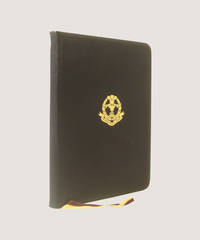
1922rif. 4654Aldershot; Gale & Polden for the Regiment 1922. 1922. Hard Cover. Quarto. xii 92 pp. Frontispiece of the Memorial at Mill Hill Barracks plus plates of its Unveiling ceremony and of the Tablet in St Paul's Church at Mill Hill. Navy blue leatherette over cushioned boards; gilt crest to upper board gilt dentelles; all edges gilt; deep blue silk moire end-papers. Two-tone yellow and brown silk placemarker. Spine very lightly rubbed at head. Scattered light foxing otherwise a clean copy; no annotation or inscriptions. Very good. A scarce honour roll containing the names of the men who served as part of the Middlesex Regiment in the First World War. An essential document for an historian of the regiment. Aldershot; Gale & Polden, for the Regiment, [1922]. hardcover
2004rif. 769602004 Lyon, Editions BGA Permezel, 2004, in 8° broché, 285 pages ; couverture illustrée.
2009rif. 826462009 Les Auteurs, (2009), in 8° broché, 520 pages ; couetrure illustrée.
rif. 018193[Militaria] Jacques [de] Guérin des Arènes (1646-1722), lieutenant colonel du régiment de Vermandois, originaire de Millau. P.A.S., 23 mai 1695, 1p in-8. Certificat pour un nommé Desgrandes, capitaine au premier bataillon du régiment. Document contresigné par un autre militaire. Joli document avec cachet de cire armorié. [420]
rif. 018194[Militaria] Paul-François de Béthune (1682-1759), marquis d'Ancenis, 4e duc de Charost, brigadier et mestres de camp du régiment de cavalerie de Bretagne (futur Royal Bourgogne). P.A.S. « D'Ancenis », Paris, 30 octobre 1714, 1p in-4. Certificats de bons services pour un cavalier, Saint Maurice, ayant servi depuis 1688 dans la compagnie de Béthune, afin qu'il puisse entrer à l'hôtel des Invalides. Document contresigné avec note par Morand (non identifié) avec un cachet de cire armorié. Une note au dos indique « Philippe Gallice de St Maurice ». Beau document. [420]
1740rif. 27294Nantes [s.n.] 1740 une affichette, imprimée en noir sur papier vergé ligné et illustrée en tête des "Armes Royales de France" gravées sur bois en noir + une lettrine historiée gravée sur bois en noir, format : 28,5 x 18 cm, AFFICHETTE DE RECRUTEMENT AUX ARMES ROYALES POUR LE SERVICE DE SA MAJESTÉ (LOUIS XIV) AU RÉGIMENT DE NAVARRE, DANS LA COMPAGNIE DE MONSIEUR DU BIGNON GERVIER (E. GERVIER, SEIGNEUR DU BIGNON ET DES BOUTEILLES), NANTES (1740 ENVIRON), l'affichette a une grande tache brune en partie droite mais trés claire et ne genant à aucun moment la lecture du texte, SANS NOM D'ÉDITEUR (IMPRIMERIE ROYALE PARIS)
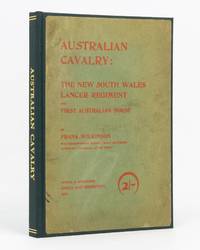
1901rif. 129531Sydney: Angus and Robertson 1901. First Edition. Hardcover. Fair. Sydney Angus and Robertson 1901. Quarto x 64 pages with an illustration plus 8 plates but lacking the colour frontispiece called for by Dornbusch. Modern binder's cloth with the front panel of the original green wrapper printed in red mounted on the front board; text block tide-marked near the head of the spine with the plates a little stained; some discolouration and foxing heavy in places; minor signs of age and use; a decent copy of an absolute rarity. This history of these two cavalry units from their foundation through to the end of the Boer War is 'undoubtedly a regimental record but it is something more - it is an attempt to explain and to some extent combat the unreasoning prejudice which has grown up as a result of the South African campaign against the cavalry arm of the service. On this point Mr. Wilkinson says:- "It is my purpose to show not only that cavalry regiments like the New South Wales Lancers have done equal yeoman service to the Empire in the South African struggle with their comrades in the other branches of the service but that they have done infinitely more as the pioneers of the cavalry movement in Australia to enhance the value of our defence force and to shew the world of what fighting stuff our men are made"' from a review in the 'Daily Telegraph' 12 October 1901. The last 18 pages contain numerous appendices including nominal and casualty rolls. Dornbusch 126; Fielding and O'Neill page 126. Angus and Robertson hardcover