1 399 résultats
réf. SONG1848844697Used: Good unknown
réf. DADAX1848844697New unknown
réf. 1527870758.Gpaperback. Good. Access codes and supplements are not guaranteed with used items. May be an ex-library book. paperback
réf. 0548943192.Ghardcover. Good. Access codes and supplements are not guaranteed with used items. May be an ex-library book. hardcover
réf. 0548597561.Gpaperback. Good. Access codes and supplements are not guaranteed with used items. May be an ex-library book. paperback
réf. 1163920223.Gpaperback. Good. Access codes and supplements are not guaranteed with used items. May be an ex-library book. paperback
2007réf. DADAX0548597561Kessinger Publishing 2007-10-02. paperback. New. 6.00x1.16x9.00. Buy with confidence. Excellent Customer Service & Return policy. Kessinger Publishing paperback
réf. DADAX0548981418New unknown
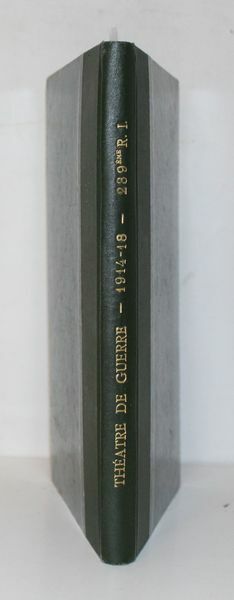
réf. 21533Rouen, saison 1915-1916, 1916-1917. In-8 de 67 pp. & 80 pp.? Nombreuses illustrations Bradel demi-percaline verte, couvertures illustrée en couleurs conservées.
1882réf. 33890ABerlin, Baensch Verlagshandlung, 1882. Gr. 8°. IX, 186 Seiten. Privater Halblederband der Zeit mit privatem Papierrückenschild. (Rückenschild verblasst, Einband berieben, Bleistiftunterstreichungen auf gut der Hälfte der Seiten, Name auf Vorsatz). [3 Warenabbildungen]
réf. 3727709New York: Published for the Seventh Regiment Athletic Association by F.M. Crossett Co. “F” 156 Fifth Avenue 1896. 4 60pp. Program. 9½ x 6¾ inches. Color illustrated wrappers; stapled. Half tone illustrations from photographs; ads. Vertical center crease; rubbing to spine with some separation to wrappers at the head; still very good. Unrecorded 1896 program for New York’s Seventh Regiment’s annual annual athletic games competition held at the regiment’s Park Avenue armory. The illustrated program comprises a roster of the officers of the Seventh Regiment Athletic Association and the event’s floor committee; an outline of the regiment’s training practices; the order of the 30 track and field events; a floor-plan or map of the armory’s indoor parade floor indicating starting points and finish lines ; record times for each event; and a complete list of the officers and soldiers entered in each event and the regimental company to which each belonged. Half tone illustrations depict the Seventh Regiment Athletic Association’s officers the regimental line and its colors training exercises the Park Avenue Armory and the baseball teams of both the regiment and United States Military Academy West Point. Competitive events included runs some handicapped of various distances ranging from 75 yards to 1000 yards hurdle races an eight-lap relay race a shot putting event safety bicycle races and a running high jump competition. Less formally athletic events included a “Roman Chariot” race “Four men and driver the latter to appear in fancy costume” a sack race a potato race and a three-legged race. New York’s Seventh Regiment was comprised of members of New York’s social élite. The regiment was formed before the American Civil War assuming its present name in 1847 as the Seventh Regiment of Infantry National Guard New York State Militia. The color cover illustration depicts the regiment’s unit insignia comprising a circular blue garter inscribed with the motto “Pro Patria et Gloria” For Country and Glory the number “7” the initials “NG” National Guard on a field of red and a winged helmet hanging below. No copies in OCLC. unknown
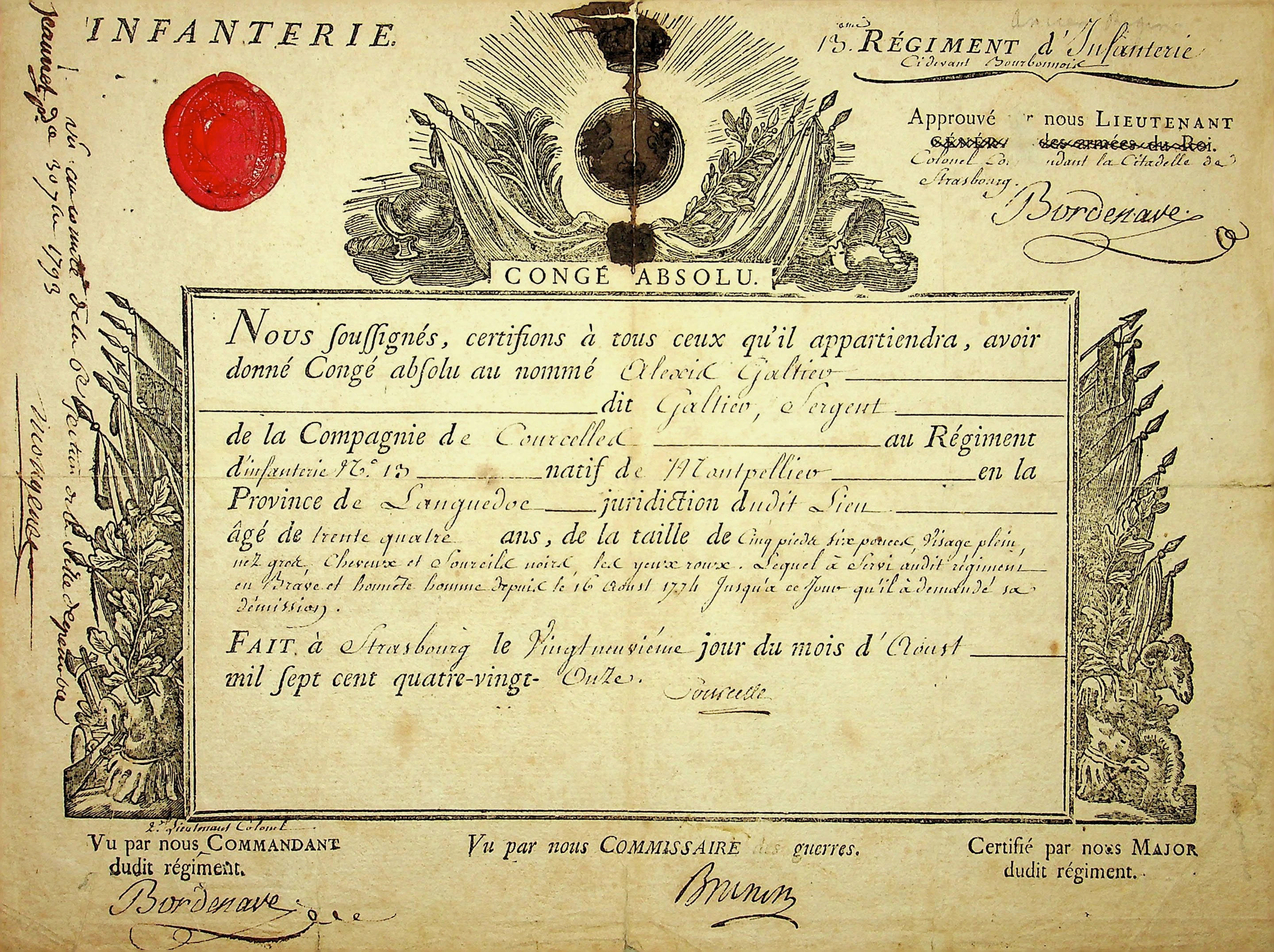
réf. 022823[Révolution, Régiment de Languedoc] Congé absolu. P.S., Strasbourg, 29 août 1791, 1p in-4. Congé absolu pour un sergent, Alexis Galtier, signé par Courcelles, contresigné deux fois par Bordenave. Deux autres signatures non identifiées. Cachet de cire (complet mais mal frappé). Entête aux armes de France bruni. Réparation au dos à un pli central. [563]
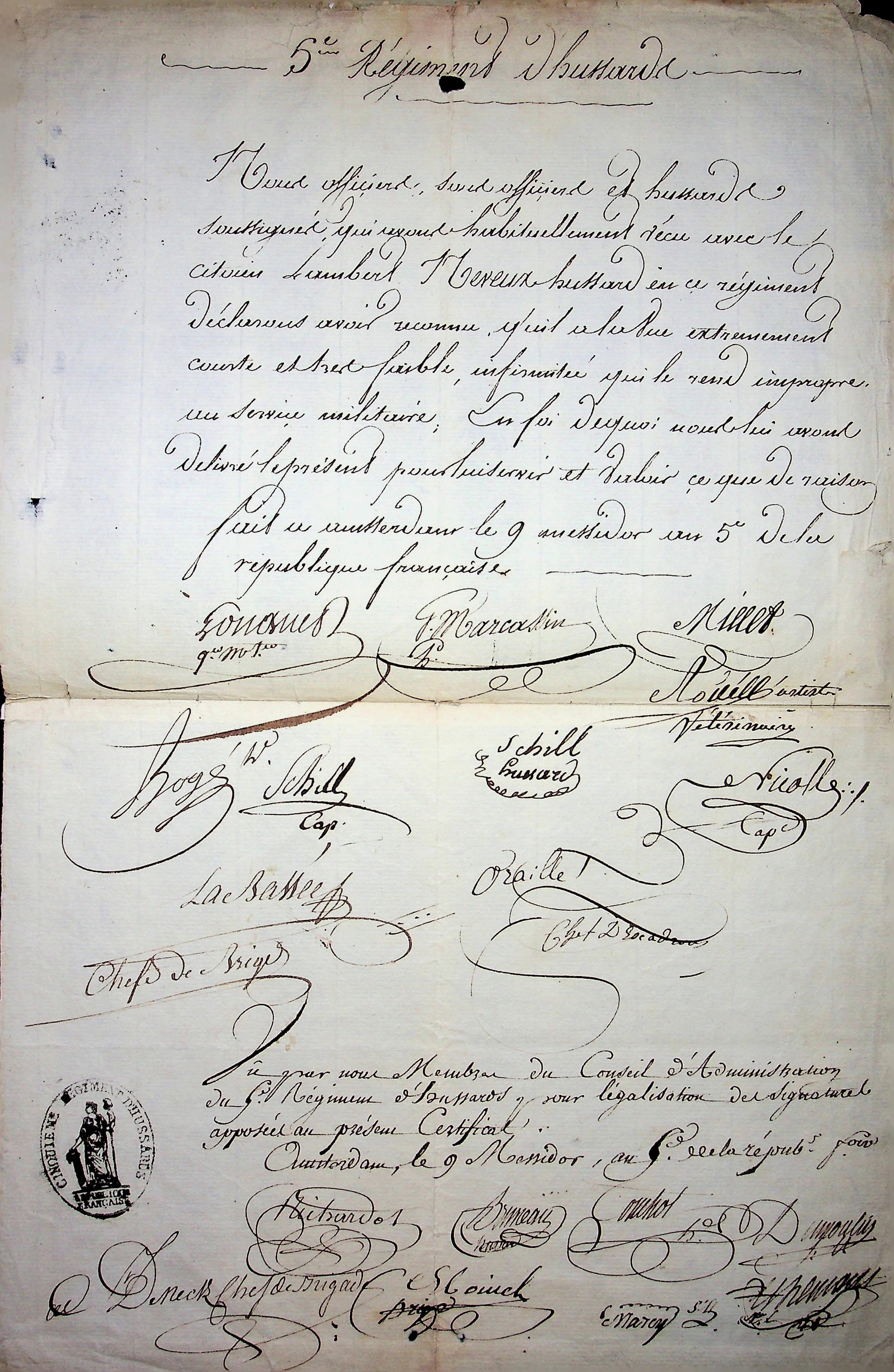
réf. 022824[Révolution, 5e régiment d'hussards] Congé de réforme. P.S., Amsterdam, 9 messidor an 5 [27 juin 1797], 1p in-folio. Congé de réforme pour Lambert Neveux qui « a la vue extrêmement courte et très faible, infirmité qui le rend impropre au service militaire ». Nombreuses signatures des officiers du 5e régiment d'hussard et des membres du conseil d'administration du régiment. Parmi les signatures, on remarquera celle de Rouelle, artiste vétérinaire. Peut-être y a-t-il un lien avec les deux frères chimistes bien connus du XVIIIe siècle. Cachet à l'encre. [563]
2014réf. LFA-126736345Revue de 76 pages, format 155 x 240 mm, illustrée, brochée, Revue du Vivarais, bon état
2015réf. LFA-126736349Revue de 80 pages, format 155 x 240 mm, illustrée, brochée, Revue du Vivarais, bon état
réf. 201803123Saint-Maixent-l'école, Presses de l'E.I.A.T./2, 1994 ; in-4, 347 pp., cartonnage de l'éditeur. Très bon état avec sa jaquette tirage limité 500 exemplaires.
1973réf. 66491Paris, Association Nationale des Anciens Combattants et Anciens du R.I.C.M. 1973 In-4 24,5 x 16 cm. Reliure éditeur simili-cuir maroquiné bleu-marine, jaquette illustrée en couleurs, 270 pp., illustrations en noir & blanc, table des matières. Exemplaire en bon état.
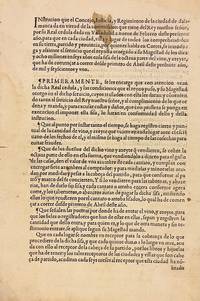
1601réf. 3683Salamanca: S.n. 1601. First edition. Signed at foot by a municipal officer Diez de la Puente. One-page contemporary manuscript on p. 3 relating to the administration of the tax. Unbound as issued. Pinholes at gutter some edge chipping and small dents brown stain affecting the upper portion throughout. Otherwise a good well-preserved copy. First edition. Signed at foot by a municipal officer Diez de la Puente. One-page contemporary manuscript on p. 3 relating to the administration of the tax. Unbound as issued. 4 last 2 blank p. Unrecorded 1601 ordinance from Salamanca enforcing the Armada-era servicio de millones Spain’s foundational fiscal levy. Printed ordinance issued by the municipal council of Salamanca implementing the royal tax known as the servicio de los dieciocho millones. In accordance with the royal cédula of 9 February 1601 the Concejo Justicia y Regimiento instructs subordinate towns and villages to collect an eighth part of all wine and olive oil sold to be remitted through a chain of local receivers. The text regulates how wine and oil must be measured recorded and taxed forbids additional repartimientos and orders prompt transfer of funds to the city’s main treasury. Dated at Salamanca 10 March 1601 and naming four municipal commissioners appointed for its execution it represents the earliest stage of local enforcement of Philip III’s fiscal scheme transforming the national levy into a functioning municipal excise. A contemporary handwritten endorsement below the text signed by Diez de la Puente attests its execution. Accompanying the printed ordinance is a contemporary manuscript headed on p. 3 “Dudas que se ofrecen en la administración de las sisas” listing practical questions concerning the execution of the tax—registration and measurement of goods roles of administrators and receivers form of payment penalties and conditions of tax farming arrendamiento. The servicio de los dieciocho millones formed part of the broader system of millones taxes created by the Cortes of Castile to meet the Crown’s desperate financial needs after the prolonged wars of Philip II. The servicio de millones had first been introduced by royal request and approved by the Cortes on 4 April 1590 conceived to raise eight million ducats over six years to finance the royal expenditure associated with the Armada campaign against England and other military commitments. Rather than remaining temporary it evolved into a regular levy on six staple items—wine oil vinegar meat soap and tallow candles—collected through local sisas and eventually forming the backbone of Castile’s fiscal structure. By 1600–1601 under Philip III the scheme was renewed and expanded to eighteen million ducats its collection entrusted to municipal governments such as Salamanca’s Concejo Justicia y Regimiento. As described in Bartolomé Yun Casalilla’s Sobre la transición al capitalismo en Castilla this marked a transition from feudal income to a centralized fiscal system financed through municipal taxation embedding local economies within the machinery of the Habsburg war state. The present ordinance captures this process of consolidation—when the monarchy sought tighter control over municipal revenues demanded proper accounting and remittance of surpluses and aimed to prevent arbitrary over-taxation—reflecting both the fiscal strain and administrative centralization characteristic of early-seventeenth-century Spain. Reference: Yun Casalilla B. 1987. Sobre la transición al capitalismo en Castilla: Economía y sociedad en Tierra de Campos 1500–1830. Valladolid: Junta de Castilla y León Consejería de Educación y Cultura. . [S.n.] unknown
réf. 2091502135500126Not Available N.A. Soft Cover. Fine. The book is in fine condition. Not Available paperback
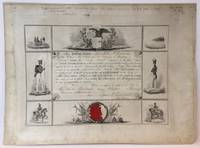
réf. 58705A collection of 11 items from the first organizational years of the National Guard unit which protected New York City in the early 19th century. The group consists of three brass cylinders each containing rolled manuscript documents related to the regiment; an oval metal box containing a pair of epaulettes from the 7th; a wallet style polished black leather military bag with a gilt emblem of the 7th National Guards on the front flap; and a partially printed document completed in manuscript acknowledging the service of a member of the regiment. New York 1816-1847. What became known as New York's Seventh Regiment was originally organized in April 1806 as a response to the threats from the British search and seizure policies in New York harbor. The regiment consisted of four companies comprising many of the merchants and tradesmen in the city. During the War of 1812 the unit by then designated the 2nd Battalion 11th Artillery manned the guns of the forts guarding New York harbor. After the war a military-weary New York saw a fall-off of interest in drilling and training by militias. The appointment in 1820 of Col. James Benedict to lead the Eleventh brought a renewed interest in organized training discipline and field exercises attention to uniforms and equipment and regular attendance at meetings. His order regarding the wearing of pantaloons over boots is reflected in one of the documents present here. By 1824 the Eleventh had been renamed "The National Guards" in honor of the Marquis de Lafayette and by 1826 it was redesignated "The Twenty-Seventh Regiment of the New York State Artillery." In addition to official parades and escorting of dignitaries the national Guards were used to maintain order in the city during public executions in the 1820s and were called out to help quell riots in the 1830s. A reorganization of all the militia units resulted in its new official designation as the Seventh Regiment in 1847. All of the material is in very good condition aside from some scuffing to the metal box. Each of the brass cylinders has an engraved label and the end of each one unscrews to reveal the rolled document inside. The metal box has a faint blind-stamp on the lid identifying it as having been produced by J.H. McLenney & Co. 141 Grand St. New York. The leather wallet is stamped in blind on the back "Ridabock & Co. New York." McKenney & Co. and its successor Ridabock & Co. were manufacturers and dealers in military goods. #6445. Itemized list of the collection: a The first cylinder engraved label reading "Roll of Honorary Members 1st Co. 7th Regt." The document inside dated June 23 1816 206 x 25 cm. consisting of 6 pages tipped together end-to-end records the "Bye laws for the Regulation of Capt. James Benedict's Company in the Eleventh Regiment NY State Artillery" including the establishment of a monthly meeting time regulations regarding attendance new members arms & equipment etc. It is signed by the three members of the Committee of Revisal Gilbert Hopkins Irad Hawley and Richard E. Purdy as well as approximately 77 members of the company. Damage to the lower corner of the document has resulted in the loss of several signatures; some chipping along the right margin of the scroll occasionally affecting a word or two. b The second cylinder engraved label reading "Roll of Company. 7th Regt. N.G.S.N.Y." Rolled inside are two separate documents. The first dated May 18 1821 90 x 20 cm. consisting of 3 pages tipped together end-to-end is a document signed by the members of the company commanded by Capt. Gilbert Hopkins 11th Regt 1st Brigade pledging to abide by a decision regarding the wearing of pantaloons over instead of under Boots on Parade signed by 67 members of the company. The second document is undated 22 x 20 cm. a single leaf approves an alteration to the by-laws regarding dunning members for non-attendance signed by 20 members. c The third cylinder engraved label reading "Roll of the first Company National Guards New York State Artillery" ownership name partially rubbed out but research shows it reads "Captain J.S. Cocks". The manuscript document records another revision of the by-laws this one from October 1826. Printed in block letters at the head of the document 184 x 23 cm. consisting of 5 pages tipped together end-to-end is the title "TWENTY-SEVENTH REGIMENT / NEW YORK STATE ARTILLERY / PRO PATRIA ET GLORIA / NATIONAL GUARDS." The text includes several modifications to various articles of the by-laws and is signed by the members of the Committee of Revisal Smith Spelman Thos. Jaycox and Thos. H. Locke along with 48 other members of the regiment. Some chipping to the margins of the document not affecting text; one long tear carefully repaired on verso touching some letters but all still legible. The ink from the block lettering has burned through the paper in spots. John Samuel Cocks 1813-1868 whose name is etched on the cylinder was elected captain of the First Company of the 7th Regiment in 1838 and resigned in 1845. During the Civil War he served as a Colonel with the 40th New York Infantry Mozart Regiment. A Successful New York businessman and member of the New York state legislature he died in Brooklyn in 1868. d The black metal box containing the epaulettes is moderately scuffed. There is a small metal handle on the lid and a clasp. The epaulettes rest on an oval post mounted inside the box. Each is braided and has a brass crescent on the shoulder dulled and a round emblem of red cloth with a contrasting black & gray striped cloth "7" affixed to it a gold button embossed with an eagle and two bars. The epaulettes show some wear particularly on the undersides where a metal plate denotes left and right shoulder pad with modest fraying to the edges. e The leather wallet has high polish; the ornamental lettering "NG7" on the front flap is bright the small leather loop clasp is worn but intact. f A partially printed document image size 21 x 31 cm. on a larger sheet 30 x 40 cm. completed in manuscript and dated October 14 1846. The text is surrounded by eight vignette illustrations six of men in uniform on horseback in ranks one of an eagle perched on a shield and the last of swords and cannons with a red wax seal over the middle partially chipped away. The document acknowledges the seven years service of John A. Hadden in Company 6 National Guard 27th Regiment and declares him to be exempt for the rest of his life from both jury service and further military service. Signed by two members of the regiment Andrew H. Brenner and Cyrus H. Loutrel. A few creases in the surface of the document which is a little soiled and has some later ink notes by Hadden in the upper margin. unknown books
réf. 58705A collection of 11 items from the first organizational years of the National Guard unit which protected New York City in the early 19th century. The group consists of three brass cylinders each containing rolled manuscript documents related to the regiment; an oval metal box containing a pair of epaulettes from the 7th; a wallet style polished black leather military bag with a gilt emblem of the 7th National Guards on the front flap; and a partially printed document completed in manuscript acknowledging the service of a member of the regiment. New York 1816-1847. What became known as New York's Seventh Regiment was originally organized in April 1806 as a response to the threats from the British search and seizure policies in New York harbor. The regiment consisted of four companies comprising many of the merchants and tradesmen in the city. During the War of 1812 the unit by then designated the 2nd Battalion 11th Artillery manned the guns of the forts guarding New York harbor. After the war a military-weary New York saw a fall-off of interest in drilling and training by militias. The appointment in 1820 of Col. James Benedict to lead the Eleventh brought a renewed interest in organized training discipline and field exercises attention to uniforms and equipment and regular attendance at meetings. His order regarding the wearing of pantaloons over boots is reflected in one of the documents present here. By 1824 the Eleventh had been renamed "The National Guards" in honor of the Marquis de Lafayette and by 1826 it was redesignated "The Twenty-Seventh Regiment of the New York State Artillery." In addition to official parades and escorting of dignitaries the national Guards were used to maintain order in the city during public executions in the 1820s and were called out to help quell riots in the 1830s. A reorganization of all the militia units resulted in its new official designation as the Seventh Regiment in 1847. All of the material is in very good condition aside from some scuffing to the metal box. Each of the brass cylinders has an engraved label and the end of each one unscrews to reveal the rolled document inside. The metal box has a faint blind-stamp on the lid identifying it as having been produced by J.H. McLenney & Co. 141 Grand St. New York. The leather wallet is stamped in blind on the back "Ridabock & Co. New York." McKenney & Co. and its successor Ridabock & Co. were manufacturers and dealers in military goods. #6445. Itemized list of the collection: a The first cylinder engraved label reading "Roll of Honorary Members 1st Co. 7th Regt." The document inside dated June 23 1816 206 x 25 cm. consisting of 6 pages tipped together end-to-end records the "Bye laws for the Regulation of Capt. James Benedict's Company in the Eleventh Regiment NY State Artillery" including the establishment of a monthly meeting time regulations regarding attendance new members arms & equipment etc. It is signed by the three members of the Committee of Revisal Gilbert Hopkins Irad Hawley and Richard E. Purdy as well as approximately 77 members of the company. Damage to the lower corner of the document has resulted in the loss of several signatures; some chipping along the right margin of the scroll occasionally affecting a word or two. b The second cylinder engraved label reading "Roll of Company. 7th Regt. N.G.S.N.Y." Rolled inside are two separate documents. The first dated May 18 1821 90 x 20 cm. consisting of 3 pages tipped together end-to-end is a document signed by the members of the company commanded by Capt. Gilbert Hopkins 11th Regt 1st Brigade pledging to abide by a decision regarding the wearing of pantaloons over instead of under Boots on Parade signed by 67 members of the company. The second document is undated 22 x 20 cm. a single leaf approves an alteration to the by-laws regarding dunning members for non-attendance signed by 20 members. c The third cylinder engraved label reading "Roll of the first Company National Guards New York State Artillery" ownership name partially rubbed out but research shows it reads "Captain J.S. Cocks". The manuscript document records another revision of the by-laws this one from October 1826. Printed in block letters at the head of the document 184 x 23 cm. consisting of 5 pages tipped together end-to-end is the title "TWENTY-SEVENTH REGIMENT / NEW YORK STATE ARTILLERY / PRO PATRIA ET GLORIA / NATIONAL GUARDS." The text includes several modifications to various articles of the by-laws and is signed by the members of the Committee of Revisal Smith Spelman Thos. Jaycox and Thos. H. Locke along with 48 other members of the regiment. Some chipping to the margins of the document not affecting text; one long tear carefully repaired on verso touching some letters but all still legible. The ink from the block lettering has burned through the paper in spots. John Samuel Cocks 1813-1868 whose name is etched on the cylinder was elected captain of the First Company of the 7th Regiment in 1838 and resigned in 1845. During the Civil War he served as a Colonel with the 40th New York Infantry Mozart Regiment. A Successful New York businessman and member of the New York state legislature he died in Brooklyn in 1868. d The black metal box containing the epaulettes is moderately scuffed. There is a small metal handle on the lid and a clasp. The epaulettes rest on an oval post mounted inside the box. Each is braided and has a brass crescent on the shoulder dulled and a round emblem of red cloth with a contrasting black & gray striped cloth "7" affixed to it a gold button embossed with an eagle and two bars. The epaulettes show some wear particularly on the undersides where a metal plate denotes left and right shoulder pad with modest fraying to the edges. e The leather wallet has high polish; the ornamental lettering "NG7" on the front flap is bright the small leather loop clasp is worn but intact. f A partially printed document image size 21 x 31 cm. on a larger sheet 30 x 40 cm. completed in manuscript and dated October 14 1846. The text is surrounded by eight vignette illustrations six of men in uniform on horseback in ranks one of an eagle perched on a shield and the last of swords and cannons with a red wax seal over the middle partially chipped away. The document acknowledges the seven years service of John A. Hadden in Company 6 National Guard 27th Regiment and declares him to be exempt for the rest of his life from both jury service and further military service. Signed by two members of the regiment Andrew H. Brenner and Cyrus H. Loutrel. A few creases in the surface of the document which is a little soiled and has some later ink notes by Hadden in the upper margin. unknown
1866réf. 44820New York 1866. First edition. Very good minor tears along folds light soiling. 1 sheet. 9 x 14.5 inches. "Report of Recruiting Committee" completed and signed July 5th 1866 by Alex Morrison Henry J. Mansfield and by representatives of the Recruiting Committee on August 7th 1866. "The 9th Regiment was first formed on June 24 1799 as the "6th Regiment of Infantry N.Y.N.G.The 9th Regiment participated at intervals in the War of 1812. On May 29 1850 the unit became known as the "9th Regiment New York State Militia" and due to the large percentage of Irish soldiers within the regiment it was given the nickname "the Irish Ninth.".Between 1861 and 1864 the 9th Regiment saw combat during the Civil War and fought under the name of the "83rd New York Volunteer Infantry Regiment.". It was attached to the Army of the Potomac and participated in dozens of actions from 1861 to 1864 including the battles of Antietam Fredericksburg Chancellorsville Gettysburg the Wilderness Spotsylvania Court House and Cold Harbor to name some of the more famous engagements" See New York State National Guard 9th Regiment Collection MS 3085 New-York Historical Society. unknown books
1866réf. 44820New York 1866. First edition. Very good minor tears along folds light soiling. 1 sheet. 9 x 14.5 inches. "Report of Recruiting Committee" completed and signed July 5th 1866 by Alex Morrison Henry J. Mansfield and by representatives of the Recruiting Committee on August 7th 1866. "The 9th Regiment was first formed on June 24 1799 as the "6th Regiment of Infantry N.Y.N.G.The 9th Regiment participated at intervals in the War of 1812. On May 29 1850 the unit became known as the "9th Regiment New York State Militia" and due to the large percentage of Irish soldiers within the regiment it was given the nickname "the Irish Ninth.".Between 1861 and 1864 the 9th Regiment saw combat during the Civil War and fought under the name of the "83rd New York Volunteer Infantry Regiment.". It was attached to the Army of the Potomac and participated in dozens of actions from 1861 to 1864 including the battles of Antietam Fredericksburg Chancellorsville Gettysburg the Wilderness Spotsylvania Court House and Cold Harbor to name some of the more famous engagements" See New York State National Guard 9th Regiment Collection MS 3085 New-York Historical Society. unknown
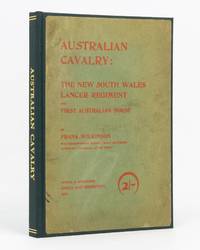
1901réf. 129531Sydney: Angus and Robertson 1901. First Edition. Hardcover. Fair. Sydney Angus and Robertson 1901. Quarto x 64 pages with an illustration plus 8 plates but lacking the colour frontispiece called for by Dornbusch. Modern binder's cloth with the front panel of the original green wrapper printed in red mounted on the front board; text block tide-marked near the head of the spine with the plates a little stained; some discolouration and foxing heavy in places; minor signs of age and use; a decent copy of an absolute rarity. This history of these two cavalry units from their foundation through to the end of the Boer War is 'undoubtedly a regimental record but it is something more - it is an attempt to explain and to some extent combat the unreasoning prejudice which has grown up as a result of the South African campaign against the cavalry arm of the service. On this point Mr. Wilkinson says:- "It is my purpose to show not only that cavalry regiments like the New South Wales Lancers have done equal yeoman service to the Empire in the South African struggle with their comrades in the other branches of the service but that they have done infinitely more as the pioneers of the cavalry movement in Australia to enhance the value of our defence force and to shew the world of what fighting stuff our men are made"' from a review in the 'Daily Telegraph' 12 October 1901. The last 18 pages contain numerous appendices including nominal and casualty rolls. Dornbusch 126; Fielding and O'Neill page 126. Angus and Robertson hardcover
1740réf. 27294Nantes [s.n.] 1740 une affichette, imprimée en noir sur papier vergé ligné et illustrée en tête des "Armes Royales de France" gravées sur bois en noir + une lettrine historiée gravée sur bois en noir, format : 28,5 x 18 cm, AFFICHETTE DE RECRUTEMENT AUX ARMES ROYALES POUR LE SERVICE DE SA MAJESTÉ (LOUIS XIV) AU RÉGIMENT DE NAVARRE, DANS LA COMPAGNIE DE MONSIEUR DU BIGNON GERVIER (E. GERVIER, SEIGNEUR DU BIGNON ET DES BOUTEILLES), NANTES (1740 ENVIRON), l'affichette a une grande tache brune en partie droite mais trés claire et ne genant à aucun moment la lecture du texte, SANS NOM D'ÉDITEUR (IMPRIMERIE ROYALE PARIS)