1.463 Ergebnisse
Best.-Nr. DADAX1843426714New unknown
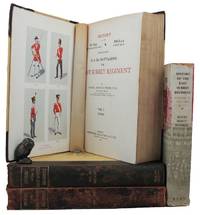
1916Best.-Nr. 152495London: Spottiswoode Ballantyne & Co. Ltd 1916. In four volumes. Volume I: 1702-1914. Pp. xviii468 18 plates 2 coloured frontispiece tissue guard browned and creased text maps title page printed in fs24 red & blackfs26 ; Volumes II & III: 1914-1919. Introduction by Major-General Sir John R. Longley. Pp. xvi262x302 4 plates 2 folding 35 maps 10 folding; Volume IV: 1920-1952. Pp. 284last colophon frontispiece 8 plates text plus endpaper maps; top edge of free endpapers marked appendix Honours and awards index; Volumes I-III: cr. 4to; half black leather spines lettered in gilt gilt insignia to upper boards the leather worn and beginning to perish joints worn and with splits and chips particularly to head of spines the cloth soiled; t.e.g; endpapers browned and hinges cracked plus some water staining to top edge of several leaves towards end and lower endpapers of Volume I; Volume IV: demy 8vo; maize cloth spine lettered in gilt title on red ground; dust wrapper worn and with several splits and chips to edges; book label of David Levine Sydney on upper pastedown volumes 1-III and verso of upper free endpaper volume IV some foxing and browning to each of the four volumes occasionally heavy; Spottiswoode Ballantyne & Co. Ltd./Medici Society London 1916-1957 First editions. White p. 84; Sutcliffe 1/pp. 193/4. Spottiswoode, Ballantyne & Co. Ltd unknown
1885Best.-Nr. 152433London: Simpkin Marshall & Co 1885. to which is prefixed a general account of the Volunteer Forces of the United Kingdom. Compiled from official and private sources from 1794 to 1884. Pp. xvi352 frontispiece tissue guard browned and torn offset onto title page 16 coloured plates appendices index; demy 8vo; brown cloth lightly marked and chipped rebacked with new brown calf spine gilt lettered & ruled skiver label upper board lettered in gilt banded in silver lightly worn and with silver insignia at centre the lower edge of cloth on upper board frayed and missing from dentelle cloth on lower board with some loss due to chipping; a.e.g.; original endpapers upper free endpapers with some slight marginal splits and chips hinge tender at frontispiece leaves browned edges a little brittle top fore-corner of one plate and two leaves lightly chipped Simpkin Marshall & Co. London 1885. First edition. White p. 208; Sutcliffe 1/p. 327. From the library of John Lloyd with his bookplate on upper free endpaper and annotations by two family members on upper endpapers 'L. H. Barclay Lloyd 17 Shaft Crown Mines Johannesburg' and 'F. Gisslen Lloyd Capt. 14 Middlesex R.V. from June 1868 to August 1871. Enrolled June 16 1859' and two newspaper cuttings offset regarding the will of Colonel Sir Joseph Henry Warner The Standard 15 Nov 1897 and the consent of the Duke of Cambridge to formally open the new centenary headquarters of the 3rd Middlesex Rifle Volunteers at Hornsey The World 8 Dec. 1897. Later from the library of Sydney bibliophile David Levine with his Militaria book label on upper pastedown. Simpkin, Marshall, & Co unknown
1956Best.-Nr. 152409Aldershot Hants: Gale & Polden Ltd 1956. With a Foreword by Lieutenant-General Sir Brian G. Horrocks. Pp. xvi462 frontispiece 16 plates 4 folding and 8 full page text maps appendices index; demy 8vo; maroon cloth spine lettered in gilt gilt insignia to upper board; book label of David Levine Sydney on upper pastedown endpapers offset and browned some foxing mainly to outer leaves and edges; Gale & Polden Ltd. Aldershot Hants 1956. First edition. White p. 109; Sutcliffe 1/p. 326. Gale & Polden, Ltd unknown
Best.-Nr. DADAX080711488XNew unknown
Best.-Nr. DADAX1844153878New unknown
1944Best.-Nr. 29773Corpus Christi TX: Cadet Regiment U.S. Naval Air Training Center. Blue spine olive covers. Slight wear/soiling. Interior and binding excellent. LG . Near Fine. Hardcover. 1944. Cadet Regiment U.S. Naval Air Training Center hardcover
1922Best.-Nr. 151715London: The Medici Society 1922. Foreword by General The Rt. Hn. Sir Arthur Paget P.C. G.C.G. Colonel of the Buffs. Pp. xx554 2 coloured plates including frontispiece 12 black & white plates 27 maps mostly folding and including endpapers appendices list of subscribers; demy 8vo; blue cloth lettered and ruled in gilt fs24 & fs22 blind gilt insignia to upper board edges lightly worn horizontal black marks across lower board; book label of David Levine Sydney on verso of upper free endpaper some foxing and browning mainly to edges of leaves heavier on a couple of leaves four leaves carelessly opened with marginal loss to one and short splits from fore-edges into margins of others one paper repaired lower hinge starting at one point; The Medici Society London 1922. First edition. White p. 53; Sutcliffe 1/p. 36. The third volume in the series which eventually comprised six volumes covering the history from 1572 to 1967. With loosely inserted publisher's leaflet lightly browned promoting this and another volume in the series and "The Dragon" the monthly Regimental paper of the Buffs. The Medici Society unknown
1967Best.-Nr. 151674Canterbury: The Queen's Own Buffs Office 1967. Royal East Kent Regiment 3rd Foot formerly designated The Holland Regiment and Prince George of Denmark's Regiment 1948-1967. With foreword by King Frederik IX of Denmark formerly Colonel-in-Chief The Buffs. Pp. xviii232last blank issued without lower free endpaper frontispiece 24 plates 5 text maps appendices index; demy 8vo; blue cloth spine lettered in gilt gilt insignia to upper board; book label of David Levine Sydney on upper pastedown light foxing mainly to outer leaves and edges; The Queen's Own Buffs Office Canterbury 1967. First edition. White p. 280; Sutcliffe 1/p. 36. The final volume in the series which comprised six volumes covering the history from 1572 to 1967. The Queen's Own Buffs Office unknown
Best.-Nr. 0282558543.Gpaperback. Good. Access codes and supplements are not guaranteed with used items. May be an ex-library book. paperback
Best.-Nr. 16670'Blooming Press Mooltan'. 1882. March lasting from 3 January to 18 March 1883. Printed on one side of piece of 50 x 32 cm wove paper. In good condition lightly aged and worn with strip of blue paper from stub adhering to blank reverse. A total of 75 entries in two tables 66 in the first and 9 in the second both arranged in eight columns as follows: 'Probable Date of arrival. 1883.' the only entry in this column is 'January' beside the first march 'No. of March' 'Stations' 'Distance Miles' 'No. of Route' 'Rivers' 'Villages' 'Remarks'. Beneath the table: 'Abbreviations - D. B. dak-bungalow; P. O. Post-Office R. S. railway-station; T. S. telegraph-station.' In large letters at bottom right: 'J. D. P. T. M.' Slug centred at foot: 'Blooming Press Mooltan sic'. The tables are filled with information. For example the first entry in the second table: 'No. of Marches 1 Stations. Gunesh Ghat Distance Miles 13 No of Route. 103 Rivers. Ramgunga bridge of boats Villages. Moradabad 2 1/2 Ramgunga 2 3/4 Remarks. en-camping ground right bank of Kosila road heavy water procurable'. And the last entry in the second column: 'No. of Marches 9 Stations. Shahjahanpur Distance Miles 13 3/8 No. of Route. 107 Rivers. Gurra bridged Villages. Buntara 6 Gurra 9. Remarks. Small cantomnent & civil Station water abundant.' Among the remarks for the fifty-second march in the first column to Koomrala is 'snipe shooting good'. From the papers of Colonel Edmund Alexander Grubbe 1857-c.1923 who describes the march in his journal. No item printed by the Blooming Press of Mooltan traced on either COPAC or OCLC WorldCat. The name of the press may be a joke 'blooming' being slang for 'bloody' as in Kipling's 'When 'Omer smote 'is bloomin' lyre'. 'Blooming Press Mooltan'. [1882.] March lasting from 3 January to 18 March 1883. unknown
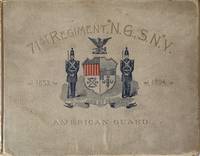
Best.-Nr. 010294New York: The 71st Regiment 1894 First edition. Oblong 8vo; 108 pp.; illustrated from photographs. Owner's stamp to title page; wear to spine some staining and bubbling to rear board; else a good copy or better in original silver-stamped leatherette covers. A souvenir book commemorating the new armory at Fourth Ave. and 34th Street designed by John Thomas. With a history of the Regiment by the Rev. George R. van der Water a musical program advertisements etc. New York: The 71st Regiment, 1894 hardcover
Best.-Nr. DADAX0811708942New unknown
1940Best.-Nr. 53679N. P.: Privately printed n. d. ca 1940. 1940. TEXAS WORLD WAR II. First edition. Stapled 6" x 9" brown printed wrappers with titles and unit insignia printed in black on the front and rear cover n. p. 39 pp. numerous illustrations from photographs. Camp Hulen was a military training camp near Palacios Texas operating from 1925 until 1946. At one time it supported the largest concentration of troops for field training in the U. S. military. In 1940 the War Department leased Camp Hulen from the Texas National Guard for antiaircraft training of National Guard units. At its peak the camp had facilities for 12000 military personnel. It continued as a training facility until 1944. The 197th Coast Artillery was one of these units. The oldest antiaircraft National Guard unit in the U.S. it was part of the New Hampshire National Guard. During World War II it was stationed in Australia as part of the defense against a feared Japanese invasion. This souvenir brochure shows group images of the various batteries making up the unit and its commanding officer. There are photographs of training exercises camp scenes recreation and social events including scenes from nearby Cuero and Palacious. Among the numerous images is a double page panoramic view of Camp Hulen in 1940. Also included is a history of the regiment and its unit. Very scarce with WorldCat locating only the copies at the United States War College and Yale. Faint evidence of a vertical crease to the front cover and minor wear to the top corner else a near fine copy of a scarce item. Privately printed, n. d. (ca 1940). unknown
2013Best.-Nr. 066293Brockenhurst Hampshire: T.R. and L. Woods 2013. 1st Edition . Hardcover. New/New. Folio - over 12 - 15" tall. The second in the series concentrates on the insignia not previously covered in the Royal Hampshire Regiment and related military units in Hampshire and the Isle of Wight. Some 330 items of shoulder belt plates pouch plates waist belt clasps buttons and uniforms have been identified measured described and photographed for this book covering the period 1702-1995. T.R. and L. Woods hardcover
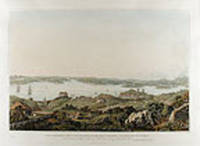
Best.-Nr. 14758London: Alecto Editions and the State Library of New South Wales 1988. Originally engraved by Robert Havell and son printed by Edward Egerton-Williams in colours and finished by hand with printer's blindstamp. "By 1820 Sydney was a town of 12000 inhabitants about a third of whom were convicts. It had grown dramatically during the administration of Lachlan Macquarie who was appointed governor of New South Wales in 1810. Unlike previous governors Macquarie was not content merely to oversee a penal colony. His vigorous building programme changed forever the appearance of Sydney while his policy of accepting emancipated convicts as respected citizens demonstrated a social attitude strangely out of step with the times. Both these policies earned him criticism. In 1819 alarmed by Macquarie's extravagant public works the British Government commissioned a lawyer and civil servant J.T.Bigge to investigate. The attacks by his critics were met head on by Macquarrie's supporters in New South Wales. Books pamphlets and paintings luded the governor's undoubted achievements. Almost certainly Major Taylor's drawings were used in if not commissioned for this cause. The engraved view presents a flattering image of the Australian seat of government and by extension of Macquarie's term there.Taylor arranged the engraving and printing of the of the three sheet Panorama. upon his return to England in July 1822.Havell appears to have worked from Taylor's. large watercolours but amended them with additional details. and decorative elements.It is most fortuitous that the copper plates.have survived. There is no other example of such a case for 19th century Australian engravings. Alecto Editions and the State Library of New South Wales unknown books
Best.-Nr. 14891A fine pair of plates engraved by Robert Havell and son printed by Edward Egerton-Williams in colours and finished by hand each in very good condition "The Town of Sydney" with a slightly greyer paper tone. From an edition limited to 110 copies printed from the original printing plates in 1988 employing the same techniques as used in 1823. This fine edition was published as a collaborative effort between the State Library of New South Wales and the renowned fine art publishers Alecto Editions. "By 1820 Sydney was a town of 12000 inhabitants about a third of whom were convicts. It had grown dramatically during the administration of Lachlan Macquarie who was appointed governor of New South Wales in 1810. Unlike previous governors Macquarie was not content merely to oversee a penal colony. His vigorous building programme changed forever the appearance of Sydney while his policy of accepting emancipated convicts as respected citizens demonstrated a social attitude strangely out of step with the times. Both these policies earned him criticism. In 1819 alarmed by Macquarie's extravagant public works the British Government commissioned a lawyer and civil servant J.T.Bigge to investigate. The attacks by his critics were met head on by Macquarrie's supporters in New South Wales. Books pamphlets and paintings lauded the governor's undoubted achievements. Almost certainly Major Taylor's drawings were used in if not commissioned for this cause. The engraved views of the Panorama present a flattering image of the Australian seat of government and by extension of Macquarie's term there.Taylor arranged the engraving and printing of the of the three sheet Panorama. upon his return to England in July 1822.Havell appears to have worked from Taylor's. large watercolours but amended them with additional details. and decorative elements.It is most fortuitous that the copper plates.have survived. There is no other example of such a case for 19th century Australian engravings. unknown books
Best.-Nr. 14757Three plates engraved by Robert Havell and son printed by Edward Egerton-Williams in colours and finished by hand each with printer's blindstamp. From an edition limited to 110 copies printed from the original printing plates in 1988 employing the same techniques as used in 1823. This fine edition was published as a collaborative effort between the State Library of New South Wales and the renowned fine art publishers Alecto Editions. "By 1820 Sydney was a town of 12000 inhabitants about a third of whom were convicts. It had grown dramatically during the administration of Lachlan Macquarie who was appointed governor of New South Wales in 1810. Unlike previous governors Macquarie was not content merely to oversee a penal colony. His vigorous building programme changed forever the appearance of Sydney while his policy of accepting emancipated convicts as respected citizens demonstrated a social attitude strangely out of step with the times. Both these policies earned him criticism. In 1819 alarmed by Macquarie's extravagant public works the British Government commissioned a lawyer and civil servant J.T.Bigge to investigate. The attacks by his critics were met head on by Macquarrie's supporters in New South Wales. Books pamphlets and paintings luded the governor's undoubted achievements. Almost certainly Major Taylor's drawings were used in if not commissioned for this cause. The engraved views of the Panorama present a flattering image of the Australian seat of government and by extension of Macquarie's term there.Taylor arranged the engraving and printing of the of the three sheet Panorama. upon his return to England in July 1822.Havell appears to have worked from Taylor's. large watercolours but amended them with additional details. and decorative elements.It is most fortuitous that the copper plates.have survived. There is no other example of such a case for 19th century Australian engravings. unknown books
Best.-Nr. 14758London: Alecto Editions and the State Library of New South Wales 1988. Originally engraved by Robert Havell and son printed by Edward Egerton-Williams in colours and finished by hand with printer's blindstamp. "By 1820 Sydney was a town of 12000 inhabitants about a third of whom were convicts. It had grown dramatically during the administration of Lachlan Macquarie who was appointed governor of New South Wales in 1810. Unlike previous governors Macquarie was not content merely to oversee a penal colony. His vigorous building programme changed forever the appearance of Sydney while his policy of accepting emancipated convicts as respected citizens demonstrated a social attitude strangely out of step with the times. Both these policies earned him criticism. In 1819 alarmed by Macquarie's extravagant public works the British Government commissioned a lawyer and civil servant J.T.Bigge to investigate. The attacks by his critics were met head on by Macquarrie's supporters in New South Wales. Books pamphlets and paintings luded the governor's undoubted achievements. Almost certainly Major Taylor's drawings were used in if not commissioned for this cause. The engraved view presents a flattering image of the Australian seat of government and by extension of Macquarie's term there.Taylor arranged the engraving and printing of the of the three sheet Panorama. upon his return to England in July 1822.Havell appears to have worked from Taylor's. large watercolours but amended them with additional details. and decorative elements.It is most fortuitous that the copper plates.have survived. There is no other example of such a case for 19th century Australian engravings. Alecto Editions and the State Library of New South Wales unknown
Best.-Nr. 14891A fine pair of plates engraved by Robert Havell and son printed by Edward Egerton-Williams in colours and finished by hand each in very good condition "The Town of Sydney" with a slightly greyer paper tone. From an edition limited to 110 copies printed from the original printing plates in 1988 employing the same techniques as used in 1823. This fine edition was published as a collaborative effort between the State Library of New South Wales and the renowned fine art publishers Alecto Editions. "By 1820 Sydney was a town of 12000 inhabitants about a third of whom were convicts. It had grown dramatically during the administration of Lachlan Macquarie who was appointed governor of New South Wales in 1810. Unlike previous governors Macquarie was not content merely to oversee a penal colony. His vigorous building programme changed forever the appearance of Sydney while his policy of accepting emancipated convicts as respected citizens demonstrated a social attitude strangely out of step with the times. Both these policies earned him criticism. In 1819 alarmed by Macquarie's extravagant public works the British Government commissioned a lawyer and civil servant J.T.Bigge to investigate. The attacks by his critics were met head on by Macquarrie's supporters in New South Wales. Books pamphlets and paintings lauded the governor's undoubted achievements. Almost certainly Major Taylor's drawings were used in if not commissioned for this cause. The engraved views of the Panorama present a flattering image of the Australian seat of government and by extension of Macquarie's term there.Taylor arranged the engraving and printing of the of the three sheet Panorama. upon his return to England in July 1822.Havell appears to have worked from Taylor's. large watercolours but amended them with additional details. and decorative elements.It is most fortuitous that the copper plates.have survived. There is no other example of such a case for 19th century Australian engravings. unknown
Best.-Nr. 14757Three plates engraved by Robert Havell and son printed by Edward Egerton-Williams in colours and finished by hand each with printer's blindstamp. From an edition limited to 110 copies printed from the original printing plates in 1988 employing the same techniques as used in 1823. This fine edition was published as a collaborative effort between the State Library of New South Wales and the renowned fine art publishers Alecto Editions. "By 1820 Sydney was a town of 12000 inhabitants about a third of whom were convicts. It had grown dramatically during the administration of Lachlan Macquarie who was appointed governor of New South Wales in 1810. Unlike previous governors Macquarie was not content merely to oversee a penal colony. His vigorous building programme changed forever the appearance of Sydney while his policy of accepting emancipated convicts as respected citizens demonstrated a social attitude strangely out of step with the times. Both these policies earned him criticism. In 1819 alarmed by Macquarie's extravagant public works the British Government commissioned a lawyer and civil servant J.T.Bigge to investigate. The attacks by his critics were met head on by Macquarrie's supporters in New South Wales. Books pamphlets and paintings luded the governor's undoubted achievements. Almost certainly Major Taylor's drawings were used in if not commissioned for this cause. The engraved views of the Panorama present a flattering image of the Australian seat of government and by extension of Macquarie's term there.Taylor arranged the engraving and printing of the of the three sheet Panorama. upon his return to England in July 1822.Havell appears to have worked from Taylor's. large watercolours but amended them with additional details. and decorative elements.It is most fortuitous that the copper plates.have survived. There is no other example of such a case for 19th century Australian engravings. unknown
Edidions E.F.M. - 1989 - grand In-4 - Cartonnage éditeur sous jaquette (petit accroc) illustrée en couleurs - Illustrations NB ou couleurs, certaines PP - 190 pages - Bel exemplaire
Best.-Nr. 22886Edidions E.F.M. - 1989 - grand In-4 - Cartonnage éditeur sous jaquette (petit accroc) illustrée en couleurs - Illustrations NB ou couleurs, certaines PP - 190 pages - Bel exemplaire
Best.-Nr. 39913London W. Bulmer and Co. 1800 Hardcover book first edition 503 pages with engraving and maps- some folding as called for. Dedicated the the chairman of the east India Company. this lovely volume explores the history geography people and natural history of the country now referred to as Myanmar and formerly Burma. The author undertook a long and arduas journey throgh the country ending in 1795. a Very good copy bound in half-calf brown boards and marbled endpapers. all plates and maps are present as listed in the directions to the binder at the rear. Maps and plates have some light foxing. Fold-out map of the Irrawwady river has some perforations to the foldsalthough this is not serious. Other plates have light foxing and some margin stains but this does not affect the images. One page 288 has some margin notes and one page 157 has a short closed tear to edge. Previous owners contemporary signature to top of title page. Binding is lightly rubbed but firm and without splits. Pictures available. Please note this is a heavy volume and will require additional shipping charges. London, W. Bulmer and Co. 1800 hardcover
20108vo., First Edition, with numerous plates; cloth, a near fine copy in unclipped dustwrapper. Contains many rare photographs drawn from the regimental museum.