1 469 résultats
réf. DADAX1241235945New unknown
réf. 0282408428.Gpaperback. Good. Access codes and supplements are not guaranteed with used items. May be an ex-library book. paperback

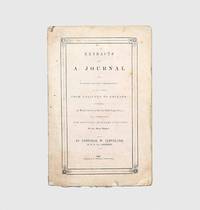
1847réf. 189591Deal: Printed by J. Deveson 1847. The battlefields of the Punjab seen from the ranks First and only contemporary edition of this brief but spirited and entirely unembroidered account in the authentic voice of an enlisted man. The 31st were one of the most heavily engaged units of the conflict seeing action at Mudki Ferozeshah Aliwal and Sobraon. Scarce with just two locations traced BL and Boston Public Library unrecorded at auction. Vivid vignettes from the battle front are set within the context of a diary account of an uneventful voyage back from Calcutta to Gravesend. Cleveland opens on 23 October 1846 "weather continues fine and the wind steady" reminiscing of Moodkee "the first battle in which I had even been engaged I have often since endeavoured to imagine what my feelings were on that occasion but the hurry and confusion of that Action prevented the exercise of thought". One thing remains clear in his memory "So confident were our Officers and men that the Sikh Army was composed of nothing but a rebel mob that they did not believe they would hazard an engagement. this entire ignorance of the Sikh Army it is wonderful that all were alike involved even the Governor and Commander in Chief each of whom it should fairly be supposed ought to have been possessed of correct information on so important a subject". Of Ferozeshah he recalls the "lurid flames" of the burning Sikh camp "gleaming through the darkness diffusing sufficient light to make the horrors of our situation more apparent" the shot from the Sikh guns falling "among us by far to thick and fast to be agreeable". The situation only saved by what Cleveland - along with Sikh commander Tej Singh - read as the Commander in Chief's order for the cavalry to make a "false charge" which was in fact the withdrawal of the Horse Artillery desperately short of ammunition to Ferozepur to resupply while under cavalry escort. At Aliwal the 31st were on the extreme right of the British line "When we had arrived within a short distance of the village under heavy fire from the enemy who were waving their swords and cutting a great variety of menacing capers in front of us General Smith galloped up and said 'take that village boys and carry it along with you' when the whole regiment broke into a rapid double which they did not abate until they had cleared the village captured the guns upon its left and caused the whole of the enemy's left flank to run for dear life. We now quietly took possession of the whole of their camp equipage ammunition and stores; and having amply supplied ourselves. we turned in for the night near the banks of the Sutlej". And so to Sobraon "At 9 A. M. the battle had reached its warmest point - shot and shell were then whizzing through the air in rapid succession. on their fearful missions of mischief. from the muzzles of 150 pieces of ordnance - about half past 9 a low rumbling sound was heard resembling distant thunder which was caused by the report of musquetry - as the infantry ad passed the Enemy's breastworks. thus concluded the most severe contest in the annals of Indian warfare and not a second to any fought in Europe with the exception of Waterloo". Following the ratification of the Treaty of Lahore the 31st marched to Calcutta and embarked for home Cleveland composing this very personal and telling NCO's witness to world-changing events while under weigh. Octavo. pp. 24. Original thin paper printed wrappers. Wraps rubbed and soiled with some minor chips and splits at the edges no loss of text creases to the corners; pale toning and some finger-soiling to the text; but a well preserved copy very good. paperback
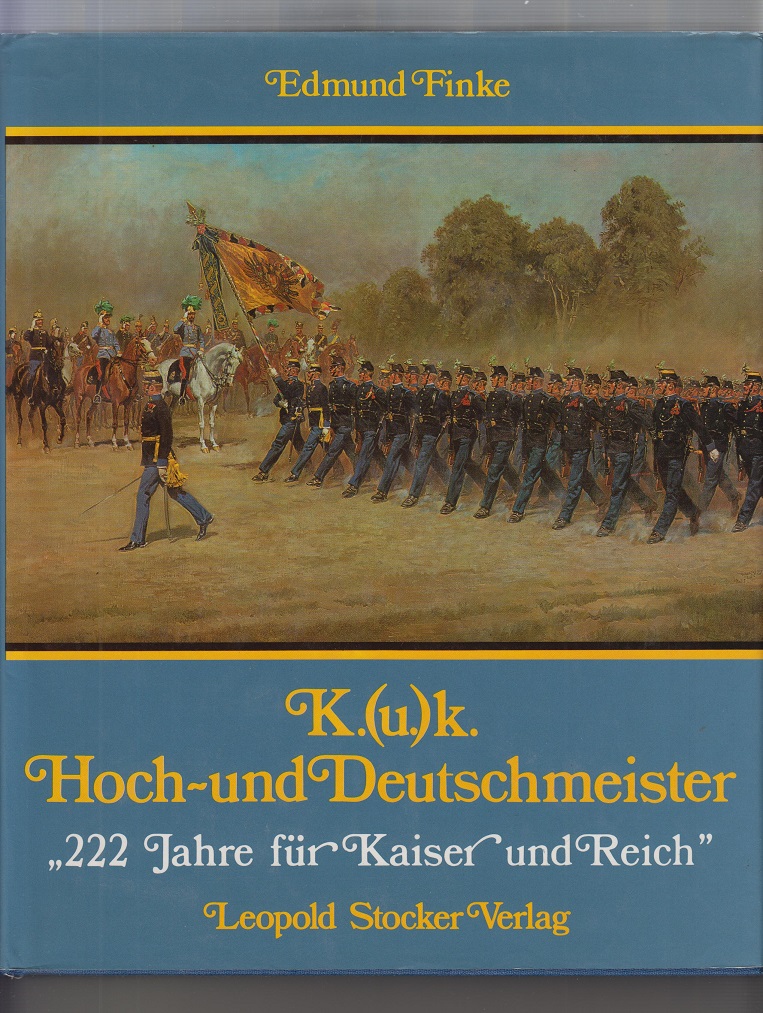
1978réf. MILI1658Graz, Stocker 1978. 4°. 359 S. u. 30 Taf., 138 Abb., Faks. u. Kartenskizzen, OLn. mit OUmschl. Tadelloses Exemplar. Der Grazer Stocker Verlag gilt als Schandfleck des österreichischen Verlagswesens: Der Das ?Familienunternehmen Stocker? ? 1917 vom Nationalsozialisten Leopold Stocker gegründet ? spielt bis heute eine wichtige Rolle für die rechtsextreme Szene in Österreich und Deutschland. Seit 2005 hat der Leopold Stocker Verlag bereits drei Prozesse mit insgesamt vier Klagen gegen die Gruppe Mayday Graz wegen kritischer Veröffentlichungen geführt. Alle Klagen wurden nacheinander abgewiesen: Die Gerichte urteilten z.B., dass es ein zulässiges Werturteil sei, das 'Familienunternehmen Stocker' als 'im Dienst des Rechtsextremismus' zu bezeichnen. Weiters steht nach gültigem Gerichtsurteil fest, daß bei den Bezeichnungen rassistisch, antisemitisch und rechtsextrem in Zusammenhang mit bestimmten Verlagspublikationen es sich um zulässige Werturteile handle, die sich auf ein bestimmtes Tatsachensubstrat stützen können
1978réf. 67911Graz, Stuttgart : Leopold Stocker., 1978. 359 S. : zahlr. Ill. 4°, Leinen
1950réf. 1109571950 Editions A. & P. Jarach - 1950 - In-4, broché, couverture rempliée - 273 p. - iconographie in et hors-texte en N&B
réf. 2091202133000431Shuho N.A. Soft Cover. Fine. Number of books: 7 Shuho paperback
1982réf. 2091202133403496Shinodayama Cannon Four Association A5 version 1982. Soft Cover. Fine. Number of pages: 1159p Size: 22cm Shinodayama Cannon Four Association A5 version paperback
19548vo., First Edition, with portrait frontispiece and endpaper maps, some mild offsetting from fold-ins to free endpapers; navy cloth, gilt back, a very good, bright, clean copy in unclipped dustwrapper, the latter chipped at head and tail of backstrip. A PRESENTATION COPY FROM THE AUTHOR WITH HIS SIGNED HOLOGRAPH INSCRIPTION ON TITLE. The epic stand of 1 Glosters on Hill 235 at the eastern crossing of the Imjin River. SIGNED COPIES ARE EXTREMELY SCARCE.
19548vo., First Edition, with portrait frontispiece and endpaper maps, some mild offsetting from fold-ins to free endpapers; navy cloth, gilt back, a very good, bright, clean copy in dustwrapper. The epic stand of 1 Glosters on Hill 235 at the eastern crossing of the Imjin River.
1978Roy. 8vo., First Edition, with 30 plates on 16 and 11 maps in the text; original red cloth, backstrip lettered in silver, a near fine copy in unclipped dustwrapper. The most detailed dedicated tribute to Gough's Squadron. The work is dedicated to Gough and all proceeds donated to the Airborne Forces Security Fund. Includes awards & decorations, extensive bibliography and list of sources. Extremely scarce, especially with the author's signature. EXTREMELY SCARCE. Enser, p.13.
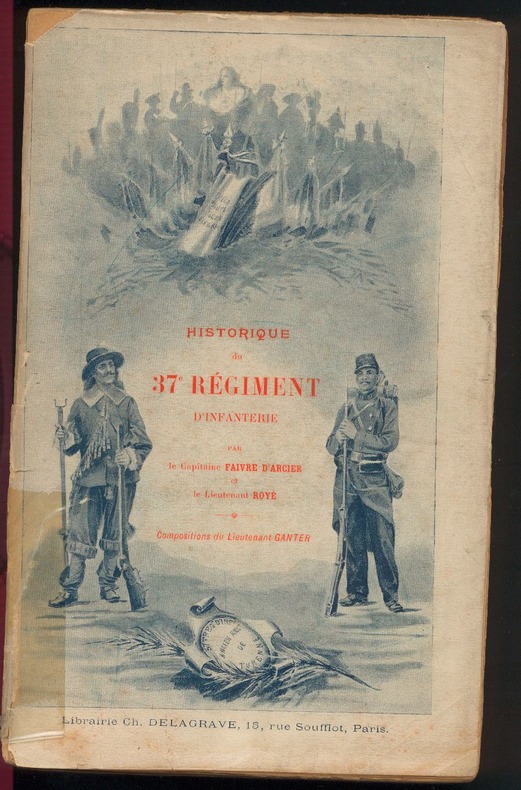
réf. 20992Paris 1895 à la librairie CH. Delagrave ;in 8 (23 x 14 cm),broché, VI + 344 pages. Ouvrage illustré de 4 compositions monochromes en bleu hors-texte sous serpentes réalisées par le Lieutenant Ganter. Couverture illustrée conservée, une charniere en partie scotchée,petit manque a un coin
réf. ORD-20382Francfort & Leipsic. 1761. S.l. 1767. Paris. Lacombe. 1771. 3 ouvrages en 1 volume in-12 (104 x 168 mm) plein veau brun scarifié, dos à 5 nerfs très orné, pièce de titre maroquin rouge, gardes peignées, tranches rouges, ex-libris manuscrit de Joannes Carolus Ledesma, 13 planches repliées pour le 1er titre, le dernier ouvrage se divise en 3 parties: 1 Traité de la Cavalerie de Xénophon, 2: Essai sur la Théorie de l'Éuitation, 3: Discours sur les rapports de l'équitation avec la Physique, la Géométrie, la Méchanique et l'Anatomie. 3ff., 164, (4)-132 - VI, 216 pp. Dos de reliure un peu râpé, papier du dernier ouvrage très lgt bruni mais bon exemplaire, exempt de rousseurs.
1919réf. 0011016Coblenz Germany Benton Pa: Occupied Germany Coblenz Benton PA 56th Infantry. Good. 1919. Softcover. On offer is a superb pocket notebook kept by an American soldier in occupied Germany in the months immediately following World War One WW1. The author of this notebook is Ezra Skow. Little is known of Skow's early life. He was born in 1892 and enlisted in the U. S. Army in about September 1918 at the age of 25 or 26. Burial records in Benton PA indicate that he was attached to the 156th Infantry Regiment. However there was no 156th Infantry in the United States Order of Battle in WWI. In his notebook Skow records that he served in the 56th Infantry. This accords with the record of service of the 56th Infantry Regiment. The 56th Infantry Regiment was a regular infantry regiment in the United States Army. Its roots date back to the American Civil War where it served in the North's Army of the Potomac. It originated from personnel of the 17th Infantry Regiment in 1917 and fought in the region of Metz during World War I. In April 1919 a battalion of the 56th entered Metz as an honour guard for the Commanding General of the American Expeditionary Force John J. Pershing. Skow was married before joining the army. His wife Laura lived until 1987 passing away at the age of 93. Skow himself died in 1947 at the age of 57. His entries take the form of letters to his wife. They cover the period Jan 11 1919 through June 25 1919. In his diary Skow records several of the towns and cities in which his unit was stationed including Metz France Mulheim Metternich and other places in and around the city of Coblenz Germany. His entries speak about the day-to-day existence of a private soldier: "This is some place. Gee I wish I was home now. I would tell you a lot. The women are carrying their things on their back when they go to the store" Jan 13; ". I wrote you a letter tonight and send you the worlds clock too as I saw that today over at the city. And I was to see Charley Chaplin in the front line trenches and it was good. I would like to see you now. . I sit here at a Dutch table now writing notes and the Dutch man is reading the paper and his wife is talking out of the front window and you can see they are like but not quite as bad. Your Husband Ezra Skow xxxx" May 2; ". I was over to Coblenz today and wrote you a letter. And it is a fine day. I didn't do very much today. But believe me I would love to be home to loved you again. As I am getting tired of this life and will be able to tell you all about it when I get home . Your most lonely husband this side of the water. Ezra Skow" May 12. On June 4th he writes that he has learned his unit is going to be leaving the Coblenz area and hopefully heading home to the United States. In fact this is exactly what happened. By June 23rd he is in Fort Dix NJ and on the 25th he is out of the army. : ". I am out of the army now. Coming home to you dear." June 25. There are several other pages of note which include among other things the names and addresses of several other men - likely men he met and befriended. For a historian this is an outstanding piece of primary source material. It details the very ordinary day-to-day life of a soldier in WWI capturing his duties and his longing for home. For a regimental historian this fills in details of the history of their regiments. For a genealogist it offers some links to other Americans who served in that regiment. Measuring 5.25 inches by 3.5 inches this notebook contains 72 pages and is 85% complete. The book is in good condition. The binding and pages are intact. His handwriting is cramped but generally legible. ; Manuscripts; 24mo 5" - 6" tall; 72 pages; Keywords: handwritten manuscript document letter autograph writer hand written documents signed letters manuscripts historical holograph writers autographs personal memoir memorial antiquité contrat vélin document manuscrit papier antike brief pergament dokument manuskript papier oggetto d'antiquariato atto velina documento manoscritto carta antigüedad hecho vitela documento manuscrito papel 56th Infantry World War One US Army American soldier Occupied Germany . Occupied Germany, Coblenz, Benton, PA, 56th Infantry paperback
1919réf. 000114Post War Germany 1919. Very interesting and intriguing diary once one gets used to the author's scrawl. Containing approximately 29 pages written on both sides Ezra Skow writes one sometimes two days per page in this notebook style journal. Many entries are letter-style to his wife and signed at the bottom with his name and location. Many times he closes with XXX. May 19 writing of Coblenz and Berlin he closes: "I would just like to love you Dear. This is some life to be in and I don't know when I am coming home.I think next month." Another note on the inside front cover dated May 15th: "One year and 5 months since we have been married and have been in the army over 9 months now." Book shows general light wear and is about 3 1/4 x 5 1/4 inches. There is a sleeve for a pencil which it seems is long gone. . Good. 24mo - over 5" - 5¾" tall. Manuscript. unknown
réf. 2395New York: The Regiment; Printed by the Republic Press 1894. . 4to white stiff wrappers has been folded; front printed in gold; back No other copy located. A glossy production by this very up-market social regiment. A loan exhibition of 103 paintings including a number of Thomas Nast's work and some by Chase [New York: The Regiment; Printed by the Republic Press, 1894. unknown books
First edition, 4to, xvii, [1], 598pp., frontispiece mounted photograph of Queen Victoria, illustrs., orig. blue publishers cloth, bevelled boards decorated in gilt, nick to spine, had and tails a little frayed. Provence: Sir Francis G. Manningham Boileau's copy 'Bought of the author, 25/- 1892'.
20128vo., First Edition, with plates and maps; brown cloth, backstrip lettered in silver, a fine copy in unclipped dustwrapper.
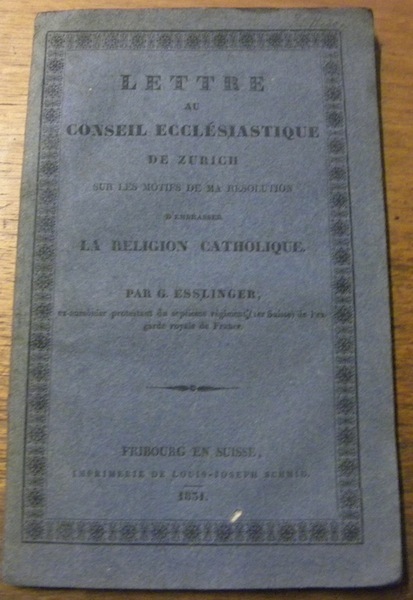
réf. 25509Fribourg, Louis-Joseph Schmid 1831, 195x125mm, 38pages, broché. Rousseurs.
1825réf. 7151EBErlangen, Carl Heyder, 1825. Klein-8°. 18 cm. 175 Seiten. Halblederband der Zeit mit goldgeprägtem Rückentitel auf rotem Lederschildchen und rotem Schnitt. [2 Warenabbildungen] (= Wahrhafte und merkwürdige Schicksale reisender Personen, als Denkmale einer göttlichen Vorsehung. 1. Bändchen).
réf. 15927Reliure éditeur avec jaquette - 16.5 x 25.5 -251 pp - 1985 - édition France Loisirs - illustrations -
réf. 12219Without place and date 1960s. The account describes events in April and May 1945. 13pp. foolscap 8vo. Paginated 1 to 13 and signed at the end 'Ernie Wilmott'. On seven leaves stapled into grey covers with the title 'The Last Month' typed on the front cover. In good condition in worn wraps. The account commences: 'There had been gun fire from the west and the south for the last three days. Friday the 13th April 1945 the usual officials did not come to fetch the men but a little later than usual the Gaschwyz sic column was called so we assembled and left for work about 20 of us. There was a lot of activity in the station yard German military vehicles were coming and going and a contingent of unarmed Russian fatigue men were on parade.' A typically vivid passage reads: 'In the morning of the 24th April I heard chaps reporting prisoners passing through and our guards not interfering a lot of Indians were going through without any guards. Chaps with kit got up early because of being cold. I got up after seven and went outside and saw the Indians going through. A column of Russian prisoners appeared with guards and were halted just outside. The German guards were standing about in groups talking to each other and taking no notice of the prisoners some of whom were already making off. A man got up on a cart and addressed us he said he couldn't advise us to go he couldn't advise us to stay the German commandant had said that if we stayed he would do his best to obtain food for us there was a horse dying in the next village and he had the first refusal of it if it expired and we should have it.' The account ends on Wilmott's return: 'At London I bid my comrades of the last 2 years goodbye and got on a train at Paddington. It was a noisy journey ex P.O.W.'s one side of the compartment civilians the other we all talked at once. At Bristol I had to catch a bus home and suddenly realised I had to pay the fare it was more than 3 years since I had paid a fare anywhere.' The covering Autograph Letter Signed by Batt is signed 'Jack' on letterhead of 1 Churstonville Court 1 Overbury Avenue Beckenham Kent. 1p. 4to. Undated and with recipient's name not given. 'The writer Ernie Willmott sic spoke 4 Languages and was learning Russian whilst POW in Germany. As he spoke German he was chosen as Camp Leader of our working Camp at Gaschwitz-Leipzig. Our Common path of experience starts at Campo 53 Page 69 - from there we were together unitl the war ended or shared similar experiences.' In a postscript he adds that Wilmott 'was not in Campo 66 at Capua but in hospital at Caserta'. Also present is a Typed Letter Signed to Batt from 'Charles'. On letterhead of 99 South Eden Park Road Beckenham Kent. 21 June 1974. 1p. 8vo. The 'article on Sidi Nsir' brings back 'many memories' and he is enclosing 'The Story of 46 Division'. Without place and date (1960s?). The account describes events in April and May 1945. paperback
réf. SONG0944413439Used: Good unknown
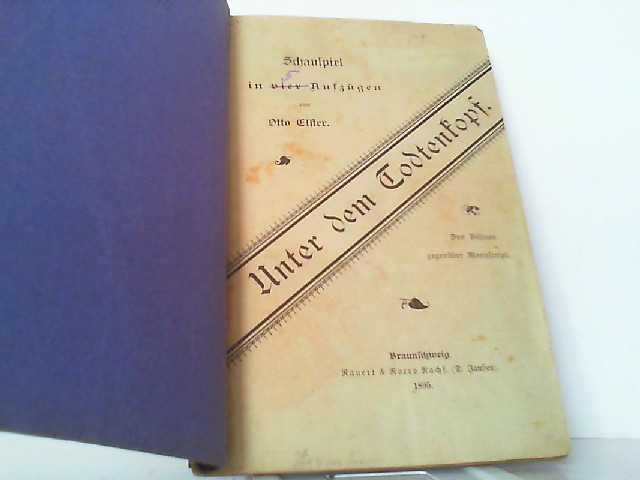
1895réf. 187643Braunschweig, Nauert & Rocco Nachf., 1895.
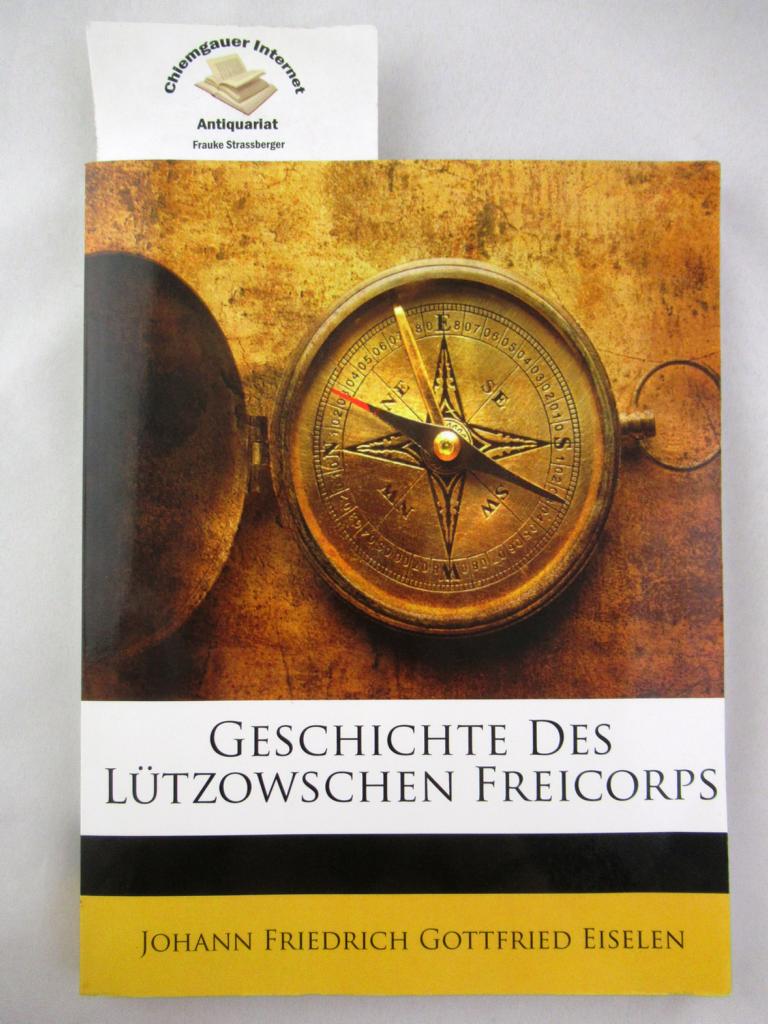
réf. 273943Nabu Public Domain, ohne Jahr. 190 Seiten. Originalbroschur. 22cm