1 139 résultats
19198vo., First Edition, on laid paper, with 5 double-page maps on japon, free endpapers browned from fold-ins; original maroon cloth, upper board framed in blind, gilt back (lettering faded but entirely legible), a very good, clean copy. Written on active service with the Dorsetshire Regiment, these are the author's personal reminiscences of service in Egypt, Mesopotamia and Palestine. Scarce in this condition. Not recorded by Enser.
20128vo., First Edition, with plates and maps; brown cloth, backstrip lettered in silver, a fine copy in unclipped dustwrapper.
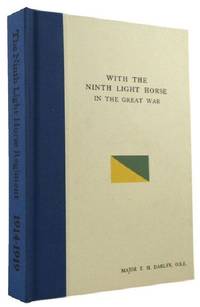
2009réf. 103772Brisbane: A. Green 2009. Foreword by General Sir Harry Chauvel. Pp. viii208last blank double sided frontispiece and 26 plates appendices including rolls; post 8vo; quarter cloth papered boards lettered in black; A. Green Brisbane 2009. Facsimile edition limited to 400 numbered copies. See Tregellis-Smith 279. First published by The Hassell Press Adelaide 1924. A. Green unknown
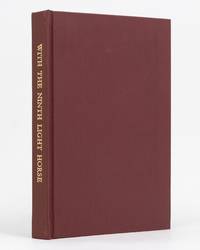
réf. 129496No Place: No Publisher. Hardcover. Fine. No Place No Publisher circa 1990s undated xerographic facsimile edition/ 1980s facsimile/ 1924. Octavo viii 206 pages plus 28 pages of plates. Binder's cloth lettered in gilt on the spine; small ownership label to the front pastedown; a fine copy. A xerographic facsimile read photocopy produced from a copy of the Burridge facsimile edition circa 1980s. See Dornbusch 384; Fielding and O'Neill page 233; Trigellis-Smith 279. No Publisher hardcover
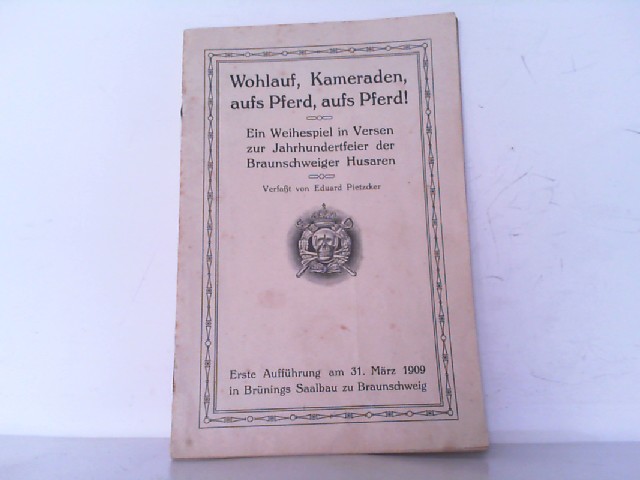
1909réf. 32484Braunschweig, Westermann, 1909. Broschiert
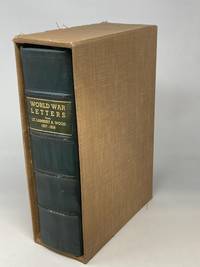
1918réf. 88062SELF PUBLISHED 1918. Manuscript. Very Good Plus. Half-bound dark green morocco over light brown woven linen. A large sturdy hand-crafted book with sewn signatures 11 3/4 in. x 8 in. x 3 in. housed within a sturdy wooden slipcase covered with woven linen matching the cover of the book itself. Letters envelopes official documents etc.are displayed behind within clear plastic "jackets" each mounted to individual pages of thick card stock. The large tipped in photo shows some spotty residue and the slipcase shows a bit of edgewear. The archive consists of 77 detailed letters written by Lieutenant Wood 9th Infantry Regiment 2nd Division who was commanding his machine gun company and was killed during combat July 18 1918 southeast of Soissons France. A collection of remarkable letters reflecting an extraordinarily deep and philosophical grasp of both the lofty purpose justification and horrors of war "I am fighting for our very civilization" with none of the details left out "I have seen men die smiling." or "I haven't been out of my clothes for 30 days." Roughly half of this notable 77-letter archive are addressed to both parents with some addressed individually to "Mother" "Father" "Dad" and the other half -- 36 letters -- addressed to M____S____ his sweetheart. Woven throughout so many of the letters is Lambert Wood's profound and unstoppable sense of duty and responsibility and consistent view of himself as a crucial component of a much larger grand effort than merely his individual self -- one utterly dependent upon his steady and ferocious all-in participation. Further as an officer he felt his comportment had to be visibly far and above that required of the ordinary soldier - on a number of occasions he mentioned to M____S____ depriving himself of sleep and duly awarded leave - because he felt compelled to set an example -- yet with no trace of egoism or grandstanding; Lambert Wood was fighting the good fight the real fight and coming to realize and mentioning that it was the big brave two-fisted men who were the wons who would win this very tough war. Apparently he had encountered those who were ambivalent about what was required for a war effort. In his absolutely devoted deep and very sweet letters to M____S____ he explained both the logistics of his various responsibilities and placements -- instructor in Gas warfare for example -- and seldom neglected to delve deeper into the reasons behind waras if in explaining it to his beloved M____S____ he was also explaining it to himself; the young man was clearly a highly articulate writer who was able - at 22 and 23 - to clearly and convincingly convey the American sense of righteousness against a loathesome enemy. Somewhat alarmingly reading through the letters one sees this soldier-leader's growing -- it must be called "joy" for he himself terms it so in this and other synonymous words in KILLING the enemy the cold and dispassionate"otherizing" which steadily grows to supplant his still youthful and natural 23-year old boyish innocence and permits the taking of human life behind a script of justification. Lambert Alexander Wood age 23 was killed in action on July 181918 southeast of Soissons France while in command of his machine gun platoon on a flank movement against an enemy group which was enfilading the advancing infantry line 9th Infantry Regiment 2nd Division. Reading through this remarkably articulate archive one follows along the horrific yet fascinating path through the eyes of an educated and perhaps privileged son of Portland Oregon gradually transform into a focused and efficient killing machine a capable and effective instructor and leader of other men who had no choice but becoming the same if they were to survive. Their unit was the first in the actual trenches. Wood was the son of Dr. William Lee Wood a physician and Elizabeth Lambert Wood a Northwest author best known for her adventure stories for boys. His grandfather was J.H. Lambert Oregon pioneer horticulturist and originator of the Lambert Cherry. He grew up in Portland Oregon. While attending Willliams College in Massachusetts Wood enrolled in the vollunteer pre-enlistment training program in Plattsburgh New York as part of the "Preparedness" movement before actual U.S. involvement in World War I sailing for France in March of 1917. Note: The soldier Lambert Alexander Wood was the son of Oregon/Washington/Arizona author Elizabeth Lambert Wood. Two books comprising excerpts from these very letters were published and are included with the purchase of this letter-archive: The first entitled HIS JOB: LETTERS WRITTEN BY A 22 YEAR-OLD LIEUTENANT IN THE WORLD WAR TO HIS PARENTS AND OTHERS IN OREGON was published in 1936 by the Metropolitan Press of Portland OR. The second which appears to be a reissue but which may contain an edited selection of letters is entitled CERTAIN BRIEF CONCLUSIONS: FROM SELECTED LETTERS OF LAMBERT WOOD was issued by publishers Binfords & Mort Portland OR in 1939 and also printed by the Metropolitan Press in Portland OR. This copy includes the tipped-in photograph of Lambert Wood opposite the titlepage and a tipped-in handwritten presentation slip written and signed by his mother Northwest author Elizabeth Lambert Wood "With the compliments of soldier-author's mother. Elizabeth Lambert Wood". Wood served with the Machine Gun Company 9th Infantry Regiment 2nd Division. unknown
1910réf. 80170Um 1910.
réf. 21533Rouen, saison 1915-1916, 1916-1917. In-8 de 67 pp. & 80 pp.? Nombreuses illustrations Bradel demi-percaline verte, couvertures illustrée en couleurs conservées.
1975réf. 33958Hessisch-Lichtenau, Vogt KG Druckerei + Verlag, 1975. gr. 8°, 293 S., mit zahlreichen s/w Abb., Zeichnungen, Karten, Regalsp. a. Fußschnitt, Bezahlung per PayPal möglich, we accept PayPal, Einb. ger. beschabt, Schnitte angeschmutzt, altersbed. Bräunungen, ger. Gebr.sp., broschiert
1977réf. 33959Hessisch-Lichtenau, Vogt KG Druckerei + Verlag, 1977. gr. 8°, 245 S., mit zahlreichen s/w und farb. Abb., Bezahlung per PayPal möglich, we accept PayPal, Einb. ger. beschabt, Schnitte angeschmutzt, altersbed. Bräunungen, ger. Gebr.sp., broschiert
réf. 40480ABo.J. -- Kl. Fehlstellen unten links (s. Abb.) -- -- Kl. Fehlstellen unten links (s. Abb.) --
réf. 007094Helvetius ; Claude-Marie Guyétant ; Lamy, ancien soldat du régiment d'Auvergne ; Joseph Mathon de la Cour ; Germain-Hyacinthe de Romance de Mesmon ; « Mélanges » contenant, dans l'ordre des auteurs : 1. Le Bonheur, poème en six chants ; 2. Le Génie vengé ; 3. Précis historique sur le régiment d'Auvergne depuis sa création jusqu'à présent. Précédé d'une épitre aux manes du chevalier d'Assas ; 4. Par quelles causes et par quels degrés les lois de Lycurgue se sont altérées chez les Lacédémoniens jusqu'à ce qu'elles ayent été anéanties ; 5. De la Lecture des romans, fragment d'un manuscrit sur la sensibilité. Volume in-8. Londres, s.n., 1772. [4]-CXX-116p. La Haye & Paris, s.n., 1780. [2]-16p. Clostercamp, s.n., 1783. front.-51p. Lyon & Paris, Durand & Vallat, 1767. [4]-100-[2]p. Edition originale posthume de la pièce d'Helvetius, sans le feuillet d'errata qui manque souvent. La longue préface est du à Saint-Lambert qui a retrouvé la pièce dans les papiers d'Helvetius. Edition originale de la pièce de Guyétant. Né en 1748, il publia cette pièce à la louange de Voltaire puis devint le secrétaire du marquis de Villette. Edition originale rare du texte sur le régiment d'Auvergne et Louis d'Assas, célèbre chevalier mort lors de la bataille de KlosterKampen en 1760, bien complet de son frontispice dépliant. Cet ouvrage ne se rencontre que très rarement et a bénéficié de deux tirages qui ne diffèrent que par le nom de l'auteur sur la page de titre (L*** au lieu de Lamy comme sur le nôtre). L'ouvrage est publié tardivement (23 ans après la mort d'Assas) et s'inscrit, après Voltaire en 1769, dans une lignée d'ouvrages sur Assas et le régiment. Le frontispice représente « Le Curtius Français ou la mort du chevalier d'Assas ». En effet, la victoire eut lieu car avant de mourir, le chevalier aurait eu le temps de dire : « A moi, l'Auvergne, c'est l'ennemi ! » (version contestée). Seuls deux exemplaires répertoriés sur CCfr et WorldCat (BnF & BM Lyon - ce dernier numérisé sur googlebooks). L'ouvrage contient quelques notes marginales d'époque, à l'encre. Edition originale de l'ouvrage de Mathon, couronné par l'Académie des Inscriptions. Le dernier ouvrage est en première édition séparée d'un texte de Mesmon paru dans le Journal de Lecture. Reliure demi-basane, dos à nerfs orné, pièce de titre maroquin, tranches rouges, petits défauts. Bon exemplaire avec un texte rare.
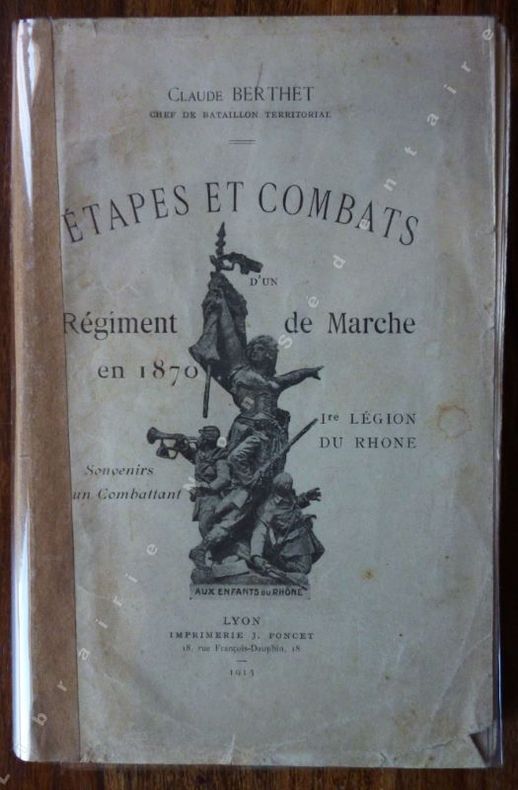
réf. 13144Lyon, Imprimerie J.Poncet, 1913 - In-8 couronne, broché, 216 pages, PUIS 22 pages pour le " Supplément à la première édition des étapes et combats d'un régiment de marche en 1870".Photographie frontispice du " Monument des enfants du Rhône", 14 gravures hors texte sur papier couché - L'exemplaire, inélégant, a été restauré et comporte sur la tranche de titre une bande de kraft de renforcement, la couverture a un petit manque de matière au coin le dos est convenable En revanche la pagination , de bonne qualité initiale, ne présente aucune rousseur Le supplément a été accolé à louvrage après un probable débrochage Ressaut des pages et gauchissement cependant ( Une reliure de cet ensemble serait à prévoir). Envoi autographe de l'Auteur.
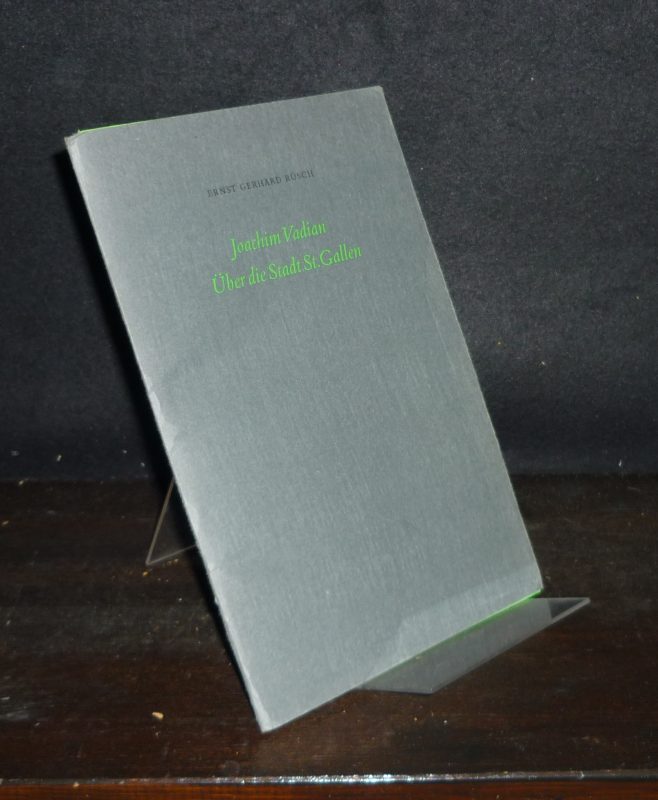
1996réf. 98004St. Gallen: Ersparnisanstalt der Stadt St. Gallen 1996. 33 Seiten. Gr. 8° (22,5-25 cm). Orig.-Broschur mit Orig.-Schutzumschlag. [Softcover / Paperback].