1 185 résultats
1952réf. 0071517Atlanta: Albert Love 1952. First edition. Hardcover. Good/No Jacket. 1952. Hardcover 4to. red cloth. Illustrated throughout in b&w. Good copy: boards soiled and edgeworn; corners worn too. Spine ends worn. Clean and unmarked contents. Albert Love hardcover
1948réf. 052743Austin: 2/5 Australian Armoured Regiment. 1948. Unpagined approx 100pp colour patch. Blue cloth with regimentalbadge in gilt to front. Slightest of flecking to cloth some light toning/foxing to prelims lacking rear free endpaper. Basically a list of members of the regiment with lined pages opposite possibly for autographs. The ownership detail inside front cover has not been completed and there are no signatures throughout. Probably produced for a regimental reunion- no date c1948/50. First Edition. Hard Cover. Near Very Good/None as Issued. Oblong 12mo. 2/5 Australian Armoured Regiment. Hardcover
réf. 15936Reliure éditeur avec jaquette - 17 x 25.5 - 287 pp - 1985 - éditions France Loisirs - illustrations -
1901réf. 229880Berlin, Verlag Salle / Braunschweig F. Bartels, 1901.
20112 vols., 8vo., First Edition, with plates and maps; black cloth, gilt backs, a fine set in unclipped dustwrapper. Detailed account of 1 Bn Bedfordshire Regiment collating both official and personal sources. The set comprises Vol. I: Mons to the Somme; Vol. II: Arras to the Armistice.
1906Oblong roy. 4to., First Edition, with title in red and black, text and captions in red, blue and black, 34 splendid large plates in photo-collotype and full-page musical score in blue; original red cloth, upper board ruled and blocked with regimental badge in gilt, expertly recased, BUT WITH SOME AGE- OR DAMP-DAMAGE TO 22 OF THE LATER PLATES (mercifully restricted mainly to upper blank margins and only materially affecting around ten plates); nevertheless a valuable record and a very scarce work. An unusually lavish production for a single battalion, this work is distinguished by the quality of the plates, which (damage apart) varies from very good to magnificent. The photographs are superbly executed by F. Bremner, photographer, variously of Lahore, Simla & Quetta, and their rendering as collotypes preserves the quite extraordinary detail of faces, uniforms and equipment. The plates include fine portraits of Major-General Frederick Walter Kitchener (Commanding 3rd (Lahore) Division) and Colonel J.C. Yale (commanding 1st Battalion), together with close-ups of the Colours and mess plate. The main body of plates is devoted, of course, to group studies. These include the officers (individually captioned), the battalion on parade, the Colour and colour sergeants (individually captioned), the NCOs (individually captioned), corporals, companies A-H (each company photographed separately), and a fine series of the battalion's various support units, trades and sports teams. An unusual composition is the plate 'Regimental Types' and depicting eight members of the battalion in a variety of uniforms including officer's full dress and OR's marching order. In addition to the plates, there is a detailed account of the battalion's service from Tournay (1794) to its arrival at Lahore Cantonment in 1906, together with pages devoted to regimental marchess. Not the least importance of this work must be as a superbly detailed record of the appearance of a regular battalion of line infantry of the period - crucially, the last phase of Edwardian opulence and before the irreversible changes brought about by the Great War. EXTREMELY SCARCE. IT IS UNCLEAR HOW MANY OF THESE REMARKABLE PORTFOLIOS WERE PRODUCED; CERTAINLY NOT MANY, AND EVEN FEWER CAN HAVE SURVIVED. Sutcliife p.103; not recorded by White (1965).
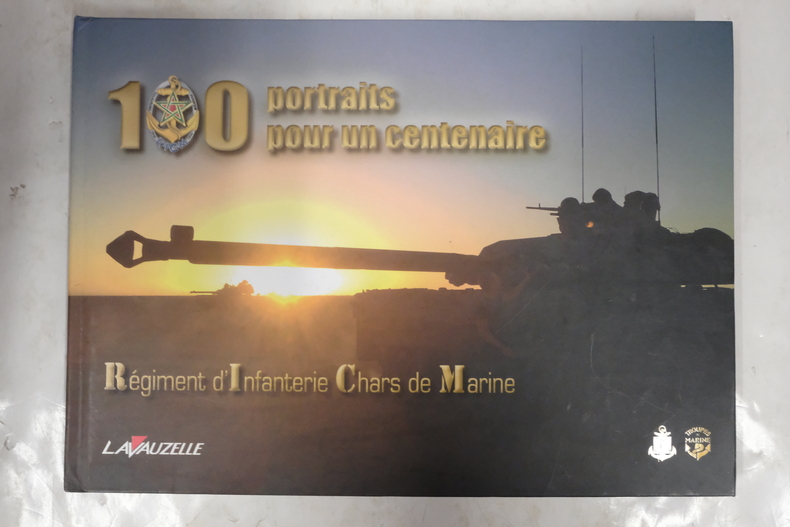
1999réf. 117908Lavauzelle 1999 Lavauzelle, 173p, 1999, in-4 reliure skivertex éditeur avec jaquette. Bon état général.
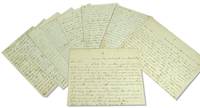
1919réf. 000114Post War Germany 1919. Very interesting and intriguing diary once one gets used to the author's scrawl. Containing approximately 29 pages written on both sides Ezra Skow writes one sometimes two days per page in this notebook style journal. Many entries are letter-style to his wife and signed at the bottom with his name and location. Many times he closes with XXX. May 19 writing of Coblenz and Berlin he closes: "I would just like to love you Dear. This is some life to be in and I don't know when I am coming home.I think next month." Another note on the inside front cover dated May 15th: "One year and 5 months since we have been married and have been in the army over 9 months now." Book shows general light wear and is about 3 1/4 x 5 1/4 inches. There is a sleeve for a pencil which it seems is long gone. . Good. 24mo - over 5" - 5¾" tall. Manuscript. unknown
1919réf. 0011016Coblenz Germany Benton Pa: Occupied Germany Coblenz Benton PA 56th Infantry. Good. 1919. Softcover. On offer is a superb pocket notebook kept by an American soldier in occupied Germany in the months immediately following World War One WW1. The author of this notebook is Ezra Skow. Little is known of Skow's early life. He was born in 1892 and enlisted in the U. S. Army in about September 1918 at the age of 25 or 26. Burial records in Benton PA indicate that he was attached to the 156th Infantry Regiment. However there was no 156th Infantry in the United States Order of Battle in WWI. In his notebook Skow records that he served in the 56th Infantry. This accords with the record of service of the 56th Infantry Regiment. The 56th Infantry Regiment was a regular infantry regiment in the United States Army. Its roots date back to the American Civil War where it served in the North's Army of the Potomac. It originated from personnel of the 17th Infantry Regiment in 1917 and fought in the region of Metz during World War I. In April 1919 a battalion of the 56th entered Metz as an honour guard for the Commanding General of the American Expeditionary Force John J. Pershing. Skow was married before joining the army. His wife Laura lived until 1987 passing away at the age of 93. Skow himself died in 1947 at the age of 57. His entries take the form of letters to his wife. They cover the period Jan 11 1919 through June 25 1919. In his diary Skow records several of the towns and cities in which his unit was stationed including Metz France Mulheim Metternich and other places in and around the city of Coblenz Germany. His entries speak about the day-to-day existence of a private soldier: "This is some place. Gee I wish I was home now. I would tell you a lot. The women are carrying their things on their back when they go to the store" Jan 13; ". I wrote you a letter tonight and send you the worlds clock too as I saw that today over at the city. And I was to see Charley Chaplin in the front line trenches and it was good. I would like to see you now. . I sit here at a Dutch table now writing notes and the Dutch man is reading the paper and his wife is talking out of the front window and you can see they are like but not quite as bad. Your Husband Ezra Skow xxxx" May 2; ". I was over to Coblenz today and wrote you a letter. And it is a fine day. I didn't do very much today. But believe me I would love to be home to loved you again. As I am getting tired of this life and will be able to tell you all about it when I get home . Your most lonely husband this side of the water. Ezra Skow" May 12. On June 4th he writes that he has learned his unit is going to be leaving the Coblenz area and hopefully heading home to the United States. In fact this is exactly what happened. By June 23rd he is in Fort Dix NJ and on the 25th he is out of the army. : ". I am out of the army now. Coming home to you dear." June 25. There are several other pages of note which include among other things the names and addresses of several other men - likely men he met and befriended. For a historian this is an outstanding piece of primary source material. It details the very ordinary day-to-day life of a soldier in WWI capturing his duties and his longing for home. For a regimental historian this fills in details of the history of their regiments. For a genealogist it offers some links to other Americans who served in that regiment. Measuring 5.25 inches by 3.5 inches this notebook contains 72 pages and is 85% complete. The book is in good condition. The binding and pages are intact. His handwriting is cramped but generally legible. ; Manuscripts; 24mo 5" - 6" tall; 72 pages; Keywords: handwritten manuscript document letter autograph writer hand written documents signed letters manuscripts historical holograph writers autographs personal memoir memorial antiquité contrat vélin document manuscrit papier antike brief pergament dokument manuskript papier oggetto d'antiquariato atto velina documento manoscritto carta antigüedad hecho vitela documento manuscrito papel 56th Infantry World War One US Army American soldier Occupied Germany . Occupied Germany, Coblenz, Benton, PA, 56th Infantry paperback
1976réf. 28760Paris Robert Laffont 1976 In-8 366 pp
réf. 3727709New York: Published for the Seventh Regiment Athletic Association by F.M. Crossett Co. “F” 156 Fifth Avenue 1896. 4 60pp. Program. 9½ x 6¾ inches. Color illustrated wrappers; stapled. Half tone illustrations from photographs; ads. Vertical center crease; rubbing to spine with some separation to wrappers at the head; still very good. Unrecorded 1896 program for New York’s Seventh Regiment’s annual annual athletic games competition held at the regiment’s Park Avenue armory. The illustrated program comprises a roster of the officers of the Seventh Regiment Athletic Association and the event’s floor committee; an outline of the regiment’s training practices; the order of the 30 track and field events; a floor-plan or map of the armory’s indoor parade floor indicating starting points and finish lines ; record times for each event; and a complete list of the officers and soldiers entered in each event and the regimental company to which each belonged. Half tone illustrations depict the Seventh Regiment Athletic Association’s officers the regimental line and its colors training exercises the Park Avenue Armory and the baseball teams of both the regiment and United States Military Academy West Point. Competitive events included runs some handicapped of various distances ranging from 75 yards to 1000 yards hurdle races an eight-lap relay race a shot putting event safety bicycle races and a running high jump competition. Less formally athletic events included a “Roman Chariot” race “Four men and driver the latter to appear in fancy costume” a sack race a potato race and a three-legged race. New York’s Seventh Regiment was comprised of members of New York’s social élite. The regiment was formed before the American Civil War assuming its present name in 1847 as the Seventh Regiment of Infantry National Guard New York State Militia. The color cover illustration depicts the regiment’s unit insignia comprising a circular blue garter inscribed with the motto “Pro Patria et Gloria” For Country and Glory the number “7” the initials “NG” National Guard on a field of red and a winged helmet hanging below. No copies in OCLC. unknown
1862réf. 72838np: np 1862. Civil War letter archive comprising 78 chronologically arranged letters the majority from Corporal Christopher C. Mead of the 12th New Jersey Regiment to his wife Hannah dated November 12 1862 to May 29 1864. Two letters comprise correspondence between Christopher and Hannah in March and April 1864; Hannah authored two additional letters in May 1864. Three letters are incomplete. Most bear penciled numbers on the front apparently added by a previous handler. The correspondence is generally legible though some letters have faded more than others; overall the paper is in good condition. The archive also includes three undated and unsigned letter fragments; an unsigned letter dated June 18 1863; a September 16 1862 letter addressed to "Uncle Christopher" concerning family matters accompanied by a note reading "Mrs. Hannah Mead Woodstown Salem Co. New Jersey Please forward"; and a four-page indenture dated 1811 and signed by James Mead. The most striking letters are Corporal Mead's fist hand account at the Battle at Gettysburg with vivid description of Picket's charge written on July 6th. Shortly after Pickett's Charge at Gettysburg Mead. an active participant in the battle. writes his wife Hannah: ".The next day was the severest of the fighting. Skirmishing was kept up until about noon when the rebels opened with about 80 pieces of artillery upon us which was kept up for about 3 hours when they succeeded in silencing one of our batteries; the artillery fight which was about a half mile apart ours being on a hill theirs masked in the woods the ground between us was lower than either of the artillery positions. After they had succeeded in silencing in silencing the battery they began to pour out of the woods in 3 lines of battle and a line of skirmishers in advance of them. In all 18 reg's strong approaching our front they made a splendid approach with their colors flying in the breeze. I was about the center of our line at the point of which they were approaching and had a fair view of them although they had silenced our battery. Thanks be to God of our Nation we had more in reserve for them. Well charged with great and canister shot which was opened upon them with terrible effect. But as their ranks were terribly thinned by the artillery fire yet they closed up quickly their ranks and marched on like brave determined men to accomplish their purposes. On they came driving our skirmishing line before them like so many frightened sheep. Although they fought well until they saw there was no chance then they fell back quickly as they possibly could; and as soon as the rebs came in range of our guns of our line of battle which laid behind piles of rails and stones four deep we opened on them and they fell like grain before the reaper which nearly annihilated them and all that came as far as our line of battle came as prisoners and of the 18 stand of colors they so nobly brought out only one seen to go back." Letter from Gettysburg recounts the Battle of Pickett's Charge. During Pickets Charge Mead writes "But as their ranks were terribly thinned by the artillery fire yet they closed up quickly their ranks and marched on like brave determined men to accomplish their purposes. On they came driving our skirmishing line before them like so many frightened sheep. Although they fought well until they saw there was no chance then they fell back quickly as they possibly could; and as soon as the rebs came in range of our guns of our line of battle which laid behind piles of rails and stones four deep we opened on them and they fell like grain before the reaper which nearly annihilated them and all that came as far as our line of battle came as prisoners and of the 18 stand of colors they so nobly brought out only one seen to go back." From Longacre page 135 "Several minutes under the storm of Federal bullets reduced Lowrances and Lane's brigades to bloody fragments. A handful managed to reach the wall before they went down riddled with balls. Their comrades at last convinced of the futility of it all began to flee. Many fell dead the moment they turned their backs to the enemy. Others hugged the ground in the hope of surviving the hail of lead long enough to surrender." Pickett's Charge July 3 1863 also known as the Pickett-Pettigrew-Trimble Assault was a major Confederate infantry attack against Union positions under Major General George G. Meade on the final day of the Battle of Gettysburg. Ordered by General Robert E. Lee and directed by Lieutenant General James Longstreet approximately 12500 Confederate soldiers advanced nearly three-quarters of a mile across open ground toward the center of the Union line on Cemetery Ridge. Preceded by a heavy artillery bombardment the assault was met by intense Union artillery and rifle fire and was repulsed with more than 50 percent Confederate casualties. The failed attack effectively ended Lee's invasion of Pennsylvania and forced the Confederate Army's retreat to Virginia. Popularly named for Major General George Pickett whose division formed the center of the assault the charge is often regarded as a major turning point of the Civil War and is associated with the "high-water mark of the Confederacy" referring to the farthest point reached by Confederate forces. Mead writes from Hanover County Virginia late May 1864. Soon after he fought in the Battle of Cold Harbor May 31 - June 12 1864 where Mead was killed. Battle of Cold Harbor May 31-June 12 1864 was a major engagement of the Union Army's Overland Campaign against Richmond. At the crossroads of Cold Harbor roughly ten miles northeast of Richmond General Ulysses S. Grant's Army of the Potomac launched repeated assaults against entrenched Confederate forces under General Robert E. Lee culminating in a devastating attack on June 3. The Union assaults failed to break the Confederate defenses and resulted in more than 17000 casualties. Grant subsequently disengaged crossed the James River and moved toward Petersburg a vital railroad and manufacturing center that guarded the approaches to Richmond. Although Cold Harbor was a costly Union defeat Grant's continued advance ultimately placed Confederate forces under sustained pressure around Richmond and Petersburg. np unknown books
1862réf. 72838np: np 1862. Civil War letter archive comprising 78 chronologically arranged letters the majority from Corporal Christopher C. Mead of the 12th New Jersey Regiment to his wife Hannah dated November 12 1862 to May 29 1864. Two letters comprise correspondence between Christopher and Hannah in March and April 1864; Hannah authored two additional letters in May 1864. Three letters are incomplete. Most bear penciled numbers on the front apparently added by a previous handler. The correspondence is generally legible though some letters have faded more than others; overall the paper is in good condition. The archive also includes three undated and unsigned letter fragments; an unsigned letter dated June 18 1863; a September 16 1862 letter addressed to "Uncle Christopher" concerning family matters accompanied by a note reading "Mrs. Hannah Mead Woodstown Salem Co. New Jersey Please forward"; and a four-page indenture dated 1811 and signed by James Mead. The most striking letters are Corporal Mead's fist hand account at the Battle at Gettysburg with vivid description of Picket's charge written on July 6th. Shortly after Pickett's Charge at Gettysburg Mead. an active participant in the battle. writes his wife Hannah: ".The next day was the severest of the fighting. Skirmishing was kept up until about noon when the rebels opened with about 80 pieces of artillery upon us which was kept up for about 3 hours when they succeeded in silencing one of our batteries; the artillery fight which was about a half mile apart ours being on a hill theirs masked in the woods the ground between us was lower than either of the artillery positions. After they had succeeded in silencing in silencing the battery they began to pour out of the woods in 3 lines of battle and a line of skirmishers in advance of them. In all 18 reg's strong approaching our front they made a splendid approach with their colors flying in the breeze. I was about the center of our line at the point of which they were approaching and had a fair view of them although they had silenced our battery. Thanks be to God of our Nation we had more in reserve for them. Well charged with great and canister shot which was opened upon them with terrible effect. But as their ranks were terribly thinned by the artillery fire yet they closed up quickly their ranks and marched on like brave determined men to accomplish their purposes. On they came driving our skirmishing line before them like so many frightened sheep. Although they fought well until they saw there was no chance then they fell back quickly as they possibly could; and as soon as the rebs came in range of our guns of our line of battle which laid behind piles of rails and stones four deep we opened on them and they fell like grain before the reaper which nearly annihilated them and all that came as far as our line of battle came as prisoners and of the 18 stand of colors they so nobly brought out only one seen to go back." Letter from Gettysburg recounts the Battle of Pickett's Charge. During Pickets Charge Mead writes "But as their ranks were terribly thinned by the artillery fire yet they closed up quickly their ranks and marched on like brave determined men to accomplish their purposes. On they came driving our skirmishing line before them like so many frightened sheep. Although they fought well until they saw there was no chance then they fell back quickly as they possibly could; and as soon as the rebs came in range of our guns of our line of battle which laid behind piles of rails and stones four deep we opened on them and they fell like grain before the reaper which nearly annihilated them and all that came as far as our line of battle came as prisoners and of the 18 stand of colors they so nobly brought out only one seen to go back." From Longacre page 135 "Several minutes under the storm of Federal bullets reduced Lowrances and Lane's brigades to bloody fragments. A handful managed to reach the wall before they went down riddled with balls. Their comrades at last convinced of the futility of it all began to flee. Many fell dead the moment they turned their backs to the enemy. Others hugged the ground in the hope of surviving the hail of lead long enough to surrender." Pickett's Charge July 3 1863 also known as the Pickett-Pettigrew-Trimble Assault was a major Confederate infantry attack against Union positions under Major General George G. Meade on the final day of the Battle of Gettysburg. Ordered by General Robert E. Lee and directed by Lieutenant General James Longstreet approximately 12500 Confederate soldiers advanced nearly three-quarters of a mile across open ground toward the center of the Union line on Cemetery Ridge. Preceded by a heavy artillery bombardment the assault was met by intense Union artillery and rifle fire and was repulsed with more than 50 percent Confederate casualties. The failed attack effectively ended Lee's invasion of Pennsylvania and forced the Confederate Army's retreat to Virginia. Popularly named for Major General George Pickett whose division formed the center of the assault the charge is often regarded as a major turning point of the Civil War and is associated with the "high-water mark of the Confederacy" referring to the farthest point reached by Confederate forces. Mead writes from Hanover County Virginia late May 1864. Soon after he fought in the Battle of Cold Harbor May 31 - June 12 1864 where Mead was killed. Battle of Cold Harbor May 31-June 12 1864 was a major engagement of the Union Army's Overland Campaign against Richmond. At the crossroads of Cold Harbor roughly ten miles northeast of Richmond General Ulysses S. Grant's Army of the Potomac launched repeated assaults against entrenched Confederate forces under General Robert E. Lee culminating in a devastating attack on June 3. The Union assaults failed to break the Confederate defenses and resulted in more than 17000 casualties. Grant subsequently disengaged crossed the James River and moved toward Petersburg a vital railroad and manufacturing center that guarded the approaches to Richmond. Although Cold Harbor was a costly Union defeat Grant's continued advance ultimately placed Confederate forces under sustained pressure around Richmond and Petersburg. np unknown
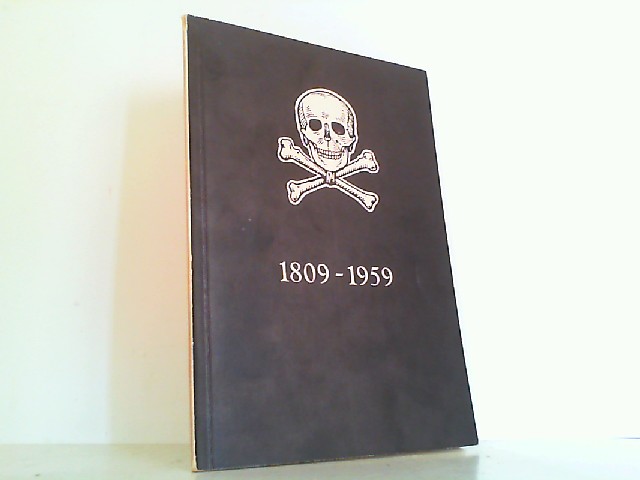
1959réf. 241124Braunschweig, 1959.
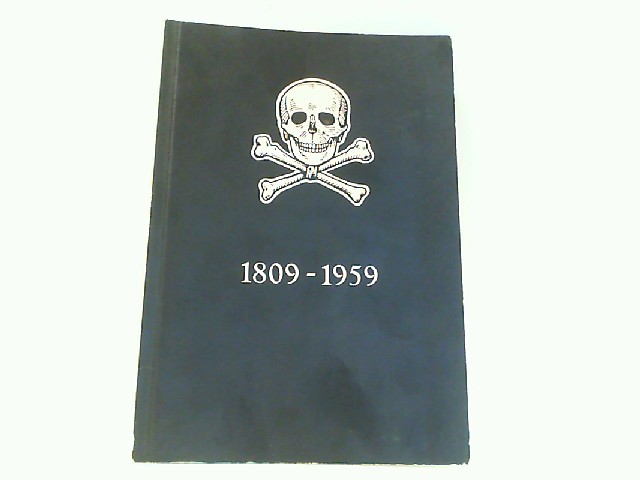
1959réf. 244916Braunschweig, 1959.
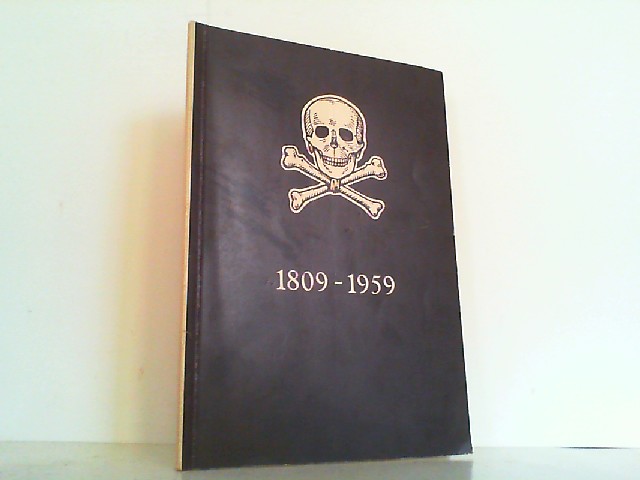
1959réf. 228192Braunschweig, 1959.
1809réf. 000867cSCOTLAND IRELAND ENGLAND DUBLIN EDINBURGH UK. Good. 1809. On offer is a remarkable original 1809 - 1833 handwritten manuscript book once used by the British Army's 94th Regiment of Foot. This book contains all manner of writings relevant to the running and goings-on of the Regiment by the Officers. The book is rather eclectic containing standing orders regimental orders different charts and forms for payroll and other reportage for example on the conditions of the Dublin Garrison orders of the day direct communications between officers public requests for leave advancement of funds settling of accounts etc. public apologies for poor behavior copies of letters sent to superiors up to and including the Duke of York Commander of all His Majesty's Forces and many other of Britain's peerage and there are even personal reminiscences notes of reference for departing soldiers plus much much more. Most of the entries of personal notes and those for Day Book purposes are signed by all manner of officers and peerage; Colonels Captains Lords and many reference specific orders by the Supreme Commander of the Army or even the King. Most fascinating are the 'Memorialist' messages of certain officers writing in the 3rd person touting themselves while seeking favor. 164 pp of history and methodology of this noted British Army regiment contained in this entirely handwritten book. Most of the entries are circa 1809 - 1827 but the oldest entry in the book is dated Edinburgh Castle 1833 and is addressed to what appears to be 'My Dear Beaver' while the correspondent signs in initials F.M. late of St. Lucia. He makes reference to Mr. Beaver as the clergyman that baptized his 3 children. Also of note: on the very last page written upside down are a quote a note and an invitation dated Fort Charlotte 1825 to His Excellency Major General Blackwell by Mr. and Mrs. Murray. Many clues for the astute researcher will assuredly unveil many of the writers in this fascinating piece of British militaria. Save for the front cover being nearly detached and some loosened endpapers this book would be G. Truly one of the most exceptional pieces of manuscript militaria we have ever encountered.; English; 4to - over 9¾" - 12" tall; KEYWORDS: HISTORY OF MILITARY MILITARIA BRITISH ARMY 94TH REGIMENT SCOTLAND IRELAND DUBLIN GARRISON MAP MANUSCRIPT DOCUMENT LETTER AUTOGRAPH DIARY JOURNAL LOG KEEPSAKE WRITER HAND WRITTEN DOCUMENTS SIGNED LETTERS MANUSCRIPTS HISTORICAL HOLOGRAPH WRITERS DIARIES JOURNALS LOGS AUTOGRAPHS PERSONAL MEMOIR MEMORIAL PERSONAL HISTORY antiquité contrat vélin document manuscrit papier Antike Brief Pergament Dokument Manuskript Papier oggetto d'antiquariato atto velina documento manoscritto carta antigüedad hecho vitela documento manuscrito Papel . unknown
1747réf. 00JT32nFrance 1747. In 1747 the Marquis A.M. De Roquepines requests an absolute leave of his superior officer for reasons of poor health. It appears he is so ill that he is putting his affairs in order. Research finds the very same Roquepines becomes the Marechal de Camp. Very Good. 8vo - over 7¾" - 9¾" tall. Manuscript. unknown
19488vo., First Edition, with portrait frontispiece, plates and maps, small neat signature on front free endpaper; blue tweed cloth, upper board blocked in gilt, gilt back, a near fine copy. Loosely inserted is a compliments slip from 12 Anti-Tank Regiment RA (the unit's later designation). Then stationed in Tripolitania, 12 ATR comprised R, S, T (Shah Sujah's Troop) and U Batteries. Includes ROH, honours & awards. EXTREMELY SCARCE.
1870réf. 2484Paris, Michel Lévy Frères, 1870 ; in-8, demi-chagrin rouge-sang, dos à cinq nerfs, titre doré, caissons décorés de fleurons dorés, toutes tranches mouchetées ; (2) ff. (faux-titre, titre), 139 pp., (1) f. (épilogue) ; 14 planches d'illustrations en noir dont une en frontispice, nombreuses illustrations en noir in-texte.
1945réf. 62-929BN.P. N.d. C. 1945. 1945. 34p. Photos. Folding map. Element of the 26th Yankee Division. Northern France Rhineland Ardennes Central Europe. Small Wraps. Fine Copy. Paperback. Fine. N.P., N.d. C. 1945. Paperback
2014réf. HIS5446MRelié, 256 pages, paru le 18 décembre 2014 chez Lavauzelle, très bon état général, quelques rousseurs très légères.
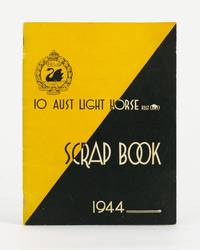
1944réf. 146426Perth: The Regiment 1944. First Edition. Paperback. Very Good. Perth The Regiment 1944. Quarto 36 pages with numerous illustrations mainly from photographs but with some cartoons by the editor plus text on the inside front cover. Two-colour pictorial wrappers in the regiment's yellow and black colours; covers slightly creased and marked with minimal surface loss to silverfish confined mainly to the plain rear one; a very good copy. A few pages are devoted to the regiment's WW1 precursor the 10th Light Horse. A rarity; not in the standard bibliographies. The Regiment paperback
195824 pages. Features: Dramatic one-page colour photo of America's Sputnik blowing up on launch pad at Cape Canaveral; Nice one-page colour-photo Campbell's Vegetable Soup ad; Wonderful four-page feature on the Community Farm of the Brethren at Bright, Ontario includes fourteen photos; Photos (one in colour) of "Bran", the Irish wolfhound and regimental mascot of the Irish Regiment of Canada; Photo and brief write-ups of Sylvia Murphy, Joan Fairfax and Joyce Hahn; Behind the Scenes at the CBC - costume-making for CBC productions - includes nice colour photo of Bill Yule and June Sampson - please note that 1/3 of the second page of this article has been removed and is not included; Wow! One-page colour team photo of the Stanley Cup Champion 1957-8 Montreal Canadiens, featuring captain Maurice (Rocket) Richard; Four amazing photos of the Xavantes tribe of Brazil - taken as part of Rolf Blomberg's trip; Photo of Canada's top horseshoe pitching team, W. Faint, G. Miles, E. Crawford and L. Cruise; Wow! - one-page colour pin-up photo of Frank Sinatra!; The MacKay family of Toronto's Forest Hills Village bands birds - ten photos with write-up - son Barry MacKay went on to become a well-known naturalist and artist; Back cover 1958 calendar features large charming colour photo of baby girl in pink bonnet Average wear. Unmarked. Centerpage and covers holding by one staple. A worthy copy of this wonderful vintage issue.. Book
1973Features: Jumpers; Big Day - Canadian Airborne Regiment receives Colors; Warrant Officer Bill Hay Retires; Operation Overlord II - Naval Reservists Walk on Water; Terra Nova Returns from Asian Waters; Charm School for potential WOs; Viet Nam - they came back proud; Lamp of Learning project ends; Military Police Fund for blind children; Hussars Big Day - 125th anniversary for 8 Hussars. Photo of Tiny Tim and Miss Vicky with members of HMCS Terra Nova. Quality copy. Book