1.315 resultados
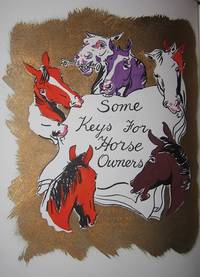
1928ref. 003636London: Country Life Ltd 1928. First Limited Edition. Full Pictorial Pigskin. Near Fine. No. 65 of 150 Edition de Luxe limitation signed by author and the illustrator using his pseudonym. 4to. 11.5 by 9.5 inches 29 by 24 cm. 240 6 pp. The illustrations through the body of the work are sprightly colorful fun and perfect exemplars of a twenties to thirties highball sophisticated aesthetic -- a sporting extension of the sleek look associated with thirties screwball comedies and musicals! The book makes riding and all its mishaps seem like one endless lark a party in which nothing really bad could possibly intrude. This is the kind of work that everyone will have a favorite image but few can not but admire the frontis of horses' heads awash with a gilt border. Much of the illustration by the way appears as if it were applied directly by hand and this slapdash manuscript quality greatly adds to the charm of the production. The pigskin binding has a film of soiling but remains attractive especially with its inked title and inkwell and feather quill pen imagery. With also a letter from the publisher. Country Life Ltd unknown books
1945ref. 89-475BBrunswick: Westermann 1945. 1945. 409p. 39p roster. Photos. Seven Folding Maps at rear. Printed boards with cream cloth spine. Element of the 2nd Armored Division. Sicily NW Europe. Heavy/Oversize. Owner's name. Old tape on the end papers. Near Fine Copy. Hardcover. Near Fine/No Jacket. Book. Brunswick: Westermann, 1945. Hardcover
191290, [4], xliv [ads] pages. Printed upon glossy stock. Black and white photos. Maps. Footnotes. Dozens of vintage ads for Toronto businesses. 27 x 20.5 cm. "We have tried in this volume to link up some of the honorable achievements of militia men of York County for a century back and show what the response has been when the bugle sounded or the alarm bell rang. We think we can discern in the men of this county a continuity of character; of deceptive equanimity in time of peace, of alacrity in time of war, of unchangeable faith in the Empire at all times." - Preface. Touched-up white decoration upon publisher's maroon cloth-covered front board. Former library copy with relatively few associated markings. Binding intact. A sound vintage copy. BISHOP p.381, COOKE p.87, DORNBUSCH 298. Book
2000xxiv, 179 pages. Index, bibliography, references, glossary. Almost one hundred black and white reproductions of photos and documents. Two fold-out maps. "This study was exciting and personally rewarding to me. I treasure the many Dutch and Canadian friends who so patiently worked with me to reconstruct the events of half a century ago. I still think it highly important that the record of Canadian actions in helping to throw off the Nazi yoke in the Netherlands be accurately and fully told to Canadian and Dutch peoples before we have all passed on. But this publication is really devoted to the 363 killed and 1760 other casualties suffered by the South Saskatchewan Regiment in the Second World War, to the other units involved in the liberation of Kamp Westerbork, but most of all to the 876 prisoners, mainly Jewish, we helped to liberate in Kamp Westerbork, the 4000 or so who passed through this transit camp to hell, but lived, and to the more than 103,000 who did not." - Foreword. After serving in WWII Professor Law [1922-2011] moved on to a career at Queen's University where he established the Business School's microcomputer lab in the 1980s, where this bookseller had the opportunity to meet him. Clean and unmarked with light wear. A quality copy of this important and highly-detailed study. Book
1784ref. 5638Sarlouis, le 18 mars 1784. 1784 1 feuillet in-folio oblong ( 212 x 286 mm) imprimé à l'encre noire et completé à la main à l'encre brune, cachet de cire rouge du régiment et cachet humide rouge estompé; et au dos est rédigé et signé par l'intendant du régiment, le détail reçu par ce soldat. (salissures, traces de plis, défauts d'usage.)
ref. 45320Printed for the Author and Sold by J. Robson T. Payne Messrs. Cadell et al. London. 1799. First edition. SCARCE. viii 316pp. The military travels of Croker presented in a series of letters a few years before the Peninsular Wars. The tone is very honest and engaging. In one town the locals decided that it would be fun to throw stones at the troups and only stopped their sport when the use of guns were threatened. Croker writes in detail about the food and wine and is also very observant of the interest the Spanish men pay to the English women that travel with the soldiers. Recently rebound in quarter maroon calf and marbled boards original endpapers and half-title present. Some occ. light foxing one page has a close short tear to margin not affecting text. The pages are remarkably clean and fresh and the volume is very sound. Please contact us for photographs. hardcover
1901ref. 6224Valence, Jules Créas et Fils, 1901 ; grand in-4 ; demi-chagrin bleu pétrole, dos à quatre nerfs plats décorés d'une roulette de losanges dorés, caisson central à deux grands décors de rinceaux, feuilles et fleurs stylisés, reliés par une chainette, dorés, caissons de tête et de queue décorés de fleurons d'encadrement dorés, auteur et titre dorés sur les plats, tête dorée, plats conservés (reliure de l'épqoue) ; (8) pp., (1) f. blanc, 402, (2) pp., couverture illustrée en couleurs, page de titre imprimée en rouge et noir et armes de Bercheny en bleu ; (6) ff. de poèmes hors-pagination, 34 planches hors-texte dont 5 en couleurs (dont 1 par Job et 1 par David de Sauzéa), 9 bandeaux dont 1 par Caran d'Ache, 7 dessins in-texte, 39 lettrines historiées humoristiques et 25 culs-de-lampe également humoristiques ; les bandeaux, lettrines et culs-de-lampe sont imprimés de toutes les couleurs.
1893ref. 026678St Louis: Nixon-Jones Printing Co 1893. First Edition. Octavo. Important first-hand observations of the Civil War in the West. Nevins calls the book "A very readable and reliable narrative by a member of the 15th Texas Cavalry who saw much service in the Western theater; the volume deserves more attention than it has heretofore received." Quite scarce. Bound in blue cloth decorated in blind spine lettering gilt edges spine ends and corners show some wear previous owner's name. Howes C597; Nevins I p.72. Nixon-Jones Printing Co unknown
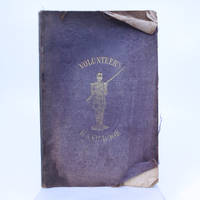
1860ref. 070469Richmond VA: West & Johnston 1860. First Edition. Softcover. Very Good -. 6.25" x 4.25" x 0.25. FIRST EDITION 1860. Since this was printed just before the beginning of the Civil War it is NOT a Confederate imprint. "Third Thousand" per the title page. Softcover. Spine is cocked; foxed throughout with some dampstain at the foot yet text has been uncompromised. Curling at the corners with some soiling. Predominantly unmarked except for a previous owner's name "L. J. Lee" dated April 1861 in pencil on the front flyleaf and a couple of markings in the margin on page 65 looking as the soldier was graphing the instruction of "By platoons left wheel. MARCH." and "Forward. March" also in pencil. The wear and soiling invokes a wonder if L. J. Lee carried this handbook with him in battle during the Civil War and what this little book has seen. A fascinating copy. Full refund if not satisfied. West & Johnston paperback
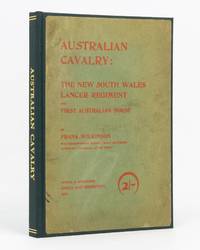
1901ref. 129531Sydney: Angus and Robertson 1901. First Edition. Hardcover. Fair. Sydney Angus and Robertson 1901. Quarto x 64 pages with an illustration plus 8 plates but lacking the colour frontispiece called for by Dornbusch. Modern binder's cloth with the front panel of the original green wrapper printed in red mounted on the front board; text block tide-marked near the head of the spine with the plates a little stained; some discolouration and foxing heavy in places; minor signs of age and use; a decent copy of an absolute rarity. This history of these two cavalry units from their foundation through to the end of the Boer War is 'undoubtedly a regimental record but it is something more - it is an attempt to explain and to some extent combat the unreasoning prejudice which has grown up as a result of the South African campaign against the cavalry arm of the service. On this point Mr. Wilkinson says:- "It is my purpose to show not only that cavalry regiments like the New South Wales Lancers have done equal yeoman service to the Empire in the South African struggle with their comrades in the other branches of the service but that they have done infinitely more as the pioneers of the cavalry movement in Australia to enhance the value of our defence force and to shew the world of what fighting stuff our men are made"' from a review in the 'Daily Telegraph' 12 October 1901. The last 18 pages contain numerous appendices including nominal and casualty rolls. Dornbusch 126; Fielding and O'Neill page 126. Angus and Robertson hardcover
1792ref. LBW-3758Auray, 1792. 1 p. in-4 oblong (22,4 x 29,3 cm), en-tête imprimé "Régiment du Port-au-Prince" corrigé à l'encre "Cap", vignette et encadrement gravés, sceau de la municipalité d'Auray et apostille des officiers municipaux, traces de plis.
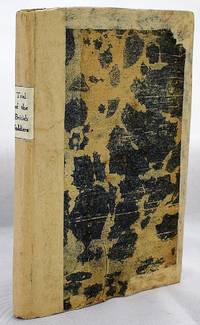
1807ref. 1812290002Boston: Beecher & Armstrong 1807. Hardcover. Acceptable. Boston Massacre Early American Printing Contemporary boards conserved and rebacked on modern spine. Ink and perforated stamps on title page. 120 p. First published in 1770 under the title: The trial of William Wemms James Hartegan etc. Taken in short hand by John Hodgson. Future President John Adams successfully represented the accused British soldiers in the tumultuous trial. "The trial of the British soldiers of the 29th Regiment of Foot : for the murder of Crispus Attucks Samuel Gray Samuel Maverick James Caldwell and Patrick Carr on Monday evening March 5 1770 before the Honorable Benjamin Lynde John Cushing Peter Oliver and Edmund Trowbridge esquires justices of the Superior court of judicature Court of assize and general gaol delivery held at Boston by adjournment November 27 1770." From the library of Richard Manning Hodges 1827-1896 noted American surgeon Harvard College 1847 Harvard Medical School 1850. Boston: Beecher & Armstrong hardcover
ref. 39913London W. Bulmer and Co. 1800 Hardcover book first edition 503 pages with engraving and maps- some folding as called for. Dedicated the the chairman of the east India Company. this lovely volume explores the history geography people and natural history of the country now referred to as Myanmar and formerly Burma. The author undertook a long and arduas journey throgh the country ending in 1795. a Very good copy bound in half-calf brown boards and marbled endpapers. all plates and maps are present as listed in the directions to the binder at the rear. Maps and plates have some light foxing. Fold-out map of the Irrawwady river has some perforations to the foldsalthough this is not serious. Other plates have light foxing and some margin stains but this does not affect the images. One page 288 has some margin notes and one page 157 has a short closed tear to edge. Previous owners contemporary signature to top of title page. Binding is lightly rubbed but firm and without splits. Pictures available. Please note this is a heavy volume and will require additional shipping charges. London, W. Bulmer and Co. 1800 hardcover
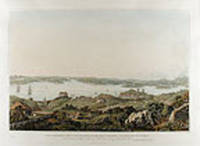
ref. 14758London: Alecto Editions and the State Library of New South Wales 1988. Originally engraved by Robert Havell and son printed by Edward Egerton-Williams in colours and finished by hand with printer's blindstamp. "By 1820 Sydney was a town of 12000 inhabitants about a third of whom were convicts. It had grown dramatically during the administration of Lachlan Macquarie who was appointed governor of New South Wales in 1810. Unlike previous governors Macquarie was not content merely to oversee a penal colony. His vigorous building programme changed forever the appearance of Sydney while his policy of accepting emancipated convicts as respected citizens demonstrated a social attitude strangely out of step with the times. Both these policies earned him criticism. In 1819 alarmed by Macquarie's extravagant public works the British Government commissioned a lawyer and civil servant J.T.Bigge to investigate. The attacks by his critics were met head on by Macquarrie's supporters in New South Wales. Books pamphlets and paintings luded the governor's undoubted achievements. Almost certainly Major Taylor's drawings were used in if not commissioned for this cause. The engraved view presents a flattering image of the Australian seat of government and by extension of Macquarie's term there.Taylor arranged the engraving and printing of the of the three sheet Panorama. upon his return to England in July 1822.Havell appears to have worked from Taylor's. large watercolours but amended them with additional details. and decorative elements.It is most fortuitous that the copper plates.have survived. There is no other example of such a case for 19th century Australian engravings. Alecto Editions and the State Library of New South Wales unknown
ref. 14758London: Alecto Editions and the State Library of New South Wales 1988. Originally engraved by Robert Havell and son printed by Edward Egerton-Williams in colours and finished by hand with printer's blindstamp. "By 1820 Sydney was a town of 12000 inhabitants about a third of whom were convicts. It had grown dramatically during the administration of Lachlan Macquarie who was appointed governor of New South Wales in 1810. Unlike previous governors Macquarie was not content merely to oversee a penal colony. His vigorous building programme changed forever the appearance of Sydney while his policy of accepting emancipated convicts as respected citizens demonstrated a social attitude strangely out of step with the times. Both these policies earned him criticism. In 1819 alarmed by Macquarie's extravagant public works the British Government commissioned a lawyer and civil servant J.T.Bigge to investigate. The attacks by his critics were met head on by Macquarrie's supporters in New South Wales. Books pamphlets and paintings luded the governor's undoubted achievements. Almost certainly Major Taylor's drawings were used in if not commissioned for this cause. The engraved view presents a flattering image of the Australian seat of government and by extension of Macquarie's term there.Taylor arranged the engraving and printing of the of the three sheet Panorama. upon his return to England in July 1822.Havell appears to have worked from Taylor's. large watercolours but amended them with additional details. and decorative elements.It is most fortuitous that the copper plates.have survived. There is no other example of such a case for 19th century Australian engravings. Alecto Editions and the State Library of New South Wales unknown books
1764ref. 6600CBBerlin, ohne Verlagsangabe, 1764. 8°, 528 S. Text, 6 S. Anhang 'Ordre zu Erhaltung der Subordination bey der Armée', Pergamenteinband der Zeit mit Siegel mit einer am Rückdeckel montierten Lederschließe mit original Stoffband mit anhänglichen Siegelresten, erste Auflage dieser Ausgabe erste 33 Seiten mit kleiner werdenden Wurmgang (mit winzigem Buchstabenverlust auf Vorsatz- und Titelseite), von den im Anhang befindlichen Falt-Karten ist nur die Monatsliste sauber enthalten, eine weitere Liste nur zu einem kleinen Teil enthalten, sonst
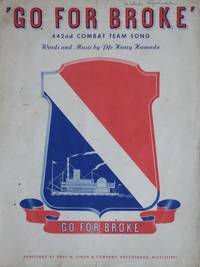
1944ref. List2436Hattiesburg: Earl M. Finch 1944. Sheet music measuring 12 x 9 inches 4 pp. Signature of a Nabuko Hayashida on front cover. Slight tears at fold some toning two small pinholes very good overall quite attractive. Very Good. In Hawaii in May 1942 a battalion of Nisei volunteers was assembled for service in World War Two despite earlier failures of efforts to recruit Japanese-Americans due to the Army’s labeling of Nisei recruits as 4-C enemy aliens. Designated as the 100th Infantry Battalion they were deployed to North Africa in June 1943 integrating with the 34th Division in active combat. Their subsequent deployment to Italy in September 1943 exposed them to intense warfare earning them the moniker of the "Purple Heart Battalion" due to their notably high casualty rate. In January 1943 the U.S. War Department officially declared the establishment of the segregated 442nd Regimental Combat Team RCT which was comprised of Nisei volunteers originating from Hawaii and the mainland. The culmination of this initiative transpired in June 1944 when the 442nd RCT merged forces with the 100th Infantry Battalion in Europe subsequently absorbing the latter into its structure. The notable achievements of Nisei soldiers in combat operations prompted the reinstatement of the draft in January 1944 specifically targeting Nisei detainees to augment the ranks of the 442nd. Over time the 442nd RCT expanded to encompass the 2nd 3rd and 100th Battalions; the 522nd Field Artillery Battalion; the 232nd Engineering Company; the 206th Army Band; Anti-Tank Company; Cannon Company; and Service Company. Offered here is a very scarce piece of sheet music entitled “Go For Broke” which was written by the Hawaiian musician Harry Hamada reflecting the slogan of the 442nd and performed by Shelby and others during the war as part of efforts to boost morale. Hamada would feature in the 1951 movie “Go For Broke” as Masami alongside several other veterans of the 442nd. This publication of “Go For Broke” is from 1944 seven years before the movie’s release. The piece is dedicated to Colonel C.W. Pence. Hamada was a Hawaiian musician who performed with a band called the Shelby Hawaiians or the Shelby Serenaders. They performed as early as 1943. The Hattiesburg Mississippi merchant Earl M. Finch who ran an Army and Navy store close to Camp Shelby befriended Hamada and other members of the 442nd and acted as a sponsor for the group and eventually published this version despite his business being a dry goods merchant house and not a publishing house. The group with the support of Finch performed throughout the country to lift morale. At some point Hamada penned this composition likely in 1944 as we find no reference to it in 1943 articles and Finch published it - Hamada’s composition would become the theme song of the 442nd and Hamada would perform at the Halloran General Hospital in New York and the Walter Reed Hospital in Washington D.C. in 1944 likely performing this composition. Another composition called “Go For Broke” exists as well and it is unclear to what degree Hamada’s work caught on among the regiment. We find two records of Finch’s published version of the composition one listed as part of an online remembrance of the 442nd by the Smithsonian Institution https://americanhistory.si.edu/explore/stories/day-remembrance-70-years-after-executive-order-9066 which appears to have been on loan from the National Japanese American Historical Society and another copy held at Stanford though not listed in OCLC. Finch’s story is also interesting and is the subject of a remembrance on a 100th Battalion History page online https://www.100thbattalion.org/history/stories/earl-finch/. We find no copies listed in OCLC. Overall a very scarce piece of Japanese-American wartime history. Earl M. Finch unknown
1944ref. List2436Hattiesburg: Earl M. Finch 1944. Sheet music measuring 12 x 9 inches 4 pp. Signature of a Nabuko Hayashida on front cover. Slight tears at fold some toning two small pinholes very good overall quite attractive. Very Good. In Hawaii in May 1942 a battalion of Nisei volunteers was assembled for service in World War Two despite earlier failures of efforts to recruit Japanese-Americans due to the Army’s labeling of Nisei recruits as 4-C enemy aliens. Designated as the 100th Infantry Battalion they were deployed to North Africa in June 1943 integrating with the 34th Division in active combat. Their subsequent deployment to Italy in September 1943 exposed them to intense warfare earning them the moniker of the "Purple Heart Battalion" due to their notably high casualty rate. In January 1943 the U.S. War Department officially declared the establishment of the segregated 442nd Regimental Combat Team RCT which was comprised of Nisei volunteers originating from Hawaii and the mainland. The culmination of this initiative transpired in June 1944 when the 442nd RCT merged forces with the 100th Infantry Battalion in Europe subsequently absorbing the latter into its structure. The notable achievements of Nisei soldiers in combat operations prompted the reinstatement of the draft in January 1944 specifically targeting Nisei detainees to augment the ranks of the 442nd. Over time the 442nd RCT expanded to encompass the 2nd 3rd and 100th Battalions; the 522nd Field Artillery Battalion; the 232nd Engineering Company; the 206th Army Band; Anti-Tank Company; Cannon Company; and Service Company. Offered here is a very scarce piece of sheet music entitled “Go For Broke” which was written by the Hawaiian musician Harry Hamada reflecting the slogan of the 442nd and performed by Shelby and others during the war as part of efforts to boost morale. Hamada would feature in the 1951 movie “Go For Broke” as Masami alongside several other veterans of the 442nd. This publication of “Go For Broke” is from 1944 seven years before the movie’s release. The piece is dedicated to Colonel C.W. Pence. Hamada was a Hawaiian musician who performed with a band called the Shelby Hawaiians or the Shelby Serenaders. They performed as early as 1943. The Hattiesburg Mississippi merchant Earl M. Finch who ran an Army and Navy store close to Camp Shelby befriended Hamada and other members of the 442nd and acted as a sponsor for the group and eventually published this version despite his business being a dry goods merchant house and not a publishing house. The group with the support of Finch performed throughout the country to lift morale. At some point Hamada penned this composition likely in 1944 as we find no reference to it in 1943 articles and Finch published it - Hamada’s composition would become the theme song of the 442nd and Hamada would perform at the Halloran General Hospital in New York and the Walter Reed Hospital in Washington D.C. in 1944 likely performing this composition. Another composition called “Go For Broke” exists as well and it is unclear to what degree Hamada’s work caught on among the regiment. We find two records of Finch’s published version of the composition one listed as part of an online remembrance of the 442nd by the Smithsonian Institution https://americanhistory.si.edu/explore/stories/day-remembrance-70-years-after-executive-order-9066 which appears to have been on loan from the National Japanese American Historical Society and another copy held at Stanford though not listed in OCLC. Finch’s story is also interesting and is the subject of a remembrance on a 100th Battalion History page online https://www.100thbattalion.org/history/stories/earl-finch/. We find no copies listed in OCLC. Overall a very scarce piece of Japanese-American wartime history. Earl M. Finch unknown books
ref. 14891A fine pair of plates engraved by Robert Havell and son printed by Edward Egerton-Williams in colours and finished by hand each in very good condition "The Town of Sydney" with a slightly greyer paper tone. From an edition limited to 110 copies printed from the original printing plates in 1988 employing the same techniques as used in 1823. This fine edition was published as a collaborative effort between the State Library of New South Wales and the renowned fine art publishers Alecto Editions. "By 1820 Sydney was a town of 12000 inhabitants about a third of whom were convicts. It had grown dramatically during the administration of Lachlan Macquarie who was appointed governor of New South Wales in 1810. Unlike previous governors Macquarie was not content merely to oversee a penal colony. His vigorous building programme changed forever the appearance of Sydney while his policy of accepting emancipated convicts as respected citizens demonstrated a social attitude strangely out of step with the times. Both these policies earned him criticism. In 1819 alarmed by Macquarie's extravagant public works the British Government commissioned a lawyer and civil servant J.T.Bigge to investigate. The attacks by his critics were met head on by Macquarrie's supporters in New South Wales. Books pamphlets and paintings lauded the governor's undoubted achievements. Almost certainly Major Taylor's drawings were used in if not commissioned for this cause. The engraved views of the Panorama present a flattering image of the Australian seat of government and by extension of Macquarie's term there.Taylor arranged the engraving and printing of the of the three sheet Panorama. upon his return to England in July 1822.Havell appears to have worked from Taylor's. large watercolours but amended them with additional details. and decorative elements.It is most fortuitous that the copper plates.have survived. There is no other example of such a case for 19th century Australian engravings. unknown
ref. 14891A fine pair of plates engraved by Robert Havell and son printed by Edward Egerton-Williams in colours and finished by hand each in very good condition "The Town of Sydney" with a slightly greyer paper tone. From an edition limited to 110 copies printed from the original printing plates in 1988 employing the same techniques as used in 1823. This fine edition was published as a collaborative effort between the State Library of New South Wales and the renowned fine art publishers Alecto Editions. "By 1820 Sydney was a town of 12000 inhabitants about a third of whom were convicts. It had grown dramatically during the administration of Lachlan Macquarie who was appointed governor of New South Wales in 1810. Unlike previous governors Macquarie was not content merely to oversee a penal colony. His vigorous building programme changed forever the appearance of Sydney while his policy of accepting emancipated convicts as respected citizens demonstrated a social attitude strangely out of step with the times. Both these policies earned him criticism. In 1819 alarmed by Macquarie's extravagant public works the British Government commissioned a lawyer and civil servant J.T.Bigge to investigate. The attacks by his critics were met head on by Macquarrie's supporters in New South Wales. Books pamphlets and paintings lauded the governor's undoubted achievements. Almost certainly Major Taylor's drawings were used in if not commissioned for this cause. The engraved views of the Panorama present a flattering image of the Australian seat of government and by extension of Macquarie's term there.Taylor arranged the engraving and printing of the of the three sheet Panorama. upon his return to England in July 1822.Havell appears to have worked from Taylor's. large watercolours but amended them with additional details. and decorative elements.It is most fortuitous that the copper plates.have survived. There is no other example of such a case for 19th century Australian engravings. unknown books
ref. 36904publishedby Ackermann & Co. London. 1833. restrike c.1870. print size: 22.5x30 1/4"; image size: 17 1/8"x 26 3/8"; from the original plate 1830 butissued pulled later 1870/80 beautifully coloured in brilliantcondition. Spendlove pp46-51; plate 69. publishedby Ackermann & Co., London. [1833]. restrike c.1870? unknown
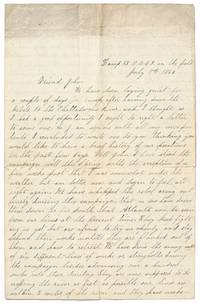
1864ref. 438776Atlanta Georgia 1864. Very Good. Autograph Letter Signed. Folio. 4pp. Partial splitting at the edges of one vertical and two horizontal folds about very good. A detailed and historically important long letter written in the field by Union soldier Harvey Rodgers just two weeks before he was killed at the Battle of Atlanta on July 22 1864. Rodgers was mustered into service in 1861 as a Corporal in the 54th Regiment Ohio Volunteer Infantry Zouaves Company A commanded by 1st Lt. Judson McCoy referred to as "Jud" in the letter. In the letter written to his "Friend John" on four easily legible folio pages Rodgers describes Confederate and Union Army maneuvers and skirmishes immediately after the Battle of Kennesaw Mountain fought from June 19 - July 2 1864 during the lead-up to the Battle of Atlanta which began on July 21st: ". Well John I have stood the campaign well this Spring . We have whipped the rebel army out finely . that is we have drove them so far South that Atlanta can be seen from our lines . I suppose you have heard about our making a charge on the 27th June . I do not wish to be in anymore such places . we lay in camp until the 2nd of July when our Division moved . very near due south of the Kennesaw mountain. That night Jud with our Company was on picket. We heard the cars very plain but did not think they the rebel army were evacuating the mountain and falling back . Next morning . We did not move forward until two o'clock when we advanced our lines two miles finding a small force of Cavalry in our front which we routed by charging them. The Regt. lost 1 killed 14 wounded ." He describes a second skirmish on July 4th at which his Company fought in support of the Union army's 16th Corps to advance Union lines and continues: ". On the 5th we were moved back again and brought further around on the right where we now lay. Our front lines are two miles further on. The rebels have a line of works between them and the Chattahoochee river . I expect we will have a pretty hard time before we get there and a hard time to cross the river ." The Battle of Atlanta commenced on July 21 1864. Both Harvey Rodgers and Union Maj. Gen. James B. McPherson were killed during the battle on July 22nd. Rodgers' letter thus ends poignantly: "Well John my time is fast rolling around now and I begin to think I will soon get home again. Only two months and 8 days more . Still in that short time there are many dangers to undergo. I may be called on to go into several more charges. Perhaps of some one not to come out alive . There has not more than half a dozen days passed since the 10th of May but what we have been under the sound of artillery. The troops appear to be pretty well worn out and wish for the campaign to close yet they all want to get into Atlanta first ." A compelling and ultimately heartbreaking eye witness account of General Sherman's Atlanta campaign during the summer of 1864. Longer quoted extracts from the letter are available. unknown
1864ref. 438776Atlanta Georgia 1864. Very Good. Autograph Letter Signed. Folio. 4pp. Partial splitting at the edges of one vertical and two horizontal folds about very good. A detailed and historically important long letter written in the field by Union soldier Harvey Rodgers just two weeks before he was killed at the Battle of Atlanta on July 22 1864. Rodgers was mustered into service in 1861 as a Corporal in the 54th Regiment Ohio Volunteer Infantry Zouaves Company A commanded by 1st Lt. Judson McCoy referred to as "Jud" in the letter. In the letter written to his "Friend John" on four easily legible folio pages Rodgers describes Confederate and Union Army maneuvers and skirmishes immediately after the Battle of Kennesaw Mountain fought from June 19 - July 2 1864 during the lead-up to the Battle of Atlanta which began on July 21st: ". Well John I have stood the campaign well this Spring . We have whipped the rebel army out finely . that is we have drove them so far South that Atlanta can be seen from our lines . I suppose you have heard about our making a charge on the 27th June . I do not wish to be in anymore such places . we lay in camp until the 2nd of July when our Division moved . very near due south of the Kennesaw mountain. That night Jud with our Company was on picket. We heard the cars very plain but did not think they the rebel army were evacuating the mountain and falling back . Next morning . We did not move forward until two o'clock when we advanced our lines two miles finding a small force of Cavalry in our front which we routed by charging them. The Regt. lost 1 killed 14 wounded ." He describes a second skirmish on July 4th at which his Company fought in support of the Union army's 16th Corps to advance Union lines and continues: ". On the 5th we were moved back again and brought further around on the right where we now lay. Our front lines are two miles further on. The rebels have a line of works between them and the Chattahoochee river . I expect we will have a pretty hard time before we get there and a hard time to cross the river ." The Battle of Atlanta commenced on July 21 1864. Both Harvey Rodgers and Union Maj. Gen. James B. McPherson were killed during the battle on July 22nd. Rodgers' letter thus ends poignantly: "Well John my time is fast rolling around now and I begin to think I will soon get home again. Only two months and 8 days more . Still in that short time there are many dangers to undergo. I may be called on to go into several more charges. Perhaps of some one not to come out alive . There has not more than half a dozen days passed since the 10th of May but what we have been under the sound of artillery. The troops appear to be pretty well worn out and wish for the campaign to close yet they all want to get into Atlanta first ." A compelling and ultimately heartbreaking eye witness account of General Sherman's Atlanta campaign during the summer of 1864. Longer quoted extracts from the letter are available. unknown books
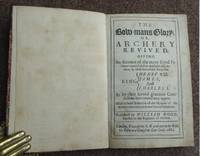
ref. 53446London printed by Samuel Roycroft and are to be sold by Edward Gough at Cow-Cross 1682. TITLE CONTINUED: As by their several gracious Commissions here recited may appear. With a brief Relation of the Manner of the Archers marching on several days of Solemnity. FIRST EDITION 1682. Small slim 8vo approximately 170 x 110 mm 7 x 4½ inches pages: xvi 1-78 lacking last leaf "Post Script" many copies are lacking this possibly added to later copies pages 1-31 mostly printed in black letter then a new title page "A Remembrance of the Worthy Show and Shooting by the Duke of Shoreditch" followed by roman text. Bound in 19th century in maroon half roan over marbled boards marbled endpapers with bookplate of Fox Pointe Manor Library on first pastedown. Slight rubbing to binding pale stain affecting the lower inner margins of first 7 leaves including title page tiny repair to blank side of lower edge of title page slight shelf wear to edges and corners 3 corner tips neatly repaired not affecting text small closed tear to 1 margin and top margin of last page both neatly repaired not affecting text some very light soiling and staining to margins a very good copy. See Sotheby's Library of the Earls of Maccclesfield Part 10 page 364 No 3850; Catalogue of The Famous Library of Henry Huth Volume 9 page 2254 No. 8182; ESTC R22583. MORE IMAGES ATTACHED TO THIS LISTING ALL ZOOMABLE FURTHER IMAGES ON REQUEST. POSTAGE AT COST AND ALL PARCELS SENT FULLY TRACKED AND FULLY INSURED. London, printed by S[amuel] R[oycroft] and are to be sold by Edward Gough at Cow-Cross, 1682. hardcover