COLLECTIF.Livre Rare Book

6529 risultati
1941rif. R150152779DENOEL.. 1941. In-8. Broché. Etat d'usage, Couv. légèrement passée, Dos plié, Intérieur acceptable. 409 pages. Frontispice en noir et blanc. Note au stylo sur la page de faux titre.. . . . Classification Dewey : 943.086-IIIe Riech. Hitler, 1933-1845
DENOEL.. 1941. In-8 Carré. Broché. Etat d'usage. Couv. légèrement passée. Dos plié. Intérieur acceptable. 409 pages. Frontispice en noir et blanc. Note au stylo sur la page de faux titre.
rif. 0715613561.Ghardcover. Good. Access codes and supplements are not guaranteed with used items. May be an ex-library book. hardcover
1938420 pages. Index. "As Douglas Reed, living in the Vienna he loved, was writing this book in 1937 and the early part of 1938, history seemed to be marching at its normal pace... the destruction of Austria was only a fear in the hearts of a few informed men. No sooner was the manuscript dispatched to the publisher, however, than the storm broke and the map of Europe began to change... The first forty-four chapters have been allowed to stand as they were written before Hitler's march into Austria... Fortunately, it has been possible to conclude the story of Austria in the last four chapters, which were written just after Hitler's arrival in Vienna on March 15th, when the author was forced to flee for his life to Zurich." - from Publisher's Note. Above-average external wear and soiling. Unmarked. Some yellowing to contents. Binding intact. A sound working copy. [Singerman 450] Book
1935rif. 61535ABAdenau, 1935. Zehnter Jahrgang, Heft 2, Juni 1935. 28 S., Illustr. Werbung, viele s/w Fotos. Pp.,farb. Deckelillustr. Seiten etwas wellig, sonst guter Zust. Illustrierte Monatschrift für Motor-Sport auf der Deutschen Gebirgs-Renn- u. Prüfungsstraße im Kreise Adenau. 10
1927rif. 61534ABAdenau, ^1927. Neunter Jahrgang, Heft 3, Juli 1934. 24S., Illustr. Werbung, viele s/w Fotos. Pp.,farb. Deckelillustr. Seiten etwas wellig, sonst guter Zust. Illustrierte Monatschrift für Motor-Sport auf der Deutschen Gebirgs-Renn- u. Prüfungsstraße im Kreise Adenau. 9
19541st edition, original cloth, 8vo. 806 pages, illustrations throughout. In Yiddish with a Spanish title page. German soldiers first passed through Ratne at the end of June 1941, but Nazi rule was established in the town only in July. Between the retreat of the Soviets and the arrival of German security forces and administrators, locals plundered Jewish homes and businesses. Shortly after the Germans arrived, they shot 27 Jews and 30 Soviet prisoners of war. Acting through the Ukrainian police, they also introduced an array of anti-Jewish measures: Jews had to wear identifying armbands (later yellow patches) , comply with a curfew, hand in valuables, including ritual objects, and provide forced labor. It was forbidden for Jews to speak to Ukrainians. As early as July 1941, Jews from the countryside were already being relocated to Ratne. In the spring of 1942, a ghetto was set up there. After a partisan raid on Ratne in June 1942, the Germans shot more than 110 Jews, along with a few Ukrainians. The Destruction of the Jewish Community. In August, the Germans recruited Ukrainian peasants from Prokhid to dig pits at a nearby sand lot. On August 26, the ghetto was liquidated by a unit from the Gestapo outpost in Brest supported by the local German Gendarmerie post and Ukrainian auxiliary police force. Although several hundred Jews fled before they could be taken to Prokhid. Many others hid in the ghetto. Most were eventually caught and murdered as well. Between 1, 300 and 1, 500 Jewish men, women, and children were killed during this operation. A few dozen skilled laborers were left alive and employed in a workshop. They were shot in February 1943. (protecting-memory.org 2018) SUBJECT(S) : Jews -- Ukraine -- Ratne. Holocaust, Jewish (1939-1945) Ratno (Ukraine) -- Ethnic relations. OCLC: 38702086. Light wear on cover and spine, page edges yellowed, previous owners name and imprint on front end page. Good Condition Overall. Inscription on Spanish title page. (YIZ-19-16A)
1943rif. yl8033 Epis Broché 1943 "In-8 (13.5x20cm), 111 pages, rare plaquette de propagande datant de 1943, textes extraits d'un numéro spécial de la revue ""Notre Combat"" du 20 avril 1943, où l'on retrouve notamment Brasillach, Déat et Chateaubriant, avec une introduction de ce dernier, riche iconographie de photos de propagande ; dos montrant une réparation, intérieur frais malgré de très légères annotations au crayon gris dans l'introduction, bon état général. Livraison a domicile (La Poste) ou en Mondial Relay sur simple demande."
1948rif. 268751948 PARIS - Années 1948/1949, du N° 1230 du vendredi 20 février au N° 1289 du vendredi 8 avril, Soit 60 NumérosL'ensemble relié en 2 Volumes à coins, dos à nerfs - Les numéros 1236 à 1246 sont reliés dans le second volume.In-4 - Environ 32 pages par numéro - Couverture illustrée d'un dessin humoristique - Envoi rapide et soigné - Réf. 26875
rif. 6j7321Franz Eher Nachfolger München 1934. XVIII/406/XVI/Seite 410-781 mit einem Portraitfrontispiz original kartoniert ohne Schutzumschlag/Band 2 fehlt die Titelseite und Reklameseiten/etwas fleckig. - Band 1: Eine Abrechnung/Band 2: Die nationalsozialistische Bewegung/Dieses Buch wird von uns nur zur staatsbürgerlichen Aufklärung und zur Abwehr verfassungswidriger Bestrebungen angeboten § 86 StGB/Widmung aus 1934 auf Vorsatz - unknown
2007rif. 1125842007 Editions Flechsig - 2007 - Fort in-8, cartonnage illustré en couleurs - 502 p. - Cahier de reproductions photographiques et illustrations en N&B hors-texte en fin d'ouvrage - Texte en allemand
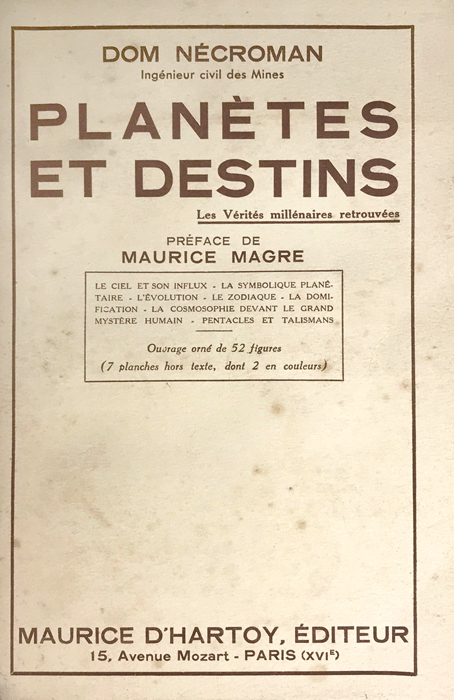
1933rif. 1070Paris, Maurice d’Hartoy, 1933 ; in-8, broché ; 295 pp., 7 planches hors-texte dépliantes (dont 2 en couleurs).
1948Original Paper Wrappers. 8vo. 94 pages. 22 cm. Series: Jewish Life in America, Number Three. CONTENTS: Characteristics of the Jewish Settlement --- The Pre-Historic Period --- The New Immigration [refugees & survivors] --- Economic Development --- Culture and Press --- Jews and Cubans --- Organizing the Community. Translated from Spanish by Simon Wolin. Covers lightly worn with small chip to one corner; internal pages are nice and clean. Very Good Condition. (HOLO2-101-19)
1961rif. 22654Grove Press. Very Good in Very Good- dust jacket. First Edition; First Printing. Hardcover. Dark blue cloth cover has lightly crushed caps corners are rubbed but cover is clean bright and in very good condition. Boards and spine are straight. Binding is tight. Pages are clean and in very good condition. Dust jacket is scuffed has wear to extremities including chipping and tearing but DJ is in very good- condition. Publisher's price of $5.00 on DJ flap. DJ protected by a brand new clear acid-free mylar cover. We add mylar covers to all books with DJs to preserve the DJs and add luster to magnify their beauty. If pictured shown without the mylar cover for an accurate representation of dust jacket. . 1961. Grove Press hardcover
1968rif. 34797Munchen: Deutscher Taschenbuch Verlag 1968. First Edition. First Printing. fair to good ex-lib. 19 cm 285 footnotes index usual library markings spine faded boards somewhat worn and soiled. Text is in German. Deutscher Taschenbuch Verlag hardcover
rif. 0434452904.Ghardcover. Good. Access codes and supplements are not guaranteed with used items. May be an ex-library book. hardcover
1934rif. 242890Berlin, Vaterländischer Verlag C.A. Weller, 1934.
19511st edition, original wrappers, 8vo. 64 pages, portraits throughout. In Yiddish with English title page. Book 3 part 1 of History of the Jews in Bialystok. SUBJECT (S) : Jews -- Poland -- Bialystok. OCLC: 970935047, OCLC lists 17 copies worldwide. Staples rusted, light wear on spine, Very Good Condition overall. (YIZ-18-12)
19521st edition, original cloth, 4to. X + 377 pages, illustrations throughout. In Hebrew. English title: Lomza- In Memory of the Jewish Community. After the end of World War I, the ethnic structure changed significantly. After Orthodox Russians and German Protestants had left Lomza, it became a city of two religions, being inhabited by Catholic Poles and Jews. After regaining independence, Lomza reached the status of a county town in Bialystok Province (from 1939 on in Warsaw Province) . It was also the local centre of trade, crafts and industry, and also the seat of garrison at the same time. A few high school operated there, and what is more, the local press in Polish and Yiddish language was published. In 1925, Pope Pius XI made Lomza the capital of Lomza Diocese. After the outbreak of World War II, on 7 September 1939, Lomza was destroyed as a result of bombing. Three days later Germans entered the city. On 28 September 1939, the city was handed over to Red Army units. Lomza was incorporated into the Byelorussian Soviet Socialist Republic. The occupiers transported to Siberia. When the war between the Germans and the Soviets began, on 22 June 1941, Lomza was bombarded by German Luftwaffe, while on 24 June occupied by Wehrmacht. In July, the city and the whole land of Bialystok were subordinated to the Gauleiter of East Prussia. A ghetto was formed in August. Jewish inhabitants and refugees from other areas were relocated there. In September 1941 about 31, 000 Jews from the ghetto were sent before a firing squad; most of those who remained were killed in Treblinka and Auschwitz-Birkenau. During the war (fights on the line of the River Narew) , in winter 1944/1945, about 70 per cent of Lomza's buildings were destroyed. The reconstructed city was the centre of county in Bialystok Province to 1975, and next it was the capital of Lomza Province, existing to 1998, as a result of an administrative reform in 1975. In 2013, the city had a status of the centre of Lomza County and a city with county rights (so-called municipal county) . (sztelt.org 2018) SUBJECT(S) : Jews -- Poland -- Lomz? A -- History. Holocaust, Jewish (1939-1945) -- Poland -- Lomz? A. Ethnic relations. OCLC: 19162885. Ex library with usual marks, wear on cover and spine, pages are separating from binding slightly in some parts, Good Condition Overall. (YIZ-18-2)
19721st edition, original cloth with dust jacket, 4to, 11 pages + 754, 170 columns. Illustrations throughout. In Hebrew, with an English section. This is the story of a vanished world, the shtetel of Antopol. The material for this presentation was gathered painstakingly over a long period of time by a relatively small group of dedicated people who wished to preserve its memory and heritage for the descendants of its martyred. More than a history, this story is very personal because our parents, grandparents and great-great grandparents going back many generations came from this community. This is also a place whose many sons and daughters in years past left to seek a new and free life. Many achieved success and prominence all over the world - the United States, South Africa, Argentina, and other areas of the globe. We are the fortunate descendants of these hardy forebears and pioneers. It is hard to imagine that only a few decades ago there existed a vibrant, living community called Antopol, with its men, women and children; its market place, stores, schools. Beth medroshim (Houses of Prayer) , orphanages, Gmilas Hasodim (free loan society for the needy) , newspaper stands - all so familiar and so dear to memory. This little town was typical of hundreds of similar smaller and larger communities. And, like Atlantis, or some past people recounted in a saga, it suddenly vanished in the most bloody massacre in all of history. But this presentation is for the living - to convey to us, the she'erit or last remnant of descendants, something of the heritage, spirit and, record of the life of this community which many of us know only in an abstract and detached way. The task is too great, and our resources too limited to write the whole story. This little volume, condensed and translated into English, is both a record and a personal memorial to a profoundly meaningful and warmly nostalgic past. (foreword from the English version of this book) SUBJECT(S) : Jews -- Belarus -- Antopal. Holocaust, Jewish (1939-1945) . Ethnic relations. OCLC: 19155706. Dust jacket has some tearing and damp stains, cover corners are dented, some wear on bottom of spine, page edges slightly yellowed, internally very good. Good Condition overall. (YIZ-17-7A) xx
19511st edition, original wrappers, 8vo. 64 pages, portraits throughout. In Yiddish with English title page. Book 3 part 1 of History of the Jews in Bialystok. SUBJECT (S) : Jews -- Poland -- Bialystok. OCLC: 970935047, OCLC lists 17 copies worldwide. Ex library with usual marks, light wear on spine and cover, Good Condition overall. (YIZ-18-12A)
19601st edition, later paper wrappers, 8vo. 808 + xx columns, illustrations throughout. In Hebrew, with an English title page and introduction. We consider it important and necessary to represent a review of our Memorial-Book to the children and friends of the Goniondz Society who do not read Yiddish or Hebrew. Let all of them get an idea about the Hometown of their parents and relatives and together with them hold dear the memory of the small Jewish community, that went to martyrdom during the black period of the bestial Nazi rule. 6, 000, 000 Jews perished during the 2nd World War in Eastern and Central Europe. Many bigger and smaller towns were immortalized in memorial books. They stand out like living symbols, spiritual monuments for the coming generations. Our beloved Goniondz has surely earned such a monument. The Jewish Goniondz was very lively and interesting. The small Jewish population was very active, established many parties and clubs and gave to the world outstanding intellectuals in many fields, both Jewish and general. Citizens of Goniondz are spread out all over the world. The majority of them live in the United States and in Israel, where they have established many societies and cooperatives in the socio-philanthropic field, giving financial and moral support to needy townspeople. The Memorial-Book portrays to a great extent the manysided life of Goniondz before its destruction. (from book) SUBJECT(S) : Jews -- Poland -- Gonia? Dz. Holocaust, Jewish (1939-1945) . Ethnic relations. OCLC: 18096280, OCLC lists 29 copies worldwide. Cover is missing, outside pages have some wear and discoloration, internally very good, Good Condition overall. (YIZ-20-2)
19488vo; 424 pages; 21 cm. . In Yiddish. Special issue to "Unser Weg". "The extermination of the Jews of Kowno (Kaunas) " on copyright page. Includes index, portraits, music and 18 pages of photo plates. The US Holocaust Memorial Museum keeps their copy in their Rare Book Collection. Pages tanned. Ex-library Lacks front wrapper, but text pages and internal binding remain solid. Good condition thus (YIZ-1-3)
19488vo; 424 pages; 1st edition. Original Blue CLoth21 cm. . In Yiddish. Special issue to "Unser Weg". "The extermination of the Jews of Kowno (Kaunas) " on copyright page. Includes index, portraits, music and 18 pages of photo plates. The US Holocaust Memorial Museum keeps their copy in their Rare Book Collection. Pages tanned. Hinges starting, some wear to boards, Good condition (YIZ-3-11A)
19501st edition. Original cloth in dust jacket. 8vo. 231 pages. Illustrated. In Yiddish. SUBJECT (S) : Jews Lithuania history; Haskalah Lithuania history. SERIES: Dos Poylishe Yidntum ; ; bd. 70; Variation: Poylishe Yidntum ; ; bd. 70. Born in Warsaw, Shatzky [1893-1956] received his doctorate in 1922 for a dissertation on 19th-century Polish-Jewish history. During World War I he served as an officer in the Polish Legion. From 1913 on he wrote Polish articles and reviews on Jewish literary and historical subjects. He came to write mainly in Yiddish after 1922, the year he settled in the U. S. Where he was one of the founders of the U. S. Section of YIVO. From 1929 until his death he was librarian of the New York State Psychiatric Institute. Shatzky's range was extraordinarily wide: Spinoza, psychiatry, theater, music, folklore, literature, language, and other areas. His principal field, however, was Eastern European Jewish history, and his major work was his history of Warsaw Jewry. He was an indefatigable and often querulous reviewer of scholarly works; the quality and accuracy of his own historical scholarship has often been questioned. (Prager, EJ) Has tanned dust jacket and sewn in ribbon bookmark. Very good condition in good jacket. (YIZ-8-5)